
A Pennsylvania professional sits at a laptop with three problems competing for attention. A missed deadline triggers worry, worry makes concentration harder, and another uncompleted task deepens the sense of failure. Sleep becomes less predictable, motivation drops, and the person starts wondering whether the central problem is ADHD, anxiety, depression, or all three.
That question matters because treatment order can affect safety, side effects, and daily functioning. There isn't one rule that says anxiety or depression must always come first, and ADHD shouldn't automatically be treated before mood symptoms. A careful evaluation identifies which condition is most urgent, how symptoms developed, and what type of support is most likely to help.
Table of Contents
- Recognizing the Overlap in Real Life
- Why ADHD, Anxiety, and Depression Frequently Co-Occur
- Symptom Overlap and Differential Challenges
- How Clinicians Determine Treatment Sequencing
- Understanding Celexa (Citalopram) for Overlapping Symptoms
- The Role of Integrative Telepsychiatry in Complex Cases
- Taking the Next Step for Personalized Care
Recognizing the Overlap in Real Life
A graduate student in Philadelphia may describe losing track of assignments, rereading the same page, and feeling physically restless during quiet study time. The student also worries constantly about disappointing professors and avoids opening email because every message feels threatening. After weeks of falling behind, low motivation and hopelessness begin to replace the earlier urgency.
An adult employee in Bucks County may show a different pattern. Missed details and disorganization have existed since childhood, but a demanding promotion has made them more visible. The person now spends hours ruminating over small mistakes, sleeps poorly, and feels too depleted to begin ordinary tasks. Anxiety may explain the racing thoughts, depression may explain the loss of energy, and ADHD may explain the lifelong difficulty managing time and priorities.
These symptoms don't stay in separate boxes. Concentration problems can arise from executive-function difficulties, anxious rumination, depressive fatigue, or several mechanisms at once. Restlessness may reflect ADHD, fear-based arousal, medication effects, or agitation associated with a mood change. Avoidance can develop because a person is distracted, overwhelmed, ashamed, or unable to access motivation.
Practical rule: The symptom matters, but its timing, triggers, and history often matter more.
Adults seeking care can review the difference between attention-related symptoms and anxious patterns in this guide to anxiety or ADHD. A screening tool may help organize concerns, but it can't establish a diagnosis. A provider needs to understand whether symptoms appeared before age 12, persisted across settings, and impaired functioning, as well as whether anxiety or depression emerged later.
Recognizing the overlap doesn't mean every symptom needs a separate diagnosis. It means treatment planning should account for the possibility that several processes are operating together.
Why ADHD, Anxiety, and Depression Frequently Co-Occur
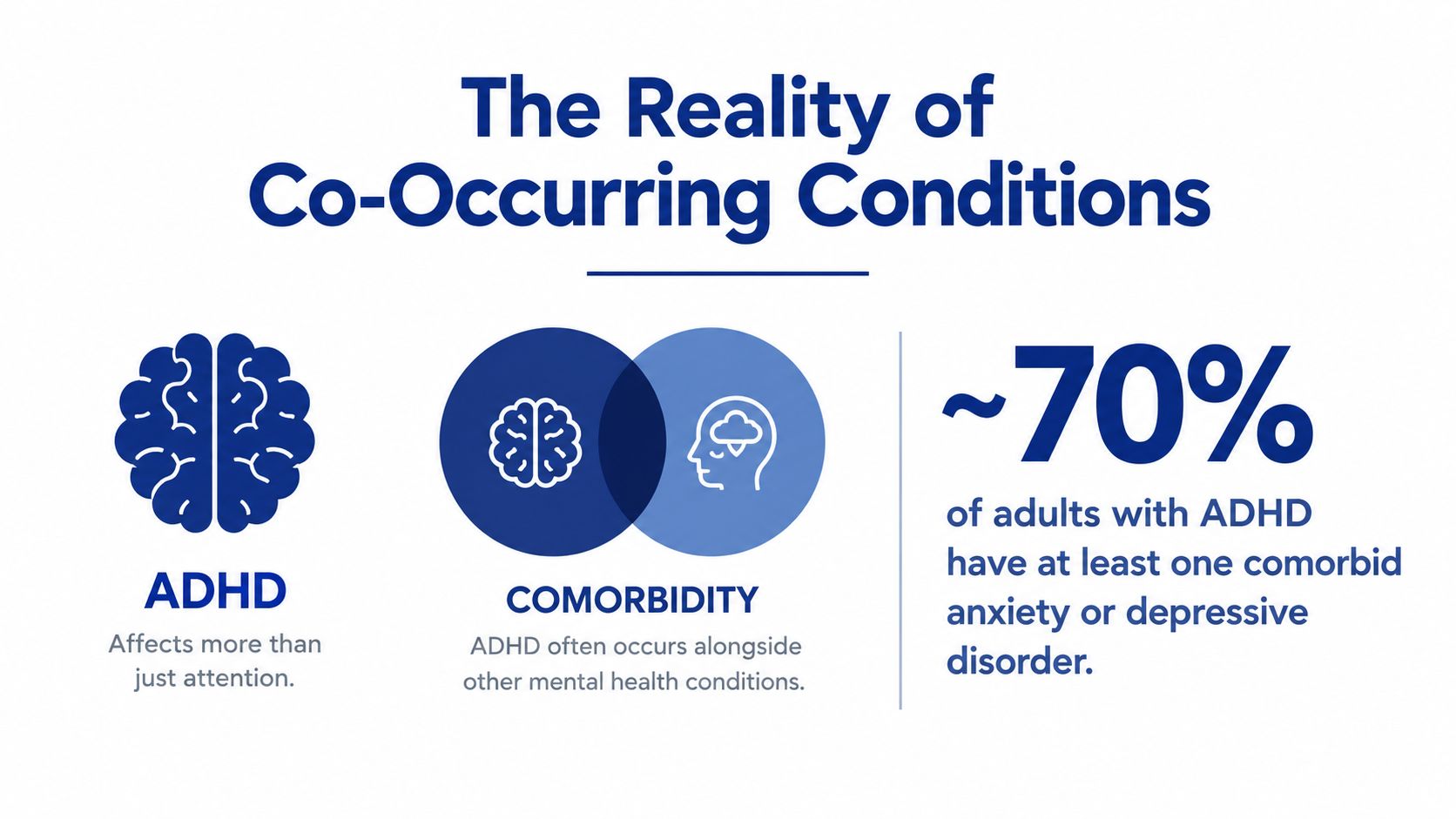
Anxiety and depression commonly occur alongside adult ADHD. A review of adult ADHD literature reports anxiety disorders in 25% to 50% of patients and depression in 18.6% to 53.3%. About 70% of adults with ADHD have at least one additional mental health condition, according to CHADD's overview of co-occurring conditions.
One large adult sample found an anxiety disorder in 47.1% of adults with ADHD, compared with 19.5% of adults without ADHD. Mood disorders occurred in 38.3% of adults with ADHD versus 11.1% without ADHD. Major depressive disorder occurred in 18.6% versus 7.8%, while dysthymia occurred in 12.3% versus 1.9%. These findings do not establish that ADHD causes anxiety or depression. They show why clinicians should screen for both directions when one condition is identified.
The overlap may reflect several interacting pathways. Chronic executive-function difficulties can create repeated stress, missed obligations, and discouraging feedback. Anxiety and depression can then worsen sleep, motivation, and attention. Shared effects on stress regulation and serotonin pathways may also contribute, although neurotransmitter explanations alone cannot determine a diagnosis. This overview of serotonin and its role in mental health provides additional context.
The pattern appears across studies. A National Comorbidity Survey Replication finding reported major depressive disorder in 18.6% of adults with ADHD and 7.8% of adults without ADHD, with an odds ratio of 2.7. A population-based study of about 40,000 adults with ADHD found anxiety and depression at roughly four to five times the prevalence in the rest of the adult population. A cohort of 172,010 ADHD patients found anxiety in 23.0%, depression in 19.0%, and anxiety and/or depression in 32.2%, as summarized in this review of adult ADHD comorbidity evidence.
These findings make treatment sequencing a clinical decision, not a preset rule. Providers weigh functional impairment, safety, sleep, symptom severity, and likely medication response before deciding which condition needs attention first.
A recent clinical review of adult ADHD and psychiatric comorbidity similarly describes about 70% of adults with ADHD as having another mental health disorder and supports screening for overlapping symptoms before medication changes or a narrow diagnosis.
Symptom Overlap and Differential Challenges
The same complaint can reflect different causes. Difficulty focusing may result from ADHD-related executive dysfunction, anxious worry that captures attention, or depression that reduces energy and processing speed. Treatment becomes more precise when the provider asks what happens before, during, and after the symptom.
Symptom Comparison Across ADHD, Anxiety, and Depression
| Symptom | ADHD | Anxiety | Depression | Possible overlap |
|---|---|---|---|---|
| Concentration problems | Attention shifts, working-memory lapses, and difficulty prioritizing tasks may persist across situations. | Worry, threat monitoring, and intrusive thoughts compete with the task. | Low energy, slowed thinking, or loss of interest can reduce focus. | A person may report poor concentration without knowing which process is dominant. |
| Restlessness | Internal or physical need for movement, stimulation, or task switching. | Tension, fear-based activation, muscle tightness, or inability to settle. | Agitation can occur, but some people experience slowing instead. | Restlessness may reflect ADHD, anxiety, mood change, sleep loss, or medication effects. |
| Avoidance | Tasks feel difficult to start, organize, sequence, or sustain. | Avoidance reduces exposure to feared outcomes or uncomfortable uncertainty. | Low energy, hopelessness, or loss of pleasure makes action feel pointless. | Missed work may look similar even when the barrier differs. |
| Low motivation | Interest-based attention and delayed rewards can make routine tasks hard to begin. | Worry may consume the mental energy needed to act. | Reduced pleasure, energy, and expectation of success can limit activity. | The person may call every form of difficulty “lack of motivation.” |
| Rumination | Replaying errors can follow impulsive decisions or chronic disorganization. | Worry focuses on possible future danger or judgment. | Repetitive thoughts may center on guilt, failure, or hopelessness. | Repetitive thinking can worsen sleep and further reduce concentration. |
| Sleep problems | Delayed sleep timing, difficulty winding down, or inconsistent routines may occur. | Fear, tension, and racing thoughts can delay sleep. | Early waking, excessive sleep, or unrefreshing sleep may accompany low mood. | Poor sleep can intensify all three symptom groups. |
| Emotional dysregulation | Rapid frustration, sensitivity to criticism, and difficulty returning to baseline may occur. | Emotions rise around perceived danger, uncertainty, or rejection. | Persistent sadness, emptiness, irritability, or reduced emotional range may dominate. | Emotional reactivity can obscure the pattern that started it. |
| Functional impairment | Problems affect organization, deadlines, relationships, or household responsibilities. | Avoidance and worry interfere with work, school, health care, or social life. | Mood and energy changes reduce participation and self-care. | Multiple conditions can compound impairment across several settings. |
The developmental timeline often clarifies the picture. Adult ADHD requires symptoms that began before age 12, appeared in at least two areas of life, and created meaningful impairment, according to NIMH information about adult ADHD diagnosis. A later decline in concentration during a depressive episode points toward a different clinical question than lifelong disorganization that worsened after a stressful promotion.
An evaluation also considers sleep disorders, medical contributors, medication effects, and other psychiatric conditions. There is no single test for ADHD, and anxiety, depression, and sleep problems can resemble it, as explained in NIMH's ADHD diagnosis guidance. A symptom checklist can support an evaluation, but it can't replace clinical judgment.
Readers who want a focused comparison can review ADHD versus anxiety. The practical question isn't which label sounds most familiar. It is which pattern best explains the person's history and current impairment.
How Clinicians Determine Treatment Sequencing
Treatment sequencing depends on the individual presentation. Clinicians don't universally treat depression first or ADHD first. They weigh urgency, impairment, history, treatment response, and the risks of leaving each condition untreated.
The factors that shape the order
Safety comes first. Severe depressive symptoms, suicidal thinking, psychosis, mania, substance-related risks, or an inability to maintain basic safety can change the immediate priority. A person with urgent safety concerns needs prompt professional assessment rather than an online attempt to choose between medications.
Functional impairment helps identify the dominant problem. If untreated ADHD is causing repeated work failures, missed obligations, and escalating shame, improving attention and organization may reduce secondary anxiety. If panic, pervasive worry, or major depressive symptoms prevent the person from attending work, sleeping, eating, or participating in therapy, anxiety or depression may require earlier attention.
Developmental history separates longstanding ADHD patterns from concentration loss that followed a mood change. A clinician asks about school reports, childhood behavior, family observations, work history, relationships, and symptoms across settings. A person who compensated successfully until a depressive episode may need a different sequence from someone whose lifelong executive-function problems have created years of demoralization.
Medication and psychotherapy history
Previous medication trials can reveal what helped, what worsened restlessness or sleep, and which side effects led to discontinuation. The review includes dose changes, adherence, timing, other medications, substance use, medical conditions, and any history suggesting bipolar-spectrum symptoms. A medication that improved worry but left severe disorganization unresolved may point to a need for a broader plan, not just a higher dose.
Psychotherapy needs also influence the sequence. Cognitive behavioral therapy can target avoidance, anxious predictions, depressive thinking, and practical ADHD skills, but the person needs enough stability and organization to participate. Some patients benefit from beginning therapy and medication management together. Others need a staged approach that makes therapy attendance and follow-through more realistic.
Sleep and medical factors deserve a direct assessment. Insomnia can amplify concentration problems, emotional dysregulation, anxiety, and low mood. Circadian timing, sleep quality, thyroid concerns, pain, hormonal changes, and medication effects may alter the presentation and should be reviewed rather than attributed automatically to ADHD.
Reassessment is part of the plan
A provider may treat the most impairing condition, monitor changes, and then reassess the remaining symptoms. If anxiety decreases but lifelong task initiation problems remain, ADHD may become clearer. If attention improves but low mood persists, depression may need its own treatment. The direction of causality isn't always obvious at the first appointment.
Genetic testing may sometimes enter a medication discussion, but it doesn't replace diagnosis or guarantee a medication choice. Patients can review the possible role and limitations of genetic testing for psychiatric medications with a qualified provider.
Clinical principle: Sequencing should reduce risk and improve clarity, not force every patient into the same medication order.
Understanding Celexa (Citalopram) for Overlapping Symptoms
Celexa, the brand name for citalopram, can be relevant to depression and anxiety, but it isn't a first-line treatment for core ADHD symptoms. As an SSRI, citalopram is FDA-approved for depression and is used clinically in anxiety-related treatment decisions. It doesn't directly address the central ADHD pattern of persistent inattention, impulsivity, disorganization, or executive dysfunction.

A provider may consider citalopram when anxiety or depression is clinically significant, functionally impairing, or associated with safety concerns. The decision depends on the person's symptoms, medical history, other medications, prior response, sleep, and the possibility of bipolar-spectrum symptoms. Citalopram may reduce depressive or anxious symptoms for some patients, but it won't automatically improve planning, working memory, time management, or task initiation.
What Celexa can and cannot clarify
Suppose a patient has lifelong disorganization plus current panic and low mood. An SSRI may address the panic or depression while the ADHD question remains open. If mood improves and attention remains impaired across settings, the residual pattern may support further ADHD evaluation. If concentration improves as depression lifts, the original attention complaint may have been largely mood-related.
Medication choice also involves trade-offs. Some patients experience activation, gastrointestinal effects, sexual side effects, emotional blunting, or sleep changes with SSRIs. Other patients tolerate them well and find that reduced anxiety creates enough mental space to use organizational strategies. A provider should explain what improvement is expected, what symptoms will remain outside the medication's target, and when follow-up should occur.
Patients should discuss:
- The target symptom: Is the medication intended to address low mood, worry, panic, rumination, or another problem?
- The untreated symptoms: Which attention, restlessness, or executive-function concerns still need evaluation?
- The sequence: What will be monitored before another medication is considered?
- The safety profile: Which mood changes, sleep changes, or physical effects should prompt contact with the provider?
- The broader plan: How will psychotherapy, sleep support, routines, and functional goals fit with medication management?
The discussion of SSRIs, supplements, and dietary considerations for depression can help patients prepare questions, but supplements can interact with medications and shouldn't be added without clinical review.
A short educational overview may also help patients understand why one medication rarely covers every symptom cluster. It should support a conversation with a prescriber, not replace an individualized evaluation.
The practical goal isn't to find a single pill that treats three diagnoses equally. It is to match each intervention to the symptom process it can reasonably address, then monitor the combined effect on functioning, sleep, anxiety, mood, and attention.
The Role of Integrative Telepsychiatry in Complex Cases
Virtual psychiatric care can support complex treatment planning when the evaluation is structured and follow-up is consistent. A Pennsylvania patient doesn't need to manage a long commute while already struggling with concentration, low energy, or avoidance. Secure telehealth can make it easier to attend appointments from home, review medication effects, and discuss how symptoms appear in the person's actual daily setting.

What comprehensive virtual care can include
An evaluation may combine diagnostic interviewing, medication history, developmental information, symptom tracking, and review of sleep and medical factors. Ongoing care can then focus on a defined target, such as reducing avoidance, restoring task completion, improving sleep consistency, or lowering persistent worry.
Medication management is only one part of the picture. Psychotherapy can address anxious avoidance, depressive thinking, emotional regulation, and practical executive-function skills. Lifestyle work may include realistic routines, exercise counseling, nutrition education, mindfulness, and sleep support. These strategies aren't substitutes for needed medical treatment, but they can make the overall plan more workable.
A Pennsylvania practice such as Integrative Psychiatry of America provides virtual psychiatric evaluations and ongoing care for ADHD, anxiety, and depression, including medication management when clinically appropriate and coordination around psychotherapy and daily-functioning goals. A patient can use telehealth to discuss whether the main concern is adult ADHD treatment, depression treatment online, anxiety care, or a combination that requires staged planning.
Access, insurance, and follow-up
Insurance should be checked before treatment begins. Benefits, copays, deductibles, network status, and authorization requirements vary by plan, including Cigna, Aetna, UnitedHealthcare, and BCBS or IBX products. A benefits check can clarify whether an evaluation, follow-up visit, therapy service, or medication-management appointment may be covered, but verification isn't a guarantee of payment.
Patients can review Insurance & Fees and compare the practical pathways for online ADHD treatment with insurance. The right next step may be an ADHD evaluation, a psychiatric consultation for anxiety or depression, psychotherapy, or medication management after an existing diagnosis.
Telepsychiatry also has limits. A virtual provider still needs a detailed history, appropriate monitoring, and coordination with primary care or other clinicians when medical issues affect symptoms. If a situation involves immediate danger or urgent safety concerns, virtual scheduling shouldn't delay emergency support.
Taking the Next Step for Personalized Care
Treatment sequencing for overlapping anxiety, depression, and ADHD depends on severity, safety, functional impairment, developmental history, medication history, sleep, medical factors, and psychotherapy needs. Clinicians may treat the most impairing or risky problem first, then reassess the others. There is no universal order.
Pennsylvania adults can request an online evaluation through Psychiatric Care or explore Psychology Care. A full assessment can guide ADHD treatment, medication management, psychotherapy, or staged care when diagnosis is uncertain. Insurance verification may clarify options before scheduling.
Integrative Psychiatry of America provides virtual evaluations and ongoing Pennsylvania care, with medication management and psychotherapy coordination when appropriate. Visit Integrative Psychiatry of America to review options and request an appointment.