
The prescription seems to help during the morning, but sleep has become harder. Or the medication works, yet getting the next refill feels like another unfinished task. For someone living with ADHD, these situations can make treatment feel confusing, even when the diagnosis is clear.
Medication management for ADHD is an ongoing clinical process, not a one-time prescription. It includes choosing a medication, adjusting treatment, tracking daily functioning, managing side effects, and resolving barriers to consistent care. The aim isn't better concentration alone. It's a workable balance of symptom relief, safety, and everyday well-being.
Table of Contents
- ADHD Medications at a Glance
- What Happens at the First Medication Visit
- How Titration and Follow-Up Visits Are Scheduled
- Monitoring Heart Rate, Blood Pressure and Daily Function
- Managing Side Effects and Co-Occurring Conditions
- Why Adults Stop Taking Medication and How to Stay on Track
- Pairing Medication with Therapy, Lifestyle and Nutrition
- Start Online Medication Management and Check Coverage
- Frequently Asked Questions About ADHD Medication Management
- Can patients receive ADHD medication management online in Pennsylvania?
- Does a screening questionnaire diagnose ADHD?
- How long does ADHD medication take to work?
- What happens when a patient misses doses?
- Can children receive ADHD medication treatment?
- Does insurance cover ADHD medication management?
- Does an effective medication need ongoing review?
ADHD Medications at a Glance
ADHD medications fall into two main groups, stimulants and non-stimulants. Each product has its own dosing instructions, expected onset, and monitoring needs. A medication's popularity doesn't establish whether it's the right choice for a particular patient.
In 2023, ADHD medication prescriptions appeared at 54.6% of U.S. health-center visits by adults with ADHD, according to the CDC's National Center for Health Statistics. That finding describes prescribing at those visits, not the likelihood that an individual will benefit.
Stimulants often act within hours. Amphetamine-based products include amphetamine salts, dextroamphetamine, and lisdexamfetamine. Methylphenidate products form another stimulant family. Immediate-release products provide shorter coverage and may require divided doses; extended-release products generally provide longer coverage, often with a morning dose.
ADHD medication classes and typical uses
| Medication class | Examples | Typical role | Key monitoring |
|---|---|---|---|
| Amphetamine stimulants | Amphetamine salts, dextroamphetamine | Fast-acting stimulant option commonly used early in treatment | Blood pressure, pulse, sleep, appetite |
| Lisdexamfetamine stimulant | Vyvanse | First-line adult option under NICE guidance | Blood pressure, pulse, sleep, appetite |
| Methylphenidate stimulant | Ritalin, Concerta | First-line option for children; also first-line for adults | Blood pressure, pulse, sleep, appetite, mood |
| Atomoxetine non-stimulant | Strattera | Alternative when stimulants aren't tolerated or suitable; benefit builds gradually | Mood, suicidal thoughts warning, blood pressure, appetite |
| Viloxazine non-stimulant | Qelbree | Non-stimulant option with pediatric and adult labeling | Sleep, appetite, mood, suicidal thoughts warning |
| Guanfacine extended-release non-stimulant | Intuniv | Alternative or add-on, sometimes considered with hyperactivity or sleep-related concerns | Blood pressure drop, pulse, dizziness, fatigue |
| Clonidine extended-release non-stimulant | Kapvay | Alternative or stimulant add-on in selected cases | Blood pressure drop, dizziness, sedation |
Choosing between the groups
Non-stimulants usually need several weeks to show their benefit. They may fit when stimulant side effects, misuse concerns, or particular medical circumstances complicate treatment. However, non-stimulant doesn't mean risk-free. Some raise blood pressure, while others can lower it.
Anxiety or sleep problems don't automatically rule out stimulants. Clinicians consider whether those problems predate treatment, worsen after a dose, or reflect another condition.
The comparison of stimulant and non-stimulant ADHD medications provides additional context. This table is a starting map, not a prescription. History, co-occurring conditions, and treatment goals guide the actual choice.
What Happens at the First Medication Visit
The first medication visit separates screening, evaluation, diagnosis, baseline checks, and shared decision-making. A questionnaire can identify symptoms worth investigating, but it can't establish ADHD by itself.
NICE's ADHD recommendations advise starting medication only after a thorough assessment by a qualified professional with ADHD expertise. They also place medication within a broader plan addressing psychological, behavioral, educational, or occupational needs. NICE is UK guidance, so Pennsylvania clinicians also apply relevant U.S. prescribing standards and regulations.
From screening to a clinical diagnosis
Screening may begin with an Adult ADHD Screener. Responses help organize concerns such as distractibility, unfinished tasks, restlessness, and impulsive decisions.
During the evaluation, the clinician explores childhood symptoms, school experiences, work performance, relationships, and family history. A parent, partner, or teacher may contribute useful information with appropriate permission. Old report cards can help, but missing records don't automatically prevent an evaluation.
Diagnosis requires more than matching symptoms to a checklist. Anxiety, depression, sleep disorders, thyroid problems, substance use, and learning differences can resemble ADHD or occur alongside it. The clinician considers when symptoms began, where they occur, and how they impair functioning.
For example, recent concentration problems following prolonged sleep loss need a different assessment than lifelong difficulties across school, home, and work.
Baseline checks and a shared plan
Before prescribing, the clinician reviews blood pressure, pulse, weight, and relevant growth measurements for children. Cardiac history includes fainting, chest pain, arrhythmias, and sudden death in the family.
Laboratory testing addresses specific clinical questions rather than confirming ADHD. Genetic testing may sometimes inform a medication discussion, but it doesn't diagnose ADHD or reliably select a guaranteed best medication.
Useful preparation includes:
- Symptom history: Examples of difficulties across childhood and current daily life.
- Medication details: Prescriptions, over-the-counter products, supplements, and previous medication responses.
- Substance exposure: Caffeine, nicotine, alcohol, cannabis, and other substances.
- Cardiac history: Personal symptoms and relevant family conditions.
- Sleep patterns: Bedtime, wake time, snoring, and daytime tiredness.
At IPA, board-certified psychiatric mental health nurse practitioners conduct evaluations and make medication decisions collaboratively with patients and families. Prescribing occurs when clinically appropriate and in line with Pennsylvania and federal telehealth regulations.
The visit should end with a clear diagnosis or next assessment step, documented baseline information, and an understandable treatment plan. A prescription isn't the only appropriate outcome.
How Titration and Follow-Up Visits Are Scheduled
Titration means starting with a low dose and making planned adjustments until benefits and tolerability reach an acceptable balance. The highest dose isn't automatically the best dose, and patients shouldn't make changes outside the prescriber's instructions.
The process below illustrates how clinicians organize those decisions.
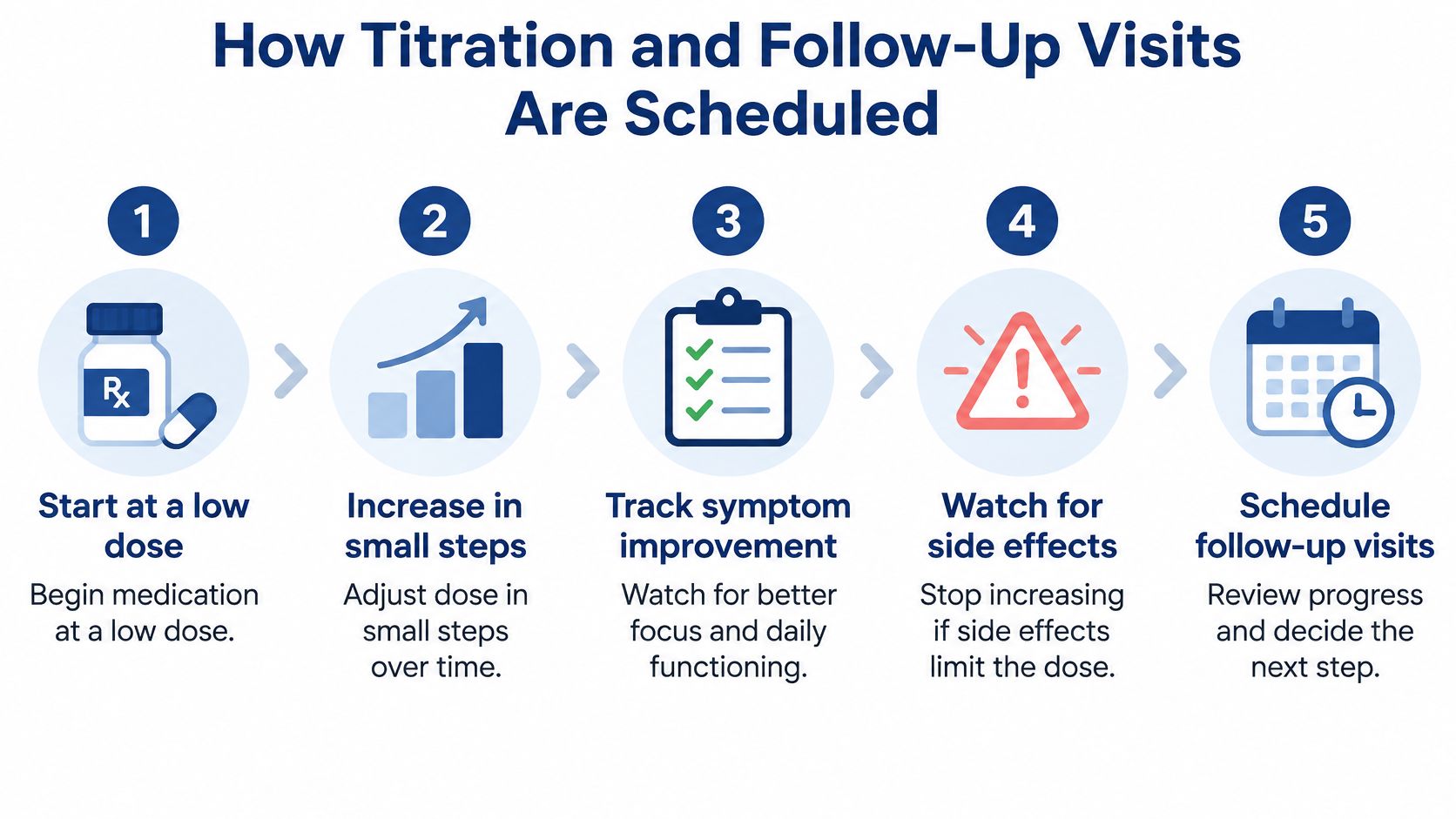
How adjustments happen
- Start low and confirm tolerability. Early observations include appetite, sleep, mood, and any uncomfortable physical symptoms.
- Adjust in small increments. The medication's labeling, formulation, response, and the patient's medical history determine the interval.
- Allow an adequate trial. NICE describes an adequate methylphenidate trial as usually about six weeks in its full ADHD guideline. This isn't a requirement to remain on an intolerable dose.
- Record benefits and adverse effects. Concrete observations, such as finishing paperwork or becoming irritable as coverage ends, are more useful than reporting better focus.
- Recheck vital signs after dose changes. The clinician reviews those measurements alongside symptoms.
- Move to maintenance follow-up once stable. Visits continue to assess benefit, safety, refill needs, and changing responsibilities.
NICE generally places methylphenidate first for children and adolescents, while adults may begin with methylphenidate or lisdexamfetamine. Adult alternatives can include atomoxetine or dexamfetamine, but the sequence depends on prior response, tolerability, and whether a medication works but doesn't provide suitable duration. U.S. treatment decisions also reflect local approvals and individual circumstances.
Typical titration and follow-up timeline
| Phase | Timing | What the clinician checks |
|---|---|---|
| Baseline | Before the first dose | Symptom targets, medical history, heart rate, blood pressure |
| Starting dose | During the initial prescribed trial | Sleep, appetite, mood, early side effects |
| Dose adjustment | At the medication-specific interval set by the prescriber | Symptom response, side effects, vital signs after changes |
| Adequate trial | After sufficient exposure at an appropriate dose | Core symptoms, daily functioning, tolerability |
| Maintenance follow-up | At scheduled reviews once stable | Ongoing benefit, refill needs, periodic vital signs |
Making follow-up visits useful
Immediate-release products may require more attention to dose timing and gaps in coverage. Extended-release products can simplify administration, but they still require careful adjustment. Release type alone doesn't determine how frequently a clinician should change the dose.
For children, parent and teacher ratings help distinguish classroom benefit from evening difficulties. Adults can compare performance during meetings, commuting, household tasks, and relationships.
Practical rule: A short timeline of what changed, when it changed, and whether the medication was taken gives the prescriber more useful information than a general impression.
Monitoring Heart Rate, Blood Pressure and Daily Function
Heart rate and blood pressure should be documented before treatment, after each dose change, and at least every six months, according to NICE's monitoring guidance. The same guidance identifies a sustained resting pulse above 120 beats per minute, arrhythmia, or a clinically significant systolic blood-pressure rise on two occasions as reasons for dose reduction and medical evaluation.
Routine electrocardiograms, or ECGs, and laboratory tests aren't necessary without a specific indication from the history or examination. An ECG records the heart's electrical activity; it isn't a substitute for discussing symptoms and family history.
Action thresholds for heart rate and blood pressure
| Reading or finding | Typical action |
|---|---|
| Sustained resting heart rate above the guideline threshold | Prescriber-directed dose reduction and medical evaluation |
| Arrhythmia | Dose review and medical evaluation |
| Clinically significant systolic blood-pressure rise confirmed on repeat assessment | Dose reduction and medical evaluation |
| Caffeine, nicotine, decongestants, recent exercise, or illicit stimulants | Document exposure and repeat under consistent conditions; don't dismiss concerning symptoms |
| Routine ECG or laboratory tests | Order when history or examination identifies a need |
Reliable measurements during telehealth care
A validated upper-arm monitor with the correct cuff size can support remote follow-up. OneTwenty's overview of blood pressure devices to consider offers a starting point for discussing equipment with the clinician.
Measurements are most useful when taken under consistent conditions. The patient sits, supports the arm, keeps feet on the floor, and records the time, reading, symptoms, and medication timing. Caffeine, energy drinks, nicotine, decongestants, and recent exercise belong in the log because they can affect interpretation.
The monitoring checklist summarizes when measurements belong in care.
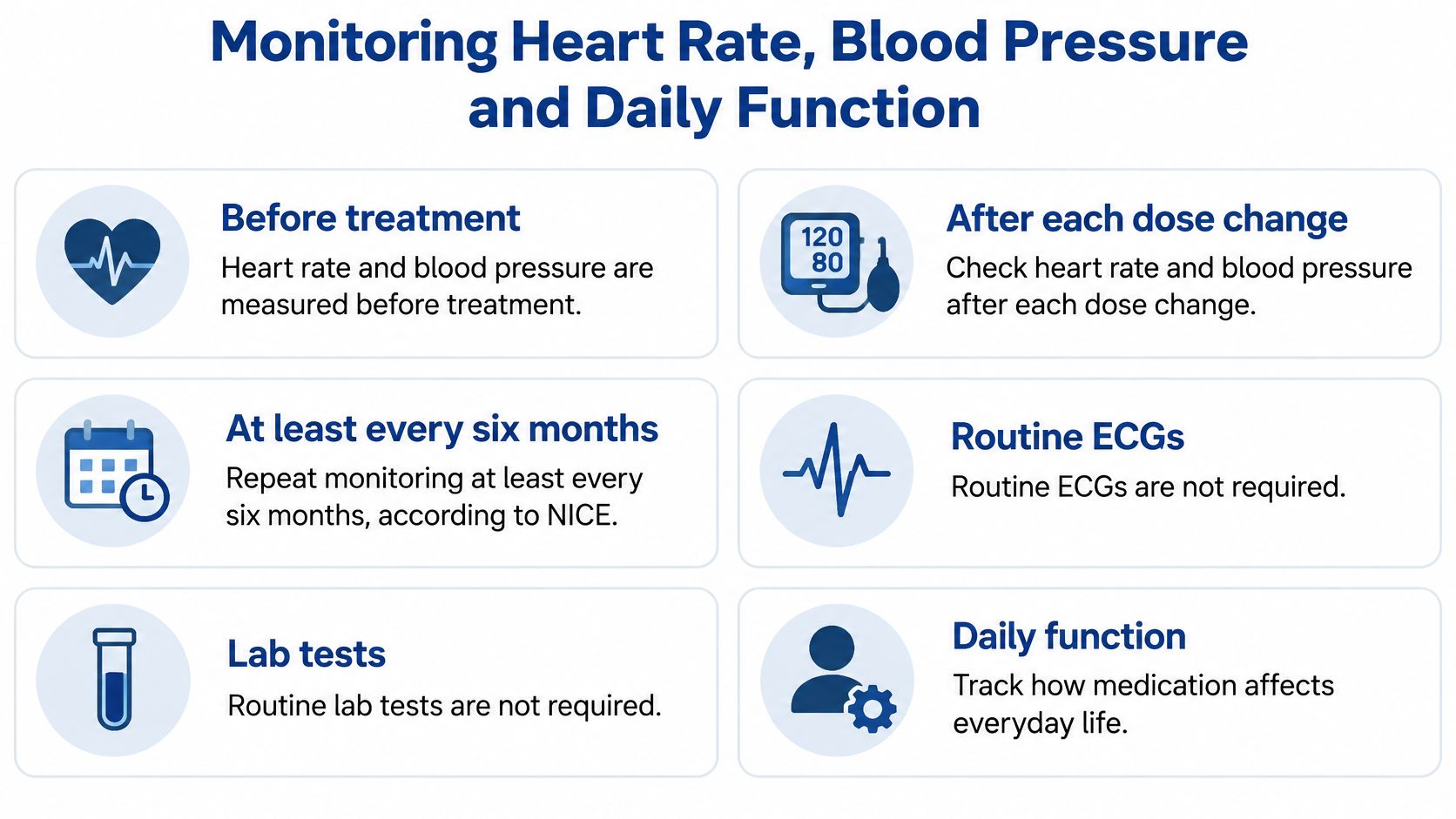
Measuring life beyond concentration
A useful daily-function log includes:
- Coverage: When benefit starts, when it fades, and whether rebound irritability occurs.
- Sleep: Difficulty falling asleep, sleep duration, and morning alertness.
- Nutrition: Appetite changes, skipped meals, and weight trends.
- Emotional health: Anxiety, low mood, irritability, or unusual activation.
- Function: Task completion, driving attention, work reliability, and relationship strain.
A patient might finish more work yet sleep poorly enough to struggle the following morning. That isn't an uncomplicated success.
Strategies for managing ADHD at work can help turn broad goals into observable outcomes. At follow-up, the clinician compares those outcomes with baseline rather than judging treatment solely by concentration.
Managing Side Effects and Co-Occurring Conditions
A side effect is information to act on, not automatically a reason to abandon treatment or continue unchanged. The prescriber considers severity, timing, duration, and whether the problem existed before medication.
Whenever possible, clinicians change a single treatment variable at a time. Otherwise, a new sleep routine, dose increase, and supplement started together can make the cause of a problem difficult to identify.
Common side effects, likely causes and typical responses
| Side effect or problem | Likely cause | Typical response |
|---|---|---|
| Reduced appetite or weight loss | Stimulant appetite suppression | Plan nourishing meals and snacks; review timing and dose |
| Trouble falling asleep | Late dosing, prolonged coverage, or an underlying sleep problem | Review sleep routine, timing, dose, or formulation |
| Late-afternoon irritability | Medication wearing off | Discuss coverage and formulation |
| Anxiety or jitteriness | Stimulant sensitivity, excessive dose, or co-occurring anxiety | Review dose and assess anxiety; consider another class |
| Headache or stomach upset | Medication effect or early adjustment | Review food instructions, hydration, persistence, and severity |
| Racing heart or blood-pressure rise | Medication-related cardiovascular effects | Measure vital signs and arrange clinical review |
| Low mood or emotional flatness | Medication effect or untreated depression | Assess mood and reconsider the regimen |
These are options for clinician review, not instructions for independent dose changes.
Balancing symptom relief and tolerability
The FDA prescribing information for lisdexamfetamine reports average blood-pressure increases of approximately 2–4 mmHg and heart-rate increases of 3–6 beats per minute. Individual changes can be larger, so averages don't replace personal monitoring.
Non-stimulants also require structured trials. Atomoxetine can cause gastrointestinal, appetite, mood, sexual, or urinary problems. Guanfacine and clonidine can cause dizziness, fatigue, and low blood pressure. Neither group offers a side-effect-free shortcut.
Anxiety, depression, sleep disorders, and substance use may change the treatment priorities. Severe depression may need attention before ADHD medication adjustment. Substance-use concerns require careful stimulant risk assessment, not automatic judgment.
IPA's explanation of overlapping anxiety, depression, and ADHD describes why symptom timing matters. For readers exploring counseling approaches, Interactive Counselling's Penticton anxiety services provide an example of anxiety-focused counseling in British Columbia, not a Pennsylvania referral or coverage recommendation.
Symptoms that shouldn't wait
Chest pain, fainting, or severe breathing difficulty warrant urgent medical evaluation. Severe mood changes, hallucinations, or suicidal thoughts require prompt clinical attention.
Safety note: In the United States, 988 connects people with suicide and crisis support. Immediate danger or a medical emergency requires emergency services rather than a routine portal message.
Why Adults Stop Taking Medication and How to Stay on Track
A 2025 study found that only about half of patients with ADHD received medication, and treated patients averaged 55.3% adherence, as reported in the Journal of Attention Disorders study. The study also linked adherence with demographic factors, depressive symptoms, and visit frequency.
Those associations don't prove why any individual missed a dose. They do challenge the assumption that inconsistent medication use reflects poor motivation. Cost, pharmacy access, side effects, depression, and insufficient follow-up can all interfere.
Separating benefit problems from tolerability problems
Inadequate benefit means the targeted difficulties remain disruptive despite taking medication as prescribed. The clinician checks whether the trial was sufficient, coverage matches the day, or another condition contributes.
Tolerability problems occur when unwanted effects make the regimen difficult to continue. Someone may concentrate better but skip doses because of nausea or emotional flatness. More medication wouldn't necessarily solve that problem.
A third possibility is a workable medication with an unworkable access process. A patient who repeatedly encounters an unavailable prescription needs coordination, not a lecture about consistency.
Telehealth discussions can help identify which problem needs attention.

Building a practical adherence plan
- Keep a brief log. Note medication taken, useful changes, unwanted effects, and reasons for missed doses.
- Prepare for refills early. Calendar reminders and pharmacy communication can reveal access problems before medication runs out. Controlled-substance rules still govern dispensing.
- Review administration demands. When midday dosing repeatedly fails, the prescriber can assess whether extended-release treatment fits.
- Schedule follow-up before the plan lapses. Clear appointment and prescription procedures reduce avoidable uncertainty.
- Discuss stopping before making a change. Symptoms may return, and certain medications require gradual reduction. Guanfacine and clonidine shouldn't be stopped abruptly without guidance.
- Use an external cue. A phone alarm or safely stored pill organizer can support the prescribed routine.
Missed-dose instructions are medication-specific. Patients shouldn't double doses or take a late dose without checking the medication instructions or contacting the prescriber.
A useful adherence plan names the clinical contact, refill process, next review, and what to do when medication is unavailable.
The plan should also record how benefit and side effects will influence a decision to continue, switch, or pause treatment.
Pairing Medication with Therapy, Lifestyle and Nutrition
Medication can reduce core ADHD symptoms, while therapy, skills, and routines address daily demands. Someone may become less distractible yet still need a system for starting laundry, preparing assignments, or remembering appointments.
Clinical guidance on ADHD care supports combining medication with behavioral and educational interventions. The useful question isn't whether medication or habits matter more. It's which barriers each part of treatment can address.
Skills that make treatment usable
Psychotherapy can address avoidance, shame, emotional reactions, and unhelpful thinking. ADHD skills coaching focuses more directly on planning, time management, and task initiation. IPA's discussion of how a psychologist can help with adult ADHD explains this distinction.
For children, behavioral parent training helps caregivers use predictable routines, clear instructions, and consistent reinforcement. Motivational interviewing helps patients clarify goals and identify barriers without treating hesitation as defiance.
A practical example is a patient who takes medication consistently but delays opening bills. Treatment might pair symptom relief with a scheduled paperwork block, a visible checklist, and support for anxiety about finances.
Habits that support the clinical plan
- Sleep timing: A consistent wake time, an evening screen cutoff, and an earlier caffeine cutoff can reduce avoidable sleep disruption.
- Movement: Regular aerobic activity may support mood, attention, and sleep. Cardiovascular concerns require a clinician-reviewed exercise plan.
- Meals: Protein at breakfast, regular meals, and planned snacks can help when appetite drops.
- Hydration: Accessible water and routine drinking opportunities can prevent busy periods from displacing basic needs.
- Supplements: Prescriber review matters because nonprescription products can interact with medications.
SleepHabits' melatonin-free sleep strategies for adults with ADHD offer additional routine ideas. Commercial sleep products shouldn't replace evaluation for persistent insomnia or sleep apnea.
An agenda, time-blocking planner, self-care tracker, or exercise planner can make a chosen habit observable. IPA's free tools include the Focus Block Planner and My Self-Care Tracker. Its Adult ADHD Screener is a screening aid, not a diagnostic test.
A manageable experiment starts with a small habit change and records whether it helps. The next appointment can address the result rather than relying on a vague intention to become more organized.
Start Online Medication Management and Check Coverage
Online ADHD medication management in Pennsylvania depends on the patient's location, clinical needs, and the provider's authorization under current rules. For IPA visits, patients must be physically located in Pennsylvania during the video appointment.
Preparation makes the evaluation more useful and helps identify coverage questions before treatment begins.

Before booking
- Confirm location: Travel or an out-of-state college address can affect whether a visit can proceed.
- Gather records: Prior evaluations, medication lists, school or work observations, and available pulse and blood-pressure readings help establish context.
- Verify benefits: Coverage for the evaluation, follow-up visits, and medication may involve separate requirements.
- Review costs: Copays, deductibles, network status, prior authorization, and step therapy differ by plan. Self-pay pricing may be relevant when insurance doesn't fit.
Patients considering Cigna, Aetna, UnitedHealthcare, Blue Cross Blue Shield, or Independence Blue Cross should verify their specific plan rather than assuming the insurer's name guarantees coverage. IPA's guide to online ADHD treatment with insurance explains the coverage questions worth resolving.
What online prescribing does and doesn't mean
Prescription stimulants are Schedule II controlled substances, and the FDA's prescription stimulant safety information emphasizes their prescribing risks and safeguards. Federal telemedicine flexibilities are scheduled to continue through December 31, 2026, subject to applicable conditions; patients should confirm the current requirements with the clinic before booking.
An online appointment doesn't guarantee a stimulant prescription. A provider may need additional records, physical measurements, medical assessment, or a different treatment approach.
IPA's care spans ages 6 through adulthood, including children, adolescents, college students, and adults throughout Pennsylvania. Board-certified psychiatric mental health nurse practitioners lead evaluations, with online prescription management when clinically appropriate.
This video provides additional context for considering virtual care.
Following evaluation, the patient portal supports messages, refill requests, and scheduling. Routine messages aren't a substitute for urgent medical care.
For prospective patients, insurance verification before booking is a practical next step. The Insurance and Fees page can help clarify the financial questions that should accompany an appointment request.
Frequently Asked Questions About ADHD Medication Management
Can patients receive ADHD medication management online in Pennsylvania?
Yes, when the patient is physically in Pennsylvania during the visit and the provider can authorize care under current rules. Clinical assessment determines whether medication and telehealth prescribing are appropriate.
Does a screening questionnaire diagnose ADHD?
No. A screener identifies symptom patterns that deserve assessment. A qualified clinician evaluates developmental history, impairment, and conditions that can resemble ADHD before making a diagnosis.
How long does ADHD medication take to work?
Stimulants often show effects within hours, while non-stimulant benefits generally develop over several weeks. A noticeable early effect isn't the same as completing a medication trial or finding the right regimen.
What happens when a patient misses doses?
The prescriber should assess the reason and provide medication-specific instructions. Cost, pharmacy shortages, unpleasant effects, and confusing routines may require different solutions. Doubling the next dose isn't a safe default.
Can children receive ADHD medication treatment?
Yes. IPA evaluates and manages ADHD for children age 6 and older when treatment is clinically appropriate. Pediatric care includes growth, appetite, sleep, cardiovascular monitoring, and feedback from caregivers and school when available.
Does insurance cover ADHD medication management?
Some plans cover evaluation, follow-up care, and prescriptions, but each benefit needs verification. Network participation, deductibles, copays, medication formularies, and authorization requirements can affect out-of-pocket costs.
Does an effective medication need ongoing review?
Yes. Changing work demands, school schedules, medical conditions, and adverse effects can alter a previously workable plan. Maintenance care checks whether treatment still provides meaningful benefit without unacceptable trade-offs.
Integrative Psychiatry of America offers ADHD evaluations and ongoing medication management through secure telehealth across Pennsylvania. Patients and families seeking a monitored, collaborative treatment plan can visit Integrative Psychiatry of America to verify insurance or request an appointment.