
A Pennsylvania adult may reach a breaking point after missing another deadline, losing important items, or struggling to finish routine tasks at home. After recognizing a pattern that seems consistent with ADHD, the next search often becomes “how to get Adderall prescribed.” That question is understandable, but it points toward the medication before establishing whether ADHD is present, whether treatment is medically appropriate, and which option fits the person's health and circumstances.
Adderall is a prescription stimulant, not a diagnostic test or guaranteed solution. A legitimate pathway starts with an ADHD evaluation, followed by a diagnosis when the evidence supports it, an individualized treatment discussion, and ongoing monitoring. Medication may be part of that plan, but an ADHD diagnosis doesn't automatically result in an Adderall prescription.
Table of Contents
- Why Adderall Is Not the Starting Point
- What an In-Depth ADHD Evaluation Includes
- Documenting Symptoms Before Your Appointment
- Stimulant and Non-Stimulant Treatment Options Compared
- What a Legitimate Telehealth ADHD Visit Looks Like
- Insurance, Prior Authorization, and Pharmacy Shortages
- Follow-Up Monitoring and Long-Term ADHD Care
Why Adderall Is Not the Starting Point
An adult in Philadelphia may describe unfinished projects, missed appointments, impulsive purchases, and tense conversations at home. Years of difficulty at work and in relationships can resemble ADHD, yet the same pattern may follow from anxiety, depression, trauma, inadequate sleep, a sleep disorder, thyroid disease, medication effects, or substance use.
A responsible visit therefore begins with the problem, not a requested stimulant. Adderall is a tightly regulated prescription stimulant, so treatment discussions must include cardiovascular health, psychiatric symptoms, medication interactions, misuse risk, and diversion. A rushed prescription can hide the cause of concentration problems or aggravate insomnia, anxiety, high blood pressure, or mood instability. The evaluation functions like a map: it helps distinguish the condition being treated from symptoms that merely look similar.
The practical principle is simple: a patient can request an ADHD evaluation, while the clinician determines whether Adderall fits the evidence, health history, and treatment goals.
Stimulant prescribing has expanded substantially in the United States. The IQVIA stimulant trends report describes growth in prescriptions dispensed and examines how documented diagnoses relate to new stimulant treatment. Those findings do not mean every appropriate patient must arrive with a recent diagnosis. They do reinforce why a symptom checklist alone cannot settle the prescription question.
A careful assessment may lead to stimulant treatment, a non-stimulant, behavioral strategies, treatment for another condition, or a combination. Adults can review stimulant and non-stimulant ADHD treatment options before discussing medication with a qualified provider. The destination is an appropriate care plan, not a particular medication.
What an In-Depth ADHD Evaluation Includes
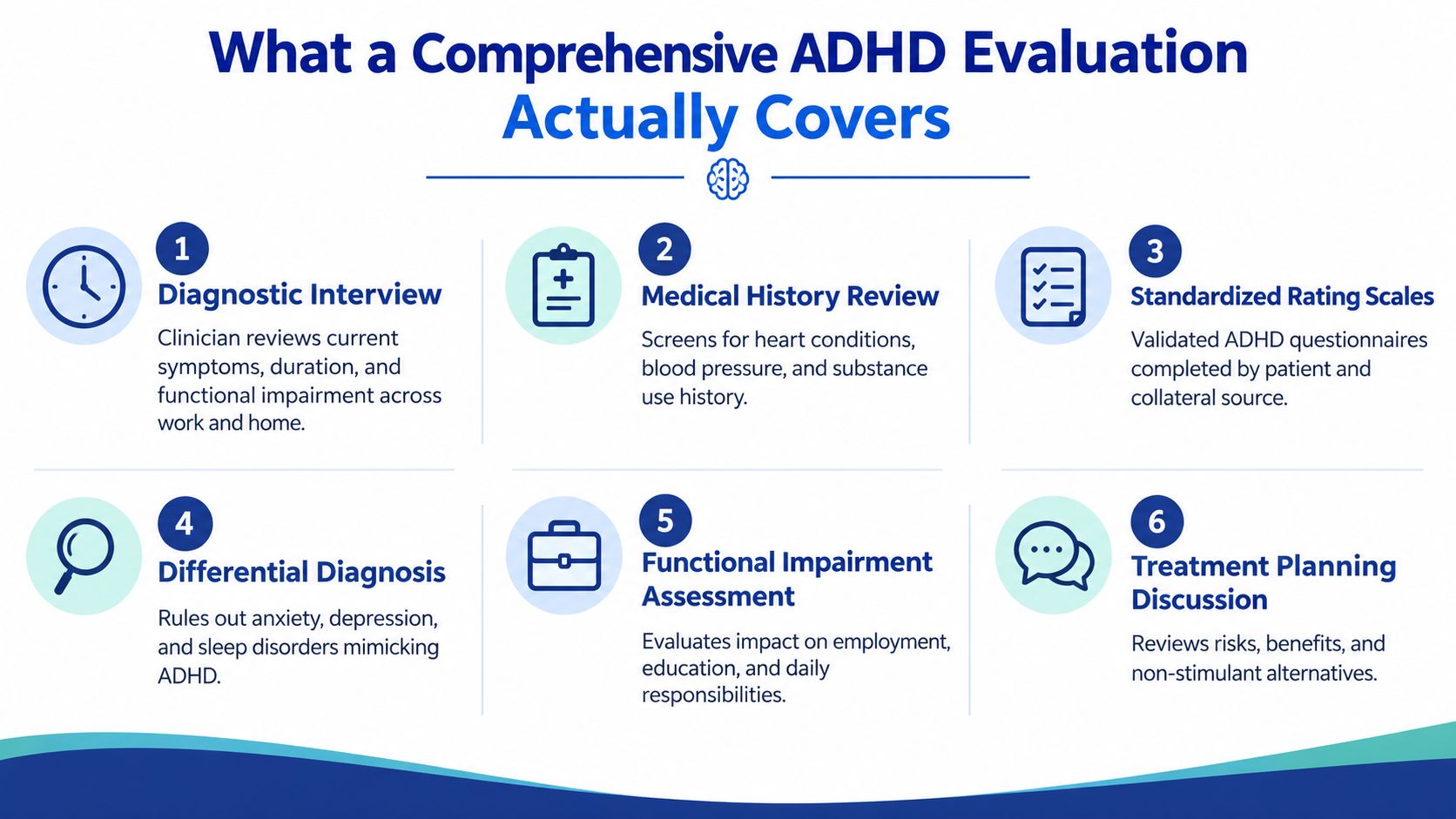
An adult ADHD evaluation is a clinical investigation, not a questionnaire followed by a medication request. It brings together an interview, diagnostic criteria, functional history, available collateral information, and review of other explanations for concentration problems. A screening tool can identify possible symptoms, but it cannot establish the diagnosis alone.
The core clinical assessment
The clinician asks when symptoms began, how they present now, and where they interfere, including work, school, relationships, driving, finances, and household responsibilities. Adult ADHD criteria require symptoms to persist for at least six months, begin before age 12, occur across at least two settings, and cause clinically meaningful impairment, according to the VA ADHD diagnostic guidance.
Childhood history helps establish whether the pattern is longstanding rather than a recent response to stress, illness, or changing demands. Report cards, teacher observations, school evaluations, IEP or 504 documentation, and family recollections can provide useful context. A partner, parent, or other informant may notice chronic lateness, unfinished chores, interruptions, or lost conversational details that the patient does not recognize.
Validated tools give the interview structure. Common examples include the Adult ADHD Self-Report Scale, or ASRS v1.1, the Wender Utah Rating Scale, or WURS, and the Conners' Adult ADHD Rating Scales. They support clinical reasoning. The clinician still has to interpret the results alongside history and impairment.
Medical and psychiatric safety review
The provider reviews medications, allergies, sleep, mood, substance use, and relevant medical conditions. Cardiovascular history, along with available blood pressure and heart rate readings, informs whether a stimulant can be considered safely. Additional medical evaluation or testing may be requested when symptoms or history warrant it.
The differential diagnosis can include anxiety, depression, bipolar disorder, trauma-related symptoms, sleep apnea, thyroid problems, anemia, or nutritional deficiencies. Laboratory testing does not diagnose ADHD, and genetic testing does not determine an appropriate Adderall dose. This review identifies factors that could change the diagnosis or make a treatment option unsafe.
A serious assessment may require substantial clinical time rather than a brief medication screen. Adults can review what the adult ADHD testing and evaluation process includes before scheduling.
The outcome is a documented clinical formulation. It may support medication, therapy, behavioral strategies, further evaluation, or a combination, with Adderall remaining one possible treatment rather than the purpose of the assessment.
Documenting Symptoms Before Your Appointment
Specific examples help clinicians distinguish persistent ADHD symptoms from temporary overload. A two-to-four-week record can capture what happens in daily life without turning the appointment into a performance.
Record the date, situation, behavior, consequence, and any relevant context. “Poor attention” gives limited information. “Missed a work deadline after opening several unrelated tabs, then needed a coworker to identify the unfinished task” gives the clinician something concrete to evaluate.
Useful entries may involve:
- Task completion: Projects started but not finished, even when the person understands the assignment.
- Organization: Lost keys, forgotten bills, duplicate purchases, or repeated searches for essential items.
- Time management: Underestimating how long a task will take or becoming absorbed in one activity while missing another obligation.
- Conversation and impulse control: Interrupting, speaking before others finish, or making decisions without considering consequences.
- Emotional regulation: Rapid frustration or strong reactions that interfere with work or relationships.
Childhood evidence can be equally valuable. Adults may gather report cards, teacher comments, IEP or 504 records, old evaluations, standardized test records, or a family member's account of early behavior. The clinical guidance cited above emphasizes childhood onset, multiple settings, functional impairment, and corroboration rather than a single adult symptom list.
The Adult ADHD Symptom Checker can help a patient organize concerns before an appointment. It remains a screening aid, not a diagnosis or a promise of medication.
Honest documentation beats persuasive presentation. Copying online symptom lists, exaggerating impairment, or presenting rehearsed answers can create uncertainty. A clinician needs an accurate history, including symptoms that don't fit ADHD and treatments that haven't helped.
A patient should also list current prescriptions, over-the-counter products, supplements, caffeine use, prior psychiatric treatment, sleep patterns, substance-use history, and relevant medical conditions. Complete information helps the provider select a safer and more precise next step.
Stimulant and Non-Stimulant Treatment Options Compared
An adult may seek help for missed deadlines and constant distraction, then assume the answer must be Adderall. A legitimate treatment discussion starts with fit, safety, and goals. Stimulants are widely used, but their popularity does not make them appropriate for every patient.
| Medication Class | Examples | Onset and Duration | Key Considerations |
|---|---|---|---|
| Methylphenidate stimulants | Ritalin, Concerta | Varies by formulation, with immediate-release and extended-release options | May affect appetite, sleep, anxiety, heart rate, and blood pressure |
| Amphetamine stimulants | Adderall, Vyvanse | Varies by formulation and individual response | Requires review of cardiovascular history, misuse risk, interactions, and adverse effects |
| Non-stimulants | Atomoxetine, guanfacine, clonidine | Often develops more gradually than stimulant effects | May suit patients with stimulant concerns, certain comorbidities, or different treatment preferences |
The choice resembles fitting a treatment to a person rather than selecting a product from a menu. Extended-release medication can provide daytime coverage with fewer doses. A clinician may prefer that approach when steadier effects are useful or when diversion concerns call for a cautious plan. The decision depends on symptoms, sleep, medical history, psychiatric history, other medications, and treatment goals.
An ADHD diagnosis does not automatically make Adderall appropriate. Cardiovascular concerns, substance-use history, significant anxiety, pregnancy considerations, previous side effects, and personal preference can change the recommendation. Some adults prefer a non-stimulant because of concerns about controlled substances. Others may need treatment for anxiety or sleep before attention problems can be assessed clearly.
Medication is one possible outcome of the evaluation, not its destination. Cognitive-behavioral therapy, organizational systems, sleep routines, exercise, skills coaching, and practical support can reduce daily impairment and may complement medication. Some patients use these strategies without medication, while others combine them with a prescription and adjust the plan as benefits and side effects become clearer.
Adults can review adult ADHD treatment options before framing the decision as Adderall versus no treatment. A careful clinician explains expected benefits, limitations, monitoring needs, and alternatives, then makes a recommendation based on the person's full history rather than the requested medication alone.
What a Legitimate Telehealth ADHD Visit Looks Like
A legitimate online ADHD evaluation resembles an in-person psychiatric assessment in its clinical depth. The provider verifies identity, Pennsylvania location, relevant medical information, and the patient's ability to participate privately through a secure platform. Telehealth availability doesn't remove the need for diagnostic documentation or safety monitoring.
What the provider evaluates
The visit may include developmental history, current symptoms, work and home impairment, school records, collateral information, standardized rating scales, psychiatric history, substance-use screening, and review of cardiovascular risks. The clinician also considers anxiety, depression, bipolar symptoms, trauma, sleep disorders, and medication effects before attributing concentration problems to ADHD.
The provider should explain the benefits and risks of possible treatments, including insomnia, appetite changes, anxiety, cardiovascular effects, misuse, and diversion. Informed consent means the patient understands that the clinician may recommend a non-stimulant, therapy, additional assessment, or no stimulant at all.
Federal controlled-substance telehealth rules remain subject to change. A 2025 DEA proposal signaled that future telemedicine prescribing of Schedule II drugs such as Adderall could become more restrictive, including a proposal that the prescriber be physically in the same state as the patient and that at least 50% of Schedule II prescriptions come from in-person visits, as discussed by Wilson Sonsini's analysis of the DEA proposal. Patients should ask a practice how current federal and Pennsylvania requirements apply to their care rather than relying on old online advice.
Secure portals, direct electronic prescribing when legally and clinically appropriate, identity checks, and a defined follow-up process are reasonable features of a professional practice. Healthcare organizations evaluating secure digital workflows can also review a healthcare AI adoption partner, although technology can't replace clinical judgment.
An online visit isn't a rushed questionnaire followed by an instant script. Pennsylvania patients should expect a real clinical conversation, clear documentation, and a decision based on evidence rather than the medication named in the appointment request. The telehealth ADHD evaluation pathway can help patients understand what questions to ask before booking.
Insurance, Prior Authorization, and Pharmacy Shortages
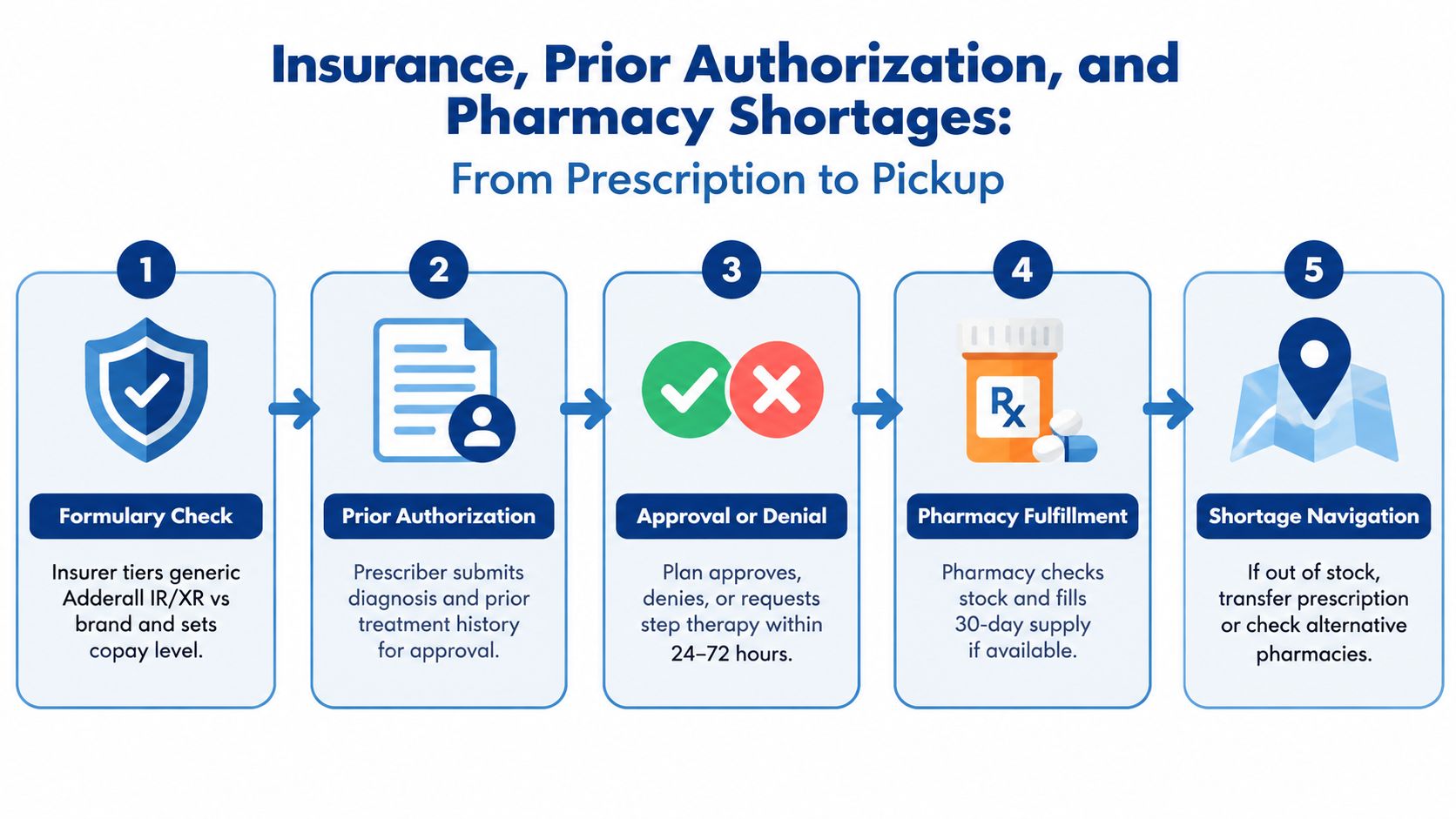
A prescription doesn't guarantee that treatment will be covered or available. Insurers apply plan-specific formularies, network rules, copays, deductibles, and prior authorization requirements. A Pennsylvania insurance guide from Integrative Psychiatry of America notes that an authorization packet may require a DSM-5 ADHD or narcolepsy diagnosis, prescriber identifiers, a dated Prescription Monitoring Program query, and documentation that generic mixed amphetamine salts was tried or is contraindicated.
Coverage and authorization questions
Before the appointment, patients can verify whether the clinician is in network and whether the plan covers ADHD evaluation, medication management, and telehealth. Cigna, Aetna, UnitedHealthcare, and BCBS or IBX plans can differ by employer, product, location, and benefit design, so a general statement about coverage can't replace plan verification.
Prior authorization may ask for diagnostic documentation, previous treatment history, or a specific formulary sequence. If the plan denies a request, the prescriber or patient can ask what information is missing and review the plan's appeal process. A pharmacy benefit decision can also change when the prescriber selects a different formulation.
When the pharmacy can't fill it
Research reports that ADHD medication shortages began in October 2022 and continued to affect mixed amphetamine salts, lisdexamfetamine, and methylphenidate as of May 2025, with availability varying by strength and pharmacy, according to this peer-reviewed shortage analysis. A patient shouldn't change the dose, split tablets, or substitute products without prescriber approval.
The practical response is to ask the pharmacist about available strengths, contact the prescriber about clinically suitable alternatives, and clarify whether the prescription can be transferred under applicable rules. A written prescription is only one part of access. Coverage, inventory, formulation, and communication all determine whether treatment begins.
Follow-Up Monitoring and Long-Term ADHD Care
Starting medication is the beginning of treatment, not the conclusion of the evaluation. The provider and patient need to determine whether the treatment improves function, whether adverse effects appear, and whether the diagnosis and treatment plan still fit the patient's changing circumstances.
What follow-up monitoring includes
Adult ADHD guidance commonly recommends checking blood pressure, heart rate, and weight at baseline and after dose changes, followed by periodic reassessment every six months, as summarized in adult ADHD monitoring guidance. Clinicians also ask about appetite, sleep, anxiety, mood, tics, palpitations, headaches, and the duration of benefit.
Early follow-up may occur sooner when a medication is being adjusted. The exact schedule depends on the treatment, clinical risk, response, and practice policy. Controlled-substance prescribing may include prescription monitoring review, medication reconciliation, adherence questions, and additional safety measures when clinically indicated. Urine testing or pill counts aren't universal, but a practice may use them when the clinical situation warrants that level of monitoring.
Measurement-based care can make follow-up more concrete. Repeated ADHD symptom measures, such as the ASRS, may be paired with assessments of anxiety or depression, including the GAD-7 or PHQ-9, when those symptoms affect concentration or functioning. The most useful outcome isn't whether the medication “feels stronger.” It's whether the patient is reliably completing responsibilities with acceptable side effects and a sustainable routine.
Monitoring should function as a safety net, not a punishment. Openly reporting missed doses, side effects, worsening anxiety, sleep disruption, or difficulty obtaining medication gives the clinician information needed to adjust care safely.
Pennsylvania patients should also ask how the practice handles Prescription Drug Monitoring Program checks, refill requests, pharmacy shortages, travel, and missed appointments. A Pennsylvania summary of telehealth rules notes that nurse practitioners require a physician collaborative agreement in the state, and that Schedule II supplies are limited to 30 days, with physician approval needed for continuation beyond that period, as described in this Pennsylvania PMHNP prescribing guide. Rules and practice arrangements can change, so patients should confirm current requirements directly with the provider.
Why therapy remains relevant
Medication can reduce symptoms, but it doesn't automatically teach planning, prioritization, emotional regulation, or repair of years of disrupted routines. Cognitive-behavioral therapy for adult ADHD can target procrastination, time management, avoidance, and negative self-beliefs. Skills-based coaching may help translate treatment gains into calendars, task systems, environmental changes, and realistic habits.
Therapy also becomes important when anxiety, depression, trauma, relationship conflict, or substance-use concerns contribute to impairment. Treating only attention symptoms may leave the main source of distress untouched. An integrative plan can include medication management, psychotherapy, sleep and exercise support, and practical behavioral tools when clinically appropriate.
A practical Pennsylvania checklist
The following sequence helps an adult prepare without treating Adderall as the destination:
- Start with honest evidence. Complete the ASRS-5 or another screening tool, then keep two weeks of notes tied to work, driving, finances, household tasks, and relationships.
- Collect developmental records. Locate report cards, teacher comments, IEP or 504 materials, and contact information for a family member or partner who can provide collateral history.
- Review coverage. Check whether the insurer lists a behavioral health network and ask about evaluation, telehealth, medication management, deductibles, copays, and authorization.
- Compare practices carefully. Look for Pennsylvania providers who perform adult ADHD evaluations rather than advertising same-day stimulant prescriptions.
- Confirm the telehealth pathway. Ask whether intake and follow-ups can occur online, whether the clinician can legally prescribe Schedule II medication in the patient's jurisdiction, and how the practice handles controlled-substance rules.
- Ask about monitoring. Confirm whether the practice reviews vital signs, queries the Pennsylvania Prescription Drug Monitoring Program, tracks symptoms and function, and schedules follow-up after treatment changes.
- Schedule with realistic expectations. A thorough intake may involve substantial clinical discussion, collateral history, and review of records. Medication is a possible outcome, not a guarantee.
Red flags deserve attention. A clinic that promises Adderall before evaluating the patient, skips identity verification, offers medication after a superficial questionnaire, avoids questions about medical history, or discourages follow-up isn't offering responsible care. Patients should also be cautious when a practice treats a screening score as a diagnosis or presents genetic testing as a way to determine the correct stimulant dose.
The legitimate answer to how to get Adderall prescribed is not to persuade a clinician to approve a named medication. It's to obtain a careful evaluation, share accurate information, consider the full range of treatments, and participate in follow-up that protects both effectiveness and safety.
Integrative Psychiatry of America provides secure virtual psychiatric care across Pennsylvania, including ADHD evaluation and individualized medication management when clinically appropriate. Adults can review the practice's services, verify insurance, and request an appointment through Integrative Psychiatry of America.