
Finding Your Focus: Navigating Adult ADHD Care in Philly
The search often starts with a quiet frustration. A missed deadline at work, a half-finished project at home, or the nagging feeling that daily tasks require far more effort than they should. For many adults in Philadelphia, typing “best psychiatrist Philadelphia ADHD” into a search bar is a mix of hope and overwhelm. They aren't just looking for a name. They're looking for the right fit.
The right fit usually means more than someone who can prescribe. It means a clinician or practice that understands adult ADHD, explains the diagnostic process clearly, and offers care that can effectively work with a busy life. For some people, that means telehealth from home in Philadelphia, Pittsburgh, Harrisburg, Erie, Scranton, Allentown, Lancaster, or Reading. For others, it means an academic center, a solo clinician, or a practice that combines medication with therapy and lifestyle support.
This guide gets to the point. It compares leading ADHD care options serving Philadelphia and wider Pennsylvania so patients can match the provider to the problem, not just pick the first name on a directory. Readers who also want practical daily support can pair treatment with brain-friendly ADHD productivity strategies.
Table of Contents
- 1. Integrative Psychiatry of America
- 2. Penn Medicine – Adult ADHD Treatment and Research Program
- 3. Rittenhouse Psychiatric Associates
- 4. ADHD Philadelphia
- 5. Children's Hospital of Philadelphia CHOP – Center for Management of ADHD
- 6. Robert F. McFadden, MD
- 7. LifeStance Health – Philadelphia Greater Philly
- Top 7 Philadelphia ADHD Providers Comparison
- Your Next Step How to Book Your ADHD Evaluation
1. Integrative Psychiatry of America
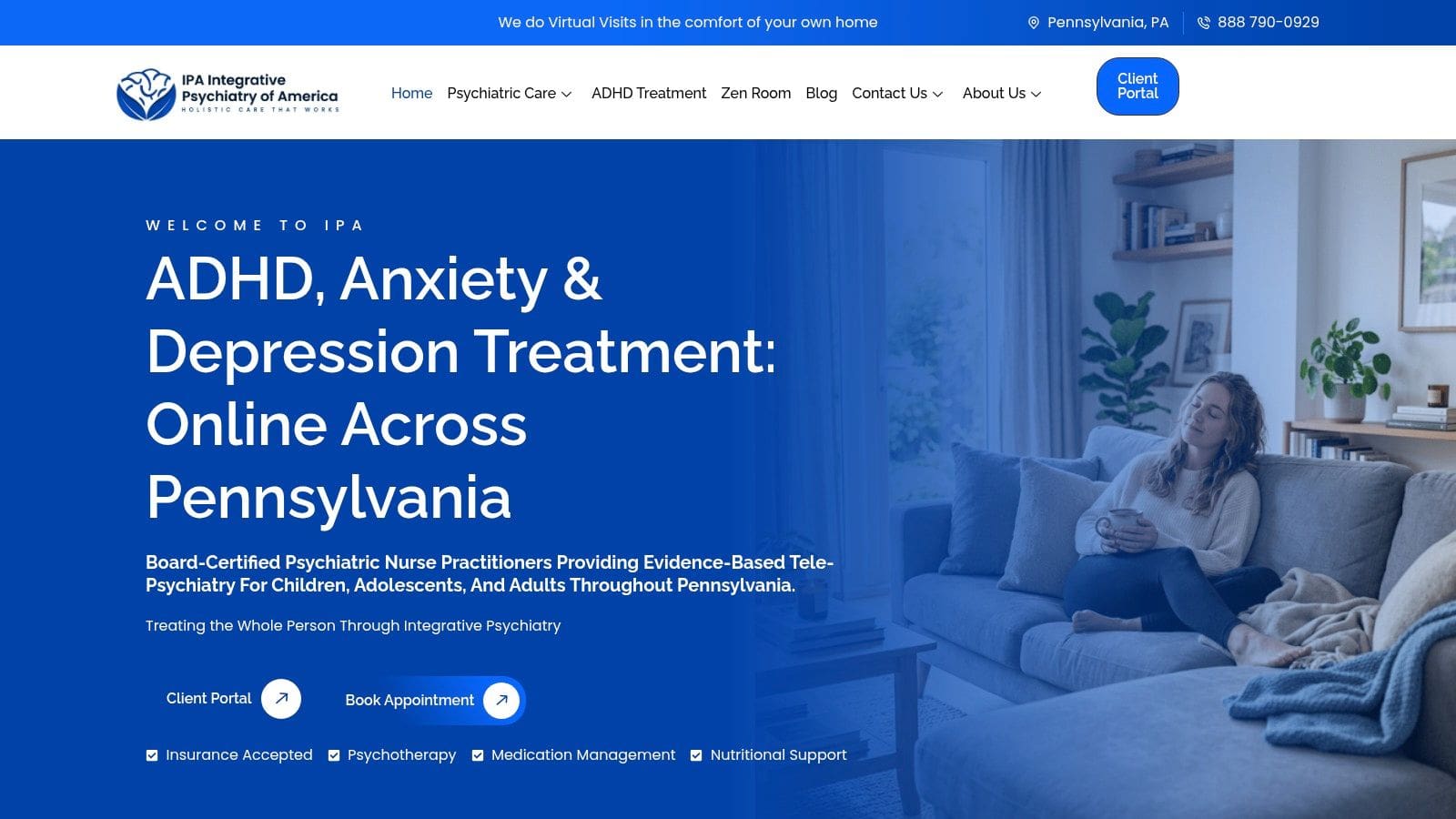
Integrative Psychiatry of America is the strongest fit for many adults who want ADHD care that's convenient, clinically structured, and broader than prescription-only treatment. The practice is Pennsylvania-based, serves patients statewide by secure telehealth, and works with adults, adolescents, and children ages 6 and up. That matters for families who want one practice that can support more than one household member.
The clinical style is whole-person rather than narrow. Medication management is available, but so are psychotherapy, nutritional guidance, exercise counseling, mindfulness support, and clinical decision-making around labs or genetic screening when appropriate. For patients who want to discuss alternatives before jumping straight to stimulants, the practice also speaks directly to non-stimulant ADHD treatment options.
Why it stands out
The practice is led by Christopher Clark, PMHNP-BC, a board-certified psychiatric nurse practitioner with more than 23 years in clinical care. The model is virtual-first, which aligns with how many adults now prefer to access treatment. In 2023, 46.0% of U.S. adults with ADHD reported receiving telehealth services for their condition, according to CDC reporting on adult ADHD telehealth use.
Telehealth only works well when the evaluation is thorough. Adult ADHD telepsychiatry is considered diagnostically equivalent to in-person assessment when it includes a detailed live clinical interview, validated rating scales, collateral information, and behavioral observation during the video visit, as described in that same CDC-linked report. Integrative Psychiatry of America's telehealth format fits what many patients in Philadelphia and across Pennsylvania are actively seeking, which is privacy, flexibility, and a real assessment rather than a rushed medication stop.
Practical rule: For adult ADHD, the better question isn't “Can this practice prescribe?” It's “How does this practice evaluate?”
Best fit and trade-offs
This is a strong option for adults who want same-week virtual availability, a HIPAA-compliant portal for refills and messaging, and care that can also address anxiety, depression, OCD, PTSD, weight concerns, or substance use. The broader clinical menu is useful because ADHD rarely shows up in isolation in real life.
Key trade-offs are straightforward:
- Best for convenience: All visits are virtual, which is ideal for many patients across Philadelphia and statewide Pennsylvania.
- Best for integrative care: Patients who want medication plus therapy-informed and lifestyle-informed planning usually find more flexibility here than in medication-only settings.
- Possible limitation: Anyone who strongly prefers office visits or needs hands-on medical testing may need local in-person support as part of care.
- Insurance note: The practice accepts many major plans and also offers cash and membership options, but patients should still verify benefits before booking.
For readers comparing the best psychiatrist Philadelphia ADHD options, this is the clearest telehealth-first choice for complete care rather than a single-service ADHD lane.
2. Penn Medicine – Adult ADHD Treatment and Research Program
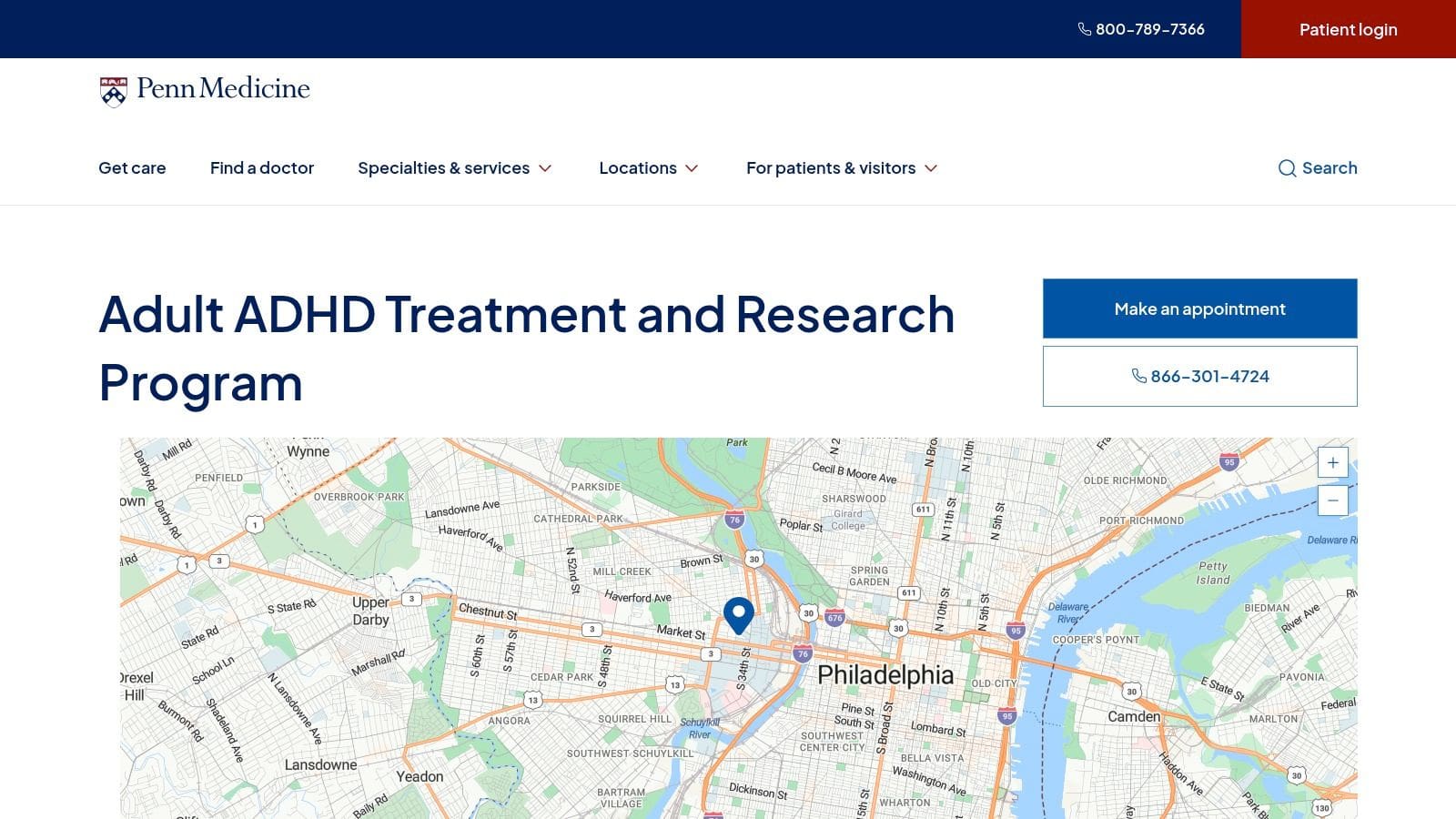
Some patients want an academic medical center because they trust depth, subspecialty access, and established hospital systems. Penn Medicine's Adult ADHD Treatment and Research Program fits that preference well. It offers evaluation, diagnosis, and ongoing medication management in University City through a dedicated adult-focused clinic.
This option is especially appealing for adults with complicated histories, unclear diagnoses, or multiple overlapping concerns. That's important because adult ADHD can be misread when clinicians don't carefully screen for anxiety, depression, trauma, and other lookalike conditions. A documented concern in Philadelphia-area ADHD coverage is that many listings emphasize medication management without clearly explaining how structured assessment is done, and adults often need more clarity on the full range of ADHD treatment options for adults.
Where it fits best
Penn's biggest strength is system depth. Patients can access a large academic environment with multidisciplinary resources and, in some cases, research opportunities. That can be reassuring for people who want care anchored in a major medical institution rather than a smaller private practice.
The trade-off is the one many patients already expect from large systems. Demand can be high, and the experience may feel less personal than a smaller practice with direct clinician continuity.
Large academic programs are often the best fit when diagnosis is complex, not when speed is the top priority.
Adults who want central Philadelphia access, hospital-based resources, and a clinic specifically focused on adult ADHD should keep Penn near the top of the list. Adults who want faster scheduling, more day-to-day communication, or a more integrative style may lean elsewhere.
Direct practice site: Penn Medicine Adult ADHD Treatment and Research Program
3. Rittenhouse Psychiatric Associates

Rittenhouse Psychiatric Associates works well for patients who don't want to split care across multiple offices. The practice includes physicians, psychiatric nurse practitioners, and therapists, and it offers evaluations, medication management, psychotherapy, and neuropsychological testing. For patients in Philadelphia and the Main Line, that range can simplify care.
One practical advantage is flexibility of format. The practice offers both in-office and telehealth appointments, which helps patients who want occasional in-person contact but still need the convenience of virtual follow-up. That hybrid setup is often useful when symptoms overlap with stress-related conditions or when patients are also trying to untangle ADHD and anxiety in adults.
Who tends to do well here
This practice tends to fit families and adults who value continuity between therapy and medication. Instead of finding a prescriber in one place and a therapist somewhere else, patients can often stay inside one system. That's especially helpful when functional problems show up across work, relationships, sleep, and mood.
The main downside is financial. Rittenhouse Psychiatric Associates is primarily self-pay and out-of-network, so patients usually need to seek reimbursement through superbills rather than rely on direct insurance billing.
A few points matter when comparing it with other options:
- Strong for combined care: Therapy and medication can be coordinated within one practice.
- Strong for lifespan care: Children, adolescents, and adults can all be seen.
- Less ideal for tight budgets: Out-of-network costs can add friction even when the clinical care is strong.
For patients who want a polished private-practice environment and broad behavioral health services under one roof, this is a solid Philadelphia option.
Direct practice site: Rittenhouse Psychiatric Associates
4. ADHD Philadelphia
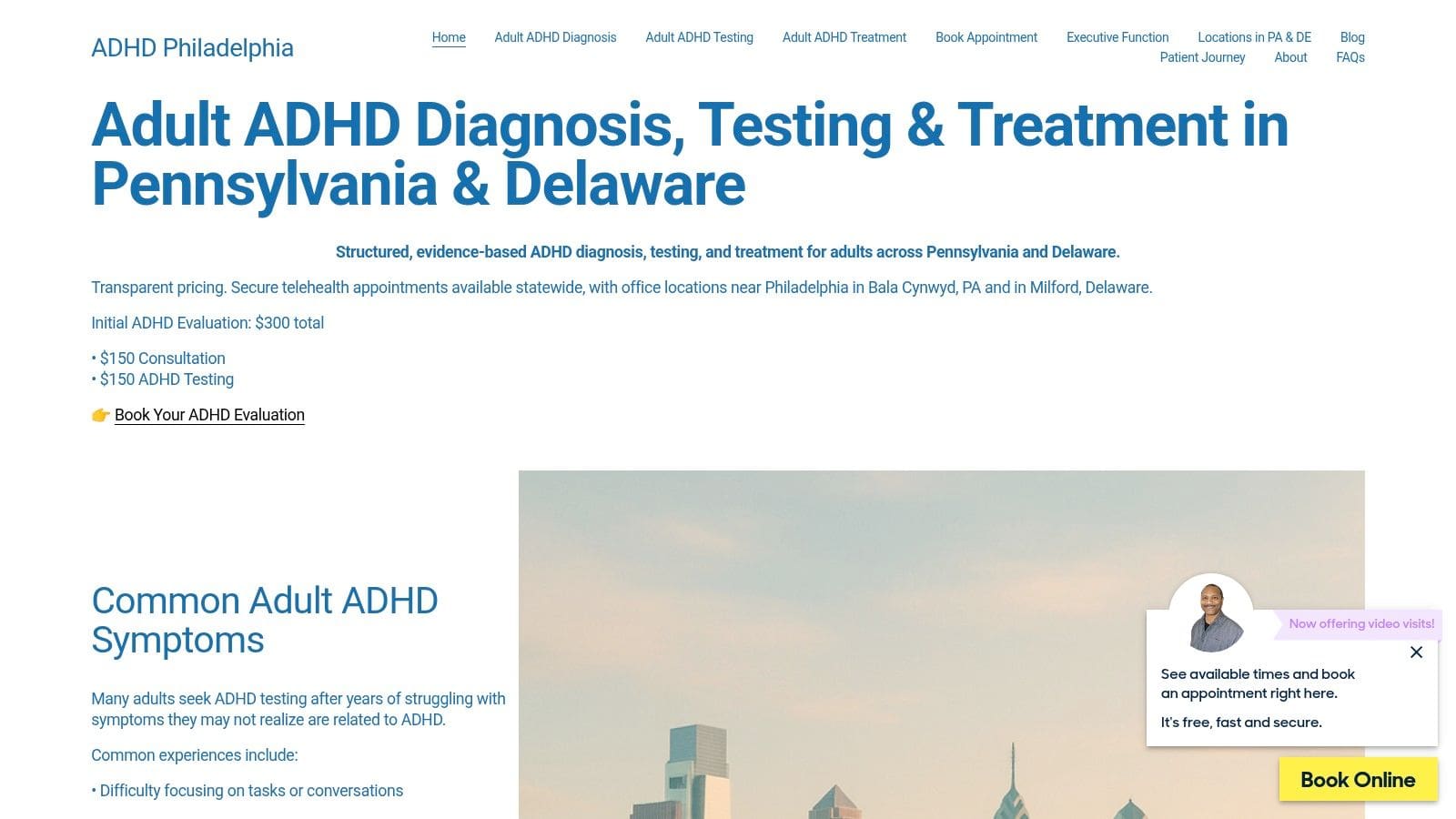
ADHD Philadelphia takes the opposite approach from broad general psychiatry groups. It stays narrow and adult-focused. That's often exactly what working adults want when they're tired of generic mental health directories and want an efficient process built around one problem.
The appeal is clarity. The practice focuses on adult ADHD diagnosis, testing, and medication management, with a Bala Cynwyd office and telehealth for Pennsylvania. For adults trying to understand the steps before a first appointment, it helps to review a plain-language guide on how to get an ADHD diagnosis as an adult.
What makes it different
Pricing transparency is one of the most useful features here. Posted flat fees reduce one layer of uncertainty for patients who are comparing private options. The workflow is also structured around adult follow-up rather than child and family care.
That said, narrow scope cuts both ways. A focused ADHD clinic may be ideal for straightforward evaluation and follow-up, but patients with significant depression, trauma, OCD, substance use, or more complex diagnostic questions may still need additional care elsewhere.
Patients who already suspect ADHD and want a focused adult workflow often prefer specialty clinics. Patients with multiple competing diagnoses usually need broader psychiatric support.
This is a practical pick for adults who want a specialty lane, telehealth availability, and predictable out-of-pocket planning.
Direct practice site: ADHD Philadelphia
5. Children's Hospital of Philadelphia CHOP – Center for Management of ADHD
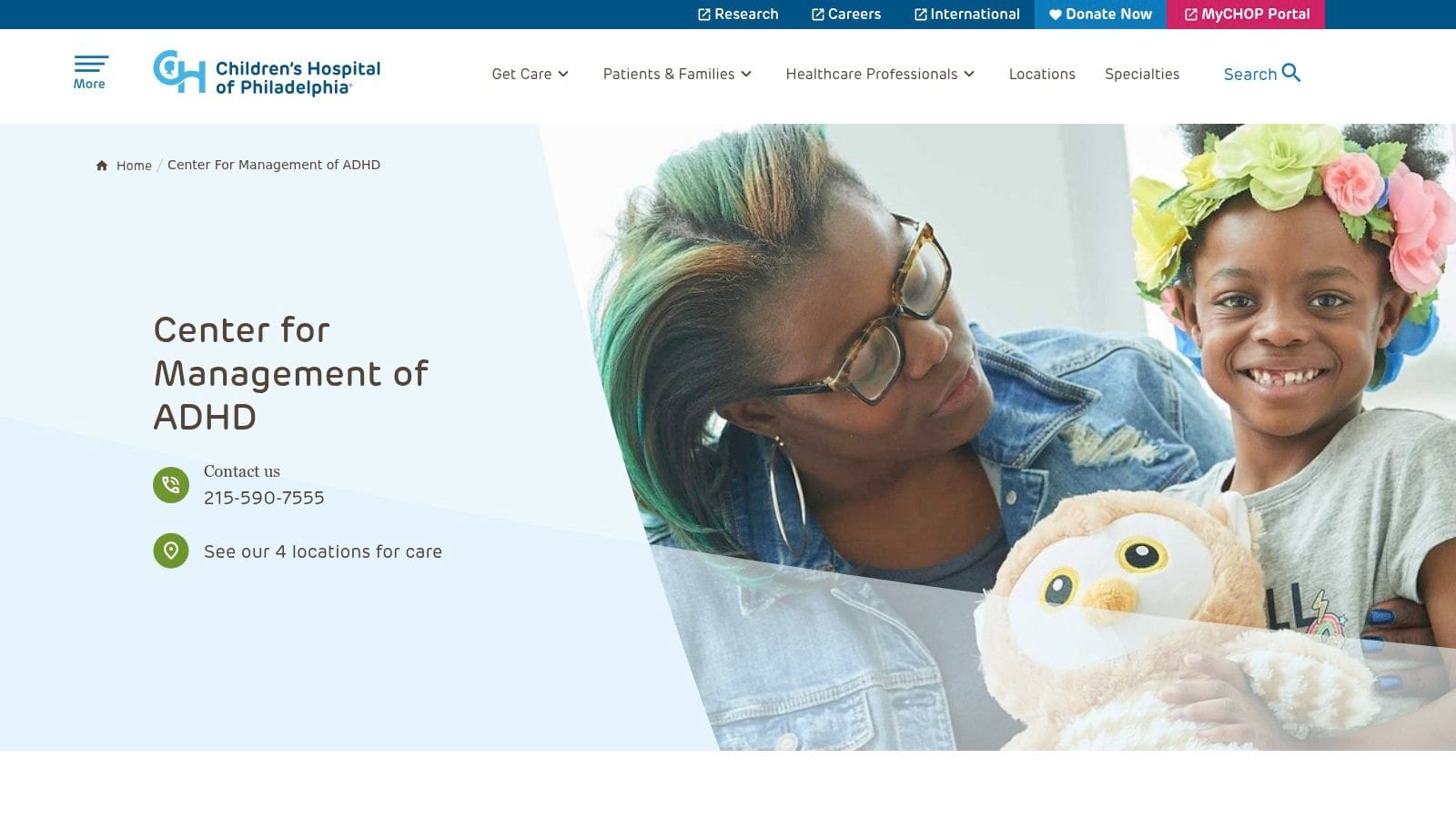
CHOP is the clear pediatric specialist on this list. It serves children and teens ages 4 to 18 and offers thorough ADHD evaluation, medication consultation and management, family behavior therapy, and parent training through a multidisciplinary team. For parents in Philadelphia, that depth is hard to match.
The broader need is significant. An estimated 7 million U.S. children ages 3 to 17, representing 11.7% of the population, have a current ADHD diagnosis based on CDC national parent survey data, and treatment access varies widely across states, according to CDC ADHD data on children and treatment patterns. That makes specialized pediatric programs valuable, especially when families need more than medication alone.
Best use case
CHOP is best for children who need full-spectrum pediatric ADHD care with behavioral support built in. Parents who want evidence-based family programs, developmental expertise, and access to a large children's hospital often feel more comfortable here than in a general outpatient office.
The limitation is simple. This is not an adult program. It also has the same challenge seen in many high-demand specialty centers, which is that families may wait longer for appointments than they would at smaller private practices.
For Pennsylvania families who want child-focused ADHD care with strong behavioral and parent-training support, CHOP remains one of the most established options in the region.
Direct practice site: CHOP Center for Management of ADHD
6. Robert F. McFadden, MD
Some adults don't want a team-based practice at all. They want one clinician, one relationship, and one treatment philosophy from start to follow-up. Robert F. McFadden, MD, fits that preference as a solo board-certified psychiatrist in Center City Philadelphia offering ADHD evaluations, psychotherapy, and medication management.
The practical appeal of a solo practice is continuity. The same clinician who reviews the history, reads the assessment forms, and talks through medication choices can also carry the therapy work. For adults who dislike repeating their story, that consistency matters.
Why some adults prefer a solo practice
Dr. McFadden's practice includes CBT and psychodynamic psychotherapy alongside medication management, and it provides downloadable ADHD assessment materials before the visit. That pre-visit structure can make the first appointment more focused and more useful.
There's a trade-off, and it's common in solo private practice. The model is self-pay and out-of-network, and appointment availability may be tighter than in larger groups.
A good fit often looks like this:
- Best for personalized continuity: One physician follows the case directly.
- Best for therapy-minded adults: Patients who want more than medication often prefer this format.
- Less ideal for insurance-first searches: Out-of-network billing can be a barrier.
For adults comparing the best psychiatrist Philadelphia ADHD options and prioritizing a consistent one-clinician relationship, this is a credible choice.
Direct practice site: Robert F. McFadden, MD
7. LifeStance Health – Philadelphia Greater Philly
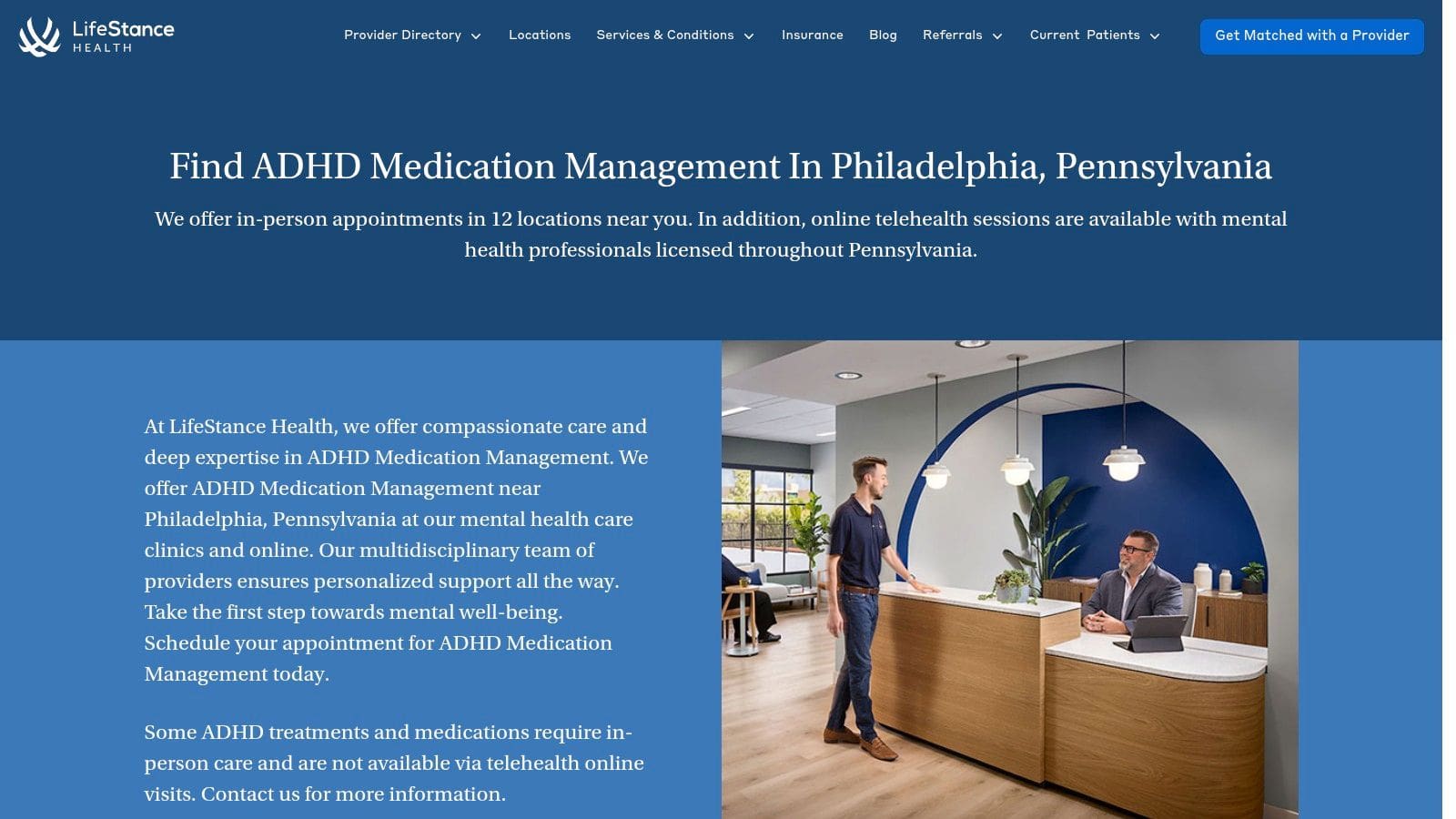
LifeStance Health is the large-network option on this list. For some patients, that's the advantage. Multiple clinics, telehealth availability, online booking, and broad insurance participation can reduce the friction that often stops people from getting evaluated at all.
The service mix includes ADHD medication management for adults and children, therapy, and psychological testing. Patients who want a recognizable brand with multiple site choices across the Philadelphia area often find this simpler to approach than searching one-off private practices. People specifically comparing virtual prescribing workflows can also review how online ADHD medication management typically works in Pennsylvania.
When a large network helps
Large groups are often strongest on access. That's useful because ADHD care demand is high, and virtual care has become a normal part of treatment. Patient satisfaction with telepsychiatry for ADHD care is described as high, and telepsychiatry has been reported as equivalent to in-person care across diagnostic accuracy, treatment effectiveness, quality of care, and satisfaction in Qbtech's review of telepsychiatry and ADHD care.
The trade-off with any large network is variation. One clinician may be excellent and highly structured, while another may be more generalist or have different policies about in-person requirements for certain medications. Patients should look at the individual provider profile, not just the company logo.
The biggest mistake in large groups is assuming every clinician practices the same way. They don't.
For patients who want insurance-friendly access, multiple Philadelphia-area options, and a large outpatient system, LifeStance is a sensible name to compare.
Direct practice site: LifeStance Health ADHD services in Philadelphia
Top 7 Philadelphia ADHD Providers Comparison
A comparison table is only useful if it helps you choose based on your actual constraints. The better question is not which name looks most impressive. It is which model fits your age, symptom complexity, budget, need for medication follow-up, and preference for telehealth versus office visits.
| Service | Care Model and Practical Trade-offs | Best Fit For | Key Strengths | Watch For |
|---|---|---|---|---|
| Integrative Psychiatry of America | Telehealth-first psychiatric care for Pennsylvania patients, with medication management and added options such as labs or genetic testing when clinically appropriate. Easier to access from home, but some patients still prefer face-to-face visits. | Adults and teens who want virtual ADHD care with a broader psychiatric lens and faster scheduling | Telehealth convenience, insurance-friendly setup, individualized treatment planning, same-week availability in many cases | Virtual care may feel less ideal for patients who strongly prefer in-person rapport or need local hands-on services |
| Penn Medicine – Adult ADHD Treatment and Research Program | Academic adult ADHD program with a higher level of structure and subspecialty depth. Strong choice for diagnostic uncertainty, overlapping conditions, or cases that may benefit from research access. | Adults with complex presentations, prior treatment failures, or interest in an academic center | Strong diagnostic depth, access to specialist input, research-informed approach | Wait times, more system complexity, and less flexibility than a smaller practice |
| Rittenhouse Psychiatric Associates | Private group practice with both therapy and medication services, plus in-person and telehealth options depending on clinician. This can be helpful if you want care under one roof. | Patients who want combined therapy and prescribing, especially those who value office-based care | Mixed clinician types, psychotherapy access, neuropsychological testing options | Fit can vary by clinician, and cost matters if you are mainly using out-of-network benefits or self-pay |
| ADHD Philadelphia | Adult-focused ADHD practice with a direct evaluation path and flat-fee pricing. The appeal is clarity and efficiency rather than broad general psychiatry. | Working adults who want posted pricing, a focused process, and ADHD-centered care | Transparent fees, focused adult ADHD workflow, predictable follow-up structure | Narrower scope may mean referrals elsewhere for significant anxiety, depression, trauma, or other comorbid concerns |
| CHOP – Center for Management of ADHD | Large pediatric ADHD program built around children, teens, and families. This model works well when school issues, parent coaching, and developmental history all need attention. | Children ages 4 to 18 who need structured pediatric ADHD assessment and family-centered treatment | Strong pediatric expertise, parent training, research access, coordinated support across common childhood needs | Large-system logistics, and it is not designed for adults seeking their own ADHD evaluation |
| Robert F. McFadden, MD | Solo psychiatrist model with direct physician continuity. Patients who value seeing one clinician over time often prefer this setup. | Patients who want a single doctor for medication care and psychotherapy | High continuity, personalized care, direct relationship with one clinician | Limited appointment capacity and fewer built-in backup options than a group practice |
| LifeStance Health – Philadelphia/Greater Philly | Large outpatient network with multiple locations, telehealth options, and insurance-based access. A practical option if availability and network coverage are major factors. | Patients who want quicker access, broad geographic coverage, and insurance-friendly scheduling | Many clinicians, several sites, telehealth availability, easier entry point for routine outpatient care | Quality and style can differ meaningfully from one clinician to another, so the individual provider choice matters |
The key differences are practical.
If you are an adult with a busy work schedule, telehealth-first options often feel easier to sustain. If the case is more complex, such as ADHD mixed with mood symptoms, substance use questions, trauma history, or prior medication problems, an academic or more broadly psychiatric setting may be worth the extra effort. If you want one psychiatrist who knows your history in detail, a solo practice can be a better fit than a large network.
For children and teens, the calculation changes. Pediatric ADHD care often works best in settings that can address school feedback, parent coaching, behavioral treatment, and developmental context, which is why CHOP stands apart from the adult-oriented options in this list.
That is the true use of a comparison table. It helps you sort by fit, not just reputation.
Your Next Step How to Book Your ADHD Evaluation
Choosing the right provider is the most important step toward managing ADHD. Philadelphia and the wider Pennsylvania region offer very different models of care, and that's a good thing. Some adults need the depth of an academic clinic. Some want a narrow adult ADHD specialty practice. Some want one solo clinician. Many want telehealth that's private, structured, and easier to fit into work and family life.
The most useful comparison isn't prestige. It's fit. Patients should ask whether the practice explains its diagnostic process, screens carefully for overlapping conditions, offers a treatment style that matches personal goals, and provides follow-up that feels sustainable. For telehealth searches in particular, another detail matters. Pennsylvania adult ADHD evaluations often require documentation of childhood clues such as report card comments, teacher concerns, or family observations of long-standing disorganization, not just current symptom checklists, as described by Integrative Psychiatry of America's overview of adult ADHD evaluation in Pennsylvania.
For adults looking for convenient, full-spectrum, and compassionate statewide care, a virtual-first model often makes the most sense. Integrative Psychiatry of America provides ADHD evaluations, medication management, and evidence-informed treatment throughout Pennsylvania, including Philadelphia, Pittsburgh, Harrisburg, Erie, Scranton, Allentown, Lancaster, and Reading. Patients who want a starting point before booking can use the practice's Adult ADHD Assessment, and those managing related stress or anxiety may also benefit from tools such as the Anxiety Symptom Checker, Daily Agenda Planner, Feeling Journal, Exercise Routine Generator, and 5-4-3-2-1 Grounding Tool available through the practice.
Insurance questions are often part of the decision, too. Readers sorting through costs and coverage can review how to interpret your medical bills. The next practical step is simple. Verify insurance, review treatment options, and schedule a confidential evaluation with a practice that offers a real diagnostic process and a treatment plan built for daily life.
Integrative Psychiatry of America offers secure virtual psychiatric evaluations, medication management, and integrative mental health treatment across Pennsylvania. Adults seeking ADHD care in Philadelphia and statewide can schedule an appointment with Integrative Psychiatry of America, verify insurance coverage, or explore supportive tools to take the next step with more clarity and less overwhelm.