
A lot of adults in Pennsylvania arrive at the same unsettling question after years of pushing through. They miss deadlines even when they care greatly about the work. They feel mentally restless at night but frozen when it's time to start a task. They try planners, alarms, caffeine, and sheer effort, yet they still feel behind. Then the worry starts. Is it anxiety? Is it ADHD? Is it both?
That confusion is common, and it often delays the right treatment. In Philadelphia, Pittsburgh, Harrisburg, Erie, Scranton, Allentown, Lancaster, Reading, and smaller communities across the state, many adults are trying to sort this out while also managing work, parenting, school, or caregiving. The practical problem isn't just naming symptoms. It's figuring out what is driving them, and then getting treatment that is fitting.
Table of Contents
- The Hidden Struggle for Adults in Pennsylvania
- Why ADHD and Anxiety So Often Overlap
- Untangling Symptoms Is It ADHD or Anxiety
- How to Get a Clear Diagnosis in Pennsylvania
- Evidence-Based Treatments for Co-Occurring Conditions
- An Integrative Approach for Lasting Wellness
- Accessing Care and Taking Control in PA
- Frequently Asked Questions About ADHD and Anxiety
The Hidden Struggle for Adults in Pennsylvania
A common Pennsylvania story sounds like this. An adult in Philadelphia keeps rereading the same email draft because focus slips every few minutes. A parent in Pittsburgh forgets a school form, then lies awake replaying the mistake. Someone in Harrisburg keeps showing up late, not because they don't care, but because time seems to move differently when tasks pile up. After enough of these moments, many people start assuming they're anxious, disorganized, or failing at adulthood.

The broader mental health situation in the state helps explain why so many adults feel overwhelmed. In Pennsylvania, 18.5% of adults experienced Generalized Anxiety Disorder in 2023, and depression combined with anxiety accounted for over 60% of reported adult mental health diagnoses in the state in 2022, according to Pennsylvania mental health statistics.
That backdrop matters because adults with undiagnosed ADHD often enter care through the anxiety door first. They notice dread, racing thoughts, tension, shame, and exhaustion. They don't always notice the long history underneath those symptoms, such as chronic procrastination, missed details, poor task initiation, or difficulty regulating attention.
Why this gets missed
Adults often become skilled at compensating. They work late to catch up. They use last-minute pressure to start. They rely on a spouse, calendar, or phone reminders to keep life moving.
Then one life change breaks the system. A promotion. A new baby. Graduate school. Remote work. A move across Pennsylvania without local supports.
Clinical reality: Many adults aren't dealing with “just anxiety.” They're dealing with anxiety that developed around years of executive dysfunction.
Access can make this harder. Many people already know they need help but struggle to find someone who can assess both conditions carefully. Pennsylvania residents dealing with long waits or limited specialty access often recognize the same system issues described in this overview of the mental health provider shortage in Pennsylvania.
Why ADHD and Anxiety So Often Overlap
ADHD and anxiety overlap so often because each condition can feed the other. A person with ADHD may lose track of deadlines, forget obligations, interrupt sleep with unfinished tasks, and feel constant friction at work or home. Over time, the brain starts anticipating failure, conflict, or embarrassment. That anticipation can look and feel like anxiety.
At the same time, some adults seem vulnerable to both conditions from the start. The overlap isn't random. It's a recognized clinical pattern, and it often creates a feedback loop that becomes hard to untangle without a careful evaluation.
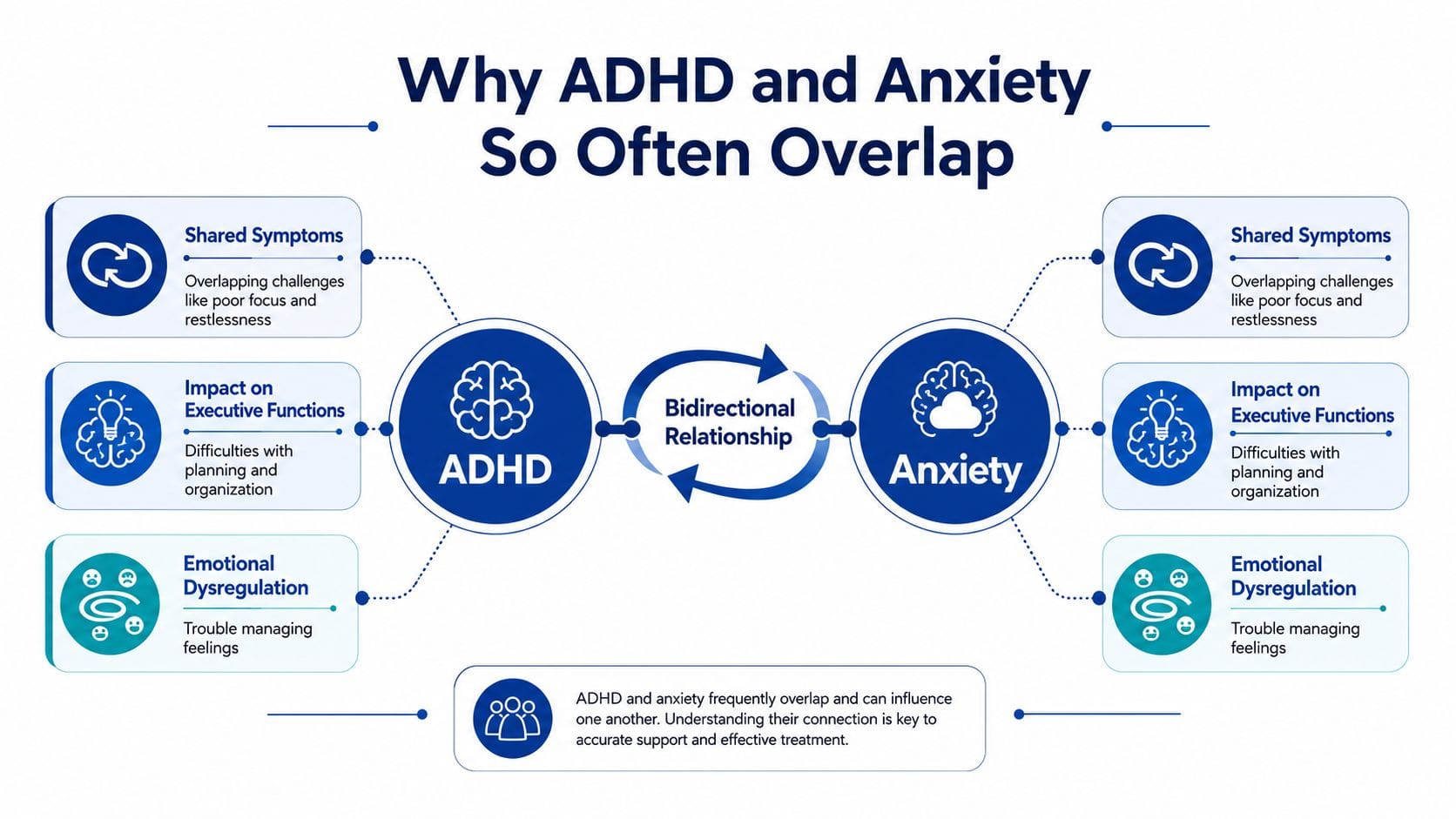
Approximately 50% of adults with ADHD also have a comorbid anxiety disorder, and this bidirectional relationship suggests that ADHD can increase a person's risk of developing generalized anxiety disorder by more than 300%, as described in this review of the overlap between anxiety and ADHD in adults.
Two ways the overlap happens
One pattern is practical and easy to understand. ADHD creates real-life instability. Bills are late. Conversations are missed. Work becomes inconsistent. Anxiety grows as a response to that instability.
The other pattern is more built in. Some adults seem to carry a broader vulnerability involving attention regulation, emotional control, and stress sensitivity. In those cases, ADHD and anxiety show up side by side rather than one solely causing the other.
The feedback loop adults often feel
The lived experience usually sounds like this:
- Attention slips: The person misses details, loses track, or stalls on a task.
- Stress rises: They worry about what they forgot, how they're being perceived, or what will happen if they don't catch up.
- Performance drops further: Anxiety crowds working memory and makes it even harder to organize, prioritize, and follow through.
- Confidence shrinks: The person starts expecting another bad outcome.
That's why many adults searching for answers about ADHD and anxiety in adults feel like they're stuck in a loop rather than dealing with two cleanly separate problems. For a patient-friendly breakdown of overlapping features, this guide on whether it's anxiety or ADD can help frame the question before a formal evaluation.
Untangling Symptoms Is It ADHD or Anxiety
The most useful question isn't “Do these symptoms match both conditions?” They often do. The better question is, what is driving the symptom?
An adult may procrastinate, feel restless, lose focus, and sleep poorly in either condition. But the engine underneath those symptoms is often different, and treatment works better when that distinction is clear.
The question is not just what happens
With anxiety, concentration problems are often pulled off course by worry. The mind gets hijacked by what might go wrong. With ADHD, concentration problems are often tied to executive dysfunction. The person may know exactly what needs to happen and still have trouble starting, sequencing, or sustaining effort.
That distinction matters because anxiety can be a secondary consequence of ADHD-related dysfunction, not just a separate primary disorder. For many adults, anxiety functions as part of an “ADHD-Anxiety Loop” of uncertainty and emotional dysregulation, which means addressing core ADHD symptoms may be the most effective way to calm the anxiety, as noted in this discussion of the ADHD-Anxiety Loop and treatment sequencing.
If anxiety started after years of missed deadlines, disorganization, time blindness, and self-criticism, the anxiety may be downstream from ADHD rather than the starting point.
For readers who want another outside perspective on symptom patterns, Insight Diagnostics details ADHD vs anxiety in a way many adults find easy to compare against daily life.
ADHD vs Anxiety Differentiating Common Symptoms
| Symptom | As Experienced in ADHD | As Experienced in Anxiety |
|---|---|---|
| Restlessness | Feels like internal drive, boredom intolerance, or difficulty staying with one task | Feels like tension, apprehension, or being on edge |
| Trouble concentrating | Attention drifts because of distraction, low stimulation, or task initiation problems | Attention narrows around worry, fear, or overthinking |
| Procrastination | Starts are hard, steps feel hard to organize, urgency is often needed to activate focus | Delay is driven by fear of mistakes, criticism, or uncertainty |
| Poor sleep | The brain struggles to settle, routines are inconsistent, and unfinished tasks linger | Racing thoughts and worry keep the body activated |
| Forgetfulness | Often tied to inattention, time blindness, or weak systems | Often tied to mental overload and preoccupation |
| Irritability | Frustration builds from overwhelm and poor task flow | Tension builds from chronic hyperarousal and worry |
A self-check can be useful, but it shouldn't replace a diagnosis. Adults in Pennsylvania who want a more structured next step can review information about psychological testing for ADHD before deciding what kind of evaluation they need.
How to Get a Clear Diagnosis in Pennsylvania
Quick quizzes can raise good questions, but they don't sort out complex overlap. That's one reason adult ADHD gets missed so often. Adult ADHD is frequently underdiagnosed and masked by comorbid anxiety and depression, and its worldwide prevalence is estimated at 3.1%, according to this overview of ADHD as an overlooked cause of persistent anxiety and depression in adults.
A clear diagnosis usually depends on pattern recognition over time, not a single symptom list. That's especially true for adults who did well enough in school, built elaborate coping systems, or learned to present as “high functioning” while struggling privately.
What a real evaluation includes
A solid psychiatric evaluation usually looks at several layers at once:
- Current symptoms: What's happening now at work, at home, in relationships, and with daily responsibilities.
- Developmental history: Whether attention, impulsivity, disorganization, or forgetfulness were present earlier in life.
- Functional impairment: Where symptoms create actual problems, such as missed deadlines, chronic lateness, unfinished tasks, financial strain, or conflict.
- Screening tools: Standardized measures can support clinical judgment, but they don't replace it.
- Rule-outs: Sleep problems, trauma, depression, substance use, thyroid issues, and other conditions can complicate the picture.
What helps most: A provider who looks for patterns, not just symptoms in isolation.
What telehealth can do well
For many adults in Pennsylvania, virtual psychiatric evaluation is the most practical route to clarity. It allows visits from home, cuts travel time, and makes follow-up easier for adults in Philadelphia, Pittsburgh, Scranton, Erie, Lancaster, Reading, and rural areas where specialty access may be thinner.
Telehealth also works well for history-taking, medication follow-up, and reviewing symptom patterns across settings. Adults looking for the nuts and bolts of the process can start with this guide on how to get an ADHD diagnosis as an adult.
Evidence-Based Treatments for Co-Occurring Conditions
A combined presentation usually needs a combined plan. That doesn't mean throwing every treatment at once. It means deciding what is driving the most impairment, what the patient can realistically follow through on, and what is most likely to reduce the feedback loop between inattention and worry.
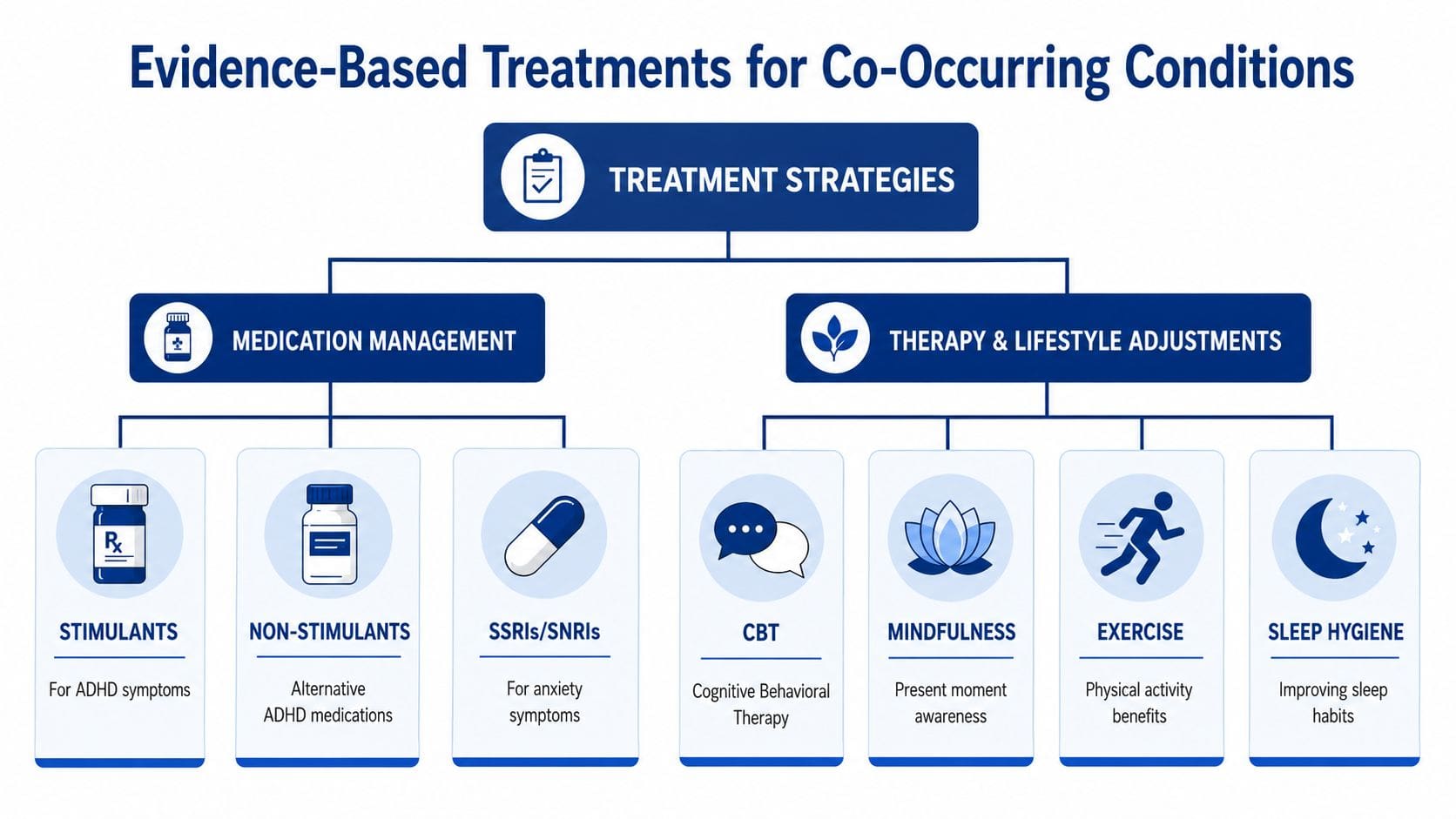
Patients with comorbid ADHD and anxiety are less likely to respond to CBT alone and often need adjunctive pharmacotherapy. Clinical guidance also indicates that stimulant medications generally do not exacerbate anxiety symptoms and often improve them by resolving ADHD-driven functional impairments, based on this summary of clinical management for comorbid ADHD and anxiety.
Medication management
Medication decisions are rarely one-size-fits-all.
Some adults benefit from stimulants because improved attention, working memory, and task initiation reduce the daily chaos that was fueling anxiety. Others do better with non-stimulant medications, especially when anxiety is prominent, side effects are a concern, or the clinical picture calls for a slower build.
Anxiety symptoms themselves may also need direct treatment. In some cases, that means adding or adjusting medications commonly used for generalized anxiety. The important point is sequencing and monitoring. A skilled prescriber watches for sleep changes, appetite changes, increased tension, and functional improvement, not just symptom checkboxes.
A focused overview of generalized anxiety disorder treatment can help adults understand how anxiety care fits into a broader treatment plan.
Later in treatment conversations, some patients find it helpful to review this clinician video before deciding what questions to bring to follow-up.
Psychotherapy and behavioral strategies
Therapy still matters. It just works best when it matches the actual problem.
For primary anxiety, CBT can target catastrophic thinking, avoidance, and physical arousal. For ADHD, therapy often needs a more concrete structure.
- External systems: Calendars, visual cues, task chunking, and body-doubling strategies reduce friction.
- Time skills: Backward planning, transition buffers, and realistic task estimates help with lateness and overload.
- Emotional regulation: Naming frustration early can prevent the spiral into shame, avoidance, and conflict.
- Sleep routines: Predictable wind-down patterns help both attention and anxiety.
Practical rule: If therapy produces insight but daily execution still collapses, the plan probably needs more support for ADHD mechanics.
An Integrative Approach for Lasting Wellness
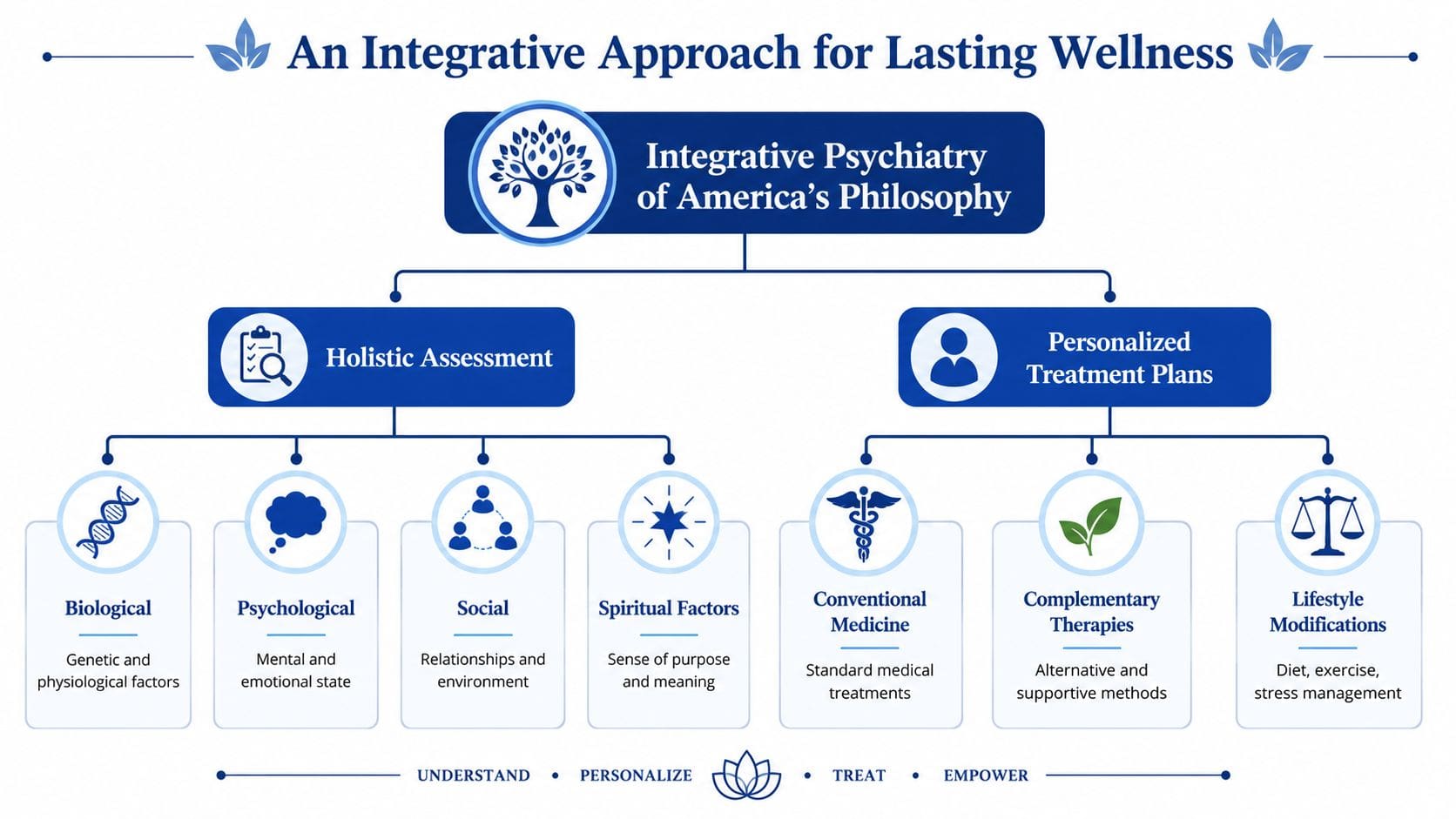
A treatment plan can look correct on paper and still fail in real life. I see this often with adults whose anxiety keeps flaring because the day itself is still unworkable. They are sleeping irregularly, missing meals, overusing caffeine, pushing through overwhelm, and then blaming themselves when focus falls apart again.
That is why lasting improvement usually requires more than choosing a medication. It helps to look at sleep patterns, physical activity, nutrition, work demands, stress load, medical factors, and the systems a person uses to get through the day. For many adults, anxiety settles more reliably once the ADHD-related friction is reduced.
Research from the University of Washington on psychologists underserving adults with ADHD points to a practical problem. Anxiety care is easier to find than adult ADHD care, even though the two often overlap. The same report notes that integrated and accessible care matters for this population.
Why this approach works better for many adults
Adults with both conditions often need treatment addressing the body, the schedule, and the environment. Poor sleep increases irritability and distractibility. Long sedentary stretches can raise tension and restlessness. Skipped meals can worsen shakiness, low frustration tolerance, and mental fatigue. Alcohol or cannabis may feel calming in the moment, then disrupt sleep, motivation, and concentration later.
A stronger plan often includes:
- Sleep and schedule review: Bedtime drift, late-night second wind, inconsistent mornings, and overpacked days.
- Medical screening: Basic lab work or medical follow-up when fatigue, thyroid issues, anemia, perimenopause, or other health factors may be adding to the picture.
- Medication planning: Some adults do well with stimulants. Others need a slower approach because of side effects, panic symptoms, blood pressure concerns, or substance use history.
- Daily function supports: Reminders, visual cues, simplified routines, and fewer decision points so treatment helps outside the appointment too.
Practical supports that help progress last
The goal is not a perfect routine. The goal is a repeatable one.
Tracking a few patterns can help. I usually recommend watching for sleep timing, skipped meals, caffeine intake, anxious spikes, and the times of day when focus collapses. That kind of record makes treatment adjustments more precise.
Many adults also benefit from short, realistic supports instead of ideal plans they cannot maintain. A ten-minute walk between tasks may work better than an ambitious exercise goal. Preparing two easy lunches may be more useful than trying to overhaul nutrition in a week. Adults who want non-caffeine ideas for steady attention may find these strategies for sustained focus useful as add-ons, not substitutes for treatment.
For Pennsylvanians using telehealth, it also helps when one psychiatric team can follow symptoms over time, adjust medication carefully, and account for sleep, stress, and function together. Integrative Psychiatry of America provides virtual psychiatric evaluations, medication management, and evidence-informed treatment statewide.
Accessing Care and Taking Control in PA
You finally decide to get help after another week of missed deadlines, poor sleep, and that familiar feeling that your mind will not slow down. Then a second problem shows up. Finding care feels like one more task you might drop.
For adults in Pennsylvania, the first step is often a telehealth psychiatric evaluation you can complete from home. That matters if your schedule is already strained by work, parenting, commuting, or the effort it takes to hold things together long enough to ask for help.
A good first visit is more useful when it answers practical questions, not just diagnostic ones. Are the anxiety symptoms primary, or are they showing up after years of untreated ADHD? What is getting in the way right now at work, at home, or with finances? What can you start doing this week while the full treatment plan is being built?
What to do before the first appointment
Bring a short record of what has been happening. It does not need to be polished. It needs to be accurate enough to show patterns.
- Write a symptom timeline: Note when distractibility, chronic worry, poor sleep, lateness, forgetfulness, or shutdown became hard to manage.
- Gather a few real examples: Missed bills, unfinished projects, tension in relationships, driving mistakes, work performance problems, or parenting overload are more helpful than vague descriptions.
- List past treatment: Include medications you tried, side effects, therapy experiences, and anything that helped briefly or made symptoms worse.
- Handle the basics ahead of time: Confirm insurance, pharmacy information, and a private place for the visit so the appointment stays focused on care.
If a spouse, parent, or close friend has seen these patterns for years, their observations can help too. Adults often minimize symptoms because they have adapted to them.
What can help right now
While you are waiting for care, reduce friction first. That usually works better than trying to fix your whole life in a weekend.
- Use one capture system: One calendar, one notes app, or one notebook lowers the odds that tasks disappear.
- Make the first step small: “Open the laptop” or “reply to one email” is often enough to break paralysis.
- Use brief grounding during overload: Naming what you can see, hear, and feel can lower the physical intensity of anxiety long enough to think clearly again.
- Protect your evening routine: A repeatable wind-down helps more than chasing a perfect bedtime.
Simple tools can support that process. A Daily Agenda Planner, Feeling Journal, Adult ADHD Assessment, Anxiety Symptom Checker, or Exercise Routine Generator can help you notice patterns and stay organized between visits.
If you live in Pennsylvania and keep wondering whether this is anxiety, ADHD, or both, stop guessing and get assessed. Clear treatment starts with a clear diagnosis.
Frequently Asked Questions About ADHD and Anxiety
| Question | Answer |
|---|---|
| Can an adult have both ADHD and anxiety? | Yes. It's common for both conditions to occur together, and the overlap often makes self-diagnosis unreliable. |
| Does ADHD cause anxiety, or are they separate problems? | Either can happen. In some adults, anxiety is primary. In others, anxiety develops after years of ADHD-related overwhelm, missed tasks, and emotional dysregulation. |
| Will stimulant medication always make anxiety worse? | No. That fear is common, but it isn't always what happens. For some adults, improved ADHD control reduces the functional chaos that was driving anxiety. |
| Is therapy enough if both conditions are present? | Not always. Some adults benefit from therapy plus medication because skills alone may not be enough when ADHD symptoms remain untreated. |
| Can telehealth diagnose ADHD in Pennsylvania? | Telehealth can be very effective for psychiatric history, symptom review, standardized screening, and medication follow-up when the evaluation is thorough. |
| What should adults track before an evaluation? | Focus problems, missed deadlines, sleep, worry patterns, emotional reactivity, work performance, and whether symptoms have been present since earlier life stages. |
| When should someone seek help? | If symptoms are affecting work, relationships, parenting, finances, sleep, or daily functioning, it's time to get assessed rather than keep guessing. |
Adults across Pennsylvania don't have to keep sorting this out alone. Integrative Psychiatry of America offers secure virtual psychiatric care for ADHD, anxiety, depression, OCD, PTSD, medication management, and integrative mental health treatment statewide. Readers who are ready for next steps can learn about treatment options, verify insurance coverage, schedule an appointment, or explore the free mental health tools before the first visit.