
For many adults with ADHD, the treatment path can feel like it only leads to one destination: stimulant medications. But what if there's another route? Non-stimulant ADHD treatment offers a different journey—one focused on steady, 24-hour symptom control. This approach is quickly becoming a primary choice for adults who want a more balanced way to manage their ADHD.
As psychiatric nurse practitioners at Integrative Psychiatry of America, we are dedicated to providing comprehensive and personalized care. This guide, written from our professional perspective, aims to shed light on these effective alternatives. The information here is designed to empower you in discussions with your healthcare provider, including psychiatric nurse practitioners or a psychiatrist.
A New Horizon in Adult ADHD Care
The conversation around adult ADHD is definitely changing. For a long time, stimulants were the default, the first and often only recommendation. Now, a new horizon is opening up. Non-stimulant ADHD treatment options are finally being recognized not just as a backup plan, but as a powerful, first-line choice for many people.
As psychiatric nurse practitioners at Integrative Psychiatry of America, we've seen firsthand how this shift helps adults, particularly those we treat via telepsychiatry across Pennsylvania. Think of it this way: stimulants are like a 'sprinter,' giving you short, powerful bursts of focus. Non-stimulants, on the other hand, are the 'marathon runner,' providing sustained, even support that lasts all day and all night. This makes them a key part of modern adult ADHD therapy.
The Rising Demand for Alternatives
This isn't just a change in perspective; the data backs it up. A recent analysis revealed a massive 60.1% increase in prescriptions filled for non-stimulant ADHD medications between 2019 and 2023. This jump was far greater than the 20.4% rise in stimulants, showing a clear and growing demand from adults for different treatment paths. This trend highlights the importance of comprehensive ADHD management.
So, what's driving this surge? Several key factors are at play:
- Desire for 24/7 Coverage: Many adults are tired of the "up and down" feeling that can come with shorter-acting stimulants and want consistent symptom management. This is a core benefit of non-stimulant ADHD drugs.
- Co-occurring Conditions: Non-stimulants are often a better fit for people who also struggle with anxiety, since stimulants can sometimes make anxious feelings worse. Addressing ADHD and anxiety together is crucial.
- Concerns About Side Effects: Some individuals find the side effects of stimulants, like poor sleep or appetite loss, to be disruptive and are looking for a gentler alternative.
- Personal Preference: For various reasons, many people simply prefer to use a non-controlled substance to manage their ADHD, valuing the lower risk of dependency or misuse.
To help you quickly understand the core differences, here’s a simple breakdown of how these two medication classes compare.
Stimulant vs Non Stimulant ADHD Medications at a Glance
This table provides a quick comparison between the two main classes of ADHD medication, helping you understand the key differences in mechanism, onset, and ideal use cases. A psychiatrist or psychiatric nurse practitioner can help determine the best fit.
| Feature | Stimulant Medications (e.g., Adderall, Ritalin) | Non-Stimulant Medications (e.g., Atomoxetine, Guanfacine) |
|---|---|---|
| Mechanism of Action | Increases dopamine and norepinephrine quickly. | Gradually increases norepinephrine or affects other brain receptors. |
| Onset of Action | Fast-acting, usually within 30-60 minutes. | Slow onset, takes several weeks to reach full effect. |
| Duration of Effect | Short-acting (4-6 hours) or long-acting (8-12 hours). | Provides 24-hour coverage. |
| Abuse Potential | Higher potential for misuse or dependency (Schedule II controlled substance). | Low to no potential for abuse (not a controlled substance). |
| Common Side Effects | Insomnia, appetite loss, anxiety, increased heart rate. | Fatigue, dry mouth, dizziness, nausea. |
| Best For | Individuals needing rapid symptom relief; no history of substance use. | Individuals needing consistent coverage, those with anxiety, or who don't tolerate stimulants well. |
While stimulants work well for many, it's clear that non-stimulants offer a valuable and effective alternative for a growing number of adults seeking balanced, long-term care and effective symptom management.
At Integrative Psychiatry of America, we believe in treating the whole person, not just the diagnosis. This means going beyond a one-size-fits-all approach to create a care plan that is truly personalized. A complete strategy often involves much more than medication. Check out our guide on the diverse ADHD treatment options for adults to see the full picture.
Ultimately, exploring non-stimulant ADHD treatment is about giving yourself more options. It’s about finding a strategy that works in harmony with your body, your lifestyle, and your goals for the future. This guide is your starting point for building that personalized and effective plan.
Understanding Your Non-Stimulant Medication Options
When we talk about ADHD medication, stimulants often get all the attention. But they aren't the only path forward. Think of non-stimulant medications as the steady, long-distance runners in the world of ADHD treatment—they offer a different, but often just as powerful, way to manage symptoms. This is a cornerstone of effective ADHD management.
As psychiatric nurse practitioners, our job is to help you understand all the tools available. These non-stimulant ADHD drugs provide a consistent, stable foundation for focus and emotional regulation, which can be life-changing for many adults.
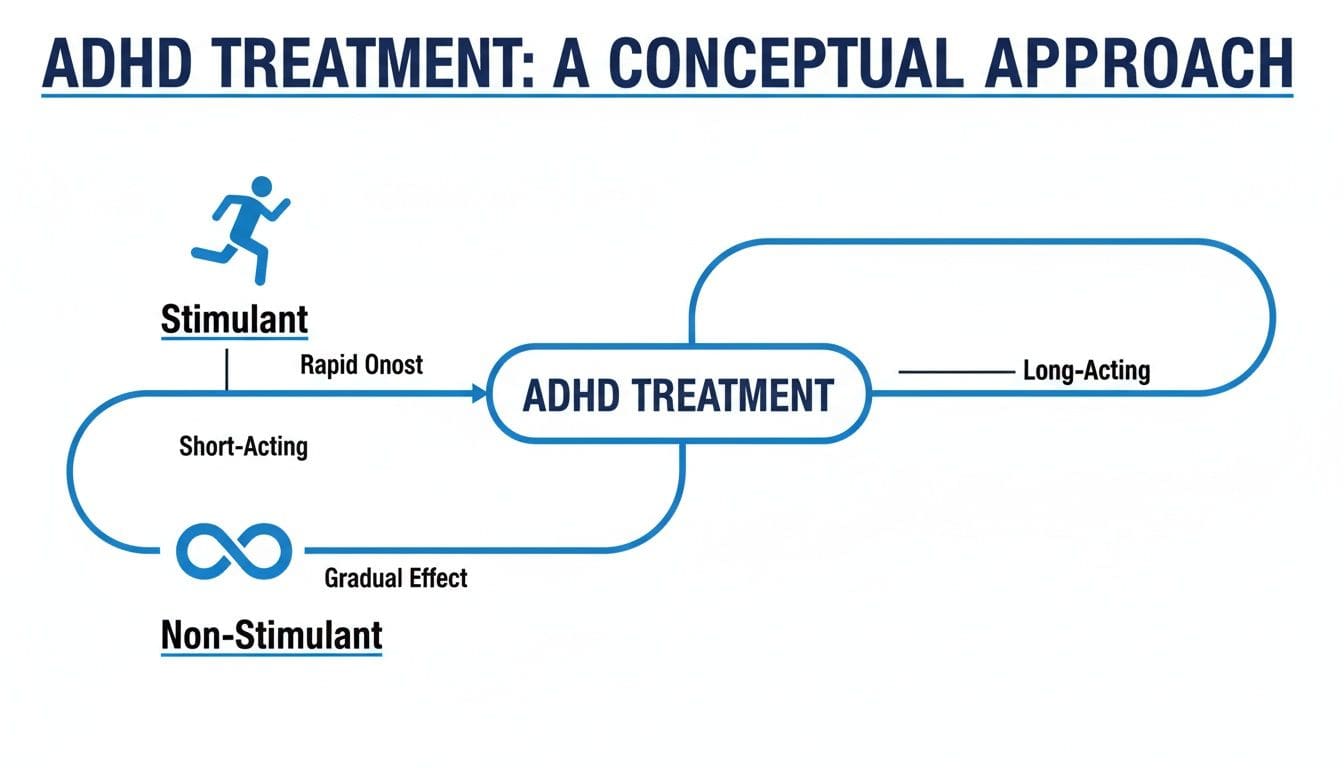
Both stimulants and non-stimulants aim for the same finish line: better focus and control. They just take different routes to get there, which is great because it gives us more options to fit your specific needs, a key principle of adult ADHD therapy.
Atomoxetine (Strattera): The 24/7 Foundation
Atomoxetine, widely known as Strattera, was the very first non-stimulant ADHD treatment the FDA approved specifically for adults. It’s what we call a selective norepinephrine reuptake inhibitor (SNRI).
Imagine norepinephrine as a key messenger in your brain that helps regulate attention. Atomoxetine works by keeping more of that messenger available, providing smooth, around-the-clock symptom support.
The biggest advantage here is its consistency. Once it builds up in your system over a few weeks, it works 24/7 in the background. You don’t get the "on/off" feeling that some people experience with stimulants, making it an excellent foundational treatment. It is a vital tool for long-term ADHD symptom management.
Alpha-2 Adrenergic Agonists: Taming Impulsivity
Next up are the alpha-2 adrenergic agonists, like Guanfacine (Intuniv) and Clonidine (Kapvay). These medications were first used to treat high blood pressure, but providers noticed they had a powerful calming effect on the brain.
They work by strengthening the prefrontal cortex—your brain's "CEO" responsible for decision-making and impulse control.
These are especially good at helping with:
- Hyperactivity: A sense of inner calm rather than constant restlessness.
- Impulsivity: Creating that crucial pause before you act or speak.
- Emotional Regulation: Smoothing out irritability and sudden flashes of frustration.
Because they have a different mechanism, we can use them on their own or even add them to another ADHD medication to fine-tune your treatment and target specific symptoms. This flexibility is a key aspect of personalized ADHD treatment.
Off-Label Options: For More Complex Needs
Sometimes, the best tool for the job is one that's officially approved for something else. We call this "off-label" prescribing, and it's a common, evidence-based practice. A great example for ADHD is Bupropion (Wellbutrin). Consulting with a psychiatrist or a psychiatric nurse practitioner is essential when considering these options.
Bupropion is an antidepressant that boosts norepinephrine and dopamine—the same brain chemicals stimulants target, but in a much more gradual and non-addictive way.
This makes it a fantastic option for adults who are dealing with both ADHD and depression, or even ADHD and anxiety. It can address both conditions with a single medication, which helps simplify the treatment plan. You can explore our guide on understanding different ADHD medications to see how all these pieces fit together.
Each of these medications has a unique profile. To explore all the options you could discuss with a provider, this complete non-stimulant ADHD medication list is a great resource. Finding the right non-stimulant ADHD treatment is all about matching the medication to your brain chemistry, symptoms, and daily life.
Building Skills Beyond the Prescription
Medication is a powerful tool for managing ADHD. But it's only one part of the equation. Think of it this way: medication can quiet the "noise" in your brain, but it doesn't automatically teach you the organizational or emotional skills you may not have developed.
A truly effective non-stimulant ADHD treatment plan must also focus on building practical, real-world skills. As psychiatric nurse practitioners, we see therapy and coaching as essential partners to medication, providing the "how-to" guide for a brain that now has the focus it needs. This holistic approach is central to effective ADHD management.

CBT for Adult ADHD: A Practical Toolkit
Cognitive Behavioral Therapy (CBT) has been specifically adapted for adult ADHD, and it's incredibly effective. It's less about analyzing your childhood and more about building concrete systems for the here and now. This form of adult ADHD therapy is highly recommended.
If your ADHD brain feels like a brilliant but hopelessly messy office, CBT helps you install the filing cabinets, create the to-do lists, and set up the calendar reminders needed to restore order. It directly targets the executive function deficits that make adulting feel like an uphill battle.
The main goals of CBT for ADHD are to:
- Reframe Negative Thoughts: Many adults with ADHD have a harsh inner critic. CBT helps you challenge self-defeating stories like "I'm lazy" or "I'm a failure" that have built up over years of struggling.
- Build Organizational Systems: You'll develop personalized strategies for managing time, organizing your space, and hitting deadlines. The key is creating systems that work with your ADHD brain, not against it.
- Improve Emotional Regulation: This therapy teaches you to recognize and manage the intense frustration or rejection sensitivity that can hijack your day, giving you more control over your emotional responses.
CBT provides the structure to turn the focus gained from medication into real-world productivity and confidence. For many, it's the component that transforms symptom management into genuine life improvement.
At Integrative Psychiatry of America, our telepsychiatry model makes it simple to access this specialized therapy. Adults across Pennsylvania, from busy professionals in Philadelphia to residents in more rural areas, can connect with a provider from home for consistent, high-quality support.
ADHD Coaching: A Forward-Focused Partnership
While CBT helps you build the foundational systems, ADHD coaching is about putting those skills into motion to achieve your goals. If CBT helps build the car, coaching teaches you how to drive it to a specific destination.
It’s an action-oriented partnership focused on forward momentum. An ADHD coach works with you to identify your personal and professional goals and then helps break them down into small, manageable, ADHD-friendly steps.
A coach can help you:
- Strengthen Executive Functions: You'll practice planning, prioritizing, and initiating tasks in the context of your actual projects and life goals.
- Navigate Workplace Challenges: Learn specific strategies for managing complex projects, communicating your needs to colleagues, and advocating for yourself in a professional setting.
- Achieve Personal Milestones: Get the accountability and support you need to finally finish that degree, launch that side business, or just build a daily routine that doesn't feel impossible.
This partnership is tailored to your unique brain, helping you build momentum and see firsthand that ADHD doesn't have to be a barrier to success. We also know physical activity is a crucial part of this toolkit; you can learn more about the benefits of exercise for ADHD in our guide.
By combining medication with powerful tools like CBT and coaching, we help you build a comprehensive, multi-faceted approach to not just manage ADHD, but to truly thrive with it.
Holistic Strategies for Whole-Person Wellness
Managing ADHD effectively goes far beyond a prescription bottle. At Integrative Psychiatry of America, we champion a whole-person approach that treats you, not just your diagnosis. Lifestyle strategies are foundational pillars that work alongside a non-stimulant ADHD treatment plan to support your brain and overall well-being.
Think of it like building a house. Medication can provide a solid frame, but diet, exercise, and sleep are the walls, roof, and foundation that make it a truly stable home. These elements aren't just 'nice-to-haves'; they are essential for optimizing focus, energy, and emotional balance.

Fueling Your Brain Through Nutrition and Movement
What you eat directly impacts how you feel and function. While there isn't a magic "ADHD diet," focusing on balanced nutrition gives your brain the steady energy it needs to thrive. This means prioritizing lean proteins, complex carbohydrates, and healthy fats while minimizing processed foods and sugary snacks that can lead to energy crashes and brain fog. This nutritional focus is a key component of natural ADHD treatment.
We often discuss the role of specific nutrients with our patients. For example:
- Omega-3 Fatty Acids: Found in fish like salmon and in walnuts, these fats are crucial building blocks for brain cells and may help improve cognitive function.
- Magnesium and Zinc: These minerals play a role in neurotransmitter health and have been linked to attention and mood regulation.
- A Balanced Plate: Ensuring every meal contains protein, fiber, and healthy fats helps stabilize blood sugar, which is key for maintaining consistent focus.
To learn more about this connection, you can read our detailed guide on how nutrition affects your mental health. It's important to discuss any potential supplements with your psychiatric nurse practitioner to ensure they are safe and appropriate for your specific needs.
Alongside nutrition, regular exercise is one of the most powerful tools for managing ADHD. Physical activity boosts dopamine and norepinephrine—the same brain chemicals targeted by many ADHD medications—which can improve executive function and reduce feelings of restlessness.
The Critical Role of Sleep and Mindfulness
Sleep isn't a luxury; it's a neurological necessity. For the ADHD brain, a lack of quality sleep can dramatically worsen symptoms, making it nearly impossible to focus, regulate emotions, or manage impulses. This is why establishing solid sleep hygiene is non-negotiable.
"Many ADHD symptoms, like inattention and irritability, overlap significantly with the effects of sleep deprivation. Prioritizing consistent, restorative sleep can feel like getting a new brain, making it one of the most impactful changes a person can make."
Here are some simple steps to improve your sleep:
- Consistent Schedule: Go to bed and wake up around the same time every day, even on weekends, to regulate your body's internal clock.
- Digital Detox: Power down all screens at least an hour before bed. Blue light can interfere with your body's production of melatonin, the sleep hormone.
- Create a Sanctuary: Make your bedroom cool, dark, and quiet. Use it only for sleep and intimacy to strengthen the mental association with rest.
Complementing good sleep is the practice of mindfulness. Mindfulness teaches you to pay attention to the present moment without judgment. For a mind that's constantly racing, this can feel like a superpower, helping you reduce stress, improve focus, and notice your impulses before you act on them.
This integrated model is especially important given the gaps in ADHD treatment. In 2022, a staggering 30% of U.S. children with current ADHD—nearly 2 million kids—did not receive any form of treatment. For the 4.4% of adults with ADHD, especially in states like Pennsylvania, telehealth is expanding access to care. By combining medication with these holistic strategies, we empower you to build a resilient and well-rounded plan for success. You can discover more insights about these trends from the CDC's ADHD data and statistics.
How to Start Your Personalized Treatment Journey
Deciding to seek help for ADHD is a significant step, but the process shouldn’t feel overwhelming. At Integrative Psychiatry of America, we’ve built a clear, supportive path for adults in Pennsylvania to get the care they need, centered entirely around you. It all begins with a simple, direct conversation.As psychiatric nurse practitioners, we view you as an active partner in your own healthcare. Your first appointment is more than a clinical evaluation; it’s the start of a collaborative relationship. We are here to understand your specific challenges and work with you to build a plan that actually fits your life.
Your Initial Consultation: What to Expect
Your first telepsychiatry visit is a thorough assessment where we aim to understand you as a whole person, not just a list of symptoms. We'll explore your medical history, your daily routines, your personal struggles, and most importantly, what you want to achieve with treatment.
This initial meeting is a safe space. We know that many adults come to us after feeling misunderstood for years. Our goal is to listen without judgment and gather the information needed for a truly personalized plan. A formal adult ADHD screening is often a critical part of starting this journey correctly.
During this first meeting, we will discuss:
- Symptom History: When did you first notice issues with focus, organization, or impulsivity?
- Past Treatments: What have you tried before, and what were the results?
- Lifestyle Factors: We'll talk about your sleep patterns, nutrition, and exercise habits.
- Co-occurring Conditions: We will screen for common conditions that often accompany ADHD, like anxiety or depression.
The Titration Period: Patience and Partnership
Starting a non-stimulant medication is a gradual process known as titration. Unlike stimulants, which can work very quickly, non-stimulants need time to build up in your system to reach their full effect. This period can take several weeks and requires a bit of patience.
Think of it like carefully tuning an instrument. We start with a low dose and make slow, precise adjustments, giving your body time to adapt. Regular communication through follow-up telepsychiatry visits is essential during this phase. It allows us to monitor your progress, manage any side effects, and fine-tune your dosage.
This slow-and-steady approach is one of the biggest strengths of non-stimulant treatment. It lets us find the exact dose that delivers maximum benefits with minimal side effects, leading to a stable and sustainable outcome. Your feedback is the most important part of getting it right.
A Clear Path Forward
We've made getting started with Integrative Psychiatry of America as straightforward as possible for adults across Pennsylvania. The table below outlines your first steps.
Your First Steps to ADHD Care with IPA
| Step | Action | What to Expect |
|---|---|---|
| 1 | Schedule Your Appointment Online | Use our simple online portal to book a time that fits your schedule. You can verify your insurance or opt for self-pay. |
| 2 | Complete Your Intake Forms | Before our first meeting, you’ll get a link to our secure patient portal to fill out your initial paperwork. |
| 3 | Attend Your Virtual Consultation | Meet with one of our board-certified psychiatric nurse practitioners from the comfort of your home for a comprehensive evaluation. |
| 4 | Collaborate on Your Treatment Plan | Together, we will decide on the best path forward, whether that includes non-stimulant medication, therapy, or lifestyle changes. |
At times, finding the right medication requires more than trial and error. To get even more specific, we might discuss tools like pharmacogenomic testing. You can learn more about how we use genetic testing for mental health to help guide medication choices.
You are in control of your health journey—we are here to provide the map and compass. Schedule your appointment today to take the first step toward a more focused and balanced life.
Common Questions About Non-Stimulant Treatments
Exploring a new treatment path naturally brings up questions. As psychiatric nurse practitioners, we find that providing clear, direct answers is the best way to help you feel confident and informed. Here, we address the most common concerns we hear from adults in Pennsylvania considering a non-stimulant ADHD treatment plan.
How Long Does It Take for Non-Stimulants to Work?
One of the biggest differences between stimulants and non-stimulants is the time needed to see results. Unlike stimulants, which can work within an hour, a non-stimulant ADHD treatment requires patience. These medications build their effects gradually over time.
Think of it like watering a plant. A quick spray wets the leaves, but a slow, deep watering is what nourishes the roots for lasting health. Non-stimulants work by making steady, consistent changes to your brain chemistry.
- Atomoxetine (Strattera): You may notice initial changes within two to four weeks. However, it often takes up to eight weeks to feel the full, stable effect.
- Alpha-2 Agonists (Guanfacine, Clonidine): These can work a bit faster. Some people see improvements in hyperactivity and impulsivity within just one to two weeks.
This gradual onset provides smooth, 24/7 symptom control. It avoids the "peaks and valleys" that some people experience with stimulants. Your provider at Integrative Psychiatry of America will guide you through this initial period to find the right dose for you.
Can I Switch From a Stimulant to a Non-Stimulant?
Yes, switching from a stimulant to a non-stimulant is a common and often effective strategy. Many of our patients make this transition to avoid side effects like anxiety or insomnia, to get 24-hour symptom coverage, or because they prefer a non-controlled substance.
This process must be carefully managed by a qualified provider, such as a psychiatric nurse practitioner or a psychiatrist. It is not as simple as stopping one medication and starting another.
The switch typically involves a "cross-tapering" process. We slowly reduce your stimulant dose while gradually introducing and increasing the non-stimulant. This method helps prevent a rebound of ADHD symptoms and minimizes potential side effects.
As your psychiatric nurse practitioner, we will create a personalized tapering schedule. This is based on your specific medications, dosages, and individual response. Our goal is a smooth transition with continuous symptom management.
Are Non-Stimulants Good for Adults with Anxiety?
This is a key area where non-stimulant options truly shine. A significant number of adults with ADHD also have co-occurring anxiety. Stimulants can sometimes make feelings of jitteriness or unease worse. For these individuals, a non-stimulant ADHD treatment is often a better fit, addressing both ADHD and anxiety.
Certain medications are particularly well-suited for this dual challenge:
- Atomoxetine (Strattera): As a selective norepinephrine reuptake inhibitor (SNRI), it works in a way that can help reduce anxiety symptoms while also improving focus.
- Bupropion (Wellbutrin): This off-label option is an antidepressant that also targets ADHD symptoms. For someone with both ADHD and depression or certain types of anxiety, it can be an excellent choice.
- Alpha-2 Agonists: Guanfacine and clonidine have a calming effect on the nervous system. This is very beneficial for reducing the physical and emotional aspects of anxiety and irritability.
Our integrative approach at Integrative Psychiatry of America is ideal for addressing these overlapping conditions. We look at your whole health picture to select a treatment that brings balance to both your focus and your mood.
Is Telehealth Effective for Managing Non-Stimulant Treatment?
Absolutely. Telehealth is an exceptionally effective and convenient model for managing ADHD with non-stimulants. In fact, the nature of this treatment is perfectly suited for virtual care, especially for busy adults across Pennsylvania.
Because non-stimulant ADHD treatment involves a gradual titration period with regular check-ins, telehealth makes this process incredibly simple. Instead of taking time off work for frequent office visits, you can connect with your psychiatric nurse practitioner from home or the office.
Through our secure, HIPAA-compliant platform, we can:
- Conduct thorough initial assessments and follow-up appointments.
- Electronically prescribe and manage your medications.
- Provide ongoing support and make dosage adjustments as needed.
- Offer integrated psychotherapy and coaching sessions.
This model removes barriers to care. It ensures every adult in Pennsylvania, whether in Philadelphia or a more rural area, has access to consistent, high-quality, and personalized ADHD management.
Taking the first step toward better ADHD management is empowering. At Integrative Psychiatry of America, our team of board-certified psychiatric nurse practitioners is here to guide you with a personalized, whole-person approach. If you're ready to explore a treatment plan that fits your life, we invite you to schedule your consultation today.