
A Pennsylvania woman may reach adulthood with a career, family responsibilities, and an impressive collection of calendars, reminders, lists, and backup plans. From the outside, she may look organized. Privately, she may lose track of tasks, postpone routine work until urgency takes over, and feel exhausted from compensating for attention problems that others have called anxiety, depression, stress, or a lack of discipline.
ADHD treatment for women begins with a thorough clinical evaluation, not a quick online screen or an automatic prescription. A careful provider considers current symptoms, childhood patterns, functional impairment, sleep, medical history, medications, stress, substance use, and co-occurring conditions. Treatment may include medication management, psychotherapy, executive-function support, and practical lifestyle strategies, but the right combination depends on the individual.
Integrative Psychiatry of America provides virtual psychiatric care across Pennsylvania. Its approach can help women in Philadelphia, Pittsburgh, Allentown, Harrisburg, and other communities pursue evaluation and ongoing care without treating hormonal changes, anxiety, or life stress as the entire explanation. The path starts with recognizing the pattern, examining the timeline, and building a plan that can be monitored over time.

Table of Contents
- Introduction to ADHD Treatment for Women Who Seek Answers Later
- Why ADHD in Women Is Often Missed or Misattributed
- How Thorough ADHD Evaluation Works for Women
- ADHD Treatment Options for Women and How They Work Together
- Hormonal Stages Comorbidity and Personalizing Care Across Life
- Integrative Support That Complements Evidence Based Treatment
- Accessing ADHD Treatment for Women Through Telehealth in Pennsylvania
- Next Steps Toward Personalized ADHD Care for Women
Introduction to ADHD Treatment for Women Who Seek Answers Later
A woman may remember needing intense deadline pressure to begin assignments, rereading schoolwork without retaining it, or relying on perfectionism to avoid mistakes. Later, she may manage a demanding job by working late, keeping elaborate systems, and hiding how difficult ordinary planning feels. When those strategies stop working after a promotion, childbirth, worsening sleep, or a reproductive transition, the resulting overwhelm can look like a new mental-health problem.
That history deserves careful attention. A late ADHD diagnosis doesn't mean symptoms began late. It may mean that earlier demands were manageable with support, structure, high effort, or compensatory habits. A clinical review of adult women with ADHD found that women are more likely than men to receive a first diagnosis in adulthood, and that undiagnosed symptoms can continue to affect education, work, and mental health before treatment begins. The review of adult women with ADHD describes adult ADHD as affecting about 2% to 6% of the global population, a figure that underscores why adult assessment matters.
What treatment can and cannot do
Treatment can help clarify what drives the symptoms and reduce impairment when the plan fits the person. It can't erase a complicated history, guarantee a specific response, or replace evaluation for sleep disorders, mood conditions, medical contributors, or medication effects.
A well-rounded plan may involve:
- Medication management: A provider may consider stimulant or non-stimulant medication, medical history, side effects, response, and patient preferences.
- Psychotherapy: Therapy can address anxiety, depression, shame, emotional regulation, procrastination, and relationship strain.
- Executive-function support: External reminders, task breakdowns, time cues, and realistic routines can reduce daily friction.
- Whole-person care: Sleep, physical activity, nutrition, mindfulness, and reproductive health may influence how symptoms are experienced and managed.
Clinical perspective: A woman who has worked hard to appear “fine” still deserves an evaluation based on impairment, history, and functioning, not appearance alone.
Why ADHD in Women Is Often Missed or Misattributed
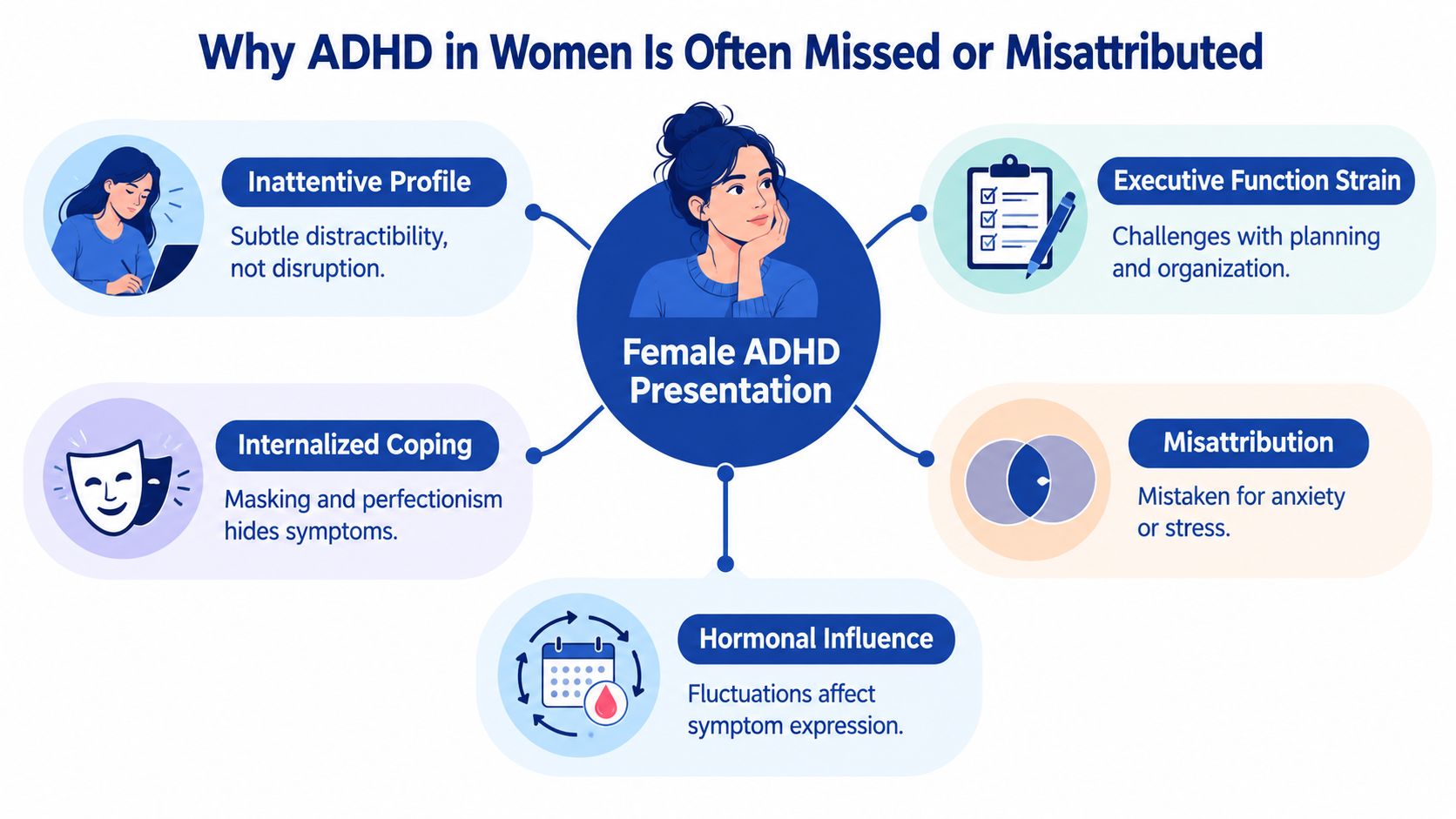
ADHD in women is often missed because the visible pattern may be inattentive, internalized, or masked rather than disruptive. A girl may daydream, lose materials, struggle with planning, or need unusual effort to complete routine work without drawing the kind of attention associated with obvious hyperactivity.
The historical referral gap was substantial. An expert consensus review found that clinical referrals for boys exceeded referrals for girls by ratios ranging from 3:1 to 16:1, while the broader literature suggests that adult ADHD prevalence is much closer between sexes than childhood referral patterns imply. The same review cites estimated adult prevalence around 2.5% to 5% and notes that some reviews report adult rates of 5.4% in men versus 3.2% in women. These figures come from the expert consensus review on ADHD in females.
The hidden cost of compensation
Masking can include overpreparing, checking work repeatedly, relying on rigid routines, or staying late to catch up. Perfectionism may conceal difficulty starting, sequencing, or finishing tasks. A woman can achieve academically or professionally and still experience significant executive-function impairment.
Anxiety and depression can overlap with ADHD. Persistent disorganization may create anxiety, repeated failures to meet expectations may lower mood, and untreated ADHD may coexist with either condition. That doesn't mean anxiety or depression was diagnosed incorrectly. It means the full timeline matters. ADHD versus anxiety can look similar in daily life, but the conditions require different clinical questions.
The history of medical misattribution also extends beyond mental health. Women who have experienced dismissal or incomplete explanations in other areas may find understanding misdiagnosis in gynecology useful when thinking about how gendered assumptions can shape clinical encounters. That context doesn't establish an ADHD diagnosis, but it can help explain why a patient may hesitate to seek another evaluation.
How Thorough ADHD Evaluation Works for Women
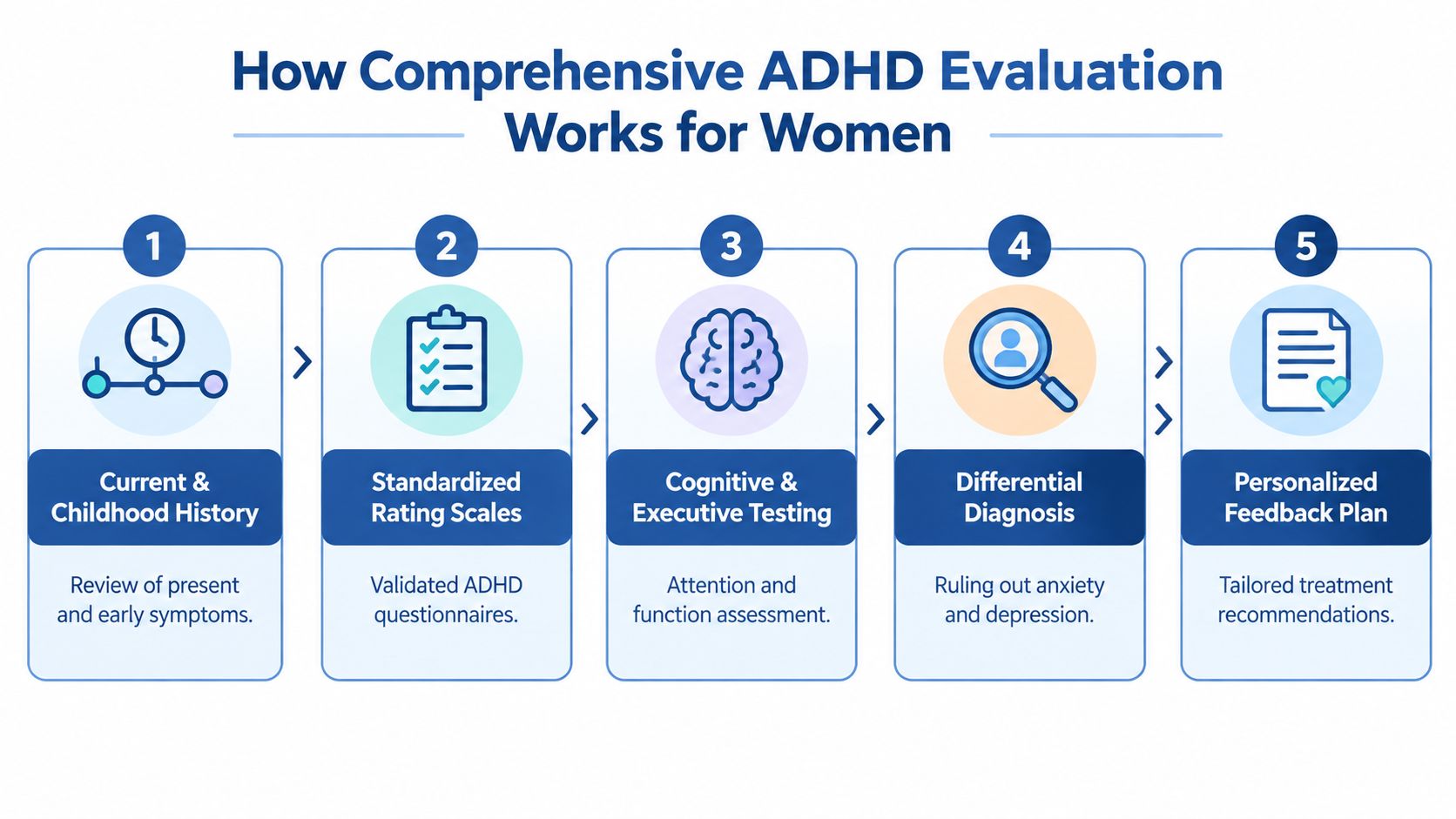
A thorough ADHD evaluation examines a lifelong pattern, current impairment, and other possible explanations for attention difficulties. A questionnaire can identify concerns, but screening isn't diagnosis. The goal is to connect present-day struggles with developmental history, rather than treating years of masking, anxiety, or low mood as the whole story.
Integrative Psychiatry of America's CADE ADHD evaluation approach gives the process structure. The first appointment usually covers current symptoms and childhood functioning. A provider may ask about school reports, forgotten assignments, organization, distractibility, impulsivity, restlessness, work performance, relationships, and the effort required to appear organized.
Key parts of the assessment
Current and childhood symptoms: ADHD is a developmental condition, so adult concerns are considered alongside earlier patterns. Good grades do not rule it out. A woman may have relied on procrastination, last-minute urgency, daydreaming, or repeated searches for misplaced items.
Functional impairment: The evaluation looks at work, education, household responsibilities, parenting, relationships, finances, and self-care. Symptoms matter clinically when they interfere with daily functioning, even if the person has learned ways to compensate.
Validated measures and collateral information: Standardized rating scales organize symptom information. A parent, partner, teacher, or another person who knows the patient may provide context, although another informant is not always available.
Differential diagnosis: Anxiety, depression, trauma-related symptoms, sleep problems, medication effects, substance use, and medical conditions can affect attention. A provider compares these possibilities with the full timeline instead of assigning every concentration problem to ADHD.
Medical review and feedback: Laboratory testing may be considered when fatigue, cognitive changes, or other symptoms suggest a medical contributor. Lab or genetic testing does not diagnose ADHD, and pharmacogenomic information cannot reliably identify one universally best medication.
A psychological testing for ADHD resource can clarify how structured testing may complement clinical judgment. The evaluation should conclude with feedback, diagnostic reasoning, and treatment options, not merely a score.
Patients can prepare by listing symptoms, examples of impairment, previous diagnoses, medications, sleep concerns, menstrual or reproductive changes, and relevant family history. A brief record of when symptoms occur can be more useful than trying to recall an entire year during one visit.
ADHD Treatment Options for Women and How They Work Together
Women generally use the same core ADHD medication classes as men, but the treatment process still requires individualized titration and monitoring. A clinical study found that 95% of girls responded favorably to methylphenidate, dextroamphetamine, or both, and concluded that both stimulants should be considered when the first option isn't optimal. The clinical study of stimulant response supports optimization rather than assuming that women need an entirely different medication class.
Prescription patterns haven't always reflected that potential benefit. A systematic review found that females were less likely than males to receive medication treatment independent of symptom severity, and Nordic population data showed annual ADHD drug use among women rising from 1.8 to 4.4 per 1,000 women during the study period. The review of sex differences in ADHD also described an evidence base that remains inconsistent.
Choosing among ADHD treatment components for women
| Treatment Component | Primary Purpose | Key Considerations for Women |
|---|---|---|
| Medication management | Reduce core attention, impulsivity, or executive-function symptoms | Review response, side effects, cardiovascular and psychiatric history, sleep, reproductive considerations, and possible changes across life stages |
| Psychotherapy | Address anxiety, depression, emotional regulation, shame, and coping patterns | Therapy may be important when years of masking or misattribution have affected self-trust and relationships |
| Executive-function skills | Improve planning, task initiation, sequencing, and follow-through | External systems should match the patient's actual routines rather than idealized expectations |
| Lifestyle support | Strengthen sleep, activity, nutrition, mindfulness, and daily structure | These strategies complement clinical treatment and should be practical enough to sustain |
Medication and therapy often solve different parts of the problem. Medication may improve access to attention, while therapy can help a woman change habits, process years of criticism, and manage co-occurring anxiety or depression. Some patients need both. Others begin with one component and reassess.
Adult ADHD treatment options can help patients compare approaches before discussing preferences with a provider. The decision should account for symptom profile, medical history, co-occurring conditions, previous treatment, side effects, reproductive plans, and the patient's comfort with each option.
Hormonal Stages Comorbidity and Personalizing Care Across Life
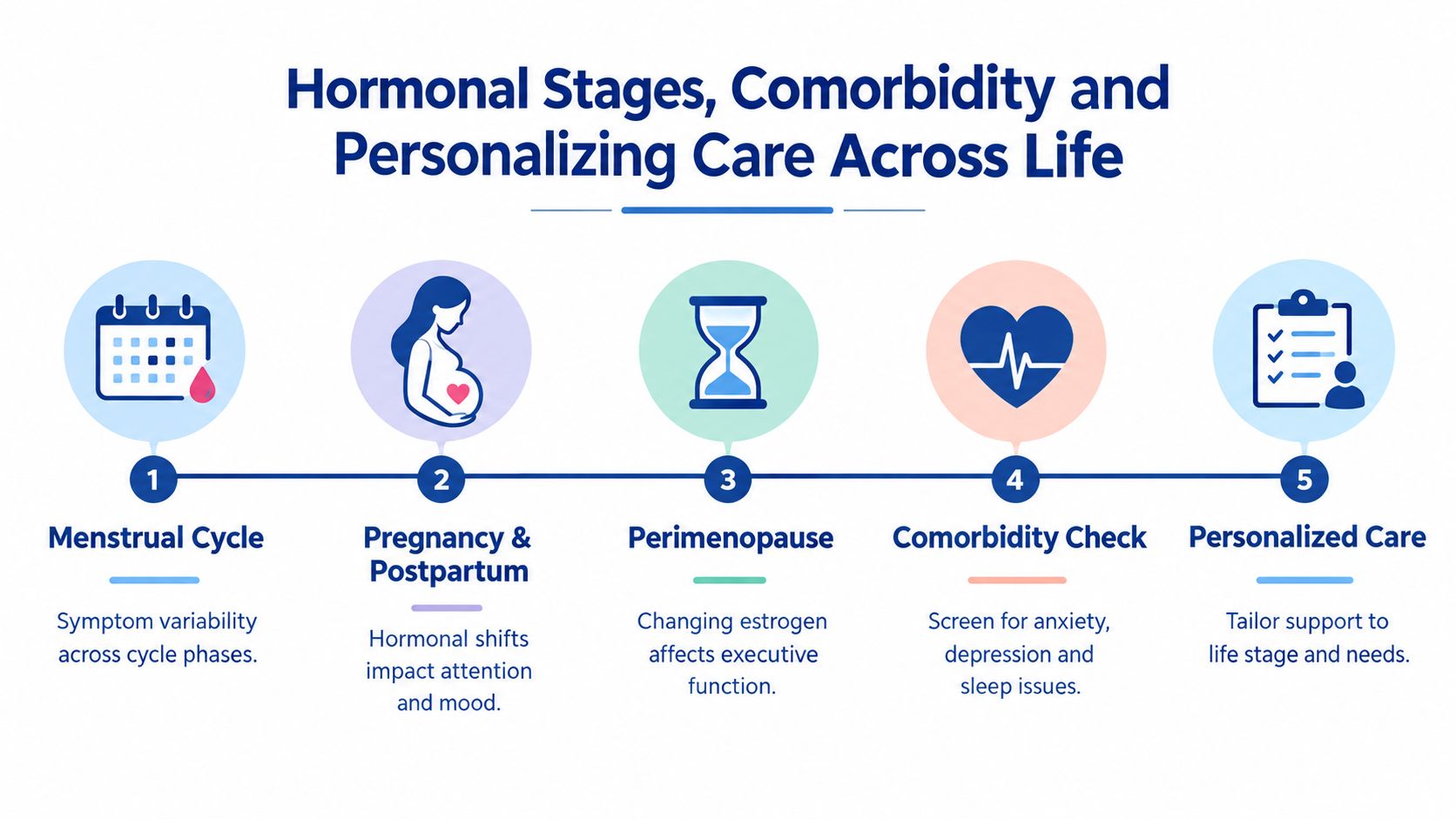
Hormonal changes may alter how ADHD symptoms feel or how consistent a medication response seems, but they don't provide a shortcut to diagnosis. Women may notice changes during the menstrual cycle, pregnancy or postpartum periods, perimenopause, or menopause. A 2025 review recommends monitoring medication effectiveness across the menstrual cycle and considering individualized stimulant dose changes during the luteal phase when premenstrual worsening occurs. That recommendation requires clinical supervision, not self-adjustment. The review of female ADHD and hormonal fluctuations emphasizes that symptom tracking should include cycle phase, sleep, and mood.
Tracking patterns instead of guessing
A simple record can include:
- Attention: Note focus, distractibility, and mental fatigue.
- Executive function: Record task initiation, organization, time management, and unfinished work.
- Mood: Track irritability, anxiety, low mood, and emotional recovery.
- Body and routine: Include sleep, cycle timing, medication timing, and side effects.
This information can help distinguish a hormone-linked exacerbation from a broader change in baseline symptoms. Pregnancy and postpartum care require discussion of reproductive plans, medication risks and benefits, sleep disruption, mood symptoms, and coordination with appropriate medical clinicians. Perimenopause and menopause may also expose previously compensated ADHD patterns, but new cognitive symptoms still deserve assessment for sleep, mood, and medical contributors.
Resources offering perimenopause clarity may help patients understand questions to raise with a menopause-informed clinician. Blood testing doesn't independently establish the cause of attention problems, and perimenopause symptoms shouldn't automatically be labeled ADHD.
Anxiety and depression need their own assessment
Anxiety may drive rumination and distractibility. Depression may reduce motivation, processing speed, and concentration. ADHD can also coexist with both, creating a layered presentation that requires coordinated planning. A provider may decide to address the most impairing condition first, treat conditions together, or adjust follow-up based on symptom changes.
A 2025 research review notes that women remain under-recognized and under-researched, particularly regarding interventions designed for hormonal fluctuations across the lifespan. The review of female ADHD research gaps supports a cautious approach, with ongoing monitoring rather than universal female-specific dosing rules.
Integrative Support That Complements Evidence Based Treatment
Integrative care adds practical support around clinical treatment. It doesn't mean replacing medication or psychotherapy with supplements, a special diet, or a single exercise routine. No particular dietary or exercise change can be identified as the largest ADHD improvement for every woman.
Useful supports often begin with basic systems that reduce the number of decisions required each day:
- Sleep protection: A consistent wind-down routine, realistic scheduling, and assessment of insomnia or disrupted sleep can improve the conditions in which attention operates.
- Physical activity: Regular movement may support mood, energy, and general health. The most useful plan is one a patient can repeat safely.
- Nutrition education: Regular meals and adequate nourishment can support steadier daily functioning. A personalized ADHD nutrition plan may help generate ideas for discussion, but it shouldn't replace medical care.
- External structure: Visual calendars, phone alarms, medication organizers, body doubling, and time-blocking can make invisible executive demands more concrete.
- Mindfulness practice: Brief breathing or attention exercises may support awareness of distraction and emotional escalation without promising to eliminate ADHD symptoms.
IPA describes an approach that may combine medication management and psychotherapy with exercise counseling, nutritional education, mindfulness, and mind-body tools. When clinically indicated, genetic or laboratory screening may provide additional information about medical contributors or medication decisions. Neither test confirms ADHD nor guarantees the best medication.
Nutrition and mental health offers related context for patients considering how eating patterns fit into broader psychiatric care. A practical plan should remain specific. For example, a provider might help a patient pair a morning medication routine with an existing habit, place a visual task list near the workspace, or divide household work into short starting steps.
Useful standard: Supportive strategies should make treatment easier to follow, not create another perfectionistic project.
Accessing ADHD Treatment for Women Through Telehealth in Pennsylvania
Women across Pennsylvania can pursue virtual psychiatric evaluation and follow-up through secure telehealth. A typical pathway includes an appointment request, intake information, a clinical evaluation, feedback about diagnostic considerations, and follow-up for treatment planning or medication management when appropriate.
Online ADHD treatment may be relevant for adults who prefer care from home in Philadelphia, Pittsburgh, Allentown, Harrisburg, Lancaster, or other Pennsylvania communities. Telehealth can also make ongoing monitoring more practical when work, parenting, transportation, or privacy create barriers.
Insurance should be verified before scheduling or treatment decisions. IPA can help patients ask about Cigna, Aetna, UnitedHealthcare, and BCBS/IBX, but coverage isn't guaranteed. Benefits, copays, deductibles, network status, and authorization requirements vary by plan, and patients should review those details through the practice's Insurance and Fees information.
An adult ADHD symptom checker can help organize concerns before an appointment, but it can't establish a diagnosis. A patient can bring symptom notes, childhood records when available, medication history, sleep information, and questions about reproductive health to the evaluation.
Next Steps Toward Personalized ADHD Care for Women
ADHD in women is often a longstanding condition that becomes visible only after coping systems fail or life demands change. A careful plan connects developmental history, current impairment, anxiety or depression, sleep, reproductive stages, medication response, therapy, and practical support.
Pennsylvania women seeking answers can begin with an ADHD evaluation rather than requesting a specific medication. Patients can also verify insurance, review medication-management options, and prepare a symptom timeline that shows what started early, what changed recently, and where daily functioning is affected.
Integrative Psychiatry of America offers virtual psychiatric evaluation, ADHD treatment, medication management, psychotherapy, and whole-person support for patients across Pennsylvania. Women who want a structured assessment can visit Integrative Psychiatry of America to review care options, verify insurance, and request an appointment.