
A Pennsylvania adult may know that anxiety, low mood, attention problems, or trauma symptoms are interfering with work and family life, yet still hesitate to book care. Driving across the state, finding a provider, explaining a complicated medication history, and wondering whether a prescription is guaranteed can make the first step feel harder than it needs to be.
Table of Contents
- How Online Psychiatric Medication Management Works at a Glance
- Your Step by Step Journey From Intake to First Prescription
- What Conditions and Medication Decisions Are Covered Online
- How to Prepare for Your First Online Medication Management Visit
- Follow Up Monitoring and How Treatment Is Adjusted Over Time
- Telehealth Limitations and When In Person or Urgent Care Is Needed
- Next Steps for Pennsylvania Patients Considering Online Care
How Online Psychiatric Medication Management Works at a Glance
Online psychiatric medication management usually begins with a psychiatric evaluation by secure video. A psychiatric provider reviews symptoms, possible diagnoses, medical and psychiatric history, current and previous medications, treatment goals, and safety considerations. When medication is clinically appropriate, the provider and patient develop an individualized plan, coordinate the prescription with a pharmacy, and schedule virtual follow-up to assess effectiveness, side effects, adherence, and possible adjustments.
A prescription isn't automatic. An evaluation may lead to medication, psychotherapy, additional assessment, a referral, or another treatment recommendation, depending on the clinical findings. Specific medications, including controlled substances, aren't guaranteed because prescribing must fit the patient's symptoms, history, safety profile, and applicable federal, state, and payer rules.
For an adult in Philadelphia, Bucks County, Pittsburgh, the Lehigh Valley, Harrisburg, Lancaster, Reading, Scranton, or Erie, statewide telehealth can remove practical barriers while preserving continuity. The patient can attend follow-up from a private location in Pennsylvania, communicate through the practice's approved digital workflow, and keep treatment connected over time. Patients exploring the broader role of virtual behavioral healthcare can also review what telepsychiatry involves.
What the care relationship includes
The provider's role extends beyond sending a prescription. Each visit can include symptom review, medication reconciliation, side-effect questions, risk assessment, treatment education, and discussion of the patient's preferences. The plan may also consider psychotherapy, sleep, physical activity, nutrition, substance use, supplements, relevant medical conditions, and laboratory information when clinically indicated.
This integrative approach doesn't mean replacing evidence-based psychiatric treatment with lifestyle advice. It means considering the factors that may affect symptoms or medication decisions while keeping clinical assessment and appropriate treatment at the center.
Patients seeking care for ADHD, anxiety, depression, OCD, PTSD, or another appropriate psychiatric condition may benefit from understanding the full process before scheduling. Online care for other health goals follows different clinical pathways, but people comparing virtual services may find this resource about GLP-1 medications via telehealth useful for that separate question.
Your Step by Step Journey From Intake to First Prescription
The online medication-management journey follows a predictable sequence, but the clinical decision at each stage remains individualized. The process generally moves from scheduling and intake to evaluation, treatment planning, prescribing when appropriate, and pharmacy coordination.
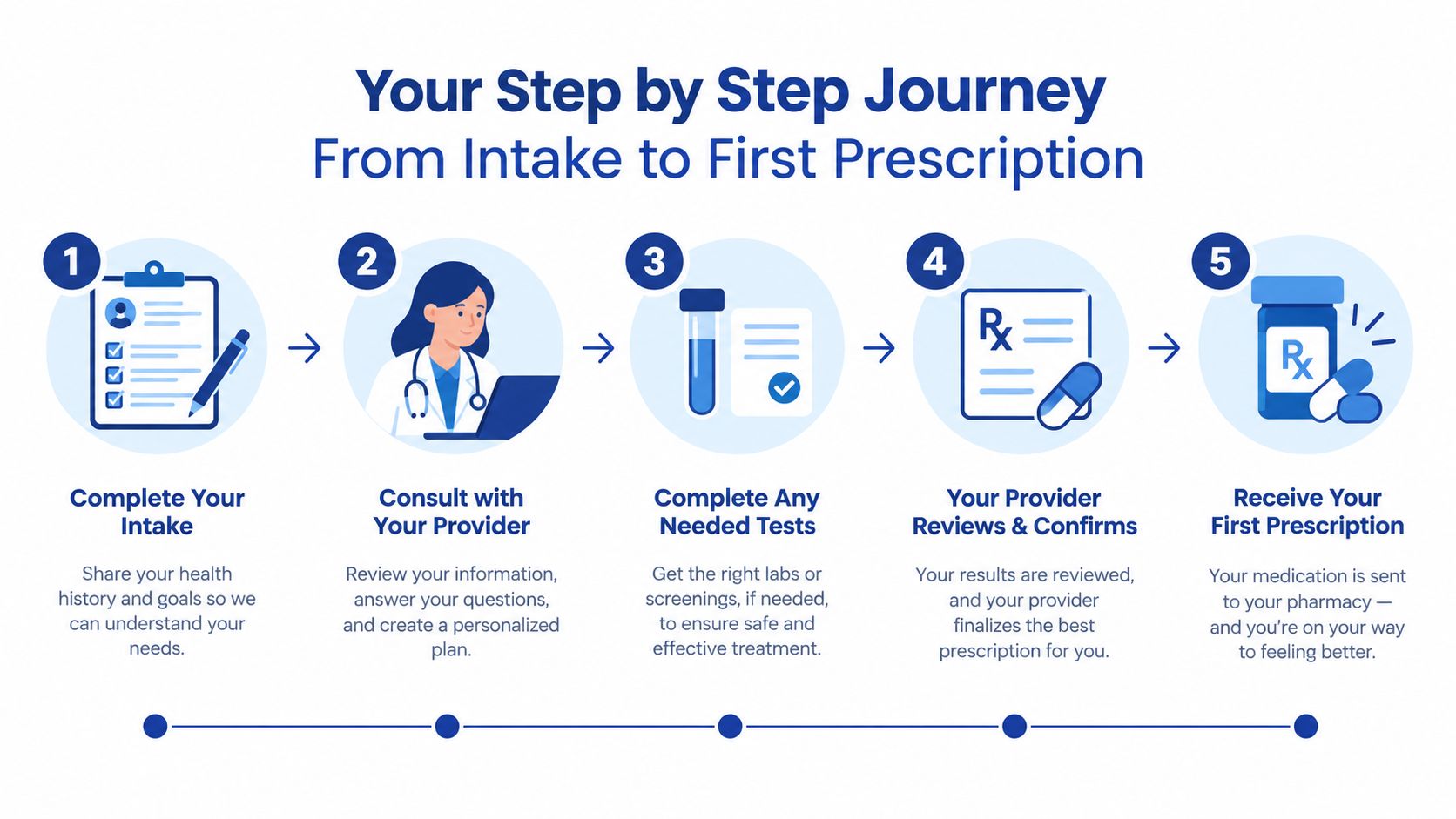
1. Scheduling and digital intake
The patient requests an appointment and completes demographics, insurance information, consent forms, and required intake documentation. Accurate information helps the practice confirm where the patient is located during care, understand the reason for the visit, and prepare for a clinically useful evaluation.
2. Insurance review when applicable
When the practice participates with a patient's plan, eligibility and benefits can be reviewed. Coverage isn't guaranteed, and benefits, copays, deductibles, network status, and authorization requirements vary by plan. Patients can review insurance and fees and confirm their individual benefits before care.
3. Comprehensive psychiatric evaluation
During the first telehealth appointment, the psychiatric provider discusses symptoms, functioning, psychiatric and medical history, current and past medications, treatment response, allergies, substance use when relevant, safety concerns, and treatment goals. The provider may also consider whether symptoms could relate to another medical or psychological issue.
An evaluation isn't the same as a confirmed diagnosis. Diagnosis requires clinical judgment based on the full history and assessment, not a single online questionnaire or symptom checklist.
4. Shared treatment planning
The provider explains reasonable options in clear language. Discussion may include whether medication is indicated, what benefits and risks deserve attention, whether psychotherapy could help, and what monitoring may be needed. The patient's preferences, prior experiences, daily responsibilities, and concerns about side effects are part of shared decision-making.
The plan may involve starting medication, continuing an existing medication, changing treatment, arranging therapy, gathering more information, or postponing prescribing until safety questions are answered.
5. Electronic prescribing and pharmacy coordination
If prescribing is clinically appropriate and legally permitted, the medication is sent electronically to the patient's selected pharmacy. Pharmacy details should be checked carefully because an incorrect address, phone number, or pharmacy selection can delay coordination.
Controlled medications require additional review. Federal policy currently supports certain telemedicine prescribing pathways through December 31, 2026, including behavioral health telehealth provisions described by the American Psychiatric Association's telehealth policy timeline. Patients considering online ADHD medication treatment should ask about the specific medication, the patient's location, and applicable state requirements rather than assuming that every medication can be started remotely.
What Conditions and Medication Decisions Are Covered Online
Online medication management may support treatment for ADHD, anxiety, depression, OCD, PTSD, and other psychiatric conditions appropriate for outpatient care. The central question isn't whether a diagnosis appears on a list. The provider must determine whether the symptoms, history, risks, and treatment goals support medication as part of care.
A board-certified psychiatric mental health nurse practitioner, or PMHNP, is an advanced-practice clinician trained to assess psychiatric symptoms, diagnose within the scope of practice, prescribe when authorized, and monitor treatment. IPA should be described accurately as working with psychiatric providers, including board-certified PMHNPs. A PMHNP isn't a physician psychiatrist, although both types of clinicians may provide psychiatric evaluation and medication care within their respective training, licenses, and legal authority.
Diagnosis comes before medication selection
For ADHD, a provider needs more than a report of distractibility or difficulty finishing tasks. The diagnostic framework requires five or more inattention symptoms persisting for at least six months for predominantly inattentive ADHD, and five or more hyperactivity or impulsivity symptoms persisting for at least six months for predominantly hyperactive or impulsive ADHD, as described in the ADHD DSM-5 criteria.
The provider also considers developmental history, impairment across settings, alternative explanations, co-occurring conditions, sleep, substance use, and medical factors. A screening tool can help identify concerns, but it doesn't establish a diagnosis by itself.
Medication decisions depend on the whole person
Two people with similar symptoms may receive different recommendations. A provider may consider previous medication response, allergies, other prescriptions, cardiovascular or neurological history, pregnancy-related considerations when relevant, substance-use history, sleep patterns, and the patient's treatment priorities.
For adults or families seeking online ADHD treatment in Pennsylvania, stimulant treatment may be considered only when clinically and legally appropriate. Non-stimulant options, psychotherapy, organizational strategies, and coordinated care may also have a place. The same principle applies to anxiety, depression, OCD, PTSD, and other conditions. No diagnosis guarantees a particular drug, dose, or outcome.
How to Prepare for Your First Online Medication Management Visit
Preparation gives the provider a clearer picture and helps the appointment focus on decisions that matter. Patients don't need a perfect timeline. A reasonably complete list, honest answers, and a short set of goals are more useful than trying to remember everything during the video visit.
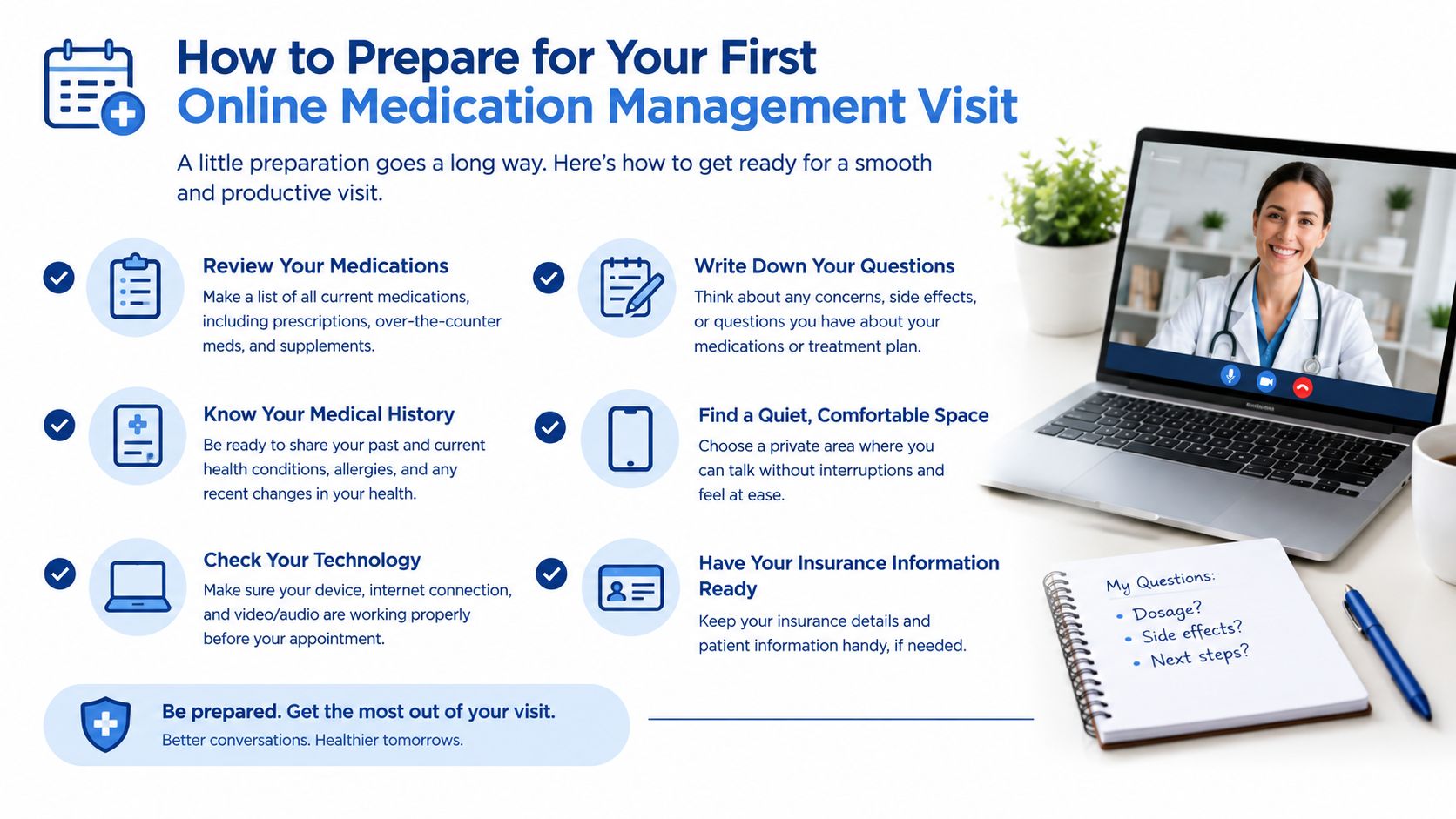
A practical preparation checklist
- Medication history: List current prescriptions, over-the-counter products, vitamins, supplements, doses, and how each medication is taken. Include psychiatric medications used in the past, what helped, what caused problems, and why treatment ended.
- Pharmacy information: Have the pharmacy's name, address, phone number, and preferred location available. This supports accurate electronic prescribing.
- Medical history: Include major diagnoses, allergies, surgeries, relevant medical symptoms, sleep concerns, and any condition that could affect medication safety.
- Previous treatment information: Gather prior evaluations, therapy history, hospital or urgent-care records, and laboratory information when relevant and available. Patients can request records if a previous clinician holds information that may clarify the assessment.
- Personal goals: Write down what the patient hopes to change, such as concentration, panic, sleep, mood stability, intrusive thoughts, trauma symptoms, or daily functioning.
- Private technology setup: A quiet space, working camera and microphone, and reliable internet can make sensitive discussion easier.
IPA uses SimplePractice for its patient-management and telehealth workflow, including secure communication and appointment management features that are available through the platform and practice process. Patients can review the online mental health evaluation process before the first visit.
Practical preparation: A patient who can explain what was taken, what changed, and what happened next gives the provider information that a medication name alone can't provide.
Parents arranging care for a child or adolescent should also have developmental, school, medical, and treatment information available. The provider can explain what participation and consent look like for the patient's age and situation.
Follow Up Monitoring and How Treatment Is Adjusted Over Time
Medication management is a longitudinal process, not a one-time prescription visit. Follow-up appointments give the provider repeated opportunities to assess symptom trends, tolerability, adherence, functioning, and safety. The treatment plan can stay the same, change gradually, or shift to another option when the current approach doesn't fit.
What happens during follow-up visits
Measurement-based care adds structure to these decisions. Patients may complete symptom scales or structured check-ins remotely, allowing the provider to compare changes over time instead of relying only on a single impression. A telehealth collaborative-care model using measurement-based care was reported as feasible and effective for reducing anxiety and depression symptoms, and a rapid review found generally similar outcomes between telehealth and face-to-face psychiatry services across 22 randomized trials in the peer-reviewed review.
| Follow-Up Element | Purpose for Your Care |
|---|---|
| Symptom trend review | Shows whether the original concerns are changing, persisting, or worsening |
| Side-effect discussion | Identifies problems that may require education, monitoring, dose changes, or another medication |
| Adherence conversation | Clarifies whether missed doses, cost, routine, access, or concerns affect consistent use |
| Dose and treatment review | Helps determine whether the plan should continue, adjust, or change |
| Safety assessment | Checks for urgent concerns, mood changes, substance-use risks, or other factors affecting the plan |
| Goal review | Connects treatment decisions to work, school, relationships, sleep, and daily functioning |
Why virtual continuity matters
Telehealth can make recurring care easier to maintain because the patient doesn't need to travel to an office for every monitoring visit. Secure communication can also help patients raise questions between appointments according to the practice's policies. Convenience doesn't replace clinical judgment, but it can reduce practical barriers that interrupt continuity.
A 2025 meta-analysis found that telemedicine interventions improved medication adherence in mental disorders, with Hedges' g = 0.25, 95% CI 0.12 to 0.38, and p < 0.01, as reported in the systematic review of telemedicine and adherence. The same review described six interventions that significantly improved adherence and none that worsened it. These findings support the value of structured digital follow-up, but they don't guarantee that every patient will experience the same result.
An example of individualized integrative care
A patient may report that anxiety worsens during periods of poor sleep and irregular meals while also taking medication for another medical condition. A provider could review the medication list, discuss sleep and daily routines, recommend psychotherapy when appropriate, consider exercise or nutrition education, and order laboratory information only if clinically indicated. That evaluation might influence treatment planning, but laboratory testing, supplements, or nutritional guidance aren't required for every psychiatric medication and don't routinely produce a medication change.
Telehealth Limitations and When In Person or Urgent Care Is Needed
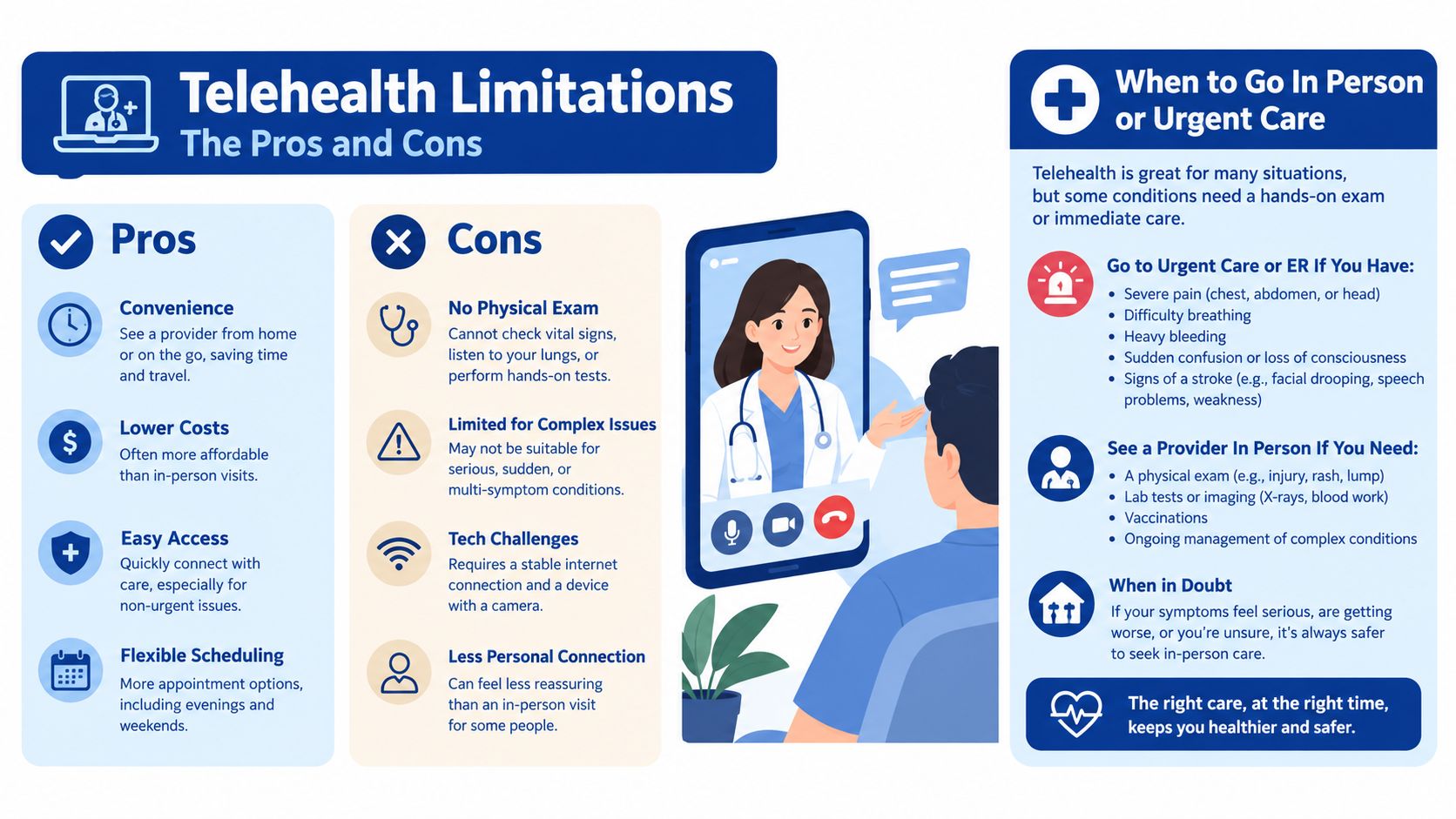
Telehealth medication management works well for many outpatient situations, but it isn't the right setting for every concern. A patient with an emergency, immediate safety risk, severe confusion, serious intoxication or withdrawal, or symptoms requiring physical examination may need urgent or emergency evaluation instead of waiting for a virtual appointment.
A patient who may harm themselves or someone else should contact emergency services or go to the nearest emergency department. A virtual clinic isn't a substitute for emergency response, crisis stabilization, or medical evaluation of a potentially dangerous physical condition.
Controlled substances require careful questions
Federal rules currently allow DEA-registered practitioners to prescribe Schedule II through V controlled substances through telehealth without a prior in-person medical evaluation, when the prescription meets applicable federal and state requirements. The current federal extension runs through December 31, 2026, as explained by HHS telehealth guidance on controlled-substance prescribing.
That federal pathway doesn't make prescribing uniform. State rules, payer requirements, clinician judgment, medication-specific risks, and pharmacy policies can still affect whether a medication is started or continued online. The American Psychiatric Association's Ryan Haight Act telepsychiatry guidance notes that state-specific requirements may differ. New Jersey, for example, requires an initial in-person evaluation for Schedule II drugs with limited exceptions.
Patients asking about ADHD stimulants, benzodiazepines, buprenorphine, or another controlled medication should provide complete information and ask about the exact clinical and legal pathway. A provider may determine that an in-person visit, additional records, closer monitoring, or another treatment option is safer.
People seeking structured support for substance-use concerns may also want to learn about a telehealth intensive outpatient program. That type of service is different from routine outpatient medication management and should be matched to the patient's level of need.
When in-person care may be more appropriate
In-person evaluation may be needed when a physical examination, local testing, vital-sign assessment, or urgent stabilization is clinically important. Technical problems, lack of privacy, inability to confirm the patient's location, or limitations in the available history can also affect whether a virtual visit can proceed safely.
Next Steps for Pennsylvania Patients Considering Online Care
For a Pennsylvania adult or parent considering online care, the most important question isn't whether a provider can send a prescription. The better question is whether the practice offers a complete process, including evaluation, individualized treatment planning, pharmacy coordination, follow-up monitoring, and a clear response when telehealth isn't sufficient.
Insurance participation can make care more accessible, but benefits vary by plan. Patients should verify eligibility, network status, copays, deductibles, and authorization requirements rather than assuming coverage. A practice may support insurance verification while still requiring the patient to confirm the final benefit details with the insurer.
IPA provides statewide virtual psychiatric care through psychiatric providers, including board-certified psychiatric mental health nurse practitioners. Its integrative, evidence-based approach may coordinate medication management with psychological services and, when clinically appropriate, attention to sleep, exercise, nutrition, substance use, and other factors that affect mental health. Patients can learn more about online psychiatric care in Pennsylvania and choose the next step that matches the concern.
An appropriate pathway may include:
- ADHD concerns: Request an ADHD evaluation and discuss whether medication or other support fits the clinical picture.
- Mood, anxiety, OCD, or PTSD symptoms: Request a psychiatric evaluation focused on symptoms, functioning, safety, and treatment options.
- Existing medication treatment: Ask about ongoing psychiatric medication management and follow-up needs.
- Cost questions: Verify insurance benefits before scheduling or ask the practice about available payment information.
A first appointment doesn't obligate the patient to take medication. It creates an opportunity for a careful assessment and a transparent discussion of reasonable next steps.
Integrative Psychiatry of America offers virtual psychiatric evaluations and ongoing medication management for Pennsylvania patients through secure telehealth, with individualized prescribing and follow-up monitoring when clinically appropriate. Patients considering online psychiatric medication management can visit Integrative Psychiatry of America to review services, verify insurance, and request an appointment.