
Another broken night has ended with a phone glowing in the dark. A person with PTSD may feel exhausted, yet remain alert to every sound, replay a trigger from the day, or wake from a vivid nightmare with a racing heart. By morning, the problem can look like ordinary fatigue, but PTSD and sleep problems often reflect a connected clinical pattern that deserves direct attention.
Sleep disruption is common in PTSD, and it can involve more than trouble falling asleep. Nightmares, repeated awakenings, daytime sleepiness, sleep-disordered breathing, and unusual movements during sleep may all require different evaluations and treatments. The practical question isn't just how to sleep longer. It's which sleep problem is present, what is maintaining it, and which intervention has evidence behind it.
Table of Contents
- Why Sleep and PTSD Are So Closely Linked
- How PTSD Disrupts Sleep Architecture
- Common Sleep Problems in PTSD Beyond Insomnia
- Evidence-Based Treatments for Sleep Problems in PTSD
- Practical Sleep Strategies You Can Start Tonight
- Integrative and Telehealth Care in Pennsylvania
- When to Seek Help and Key Takeaways
Why Sleep and PTSD Are So Closely Linked
Sleep disturbance is a central clinical target in PTSD. A 2023 review reported that upwards of 90% of people with PTSD endorse some form of sleep problem, while insomnia affects about 70% of diagnosed individuals (peer-reviewed review of PTSD and sleep). Earlier clinical literature found difficulty falling or staying asleep in 70% to 91% of patients and nightmares in 19% to 71%, with variation related to trauma exposure and PTSD severity (review of PTSD sleep disturbance).
Findings from community samples point in the same direction. In a national sample of U.S. adults, more than 92% of people meeting DSM-5 criteria for PTSD reported at least one sleep disturbance (population and meta-analytic findings on PTSD sleep). A 2022 meta-analysis of 75 studies and more than 573,665 individuals found a pooled insomnia prevalence of 63% among people with PTSD or posttraumatic stress symptoms (2022 PTSD insomnia meta-analysis).
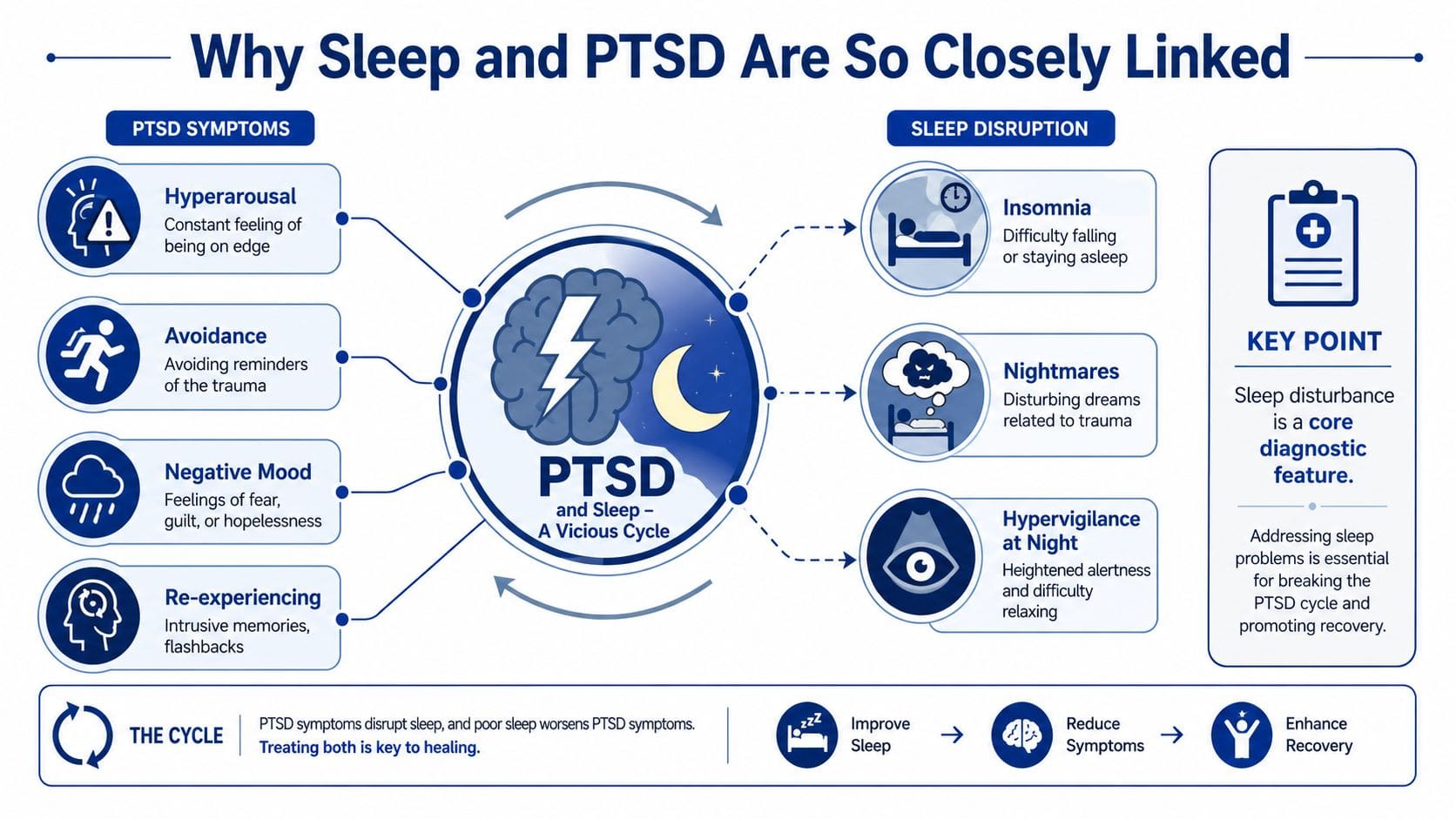
The cycle keeps both problems active
Trauma symptoms can keep the nervous system alert after bedtime. Intrusive memories and nightmares interrupt sleep. Avoidance may lead someone to delay bedtime or leave the television on, while hypervigilance can make darkness and silence feel unsafe.
Poor sleep then reduces daytime emotional control. Fatigue may increase irritability, emotional reactivity, concentration problems, and vulnerability to intrusive memories. The result is a self-reinforcing feedback loop that requires clinical assessment, rather than a judgment about personal discipline.
Clinical rule: Persistent sleep symptoms deserve direct assessment, even when trauma treatment is already underway.
Early trauma can also shape adult sleep and stress responses. A resource on the effects of childhood trauma on adults may help patients understand why these patterns persist. Treatment should identify the specific sleep problem, because insomnia, nightmares, sleep apnea, and REM-related disturbance do not share the same first-line approach. Sleep care can begin while broader PTSD symptoms are still being treated.
How PTSD Disrupts Sleep Architecture
A person can spend adequate time in bed and still wake unrefreshed. That experience reflects measurable sleep fragmentation, not insufficient effort. Polysomnography records brain waves, breathing, muscle activity, and eye movements. A meta-analysis found that people with PTSD had less total sleep time, less slow-wave sleep, lower sleep efficiency, and more wake after sleep onset than healthy controls (polysomnography meta-analysis).
Slow-wave sleep is the deepest stage of non-REM sleep. Reduced time in this stage may help explain why some patients feel exhausted yet never reach restorative rest. Greater PTSD severity was also associated with lower sleep efficiency and reduced slow-wave sleep in the same analysis.
Subjective insomnia and objective fragmentation
Subjective insomnia describes difficulty falling asleep, staying asleep, or feeling restored after sleep. Objective testing can reveal frequent brief awakenings, less deep sleep, or altered REM patterns that the patient does not remember. The result can be a mismatch between the night recalled and the disruption measured.
REM findings vary with age and study population. REM sleep percentage was significantly reduced in PTSD groups with a mean age below 30 years, while researchers did not observe that pattern in older groups. PTSD therefore does not produce one uniform sleep profile.
| Sleep measure | PTSD finding | Clinical effect |
|---|---|---|
| Total sleep time | Reduced compared with healthy controls | Greater exhaustion and less restorative sleep |
| Slow-wave sleep | Reduced, with lower levels linked to greater PTSD severity | Sleep may feel shallow or unrefreshing |
| Sleep efficiency | Lower than in healthy controls | More time awake while in bed |
| Wake after sleep onset | Increased | Repeated or prolonged nighttime disruption |
| REM sleep | Findings vary by age and cohort | Dream-related symptoms may not look identical across patients |
The threat system can remain active while the brain should be moving between sleep stages. Patients may feel physically tired while staying neurologically prepared to detect danger. That distinction affects treatment: insomnia-focused care may help difficulty initiating or maintaining sleep, while nightmares, breathing-related disruption, and REM abnormalities require different assessments and interventions.
A circadian rhythm disorder evaluation may be appropriate when the main problem is a delayed or irregular sleep schedule rather than trauma-linked awakenings. Identifying the sleep architecture problem first prevents every nighttime symptom from being attributed to PTSD alone.
Common Sleep Problems in PTSD Beyond Insomnia
“PTSD insomnia” can conceal several sleep conditions that require different assessments and treatments. A broader PTSD sleep syndrome may include nightmares, sleep-disordered breathing, periodic leg movements, disruptive nocturnal behaviors, and REM or non-REM abnormalities, as described in this review of sleep disorders associated with PTSD.
Match the nighttime pattern to the morning pattern
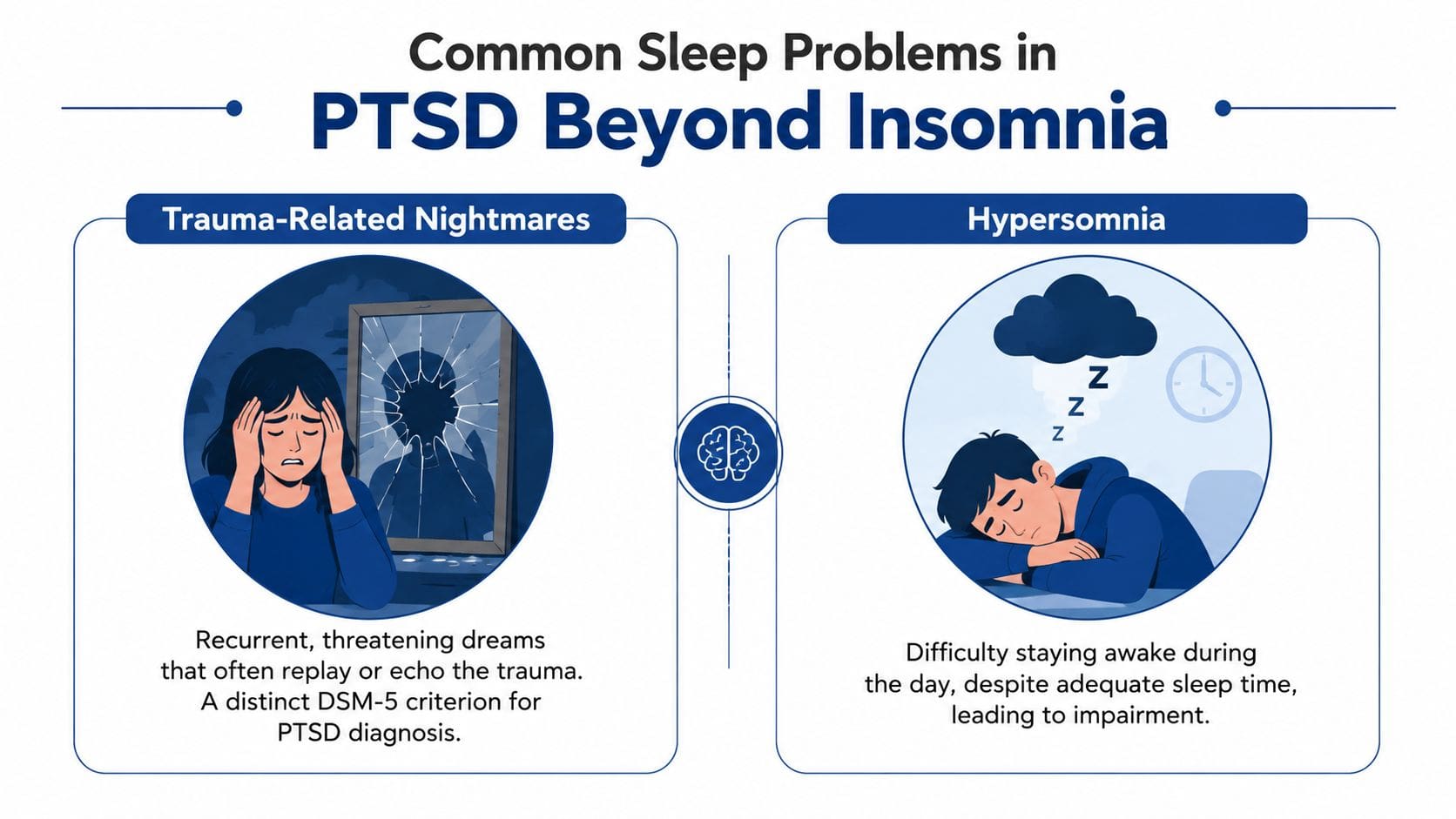
Trauma-related nightmares may replay or echo a traumatic event and leave the patient distressed on waking. Recurrent distressing dreams are part of PTSD diagnostic criteria. Dream content, timing, and the patient's response help determine whether nightmares are trauma-linked or reflect another sleep problem.
Sleep-onset insomnia means lying awake while tense, watchful, or mentally activated. Sleep-maintenance insomnia involves repeated awakenings or extended periods awake during the night. Both can produce daytime frustration, mental fog, and growing concern about the next night.
Nocturnal hyperarousal may involve checking locks, scanning the room, sweating, startling at sounds, or waking with a sense of imminent danger. A patient may have no dream memory, yet the body responds as though a threat is present.
Obstructive sleep apnea needs its own evaluation. Loud snoring, gasping, witnessed breathing pauses, dry mouth, morning headaches, and marked daytime sleepiness point toward disrupted breathing. Increasing a sedating medication without assessing apnea can worsen the clinical picture.
Periodic limb movements produce repeated leg or arm movements during sleep. Patients may not notice them. A partner may report the movements, or the patient may describe unrefreshing sleep despite spending enough time in bed.
Why subtype matters
A nightmare-focused presentation may respond to imagery rehearsal therapy. Chronic insomnia may require CBT-I. Suspected apnea calls for breathing assessment and, if confirmed, treatment for sleep-disordered breathing. Excessive daytime sleepiness can reflect fragmented sleep, medication effects, hypersomnia, or another sleep disorder.
There is no consensus on one objective sleep profile in PTSD. Assessment should cover breathing, movements, dream enactment, medications, substances, sleep schedule, and daytime alertness. Sleep deserves primary clinical attention, not automatic attribution of every nighttime symptom to PTSD.
Evidence-Based Treatments for Sleep Problems in PTSD
Treatment should follow the sleep subtype. Trauma-focused therapy can reduce the underlying PTSD pattern, yet insomnia, nightmares, sleep apnea, or dream-enactment symptoms may persist and need separate assessment. A systematic review of randomized controlled trials found improvements in sleep outcomes across 49 RCTs, with a standardized mean difference of -0.56. PTSD symptoms also improved across 44 RCTs, with a standardized mean difference of -0.48 (systematic review of PTSD interventions and sleep).
Match treatment to the problem
Trauma-focused therapies, including cognitive processing therapy, prolonged exposure, and EMDR, address traumatic memories, avoidance, threat beliefs, and fear responses. Sleep can improve as PTSD improves, but ongoing insomnia or nightmares still warrant targeted treatment.
CBT-I is the primary behavioral treatment for chronic insomnia. Stimulus control rebuilds the link between bed and sleep. Sleep restriction temporarily narrows time in bed to strengthen sleep drive, while cognitive work addresses predictions such as, “If sleep is poor tonight, tomorrow will be impossible.” The early workload can be difficult for someone already exhausted, but the treatment targets insomnia directly rather than relying on sedation.
Imagery rehearsal therapy is designed for recurrent nightmares. During the day, the patient works with a clinician to develop a less threatening version of the dream and rehearses it. The goal is not to deny the trauma. It is to alter the learned nightmare script.
Prazosin may be considered for trauma-related nightmares in selected patients. Findings are mixed, so clinicians should review blood pressure, dizziness, fainting risk, other medications, and the person's response over time. It is not a universal treatment.
Sleep apnea and other comorbid sleep disorders require medical assessment rather than a medication increase aimed at PTSD. Loud snoring, gasping, witnessed breathing pauses, dry mouth, morning headaches, or substantial daytime sleepiness should change the evaluation. Medication choice also depends on whether the main problem is insomnia, nightmares, breathing disruption, or next-day sedation.
Other medications, such as trazodone or mirtazapine, may suit selected cases. Brief hypnotic use can help some patients, but tolerance, dependence, next-day impairment, and limited PTSD-specific evidence require careful discussion. Alcohol is not a safe substitute.
| Treatment | Best targets | Evidence strength | Key trade-off |
|---|---|---|---|
| Trauma-focused therapy | Core PTSD symptoms and trauma-linked arousal | Established PTSD treatment approach | Sleep may need separate treatment |
| CBT-I | Persistent sleep-onset or sleep-maintenance insomnia | Strong sleep-focused evidence | Structured practice can feel difficult early |
| Imagery rehearsal therapy | Recurrent distressing nightmares | Sleep-targeted evidence | Requires rehearsal of a revised dream |
| Prazosin | Trauma-related nightmares in selected patients | Mixed findings | Blood pressure effects and variable response |
| Trazodone or mirtazapine | Insomnia with selected mood or anxiety features | Individualized, less PTSD-specific | Sedation and other medication effects |
| Hypnotic medication | Short-term severe insomnia in selected cases | Limited role for long-term PTSD care | Tolerance, dependence, and next-day impairment |
A structured calm wind-down protocol can complement treatment, but supplements and relaxation routines should not replace evaluation when symptoms continue. Patients seeking trauma-focused care can review therapy options for PTSD with a qualified clinician.
Practical Sleep Strategies You Can Start Tonight
Night routines can reduce arousal and support treatment, but they cannot diagnose sleep apnea or resolve severe PTSD alone. Choose steps that are predictable, simple, and realistic enough to repeat. The right target also depends on the problem. Regular scheduling may support insomnia, while recurrent nightmares, breathing pauses, or unusual dream enactment require different clinical assessment.
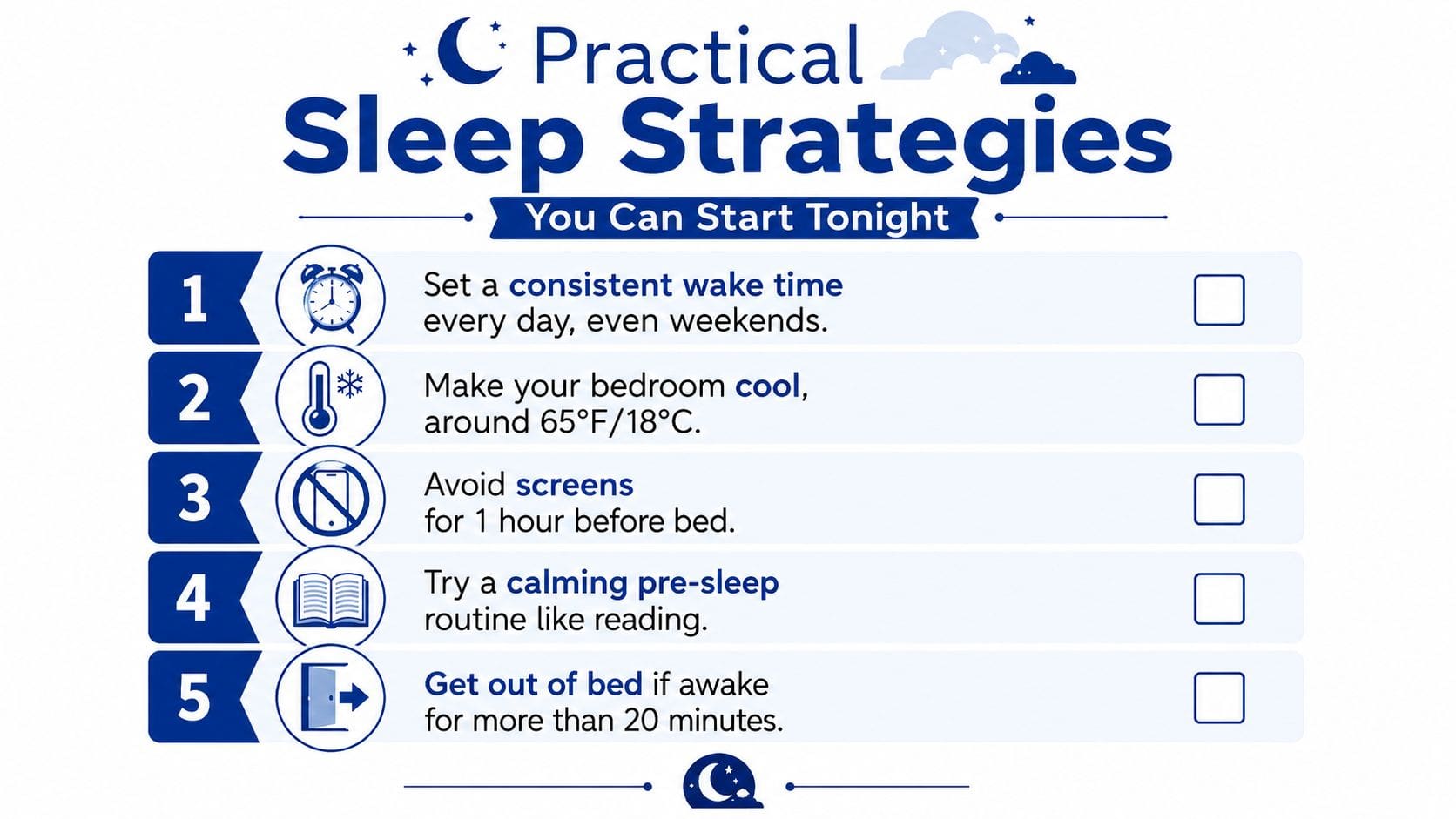
A practical evening checklist
- Set a consistent wake time: A stable morning anchor often helps more than forcing an early bedtime. Keep the schedule workable instead of making an aggressive change that increases stress.
- Make the room comfortable: A cool, dark, quiet room can reduce sensory triggers. Earplugs, an eye mask, or steady background sound may help when sudden noise increases vigilance.
- Reduce screen stimulation: Put phones and tablets aside before bed when possible. If a phone is needed for safety, dim the display and remove news, social media, and trauma-related content.
- Use a calming routine: Reading, gentle stretching, or a warm shower can signal a transition. The routine should feel safe, not like another performance test.
- Leave the bed when fully awake: Sit in a dim room and do something quiet. Return to bed when sleepiness returns, which helps weaken the link between bed and alertness.
Lower arousal without forcing relaxation
Paced breathing helps some people, yet breath-focused exercises can increase distress after trauma. Try a slower exhale, gentle body scan, or brief grounding exercise if counting breaths feels unsafe.
The 5-4-3-2-1 grounding tool directs attention to present sensory details. Cognitive defusion uses a phrase such as “this is a trauma memory,” rather than treating the thought as a current warning. The 5-4-3-2-1 Grounding Tool offers a structured version of that exercise.
Safety boundary: Alcohol, borrowed prescriptions, and unreviewed combinations of sedatives can create more risk than relief.
Vigorous late-evening exercise can leave some people activated. Earlier walking, cycling, or strength training may fit better, while gentle stretching can work closer to bedtime. Anyone considering melatonin, an over-the-counter antihistamine, or a sedating prescription should ask the prescribing clinician before combining products.
Bedroom comfort may support sleep without treating PTSD. Readers considering a mattress change can review the effects of a good mattress on mood while keeping comfort changes separate from clinical care.
Integrative and Telehealth Care in Pennsylvania
A useful evaluation begins with a detailed sleep and trauma history. The clinician needs to know whether the main problem is nightmares, insomnia, breathing disruption, daytime sleepiness, medication effects, substance use, or several issues at once.
For an adult in Philadelphia, the first visit may include a psychiatric evaluation, review of trauma symptoms, medication history, sleep timing, and safety concerns. The treatment plan can then combine trauma-focused psychotherapy, CBT-I referral or coordination, medication management when indicated, and sleep evaluation when apnea or another disorder is suspected.
What coordinated care can include
Integrative care doesn't mean replacing evidence-based treatment with supplements. It means layering practical supports onto appropriate psychiatric and sleep care.
- Medication review: A clinician can assess whether a medication is helping, worsening sedation, increasing activation, or interacting with an over-the-counter product.
- Mindfulness and grounding: These skills can be adapted for patients who find quiet attention uncomfortable after trauma.
- Nutrition and exercise guidance: Regular meals, physical activity, and individualized planning may support energy and routine without pretending that diet alone treats PTSD.
- Laboratory or genetic screening: When clinically appropriate, testing may help investigate medication response or contributors such as thyroid dysfunction or iron deficiency.
- Sleep referral: Suspected apnea, periodic limb movements, or unusual sleep behaviors may require a sleep specialist or formal sleep study.
Integrative Psychiatry of America provides virtual psychiatric evaluations, medication management, and integrative mental health treatment through telehealth for patients across Pennsylvania. A patient can learn more about what telepsychiatry involves before deciding whether remote care fits the situation.
Follow-up matters because sleep patterns can change as treatment starts. A telehealth appointment can support regular symptom tracking from home, including Philadelphia and other Pennsylvania communities, while the clinician monitors nightmares, sleep timing, daytime alertness, side effects, and safety.
When to Seek Help and Key Takeaways
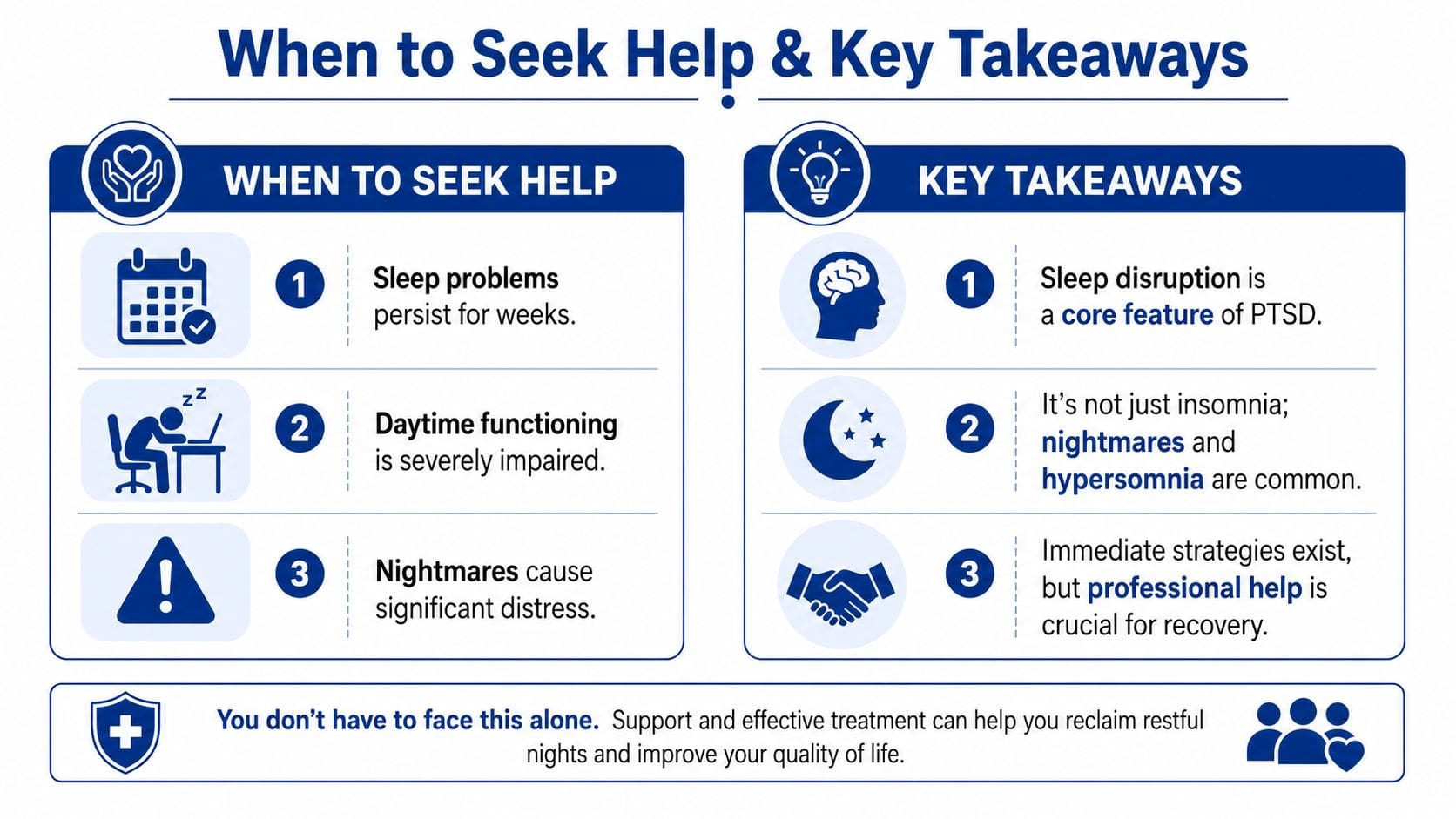
Sleep disruption is a central feature of PTSD. It isn't limited to insomnia, and it shouldn't be treated as a complaint that must wait until trauma symptoms are fully resolved. Nightmares, hyperarousal, breathing problems, periodic movements, and excessive sleepiness can require different assessments.
Professional help is appropriate when:
- Nightmares remain frequent and distressing: Recurrent nightmares occurring more than twice weekly deserve clinical attention.
- Insomnia persists: Trouble falling or staying asleep that continues beyond a few weeks despite reasonable self-management warrants evaluation. The U.S. PTSD National Center describes insomnia as difficulty falling or staying asleep at least three nights a week, lasting for a few months or more, and impairing work or home life (PTSD National Center insomnia definition).
- Daytime sleepiness is prominent: Falling asleep unintentionally, waking with headaches, loud snoring, or witnessed breathing pauses can point toward sleep apnea or another sleep disorder.
- PTSD symptoms are escalating: Increasing avoidance, intrusive memories, irritability, substance use, or inability to function calls for timely care.
- Suicidal thoughts return: Any return of suicidal thoughts requires immediate support through emergency services, a crisis line, or an urgent clinical evaluation.
Sleep-focused CBT and imagery rehearsal therapy have direct evidence for sleep symptoms, while trauma-focused therapy addresses the disorder driving many nighttime reactions. The best plan often combines the two, then adds sleep-disorder testing or medication only when the clinical picture supports it.
Adults who need guidance can review when to see a psychiatrist and seek an assessment rather than continuing to push through exhaustion. Sleep problems are treatable, but waiting can give the cycle more time to become established.
Integrative Psychiatry of America offers virtual psychiatric evaluations, medication management, and integrative PTSD care for adults throughout Pennsylvania. Patients with trauma-related insomnia, nightmares, or suspected medication and sleep-disorder contributors can visit Integrative Psychiatry of America to request an evaluation from home.