
Knowing when it's time to see a psychiatric provider can be confusing. The simple truth is, if your mental health is getting in the way of your daily life, your job, or your relationships, it's time to get help. That’s the sign. Persistent sadness, overwhelming anxiety, or thoughts you can't seem to control are all valid reasons to reach out.
Deciding to seek support is a sign of strength, not a weakness.
When Should You See a Psychiatric Professional?
Figuring out the "right" time to schedule an appointment is a tough, personal call. So many people I've worked with hesitate, asking themselves if their struggles are “bad enough” to warrant professional help. It’s a completely normal thought, but you don't have to just "tough it out." Living with constant mental or emotional distress isn't a requirement.

Recognizing the Need for Expert Support
The first, and often hardest, step is simply admitting that you could use some help. You don't need to be in a full-blown crisis to benefit from expert care. In fact, seeking help earlier often leads to better, faster results.
When you do, you might see a psychiatrist or a board-certified psychiatric mental health nurse practitioner (PMHNP). These are highly trained medical professionals who are true experts in mental healthcare. A PMHNP is qualified to:
- Diagnose conditions like depression, anxiety, PTSD, and ADHD.
- Create a personalized treatment plan just for you.
- Prescribe and carefully manage medications if they're needed.
- Offer advanced therapeutic support.
Think of a PMHNP as a specialist for your mental well-being. They combine the medical knowledge to understand the brain's biology with the therapeutic skill to help you navigate your emotional and mental challenges.
Making Care Accessible and Convenient
Just the thought of finding a provider, scheduling appointments, and traveling to an office can feel like a huge barrier. Thankfully, getting care is much easier than it used to be.
Telepsychiatry has changed the game, allowing you to connect with a qualified professional right from your own home. It eliminates the stress of traffic, taking time off work, and sitting in a waiting room.
At Integrative Psychiatry of America, our PMHNPs provide this exact kind of compassionate, expert care online for adults across Pennsylvania. Your concerns are real, and there's a clear path forward to help you feel like yourself again.
Psychiatric Care vs. Traditional Therapy
So, you’ve decided you’re ready for some support, but who do you actually call? A therapist? A psychiatric provider? It’s a common question, and it's easy to get the two confused. Figuring out the difference is the first step toward getting the right kind of help for what you’re going through.
Think of a therapist or counselor as a personal trainer for your mind. Their main tool is talk therapy (also called psychotherapy). In your sessions, you’ll work together to unpack your thoughts, feelings, and behaviors. The goal is to build new coping skills and find healthier ways to navigate life's challenges. It's an active, collaborative process focused on building your mental and emotional strength.
The Role of a Psychiatric Provider
A psychiatric provider, on the other hand, is more like a medical specialist for your mental health. This could be a psychiatrist or a psychiatric mental health nurse practitioner (PMHNP). PMHNPs are highly trained professionals who bring together expertise from both nursing and psychiatry. This gives them a unique ability to look at your well-being from both a medical and a therapeutic angle.
A psychiatric provider's role often includes things a traditional therapist can't do. They are trained to:
- Look at the Medical Picture: They’ll dig into your symptoms, your personal and family medical history, and other biological factors that could be influencing how you feel.
- Provide a Diagnosis: With this information, they can give you a clear, formal diagnosis for conditions like depression, an anxiety disorder, ADHD, or bipolar disorder.
- Manage Medication: This is the big one. PMHNPs are licensed to prescribe and manage medications that can help rebalance brain chemistry and ease your symptoms.
The biggest distinction is that psychiatric providers like PMHNPs can treat mental health from a medical perspective. That includes prescribing medication, which is often essential when symptoms have a biological cause that talk therapy alone can’t resolve.
An Integrated Path to Wellness
Here’s the thing: choosing between therapy and psychiatric care isn't usually an either/or situation. For many people, the best results come from a combination of both. It’s like recovering from a bad knee injury—you might see an orthopedic doctor for the medical issue while also working with a physical therapist to rebuild strength.
A PMHNP can build a treatment plan that pairs medication with specific therapeutic strategies. They often work closely with your therapist to make sure everyone is on the same page. This allows medication to help stabilize your mood and thoughts, which can make the work you do in therapy even more powerful. It’s about building a complete support system that addresses both the psychological and the biological sides of your mental health.
It’s tough to know the difference between a rough patch and something more serious. We all have bad days or even bad weeks where we feel down, stressed, or just a little off. But what happens when those feelings don't go away? When they start to interfere with your job, your relationships, or just your ability to enjoy life, that’s a clear signal it might be time to get some professional support.
Taking that first step is all about recognizing the signs in yourself. Let's walk through seven common experiences that suggest a conversation with a psychiatric professional could make a real difference.
1. A Persistent Feeling of Sadness or Emptiness
Sadness is a natural part of life, a normal response to loss or disappointment. But when that sadness digs in for more than two weeks and becomes a constant, heavy blanket you just can't shake, it might be clinical depression.
This isn't just about "feeling blue." It's often a profound sense of emptiness, a loss of hope, or a persistent feeling of worthlessness that seems to suck the color out of everything. If you find yourself crying for no apparent reason or, conversely, feeling completely numb, it’s a strong sign you should talk to someone.
2. Major Shifts in Your Sleep or Appetite
Your body has a way of showing you when something is wrong mentally. Think of your sleep and appetite as barometers for your well-being. Any major, unexplained changes are classic red flags.
Are you wrestling with insomnia, with thoughts racing the second your head hits the pillow? Or are you on the opposite end, sleeping far more than usual but waking up just as exhausted? The same goes for food—a sudden disinterest in eating and unintentional weight loss, or compulsive overeating for comfort, are often physical symptoms of underlying mental distress.
These aren't just lifestyle quirks; they're often biological symptoms of conditions like depression or anxiety. A psychiatric provider can help get to the root cause and see if medication might help regulate these physical systems, giving you a foundation to build on.
3. Losing Interest in Things You Used to Love
One of the most telling signs is when you stop caring about the hobbies, activities, and people that once brought you joy. In clinical terms, this is called anhedonia, and it's a core symptom of depression.
Maybe you were an avid gardener, but now your plants are wilting. Perhaps you lived for your weekly game night with friends but now you consistently make excuses to stay home. When the things that once made you feel like you now feel like a massive effort, it’s a powerful sign that something deeper is going on.
This is a key point where you might wonder what kind of help is best. This flowchart can help you think through whether therapy or seeing a psychiatric provider is the right starting point for your needs.
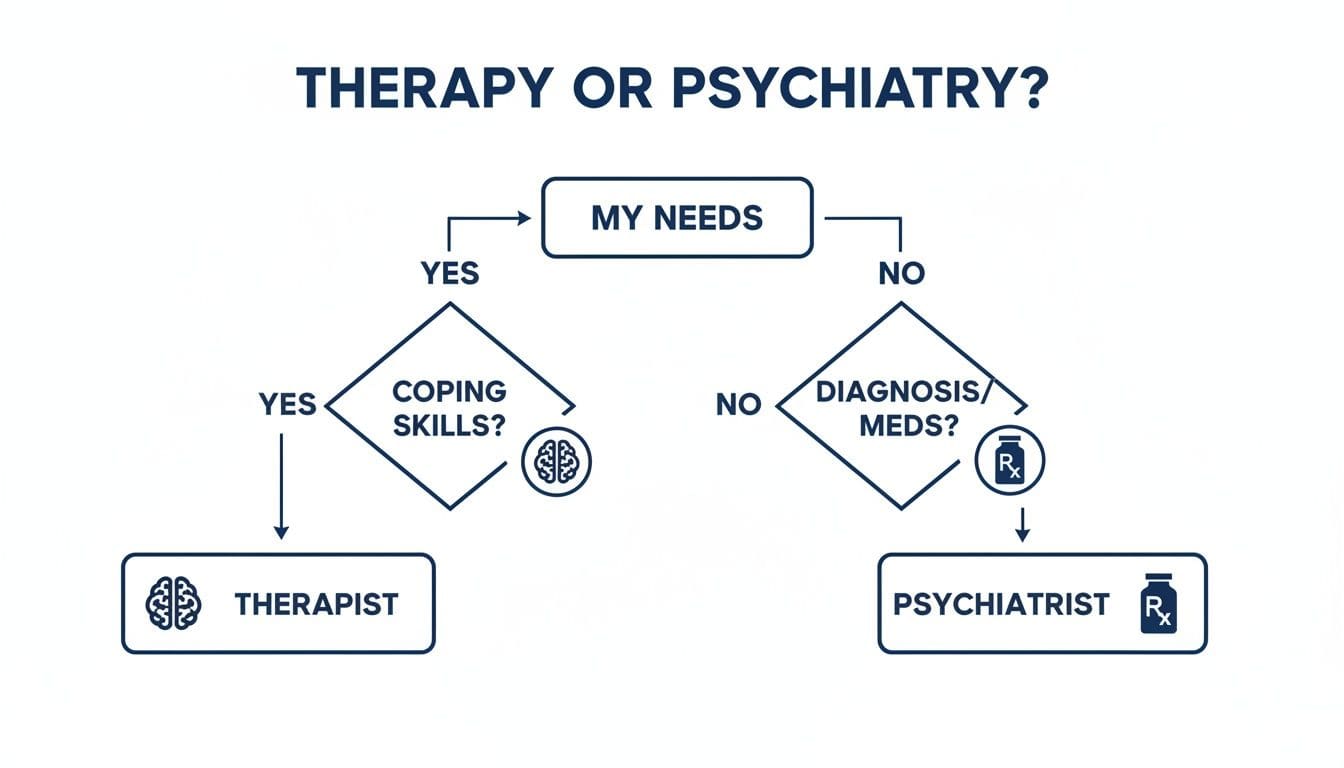
As the guide shows, therapy is fantastic for building coping skills and processing experiences. But if your symptoms are significantly impacting your daily functioning and you're considering medication, a psychiatric provider who can prescribe is the specialist you need.
4. Overwhelming Worry or Intrusive Thoughts
Everyone worries. But when does normal concern become something more? If you feel trapped in a relentless cycle of fear, panic, or obsessive thoughts you can't control, it may be a sign of an anxiety disorder, OCD, or even PTSD.
This isn't just worrying about an upcoming bill. It's an all-consuming sense of dread that can trigger physical symptoms like a racing heart, shortness of breath, or a constant feeling of being on high alert. When worry is the main character in your life story, it's time to get help rewriting the script.
5. Trouble Concentrating or Making Decisions
Does it feel like your brain is wrapped in a thick fog? Having a hard time focusing, remembering things, or even making simple decisions can be incredibly frustrating. While it's easy to blame it on stress or not getting enough sleep, persistent brain fog can be a symptom of several mental health conditions, including ADHD, depression, and anxiety.
When your inability to focus starts to impact your performance at work, school, or your ability to handle everyday responsibilities, a psychiatric evaluation can help bring some much-needed clarity.
6. Extreme Mood Swings
While everyone is a little "moody" at times, we’re talking about something far more dramatic. If you find yourself ricocheting between extreme highs and devastating lows, it’s a serious sign.
These swings can look like periods of intense, euphoric energy (mania) where you feel on top of the world and act impulsively, followed by crushing periods of depression. This pattern is a hallmark of conditions like bipolar disorder and can wreak havoc on your relationships, finances, and overall stability.
7. Thoughts of Self-Harm or Hopelessness
This is the most important and urgent sign of all. If you are having thoughts about hurting yourself, or if you feel a deep, unshakable sense of hopelessness that life isn’t worth living, it is critical to seek help immediately. You do not have to carry this weight by yourself.
When to Seek Help: Routine vs. Urgent Signs
Knowing whether to book a future appointment or seek immediate help can be confusing. This table breaks down some of the signs we've discussed into routine and urgent categories.
| Symptom Category | Routine Consultation Sign (Book an Appointment) | Urgent Care Sign (Seek Immediate Help) |
|---|---|---|
| Mood | Persistent sadness, irritability, or emptiness for over two weeks. | Actively planning or thinking about suicide; intense feelings of hopelessness. |
| Anxiety/Worry | Constant worry or obsessive thoughts that are distressing but manageable. | Severe panic attacks; feeling completely overwhelmed by fear or dread. |
| Behavior | Withdrawing from social activities; loss of interest in hobbies. | Risky or impulsive behavior that endangers yourself or others; inability to care for yourself. |
| Cognition | Difficulty concentrating or making decisions that impacts work/home life. | Disorientation, confusion, or experiencing a break from reality (psychosis). |
| Physical | Gradual changes in sleep or appetite over several weeks. | Sudden, drastic weight loss or refusal to eat; not sleeping for multiple days. |
If any of your symptoms fall into the "Urgent" column, please don't wait. Your safety is the number one priority.
These struggles are far more common than most people realize. Research suggests about half of all people globally will experience a mental health disorder in their lifetime, but far too many wait years to get help. This delay allows conditions like depression, which affects 4% of the world's population, to become more severe. Here in the U.S., 22.8% of adults—that’s over 57 million people—lived with a mental illness in 2021, a stark reminder that you are not alone in this. You can explore more about these mental health statistics to see just how widespread these challenges are.
What to Expect From Your First Online Psychiatry Visit
Taking the first step toward seeing a psychiatric provider can feel like a huge hurdle. The fear of the unknown—what will they ask? what will it be like?—stops a lot of people from getting the support they need. Let’s pull back the curtain on that first online visit so you know exactly what’s involved. It’s a lot more straightforward and supportive than you might think.

The whole process starts right from your own home. You’ll be able to schedule your appointment online, picking a time that fits into your life without having to clear your whole schedule.
The Initial Setup
Before your appointment, you will likely get an email with a link to a secure patient portal. Here, you’ll fill out some initial paperwork that covers your medical history, what you've been experiencing, and what you’re hoping to get out of your visits.
Getting this done ahead of time is incredibly helpful. It gives your provider a chance to review your information beforehand, so your first conversation can be much more focused and productive right from the start.
The Confidential Video Call
Think of your first telepsychiatry appointment as a conversation, not an interrogation. From the privacy of your own space, you'll connect with your provider over a secure, HIPAA-compliant video call. The main goal here is simple: for them to listen and understand what's been going on.
Your provider will ask you questions about your symptoms, how they're affecting your daily life, and a bit about your personal history. This isn't just a checklist; it's a genuine dialogue to help them get an accurate picture of your needs so you can build a treatment plan together.
Your provider's mission is to create a safe and inclusive environment where you feel heard and respected. It’s a space where your experiences are validated, allowing you to share openly and honestly.
Seeking help is a powerful step, especially when you consider the broader impact. Untreated mental health conditions contribute to nearly $1 trillion in lost productivity worldwide each year. This really underscores why it’s so important to see a provider when symptoms start to interfere with your life. In the United States alone, over 9% of adults with mental illness were uninsured in 2022-2023, which is why accessible care options are so critical. You can read more about the global impact of mental health and see just how widespread these challenges are.
A Whole-Person Approach to Mental Wellness
When you hear the word “psychiatry,” what comes to mind? For many, it’s a quick appointment and a prescription. But modern mental healthcare has evolved far beyond that. The goal isn't just to manage symptoms, but to understand why you're feeling the way you do and build a path toward lasting wellness.
This is what we call an integrative approach. It’s a partnership between you and your provider that looks at you as a whole person, not just a diagnosis on a chart. At Integrative Psychiatry of America, our board-certified psychiatric nurse practitioners (PMHNPs) are specialists in this very philosophy. They bring together expert medication management with a deep understanding of how your biology, habits, and lifestyle all connect to your mental health.
More Than Just a Prescription
An integrative plan looks at the full picture of your well-being. Think of your PMHNP as a guide who helps you explore all the different avenues that lead to feeling better. It's a collaborative process, which means the treatment plan is built with you, for you.
What this looks like in practice might include:
- Nutrition and Exercise Guidance: We now know just how much food and movement impact mood and energy. Your provider can offer practical advice on simple changes that can make a real difference in supporting your mental health.
- Mindfulness and Meditation: Learning techniques to calm your nervous system isn't just a trend; it's a powerful skill. These tools can be a game-changer for managing the daily static of anxiety and depression.
- Targeted Screenings: Sometimes, the root of the problem is biological. Your provider might recommend genetic testing or lab work to uncover underlying factors that could be contributing to your symptoms, allowing for much more precise treatment.
At its core, this whole-person model is about finding what works for you. It’s not a one-size-fits-all formula, but a dynamic and supportive process aimed at helping you feel genuinely well by addressing the powerful link between your mind and body.
A Modern Path to Feeling Better
Your mental health is shaped by a complex web of biological, psychological, and social threads. A psychiatric nurse practitioner is trained to see how all those threads are woven together, blending medical expertise with a compassionate, therapeutic presence. They lead with practical, evidence-based care that feels supportive and human.
The ultimate goal is to move beyond temporary fixes and work toward genuine, long-term stability. By combining strategies like mindfulness or nutritional counseling with medication, you end up with a much stronger set of tools for navigating whatever life throws your way.
And the best part? This advanced level of care is more accessible than ever. Through secure telepsychiatry, you can meet with a PMHNP from anywhere in Pennsylvania. You get expert, integrative treatment from the comfort and privacy of your own home—a truly modern path to not just feeling better, but truly getting well.
How to Find the Right Psychiatric Provider in Pennsylvania
You’ve learned the signs and know what to expect from a first visit. Now, let’s talk about the "how." Finding the right provider in Pennsylvania doesn’t have to be another source of stress. The truth is, just deciding you’re ready for professional help is often the biggest and most important step you’ll take.
Once you’re there, the path forward is clearer than you might think. The first practical hurdle is usually insurance or cost. Many modern practices, including our own, have made this much simpler by letting you verify your benefits right on their website, taking the guesswork out of the equation.
Taking Action and Preparing for Your Visit
After you’ve sorted out the logistics, you're ready to schedule your appointment. At Integrative Psychiatry of America, for example, our secure online portal lets you book a confidential telepsychiatry session with a psychiatric nurse practitioner without a lot of back-and-forth.
To get the most out of that first meeting, it helps to do a little prep work. Think of it as creating a brief guide for your provider.
- Jot down your symptoms: What have you been feeling, and for how long? No detail is too small.
- List your questions: What are you curious or nervous about? Write it all down so you don’t forget.
- Define your goals: What does "feeling better" actually look like for you? Having a goal in mind can be incredibly powerful.
This simple roadmap is designed to remove barriers and connect you with a provider who can help you start feeling like yourself again. Globally, over a billion people live with mental health conditions, but far too many go without care. In the U.S. alone, 23.4% of adults—more than 60 million people—experienced a mental illness in a recent year. You can learn more about the global scale of mental health needs and see just how vital it is to get support when you need it.
Your Questions About Psychiatric Care, Answered
It’s completely normal to have questions when you're thinking about seeing a psychiatric provider. Stepping into mental healthcare for the first time can feel a little confusing, so let’s clear up some of the most common concerns people have.
Can a Psychiatric Nurse Practitioner Prescribe Medication?
Yes, they can. Our board-certified psychiatric mental health nurse practitioners (PMHNPs) are highly trained medical providers. Their advanced education and licensing give them the authority to conduct full psychiatric evaluations, diagnose conditions, and prescribe and manage medication.
In fact, at our practice, our PMHNPs are the experts you'll see for medication management. They have the deep clinical expertise needed to figure out if medication could be helpful for you and to keep a close eye on your progress.
What if I Am Nervous About My First Appointment?
Feeling a bit on edge before your first appointment is something almost everyone experiences. The most important thing to remember is that this first meeting is just a conversation. It's not a test you can fail. It’s simply a safe, confidential space for you to share your story and for a provider to listen and understand what's been going on.
A little tip that helps many people: Before your appointment, try jotting down a few notes. Think about your symptoms, any questions you have, and what you’re hoping to get out of treatment. It can make the conversation feel less daunting and helps ensure you don’t forget anything important.
How Do I Know if I Need Medication or Just Therapy?
This is a big one, and it's a question you don't have to answer alone. Your psychiatric provider is your partner in figuring this out. They won't push you in one direction but will work with you to find the best approach for your unique situation.
During your first visit, they'll listen to your story, get a sense of your symptoms and background, and talk about your goals. For many people, the most powerful approach is actually a combination of both medication and therapy. Your provider is perfectly positioned to guide this conversation, blending their medical knowledge with a real understanding of the therapeutic process to create a plan that feels right for you.
At Integrative Psychiatry Of America, our psychiatric nurse practitioners are here to offer the compassionate, expert support you're looking for. We provide secure telepsychiatry appointments for adults across Pennsylvania, making it easy to take the first step. Verify your insurance and schedule your confidential visit online today.