
A Pennsylvania adult may spend weeks postponing psychiatric care because an office visit conflicts with work, childcare, traffic, or a long drive. Then a medication runs low, side effects become harder to ignore, or anxiety and depression begin affecting daily decisions. Online psychiatry medication management can address that gap, but effective virtual care is more than receiving a prescription through a video call.
A clinician must evaluate the condition, review medical risks, select or adjust treatment, and follow symptoms over time. The process also changes when a medication is controlled, when laboratory monitoring is needed, or when a patient's safety requires in-person support. This guide explains what adults in Pennsylvania can expect from virtual psychiatric medication care, including its benefits, limits, insurance questions, and the 2026 controlled-substance framework.
Table of Contents
- What Online Psychiatry Medication Management Is
- How the Care Pathway Works From Intake to Monitoring
- Conditions Commonly Treated Through Virtual Medication Management
- Safety, Controlled Substances, and the Legal Framework in 2026
- Benefits, Limitations, and What the Evidence Really Shows
- Insurance Coverage and Access in Pennsylvania
- How Integrative Psychiatry of America Delivers This Service
What Online Psychiatry Medication Management Is
Suppose your refill is due, your symptoms have shifted, and an office visit is difficult to arrange. Online psychiatry medication management lets a qualified psychiatric clinician evaluate the situation through secure telehealth, review relevant records, prescribe when appropriate, adjust treatment, and monitor your response over follow-up visits. A prescription may go electronically to a local pharmacy or, when permitted, to a mail-order pharmacy.
The defining feature is continuity. A single telehealth visit may address an immediate request. Ongoing medication care follows a clinical loop: assess symptoms, choose or adjust treatment, check benefit and adverse effects, and reconsider the diagnosis as new information appears. The clinician also reviews sleep, substance use, medical conditions, other prescriptions, pregnancy or family-planning considerations, and changes in daily functioning.
Practical rule: A prescription is one event. Medication management is the clinical loop surrounding that prescription.
Medication care has a different purpose from talk therapy. Therapy centers on psychological skills, emotional patterns, relationships, and behavior change. Medication management centers on diagnosis, pharmacology, risk assessment, medication selection, dose changes, adherence, and coordination with therapy or primary care. Primary care clinicians may manage straightforward psychiatric prescriptions, while psychiatric specialists often assess complex symptoms, treatment resistance, medication interactions, or diagnostic uncertainty.
The term covers both non-controlled medications, including many antidepressants, and controlled medications, including stimulants. Those categories do not follow identical prescribing steps. The American Psychiatric Association describes telehealth prescribing conditions that include real-time, two-way audio-video care, a legitimate medical purpose, and compliance with federal and state law in its telehealth prescribing guidance. Pennsylvania patients should also confirm where the clinician is authorized to practice and what monitoring the medication requires.
For a clearer overview, read about what telepsychiatry involves. Resources on remote patient care strategies explain how technology can support follow-up between appointments. Integrative Psychiatry of America's model places medication decisions inside that ongoing record of symptoms, response, safety checks, and coordination, rather than treating care as a refill transaction.
How the Care Pathway Works From Intake to Monitoring
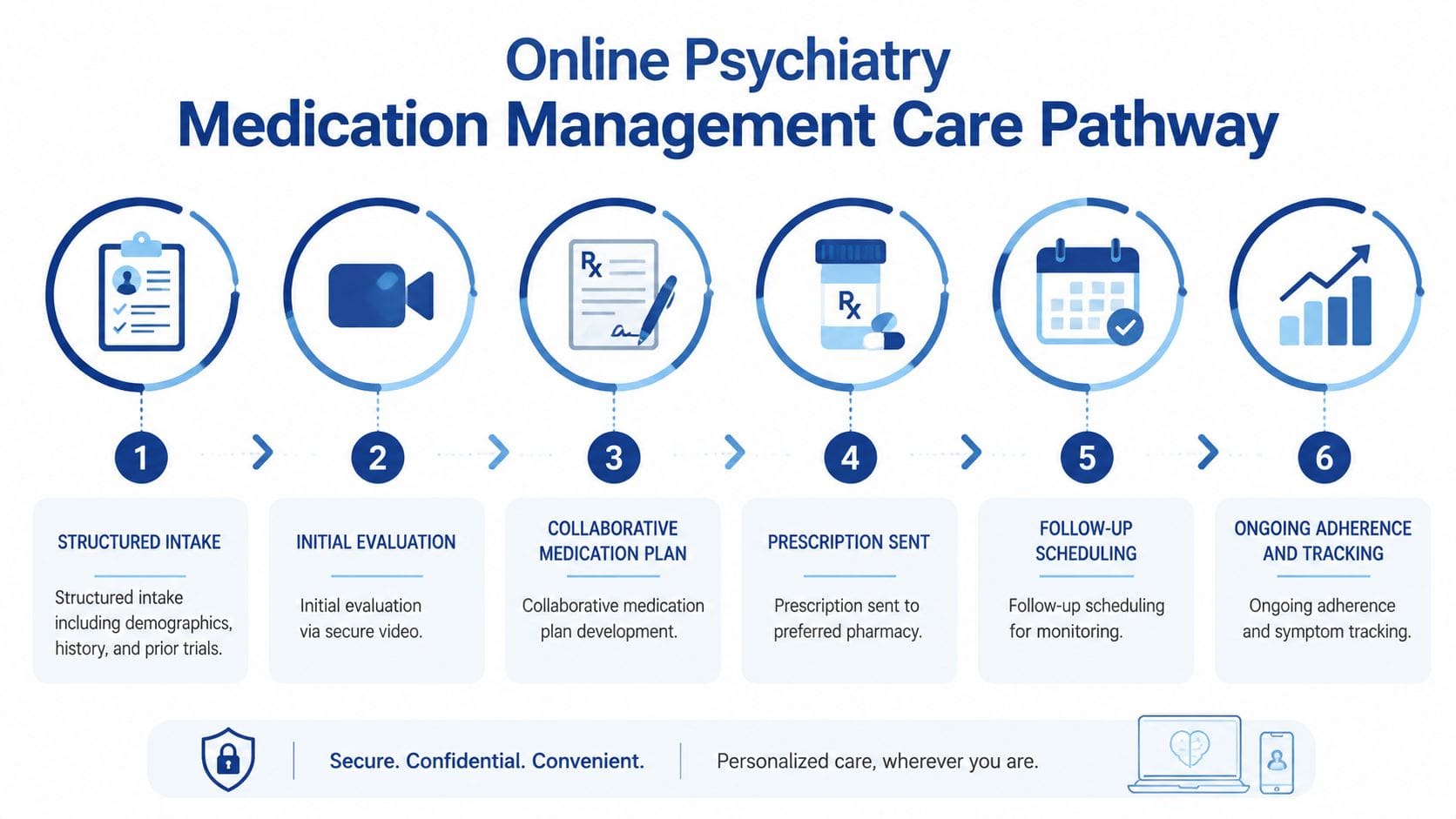
A well-designed virtual pathway resembles a clinical process, not a digital prescription pad. Each stage gives the clinician information needed for the next decision.
Intake creates the clinical starting point
Before the first appointment, patients commonly complete forms covering identity, current symptoms, medical conditions, psychiatric history, previous medication trials, allergies, current prescriptions, substance use, and preferred pharmacy. That information helps the clinician identify missing records and possible safety issues before discussing a medication plan.
The intake should also identify the patient's location during care. A clinician must generally be licensed or otherwise authorized to practice where the patient is physically located at the time of the visit. Patients who travel should tell the practice before an appointment, especially when a controlled medication is involved.
The initial evaluation tests the treatment plan
An initial video evaluation often lasts about 45 to 60 minutes, depending on clinical complexity. The clinician reviews diagnostic possibilities, symptom severity, safety concerns, functioning, prior treatment response, and the patient's goals. Shared decision-making then compares reasonable options, including medication, psychotherapy, lifestyle changes, laboratory work, or referral for in-person assessment.
The decision may be to start medication, continue an existing prescription, change a dose, obtain more information, or defer prescribing. A cautious decision is still a productive clinical decision.
Prescribing starts a feedback loop
If medication is appropriate, the clinician sends an electronic prescription to the selected pharmacy and explains the expected benefits, common side effects, warning signs, missed-dose instructions, and follow-up plan. Controlled substances require additional checks and may have different dispensing rules.
Follow-up commonly occurs 2 to 4 weeks after a new prescription or dose change, then becomes less frequent once symptoms and adverse effects are stable. The exact schedule depends on the diagnosis, medication, risk profile, and response.
A closed-loop workflow may include:
- Symptom measures: Standardized rating scales can make changes easier to track than general impressions alone.
- Side-effect review: Sleep, appetite, agitation, gastrointestinal symptoms, sexual effects, blood pressure concerns, and mood changes may require targeted questions.
- Adherence checks: The clinician asks whether doses were missed, why they were missed, and whether cost, access, forgetfulness, or adverse effects created the barrier.
- Asynchronous contact: Secure portal messages can alert the practice to a side effect or symptom change between scheduled visits.
- Escalation planning: Worsening suicidality, mania, psychosis, intoxication, or severe adverse effects may require urgent or in-person care.
Patients considering a virtual prescription evaluation can review online medication evaluation options before scheduling. A short educational overview of secure video care is also available below.
Conditions Commonly Treated Through Virtual Medication Management
Virtual medication management can fit many outpatient conditions, but suitability depends on stability, diagnostic confidence, medical monitoring needs, and safety risk. Telehealth is a delivery channel, not a diagnosis or a guarantee that a particular medication can be prescribed remotely.
| Condition | Typical Medication Classes | Virtual Care Suitability |
|---|---|---|
| Major depressive disorder | Antidepressants, augmentation medications when clinically appropriate | Often suitable for evaluation and follow-up when safety can be assessed remotely |
| Generalized anxiety and panic disorder | Antidepressants, selected non-controlled anxiety medications | Often suitable with careful review of sedation, activation, and dependence risk |
| Adult ADHD | Stimulants or non-stimulant ADHD medications | Requires detailed diagnostic assessment and stricter controlled-substance procedures for stimulants |
| Bipolar II disorder | Mood stabilizers and selected atypical antipsychotics | May suit stable outpatient care, with laboratory or metabolic monitoring when needed |
| Insomnia and related sleep problems | Behavioral treatment, selected sleep medications, treatment of underlying conditions | Depends on cause, duration, substance use, and medication risk |
| PTSD | Antidepressants and other symptom-targeted medications | May suit stable outpatient care alongside trauma-focused therapy |
| First-episode psychosis or acute mania | Antipsychotic and mood-stabilizing treatment | Usually needs urgent in-person or higher-acuity assessment |
| Active suicidality | Individualized crisis and psychiatric intervention | Not appropriate for routine medication-only virtual management |
For depression and anxiety, a 2022 retrospective cohort study of telepsychiatry care found clinically meaningful improvement over an average treatment duration of 103 days. Mean GAD-7 scores decreased by 6.71 points, and mean PHQ-8 scores decreased by 6.85 points. Among patients who began with at least moderate symptoms, anxiety severity decreased by 45.7% and depressive severity by 43.1%. At the end of care, 67.41% of patients with anxiety and 62.44% of patients with depression had minimal or mild symptoms, according to the published cohort study.
Adult ADHD deserves special care because anxiety, depression, trauma, sleep loss, thyroid problems, substance use, and medication effects can resemble ADHD. Adult criteria include at least five symptoms of inattention and/or hyperactivity-impulsivity for six months or longer, symptoms in at least two settings, and measurable impairment, as explained in this adult ADHD clinical guidance. A diagnosis is often not a one-visit event. The AAFP ADHD assessment tool describes assessment across multiple visits and follow-up after stabilization.
Safety, Controlled Substances, and the Legal Framework in 2026
A patient in Pennsylvania may receive a non-controlled antidepressant through a relatively straightforward virtual pathway. A Schedule II stimulant or benzodiazepine requires a closer review of risks, federal rules, state requirements, and whether video care is clinically sufficient. The diagnosis alone does not determine the prescribing pathway.
Schedule II stimulants include commonly prescribed amphetamine and methylphenidate products. Benzodiazepines require attention to dependence, sedation, interactions, misuse, and withdrawal. Buprenorphine for opioid use disorder follows separate federal rules and clinical safeguards. For any of these medications, the clinician must decide whether online initiation, continuation, or a refill is appropriate.
The DEA and HHS have extended specific telemedicine flexibilities through at least December 31, 2026, subject to applicable conditions. In qualifying circumstances, these rules may permit Schedule II through Schedule V prescribing without a prior in-person visit. Audio-video prescribing remains available for DEA-registered providers, while audio-only pathways apply to certain mental health and opioid use disorder maintenance or withdrawal-management care. HHS reported that more than 7 million controlled-substance prescriptions were issued through telemedicine without a prior in-person visit in 2024, as summarized in this 2026 telepsychiatry policy coverage. These flexibilities can change, so a Pennsylvania practice must verify the rules in effect when care is provided.
Federal flexibility does not replace clinical judgment or Pennsylvania compliance. A responsible workflow verifies identity and the patient's location, reviews relevant prescription-monitoring information, documents the indication and risk assessment, and sets a follow-up plan. Licensing rules also apply when a patient crosses state lines. The Ryan Haight Act remains part of the background, while temporary federal policies can alter the practical route to prescribing.
| Drug Class | Examples | Online Initiation Allowed? | Refills via Telehealth | Key Requirement |
|---|---|---|---|---|
| Schedule II stimulants | Amphetamine, methylphenidate | May be possible under applicable 2026 rules and clinical criteria | May be possible when legally and clinically permitted | Identity, documentation, monitoring, and federal and state compliance |
| Benzodiazepines | Medication class used for selected anxiety or panic indications | Highly individualized and restricted by risk | Requires ongoing clinical review | Dependence, sedation, misuse, and interaction assessment |
| Schedule III to V medications | Certain monitored psychiatric medications | May be possible under defined telemedicine conditions | May be possible with required monitoring | Prescription-monitoring review and documented medical purpose |
| Non-controlled antidepressants | Common antidepressant classes | Often possible after evaluation | Often possible with follow-up | Diagnosis, interactions, adverse-effect monitoring |
| Mood stabilizers and selected sleep medications | Medication-specific | Depends on drug and monitoring needs | Depends on response and safety | Laboratory, metabolic, or in-person monitoring when indicated |
Secure records and clear communication complete the safety process. Integrative Psychiatry of America explains HIPAA-compliant telehealth practices for virtual care. Patients and clinicians should also follow patient data sharing best practices when exchanging records, medication lists, or pharmacy information.
Benefits, Limitations, and What the Evidence Really Shows
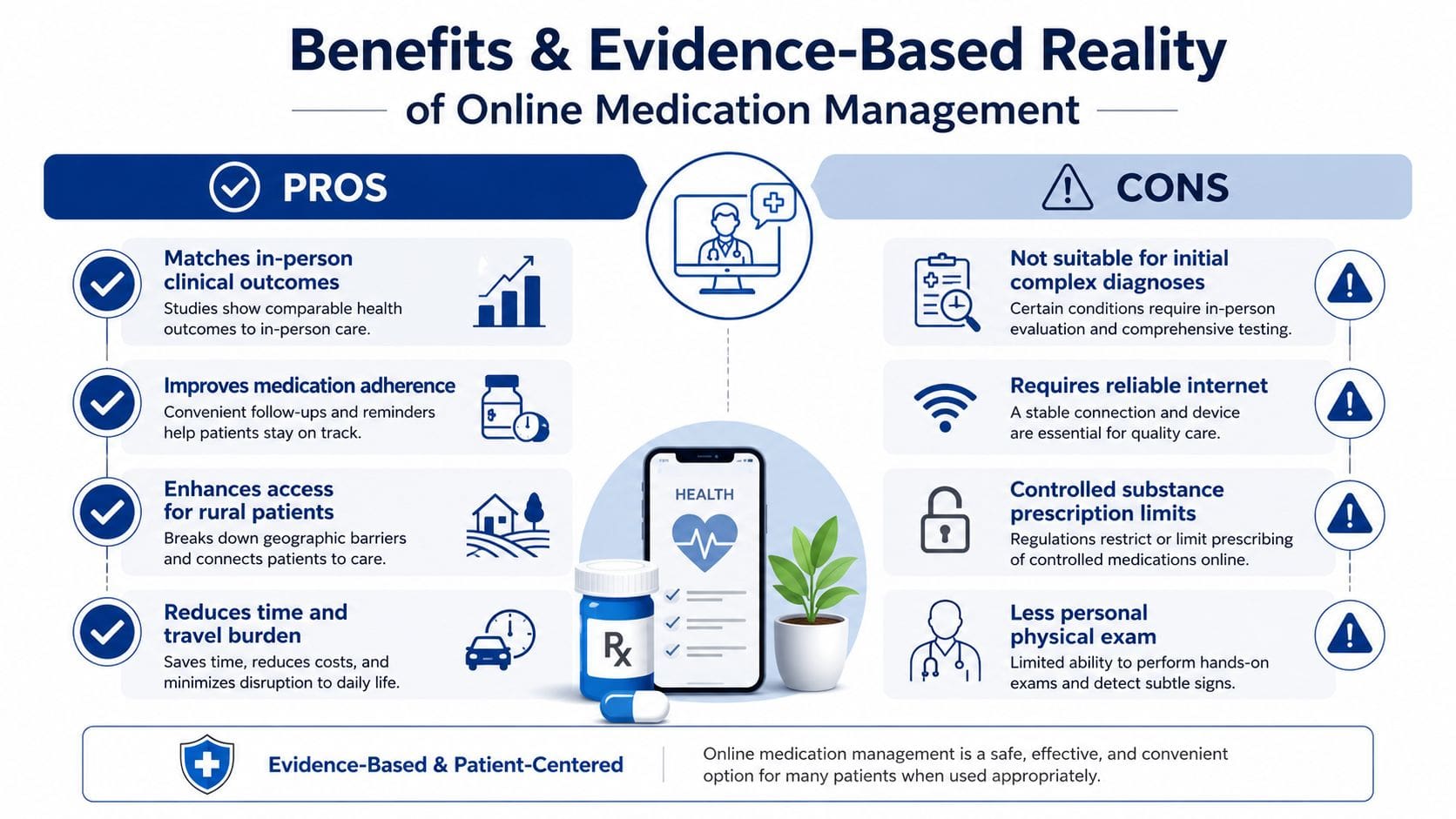
Virtual care can reduce travel and scheduling friction, which may help patients maintain follow-up. It can also give clinicians repeated opportunities to ask about adherence, sleep, mood changes, and adverse effects. Those advantages matter most when the practice uses structured monitoring rather than just adding more appointments.
A 2025 systematic review and meta-analysis found a statistically significant improvement in medication adherence with telemedicine interventions. The pooled effect was Hedges' g = 0.25, with a 95% confidence interval of 0.12 to 0.38 and p < 0.01, as reported in the review and meta-analysis. A separate systematic review of 17 studies found adherence benefits in 9 studies, particularly when follow-up included symptom tracking, refill support, and reminders, according to the systematic review record.
The depression and anxiety cohort described earlier also showed measurable symptom improvement. That evidence supports virtual medication management as a credible outpatient option, but it doesn't prove that every patient or condition will respond equally.
Where virtual care reaches its limits
Video visits can't replace every physical assessment. Depending on the medication, the clinician may need blood pressure, weight, movement assessment, blood tests, drug levels, or an examination that telehealth can't provide. Patients may need to use a local laboratory, primary care office, pharmacy service, or in-person psychiatric provider.
Technology also creates practical limits. Weak broadband, a private-space shortage, device problems, and difficulty using a patient portal can interrupt care, particularly in rural areas. Patient-reported symptoms remain important, but they're only one part of a safe assessment.
A Harvard summary of a large mental-health telehealth study reported greater visit use and continuity without better medication adherence or fewer hospitalizations. The finding is a useful warning: more visits don't automatically produce better medication outcomes. Virtual care works best when each contact has a clear purpose and connects to monitoring, decisions, and escalation.
First-episode psychosis, suspected acute mania, active suicidality, severe intoxication, and complex polypharmacy may require in-person or emergency evaluation. A virtual clinician should refer rather than stretch telehealth beyond its safe limits.
Insurance Coverage and Access in Pennsylvania
Pennsylvania patients often encounter three separate coverage questions: whether telehealth is covered, whether the clinician is in network, and what the plan requires before paying for a medication or visit. Federal parity law requires mental health and substance use disorder benefits to be no more restrictive than comparable medical and surgical benefits. The 2023 final rule also reinforced comparable terms for telehealth mental health visits when telehealth medical visits are covered, according to this telehealth parity analysis.
Parity doesn't mean every plan pays every service. Coverage parity, cost-sharing parity, and prior-authorization parity can affect the final bill. Some policies require telehealth reimbursement to match in-person reimbursement, while audio-only mental health care provided at home may be reimbursed at 80% of the in-person rate in some jurisdictions, as described in the same parity resource.
Commercial plans, Medicaid through HealthChoices managed care organizations, and Medicare Advantage plans can apply different network, referral, authorization, and pharmacy rules. Follow-up services may be billed using common evaluation and management codes such as 99213 or 99214, but the code alone doesn't determine the patient's cost. The plan's deductible, copay, coinsurance, network status, and authorization rules still control the practical amount.
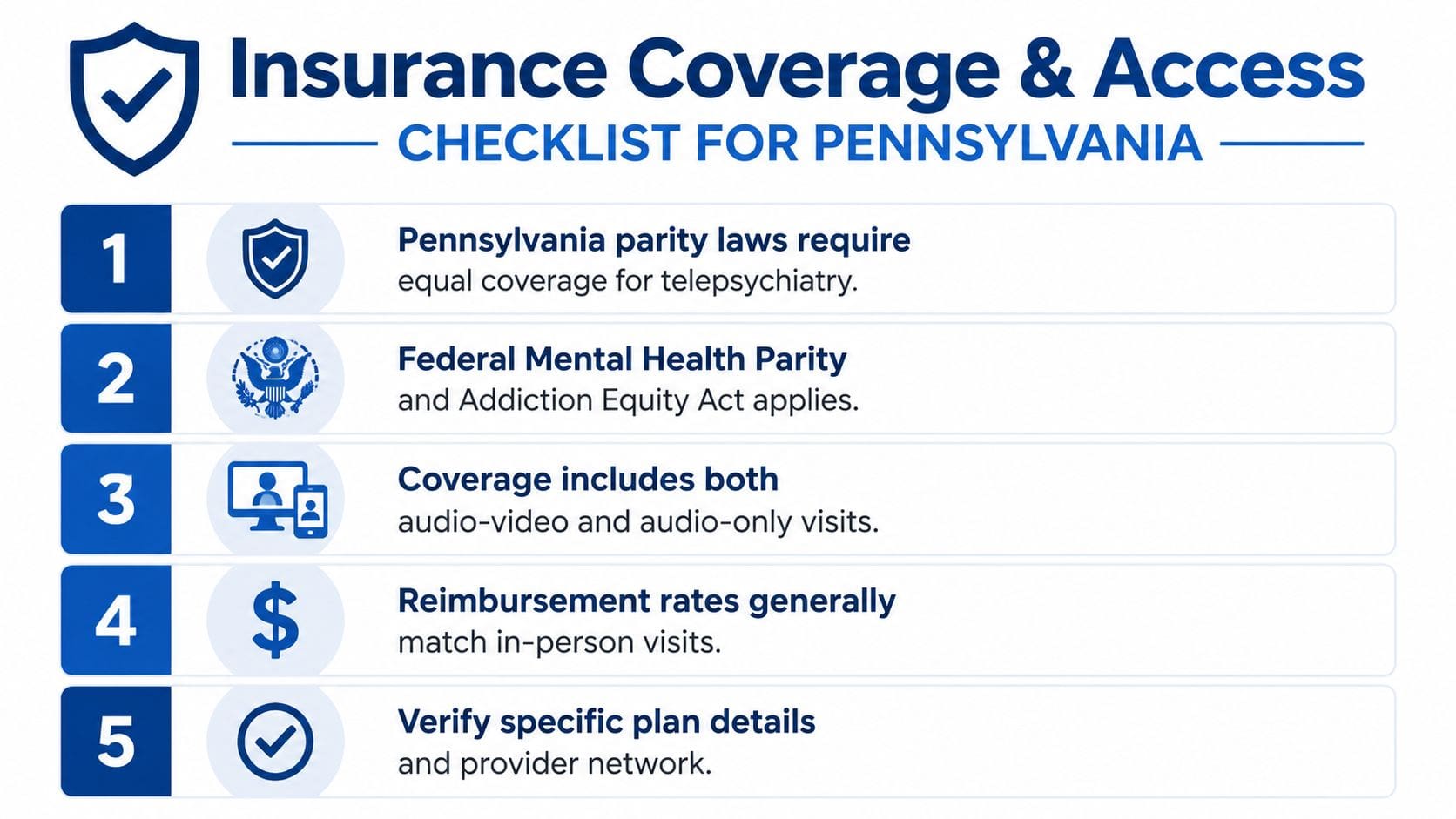
Before scheduling, a Pennsylvania patient can ask the insurer and practice to confirm:
- Telehealth coverage: Whether audio-video and audio-only visits are covered for the specific plan.
- Network status: Whether the clinician is licensed in Pennsylvania and participates in the patient's network.
- Cost sharing: The expected deductible, copay, or coinsurance for an initial evaluation and follow-up.
- Prior authorization: Whether the plan or pharmacy benefit requires authorization for a stimulant, brand medication, or selected psychiatric drug.
- Pharmacy processing: Whether the preferred pharmacy can receive and dispense the prescription under applicable controlled-substance rules.
- Travel restrictions: Whether care remains permitted if the patient is temporarily outside Pennsylvania.
- Out-of-network options: Whether the plan accepts a superbill or allows a single-case agreement.
Patients can review the practice's insurance verification process before an appointment. Verification isn't a guarantee of payment, so the insurer remains the final source for benefit-specific answers.
How Integrative Psychiatry of America Delivers This Service
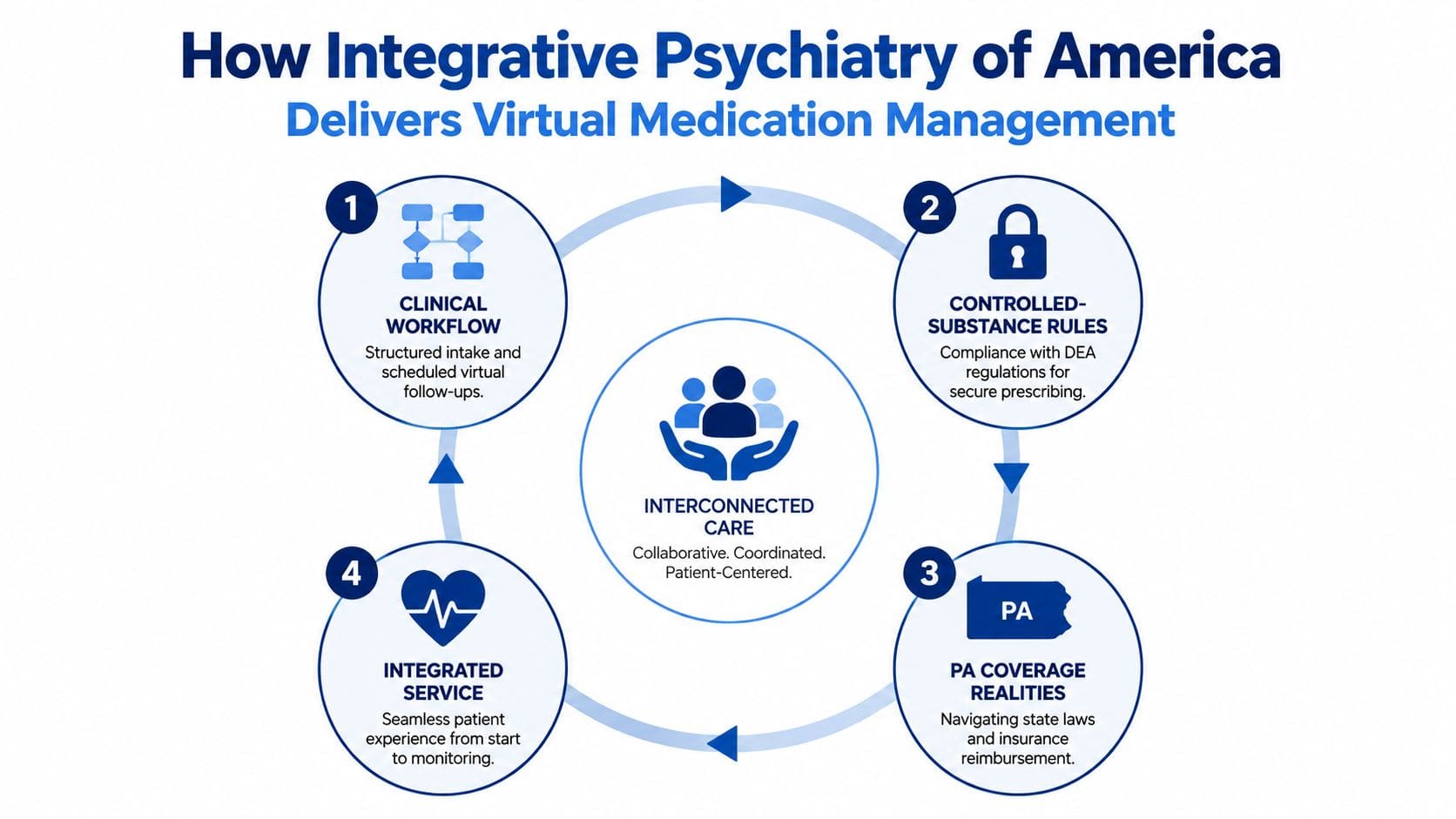
Integrative Psychiatry of America is a Pennsylvania-based virtual psychiatric practice offering evaluations, medication management, and integrative mental health treatment through telehealth. Its service model connects clinical assessment, follow-up monitoring, controlled-substance safeguards, and practical insurance questions rather than treating them as separate tasks.
The process begins with secure intake forms and a 60-minute diagnostic video evaluation with a board-certified psychiatric clinician. The evaluation reviews symptoms, history, medical factors, prior medication trials, safety, and treatment goals. The resulting plan may include medication, brief therapy when indicated, lifestyle support, laboratory or genetic screening when clinically relevant, and coordination with other clinicians.
During titration, follow-up is typically scheduled within 2 to 4 weeks. Once a patient reaches a stable maintenance phase, visits may spread to 6 to 12 weeks, depending on the medication, diagnosis, risk profile, and clinical response. Secure asynchronous check-ins can address side effects or symptom changes between visits, but urgent safety concerns still require immediate crisis or emergency support.
Controlled medications require protocolized decisions
For Schedule III through V medications, the practice applies the applicable DEA and HHS 2026 flexibilities after an in-person or qualifying referral relationship when required by the clinical and legal circumstances. For Schedule II stimulants, the practice requires an in-person examination under its current interpretation of Ryan Haight requirements. Stimulant and benzodiazepine protocols include urine drug screening and prescription-drug-monitoring-program queries when clinically and operationally indicated.
At every visit, the clinician documents the medication indication, response, adherence concerns, and adverse effects. This documentation supports continuity and helps distinguish legitimate treatment from unsafe refill-only prescribing.
Care is delivered to Pennsylvania residents by clinicians licensed in the state. The practice also provides transparent self-pay pricing and out-of-network superbills for insured patients seeking reimbursement. Patients seeking a broader view of the model can review integrative psychiatry services in Pennsylvania.
Integrative Psychiatry of America offers virtual psychiatric evaluations, medication management, and integrative treatment for adults throughout Pennsylvania, including care for ADHD, anxiety, depression, OCD, and PTSD. Patients who need structured online psychiatry medication management can visit Integrative Psychiatry of America to review services, verify insurance, and request an appointment.