
A person in Philadelphia finishes a workday, answers texts, loads the dishwasher, and notices something unsettling. Nothing feels sharp. Good news lands flat. Bad news barely registers. Time with a partner, a child, or a close friend feels distant, almost like watching someone else's life from behind glass.
The same thing happens in Pittsburgh, Harrisburg, Erie, Scranton, Allentown, Lancaster, and Reading. Someone keeps functioning, keeps showing up, keeps doing what needs to be done, but inside there's a blankness that doesn't make sense. Many adults start searching late at night for one phrase: feeling emotionally numb.
That search often comes with shame. It shouldn't. Emotional numbness usually isn't a choice, laziness, or lack of caring. It's a symptom. In many cases, it's the nervous system trying to protect itself when stress, trauma, depression, anxiety, grief, or medication effects become too much to process all at once.
This symptom can improve. The key is understanding what it means, what commonly causes it, and what kind of treatment tends to help instead of making the problem worse.
Table of Contents
- That Blank Feeling in a Busy Pennsylvania Life
- Understanding Emotional Numbness as a Protective Response
- Common Causes and Related Mental Health Conditions
- Recognizing the Signs of Emotional Numbness
- Integrative Strategies to Help You Reconnect
- How to Get Professional Support in Pennsylvania
That Blank Feeling in a Busy Pennsylvania Life
A teacher in Lancaster moves through the school day on autopilot. A nurse in Pittsburgh finishes a shift and feels nothing on the drive home. A parent in a small Pennsylvania town sits at a child's soccer game and knows they should feel present, proud, or excited, but the moment barely lands.

For some people, the numbness is obvious. They say, “I can't cry,” or “I can't feel joy.” For others, it manifests subtly. They stop looking forward to weekends. Food tastes normal but not enjoyable. Conversations feel harder to enter. Intimacy starts to feel mechanical.
What makes this symptom so confusing
Emotional numbness can look like calm from the outside. A person may still work, parent, commute, and answer emails. That's why families sometimes miss it, and why the person experiencing it often second-guesses their own distress.
Practical rule: If someone is functioning but feels detached from life, that still counts as suffering.
Many adults in Pennsylvania delay care because they think numbness isn't “serious enough.” They tell themselves they're just tired, burned out, or not trying hard enough. That interpretation usually adds more self-criticism to a nervous system that's already overloaded.
A better starting point is this: blankness is information. It points to something that needs attention.
What people are usually trying to figure out
Most readers searching about feeling emotionally numb want answers to a few practical questions:
- Is this depression: Sometimes it is, but numbness can also show up with anxiety, trauma, grief, dissociation, or medication side effects.
- Did stress do this: Chronic overload can absolutely push the nervous system toward shutdown.
- Will this pass on its own: Sometimes it eases when the stressor resolves, but persistent numbness deserves evaluation.
- Can virtual care help: Yes. Many adults across Pennsylvania prefer telepsychiatry because it's private, convenient, and easier to fit into work and family life.
This is one of the most important reframes in mental health care. Emotional numbness doesn't mean a person has stopped caring. It often means the system has been carrying too much for too long.
Understanding Emotional Numbness as a Protective Response
Emotional numbness is often called emotional blunting. It doesn't mean emotions have disappeared forever. It usually means the brain has turned the volume down because full emotional intensity feels too costly or too overwhelming to process right now.
When the emotional system shuts the volume down
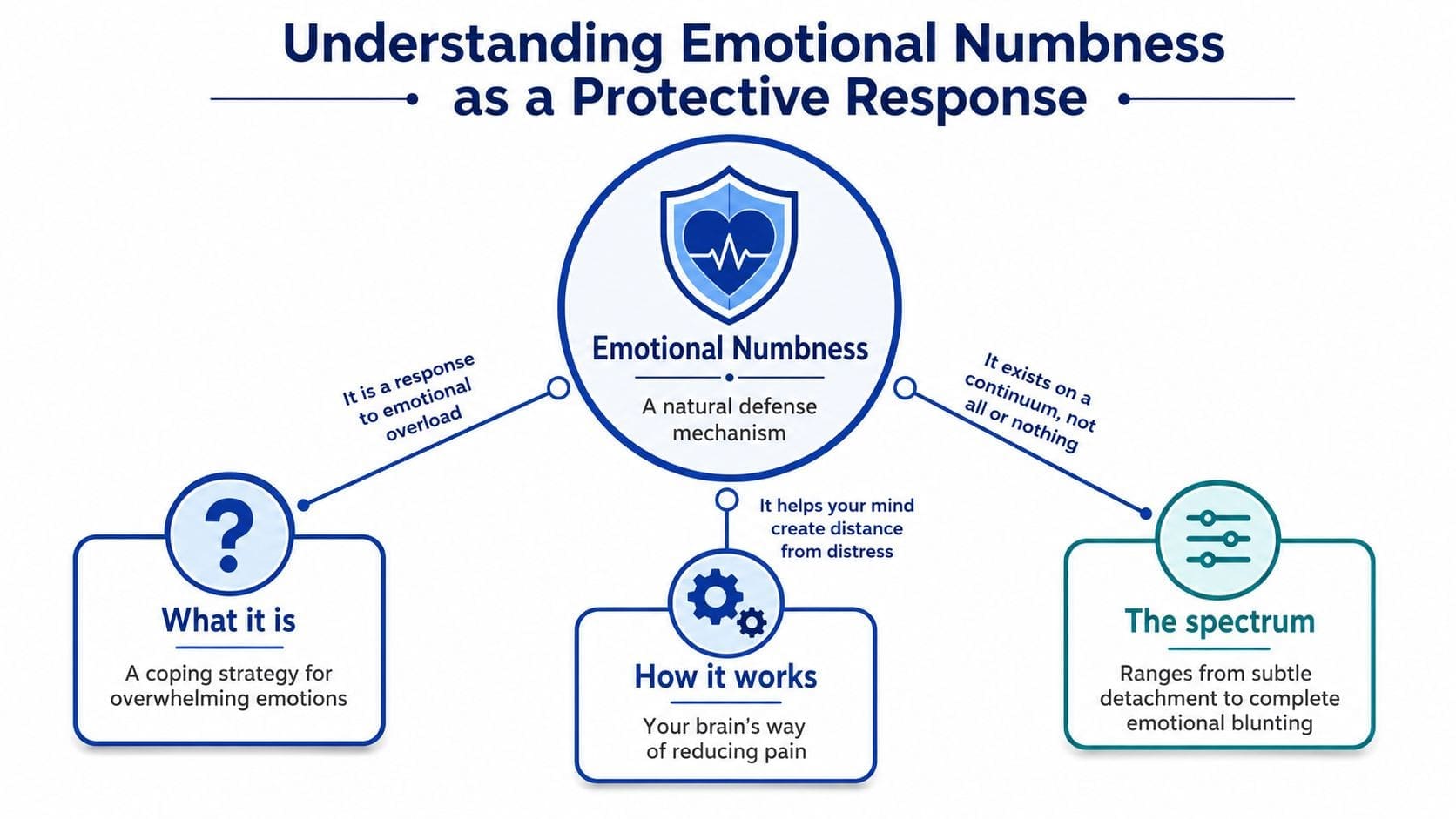
A useful way to picture it is a circuit breaker. When a system gets overloaded, the breaker flips to prevent more damage. Emotional numbness works in a similar way. The nervous system can reduce access to feeling in order to keep a person moving through a threat, a loss, prolonged stress, or a period of psychiatric illness.
According to Cleveland Clinic's explanation of emotional numbness, emotional numbness is not a standalone diagnosis but a protective mechanism. It's often a freeze response where the brain “dims emotional lights” to prioritize survival, and it commonly appears in anxiety, depression, and PTSD. That same source also notes that antidepressants such as SSRIs can contribute by altering serotonin and dopamine levels.
Later in the section, the distinction becomes important. A symptom is not the same as a diagnosis. Numbness is a clue, not the final answer.
A short visual overview may help:
Why this matters clinically
When a person sees numbness as a character flaw, they often respond in ways that backfire. They isolate more. They try to force themselves to feel. They judge themselves for being distant with the people they love. None of that helps the nervous system feel safer.
When numbness is understood as a protective response, the treatment goal changes. The work becomes helping the system come out of shutdown gradually and safely. That usually means addressing root causes, not demanding emotion on command.
A trauma-informed framework is often useful here. Patients looking for care that recognizes how stress and trauma shape symptoms may benefit from learning about trauma-informed mental health care.
| What emotional numbness is | What it is not |
|---|---|
| A symptom | A moral failing |
| A protective response | Proof that someone doesn't care |
| A clue to an underlying issue | A complete diagnosis by itself |
| Often reversible with treatment | A permanent state in most cases |
Emotional numbness is often the nervous system choosing survival over emotional range.
That reframe matters because it lowers shame. Lower shame makes it easier for a person to seek help, describe symptoms accurately, and accept treatment.
Common Causes and Related Mental Health Conditions
Emotional numbness usually has a pattern behind it. In practice, I look for what has been straining the nervous system long enough that it started conserving energy, emotion, or both. That pattern may involve a mental health condition, a medication effect, a medical issue, or several factors at the same time.
Depression is a common cause. Many people expect depression to look like obvious sadness, but a lot of adults describe something flatter. They are functioning on the outside, showing up to work, answering texts, taking care of kids, but interest, pleasure, and emotional range have narrowed. In treatment, this often shows up as anhedonia, low motivation, and a sense that life has gone emotionally quiet.
Anxiety can lead to numbness too. After enough weeks or months of tension, overthinking, poor sleep, and constant internal bracing, some people stop feeling intensely and start feeling far away from themselves. That shift can happen in high-pressure jobs, caregiving roles, college stress, or long stretches of uncertainty. If ongoing depletion is part of the picture, this guide on how to cope with exhaustion can help patients put language to burnout alongside their emotional symptoms.
Trauma and PTSD are another major pathway. When the brain has learned that strong emotion is tied to danger, it may reduce access to feeling as a form of protection. Patients often describe this as going blank during conflict, feeling detached in situations that should feel safe, or struggling to access warmth, grief, anger, or joy even when they want to.
Self-alienation matters here too. People who have spent years pushing down needs, ignoring stress signals, or staying in survival mode can become disconnected from their own internal cues. That does not mean they are broken. It means their system has practiced disconnection for a reason, and treatment often involves rebuilding awareness gradually rather than trying to force emotion back all at once.
When medication may be part of the picture
Medication can be helpful and still come with trade-offs. Antidepressants, especially SSRIs, can reduce suffering for many patients. They can also leave some people feeling emotionally flattened, less reactive, or less able to feel pleasure and closeness in the way they expect.
That possibility deserves a direct conversation. If numbness started or worsened after a medication change, the next step is a careful review with the prescriber. Dose, timing, the specific medication, coexisting depression, and stress load all matter. Patients should not stop medication abruptly on their own.
A full assessment also looks beyond psychiatry alone. Low iron, anemia, thyroid problems, vitamin deficiencies, sleep disorders, chronic stress, and substance use can all contribute to low mood, fatigue, and disconnection. This is one reason I often recommend reviewing the overlap between physical and emotional symptoms, including whether anemia can cause depression.
Many people have more than one driver. A Pennsylvania patient might be carrying unresolved trauma, running on poor sleep, taking a medication that is partly helping, and dealing with burnout at the same time. Good care sorts that out step by step. Through telepsychiatry, that work can include diagnostic clarification, medication review, therapy referrals, lifestyle assessment, and coordination with primary care so the treatment plan addresses the whole person, not just the symptom.
Recognizing the Signs of Emotional Numbness
Some people know immediately that they're numb. Others recognize it only after a partner says, “You seem far away,” or after they notice they haven't felt fully engaged in weeks. The signs often build gradually.
What people often notice first
Research discussed in the Journal of Traumatic Stress article on emotional blunting describes emotional blunting as an endorphin-mediated phenomenon linked to chronic stress and increased cortisol in conditions such as PTSD. It can reduce pleasure and interest in activities and can specifically diminish feelings of intimacy, tenderness, and care for others.
That clinical description matches what many patients describe in plain language.
- Daily life feels muted: Music sounds fine but doesn't move them. A favorite meal tastes ordinary. Weekends don't feel restorative.
- Connection gets harder: They care about loved ones, but the emotional signal feels faint.
- The body feels distant: Some people describe being numb in both mind and body, or moving through the day on autopilot.
- Joy and sadness both seem blocked: This is not just “not feeling happy.” It can be not feeling much of anything.
- Life starts to feel observed rather than lived: A person may feel detached, unreal, or like they're watching themselves from the outside.
If the emotional range has narrowed and relationships feel harder to access, that deserves attention even if work performance still looks fine.
Questions worth asking yourself
A diagnosis shouldn't come from an online checklist. Still, good self-observation can help a person know when to reach out.
Consider these questions:
- When was the last time something felt genuinely moving
- Has interest in hobbies, sex, friendships, or food dropped off
- Does it feel hard to name emotions beyond “fine,” “tired,” or “stressed”
- Has there been recent trauma, grief, burnout, or a medication change
- Is there a sense of going through the motions at home or at work
A short symptom screen can also help someone decide whether anxiety is part of the broader picture. If that seems possible, reviewing when to see a psychiatric provider can be a practical next step.
For people who want to start tracking patterns, using a simple mood or emotion log often works better than trying to “figure it all out” mentally. Brief daily notes about sleep, stress, body tension, appetite, medication timing, and moments of connection can reveal patterns that are easy to miss in the moment.
Integrative Strategies to Help You Reconnect
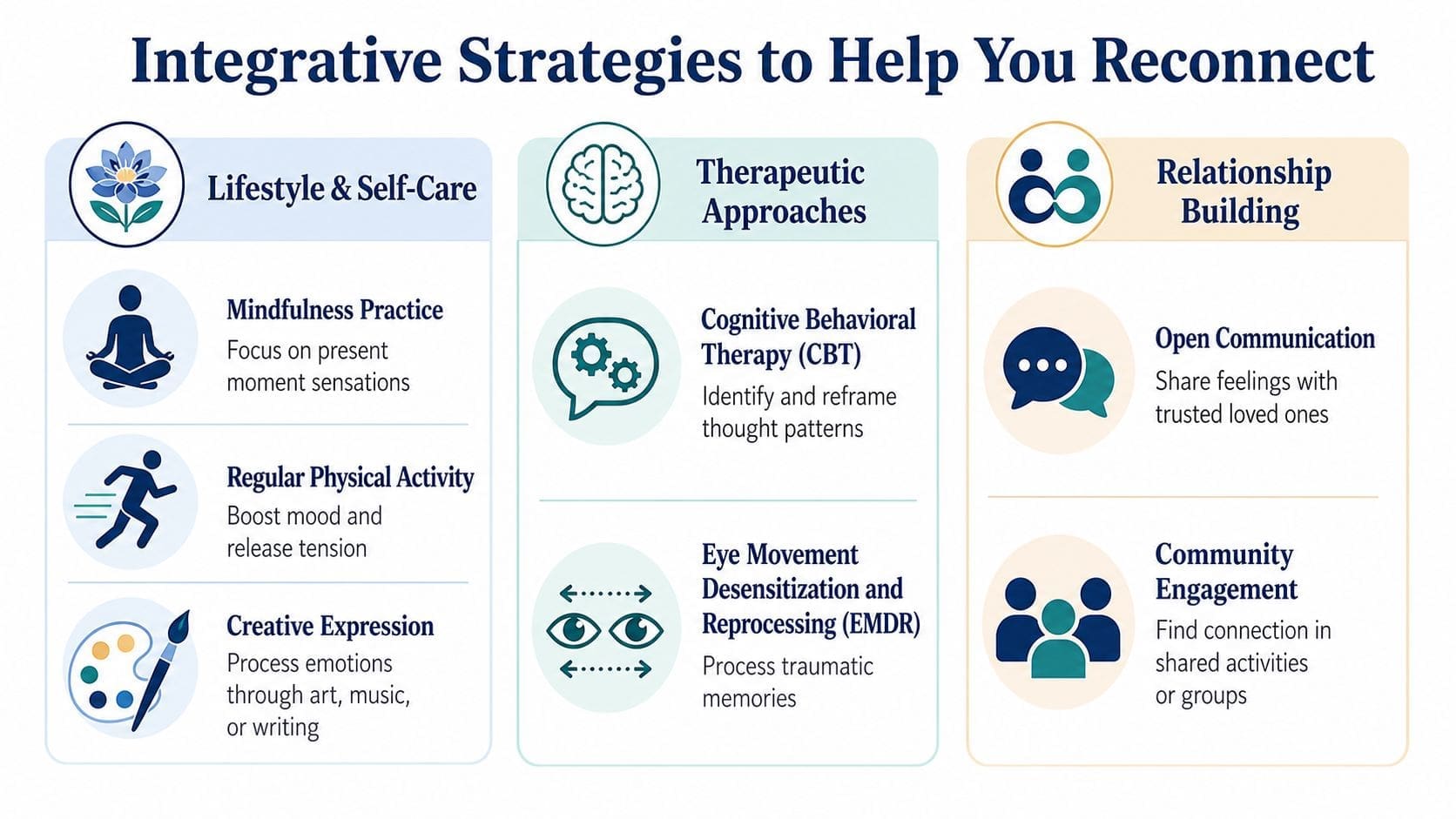
Treatment works best when it respects what numbness is. This is usually not a problem solved by willpower. Telling someone to “just feel more” tends to increase frustration. A better plan combines nervous system regulation, targeted therapy, and careful medication review.
Start with the body, not force
Evidence summarized in this clinical discussion of interventions for numbness emphasizes somatic reawakening. It also identifies CBT, ACT, and EMDR as benchmark approaches that reduce negative thought patterns and help lessen shutdown responses linked to difficult memories.
That body-first point matters. When the system is frozen, insight alone often isn't enough.
Helpful starting points often include:
- Grounding through sensation: Warm tea, a textured blanket, a cool washcloth, slow stretching, or noticing feet on the floor can gently increase contact with the present moment.
- Regular physical activity: Movement helps many people come out of collapse and into a greater sense of safety. For readers interested in the brain benefits of exercise intensity and recovery, BionicGym's BDNF exercise insights offer useful context.
- Structured emotional tracking: A daily log can help reconnect language with internal experience. Tools such as a Feeling Journal can support this process.
- Simple self-soothing practices: Breathing exercises, sensory regulation, and small routines often work better than waiting to “feel normal” first. Patients can explore practical options for how to self-soothe.
Clinical reality: Gentle repetition usually works better than intense emotional pushing.
Therapies that target the shutdown pattern
Not all therapy approaches address numbness equally well. Traditional talk therapy can help, but patients often need more than conversation.
Here's where common approaches fit:
| Approach | What it may help with |
|---|---|
| CBT | Identifying thought patterns that worsen hopelessness, avoidance, and disconnection |
| ACT | Making room for internal experiences without fighting them, while reconnecting with values |
| EMDR | Processing traumatic memories that keep the nervous system in a shutdown loop |
| Somatic approaches | Restoring awareness of bodily sensations and helping the freeze response soften |
A practical mistake is expecting a dramatic breakthrough quickly. Reconnection often starts subtly. A person notices music again. They laugh once without forcing it. They feel more present during a walk. Those small returns matter.
Medication review and whole-person care
When numbness begins after starting or increasing a psychiatric medication, medication review becomes part of treatment. The main question is whether the medication is helping overall, whether the dose is right, and whether the trade-off is acceptable.
Good medication management doesn't assume “more is better.” It asks:
- Is the emotional flattening new
- Did it start after a dose change
- Is depression itself still undertreated
- Would a different medication profile fit better
- Are sleep, nutrition, alcohol, cannabis, or medical issues affecting the picture
Whole-person care also looks at routine, movement, nutrition, substance use, trauma history, and relationships. Emotional numbness tends to improve more reliably when treatment matches the full context instead of chasing one symptom in isolation.
How to Get Professional Support in Pennsylvania
Emotional numbness deserves clinical attention when it stops being an occasional stress response and starts shaping daily life. I tell patients this often. You do not need to wait until things fall apart to get evaluated. Earlier care usually means fewer complications, a clearer treatment plan, and less time spent guessing whether this is burnout, depression, trauma-related shutdown, medication side effects, or a combination.
When numbness needs clinical attention
Professional support makes sense when the pattern is persistent, distressing, or starting to affect how you function. Common signs include:
- Work or home responsibilities are getting harder: Tasks feel flat, effortful, or strangely disconnected, even when you are still getting them done.
- Relationships feel more distant: Loved ones notice you seem checked out, detached, or harder to reach emotionally.
- You are questioning a medication change: Numbness began after starting, stopping, or adjusting a prescription.
- Basic self-care has not shifted it: More sleep, time off, exercise, or a quieter schedule have not brought much feeling back.
- Safety concerns are present: Hopelessness, thoughts of self-harm, or trouble caring for basic needs call for prompt evaluation.
What virtual psychiatric care looks like
For many adults in Pennsylvania, telepsychiatry removes practical barriers that delay treatment. That matters in large cities and in smaller towns where specialty mental health care can be harder to find.
A good psychiatric evaluation looks beyond the symptom itself. It should cover the timeline of the numbness, current stressors, trauma history, sleep, substance use, medical issues, and any medications that may be helping in one area while flattening emotion in another. That trade-off is real. Sometimes a medication is reducing panic or depression but leaving a person feeling muted. Sometimes the numbness is the illness, not the treatment. Sorting that out is part of the work.
Virtual care can also make it easier to stay consistent with follow-up. For Pennsylvanians who want access from home, work, or a private space between responsibilities, online psychiatric care in Pennsylvania can support evaluation, medication review, and ongoing treatment without adding travel time or waiting room stress.
Before an appointment, it helps to write down a few specifics. When did the numbness start. Is it constant or does it come in waves. What changed around that time. Which parts of life feel hardest right now. Those details help a clinician identify whether the nervous system is in a shutdown pattern and build a treatment plan that is practical, evidence-based, and personalized for your life in Pennsylvania.