
A positive pregnancy test can turn a normal morning into a day full of questions. For someone managing ADHD, the next thought is often immediate, whether Strattera and Pregnancy can go together, whether stopping medication will make work and home life harder, and whether the baby could be affected. For patients across Pennsylvania, that decision is especially important when care has to fit around busy schedules, prenatal visits, and the challenge of getting help through telehealth.
Table of Contents
- Introduction to Strattera and Pregnancy
- How Strattera Works as a NonStimulant ADHD Medication
- What Current Research Says About Atomoxetine in Pregnancy
- Key Clinical Considerations for Using Strattera in Pregnancy
- Risks of Untreated ADHD During Pregnancy
- Planning Individualized ADHD Treatment with Strattera in Pregnancy
- Telehealth Support and Next Steps with Integrative Psychiatry of America
Introduction to Strattera and Pregnancy
A common scene plays out in real life. A patient with ADHD finds out she's pregnant, keeps taking stock of her symptoms, and starts wondering whether the medication that helps her stay organized should now be paused. That fear can feel louder than the diagnosis itself, especially when every search result seems to offer a different answer.
Strattera is the brand name for atomoxetine, a non-stimulant ADHD medication. For many people, it matters because it offers a different option from stimulant treatment, and that difference becomes more meaningful during pregnancy, when patients want the clearest possible risk-benefit picture. Across Pennsylvania, from Philadelphia and Pittsburgh to Harrisburg, Erie, Scranton, Allentown, Lancaster, and Reading, virtual psychiatric care can help patients sort through that decision without waiting weeks for answers.
The main issue is not just medication safety in the abstract. It's whether the pregnant patient can stay functional, safe, and supported while protecting fetal health as much as possible. That balance is why a careful, individualized plan matters, especially when ADHD symptoms affect work, driving, household routines, and prenatal follow-through.
Practical rule: a pregnancy decision about ADHD medication should never be made from internet fear alone. It should be made from the patient's symptoms, the available human data, and a coordinated plan with obstetric care.
How Strattera Works as a NonStimulant ADHD Medication
Strattera works differently from stimulant ADHD medications. A simple way to think about it is traffic control. Stimulants can act like turning more lights green across a busy system, while atomoxetine focuses on one major junction, the norepinephrine transporter, to improve attention and reduce distractibility more selectively. That's why it's often discussed as a non-stimulant option rather than a replacement that behaves the same way as amphetamine-based or methylphenidate-based treatment.
Why that difference matters
For some patients, the non-stimulant profile is part of the appeal. They may want to avoid the more activating feel that can come with stimulant medication, or they may have a treatment history that makes a different mechanism more attractive. Others prefer that Strattera is not a controlled stimulant medication, which can simplify certain treatment discussions, especially when pregnancy already adds enough complexity.
The tradeoff is that Strattera doesn't work like a quick on-off switch. ADHD treatment choices usually come down to what a patient needs most, attention support, emotional steadiness, daytime functioning, and tolerability. The right choice depends on the whole picture, not one symptom.
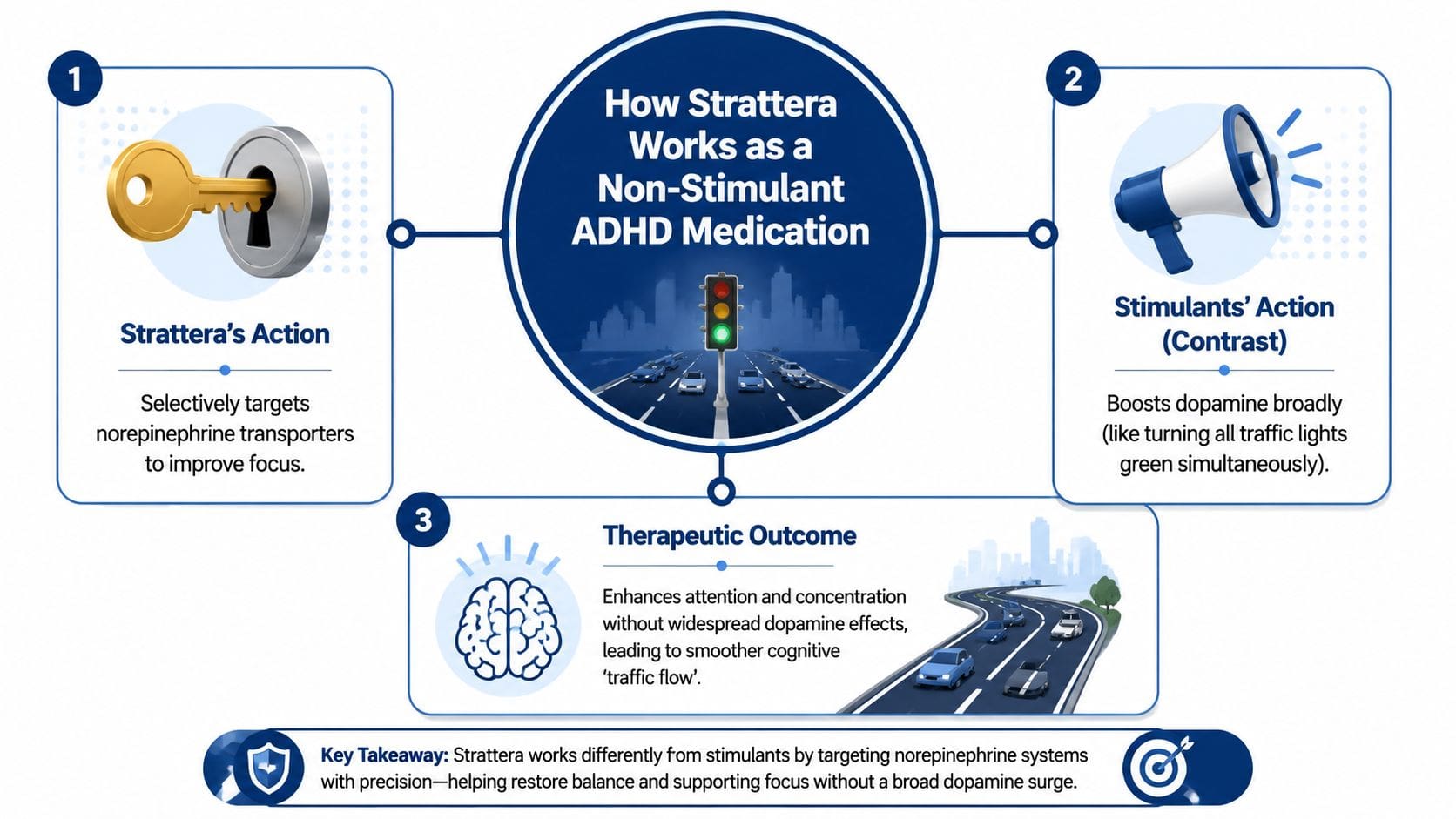
The practical takeaway is simple. Strattera belongs in the broader conversation about non-stimulant ADHD medications, especially for patients who need a medication that fits a different tolerability profile. For readers comparing treatment paths, the overview at Integrative Psychiatry of America's non-stimulant ADHD treatment page can help frame how atomoxetine fits alongside other options.
Clinical lens: Strattera can be useful when a patient needs ADHD support but does not want stimulant effects to drive the medication choice.
What Current Research Says About Atomoxetine in Pregnancy
A patient in telehealth from Pennsylvania may be asking a very practical question, can Strattera stay part of the plan during pregnancy, or does the medication need to change as soon as pregnancy is confirmed? The best human evidence so far helps answer that question with more nuance than a simple yes or no.
The strongest human data available so far come from a large Nordic-U.S. cohort study that identified 990 pregnancies with first-trimester atomoxetine exposure, including 368 from four Nordic countries and 622 from the United States (Women's Mental Health summary of the cohort). In that dataset, there was no increase in major congenital malformations overall. The study reported a pooled crude prevalence ratio of 1.18 with a 95% confidence interval of 0.88-1.60, and an adjusted prevalence ratio of 0.99 with a 95% confidence interval of 0.74-1.34 for any major congenital malformation.
How to read those numbers
A confidence interval that crosses 1.0 means the study did not show a statistically significant increase in risk in that analysis. That does not prove zero risk. It means the available data did not detect a clear signal of harm in that sample, the way a smoke detector can stay quiet even when a kitchen is busy but not on fire. For cardiac malformations, the adjusted prevalence ratio was 1.34 with a 95% confidence interval of 0.86-2.09, and for limb malformations it was 0.90 with a 95% confidence interval of 0.38-2.16. Those estimates are part of why clinicians describe atomoxetine pregnancy data as reassuring but still incomplete.
The broader literature points in the same direction. A UK teratology review reported 1,621 atomoxetine-exposed pregnancies, including at least 1,465 first-trimester exposures, and a JAMA Network Open systematic review and meta-analysis of 10 studies covering 16.5 million pregnant women found atomoxetine was not associated with a significant increase in congenital anomalies or miscarriages (UKTIS monograph, JAMA Network Open meta-analysis). In that meta-analysis, the odds ratio was 1.14 with a 95% confidence interval of 0.83-1.55 for congenital anomalies, and 1.15 with a 95% confidence interval of 0.82-1.62 for miscarriages. For patients comparing medication options, the broader ADHD medication guidance for pregnant women puts these atomoxetine findings in context alongside the rest of the treatment conversation.
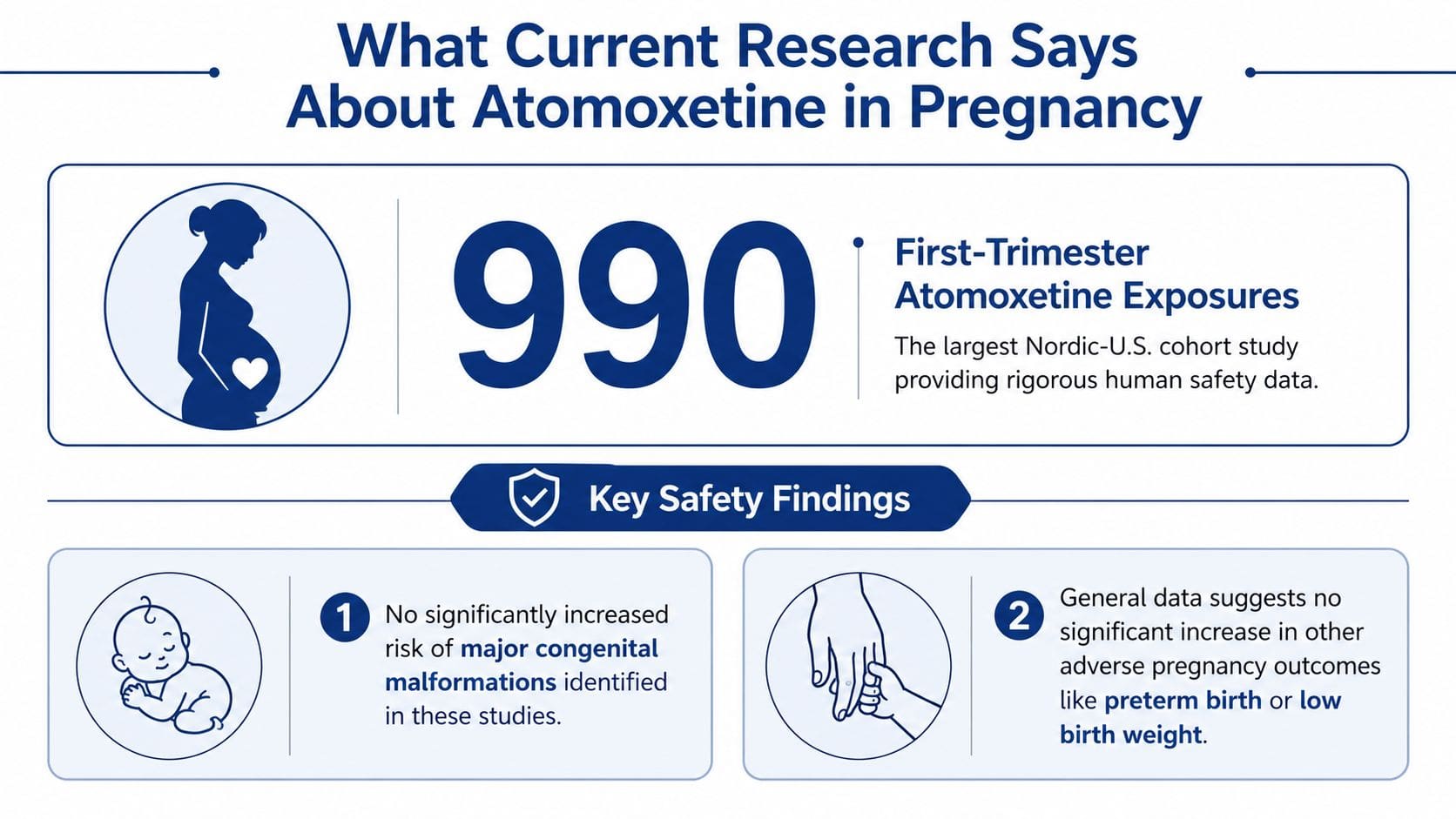
For a patient trying to decide whether to continue treatment, the message is measured, not absolute. Current human data do not show a clear teratogenic signal, but observational studies still leave room for uncertainty. That is why many clinicians pair the research with the patient's own symptom burden, prenatal goals, and telehealth follow-up, rather than using a one-size-fits-all answer.
Key Clinical Considerations for Using Strattera in Pregnancy
The FDA label remains the anchor for conservative decision-making. It states that published human pregnancy data are insufficient to establish drug-associated fetal risk and advises using atomoxetine only when maternal benefit justifies potential fetal risk (FDA label). That wording matters because it reflects the gap between encouraging human studies and the lack of definitive randomized pregnancy trials.
What that means in practice
A medication plan should start with the patient's current function. A person who is mildly symptomatic and doing well with behavioral supports may decide differently than someone whose ADHD symptoms are disrupting work, driving, or prenatal follow-through. Coexisting anxiety or depression can also change the picture, because untreated ADHD can amplify stress and make other symptoms harder to manage.
The FDA also directs clinicians to consider enrollment in the National Pregnancy Registry for ADHD Medications. That recommendation is important because pregnancy medication data improve when clinicians and patients contribute outcome tracking over time, instead of relying only on isolated case reports. In a telehealth setting, that conversation can happen early, before the patient feels pressured to make a rushed decision.
Clinical rule: pregnancy treatment decisions are strongest when they account for gestational age, symptom severity, comorbid conditions, and the patient's own values.
Animal findings are part of the label too, but they are not the same as human pregnancy outcomes. The label notes animal data with decreased live fetuses and increased early resorptions in rabbits at up to 100 mg/kg/day, and no adverse fetal effects in rats at up to 150 mg/kg/day, while still recommending use only when benefit outweighs risk (older FDA labeling). Those details help explain why clinicians stay cautious, even when the more recent human data look reassuring.
For patients asking how this compares with other medication discussions, the review on ADHD medication during pregnancy can help frame the decision in a broader way. The core idea stays the same, though. Strattera is not automatically stopped or automatically continued. It's weighed against the patient's real-world need for symptom control and the pregnancy context in front of them.
Risks of Untreated ADHD During Pregnancy
Untreated ADHD can cause problems that never show up on a lab test. Missed appointments, forgotten vitamins, inconsistent eating, difficulty organizing childcare or work demands, and faster stress buildup can all affect pregnancy routines. When ADHD symptoms are active, even simple prenatal tasks can take more mental effort than they should.
Why symptom control still matters
The risk discussion should include more than fetal exposure. A patient who cannot concentrate long enough to keep up with prenatal care may face preventable complications in daily life, even if the medication question is the only thing she can see at first. That's why ADHD treatment during pregnancy is often about preserving stability, not just chasing symptom relief.
For some people, untreated ADHD also affects sleep, emotional regulation, and follow-through with therapy or exercise routines that would otherwise help. Those issues can spill into postpartum life too, where attention, planning, and patience matter more than ever. A new parent who is already overloaded may struggle to keep up with feeding schedules, rest, and medication adherence.
Untreated ADHD can be a prenatal issue and a postpartum issue. The impact often reaches farther than the patient expects.
This is why the safest effective treatment matters. For some patients, that may still be Strattera. For others, it may be a different medication strategy or a non-medication plan with close monitoring. The point is not that every pregnant patient with ADHD needs medication. The point is that every pregnant patient deserves a plan that respects both maternal function and fetal safety.
Planning Individualized ADHD Treatment with Strattera in Pregnancy
Individualized planning starts before the next refill. A patient who is trying to conceive, newly pregnant, or already in the second or third trimester needs a different conversation than someone who is planning for postpartum care. Timing matters, symptoms matter, and the patient's support system matters.
A practical decision path
First, review the reason Strattera is being used. Some patients need it because stimulant side effects were hard to tolerate, while others use it because it fits their health history better. That starting point helps identify whether the next step should be continuation, dose review, transition planning, or closer monitoring.
Second, build the decision around shared priorities. A patient may care most about staying organized at work, keeping prenatal appointments, protecting sleep, or reducing emotional overload. A prescriber should take those priorities seriously, because treatment succeeds when it fits real life instead of a textbook scenario.
Third, plan for postpartum early. The public data on breastfeeding are a major gap. There are no human data on atomoxetine in breast milk, infant effects, or milk production, which leaves a real uncertainty for new parents who want to restart ADHD treatment after delivery (FDA safety labeling change summary). That gap should be discussed before delivery, not after sleep deprivation has already set in.
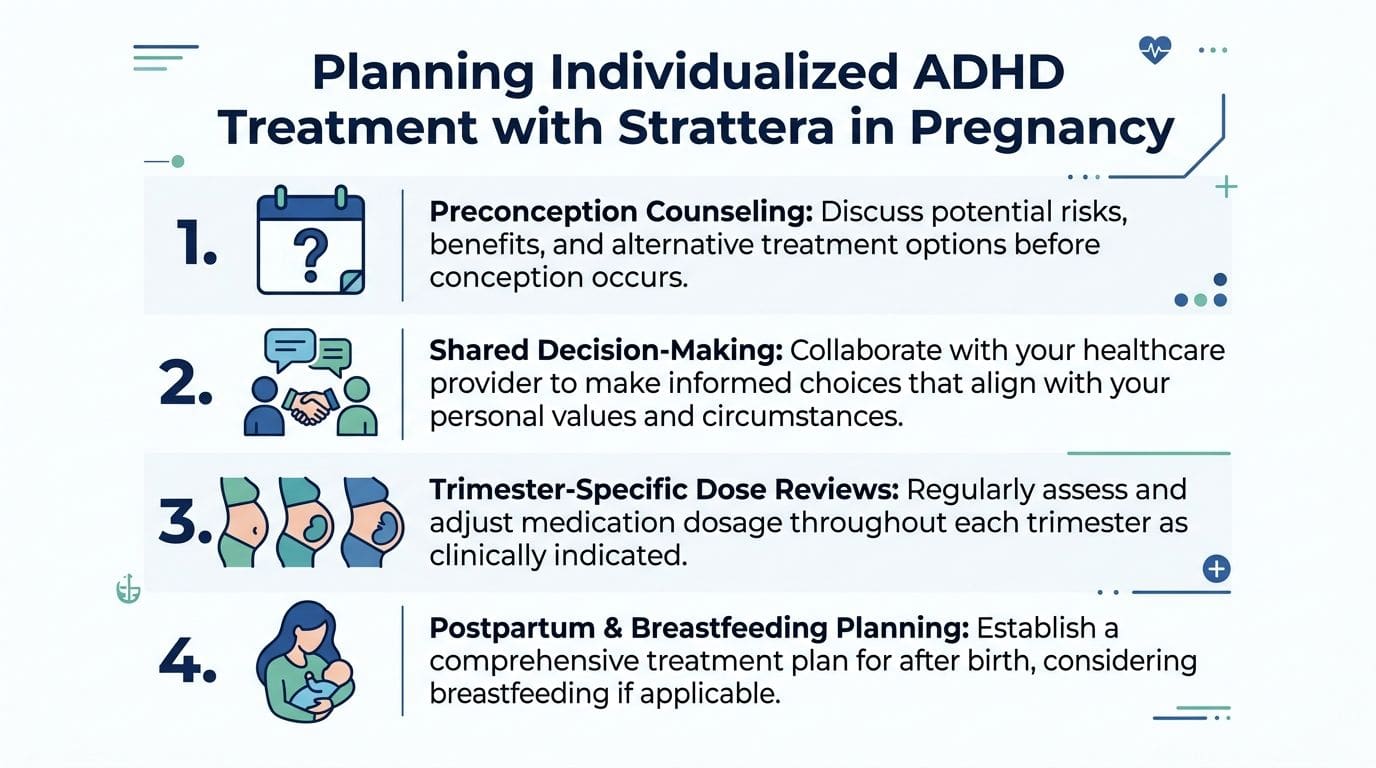
A useful structure for many patients includes:
- Preconception counseling: review benefits, risks, and alternatives before conception whenever possible.
- Shared decision-making: match the plan to the patient's values, work demands, and symptom pattern.
- Trimester-specific review: revisit whether the dose and overall strategy still make sense as the pregnancy changes.
- Postpartum planning: decide ahead of time how ADHD care will work if breastfeeding is part of the plan.
For patients in Philadelphia who want a clinically grounded review of this issue, the page on safe ADHD treatment during pregnancy in Philadelphia can be a practical starting point. The right plan should feel coordinated, not improvised.
Telehealth Support and Next Steps with Integrative Psychiatry of America
Virtual care makes this kind of decision much easier to manage. Integrative Psychiatry of America provides virtual psychiatric evaluations and medication management across Pennsylvania, which helps patients in Philadelphia, Pittsburgh, Harrisburg, Erie, Scranton, Allentown, Lancaster, Reading, and smaller communities get care without adding another trip to an already full schedule. For pregnant patients, that convenience can make follow-up more realistic.

The practice's telepsychiatry model is explained further on its telepsychiatry information page, which is useful for patients who want to understand how remote visits work before booking. That matters for pregnancy care because follow-up should be easy to access when symptoms shift, medications change, or obstetric questions come up.
For many patients, the next steps are straightforward. Verify insurance, schedule a telehealth appointment, and bring a medication list, pregnancy timeline, and symptom concerns to the visit. If ADHD symptoms are making daily routines harder, tools like the Adult ADHD Assessment, Feeling Journal, Daily Agenda Planner, Exercise Routine Generator, and 5-4-3-2-1 Grounding Tool can help organize what to discuss and track between visits.
The decision about Strattera and Pregnancy should be thoughtful, not rushed. If pregnancy has raised questions about atomoxetine, ADHD symptom control, or breastfeeding planning, Integrative Psychiatry of America can help you review medication options, coordinate with obstetric care, and build a practical telehealth plan that fits life in Pennsylvania.