
Secure video can deliver first-line CPT, PE, or EMDR, and several VA trials show results comparable to office care when the protocol and weekly dose are appropriate, with initial improvement often expected after 4 to 8 sessions. Video-only care isn't automatically equivalent for every person.
For a Pennsylvania adult balancing nightmares, work, and family responsibilities, the difficult part may be finding care that feels possible to attend. A nearby clinic may have inconvenient hours, while a distant clinic may require time off that isn't available. The screen isn't the treatment. The clinical approach, appointment schedule, and setting matter more than just having access to a video platform.
Table of Contents
- PTSD Treatment Online From a Private Room
- The Therapies Guidelines Put First
- When Video Matches an Office Visit
- Safety Planning and Whole-Person Supports
- The Weekly Schedule and Staying in Treatment
- Cost, Coverage and Benefit Checks
- Start PTSD Treatment From Anywhere in Pennsylvania
PTSD Treatment Online From a Private Room
Consider an adult outside Harrisburg who keeps postponing trauma care. The drive requires leaving work early, and sitting in a waiting room feels exposing. A private room at home could remove those barriers, provided the clinician can deliver the right treatment there.
PTSD treatment online can involve the same structured therapies used in an office. However, online care describes several different services, not a single treatment.
Different services behind the same screen
- Live videoconference psychotherapy involves real-time work with a clinician following a written treatment protocol, with planned exercises and between-session practice.
- Guided internet programs provide lessons and skills exercises, often with lighter clinician contact. They aren't automatically equivalent to a full psychotherapy course.
- Telehealth medication management evaluates symptoms, medication effects, and side effects. It can address problems such as depression or hyperarousal, but it isn't trauma-focused psychotherapy.
The VA's summary of telemental health evidence describes randomized trials in which office-based video CPT was non-inferior to in-person CPT for female and male Veterans, while home-based PE produced outcomes comparable to office-based, face-to-face PE. Non-inferior means the video treatment wasn't meaningfully worse within the study's comparison criteria. It doesn't mean every patient or every online program will have identical results.

The room is part of the care decision
A private room, stable connection, and protected appointment time support meaningful trauma work. A laptop at the kitchen table may be adequate for scheduling, but not for discussing memories while relatives walk through.
A trauma-informed approach to mental health care also preserves choice. The clinician explains the rationale, checks readiness, and agrees on how to respond if distress becomes difficult to manage.
Practical rule: A useful online program names the therapy, protects the appointment time, and establishes a safety plan before intensive trauma work begins.
The Therapies Guidelines Put First
Individual, structured trauma-focused psychotherapy is the preferred starting point for many adults with PTSD. The 2023 VA/DoD guideline recommendations recommend Cognitive Processing Therapy, Eye Movement Desensitization and Reprocessing, or Prolonged Exposure over medication-only treatment.
The term manualized means the clinician follows a tested treatment structure. It doesn't mean ignoring the person's history, preferences, or pace.
What CPT, PE, and EMDR actually involve
Cognitive Processing Therapy, or CPT, addresses beliefs that remain stuck after trauma. Someone might believe that trusting anyone is dangerous or that surviving an assault proves personal responsibility. CPT helps the person examine those conclusions without denying what happened.
Prolonged Exposure, or PE, addresses avoidance of trauma memories and objectively safe reminders. The clinician and patient develop a planned progression of exercises. Exposure isn't an instruction to confront genuine danger or disclose everything without preparation.
Eye Movement Desensitization and Reprocessing, or EMDR, combines focused attention on distressing memories with bilateral stimulation, such as guided eye movements. The clinician tracks distress and follows a structured protocol. Adding eye movements to an otherwise unstructured conversation isn't the same as delivering a complete EMDR treatment.
Online PTSD treatment options compared
| Option | What it works on | Typical course | What to ask a virtual provider |
|---|---|---|---|
| Cognitive Processing Therapy (CPT) | Trauma-related beliefs, including guilt and self-blame | A structured weekly course with cognitive exercises and homework | Does the clinician provide manualized individual CPT with protected weekly appointments? |
| Prolonged Exposure (PE) | Avoidance of memories, places, and safe reminders through a planned hierarchy | A structured weekly course with exposure practice between visits | Can exposure happen safely by video from the available room? |
| EMDR | Distress tied to specific memories, using bilateral stimulation | Preparation, memory processing, and reassessment within a structured course | Does the clinician deliver the full protocol rather than an isolated technique? |
| Medication management | Depression, hyperarousal, and selected sleep-related symptoms | Ongoing follow-up rather than a fixed psychotherapy course | Is medication supporting a broader plan, or is it the only treatment offered? |
| Guided internet or blended programs | Skills practice, supported self-directed work, or combined online and office treatment | A program-defined sequence with scheduled clinician guidance | Is clinician support available, and can care step up to trauma-focused psychotherapy? |
A credible virtual service should state whether it provides, coordinates, or refers for these therapies. General supportive conversation can be valuable, but patients need clarity about whether it constitutes a PTSD-specific treatment course.
Where medication and internet programs fit
SSRIs and other medications still have a role when a person declines psychotherapy, cannot currently engage in it, or needs help with associated symptoms. Medication selection should reflect the target symptom, medical history, interactions, and tolerability. Not every medication addresses nightmares, insomnia, depression, and core PTSD symptoms equally.
Smaller internet programs deserve a more cautious interpretation. A 2024 acceptance and commitment therapy pilot enrolled 10 people with PTSD and chronic pain in a 10-week internet program and reported clinically significant improvements sustained at three-month follow-up. That finding supports further investigation, not equivalence to established first-line therapies.
A 2024 blended trauma-focused cognitive therapy feasibility study included 17 participants, with 88% remaining in treatment and 64% achieving clinically significant change. The sample was small, and the intervention combined internet and in-person care. Neither finding guarantees an individual outcome.
When Video Matches an Office Visit
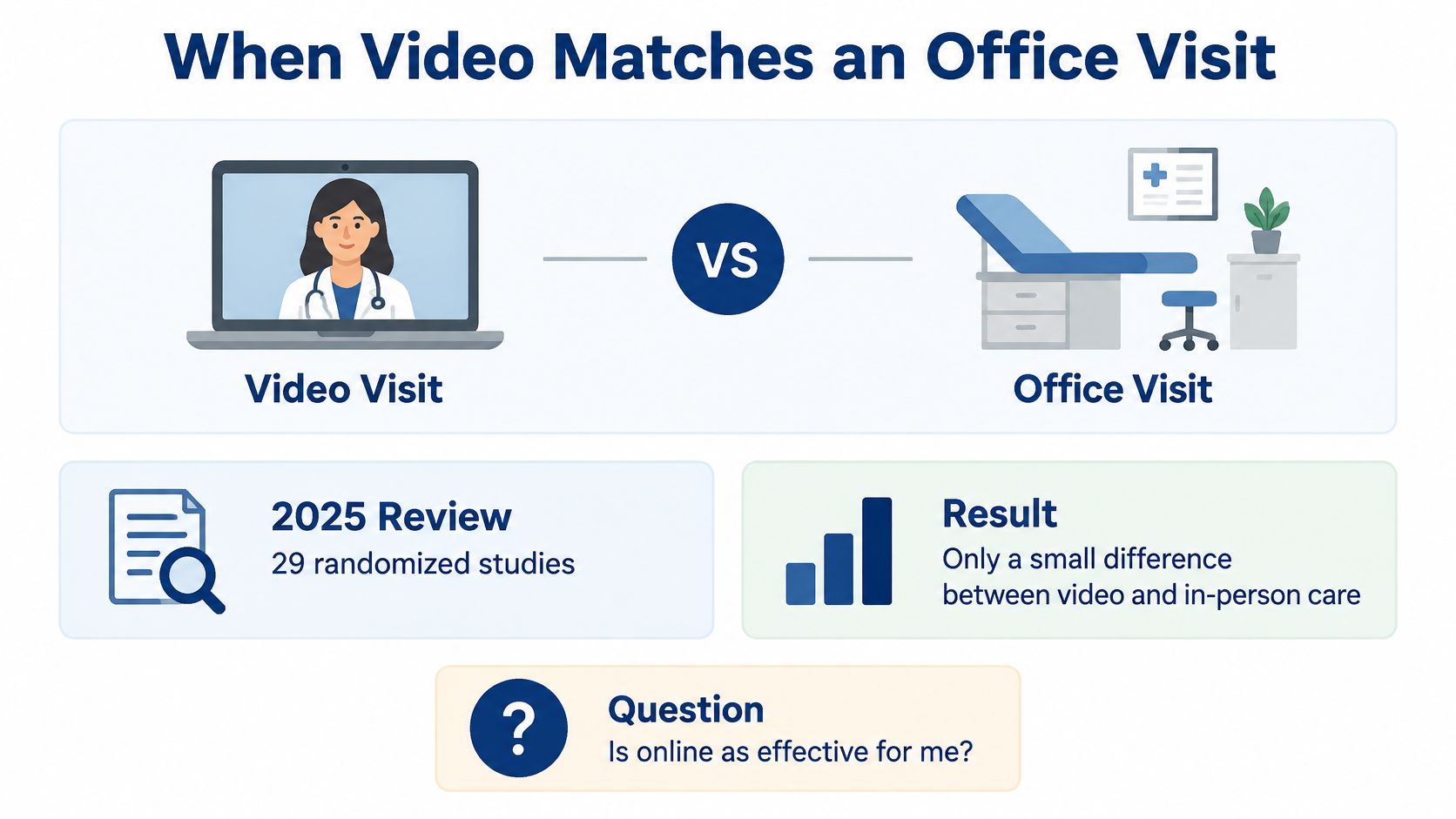
A private room, reliable connection, and the right therapy protocol matter more than the screen itself. A 2025 systematic review of 29 randomized studies found only a small difference in PTSD treatment effectiveness between video and in-person care, d = 0.06, with a 95% confidence interval from −0.17 to 0.28.
That effect size summarizes the average difference between formats. It is not a personal estimate of recovery. In practice, outcomes can vary with the treatment protocol, whether sessions happen regularly, and the support available to the patient.
Access can change whether treatment happens
A VA report on a randomized study published in 2015 describes 265 rural Veterans, including 133 assigned to video CPT with support from a nurse-care manager, pharmacist, and psychiatric team. After 12 months, nearly 55% of the telemedicine group had received CPT, compared with 12% receiving usual care. The video-supported group also had larger symptom reductions, while medication differences were minimal.
The comparison was between a supported video program and usual care, not video therapy and otherwise identical office therapy. The care team helped participants access structured treatment, so the results do not establish what a stand-alone video appointment would achieve. Access is part of the treatment decision: video may make it possible to begin care that distance would otherwise put out of reach.
When to choose video, office, or hybrid PTSD care
| Situation | Usually a better fit | Why |
|---|---|---|
| Private room and stable internet | Video | Removes travel while keeping the treatment protocol |
| Rural location or long travel is the main barrier | Video | Makes access to a suitable clinician more practical |
| Planned weekly exposure practice | Video if the room stays private | Allows home-based work with clinician guidance |
| No private space, or someone at home is unsafe | Office or hybrid | Trauma work requires a protected setting |
| Severe dissociation or difficulty completing sessions on camera | Office or hybrid assessment | In-room support and monitoring may help |
| Internet repeatedly drops mid-session | Office or a clinic video room | Interruptions can break up active trauma work |
These are factors to discuss with a clinician, not automatic rules for excluding video. Dissociation means feeling disconnected from the present, the body, or surroundings. Its severity and effect on participation matter more than the label.
Intensive treatment is a separate choice
Some services compress therapy into a more intensive, or massed, schedule. That format is a separate option, not a default for every adult. The decision should consider whether the person can attend consistently and complete practice between appointments.
Substance use, other mental health conditions, and trust in the clinician can also affect fit. If video makes it hard to stay engaged, moving to hybrid or office care can be a practical adjustment, not a sign of failure.
Safety Planning and Whole-Person Supports
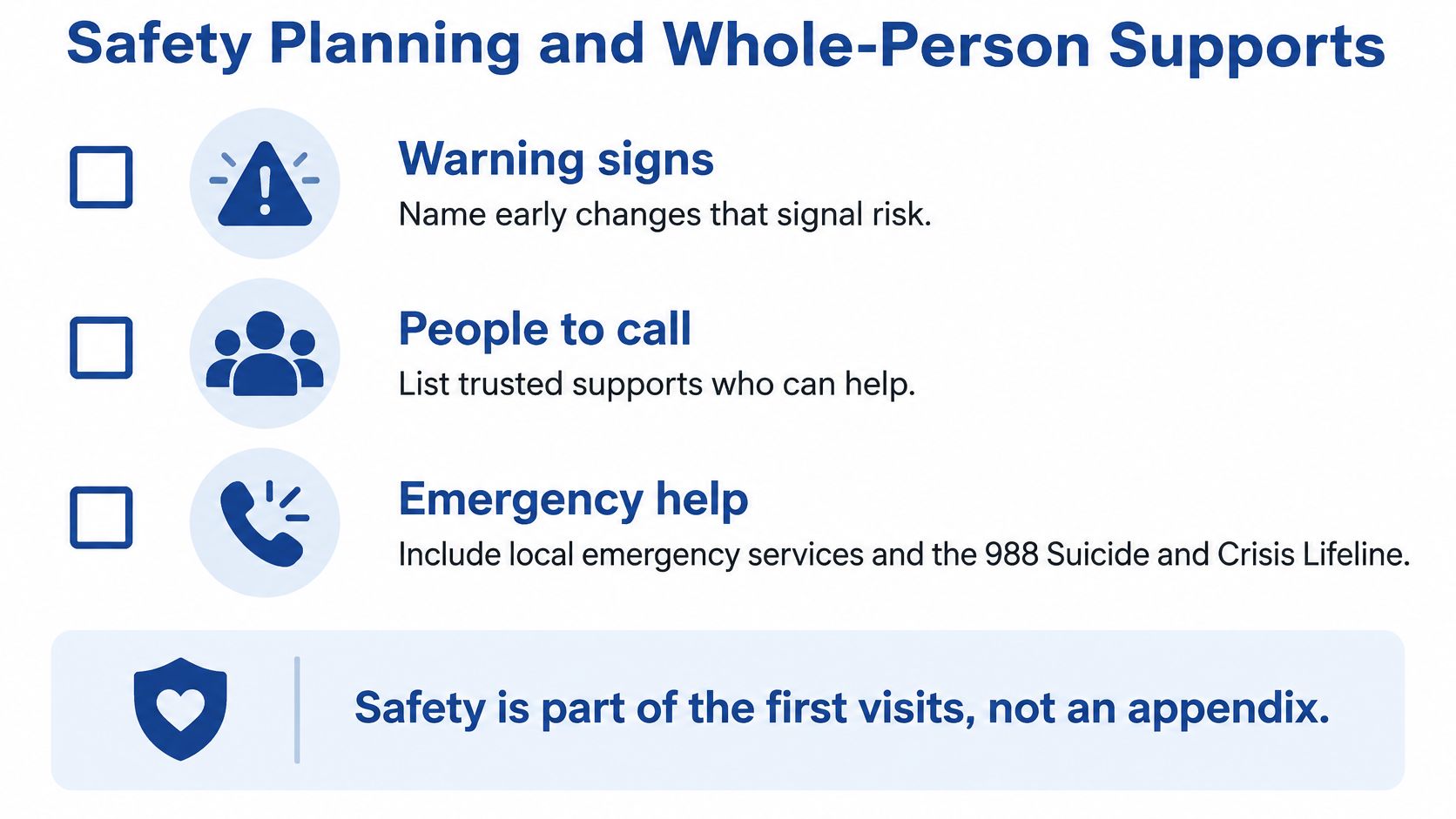
Safety planning belongs in the first visits, before demanding memory work begins. A written plan should identify warning signs, trusted contacts, local emergency services, and the 988 Suicide and Crisis Lifeline. Routine telehealth appointments aren't emergency services.
The clinician should confirm the patient's physical location and a callback method. If a connection fails during significant distress, both parties need an agreed next step rather than an improvised response.
Protecting the session
- Location: Attend from a private room in Pennsylvania, or another jurisdiction where the clinician is authorized to provide care. A car or public setting isn't suitable for trauma processing.
- Privacy: Use headphones, close the door, and agree on what happens if a child or partner enters.
- Recording: Don't record the visit. Discuss any accessibility needs or requests for written summaries beforehand.
- Between-session contact: Establish how to report increased symptoms and what requires urgent local help instead of a portal message.
Distress can temporarily rise during exposure or trauma narratives. That possibility deserves preparation, not dismissal. A marked increase, inability to regain orientation, or escalating safety concern warrants contact through the agreed care plan.
Expected discomfort doesn't mean a person must tolerate overwhelming distress alone.
Supports that complement trauma treatment
Sleep routines, regular meals, movement, and mindfulness can support participation. They don't replace CPT, PE, or EMDR. Grounding should also be coordinated with the therapy plan rather than used automatically to avoid every uncomfortable feeling.
Integrative Psychiatry of America is a fully licensed Pennsylvania telehealth practice. Its trauma-informed care includes individualized planning that can integrate psychotherapy, medication optimization, advanced lab monitoring, genetic evaluations, exercise and nutritional counseling, and mindfulness techniques.
Testing should answer a clinical question. Laboratory evaluation may help investigate contributors such as thyroid disease or anemia when the history suggests them. Genetic information may inform selected medication decisions, but it doesn't diagnose PTSD or identify a guaranteed effective medication.
A free grounding exercise for PTSD-related distress can provide educational support between visits. An anxiety symptom checker can help organize concerns for an appointment, but a checker is screening, not diagnosis.
The Weekly Schedule and Staying in Treatment
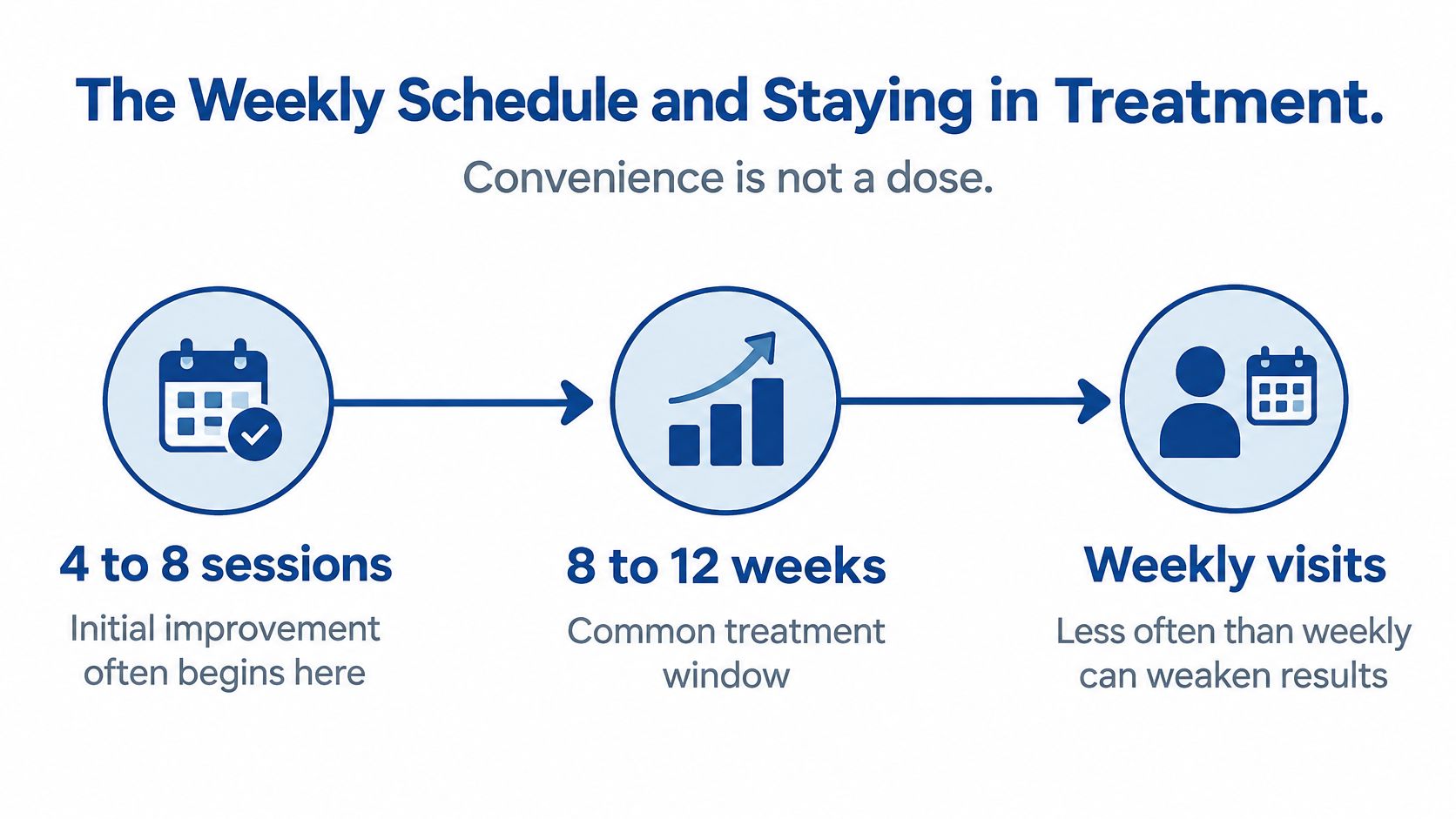
Convenience isn't a treatment dose. The VA/DoD provider summary describes initial improvement after approximately 4 to 8 sessions, generally across 8 to 12 weeks, and cautions that treatment effects may decrease when sessions occur less often than weekly.
These expectations aren't a recovery deadline. The treatment protocol, complexity of the presentation, and actual attendance shape how a clinician interprets progress.
A course of care has distinct stages
A thorough evaluation comes first. The psychiatric provider assesses trauma symptoms, impairment, medical history, medications, and safety. Depression, panic, ADHD, substance use, and medical contributors can overlap with PTSD or occur alongside it. Attention difficulties alone don't establish ADHD, just as a trauma history alone doesn't establish PTSD.
Early treatment establishes a shared explanation of the problem and the selected therapy. Depending on the protocol, this may include identifying beliefs, developing an exposure hierarchy, or selecting memory targets. The clinician also establishes a written crisis plan and explains what preparation is necessary.
The middle phase contains the active therapeutic work. Appointments follow the protocol, and practice continues between visits. Homework should have a clear purpose, such as completing a CPT worksheet or approaching a safe situation that avoidance has restricted.
Later sessions consolidate learning and plan for future triggers. The clinician reviews remaining symptoms, changes in daily functioning, and what the patient should do if avoidance or distress returns.
Preparation should support active treatment, not become an indefinite requirement that postpones it. Conversely, a clinician shouldn't rush into exposure before understanding safety, consent, and the patient's ability to participate.
What a protected video appointment looks like
The camera sits near eye level, with enough light for the clinician to observe facial expression. Worksheets, reading glasses, and water are within reach. Notifications are silenced, the door closes, and headphones protect conversation in a shared home.
The patient isn't driving, working another task, or supervising a situation that requires constant interruption. Some transition time after the appointment can help before returning to children, customers, or a demanding shift.
An illustrative schedule shows why frequency matters: a hypothetical 12-session course takes roughly three months with weekly attendance but about six months with alternate-week attendance. That arithmetic describes scheduling, not a universal CPT prescription. A longer calendar span doesn't automatically provide a stronger treatment dose.
Reach and completion measure different things
A VA evidence summary covering national use and implementation findings reports the figures below. The national analysis examined Veterans receiving individual evidence-based PTSD psychotherapy between April 2022 and April 2023; the implementation and clinic findings involve separate groups.
Reach versus completion in VA data
| Measure | Result |
|---|---|
| 2025 national analysis, Veterans using video for at least one session, n = 24,447 | 74.4% |
| 2025 national analysis, Veterans receiving at least half of sessions by video | 66.8% |
| Implementation sample, n = 544, at least one care-manager contact | 41.6% |
| Implementation sample, engaged in trauma-focused psychotherapy | 6.0% |
| Separate VA clinic, enrolled in some treatment | 79.4% |
| Same clinic, enrolled Veterans who completed evidence-based psychotherapy | 39.2% |
These aren't stages in a single patient funnel. The groups and denominators differ, so the figures cannot establish that video caused dropout. They demonstrate why a service should assess both access and follow-through.
Consider a hypothetical night-shift worker who starts CPT, then repeatedly misses appointments during overtime. Symptoms remain difficult, and the clinician has too little consistent treatment exposure to judge response. On another attempt, a protected weekly slot and manageable homework allow completion of the planned course, making the response easier to evaluate.
The example doesn't promise improvement after completion. It distinguishes a treatment that hasn't received an adequate trial from one that needs reconsideration despite consistent participation.
Building attendance into the plan
- Protect a recurring slot: Treat the appointment as clinical care rather than spare time that work can absorb.
- Scale homework realistically: Agree on practice that fits the patient's reading ability, schedule, and symptom burden.
- Arrange a backup location: Identify another private, authorized setting before household disruptions occur.
- Plan for missed visits: Agree on outreach and reassessment when attendance becomes inconsistent.
Clinical checkpoint: Little change after a genuine, consistently attended trial calls for reassessment, not an assumption that the patient failed.
Some adults need a longer course because of multiple traumas or co-occurring conditions. Others need a different therapy, an office setting, medication adjustment, or a revised diagnosis. A concrete set of PTSD treatment goals helps track changes in sleep, work, relationships, and avoidance alongside symptom scores.
Cost, Coverage and Benefit Checks
Before scheduling online PTSD care, check the plan's specific benefits. Copays, deductibles, network status, visit limits, and authorization rules may differ for psychotherapy, psychiatric medication visits, and laboratory services.
Coverage for office therapy does not confirm coverage for video appointments. Ask the insurer about the service format and the individual clinician, since coverage can depend on both.
Questions worth resolving before booking
- Covered services: Does the plan cover psychiatric evaluations and trauma-focused psychotherapy by video in Pennsylvania?
- Clinician network status: Is the treating provider in network, rather than only the practice?
- Treatment limits: Do CPT, PE, or EMDR appointments count toward a visit limit?
- Separate charges: Could the evaluation, medication follow-up, or ordered laboratory work have different patient costs?
Call the member-services number on the insurance card and ask specifically about mental health telehealth benefits. Check whether authorization applies to the evaluation, ongoing therapy, or both.
Record the reference number and ask for an estimate of your share of the cost. If an answer is unclear, request written clarification before assuming the service is covered.
Turning benefit information into a workable plan
Integrative Psychiatry of America's insurance verification process can help organize benefit questions before scheduling. The website's Verify Insurance option can help organize that step.
A workable budget should account for the intended follow-up schedule, not only the initial appointment. Unexpected bills can make it harder to attend consistently.
Benefit verification isn't a payment guarantee. An estimate before treatment cannot determine how an insurer will process an individual claim.
Start PTSD Treatment From Anywhere in Pennsylvania
A routine video evaluation is a reasonable next step when symptoms disrupt daily life and a protected appointment is feasible. A referral or hybrid plan may fit better when trauma work cannot happen safely at home. Immediate danger requires urgent local crisis care, not a routine online booking.
The intake request should be specific without requiring the patient to choose a treatment alone. A full evaluation can clarify the diagnosis, identify co-occurring conditions, and determine whether a named trauma-focused therapy or referral belongs in the plan.
What an appropriate starting plan should clarify
- Treatment direction: Whether CPT, PE, EMDR, or another justified approach is appropriate, and who will provide it.
- Medication's role: Which symptoms medication would target, how response will be monitored, and how it fits with psychotherapy.
- Appointment cadence: Whether the schedule supports active treatment rather than occasional check-ins alone.
- Coordination: How the psychiatric provider and an outside trauma therapist will communicate when care involves separate clinicians.
Integrative Psychiatry of America sees patients throughout Pennsylvania, including Philadelphia and other communities statewide. Its clinical team includes board-certified psychiatric mental health nurse practitioners; the term psychiatric provider doesn't imply that every clinician is a physician psychiatrist.
Choosing the next step without a recovery promise
New patients can schedule a psychiatric evaluation through the website, with visits conducted through secure telehealth. The practice's PTSD treatment information offers a starting point for understanding its trauma-informed approach and discussing the appropriate care pathway.
For adults whose main obstacle is uncertainty about benefits, insurance verification can come first. Those ready to discuss symptoms and treatment options can request an evaluation. Educational grounding resources may support that preparation, but they shouldn't become another reason to postpone needed assessment.
No online plan can guarantee symptom remission. The practical goal is a clinically appropriate treatment, a setting that supports participation, and a clear process for checking whether the plan is helping.
Integrative Psychiatry of America offers confidential, trauma-informed virtual psychiatric care for adults across Pennsylvania. Adults considering PTSD treatment online can visit Integrative Psychiatry of America to request a full evaluation or begin insurance verification, then discuss psychotherapy coordination, medication needs, and a workable follow-up schedule.