
The worry often starts before breakfast. A person in Philadelphia checks work email twice, replays a conversation from yesterday, wonders whether a family member is upset, then notices tight shoulders and a racing mind. By afternoon, the brain has found three more problems to solve. By bedtime, sleep still won't come.
That pattern is common in generalized anxiety disorder treatment conversations across Pennsylvania. People in Pittsburgh, Harrisburg, Erie, Scranton, Allentown, Lancaster, Reading, and smaller towns often ask the same questions. Is this normal stress, or something more? Should treatment start with therapy, medication, or both? What happens if the first plan doesn't help enough? Telehealth has made those answers easier to access without adding another long drive or another waiting room.
Table of Contents
- Understanding Generalized Anxiety Disorder and Its Symptoms
- First-Line Medical Treatments for GAD
- The Role of Psychotherapy in GAD Recovery
- Integrative Approaches for Whole-Person Anxiety Care
- Creating Your Personalized GAD Treatment Plan in Pennsylvania
- Frequently Asked Questions About GAD Treatment
Understanding Generalized Anxiety Disorder and Its Symptoms
Generalized anxiety disorder, or GAD, is more than being a worrier. It usually feels like a mind that won't turn off, even when there isn't a clear emergency. The worry tends to spread across several areas at once, such as work, money, health, family, school, or everyday responsibilities.
This condition is also common and often untreated. The Anxiety and Depression Association of America reports that GAD affects 6.8 million adults, or 3.1% of the U.S. population, yet only 43.2% of people with GAD are receiving treatment. The National Institute of Mental Health estimates a 5.7% lifetime prevalence among U.S. adults, which highlights how many people will deal with it at some point (ADAA facts and statistics on anxiety).
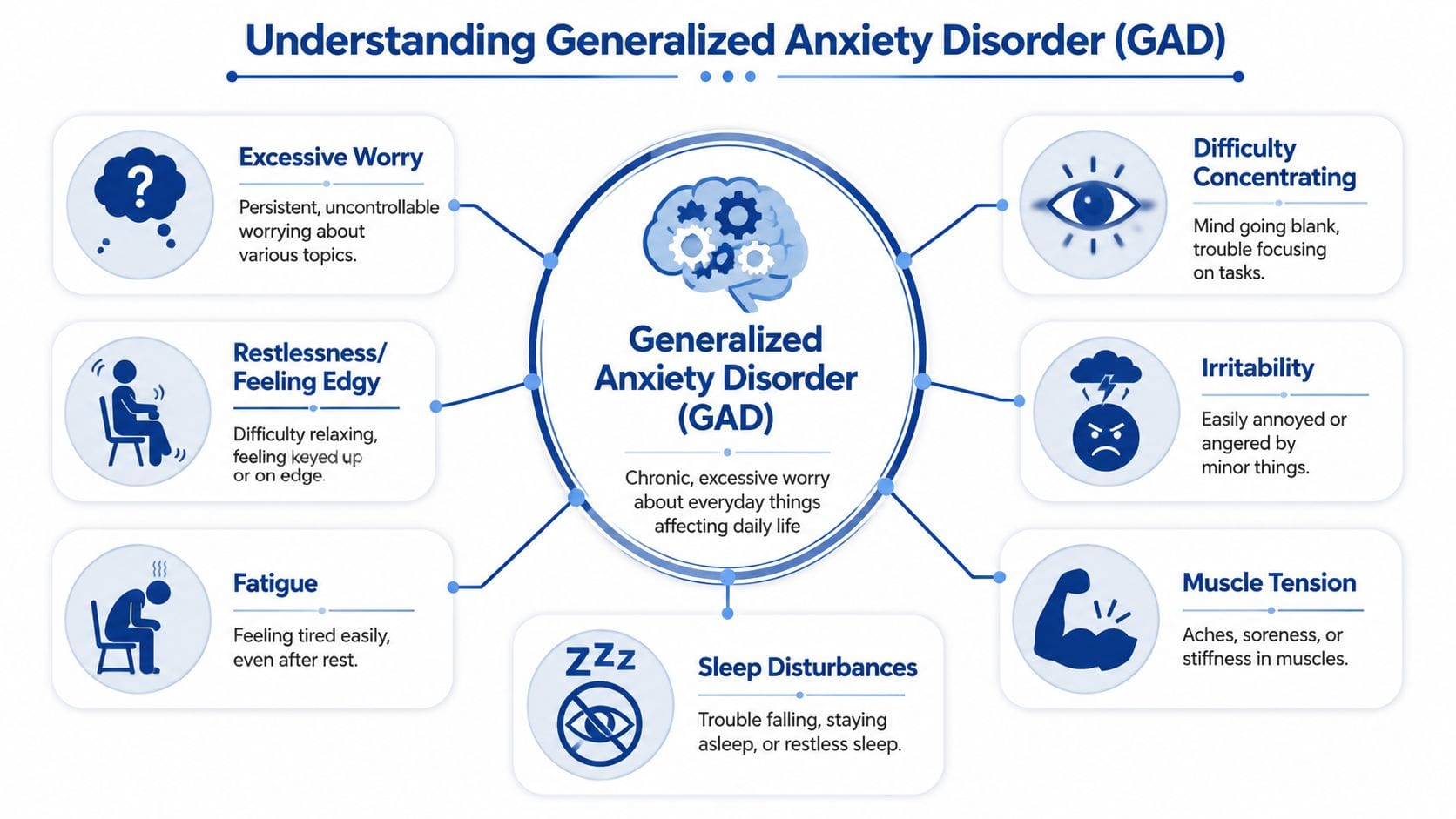
How GAD feels in daily life
Some people describe GAD as constant mental scanning. The brain keeps looking for the next thing that could go wrong. Even when one concern settles, another takes its place.
Common symptoms include:
- Persistent worry: Anxiety jumps from one topic to another and is hard to shut off.
- Restlessness: The body feels keyed up, edgy, or unable to settle.
- Fatigue: Mental overdrive is exhausting, even after a full night in bed.
- Poor concentration: Focus slips because worry keeps interrupting attention.
- Irritability: Small frustrations can feel much bigger than they should.
- Muscle tension: Tight neck, shoulders, jaw, or general body soreness are common.
- Sleep problems: Trouble falling asleep, staying asleep, or waking unrefreshed.
Signs that worry has crossed into a disorder
Normal stress usually matches a clear situation and eases when the situation improves. GAD is different. It tends to be chronic, difficult to control, and disruptive.
Practical rule: If worry is shaping daily decisions, affecting sleep, straining relationships, or making work harder, it's worth a professional evaluation.
A useful next step is a structured self-check. The Anxiety Symptom Checker can help a person organize symptoms before a visit and put vague distress into clearer language.
First-Line Medical Treatments for GAD
Medication can be helpful when anxiety is intense, persistent, or interfering with basic functioning. In adults with GAD, the best-supported first-line pharmacotherapy is an SSRI or SNRI, with strong evidence supporting escitalopram, duloxetine, and venlafaxine. A treatment trial of at least 12 weeks is recommended before judging full response, although lack of improvement by 4 weeks can predict a lower chance of success (review of pharmacotherapy for GAD).
That timeline matters. Many patients worry that if they don't feel dramatically better in a few days, treatment has failed. Usually, that's not how these medications work. They are not rescue medications. They are longer-term tools used to reduce the intensity and frequency of anxiety over time.
What medications are usually tried first
SSRIs and SNRIs work by affecting signaling systems involved in mood and anxiety regulation. In plain terms, they help the brain respond less intensely to chronic anxiety signals.
| Comparing Common GAD Medication Classes | How They Work | Common Examples |
|---|---|---|
| SSRIs | Adjust serotonin signaling linked to anxiety regulation | Escitalopram |
| SNRIs | Adjust serotonin and norepinephrine signaling | Duloxetine, Venlafaxine |
A medication plan isn't just about picking a name from a list. It also includes dose selection, side effect review, interaction checks, medical history, and a follow-up schedule. The Pennsylvania anxiety treatment guide for CBT, medication, and telepsychiatry gives a practical overview of how those pieces fit together in outpatient care.
What the first few weeks usually look like
Early treatment often requires patience. Some people notice small changes first. They may sleep a little better, recover faster after stress, or spend less time spiraling. The main goal in the opening weeks is not perfection. It's trend tracking.
Patients should expect close monitoring of:
- Side effects: Nausea, sleep changes, or feeling temporarily off can happen early and often improve with time.
- Function: Is work more manageable? Is it easier to focus? Is the body less tense?
- Worry intensity: Even modest softening of all-day worry can be clinically meaningful.
- Adherence: Skipping doses makes it harder to know whether a treatment is working.
If there's no meaningful early shift, that doesn't mean there are no options. It means the treatment plan may need adjustment instead of passive waiting.
The Role of Psychotherapy in GAD Recovery
Medication can lower the volume of anxiety. Therapy helps a person understand the pattern that keeps anxiety active. For many adults with GAD, that skill-building piece is what makes improvement more durable.
The World Health Organization notes that anxiety disorders have effective treatments, and Harvard Health reports that with appropriate treatment, 70% or more of people with GAD experience significant improvement. Reviews also describe CBT as the “gold standard” psychotherapeutic approach, often used alongside first-line medications for stronger overall care (WHO anxiety disorders fact sheet).
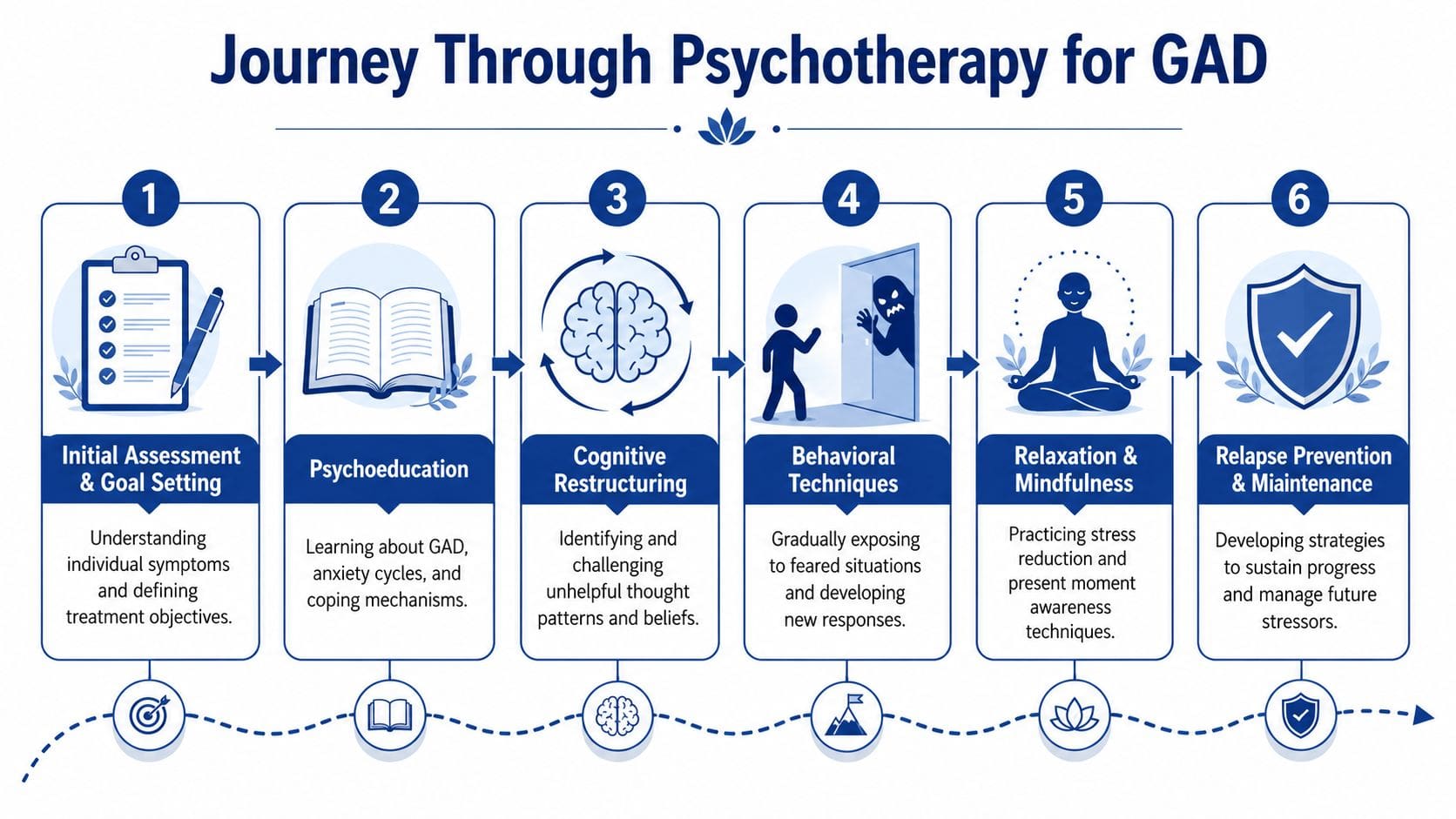
Why CBT remains central
CBT is structured and practical. It focuses on the links between thoughts, emotions, physical sensations, and behavior. In GAD, worry often acts like a mental habit. CBT helps interrupt that habit instead of obeying it.
Core parts of CBT for anxiety often include:
- Psychoeducation: Learning how the anxiety cycle works.
- Cognitive restructuring: Spotting catastrophic thinking and testing it more realistically.
- Self-monitoring: Tracking triggers, worry patterns, and body responses.
- Breathing and relaxation skills: Lowering physical arousal.
- Behavior change: Reducing avoidance and practicing more effective responses.
The self-soothing strategies resource can be a useful bridge between therapy sessions, especially for people who need concrete ways to calm the body when worry spikes.
A short visual overview helps many patients understand the process:
What therapy sessions often include
Early sessions often focus on pattern recognition. A person might notice that anxiety gets worse after poor sleep, conflict, too much caffeine, or constant reassurance-seeking. Later sessions shift toward changing the response.
Clinical takeaway: Good therapy for GAD doesn't just validate distress. It teaches a repeatable method for handling it.
For adults across Pennsylvania, virtual therapy-informed medication management can also make treatment more accessible. A patient in Erie or Lancaster can work on CBT-based tools from home, then review progress in follow-up visits without losing time to travel.
Integrative Approaches for Whole-Person Anxiety Care
Anxiety treatment works better when it includes the body, not just the mind. Sleep, movement, routines, food patterns, stress exposure, and social connection all shape how anxious a person feels from one day to the next. These aren't cosmetic add-ons. They influence baseline nervous system activation.
That's why a whole-person model often makes more clinical sense than a medication-only approach. Psychotherapy and medication management can do important work, but they usually work best when daily habits stop pushing the brain in the opposite direction.
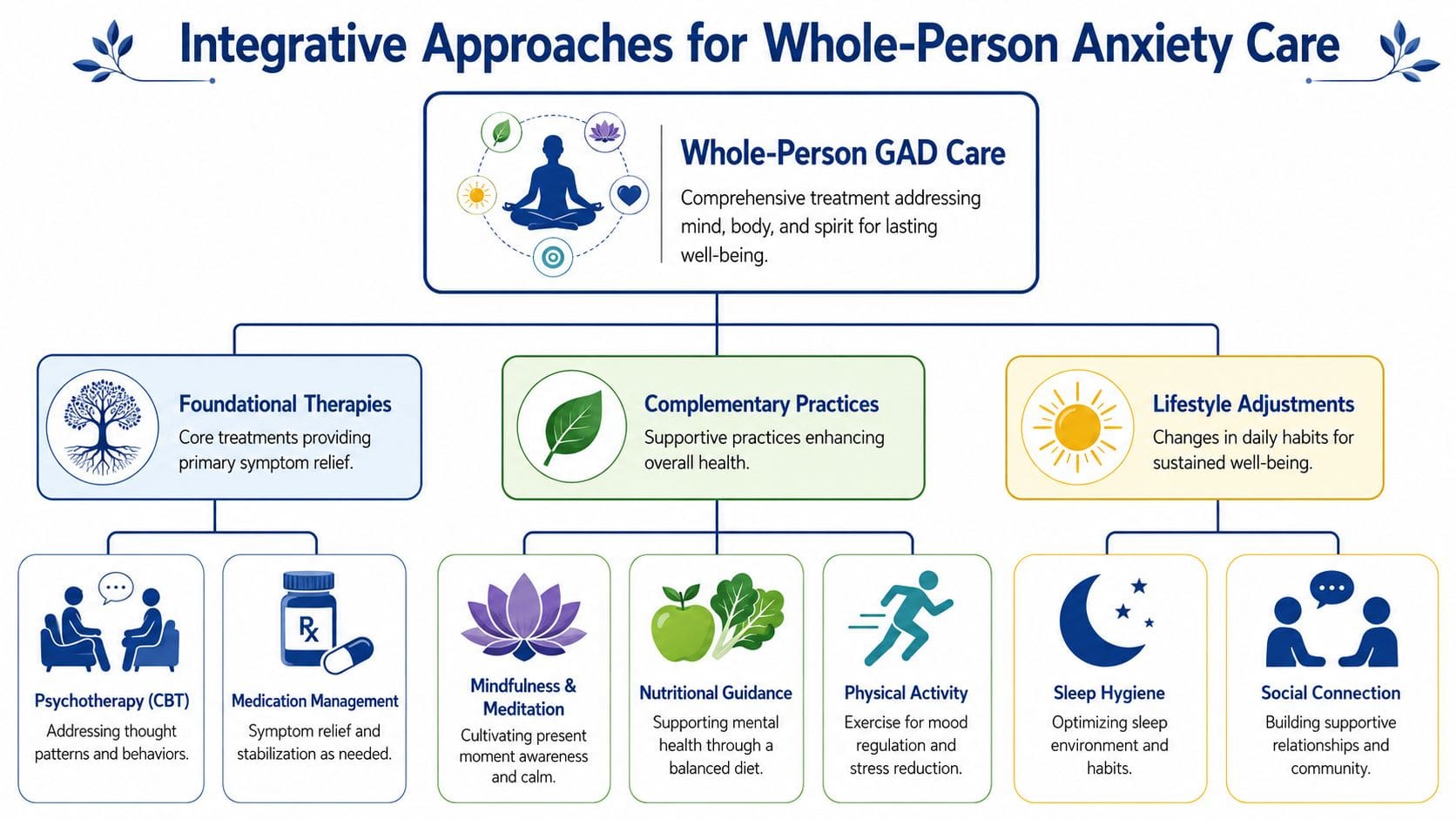
Why daily habits matter clinically
When anxiety is chronic, the body often lives in a state of over-preparation. Poor sleep, irregular meals, isolation, and inactivity can keep that cycle going. Lifestyle work can lower the background noise so therapy and medication have a better chance to work.
Useful areas to address include:
- Sleep hygiene: Consistent wake time, less late-night stimulation, and a more calming wind-down routine.
- Physical activity: Regular movement can discharge tension and improve mood regulation.
- Mindfulness practice: Attention training helps people notice worry without immediately following it.
- Nutrition patterns: More steady eating patterns can reduce the stress that comes with under-fueling or chaotic routines.
- Social structure: Anxiety often worsens in isolation and with unstructured time.
People struggling with nighttime anxiety may also benefit from practical sleep-focused guidance such as these natural ways to improve restless sleep, especially when worry tends to surge after the day slows down.
Practical tools that support treatment between visits
Many patients need more than insight. They need something concrete to do on Tuesday afternoon when anxiety is building. A few useful supports include a grounding exercise, a simple feeling log, and a realistic movement routine.
One option for statewide telehealth support is Integrative Psychiatry of America's integrative psychiatry approach, which combines virtual psychiatric care with lifestyle-focused strategies such as exercise counseling, nutritional education, and mindfulness-based support. Patients may also use tools like a Feeling Journal, Daily Agenda Planner, Exercise Routine Generator, or 5-4-3-2-1 Grounding Tool to make treatment more actionable between appointments.
Anxiety usually improves faster when coping skills are tied to a specific plan instead of vague intentions.
Creating Your Personalized GAD Treatment Plan in Pennsylvania
Starting treatment often feels harder than treatment itself. Many adults delay care because they aren't sure what a first appointment will involve, whether medication will be pushed too quickly, or whether telehealth can feel personal. In practice, a good treatment plan starts with a careful evaluation, not a rushed prescription.

What a virtual evaluation usually covers
A thorough virtual evaluation for GAD usually looks at the full picture:
- Symptom pattern: How long the worry has been present, what it centers on, and how it affects sleep, concentration, and daily functioning.
- Medical and psychiatric history: Prior treatment, medication responses, family history, and any conditions that may overlap with anxiety.
- Lifestyle contributors: Sleep schedule, caffeine use, substance use, work stress, exercise, and routines.
- Goals: Some patients want fewer panic-like episodes. Others want better sleep, sharper focus, or less avoidance.
A person in Philadelphia may want discreet care between work meetings. Someone in Pittsburgh may want consistent medication follow-up without crossing the city. Someone in a smaller Pennsylvania community may want specialty access without long travel. The Philadelphia anxiety treatment page shows how virtual care can fit into that real-world demand for convenience and privacy.
How telehealth follow-up works across Pennsylvania
After the evaluation, treatment usually becomes a sequence of adjustments rather than a one-time decision. Follow-ups focus on what's changing, what isn't, and what should happen next. That may include medication management, therapy recommendations, skill-building, or all of the above.
Long-term planning matters. The American Academy of Family Physicians reports that continuing antidepressants for at least 6 to 12 months helps reduce relapse, and stopping before one year can lead to symptom relapse in up to 50% of patients treated with an SSRI or SNRI (AAFP guidance on diagnosis and management of GAD and panic disorder).
That doesn't mean everyone needs the same duration of care. It means early improvement isn't the same as full recovery. A personalized plan should include not only how to feel better, but how to stay better.
Frequently Asked Questions About GAD Treatment
Some questions come up in nearly every intake. They're practical, urgent, and often tied to fear that treatment will either be too aggressive or not effective enough. Clear answers help people move forward.
About 50% of patients with GAD may not fully respond to their first-line treatment. Next steps may include switching medications, augmenting with another agent, or intensifying psychotherapy, although the evidence base for these later steps is still developing (review of treatment-resistant GAD). That point matters because many patients think one disappointing start means they're out of options. They aren't.
FAQ table
| Question | Answer |
|---|---|
| How do people know if they need treatment for GAD? | Treatment becomes worth pursuing when worry is persistent, hard to control, and starts affecting sleep, concentration, work, relationships, or physical tension. If anxiety is shaping daily life, an evaluation makes sense. |
| Is medication always necessary? | No. Some patients do well with psychotherapy and lifestyle work, while others benefit from medication, especially when symptoms are more impairing. The right plan depends on severity, history, preferences, and how much anxiety is disrupting daily function. |
| How long does medication take to work? | It usually takes time. Patients often need patience during the first several weeks, with follow-up to track side effects and early signs of progress. A full trial is typically longer than many people expect, which is why regular monitoring matters. |
| What if the first medication doesn't work? | That's common. A nonresponse may lead to a dose adjustment, a medication change, an added medication, or a stronger psychotherapy plan. It should trigger reassessment, not hopelessness. |
| Can therapy help even if anxiety feels physical? | Yes. GAD often shows up in the body as muscle tension, restlessness, stomach discomfort, fatigue, or poor sleep. Therapy can still help because it targets the worry cycle and the behaviors that keep the nervous system activated. |
| Is telehealth a good option for anxiety treatment? | For many adults in Pennsylvania, yes. Telehealth can make it easier to attend appointments consistently, especially when driving, missed work, childcare logistics, or privacy concerns make in-person care harder. |
| Will treatment just focus on symptoms? | It shouldn't. Good generalized anxiety disorder treatment also looks at sleep, routines, stress load, coping habits, and relapse prevention so progress can last. |
| What happens in follow-up visits? | Follow-up usually reviews symptom changes, side effects, sleep, function, and whether the current plan still fits. Small adjustments over time are normal and often necessary. |
| Can someone stop medication once they feel better? | Sometimes, but timing matters. Stopping too soon can increase the chance that symptoms return, so taper decisions should be thoughtful and supervised rather than impulsive. |
| What if anxiety overlaps with ADHD, depression, OCD, or trauma? | That's another reason evaluation matters. Anxiety can overlap with several conditions, and treatment works better when the full picture is identified early instead of assuming all symptoms come from one diagnosis. |
The most helpful mindset is to treat GAD like a condition that can be managed skillfully, not like a personal flaw that has to be hidden.
If anxiety is getting in the way of sleep, focus, work, or relationships, Integrative Psychiatry of America offers virtual psychiatric evaluations and medication management across Pennsylvania. Adults in Philadelphia, Pittsburgh, Harrisburg, Erie, Scranton, Allentown, Lancaster, Reading, and throughout the state can explore treatment options, verify insurance, and use free mental health tools to take the next step toward steadier, evidence-based care.