
A Philadelphia adult with ADHD symptoms usually reaches the same frustrating moment. The plan sounds simple at first: find a clinician, check the card, book the visit. Then the questions hit: whether Independence Blue Cross will cover the evaluation, how fast the first appointment can happen, and which phone number gets someone scheduled instead of routed in circles.
With ADHD Independence Blue Cross Philadelphia searches, the fastest path is usually not a random directory search. It starts with the insurer's Behavioral Health Care Navigation team, which IBX says can match members with an in-network provider and schedule an appointment in as quickly as 1–2 days through the number listed on its behavioral-health page, 1-800-688-1911, Monday through Friday, 8 a.m. to 6 p.m. IBX behavioral health benefits. Philadelphia members who want a local access point can also use Independence LIVE, 1919 Market Street, 2nd Floor, Philadelphia, PA 19103, with the customer-service line 1-855-640-3454 (TTY: 711) IBX individual and family plan materials.
For a lot of people, the first real win is getting a human who knows the network. That matters because ADHD care is rarely just one visit. It usually involves evaluation, follow-up, medication management, and sometimes therapy, which means the insurance path has to work as a workflow, not as a one-time approval.
A practical place to start is to compare the insurer route with a self-directed search. If the goal is quick access plus local follow-up, the Connect to Care network is often the most useful lane. If the goal is just to organize symptoms before making calls, explore nutrition planning guides can be useful background support, especially for readers who are trying to stabilize routines while waiting for care. For a direct service option that fits the same search intent, the practice page at ADHD doctor near me is a natural next stop for readers who want virtual psychiatric care in Pennsylvania.
Table of Contents
- Starting the ADHD Search Under Independence Blue Cross in Philadelphia
- Verifying ADHD Benefits Before You Book
- Connect to Care, Teladoc, and Out-of-Network Options
- The Real ADHD Evaluation and Medication Workflow
- Why IBX Outcomes Data Matters for ADHD Care
- Step-by-Step Plan to Start ADHD Care This Week
Starting the ADHD Search Under Independence Blue Cross in Philadelphia
A common Philadelphia scenario starts with a missed deadline, a cluttered inbox, or a long-delayed conversation about attention problems. The person calls IBX, listens to a few plan prompts, and still does not know whether an ADHD evaluation is covered, whether the clinician needs to be in network, or whether the wait will be days or months. That confusion is why the insurer's Care Navigation line matters so much in this market.
What the first call should accomplish
The first call should answer three practical questions. Is the clinician in network, is the visit tied to the member's behavioral-health benefit, and can the appointment be scheduled fast enough to keep momentum? IBX says its Care Navigation team can directly schedule an in-network appointment in as quickly as 1–2 days, which is a real operational advantage when a patient is stuck between work, family, and executive-function overload.
That speed matters in Philadelphia because ADHD care tends to lose traction when the process drifts. A patient who waits too long after the first inquiry often drops off before the evaluation, especially if the plan, the provider, and the follow-up process are not lined up. A stable workflow reduces that drop-off.
Practical rule: the first successful contact is the one that produces a name, a network status, and an actual appointment window.
Why the local access point matters
Philadelphia members often do better when they know there is a local insurer touchpoint, not just a statewide call center. Independence LIVE at 1919 Market Street gives people a real place to anchor the search, especially when plan language is confusing or a family member wants face-to-face guidance. That local contact can be the difference between “I'll think about it” and “the appointment is booked.”
For readers who are also trying to stabilize daily routines while waiting for care, a simple support tool can help organize the week. The journal for business owners is a good example of a structured planning resource, and the same general idea applies to ADHD care, a written system lowers friction. In clinical work, that often translates into a patient showing up with notes, symptom examples, and a better sense of what help they need.
If the plan details still feel unclear after the first call, a local psychiatric intake can shorten the back-and-forth. A directory like find an ADHD doctor near me can help a Philadelphia patient compare options before spending more time on hold.
Verifying ADHD Benefits Before You Book
A Philadelphia patient can waste a week if the benefits check is done in the wrong order. Before the appointment is set, verify what the plan covers, who can see the member, and whether the first visit has to meet a network rule. In practice, that means checking the card, the benefits booklet, and the behavioral-health section together, not one at a time.
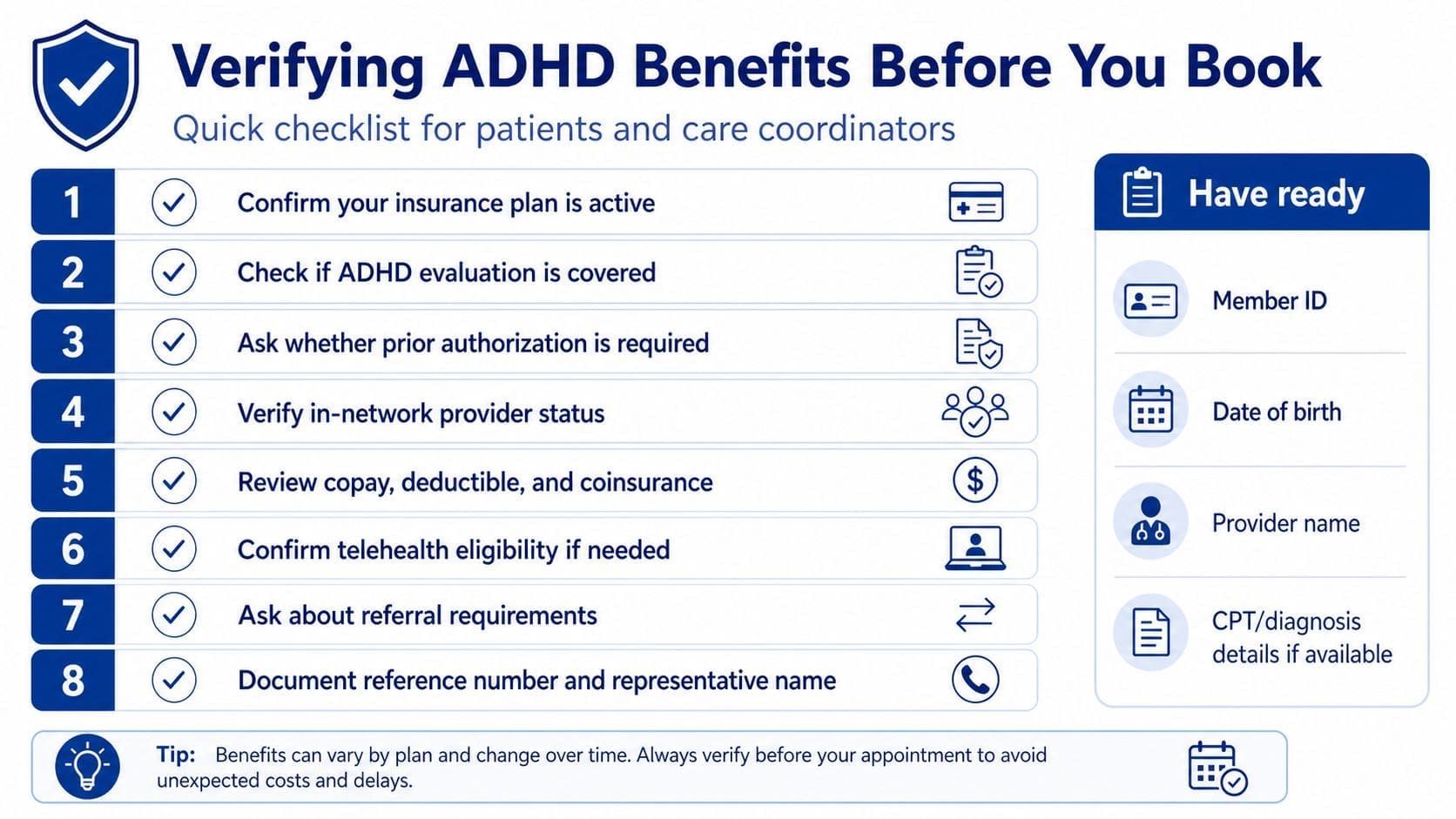
What to check on the plan documents
Start with the network name. Some IBX plans use Keystone HMO, others use Personal Choice PPO, and that difference can change how a patient reaches psychiatry, what kind of referral is needed, and whether telehealth is treated the same as office care. Then confirm that outpatient therapy and psychiatry appear as covered behavioral-health services, and look for any mention of referral rules or prior authorization. Skipping that review often turns a booked visit into a denied claim or a delayed start.
The cost picture is usually clearer than the plan language. A neutral coverage guide for IBX says outpatient therapy and psychiatry are covered for Keystone HMO, Personal Choice PPO, CHIP, and Medicare Advantage plans, with copays ranging from $0 to about $65 depending on plan design, and that CHIP and Medicaid (PA HealthChoices) families may have therapy and psychiatry visits covered at $0 per visit IBX coverage guide. Those are the details that tell a family whether to book now or ask questions first.
The questions that prevent delays
The right questions are plain and specific. Does the plan require prior authorization for ongoing stimulant prescribing, does the first psychiatric visit need to be with a certain network type, and does telehealth count the same way as office care? For a patient balancing work, school pickup, or both, those answers decide whether treatment starts cleanly or gets stuck in verification.
Ask for the rule in writing when possible. Insurance phone calls help, but a benefits booklet and a documented call note are more useful when a refill is delayed later.
A checklist can keep the call focused. A helpful checklist for patients and care coordinators to verify ADHD benefits with their insurance provider. gives patients and care coordinators a way to track the same details before booking. For fee questions and visit planning, the insurance and fees page gives a straightforward place to review how costs are organized before the intake call. A working note system matters too, and the same habit can be borrowed from the journal for business owners, where dates, next steps, and written records stay in one place.
Connect to Care, Teladoc, and Out-of-Network Options
A Philadelphia patient with ADHD usually ends up choosing among three real paths for care. One is a Connect to Care in-network clinician. Another is a Teladoc Health virtual visit through IBX. The third is an out-of-network provider, which can still work for some patients, but it usually brings more paperwork and less predictable cost-sharing.
How the three paths compare
| Path | Typical Wait | Best For | Cost-Sharing | Prescribing |
|---|---|---|---|---|
| Connect to Care in-network provider | Often quick through Care Navigation | Full ADHD evaluation, follow-up, and medication management | Varies by plan | Often the most workable path for ongoing prescribing |
| Teladoc Health through IBX | Fast access, especially for stress, anxiety, grief, and depression | Short-term virtual behavioral-health support | Depends on plan | May not fit every long-term ADHD workflow |
| Out-of-network clinician | Depends on clinician availability | Patients with an established outside provider | Usually higher and less predictable | Can be difficult to sustain without careful benefit checks |
Why the virtual path helps, and where it can fall short
Teladoc helps when the immediate need is access, a conversation, and symptom relief. It is less dependable as a stand-alone option for a patient who needs ongoing ADHD titration, refill coordination, and repeated benefit checks over time. For that reason, many Philadelphia adults do better with a virtual psychiatric practice that stays involved after the first appointment, especially when the plan calls for follow-up visits and medication adjustments. The workflow matters more than the platform.
A virtual psychiatric practice also needs to fit the plan's rules. In Philadelphia, that means checking whether the visit is being used for evaluation, medication management, or short-term support, because those are not handled the same way by every payer or clinician group. A patient who only needs a one-time consult can sometimes use a simpler route. A patient who needs careful ADHD follow-up usually needs a practice that can keep the chart, the refill history, and the prior authorization record in one place.
If you want a plain explanation of how secure visits work, what is telepsychiatry gives that overview without the jargon. The staffing side matters too, and the remote NP jobs resource is a useful look at how telehealth-based clinical coverage is organized behind the scenes.
The Real ADHD Evaluation and Medication Workflow
A good ADHD workup rarely starts with medication alone. It usually starts with a symptom screen, then a more complete psychiatric evaluation, then a treatment plan that may include medication and therapy. That sequence matters because insurers and prescribers both need documentation, not just a vague report of trouble concentrating.
What a clean workflow looks like
A practical first step is standardized screening with a tool such as ASRS v1.1, then a full evaluation that reviews attention symptoms, onset pattern, sleep, mood, substance use, and day-to-day impairment. From there, the clinician decides whether the presentation fits ADHD, whether anxiety or depression is also part of the picture, and whether medication makes sense as part of the plan. A strong intake doesn't just ask whether focus is poor, it asks where the problem shows up, at work, at home, or in relationships.
Once treatment starts, follow-up becomes the true test. Medication management usually needs adjustment, side-effect review, and refill coordination. That's where prior authorization and benefit rules can slow things down if the chart doesn't clearly support medical necessity.
Common pitfall: patients assume the first prescription ends the insurance work. In reality, the first refill cycle is often where delays surface.
Where administrative friction usually appears
The most common delays involve stimulant prescribing, refill timing, and network status. A patient who books out of network may face higher cost-sharing. A patient who doesn't confirm authorization rules may get stuck waiting when the clinician needs approval before the next fill or dose change. Under the federal mental health parity framework, large-group plans generally have to apply comparable medical-necessity standards and utilization controls to behavioral health and medical care, but that doesn't remove paperwork.
For that reason, the best preparation is simple and concrete. Bring past diagnoses, medication lists, prior treatment records if available, and a written symptom summary. If the visit is virtual, use it as a real clinical intake, not a rushed checkbox call.
Patients who want a structured virtual ADHD workflow can review ADHD evaluation Philadelphia before the first appointment. That kind of preparation makes the intake more useful and lowers the odds that the plan gets delayed by missing documentation.
Why IBX Outcomes Data Matters for ADHD Care
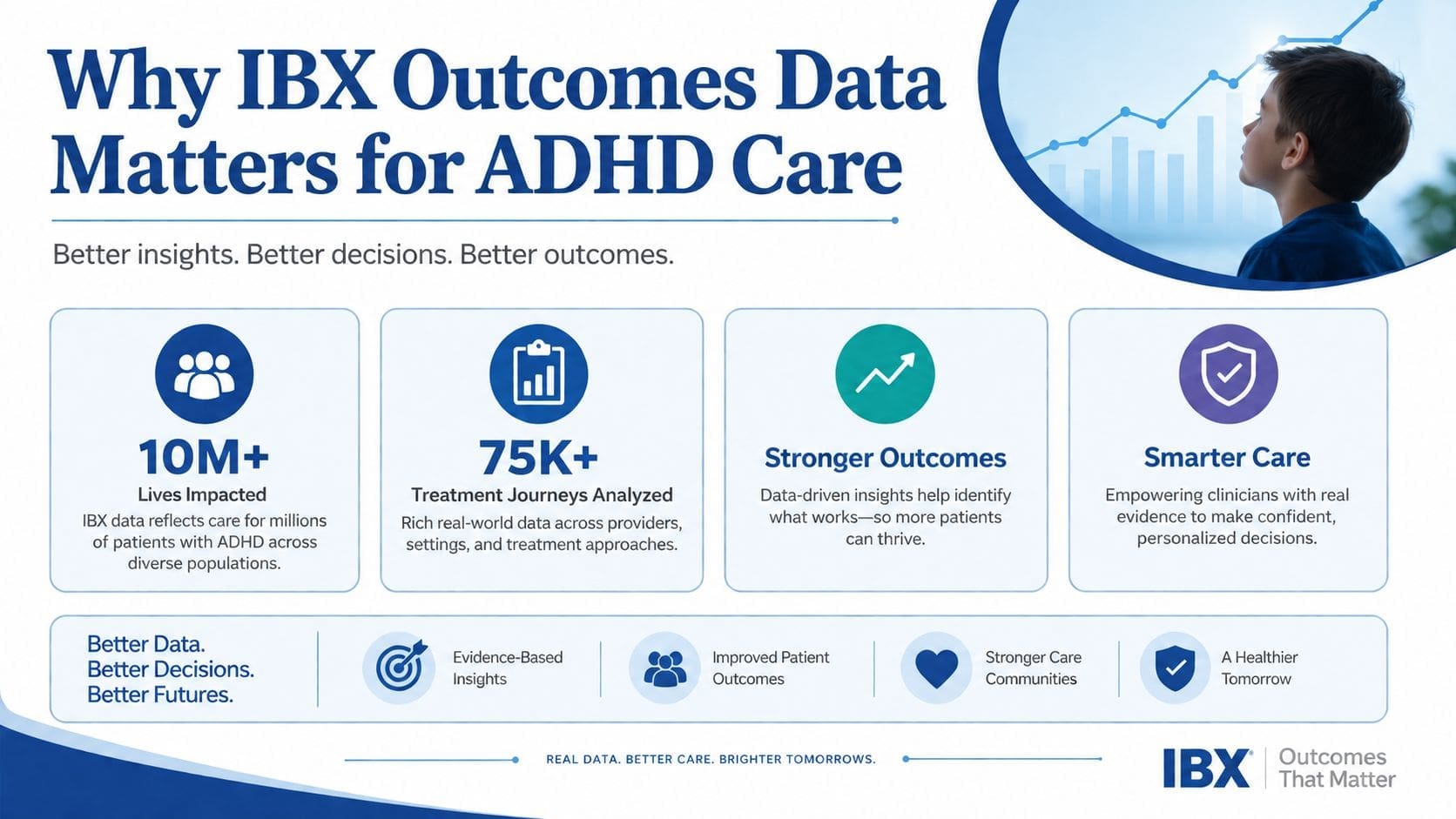
IBX reported in 2025 that its expanded behavioral-health services produced measurable changes in the Connect to Care network, including a 45% decrease in moderate-to-severe depression symptoms, a 42% decrease in moderate-to-severe anxiety symptoms, a 16% increase in outpatient behavioral-health visits, and an estimated $9.7 million in reduced health care costs IBX 2025 behavioral-health reporting. Those figures aren't specific to ADHD, but they matter because adults with ADHD commonly also deal with anxiety and depression.
The important point is what those numbers imply about care design. Structured, insurance-linked outpatient care can move people toward ongoing treatment instead of crisis-driven use. That's the right model for many ADHD patients, because the condition often needs steady follow-up, not one isolated appointment.
Why outpatient continuity matters more than a fast prescription
A quick prescription can help, but it doesn't solve the full problem if follow-up is weak. ADHD care gets better traction when medication management is paired with symptom tracking, behavioral support, and a clinician who can respond to side effects or incomplete response. The outpatient model is especially relevant in Philadelphia, where working adults often need care that fits between commute, childcare, and job demands.
The data also make a broader point about access. When members can get into care quickly and stay in care, the system shifts toward lower-acuity treatment. That's exactly the kind of structure ADHD patients benefit from.
A Philadelphia reader who wants a treatment setup that includes therapy, medication management, and telehealth follow-up can use that logic when comparing providers. The question is not just “who takes the plan,” it's “who can keep the plan moving.”
Step-by-Step Plan to Start ADHD Care This Week
A Philadelphia patient who wants to start ADHD care fast needs a short, specific workflow. The first move is not choosing the first name that appears in search results. It is checking the plan, confirming the provider type, and making sure the next visit can lead to actual follow-up instead of a dead end.
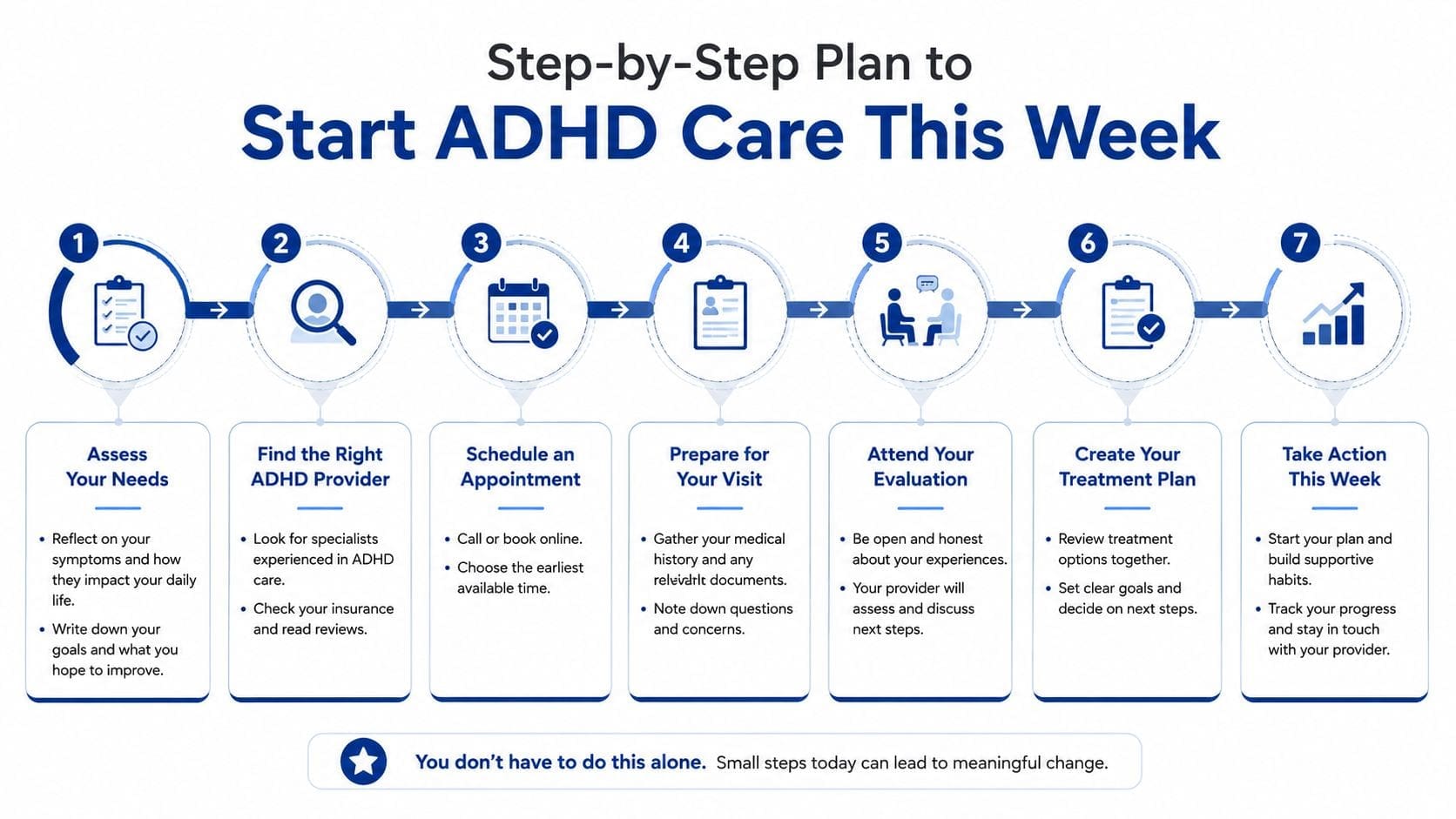
A practical five-step launch plan
Call Behavioral Health Care Navigation. Use 1-800-688-1911, Monday through Friday, 8 a.m. to 6 p.m., and ask for an in-network behavioral-health provider who can evaluate ADHD and manage follow-up.
Confirm the plan details. Ask about outpatient therapy, psychiatry, copays, network type, and whether any prior authorization rules apply before the first medication visit.
Book the right setting. A virtual psychiatric practice can work well for Pennsylvania members who need consistent follow-up, while the Independence LIVE office at 1919 Market Street, 2nd Floor, Philadelphia, PA 19103 is a local option for in-person help IBX local access point.
Complete intake before the visit. Fill out the ADHD screening, especially if the office asks for ASRS-style symptom details, and gather prior records, old prescriptions, or school/work examples that show impairment.
Verify follow-up coverage. Medication management only works if the next visit, the refill cycle, and the authorization path are clear from the start.
Use simple tools before the first visit
A prepared patient usually gives a better history and gets a more useful plan. The Adult ADHD Assessment can help organize symptoms, routine problems, and daily task failures before the first call. Patients who need a practical way to track appointments, deadlines, and unfinished tasks can also use the medication management online service model to keep records organized between visits. Those tools are especially helpful for people who know they need care but struggle to explain the pattern under pressure.
For patients who want virtual medication follow-up after the first evaluation, medication management online is a practical service model to consider. It fits the Philadelphia workflow well when the goal is to keep care moving without repeated office travel.
Integrative Psychiatry of America provides virtual psychiatric evaluations, ADHD care, and medication management for adults across Pennsylvania, including Philadelphia, with telehealth visits that fit the kind of insurance and follow-up questions described here. If ADHD symptoms are making work, family life, or daily organization harder, review care options and check whether your coverage lines up before your first appointment.