
A lot of people searching for medication management online in Pennsylvania are doing it at the end of a long day. A professional in Philadelphia may be trying to hold work together while anxiety is getting louder. A college student in Pittsburgh may be wondering whether ADHD is the reason deadlines keep slipping. A parent in Lancaster or Reading may already know a medication helped before, but can't figure out how to restart care without taking half a day off.
The search itself can feel unsettling. Is online prescribing legitimate? Will a clinician listen, or just rush through a refill? What happens if side effects show up, or if the diagnosis isn't straightforward?
Those questions are reasonable. Good virtual psychiatric care should answer them clearly before treatment starts. It should also feel private, structured, and clinically grounded. Patient confidence in that model is strong. According to the American Psychological Association, 82% of patients with mental health disorders who receive virtual care express satisfaction with medication management safety and efficacy, noting that secure, HIPAA-compliant telehealth platforms enable real-time monitoring of side effects and rapid dose adjustments, as summarized in this virtual care medication management review.
For adults across Pennsylvania, from Erie and Scranton to Harrisburg and Allentown, telehealth has made it much easier to get evaluated, start treatment, and stay consistent. A secure virtual visit can support diagnosis, medication decisions, monitoring, and coordination with therapy or lifestyle changes without adding more travel, waiting rooms, or disruption to an already strained schedule.
Table of Contents
- Your Guide to Online Medication Management in Pennsylvania
- Conditions We Treat with Virtual Medication Management
- Your First Virtual Psychiatry Appointment and Follow-Ups
- Is Online Medication Management Safe and Private
- Beyond the Prescription Our Integrative Approach
- Choosing Your Online Medication Provider in Pennsylvania
- Frequently Asked Questions About Online Care
Your Guide to Online Medication Management in Pennsylvania
Medication management online means more than getting a prescription through a video visit. In solid telepsychiatry care, it includes diagnosis, medication selection, safety review, side-effect monitoring, refill planning, and regular follow-up. It also includes deciding when medication isn't the whole answer.
For many Pennsylvania adults, virtual care lowers the friction that keeps treatment from happening. A person in Scranton might have limited local options. Someone in Philadelphia may have plenty of options on paper, but no practical way to commute to another office during the workweek. A patient in a smaller town may want privacy and consistency more than anything else.
What online care actually includes
A careful medication management process usually covers:
- Initial assessment: symptoms, past treatment, medical history, current medications, sleep, substance use, and goals.
- Medication reconciliation: comparing what's prescribed with what the patient takes, including supplements and over-the-counter products.
- Ongoing monitoring: checking benefit, side effects, adherence, sleep changes, appetite, mood shifts, and functional improvement.
- Plan adjustments: changing dose, timing, or medication choice when the response isn't good enough or tolerability becomes a problem.
Practical rule: Good virtual care should feel at least as organized as an in-person visit. If a service can't explain how it handles follow-ups, side effects, and refill timing, that matters.
Online care also gives patients a quieter setting. Many people discuss anxiety, depression, trauma, or ADHD symptoms more openly from home than they do in a waiting room. That can improve the quality of the assessment, especially early on when a patient is still deciding whether the provider feels trustworthy.
Why this model works across Pennsylvania
The strongest benefit is often continuity. Treatment works better when patients can keep appointments, communicate changes early, and make measured adjustments rather than waiting until things fall apart. That's why many patients looking for virtual psychiatry care in Pennsylvania start with convenience but stay because the follow-up process is easier to maintain.
Medication management online isn't ideal for every situation. Some patients need urgent in-person evaluation, physical examination, or a higher level of care. But for common outpatient conditions such as ADHD, anxiety, depression, OCD, PTSD, and recovery-focused addiction treatment, telehealth can offer a calm, structured path forward.
Conditions We Treat with Virtual Medication Management
Some diagnoses fit virtual medication management especially well because progress depends on regular check-ins, careful dose changes, and close attention to daily functioning rather than occasional office visits.
ADHD, anxiety, and depression
ADHD often requires titration. The first medication choice isn't always the final one, and even when the medication is right, timing, sleep effects, appetite changes, and work or school demands still need review. In Pennsylvania, adults seeking telepsychiatry for ADHD report that 75% of initial virtual evaluations successfully identify the need for medication therapy management, leading to timely prescribing and dose adjustments within 2 to 4 weeks of treatment initiation, according to Johns Hopkins guidance on managing multiple medications. For patients exploring online ADHD medication management, that early structure matters.
Anxiety disorders also respond well to virtual care because follow-up can focus on patterns. Is the medication reducing panic, physical tension, or rumination? Is it causing fatigue or restlessness? Is caffeine, alcohol, or poor sleep undermining the plan? Those questions are easier to answer when visits are consistent and a patient can track symptoms between appointments. Patients who aren't sure whether anxiety may be part of the picture often benefit from a simple screening tool such as an Anxiety Symptom Checker before the first visit.
Depression treatment benefits from accessibility. When energy and motivation are low, missed visits become more likely. Virtual appointments reduce that barrier and make it easier to catch early warning signs before a lapse turns into a full relapse.
OCD, PTSD, and co-occurring conditions
OCD medication management online works best when it is paired with clear symptom review. A prescriber needs to know whether intrusive thoughts, compulsions, avoidance, and distress are changing, not just whether the medication is being tolerated.
PTSD care often requires pacing. Virtual follow-ups can support close review of nightmares, hypervigilance, irritability, sleep disruption, and medication sensitivity in a familiar environment.
Opioid dependence and other co-occurring conditions require a more deliberate safety framework, especially when treatment may involve Suboxone or other psychiatric medications at the same time. That doesn't rule out telehealth. It means the provider must be more structured, more available for reassessment, and clearer about escalation plans.
Patients in Allentown, Erie, and statewide often aren't looking for a refill service. They're looking for a clinician who can sort out overlapping symptoms and make careful decisions over time.
Your First Virtual Psychiatry Appointment and Follow-Ups
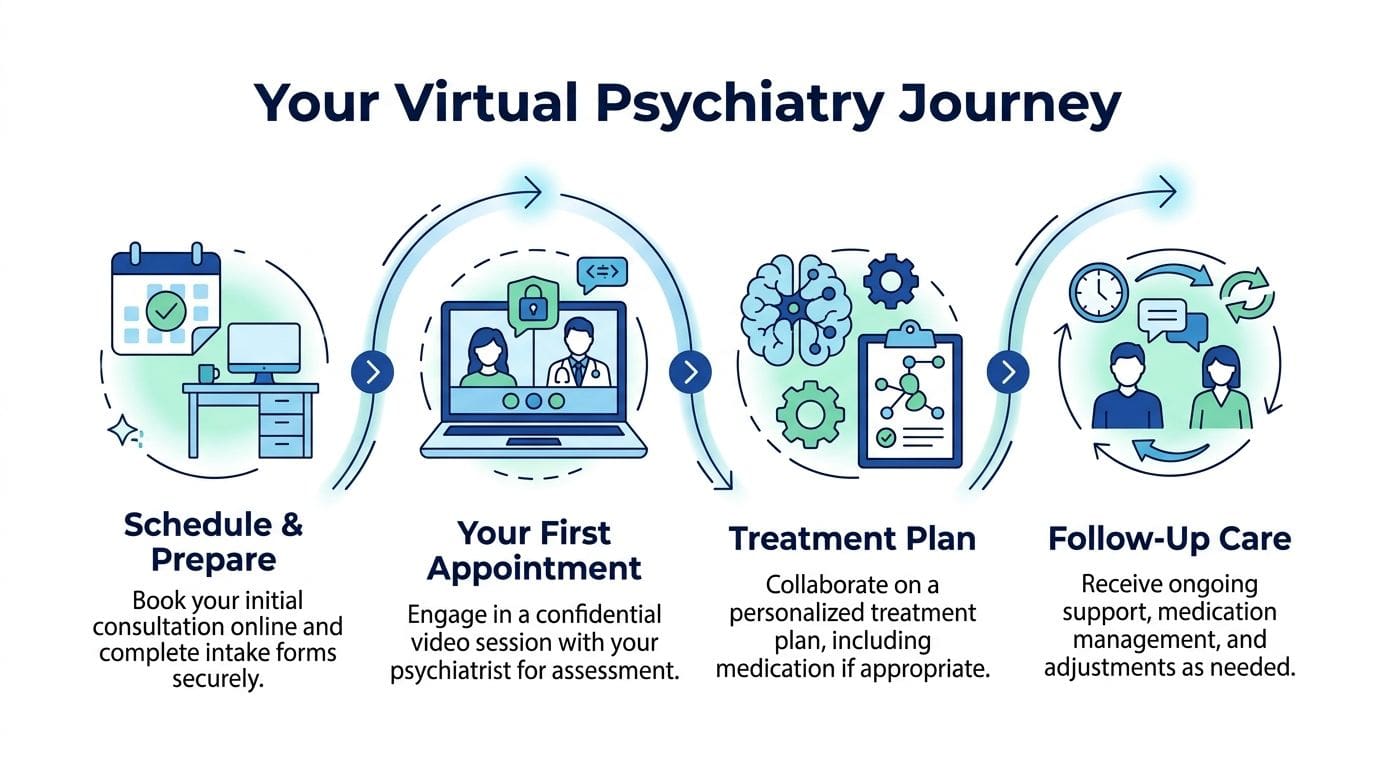
The first appointment usually feels easier once patients know the sequence. Online medication management is most reassuring when the workflow is predictable.
A typical virtual care journey looks like this:
Before the first visit
Most practices begin with intake forms and a secure portal. Patients usually provide contact details, pharmacy preference, medication list, symptoms, past diagnoses, allergies, medical history, and consent paperwork. This part matters because medication decisions depend on context, not just a chief complaint.
Preparation usually helps the first session go better. It's useful to have:
- A full medication list: prescription drugs, supplements, and over-the-counter products.
- A symptom timeline: when symptoms started, what makes them worse, and what has helped before.
- Treatment history: past medications, benefits, side effects, therapy experiences, and prior testing.
- Practical goals: better sleep, steadier focus, fewer panic episodes, improved mood, reduced cravings, or fewer compulsions.
During the evaluation
The first virtual appointment is not just a prescription conversation. A competent psychiatric evaluation reviews symptoms, functioning, medical background, substance use, sleep, family history, trauma history when relevant, and safety concerns. For ADHD, that may include developmental history and impairment across settings. For depression or anxiety, it often includes how symptoms affect work, relationships, and daily routines.
A provider may decide that medication is appropriate, that therapy should come first, or that more information is needed before prescribing. That is a good sign, not a delay tactic. Careful prescribing starts with diagnostic accuracy.
Later in the process, some patients also want to understand how medication management works in daily life. This overview helps many people see the rhythm of care:
After the visit and between follow-ups
If medication is started, prescriptions are typically sent electronically to the patient's pharmacy. Follow-up visits then focus on what changed after treatment began. That includes symptom relief, side effects, blood pressure or sleep concerns when relevant, timing issues, and whether the medication fits the person's day-to-day life.
Telehealth tools can support that monitoring. Telehealth platforms for psychiatry increase antidepressant adherence by 42% and reduce relapse rates by 18% compared to traditional care, by integrating smart pillboxes with mobile health apps and using secure portals for real-time medication reconciliation and side-effect tracking, according to this review of eHealth tools in mental health treatment.
That doesn't mean every patient needs connected devices. It means simple systems matter. A portal message about a new side effect, a refill request sent before medication runs out, or a note that sleep worsened after a dose change can prevent avoidable setbacks.
What follow-up visits are meant to do
Follow-ups are where treatment becomes personalized. They help answer questions such as:
| Focus area | What the provider is looking for |
|---|---|
| Response | Are symptoms improving in a meaningful way? |
| Tolerability | Is the medication causing side effects that outweigh benefit? |
| Function | Is work, school, parenting, or daily organization getting easier? |
| Safety | Are there new risks, interactions, or signs the plan needs revision? |
For patients considering stimulant treatment, online ADHD medication options should include this kind of structured follow-up, not just a one-time assessment and refill cycle.
Is Online Medication Management Safe and Private
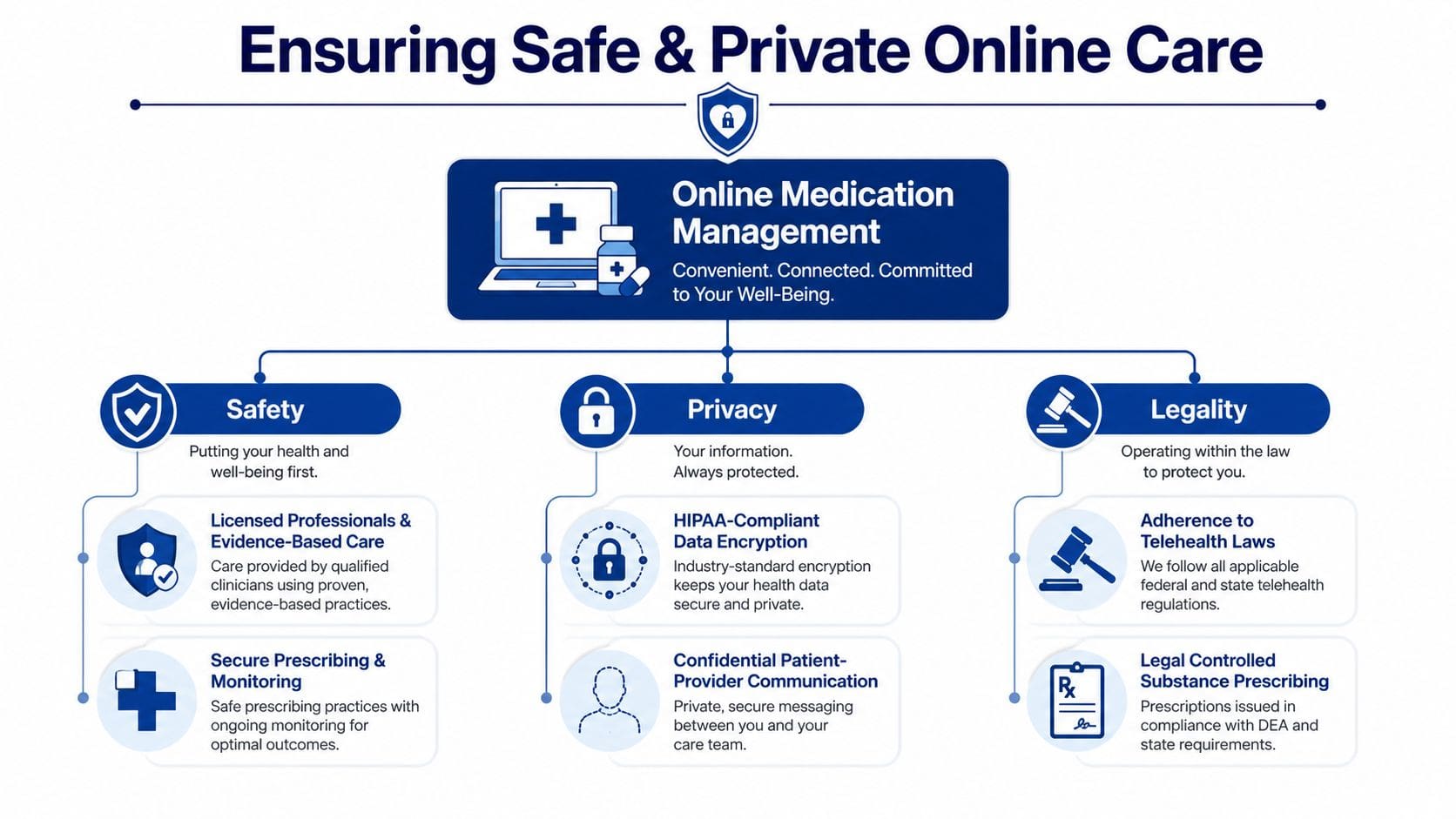
Safety and privacy concerns are often strongest when treatment involves controlled substances, trauma history, addiction recovery, or several diagnoses at once. Those concerns are justified. Online care only earns trust when the safeguards are visible.
What safe virtual prescribing looks like
A safe telehealth medication model starts with licensed Pennsylvania practice, full psychiatric assessment, identity verification, pharmacy coordination, and clear follow-up expectations. It also requires knowing when not to prescribe. If the history is unclear, the risk is too high, or the condition needs in-person medical evaluation, a good provider says so directly.
This is especially important for stimulants used in ADHD treatment and for medications such as Suboxone in opioid dependence care. These decisions require review of diagnosis, substance use history, current symptoms, misuse risk, other medications, and the patient's ability to participate reliably in treatment. Structured follow-up is not optional.
Patients often ask how remote care can still be hands-on enough for complex cases. A useful answer comes from this telehealth addiction medicine review, which notes that patients with multiple conditions and Suboxone treatment can be monitored through secure video check-ins, patient-reported outcome measures, and clear escalation plans for high-risk cases, preserving personal contact and safety without requiring in-person visits.
Safety in telehealth doesn't come from the screen. It comes from the protocol behind the screen.
How privacy is protected
Most patients want two forms of privacy. They want their health information secured, and they want the experience to feel discreet in daily life. HIPAA-compliant telehealth platforms address the first concern through encrypted communication, secure portals, protected messaging, and controlled access to records.
The second concern is more practical. Patients need to know where messages go, how forms are stored, whether refill requests are handled in a portal instead of standard email, and how the practice protects sensitive information during routine administrative work. For readers who want a broader explanation of how healthcare organizations think about secure data in contact centers, that resource gives helpful operational context.
What legality and oversight mean in Pennsylvania
Legal prescribing online doesn't mean casual prescribing. It means the provider is appropriately licensed, follows telehealth rules, uses proper documentation, and applies the same clinical standards that would apply in an office. The legal question matters, but the clinical question matters more. Is this a complete evaluation? Is the treatment plan individualized? Are there clear rules for follow-up, refill timing, and urgent concerns?
Patients looking for an online mental health provider in Pennsylvania should ask those questions directly. A trustworthy answer should be specific, calm, and easy to understand.
Beyond the Prescription Our Integrative Approach
Medication can be the right tool and still not be the whole treatment plan. Many patients searching for medication management online are also dealing with poor sleep, inconsistent meals, low activity, chronic stress, trauma triggers, substance use, or hormonal and medical issues that shape how psychiatric symptoms show up.

How whole-person treatment changes medication decisions
An integrative plan doesn't mean replacing evidence-based medication with vague wellness advice. It means using medication thoughtfully while also looking at biology, routine, and behavior. For one patient, the missing piece may be therapy focused on OCD or trauma. For another, it may be nutrition, exercise structure, or lab review that changes how fatigue, mood, or attention problems are interpreted.
This matters in addiction and personality-related treatment too. The National Institute of Mental Health reports that 68% of adults with opioid dependence or personality disorders achieve better recovery outcomes when medication management is integrated with counseling, nutritional education, and mindfulness-based interventions delivered via telehealth, as summarized in this federal resource for health professionals.
That kind of model is more demanding than refill-based care. It asks the provider to coordinate, not just prescribe.
Where lab work, genetics, and lifestyle tools fit
Some patients benefit from additional data when medication response has been uneven or side effects have been difficult. Lab work may help identify contributors to mood, fatigue, concentration problems, or medication tolerability. Genetic screening may, in selected cases, add information that supports medication planning. It is not a magic shortcut, but it can be part of a more individualized process. Patients interested in that option can learn more about genetic testing for mental health treatment.
Lifestyle tools are often where consistency improves. A Feeling Journal can make patterns visible. An Exercise Routine Generator can help a patient move from vague intentions to a realistic plan. A Daily Agenda Planner can support ADHD treatment by reducing decision overload. The point isn't to ask patients to do everything at once. It's to use a few practical supports that make medication more effective and daily life more manageable.
The strongest treatment plans usually answer two questions at the same time. What medication fits, and what in this person's routine is making recovery harder?
When clinically indicated, broader medical coordination may also matter, including evaluation of concerns that overlap with sleep, metabolic health, or hormone-related symptoms. That can include discussion of TRT in the right context, but only after appropriate clinical review rather than as a shortcut for low energy or depressed mood.
One Pennsylvania telehealth option that follows this whole-person model is Integrative Psychiatry of America, which combines virtual psychiatric evaluations, medication management, and evidence-informed support such as therapy coordination, lifestyle counseling, and selected genetic or lab screening in appropriate cases.
Choosing Your Online Medication Provider in Pennsylvania
A strong provider choice usually becomes clear when a patient stops asking, "Can this service prescribe?" and starts asking, "How does this service practice?"
What to look for
- Pennsylvania licensure: The clinician should be authorized to treat patients in Pennsylvania, whether the patient lives in Philadelphia, Harrisburg, Erie, Scranton, Allentown, Lancaster, Reading, Pittsburgh, or elsewhere in the state.
- Clear credentials: Look for a psychiatric clinician with relevant training, such as a board-certified psychiatric mental health nurse practitioner.
- Defined process: The practice should explain intake, assessment, follow-ups, refill policies, portal messaging, and what happens if symptoms worsen.
- Comfort with complexity: If a patient has ADHD plus anxiety, depression plus trauma, or addiction recovery plus another psychiatric condition, the provider should be able to explain how those issues are prioritized and monitored.
- Integrative thinking: Medication is important, but a good provider also considers therapy, sleep, exercise, nutrition, habits, and medical contributors.
Questions worth asking before booking
A short screening call or website review should answer these questions:
| Question | Why it matters |
|---|---|
| How are side effects handled between visits? | Patients need a realistic path for timely reassessment. |
| What is the follow-up schedule after starting medication? | Early monitoring is part of safe prescribing. |
| Do you treat co-occurring conditions? | Many adults don't fit a single diagnosis. |
| How do you handle controlled substances? | The answer should sound structured, not casual. |
A patient shouldn't have to guess whether a service is careful. The right practice makes its standards visible.
Frequently Asked Questions About Online Care
Does insurance cover virtual medication visits
Coverage depends on the patient's plan and the practice's participation status. The fastest path is to verify benefits before the first appointment. A good office should explain whether it accepts insurance, offers self-pay options, or has membership-style pricing.
What if medication isn't working
That should lead to reassessment, not frustration. Sometimes the dose is wrong. Sometimes the diagnosis needs review. Sometimes the medication is reasonable, but sleep, alcohol use, panic symptoms, trauma, or missed doses are interfering with results. The answer is usually a more precise plan, not blind persistence.
What if side effects show up after the appointment
Patients should have a clear method for contacting the practice through a secure portal or defined clinical channel. Side effects such as sedation, nausea, agitation, appetite change, sleep disruption, or sexual side effects often can be managed, but they shouldn't be ignored.
Do most patients need therapy too
Many do. Medication can reduce symptom intensity, but therapy often helps patients build coping skills, improve routines, process trauma, challenge compulsions, or address relationship patterns that medication alone won't fix.
Can online care work for people with more than one diagnosis
Yes, if the provider is organized and explicit about safety. Co-occurring ADHD, anxiety, depression, OCD, PTSD, or opioid dependence usually require more frequent review and better coordination, not necessarily in-person care.
What should a patient do before booking
Have a medication list ready, note the main symptoms, choose a preferred pharmacy, and think about treatment goals. It also helps to complete any available screening tools in advance, such as an Adult ADHD Assessment, a Feeling Journal, or a 5-4-3-2-1 Grounding Tool if anxiety spikes during the day.
If medication management online seems like the right next step, Integrative Psychiatry of America offers secure virtual psychiatric evaluations, medication management, and evidence-informed mental health treatment across Pennsylvania. Patients can review treatment options, verify insurance coverage, schedule an appointment, or start with one of the free mental health tools to get clearer about symptoms before the first visit.