
An adult leaves an ADHD evaluation with a prescription and a clear hope: work will feel more manageable. Then weeks pass without a follow-up. The medication seems helpful at first, but later it's hard to tell whether it still works, whether side effects are building, or whether a change in sleep or workload is affecting symptoms.
Adult ADHD medication management is an ongoing measurement cycle, not a one-time prescription. A clear plan tracks symptoms, everyday functioning, side effects, and safety over time, then adjusts treatment with the prescriber when the evidence points to a change.
Table of Contents
- The Adult ADHD Medication Management Cycle at a Glance
- Baseline Checks and Heart Rate Rules Before Dosing
- How to Adjust an ADHD Dose Without Overshooting
- Side Effects, Missed Doses and Fading Benefit
- Pregnancy, Heart Risk and Shortages Change the Plan
- Insurance, Costs and Telehealth Monitoring
- Building Your Coordinated Care Plan and Next Step
The Adult ADHD Medication Management Cycle at a Glance
A screening questionnaire can flag possible ADHD, but it cannot establish a diagnosis. An evaluation is a clinician's review of symptoms, history, daily impact, and other conditions that can look similar. The clinician makes a diagnosis after weighing that information. Treatment may include medication and other supports, such as therapy and attention to sleep.
In a CDC survey collected in October and November 2023, an estimated 15.5 million U.S. adults, or 6.0% of U.S. adults, reported a current ADHD diagnosis. Among adults with ADHD, 50.4% said they had been prescribed ADHD medication in the preceding 12 months (CDC data on ADHD treatment among adults). That prescription rate shows why a medication plan needs a way to check how treatment is going over time.
The table outlines a practical measurement cycle. Follow-up intervals are safety cadences set by the prescriber, based on the person's health, medication, and risks. NICE guidance specifically recommends checking heart rate and blood pressure every six months; the other intervals below are practical points for discussion with the prescriber, not NICE recommendations.
| Phase | Typical timing | What gets checked |
|---|---|---|
| Baseline before first prescription | Before the first dose | Symptoms, daily impairment, medical and cardiac history, blood pressure, pulse, weight, sleep, and appetite |
| First follow-up | 1 to 2 weeks after starting or any dose change | Benefit, side effects, sleep, appetite, mood, anxiety, pulse, and blood pressure |
| Titration | At each dose change until the regimen is stable | Symptom severity, functional gains, duration of benefit, rebound symptoms, and adherence |
| Stable maintenance | Periodic visits, interval set by the prescriber | Ongoing benefit, tolerability, adherence, new medications, or new conditions |
| Comprehensive medication review | At least once a year | Benefit compared with risk, coexisting conditions, and whether another medication or added therapy may fit better |
Each phase answers a different question: Is treatment safe to start? Is it helping? Is it still helping? Does it still fit the patient's life? Writing down the answers between visits gives the patient and prescriber a shared record, like readings on a dashboard, and helps keep dose changes tied to observed benefit and risk.
Baseline Checks and Heart Rate Rules Before Dosing
Before starting medication, a provider needs a clear picture of the patient's health and daily life. Those starting measurements work like a reference point on a map: they help the patient and prescriber judge later changes without guessing whether medication, health, or routine may be involved.
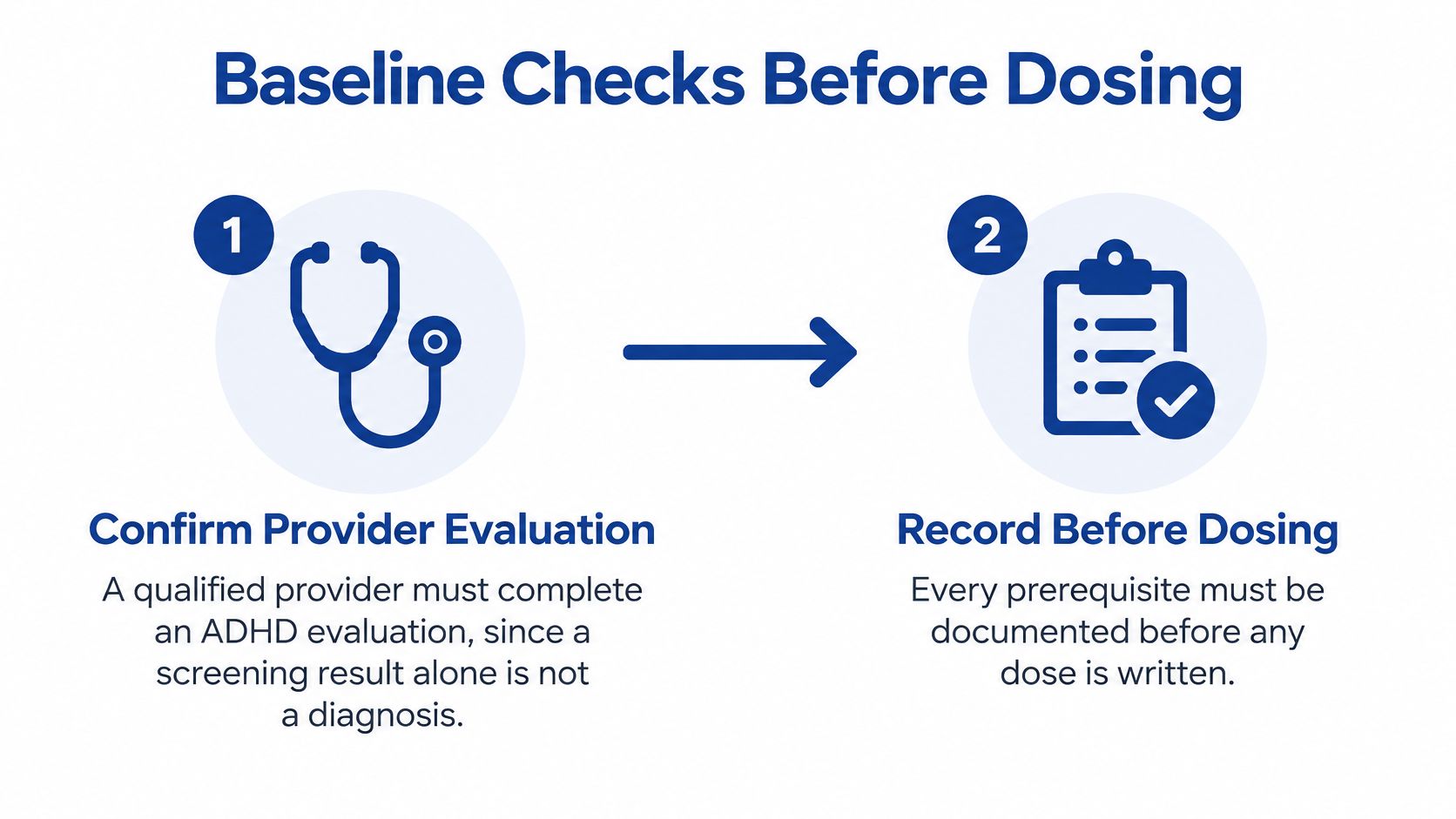
What to record before the first dose
- Confirm an ADHD evaluation. A qualified provider reviews symptoms and history. A screening score can support an evaluation, but does not establish a diagnosis on its own.
- Bring a complete medication and substance list. Include prescriptions, supplements, over-the-counter products that contain stimulants, caffeine, alcohol, cannabis, and other substance use. This gives the provider information needed to assess interactions and risks.
- Share cardiovascular history. Report high blood pressure, heart rhythm problems, heart disease, and family history of heart disease or sudden cardiac death.
- Measure resting pulse and blood pressure. Sit still and calm before taking readings and use a properly sized cuff. Record weight or body mass index, a measure based on weight and height, as well.
- Describe sleep, appetite, anxiety, and mood. These can affect concentration and may change during treatment, so a baseline helps make later comparisons clearer.
- Choose symptom and function measures. The Adult ADHD Self-Report Scale can help track symptoms. Add personal goals, such as finishing work on time, driving without near misses, maintaining relationships, or paying bills.
- Discuss pregnancy plans, misuse risk, and daily routines. A dosing schedule should fit the person's life as well as the prescription instructions.
- Arrange an early follow-up. A check-in within one to two weeks of starting medication or changing a dose provides an opportunity to review how treatment is going.
For cardiovascular monitoring, NICE recommends checking heart rate and blood pressure before and after dose changes, and at least every six months. These are monitoring intervals, not universal cutoffs for changing treatment. The prescriber sets any action thresholds for the individual, considering their health history, readings, symptoms, and medication. Adults do not use pediatric percentile thresholds to interpret blood pressure.
| Measure | When to check | How to interpret and discuss |
|---|---|---|
| Resting pulse | Before and after each dose change, and at least every six months | Review a persistent change or concerning symptoms with the prescriber. The appropriate response depends on the person's circumstances. |
| Heart rhythm | At baseline and if symptoms or concerns arise during follow-up | Report a new irregular heartbeat or other rhythm concern. The prescriber determines whether further assessment or a medication change is appropriate. |
| Blood pressure | At baseline, before and after dose changes, and at least every six months | Discuss readings that are repeatedly high or have risen meaningfully from baseline. The prescriber assesses them using adult criteria and the patient's health context. |
| Weight or BMI | At baseline and routine follow-up | Report ongoing weight loss or appetite changes so the prescriber can assess whether the treatment plan needs adjustment. |
For home readings during telehealth care, write down the time and how long it has been since the dose. A heart rate calculator can help organize a pulse reading, but it cannot diagnose a rhythm problem or set a safe dose. Chest pain, fainting, severe shortness of breath, or a racing heartbeat that does not settle requires 911 or emergency care, not a scheduled call.
How to Adjust an ADHD Dose Without Overshooting
If medication seems to wear off before the workday ends, raising the dose may seem like the simplest fix. First, check whether the issue is the amount of medication or how long it lasts. That distinction helps avoid added side effects from a higher peak dose when a different timing or formulation may fit better.
A dose review works like a measurement cycle: check what is happening, adjust one factor, then compare the same measures again.
- Check adherence and timing. Record whether each dose was taken as prescribed, when it was taken, and whether it was taken with food if the instructions say to do so.
- Review other influences. Poor sleep, caffeine, substance use, anxiety, depression, and heavy workload can affect focus. These factors may resemble undertreated ADHD, so note changes before attributing symptoms to the dose.
- Change one variable at a time. If medication, sleep habits, and caffeine use all change together, it becomes hard to tell what helped or caused a side effect.
- Use consistent measures. Compare symptom ratings and practical goals, such as meeting deadlines or keeping track of daily tasks. A simple daily log can make patterns easier to discuss at follow-up.
- Review safety with the prescriber. Consider pulse, blood pressure, weight, appetite, and sleep before an increase. These checks help weigh possible benefit against tolerability.
- Ask about duration of benefit before raising the peak dose. If symptoms return too early, discuss a different formulation or split dosing, where the prescribed amount is taken in separate doses. A comparison of stimulant and nonstimulant ADHD medication can help you prepare questions about options.
- Agree on a stopping rule. Stop increasing when added benefit levels off or side effects worsen. The goal is useful symptom relief that remains tolerable, not reaching the highest possible dose.
Research supports realistic expectations. A 2024 systematic review found that most stimulant-related symptom reduction occurred at licensed doses. Doses above licensed ranges offered only small additional reductions and worsened tolerability (2024 review of stimulant dose response). This makes tracking useful: it gives you and your prescriber a way to judge whether a change is helping enough to justify its trade-offs.
For example, a hypothetical Lancaster County teacher notices medication fading by mid-afternoon. Before changing the dose, the teacher and prescriber could compare the timing log with sleep and daily symptom notes. If the pattern suggests the medication's effect is not lasting long enough, they could discuss a formulation change rather than increasing the peak dose.
Side Effects, Missed Doses and Fading Benefit
A dose can seem helpful at first, then become hard to take consistently when side effects, routines, or refill delays get in the way. A 2025 study reported that 55.4% of patients with ADHD received medication. Among patients with adherence data, the study measured average adherence at 56%, and 27.5% met its threshold for high adherence, defined as taking at least 80% of medication as prescribed (study of ADHD medication adherence). These figures describe medication use in that study, not how well medication worked for each person.

Missed doses may follow from forgetfulness, changing work hours, refill friction, cost, stigma, poor sleep, or depression. Side effects can also affect whether someone continues treatment. Keep a simple record between visits: dose time, missed doses, sleep, appetite, weight, mood, and when symptoms return. These observations help the prescriber distinguish a side effect from a dose that wears off too early.
| Problem | Likely causes | Response to discuss |
|---|---|---|
| Symptoms fade before evening | Dose wears off early; formulation doesn't last long enough | Ask about extended-release options or split dosing before raising the peak dose |
| Trouble falling asleep or waking early | Dose timing, caffeine, anxiety, or an untreated sleep disorder | Consider earlier dose timing, review caffeine, and screen for sleep problems |
| Appetite loss or weight drop | Medication effect on appetite or skipped meals | Adjust meal timing, track weight, and review dose or formulation |
| Irritability or anxiety as dose ends | Rebound effect as medication wears off | Describe the pattern and timing; a formulation change may be considered |
| Headache, jitteriness, or racing heart | Dose may be too high or taken too late | Report it within the week; check cardiovascular measures on the agreed schedule |
| Missed doses or refill gaps | Forgetfulness, refill friction, or pharmacy shortages | Set reminders, plan refills early, and tell the prescriber before running out |
| Low mood or flat feelings | Coexisting depression or a medication effect | Repeat mood assessment; don't stop abruptly without contacting the prescriber |
Use a stopping rule for dose changes: if more medication brings no clear added benefit, or side effects worsen, contact the prescriber rather than increasing the dose yourself. For missed doses, ask what to do for your specific medication; do not double a later dose unless your prescriber tells you to. A phone alarm tied to a daily routine, a weekly pill organizer, and a refill calendar can make the plan easier to follow.
A short, dated log can turn a vague concern into a useful pattern. For example, note whether sleep trouble follows a later dose, or whether appetite returns when medication wears off. Bring the record and a written question list to the appointment. You can also review ADHD medication options and management to prepare questions about timing, formulation, and side effects.
Don't stop or change medication suddenly. Call the prescriber first so you can agree on a safe adjustment.
Pregnancy, Heart Risk and Shortages Change the Plan
A person with ADHD who is planning a pregnancy, managing heart disease, or facing an empty pharmacy shelf may need a different medication plan. These changes are reasons to reassess with the prescriber, not to adjust a dose alone.
| Situation | What changes | First step |
|---|---|---|
| Hypertension, arrhythmia, or heart disease | Blood pressure or heart rhythm may need closer monitoring. An arrhythmia is an irregular heartbeat. | Ask about a cardiovascular review before starting or switching medication. |
| Pregnancy or planning pregnancy | The available pregnancy evidence differs by medication, and the decision depends on individual risks and benefits. | Discuss options before conception when possible, or promptly after pregnancy is suspected. |
| Substance-use history | Risk of misuse or sharing medication can affect the choice and dispensing plan. | Share relevant history so the prescriber can discuss stimulant and nonstimulant options. |
| Anxiety, depression, or sleep disorder | These conditions can overlap with ADHD symptoms or change how treatment feels. | Coordinate care rather than changing ADHD medication on your own. |
| Pharmacy shortage or coverage gap | A medication may be unavailable or not covered, interrupting treatment. | Contact the prescriber about alternatives before changing how you take it. |
Pregnancy decisions require individualized discussion. A review of stimulant use in pregnancy describes a possible association between first-trimester methylphenidate exposure and fetal heart defects; the evidence it discusses does not report the same association for amphetamines. An association does not establish that a medication caused a problem, or predict an outcome for an individual pregnancy. Read more about ADHD stimulants and pregnancy and discuss the evidence, symptom needs, and options with your prescriber. The clinical guidance on ADHD medication and controlled drugs also covers medication considerations, but it should not replace pregnancy-specific clinical advice.
Supply problems can also change the plan. A CDC report discusses access to stimulant treatment for adults with ADHD, including reported prescription-fill challenges (CDC report on stimulant access and adult ADHD treatment). If a pharmacy cannot fill a prescription, contact the prescriber to discuss an available formulation or another medication class. Do not stretch doses or substitute medication without guidance. A shortage is a reason to reassess the plan, not to let the dose drift upward or downward on your own.
Insurance, Costs and Telehealth Monitoring
Insurance benefits can affect access to evaluation, follow-up, and medication. Copays, deductibles, network status, and prior authorization requirements vary by plan. Integrative Psychiatry of America can't guarantee coverage for Cigna, Aetna, UnitedHealthcare, or BCBS members.
Before booking, patients can use the insurance and fees information to guide these questions:
- Verify benefits. Ask whether ADHD evaluation, medication management, and telehealth visits are covered.
- Check authorization and formulary rules. Ask whether the plan requires prior authorization for ADHD medication and whether it covers a particular formulation or nonstimulant.
- Ask about possible out-of-pocket costs. Include evaluation, follow-up visits, lab work, and pharmacy copays.
- Clarify monitoring costs for telehealth. Ask whether the plan covers a home blood pressure cuff, in-person lab work, or a local visit for pulse and rhythm checks.
- Keep a record. Write down authorization numbers and appointment dates.
A plan may confirm benefits, but that doesn't guarantee payment for every service or medication. Formulary changes and pharmacy shortages can also interrupt treatment, so patients should contact the prescriber early rather than waiting until medication runs out.
Building Your Coordinated Care Plan and Next Step
Medication is one part of ADHD care. Other supports can address practical barriers that a prescription alone doesn't solve, especially when symptoms affect planning, sleep, nutrition, or daily routines.
Behavioral or skills-based therapy can help build organization strategies and routines. If sleep problems are present, discussing sleep treatment matters because poor sleep can mimic or worsen attention difficulties. Exercise and nutrition can support general well-being, but they're not replacements for evaluation or prescribed treatment.
Lab testing depends on medical history and symptoms. There isn't a universal lab test that establishes ADHD; a provider may order tests to look for other contributors when appropriate. Pharmacogenetic testing, which examines how genes may relate to medication response, is available, but evidence that it improves ADHD outcomes is limited. Before pursuing it, patients can ask what the test would change in care, whether insurance covers it, and what costs might apply.
A practical visit checklist helps turn observations into a shared plan:
- Complete the Adult ADHD Symptom Checker as a screening tool only. It can flag concerns, but it can't diagnose ADHD.
- Bring a symptom and side-effect log that tracks dose timing, sleep, appetite, mood, and personal goals.
- Verify insurance benefits for evaluation, medication management, and telehealth.
- Request an appointment with a board-certified psychiatric mental health nurse practitioner through secure telehealth if located in Pennsylvania.
Integrative Psychiatry of America offers virtual psychiatric care across Pennsylvania, including adult ADHD evaluation and ongoing medication management. People considering care can review the practice's approach and appointment options before deciding whether to visit Integrative Psychiatry of America.
Author and clinical reviewer credentials: Christopher Clark, MSN, PMHNP-BC, board-certified psychiatric mental health nurse practitioner. Review date: October 25, 2026.