We do Virtual Visits in the comfort of your own home

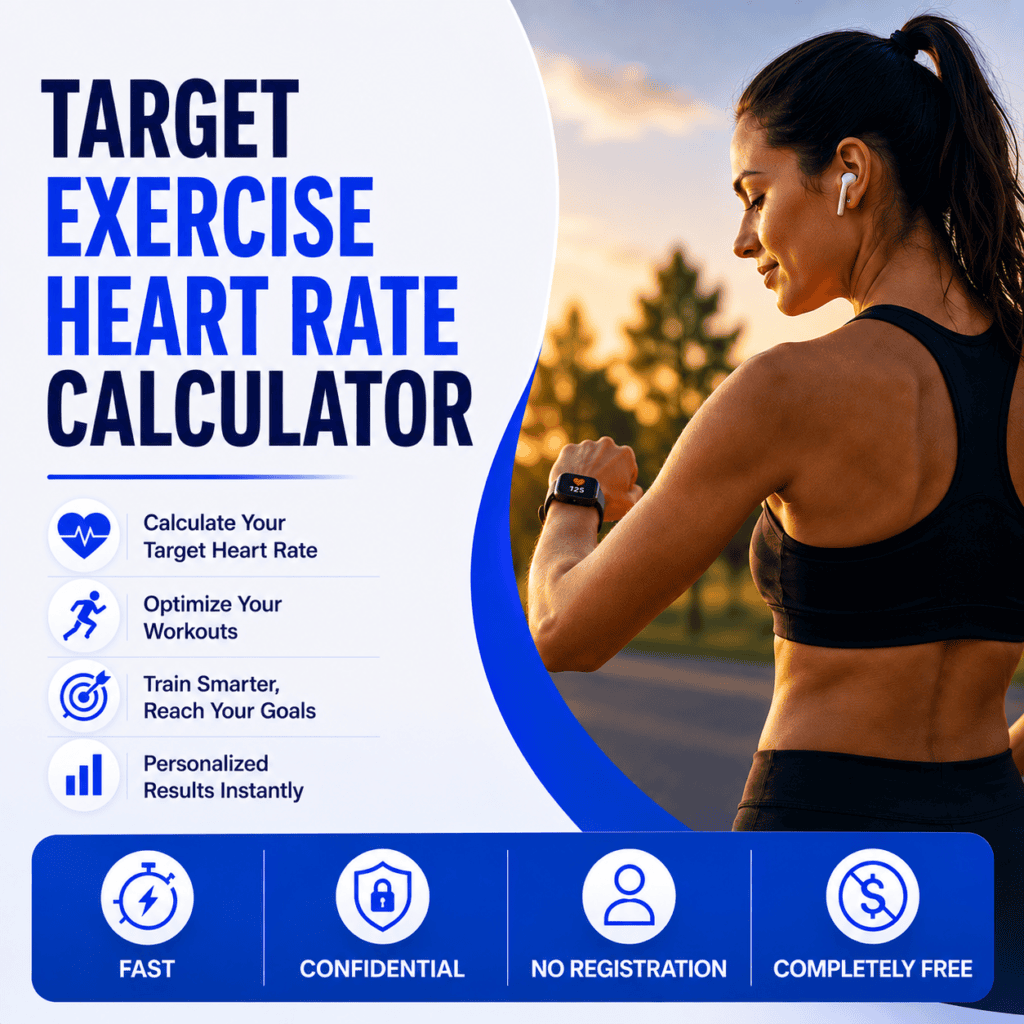
Target Exercise Heart Rate Calculator

Free online target exercise heart rate calculator to help you calculate your target heart rate for exercise quickly and easily. No registration required, instant results, and completely free to use.

🔒 100% Private Local Storage ⚡ No Registration Required 🏥 Clinical Telepsychiatry Standards

Heart Rate Calculator

Target Exercise Heart Rate Calculator

How It Works

Calculate your optimal exercise heart rate in three simple steps

Enter Your Age

Input your current age in years (between 1-120). Your age is the foundation for calculating your maximum heart rate and determining safe, effective exercise zones tailored to your body.

Select Exercise Intensity

Choose between moderate intensity (50-70% MHR) for general fitness and fat burning, or vigorous intensity (70-85% MHR) for improved cardiovascular performance and endurance training based on your fitness goals.

View Your Target Heart Rate

Instantly receive your maximum heart rate and personalized target heart rate zone in beats per minute (BPM). Use this range during workouts to optimize cardiovascular benefits and ensure safe training.

Frequently Asked Questions

Maximum heart rate (MHR) is the highest number of times your heart can beat per minute during maximum physical exertion. It's calculated using the formula: 220 minus your age. For example, a 40-year-old would have an estimated MHR of 180 BPM (220 - 40 = 180). This formula provides a general estimate, though individual MHR can vary based on genetics and fitness level.
Moderate intensity exercise (50-70% of MHR) includes activities like brisk walking, recreational swimming, or leisurely cycling. You can talk but not sing during moderate exercise. Vigorous intensity exercise (70-85% of MHR) includes running, fast cycling, or aerobic dance—activities where conversation is difficult. Vigorous exercise provides greater cardiovascular benefits in less time but requires higher fitness levels.
You can measure your heart rate using several methods: wear a fitness tracker or smartwatch with heart rate monitoring, use a chest strap heart rate monitor for accuracy, manually check your pulse at your wrist or neck for 15 seconds and multiply by 4, or use cardio equipment with built-in heart rate sensors. Most modern devices provide real-time feedback during workouts.
Exercising at your true maximum heart rate should only be done briefly during high-intensity interval training and only by well-conditioned athletes. Most people should exercise within their target heart rate zones (50-85% of MHR) for safe, effective training. Always consult your healthcare provider before beginning a new exercise program, especially if you have heart conditions, chronic health issues, or have been sedentary.
Regular cardiovascular exercise at your target heart rate stimulates the production of endorphins and regulates neurotransmitters like serotonin and dopamine, which are crucial for mood regulation. Exercise has been proven to reduce symptoms of anxiety, depression, ADHD, and PTSD. At Integrative Psychiatry of America, we incorporate exercise recommendations as part of comprehensive mental health treatment, recognizing that physical activity is a powerful, evidence-based intervention.
The American Heart Association recommends at least 150 minutes of moderate-intensity exercise or 75 minutes of vigorous-intensity exercise per week for adults. This can be broken into 30-minute sessions five days per week for moderate exercise, or 25-minute sessions three days per week for vigorous exercise. Beginners should start gradually and increase duration and intensity over time. Consistency matters more than intensity for long-term health benefits.

Ready to Book Today?

We Accept Most Major Insurance
anthem1 logo
Cigna-Logo
quest logo
carelon-logo
Aetna logo
Logo of Integrative Psychiatry of America
Privacy Overview

This website uses cookies so that we can provide you with the best user experience possible. Cookie information is stored in your browser and performs functions such as recognising you when you return to our website and helping our team to understand which sections of the website you find most interesting and useful.