
Two-thirds of people with depression also experience insomnia, and sleep problems predict the onset of depression and anxiety with roughly two-to-three times higher odds. Sleep is therefore a core part of integrative psychiatric treatment, not a side note added after mood symptoms are addressed.
That relationship works in both directions. Anxiety can keep the mind alert at bedtime, depression can disrupt sleep or increase the need for sleep, and fragmented rest can make concentration, irritability, emotional regulation, and daily functioning harder the next day. Better sleep may support recovery, but it doesn't automatically resolve an anxiety or depressive disorder.
Table of Contents
- Why Sleep Deserves Clinical Attention
- How Anxiety, Depression, and Sleep Influence Each Other
- What Telehealth Clinicians Track About Sleep
- Why Treating Sleep Alone Is Not the Same as Treating Depression or Anxiety
- When Sleep Issues May Need Separate Medical Evaluation
- How Sleep Fits Into an Integrative Treatment Plan
- Frequently Asked Questions About Sleep and Mental Health Treatment
Why Sleep Deserves Clinical Attention
Sleep disruption is common enough to deserve direct clinical assessment. A large 2025 survey from the American Academy of Sleep Medicine found that 74% of Americans sometimes, always, or often experience disrupted sleep because of stress. 68% lose sleep because of anxiety, and 55% report sleep disruption related to depression. These figures come from the American Academy of Sleep Medicine survey on stress, anxiety, depression, and sleep.
The overlap is also visible in clinical research. A 2025 review reported that insomnia affects about 10% of the global population and can rise as high as 50% among primary-care patients. About 66% of people with depression also have insomnia, while about 20% of people with insomnia show depressive symptoms, according to the review of comorbid insomnia and depression.
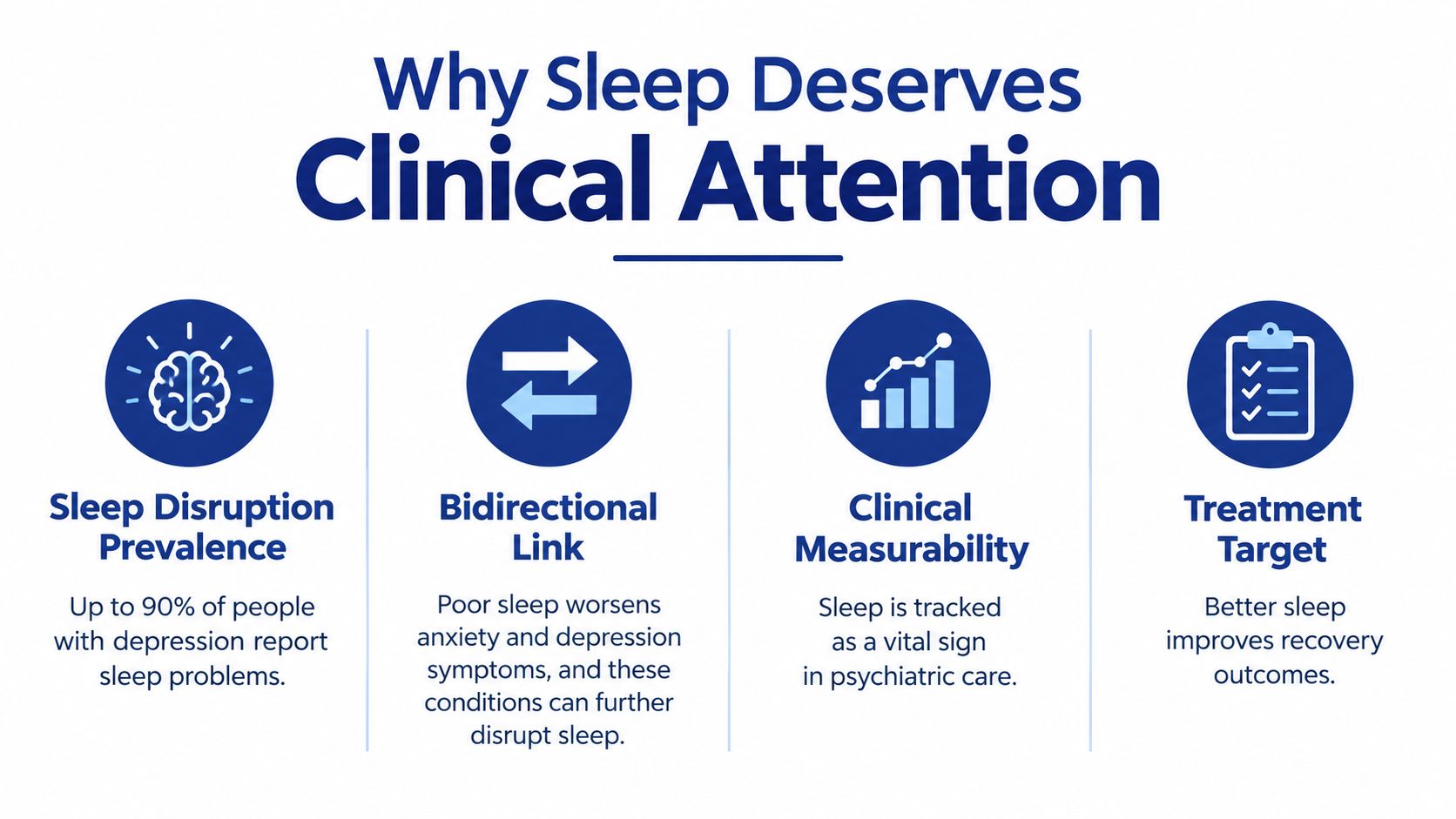
Sleep is both a symptom and a treatment target
Insomnia may appear after anxiety or depression begins. It can also persist after other symptoms improve and continue to affect energy, attention, and emotional stability. That makes sleep more than a background habit. It becomes a measurable clinical variable that belongs alongside mood, worry, appetite, concentration, medication effects, and functioning.
Research also supports a prospective relationship. A 2025 literature review found that sleep problems predicted the later onset of depression and anxiety with odds ratios of approximately 2 to 3, with possible mechanisms including hyperarousal, circadian dysregulation, altered neurotransmission, and inflammation. The review of sleep problems as risk factors for anxiety and depression supports screening sleep early, without claiming that poor sleep is the root cause of every psychiatric condition.
Integrative psychiatry applies that broader view. A clinician may consider medication management, psychotherapy, routines, exercise, nutrition, stress regulation, and possible medical contributors together. Patients seeking more background can also read this evidence-based guide to sleep loss, while those exploring the connection between depression and insomnia can review this clinical discussion of mood and sleep.
How Anxiety, Depression, and Sleep Influence Each Other
Anxiety often disrupts sleep through anticipatory thinking and physiological arousal. A patient may feel tired but remain mentally alert, replaying conversations, planning for possible problems, or monitoring bodily sensations. The bed then becomes associated with worry rather than rest. Repeated nighttime alertness can make the next day more irritable and less productive, which may create fresh concerns by evening.
Depression can produce a different pattern. Some patients develop difficulty falling asleep, early morning waking, or frequent awakenings. Others experience hypersomnia, meaning an excessive need for sleep or prolonged time in bed. Neither pattern proves a diagnosis by itself. The clinician must consider mood, energy, appetite, concentration, medical history, substance use, and changes in functioning.

Why the next day matters
Poor-quality sleep can reduce attention and make ordinary tasks feel more effortful. It can also increase irritability and reduce emotional flexibility. These effects matter in anxiety, depression, and ADHD treatment because concentration problems may reflect several overlapping causes, including a psychiatric condition, sleep disruption, medication effects, or a separate sleep disorder.
Irregular schedules can intensify the cycle. A changing bedtime, late naps, shift work, or substantial differences between weekday and weekend sleep can make it harder for the body to anticipate rest. Circadian rhythm delay may look like insomnia when the person tries to sleep before the body is ready.
Clinical distinction: Sleep can amplify anxiety and depression without being the original cause of either condition.
The relationship is not merely theoretical. The cited literature links sleep problems with a higher likelihood of later depression and anxiety, while treatment research suggests that sleep-focused care can improve psychiatric symptoms. A 2025 meta-analysis found that improvements in sleep quality were associated with lower depressive symptoms, with a mean difference of −2.92 and a 95% confidence interval of −3.61 to −2.24, as well as lower anxiety symptoms with a mean difference of −1.14. Those figures appear in the meta-analysis of sleep improvement and mental health symptoms.
A short educational video can help patients visualize how sleep and daytime stress interact:
Sleep quality also depends on the physical environment and comfort, although a mattress change can't substitute for psychiatric or medical evaluation. Patients interested in that narrower topic can review this resource on sleep quality and emotional wellness. For questions about neurobiology and psychiatric care, this explanation of 5-HT provides additional context.
What Telehealth Clinicians Track About Sleep
Telehealth clinicians can assess sleep effectively when questions are specific. A remote visit shouldn't rely on a general question such as “Is sleep okay?” The useful information usually comes from patterns across several nights and from changes that occur with mood, anxiety, routines, or medication.
The practical sleep history
A clinician may ask about:
- Timing: Bedtime, wake time, and how consistent those times are across the week.
- Sleep onset: The estimated time needed to fall asleep after going to bed.
- Nighttime disruption: Awakenings, early waking, nightmares, or difficulty returning to sleep.
- Total rest: The patient's estimated sleep time, while recognizing that estimates aren't exact.
- Daytime effects: Fatigue, sleepiness, concentration, irritability, and reduced functioning.
- Naps: Their timing, duration, and effect on nighttime sleep.
- Substances: Late-day caffeine, alcohol, nicotine, cannabis, and other substances that may affect sleep.
- Medication changes: New sleep problems or improvements after starting, stopping, or adjusting medication.
Patterns often matter more than a single number. A patient who sleeps poorly only after late caffeine use may need a different plan from someone with nightly rumination, loud snoring, or a delayed sleep schedule.
A simple sleep diary can make those patterns easier to see. Existing wearable data may also provide context, especially when a patient notices changes after a medication adjustment. Consumer devices don't diagnose insomnia, sleep apnea, circadian disorders, or psychiatric conditions, and their estimates shouldn't replace clinical assessment or formal sleep testing.
Patients considering virtual medication care can learn more about online psychiatric medication management. The same principle applies to sleep monitoring: information supports a broader clinical decision, rather than dictating treatment by itself.
Why Treating Sleep Alone Is Not the Same as Treating Depression or Anxiety
Improving sleep can support psychiatric care without treating the disorder behind persistent anxiety or depression. A steadier routine may reduce one source of strain, while significant worry, low mood, trauma symptoms, obsessive thoughts, or biological contributors continue to affect the patient.
A hypothetical example
An adult with depression may report inconsistent bedtimes, frequent waking, low daytime energy, and difficulty concentrating at work. The clinician can address schedule consistency, late caffeine, medication timing, and possible side effects. Psychotherapy may target hopeless thinking and behavioral withdrawal. Medication may be considered or adjusted when clinically appropriate.
As sleep improves, the patient may notice more energy, better concentration, steadier emotional regulation, and stronger daily functioning. Those changes matter, even without promising a particular timeline or score reduction. Validated tools such as the PHQ-9 and GAD-7 can help monitor depression and anxiety, but sleep improvement should not be treated as a fixed predictor of a specific score change.
Sleep and psychiatric symptoms often influence each other. A 2025 meta-analysis found that improvements in sleep quality were associated with lower depressive symptoms, as discussed in the review of co-modal treatment for insomnia and psychiatric conditions. An association does not prove that sleep treatment alone resolves depression or anxiety. It supports tracking both domains and treating them when both remain clinically significant.
What works better than a single-focus plan
An integrated plan screens for insomnia, considers CBT-I or digital CBT-I when appropriate, and follows sleep alongside mood and functioning. It also asks what role sleep is playing. Sleep may be a symptom of depression or anxiety, a factor that maintains distress, an effect of medication, or a separate sleep disorder. Telehealth monitoring can identify patterns and guide follow-up, but it cannot replace assessment of psychiatric symptoms or medical causes when warning signs appear.
Better sleep alone should not be presented as a cure for depression. Persistent insomnia should not be dismissed after an antidepressant is prescribed or psychotherapy begins.
Caffeine and alcohol require the same balanced approach. Late-day caffeine can sustain alertness and bedtime worry. Alcohol may cause initial drowsiness while disrupting sleep quality and continuity later in the night. Reducing either substance may help, but neither change replaces treatment for a significant anxiety or depressive disorder.
When Sleep Issues May Need Separate Medical Evaluation
Not every sleep complaint belongs entirely within psychiatric treatment. Obstructive sleep apnea, circadian rhythm disorders, and persistent insomnia can resemble or worsen anxiety and depression. A patient may need a primary-care evaluation, sleep-medicine referral, formal sleep testing, or targeted behavioral treatment in addition to psychiatric care.
Questions that can change the clinical direction
A remote psychiatric intake can miss important clues unless the clinician asks directly about:
- Breathing during sleep: Loud snoring, gasping, choking, or witnessed pauses in breathing.
- Morning symptoms: Headaches, dry mouth, unrefreshing sleep, or severe morning fatigue.
- Schedule alignment: A consistent inability to fall asleep at conventional times, rotating shifts, or severe weekday and weekend differences.
- Persistent insomnia: Ongoing difficulty falling asleep, staying asleep, or waking too early despite reasonable opportunities for sleep.
- Daytime impairment: Sleepiness that affects driving, work, school, caregiving, or safety.
The distinction matters because a sedating medication may not address untreated sleep apnea, and generic sleep-hygiene advice may not correct a delayed sleep phase. A patient with repeated breathing pauses needs medical assessment rather than an assumption that anxiety explains the waking.
Circadian problems also require careful questioning. A person who sleeps well from a much later schedule but struggles to sleep early may not have classic insomnia. The issue may involve timing, light exposure, work demands, or an underlying circadian rhythm disorder. Information about circadian rhythm disorder care can help patients understand why schedule misalignment deserves specific evaluation.
Sleep disorders may coexist with depression, anxiety, or ADHD. A psychiatric provider can identify warning signs and coordinate appropriate medical care, but telehealth monitoring can't replace a sleep study when formal testing is indicated.
A wearable may show a pattern worth discussing. It can't confirm the diagnosis that explains that pattern.
How Sleep Fits Into an Integrative Treatment Plan
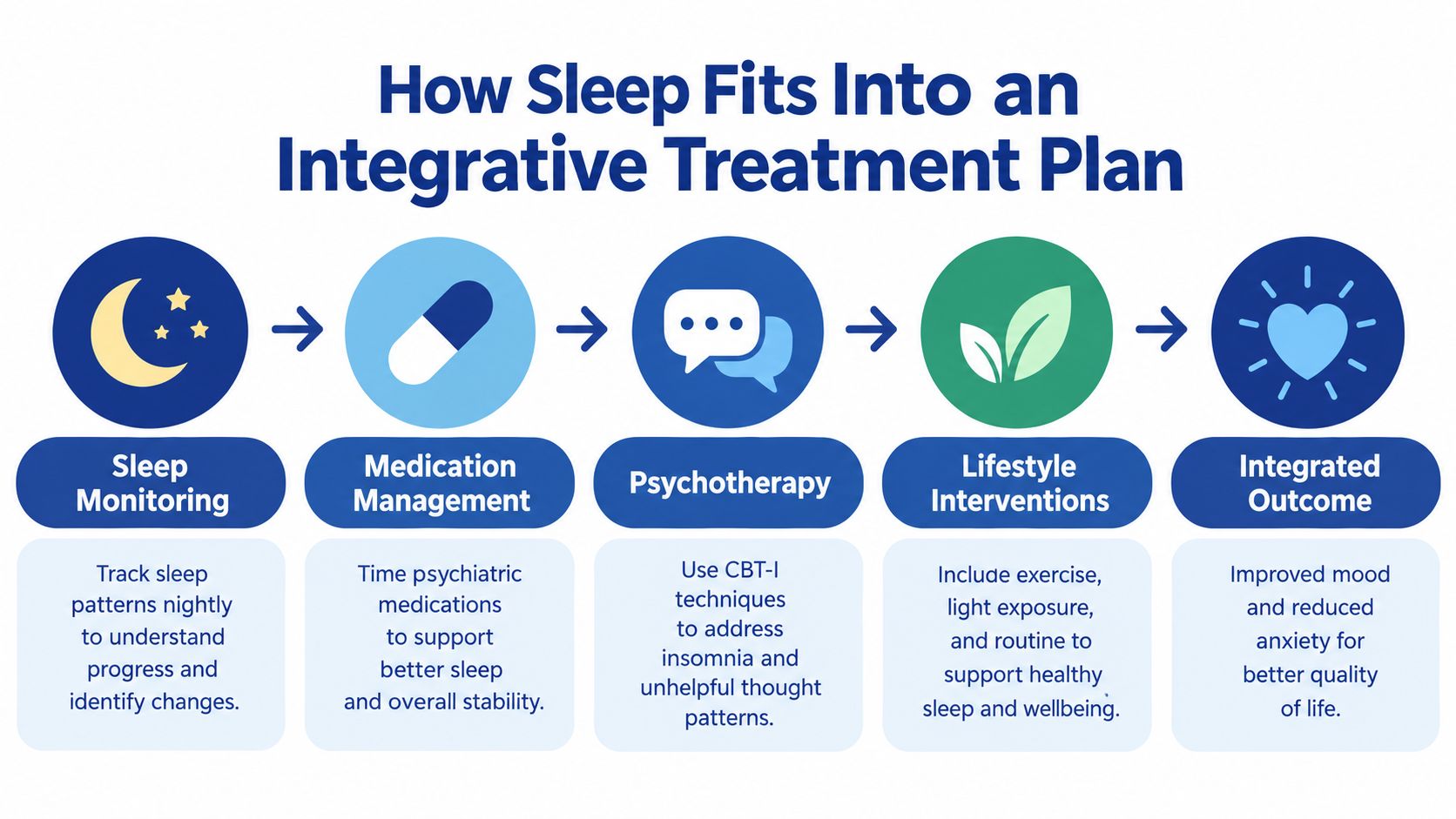
A plan that improves sleep may also support mood, anxiety, concentration, and daily functioning, but sleep is only one part of the clinical picture. An integrative psychiatry treatment approach considers psychiatric symptoms, medication timing, side effects, exercise, light exposure, nutrition, substance use, routine stability, and medical conditions. The goal is to identify the factors disrupting rest rather than force every patient into the same schedule.
What an individualized plan may include
Medication management starts with reviewing whether a psychiatric medication causes sedation, activation, vivid dreams, or nighttime waking. A timing adjustment may help, but patients should not change a prescribed medication without consulting the prescribing clinician.
Psychotherapy can address bedtime rumination, avoidance, trauma-related arousal, and depressive withdrawal. CBT-I provides a structured insomnia treatment rather than a general list of sleep-hygiene suggestions. Therapy may also address the anxiety or depression that keeps sleep disruption active.
Lifestyle interventions may include a steadier wake time, morning light exposure, planned exercise, less late-day caffeine, and a review of alcohol use. Brief mindfulness or relaxation exercises can help when rumination delays sleep. Someone else may need medication review or assessment for a sleep disorder. The appropriate choice depends on the pattern and the patient's wider symptoms.
A peer-reviewed review describes a polysomnographic study of 8 stimulant-naive adults in which methylphenidate increased sleep efficiency and improved the perceived restorative value of sleep. That result does not establish that stimulants improve sleep for every person with ADHD. It shows why medication effects require individual assessment. The same review of sleep management in adult ADHD reports that bright light therapy may help shift sleep patterns and improve functioning in adults with ADHD.
Telehealth can support regular tracking of sleep quality, mood, anxiety, concentration, energy, emotional regulation, and daily functioning. It cannot replace testing or medical assessment when symptoms point to another condition. More sleep is not automatically better. Timing, consistency, restorative quality, and the patient's full clinical situation determine whether the plan is helping.
Frequently Asked Questions About Sleep and Mental Health Treatment
Is sleep tracking useful during telehealth care?
Yes. A simple diary can show bedtime, wake time, awakenings, naps, caffeine, alcohol, fatigue, and medication-related changes. Wearables may add context, but they aren't diagnostic substitutes.
How long does sleep treatment take to help?
The timeline varies by cause, treatment, adherence, and coexisting conditions. Persistent insomnia, medication effects, circadian problems, and sleep apnea require different responses.
Should sleep always be treated first?
Not always. Severe depression, suicidality, disabling anxiety, mania, or medication problems may require immediate psychiatric attention while sleep is addressed in parallel.
Do caffeine and alcohol affect treatment?
They can. Late caffeine may worsen alertness and bedtime anxiety, while alcohol may fragment sleep. A clinician can help determine whether changing either substance is relevant to the patient's pattern.
Integrative Psychiatry of America provides virtual psychiatric care across Pennsylvania, including evaluation and treatment planning for anxiety, depression, ADHD, and related concerns. Patients who want sleep reviewed alongside medication, psychotherapy, and whole-person factors can visit Integrative Psychiatry of America to review care options and request an appointment.