
Between appointments, patients monitor symptoms, side effects, sleep, and functioning while awaiting the next scheduled visit. Providers may adjust medication based on this tracking data.
A Pennsylvania patient may pick up a first prescription, return home, and wonder what happens next. The next visit might feel far away, yet medication response develops through ordinary days, work demands, family interactions, sleep changes, and pharmacy problems. Psychiatric medication management is an ongoing clinical process, not just prescription renewal.
The weeks between visits give patients and providers useful information. A brief symptom note, a change in appetite, missed doses, or a new medical problem can help clarify whether treatment is helping, creating complications, or requiring a different strategy. Significant concerns shouldn’t wait for a routine appointment.
Table of Contents
- Understanding What Happens Between Psychiatric Follow-up Visits
- Symptom Monitoring and Side Effect Tracking Between Appointments
- How Psychiatrists Use Between-Visit Data to Adjust Treatment
- When to Contact Your Provider Before the Next Scheduled Appointment
- Telehealth, Refill Logistics, and Communication Between Visits
- What to Track Between Psychiatric Follow-up Visits Practical Checklist
Understanding What Happens Between Psychiatric Follow-up Visits
The appointment ends, but treatment does not pause. A patient starting an antidepressant, adjusting ADHD medication, or managing anxiety, depression, or a more complex condition continues gathering information through ordinary days. Medication response can appear in sleep, work, family interactions, mood, and physical sensations before the next clinical review.
A U.S. study of antidepressant follow-up care found that only 14.9% of patients received the FDA-recommended level of follow-up during the first four weeks, increasing to 18.1% by eight weeks and 22.6% by twelve weeks (American Journal of Managed Care). During the first four weeks, 55.0% saw any healthcare provider, while only 17.7% saw a provider specifically for mental healthcare. The same study found that patients averaged only one to two face-to-face visits during the first four weeks and four to five visits during the first twelve weeks.
Those gaps make the in-between plan important, particularly for Pennsylvania patients receiving telepsychiatry. A visit is a snapshot. Daily notes provide the surrounding sequence: what changed after a dose, whether a side effect continued, which doses were missed, whether a refill was delayed, and how symptoms affected daily functioning. Patients can use online psychiatric medication management guidance to understand how virtual care may support communication between scheduled appointments. https://integrativepsychiatryofamerica.com/mental-health-provider-shortage-in-pennsylvania/

Why the interval matters
A longitudinal psychiatry quality study found that patients averaged 4.1 medication-related problems at baseline, compared with 3.6 at three months and 3.4 at six months. The overall burden did not significantly decrease because existing problems were often replaced by new ones. Eighty percent of problems identified at three-month follow-up and 89% identified at six-month follow-up were new (Psychiatry quality study in PMC).
A patient may stop feeling nauseated yet begin sleeping poorly. Another may take medication consistently but experience more anxiety after a stressful event. Tracking these changes gives the prescriber a timeline instead of a single impression at the next visit. It also helps clarify what should be watched, what can be discussed routinely, and what deserves earlier contact.
Medication management and counseling may address different parts of care. Resources such as depression counselling in Penticton can help patients consider emotional support alongside medication treatment.
Symptom Monitoring and Side Effect Tracking Between Appointments
Between psychiatric medication appointments, patients should track symptoms, side effects, sleep, adherence, functioning, and relevant health changes. The most useful record is brief and consistent enough to reveal patterns without becoming another source of stress.
Start with changes in the treated symptoms
A daily note can answer questions that “feeling okay” can’t. Patients might record whether depression feels lighter, anxiety feels more manageable, attention lasts longer, or intrusive thoughts interfere less with daily activities. The record doesn’t need to predict an outcome. It creates a clearer account of what has changed.
Useful observations include:
- Mood: Note major shifts, irritability, emotional numbness, hopelessness, or unusual elevation.
- Anxiety: Record panic symptoms, physical tension, excessive worry, and situations that become easier or harder.
- Attention and functioning: Note task completion, organization, forgetfulness, impulsivity, work or school performance, and relationship strain.
- Depressive symptoms: Track motivation, pleasure, energy, concentration, and ability to complete basic responsibilities.
A symptom diary can use plain language. “Finished a work task without repeatedly restarting,” or “Spent most of the afternoon in bed,” gives a provider more useful context than “better” or “worse.”
Notice side effects without changing medication independently
Side effects can include sedation, nausea, insomnia, appetite changes, restlessness, dizziness, or other new physical or emotional experiences. Patients should record when a symptom started, how disruptive it feels, and whether it appears connected to medication timing, food, sleep, or another change.
A patient shouldn’t start, stop, increase, or decrease medication without provider guidance. The record supports a clinical conversation. It doesn’t replace one.
Practical rule: A new or severe symptom deserves communication, even when the patient isn’t sure whether medication caused it.
Track sleep, adherence, and daily context
Sleep can change both psychiatric symptoms and medication tolerability. A simple log might include approximate sleep duration, nighttime awakenings, difficulty falling asleep, daytime sleepiness, and whether sleep feels restorative. Patients can also note missed doses, delayed doses, confusion about the regimen, or difficulty obtaining medication.
New prescriptions, supplements, medical diagnoses, alcohol use, or other substance use may affect safety or symptom interpretation. These details aren’t moral judgments. They help the provider assess interactions, adherence barriers, and changes in risk.
Function often provides the clearest measure of progress. Weekly notes can cover work, school, parenting, relationships, household tasks, exercise, and personal care. A patient may still feel anxious but function better at work, or report less sadness while struggling with severe fatigue. Both details matter.
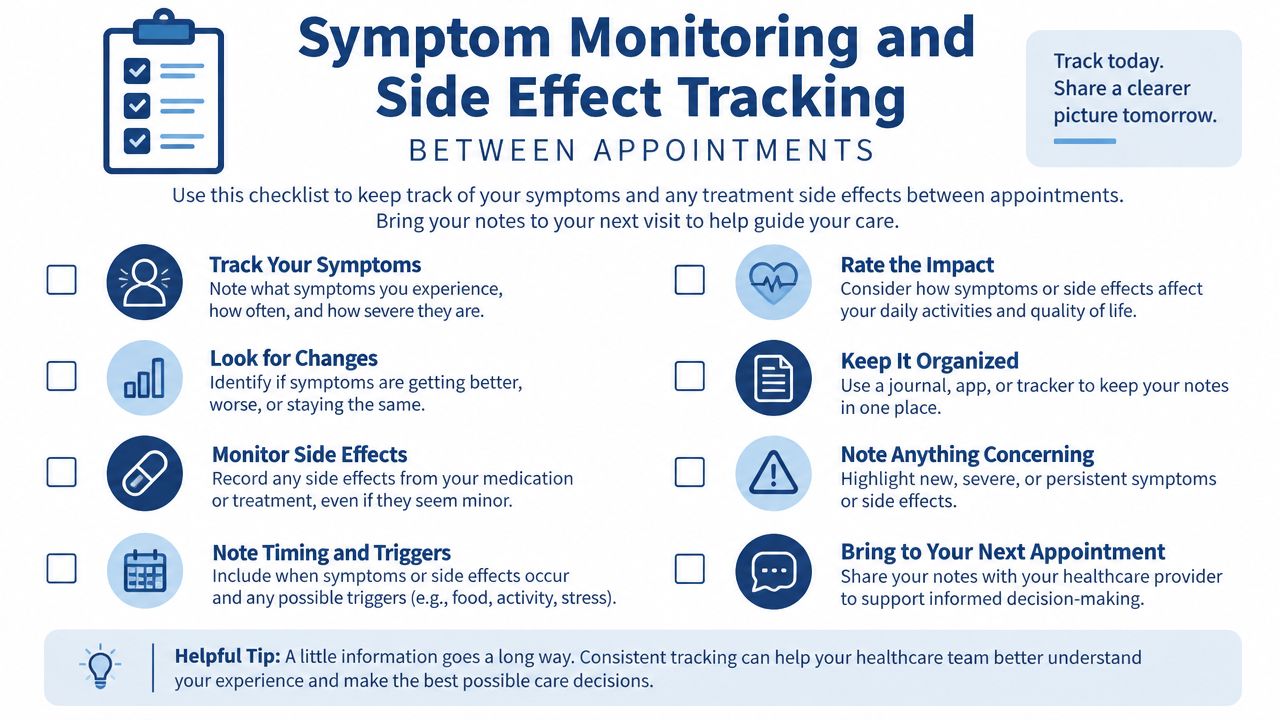
A daily mood journal can help organize observations. Optional tools may include sleep tracking, validated anxiety or depression scales, ADHD symptom notes, activity records, or blood-pressure and pulse monitoring when clinically relevant. These tools supplement provider-guided care. They don’t independently determine treatment changes.
For medications with important medical monitoring needs, clinicians may also order objective measurements. A depression care pathway describes lithium level monitoring after initiation, repeated renal and thyroid assessment, and scheduled tracking of weight, HbA1c, lipids, and blood pressure for antipsychotic treatment (Depression Care Pathway Guidelines). The exact plan depends on the medication, medical history, and treating clinician.
How Psychiatrists Use Between-Visit Data to Adjust Treatment
Providers use between-visit information to answer several clinical questions. Is the target symptom improving? Are side effects tolerable? Is the medication being taken as planned? Has another health or substance-related factor changed the picture?
Consider a patient who reports improved mood but persistent nausea that interferes with meals. Another patient may tolerate medication physically but experience worsening insomnia and reduced daytime concentration. A third may report better attention on workdays but no meaningful improvement in organization at home. These patterns can lead to different discussions because treatment decisions depend on both benefit and burden.
Possible treatment pathways
A follow-up assessment may lead to a change in medication timing, a dose adjustment, a switch to another medication, or a different treatment strategy. The provider may also decide that the current plan needs more time, particularly when symptoms are changing and side effects remain manageable. No patient should treat another person’s medication experience as a model for personal dosing.
Psychiatric follow-up guidance emphasizes monitoring treatment response, adverse effects, adherence, suicide risk, comorbidities, social support, and tolerability. NICE guidance recommends reviewing antidepressant treatment within two to four weeks of starting, followed by further review as needed and no later than four weeks after that appointment (clinical follow-up guidance). These timeframes support active observation, not automatic medication changes.
Providers may add psychotherapy or another service when medication alone doesn’t address the full clinical picture. Counseling can help with coping skills, trauma-related symptoms, behavior patterns, relationship stress, or medication adherence. Exercise counseling, mindfulness, sleep strategies, and nutritional education may also be considered when clinically appropriate. Nutrition education should support overall health and functioning, not serve as a stand-alone replacement for psychiatric treatment.
Testing provides context, not automatic answers
Laboratory or genetic testing isn’t used routinely to make automatic psychiatric medication changes. Clinicians may consider testing when symptoms, medical history, current medications, or possible medical contributors create a reason to investigate further.
A thyroid abnormality, for example, may change how a provider interprets fatigue, concentration problems, or depressive symptoms. The appropriate response may include medical follow-up or coordination with primary care rather than an automatic psychiatric prescription change. Information about genetic testing for psychiatric medications should be understood in that individualized context.
Tracking data supports clinical judgment, but it doesn’t replace assessment or guarantee a particular response. The same symptom can have different causes, and the same medication can affect people differently.
When to Contact Your Provider Before the Next Scheduled Appointment
Patients should contact their provider before the next visit when a concern is significant, rapidly worsening, difficult to tolerate, or potentially unsafe. Waiting may be reasonable for a mild, stable issue that has already been discussed, but uncertainty itself can justify a message asking how to proceed.
A practical decision guide
| Situation | Appropriate next step |
|---|---|
| Mild, stable side effect that has been discussed | Record it and raise it at the scheduled visit unless it worsens |
| Gradual symptom fluctuation without a safety concern | Track the pattern and send an update if the change persists |
| Refill, pharmacy, or insurance question | Contact the practice promptly rather than waiting until medication runs out |
| New medical problem, new medication, or supplement | Notify the provider so the treatment plan can be reviewed |
| Severe or rapidly worsening side effect | Contact the provider promptly for clinical guidance |
| New or worsening suicidal thoughts, dangerous mood changes, or immediate safety concerns | Seek urgent help immediately and don't rely on a routine portal response |
New or worsening suicidal thoughts, severe agitation, confusion, fainting, serious allergic symptoms, or a rapid and concerning mood change require urgent attention. Emergency services or the nearest emergency department may be appropriate when immediate safety is at risk. A patient shouldn't wait for a provider's routine reply in an emergency.
Significant substance use also warrants earlier communication when it affects safety, adherence, sleep, mood, or medication interactions. The same applies to pharmacy problems that could create a medication gap. A provider may answer through the portal, arrange an earlier appointment, coordinate with another clinician, or direct the patient to a higher level of care.
Patients can review general warning signs and care options through when to see a psychiatric provider. Contacting a practice isn't an interruption. It gives the clinical team information needed to decide whether the concern can wait.
Telehealth, Refill Logistics, and Communication Between Visits
Telehealth changes where follow-up occurs, not the need for follow-up. A patient in Philadelphia, Bucks County, the Lehigh Valley, or another Pennsylvania community may communicate from home through a secure portal, attend a scheduled video visit, or coordinate care with a local pharmacy.
Portal messages work well for concise updates, such as a new side effect, a change in sleep, a refill question, or a pharmacy reporting that medication is unavailable. They aren't a substitute for an assessment when a problem requires detailed discussion. They also aren't a substitute for emergency care.
Refill planning prevents avoidable gaps
Patients should request refills before medication runs out and include the medication name, pharmacy, and the nature of the request. A refill isn't automatically guaranteed because the provider may need current follow-up information, updated monitoring, or clarification about safety.
One telehealth prescription policy advises allowing at least 48 business hours for routine refill requests and states that same-day refills aren't guaranteed (telehealth prescription policy). Weekend schedules, pharmacy inventory, insurance requirements, and prior authorization can affect timing. Patients should contact the practice as soon as a delay appears rather than waiting for the final dose.
Insurance questions also belong in advance planning. Benefits, copays, deductibles, network status, and authorization requirements vary by plan. An Insurance & Fees page or benefits-verification process can help clarify administrative questions, but coverage cannot be guaranteed until the individual plan is reviewed.
Regular follow-up timing varies with the medication and clinical situation. Stable psychiatric medication management is commonly scheduled every three months, while acute treatment or a medication change may involve weekly visits initially, followed by visits every two to three weeks until stabilization (psychiatric follow-up guidance). The appropriate schedule remains individualized.
What to Track Between Psychiatric Follow-up Visits Practical Checklist
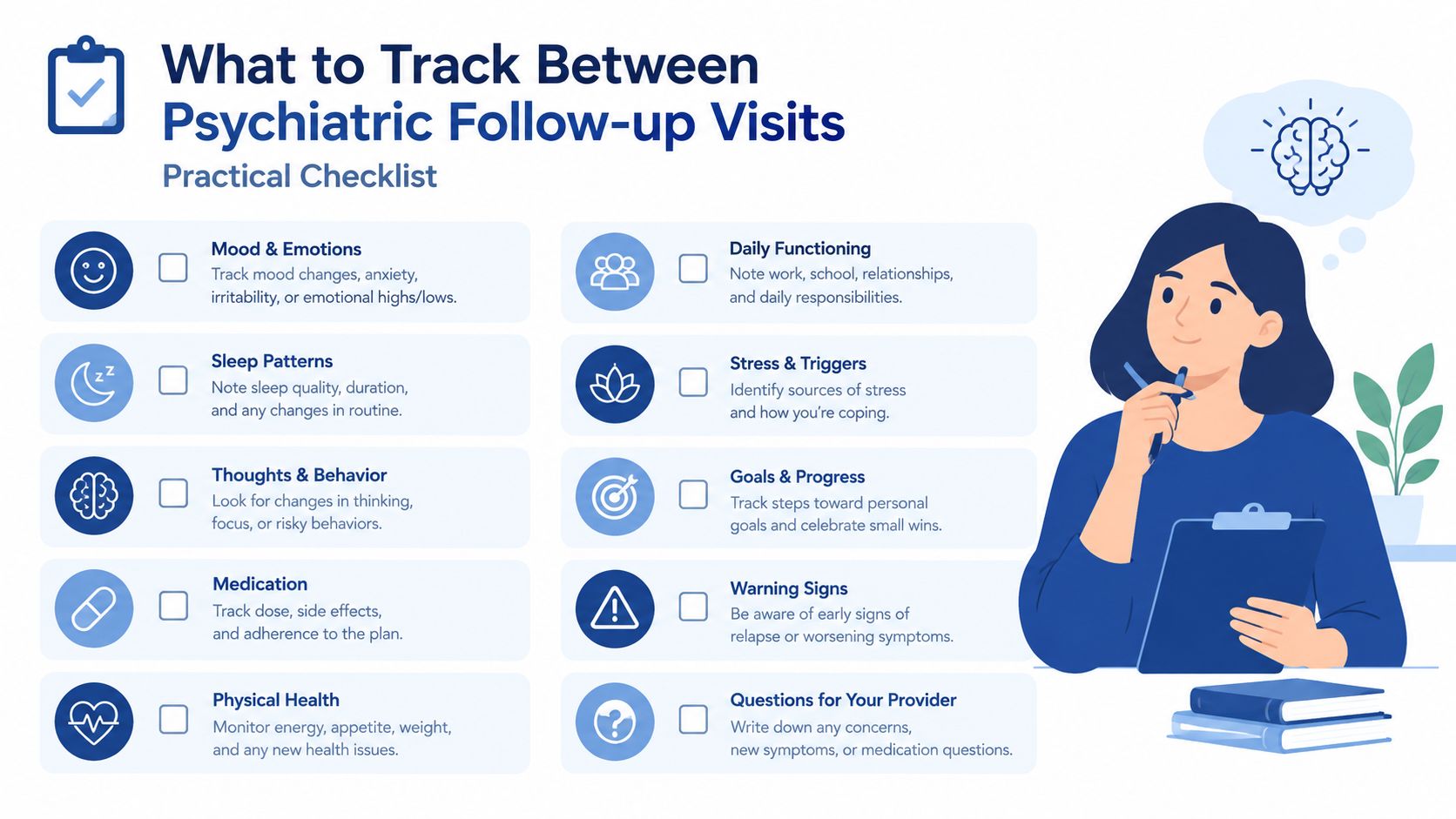
The most useful tracking plan is simple enough to maintain and detailed enough to reveal meaningful changes. A patient doesn't need to document every thought. A few consistent observations can help a provider understand response, tolerability, adherence, and functioning.
Daily observations
- Mood: Record meaningful changes in sadness, irritability, emotional intensity, hopelessness, or unusual energy.
- Anxiety: Note panic, physical tension, worry, avoidance, and situations that feel different.
- Sleep: Track difficulty falling asleep, awakenings, daytime sleepiness, and whether rest feels restorative.
- Side effects: Describe what appeared, when it started, how severe it feels, and how it affects daily life.
- Adherence: Note missed or delayed doses, confusion, trouble swallowing medication, or difficulty reaching the pharmacy.
- Safety: Report new suicidal thoughts, severe agitation, dangerous impulsivity, or other urgent concerns immediately.
Weekly patterns
A weekly review can focus on functioning rather than symptoms alone. Patients may note work or school performance, attention, task completion, relationships, appetite, personal care, activity, and participation in therapy. This helps distinguish feeling different from functioning differently.
Patients may also track alcohol or substance use when clinically relevant, along with new prescriptions, supplements, medical symptoms, or changes in a health condition. These details can affect safety and help providers interpret symptom changes accurately.
Optional tools include a mood journal, sleep tracker, validated anxiety or depression scale, ADHD symptom log, executive-function tracker, activity record, or daily mental health agenda planner. Tools should reduce confusion, not create pressure. Wearable data and nutrition logs can reveal patterns involving sleep, activity, stress, medication timing, and functioning, but they don't independently determine medication changes.
Before the next appointment
Patients can bring a short summary with the most important changes, questions, side effects, refill concerns, and examples of daily functioning. Significant worsening, severe side effects, new medical problems, or safety concerns should prompt earlier contact rather than waiting.
Pennsylvania patients considering virtual care can explore Psychiatric Care, including support for anxiety, depression, ADHD, OCD, PTSD, and related concerns. Integrative Psychiatry of America provides secure telehealth appointments and portal communication for patients receiving ongoing psychiatric care.
Pennsylvania patients who need to begin or review psychiatric medication management can visit Integrative Psychiatry of America, review insurance information, and request an appointment through the secure telehealth practice. The care team can help assess symptoms, medication response, side effects, and the right follow-up plan for the individual situation.