
Most major Pennsylvania insurers cover online ADHD evaluation and follow-up visits when the clinician is in-network, but final coverage depends on the member's specific plan. Stimulant medications use a separate pharmacy benefit and may require formulary approval or prior authorization.
A parent in Bucks County may reach the same point as an adult in Philadelphia: the symptoms are disrupting school, work, relationships, or daily organization, and the next question is practical. Can online ADHD treatment use insurance, and what will happen after the request is submitted? Insurance can make ongoing care more manageable, but it doesn't guarantee a diagnosis, a prescription, or a particular out-of-pocket cost.
Virtual ADHD care has become a routine access point rather than a temporary workaround. Cigna reports that about 46% of adults with ADHD use telehealth for their ADHD condition, while approximately one-third of adults with ADHD have used telehealth for therapy or an ADHD medication prescription since the COVID-19 pandemic (Cigna's telehealth and ADHD overview). The practical question for Pennsylvania families is how the clinic and insurer hand off responsibility at each stage.
Table of Contents
- How Insurance Actually Works for Online ADHD Treatment
- The Pennsylvania Patient Journey From Verification to First Visit
- Why the Stimulant Prescription Is the Real Coverage Question
- What a Comprehensive ADHD Evaluation Looks Like Online
- Comparing Major Insurers IPA Works With in Pennsylvania
- Ongoing Treatment and Integrative Support After Diagnosis
- Common Insurance and Access Questions Answered
- Getting Started With IPA in Pennsylvania
How Insurance Actually Works for Online ADHD Treatment
A Philadelphia teacher calls her insurer before booking an online evaluation for her son. The representative says telehealth is covered, but that answer is only the beginning. The visit benefit and the medication benefit are separate decisions.
The first decision concerns the medical or behavioral health service. The insurer checks whether the psychiatric clinician is in-network, whether the service is covered, and how the patient's deductible, copay, or coinsurance applies. A synchronous video visit with an in-network psychiatric clinician is often processed through the plan's behavioral health or medical benefit, but specific policies can exclude certain billing codes or apply special telehealth rules.
The second decision concerns prescriptions. A covered evaluation doesn't automatically mean that every ADHD medication will be covered at the pharmacy. The pharmacy benefit may apply a formulary restriction, quantity limit, step-therapy rule, or prior authorization requirement.
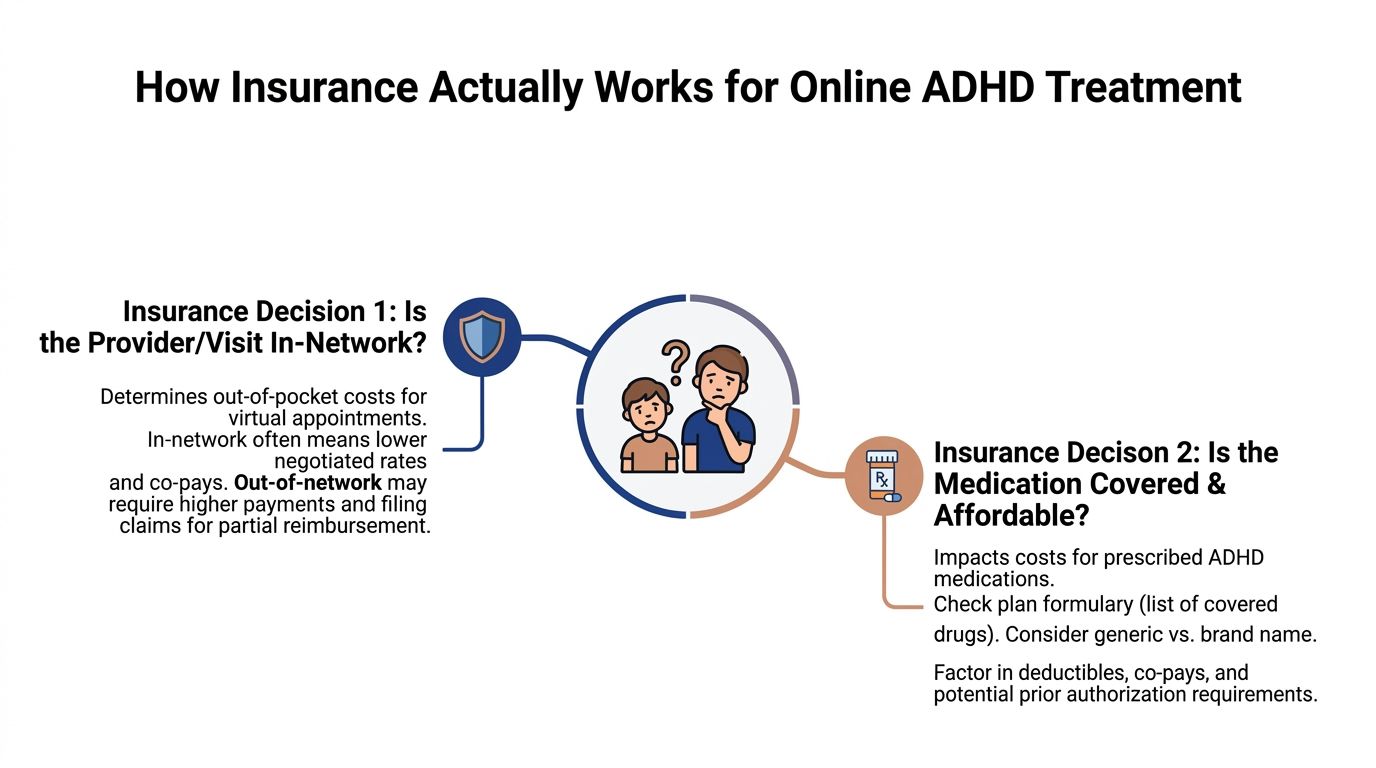
What in-network means for telehealth
“In-network” refers to the clinician or practice's contracted relationship with the patient's specific plan. A telehealth-only practice can be licensed to treat Pennsylvania patients and still be out-of-network for a particular employer policy. The insurer, not the practice's location alone, determines how the claim processes.
IPA accepts multiple major plans, including Aetna, Cigna, UnitedHealthcare and Optum, Independence Blue Cross, Highmark, and other participating plans. Patients comparing broader personal health insurance options should still confirm whether the selected plan recognizes the specific clinician and services.
A clinic's billing team can typically check eligibility and available benefit information before the first appointment. That check can clarify network status, deductible information, and the plan's stated telehealth benefits, but only the insurer can make the final claim determination. Patients seeking ongoing care can review online medication management as part of the broader treatment pathway.
The Pennsylvania Patient Journey From Verification to First Visit
The patient journey begins with insurance information, not a prescription request. A Pennsylvania adult or a parent can select or request an appointment, provide the member ID and plan details, and allow the clinic to verify eligibility and benefits as applicable.
The verification step helps identify behavioral health coverage, the likely visit cost-sharing structure, deductible status, and whether the plan has a telehealth-specific requirement. It also gives the scheduling team information needed to offer an appropriate evaluation appointment. Patients can review the IPA insurance verification process when preparing to contact the practice.
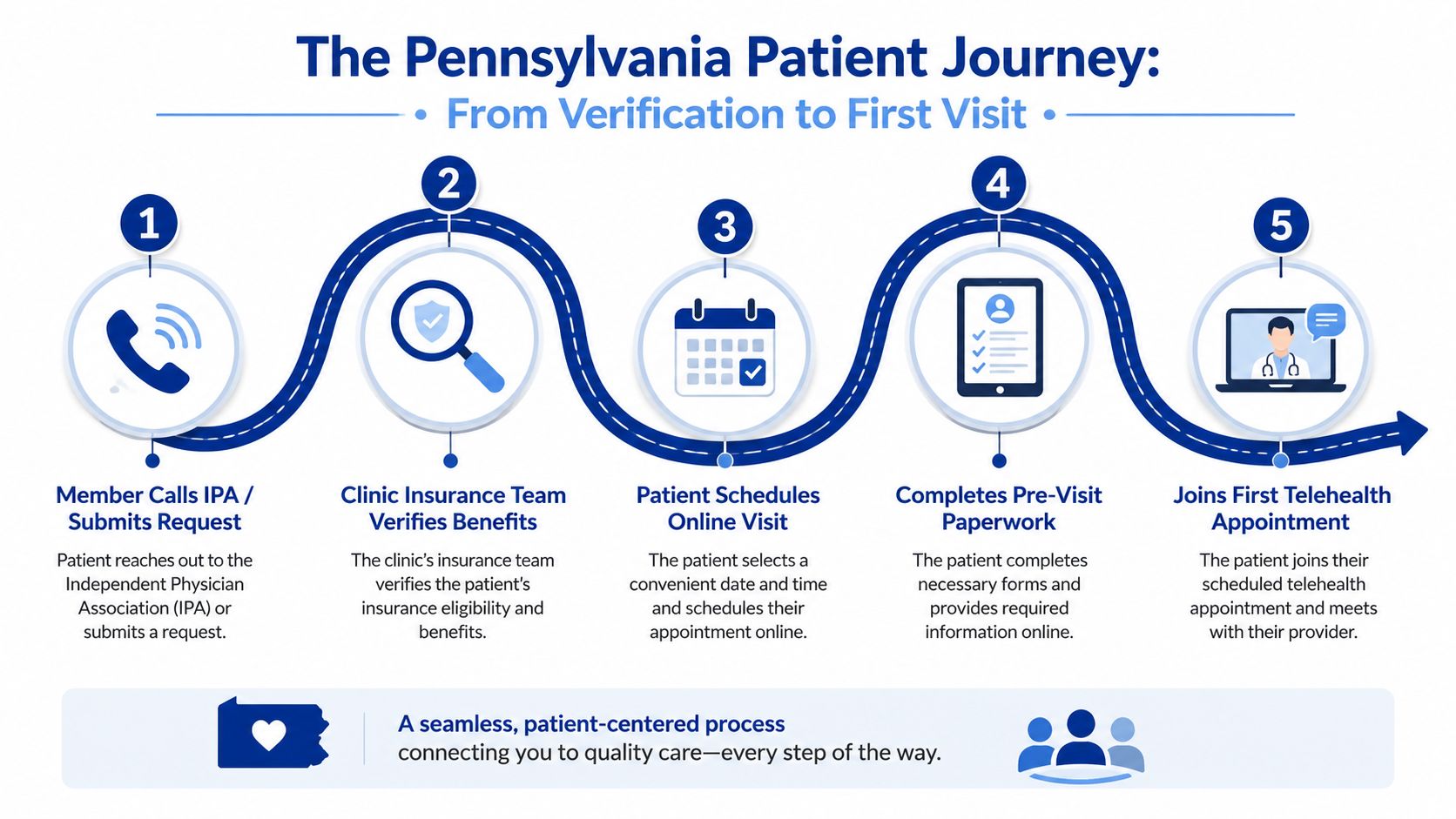
Five connected handoffs
- Request or call. The patient submits an appointment request or contacts intake with insurance information.
- Benefits review. The clinic checks available eligibility and benefit details through the payer's system.
- Scheduling. The patient receives an available virtual evaluation time after the administrative information is reviewed.
- Pre-visit information. Intake forms gather relevant history, school or work concerns, prior records when available, and ADHD assessment information.
- Telehealth evaluation. The patient joins a secure video visit from a phone, tablet, or computer anywhere in Pennsylvania.
Each handoff protects the next one. Insurance information supports billing, intake material supports clinical assessment, and prior records can reduce unnecessary repetition. Adults can describe work, household, and relationship effects. Parents can provide school observations, developmental history, and information about how symptoms appear across settings.
IPA provides virtual psychiatric care for adults and children throughout Pennsylvania. The first visit is an evaluation, not a promise that medication will be prescribed. The clinician reviews the available information, discusses findings, and recommends an individualized plan when clinically appropriate.
Why the Stimulant Prescription Is the Real Coverage Question
A patient may have a covered video evaluation and still encounter a pharmacy delay. Visit coverage answers whether the clinician's service is payable. Pharmacy coverage answers whether a specific medication can be dispensed under the prescription benefit.
Stimulants such as methylphenidate and amphetamine-based products are Schedule II controlled substances. That status can bring stricter dispensing and authorization rules, including quantity limits, refill restrictions, and recurring reviews. Prior authorization means the prescriber submits clinical information to support the medication request, then waits for the insurer's response before the pharmacy can process it under the plan.
Federal guidance states that a DEA-registered practitioner may prescribe Schedule II through Schedule V controlled substances through telemedicine without first conducting an in-person evaluation when applicable requirements are met (HHS guidance on controlled-substance prescribing). State licensure, federal rules, clinical judgment, and current policy requirements still apply. DEA announcements in 2025 extended COVID-era telemedicine flexibilities for controlled medications through December 31, 2026 (DEA announcement).
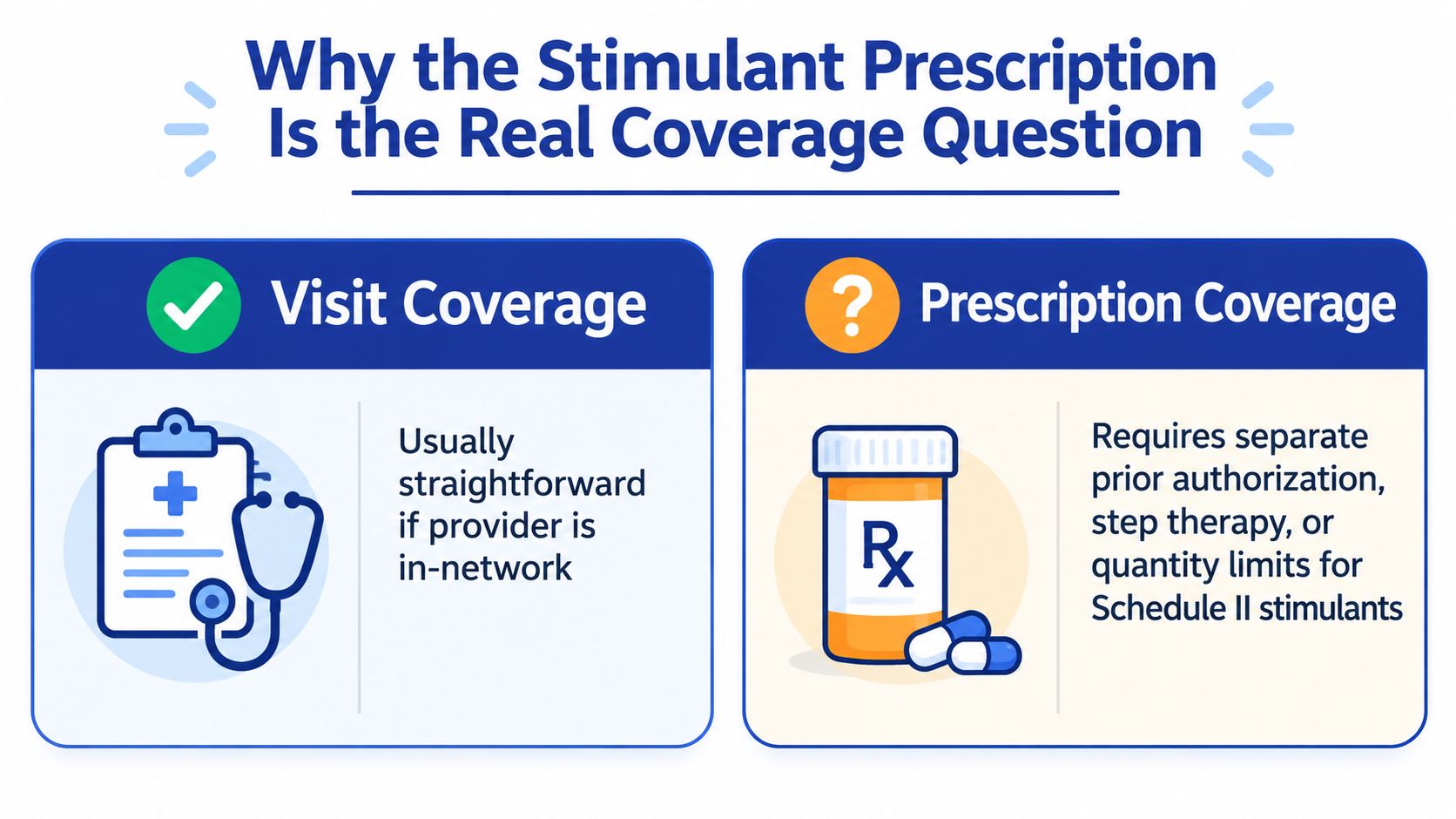
What patients should check
- Formulary placement: The plan may prefer a generic or another medication before covering a specific brand.
- Prior authorization: The insurer may require clinical documentation before approval.
- Pharmacy logistics: Stock shortages, pharmacy limits, or mail-order rules can delay filling a prescription even after approval.
- Non-stimulant pathways: Atomoxetine and viloxazine follow different coverage and prescribing pathways.
IPA can document the clinical rationale, submit and track authorization requests, and consider formulary-friendly options when appropriate. The insurer controls the final approval, while the pharmacy controls dispensing based on its inventory and applicable rules. Patients can review general ADHD treatment medication options before discussing choices with a licensed clinician, and IPA's ADHD medication management can address the ongoing monitoring process.
What a Comprehensive ADHD Evaluation Looks Like Online
A screening questionnaire cannot establish an ADHD diagnosis by itself. A full evaluation considers symptoms, developmental history, functional impairment, medical factors, and whether another condition better explains the concerns.
IPA uses a structured CADE ADHD evaluation approach through secure Pennsylvania telehealth. The clinician reviews the patient's history and current concerns, uses validated rating scales when appropriate, and seeks collateral information from a parent, partner, teacher, or another reliable observer when available.
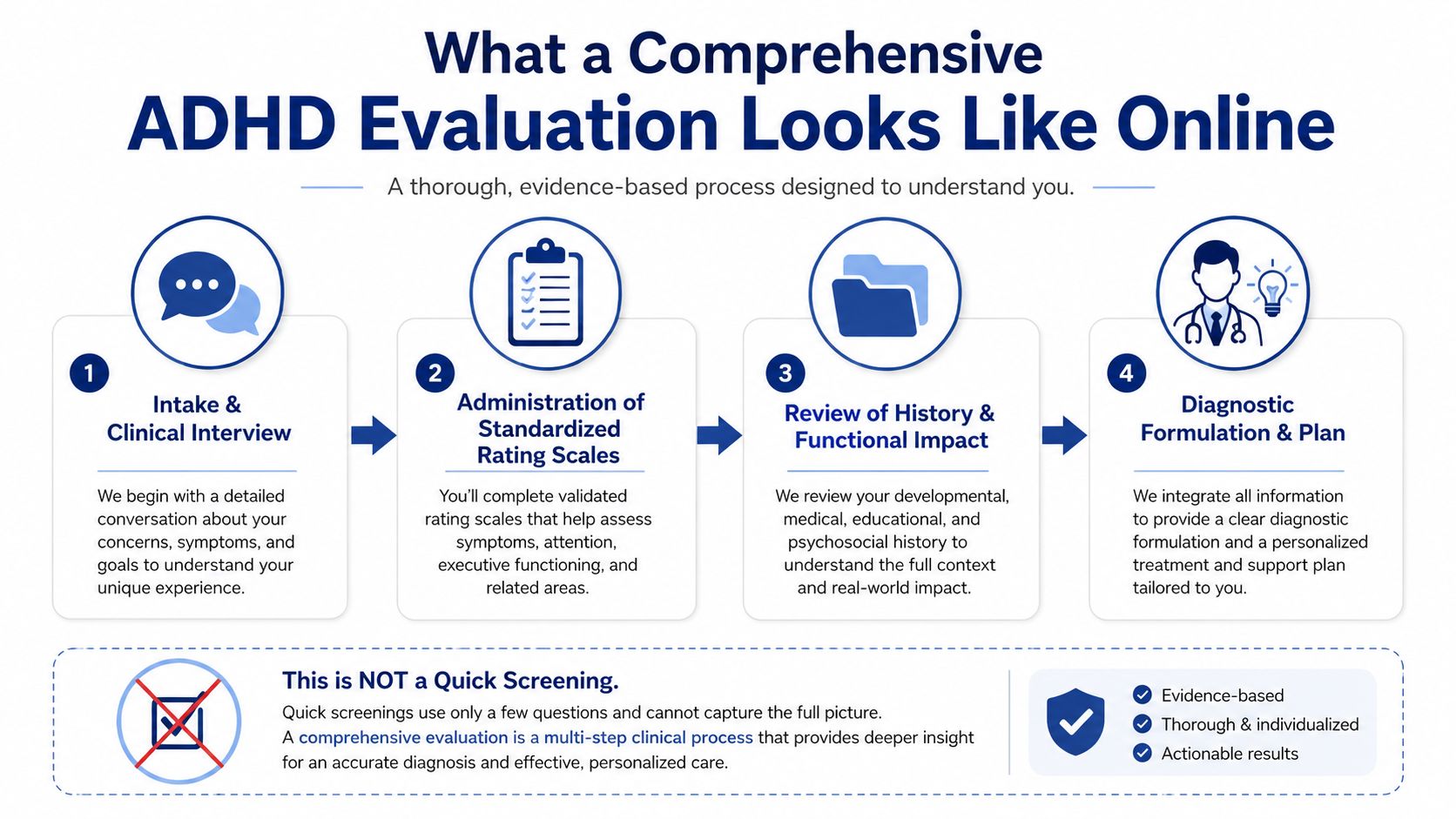
Screening, assessment, and diagnosis
A screening tool can identify patterns worth evaluating. It cannot replace a diagnostic interview or establish that ADHD is the cause. Sleep problems, anxiety, depression, trauma, substance use, medication effects, and medical conditions can overlap with attention difficulties, so the clinician considers the full picture.
The evaluation may include:
- Clinical interview: The provider explores symptoms, onset, persistence, and effects on daily functioning.
- Standardized scales: Rating forms organize information from the patient and, when relevant, family or school.
- History review: Developmental, educational, occupational, psychiatric, medical, and medication histories add context.
- Diagnostic formulation: The clinician explains whether the available evidence supports ADHD or points toward another formulation.
Psychological testing isn't automatically necessary for every patient. When assessment or testing is clinically appropriate, IPA can provide access to a PhD psychologist through its psychology care services. Findings may inform medication decisions, therapy targets, school accommodations for children, or workplace strategies for adults.
Patients can learn more about the online ADHD evaluation process before requesting an appointment.
A video demonstration can also help families understand the clinical format:
Comparing Major Insurers IPA Works With in Pennsylvania
IPA works with major Pennsylvania insurance networks, including Highmark Blue Cross Blue Shield of Pennsylvania, Independence Blue Cross, Capital BlueCross, Aetna, UnitedHealthcare, Cigna, and Geisinger Health Plan, along with other participating plans. This list is a starting reference, not a coverage guarantee. The patient's employer group, individual policy, deductible status, network configuration, and recognition of the specific IPA clinician can change the result.
Most major Pennsylvania insurers cover behavioral health telehealth when the provider is in-network, but copays, coinsurance, deductibles, visit limits, and authorization rules vary. Patients should verify the plan before relying on an insurer name alone.
| Insurer | Typical Telehealth Coverage |
|---|---|
| Highmark Blue Cross Blue Shield of Pennsylvania | Behavioral health telehealth may be covered when the clinician and service are in-network. |
| Independence Blue Cross | Coverage depends on the specific member plan and network. |
| Capital BlueCross | Telehealth benefits and cost-sharing vary by employer or individual policy. |
| Aetna | Online ADHD visits may be covered when the provider participates in the relevant network. |
| UnitedHealthcare and Optum | Behavioral health and pharmacy benefits require separate plan-specific review. |
| Cigna | Telehealth and medication coverage depend on the member's benefits and formulary. See the Cigna ADHD treatment information. |
| Geisinger Health Plan | Eligibility, network participation, and telehealth rules vary by plan. |
A verified insurer name still doesn't answer whether testing, psychotherapy, medication management, or prescriptions process under the same benefit. Patients should ask about each service separately.
Ongoing Treatment and Integrative Support After Diagnosis
ADHD care continues after the evaluation. When a diagnosis and treatment plan are clinically appropriate, follow-up visits help the provider assess response, monitor side effects, and adjust the plan safely.
For adults, medication management may address concentration, task completion, impulsivity, emotional regulation, and daily routines. For children, the plan may include parent participation, school observations, developmental context, and coordination around classroom needs. A prescription isn't guaranteed, and medication may not be the only appropriate intervention.
Care beyond medication
Therapy and practical support can help patients convert treatment goals into daily habits. Depending on the patient's needs, care may address:
- Executive-function routines: Breaking large tasks into smaller actions, using reminders, and building consistent systems.
- Emotional regulation: Identifying frustration patterns and practicing responses before overwhelm escalates.
- Parent support: Helping caregivers create predictable expectations and reinforce skills at home.
- School planning: Coordinating information relevant to accommodations, including 504 plans when appropriate.
- Workplace strategies: Organizing documentation requests and practical changes around attention, deadlines, and distractions.
Integrative support may also include structured sleep, nutrition education, exercise counseling, mindfulness, or other clinically relevant strategies. These approaches support a treatment plan, but they don't replace individualized assessment or prescribed care when medication is indicated.
Family involvement can occur virtually with consent. A parent or guardian may participate in a child's visit, while an adult patient can authorize participation from a partner or family member. The clinician revisits the plan as symptoms, demands, medication response, and insurance circumstances change.
Practical rule: Insurance can support the care channel, but regular follow-up still depends on clinical need, appointment availability, pharmacy access, and the patient's actual benefits.
Common Insurance and Access Questions Answered
Can IPA verify whether online ADHD care is covered?
The clinic can review available information about eligibility, network status, behavioral health benefits, telehealth processing, and potential cost-sharing. The insurer remains responsible for the final claim decision, so verification is an estimate of available benefits rather than a guarantee.
Does a deductible mean the visit is free?
No. A deductible may apply before the plan begins paying for certain services. Depending on the policy, the patient may also have a copay or coinsurance. Out-of-network exceptions can exist, but they require confirmation from the plan and may involve different reimbursement rules.
Will insurance approve a stimulant?
Not automatically. The pharmacy benefit may require prior authorization, step therapy, a preferred medication, or other documentation. IPA can submit appropriate clinical records and respond to requests, but the insurer makes the approval decision and determines the patient's pharmacy cost under the plan.
Does insurance determine who treats the patient?
It can influence the available network and referral pathway. Research on adults with ADHD found telehealth use above 50% among privately insured adults and adults with Medicaid in 2021, with 52.6% for private insurance and 51.6% for Medicaid (peer-reviewed analysis). The same analysis found that privately insured patients most often received ADHD telehealth care from psychiatrists, while Medicaid users most often saw nurse practitioners or psychiatric nurses. Provider availability and plan rules can affect how quickly a patient is seen.
Can a child attend alone?
A minor generally needs an adult caregiver involved in telehealth care. The clinician explains participation and consent requirements before or during scheduling.
What happens if insurance changes?
The new plan should be verified before the next visit or prescription request. Network status, deductible accumulation, authorization requirements, and pharmacy coverage may all change. Patients should provide updated member information promptly to prevent avoidable billing or refill delays.
How long does it take to receive a prescription?
The timeline depends on evaluation findings, clinical appropriateness, appointment availability, controlled-substance rules, pharmacy inventory, and insurer authorization. A first visit may result in further assessment rather than an immediate prescription. A pharmacy request can take longer when the plan requires prior authorization or an alternative medication.
Federal policy has shifted across telehealth settings. Medicare behavioral health telehealth protections and other Medicare flexibilities don't automatically determine how a commercial Pennsylvania plan handles ADHD care, so the member's policy remains the controlling source for coverage.
Getting Started With IPA in Pennsylvania
Pennsylvania adults and parents can begin with a request for appointment or insurance verification, rather than committing to a treatment plan. The patient shares the insurance information needed for the clinic to review eligibility and available benefits. IPA can then confirm participating network information and provide an estimated copay when that information is available.
The practical sequence is straightforward:
- Submit the request or contact intake. Include the patient's age, Pennsylvania location, and insurance details.
- Allow benefit verification. The team reviews available information about eligibility, network participation, and behavioral health telehealth coverage.
- Choose an evaluation appointment. Scheduling connects the patient with a virtual psychiatric clinician.
- Prepare useful records. Prior evaluations, medication lists, school observations, work concerns, and relevant medical history can help.
- Attend the secure video visit. The clinician completes the evaluation and discusses next steps when clinically appropriate.
Patients don't need to diagnose themselves before contacting the practice. A symptom checklist can organize concerns, but it isn't a diagnosis. Families should bring specific examples, such as missed assignments, repeated workplace errors, forgetfulness, restlessness, or difficulty completing routine tasks across settings.
Insurance verification is free and carries no obligation. Final benefits still depend on the individual policy, including deductible, copay, coinsurance, network status, testing coverage, and prescription rules.
Integrative Psychiatry of America provides virtual ADHD evaluation, treatment, medication management, and related psychiatric support for adults and children throughout Pennsylvania. Visit Integrative Psychiatry of America to verify insurance or request an appointment for a structured online evaluation.