
An adult in Philadelphia may start the day searching for an Aetna psychiatrist, then spend the afternoon comparing provider directories, checking whether an evaluation needs a referral, and asking a pharmacy why a prescribed medication isn't ready. The clinical question, “Could this be ADHD?” quickly becomes an insurance question: Will Aetna cover the evaluation, the medication, follow-up care, and telehealth visits?
The practical answer is that Aetna ADHD treatment usually depends on the member's specific plan, the provider's network status, the clinical documentation, and the medication requested. Aetna's policies show that ADHD care may involve a structured, multi-modal plan, while medication access can involve prior authorization, step therapy, age-based rules, dose limits, and pharmacy availability. Pennsylvania patients can often pursue care through in-person services or Pennsylvania telepsychiatry, but benefit verification remains essential.
Table of Contents
- Why Aetna ADHD Treatment Coverage Feels Complicated
- Navigating the Aetna ADHD Evaluation Process in Pennsylvania
- Understanding Aetna ADHD Medication Coverage Rules
- Telehealth vs In-Person ADHD Care for Aetna Members
- Building a Complete ADHD Treatment Plan Under Aetna
- Next Steps for Pennsylvania Aetna Members Seeking ADHD Care
Why Aetna ADHD Treatment Coverage Feels Complicated
A Pennsylvania adult may recognize a familiar pattern. Work deadlines are missed, appointments disappear from the calendar, bills sit unopened, and concentration collapses during routine tasks. After deciding to seek help, the patient expects an evaluation followed by a prescription. Instead, the provider asks about childhood symptoms, sleep, anxiety, depression, substance use, medical conditions, and current medications. The health plan may then require additional documentation before covering a requested drug.
That process feels frustrating, but ADHD diagnosis and treatment aren't prescription transactions. Aetna has historically described ADHD care as part of a “total treatment program” that includes psychological, educational, and social measures for certain pediatric policies. Aetna has also described referral for “bio-psychosocial treatment” in collaboration with primary care clinicians and specialists, while noting that pharmacotherapy coverage depends on the member's specific drug benefits. These policy details appear in Aetna's clinical policy bulletin on ADHD treatment.

Why the rules vary
Aetna's policies have shifted from broad treatment-program language toward more segmented utilization management. In practical terms, that means the pathway can differ by:
- Plan design: Employer-sponsored, commercial, Medicare, and Medicaid-related benefits may use different rules.
- Medication class: Preferred stimulants, non-preferred stimulants, and non-stimulants may follow separate approval pathways.
- Age: Pediatric and adult members aren't always evaluated under the same coverage criteria.
- Clinical history: A new medication may require documentation of previous trials, inadequate response, intolerance, or contraindication.
- Pharmacy benefit: The medical evaluation and the prescription claim may be managed through separate parts of the plan.
Aetna's policies therefore don't mean every member faces the same process. One plan may cover a preferred medication without prior authorization under a particular guideline, while another may require review. Members seeking care for more than ADHD should also verify the coverage pathway for related services, such as depression treatment under Aetna insurance, rather than assuming one benefit rule applies to every diagnosis.
Practical rule: A diagnosis can support treatment without guaranteeing automatic coverage for every medication, formulation, quantity, or provider.
The most efficient approach treats insurance verification as part of clinical preparation. Patients should identify their plan type, confirm network status, ask whether an ADHD evaluation requires a referral, and determine whether the requested medication needs prior authorization. That information helps the clinician select a realistic pathway without allowing administrative uncertainty to delay a medically appropriate assessment.
Navigating the Aetna ADHD Evaluation Process in Pennsylvania
An Aetna ADHD evaluation should establish whether ADHD symptoms are present, how long they've existed, and whether another condition better explains them. Aetna medication policies provide concrete examples of the documentation that may support approval, including a complete clinical assessment, a DSM-5-based evaluation, standardized rating scales, and interviews or questionnaires. The Aetna Qelbree policy identifies these elements in its prior-authorization logic.
Start with the benefit, not the medication
Before scheduling, an Aetna member should call the number on the insurance card or use the member portal to clarify:
- Whether outpatient psychiatric evaluations are covered.
- Whether the selected clinician or practice is in network.
- Whether a primary-care referral is required.
- Whether telehealth psychiatric visits are included.
- Whether behavioral therapy uses a separate benefit administrator.
- Whether medication approval is handled through Aetna's pharmacy benefit.
A referral may be unnecessary under one plan and required under another. A provider directory also isn't enough by itself. The office should confirm that it accepts the member's exact Aetna product, because network participation can vary by plan.
Prepare for a clinically complete assessment
A responsible evaluation usually explores current symptoms, childhood history, school or work functioning, relationships, sleep, mood, anxiety, trauma, substance use, medical history, and medication response. Rating scales can organize symptom information, but they don't establish the diagnosis by themselves. The clinician must interpret the results alongside developmental history and functional impairment.
Collateral information can be useful when available. A partner, parent, school record, old report card, or previous treatment record may clarify whether symptoms began earlier in life. Adults don't need to produce perfect childhood documentation, but they should bring whatever history exists and explain what has changed over time.
Pennsylvania telehealth makes this process more accessible for residents in Philadelphia, Pittsburgh, Harrisburg, and surrounding counties. A secure virtual appointment can reduce travel and scheduling barriers, although the clinician still needs adequate privacy, reliable technology, and a setting suitable for sensitive discussion. Patients can review the telehealth ADHD evaluation process before deciding whether a virtual assessment fits their needs.
Know when in-person care may matter
Telehealth isn't appropriate for every situation. A clinician may recommend an in-person medical assessment when physical findings, complex substance-use concerns, severe mood symptoms, medication monitoring needs, or another medical issue requires direct evaluation. A virtual clinician can also coordinate with primary care or another specialist when the diagnosis remains uncertain.
The evaluation should end with more than a label. It should clarify the working diagnosis, competing explanations, treatment options, safety considerations, follow-up needs, and the insurance documentation likely to support the selected plan.
Understanding Aetna ADHD Medication Coverage Rules
Medication coverage is where ADHD Aetna searches often become confusing. Aetna's policies show that approval can depend on the drug, formulation, age, benefit line, prior medication history, and requested quantity. A diagnosis is important, but it isn't always the only requirement.
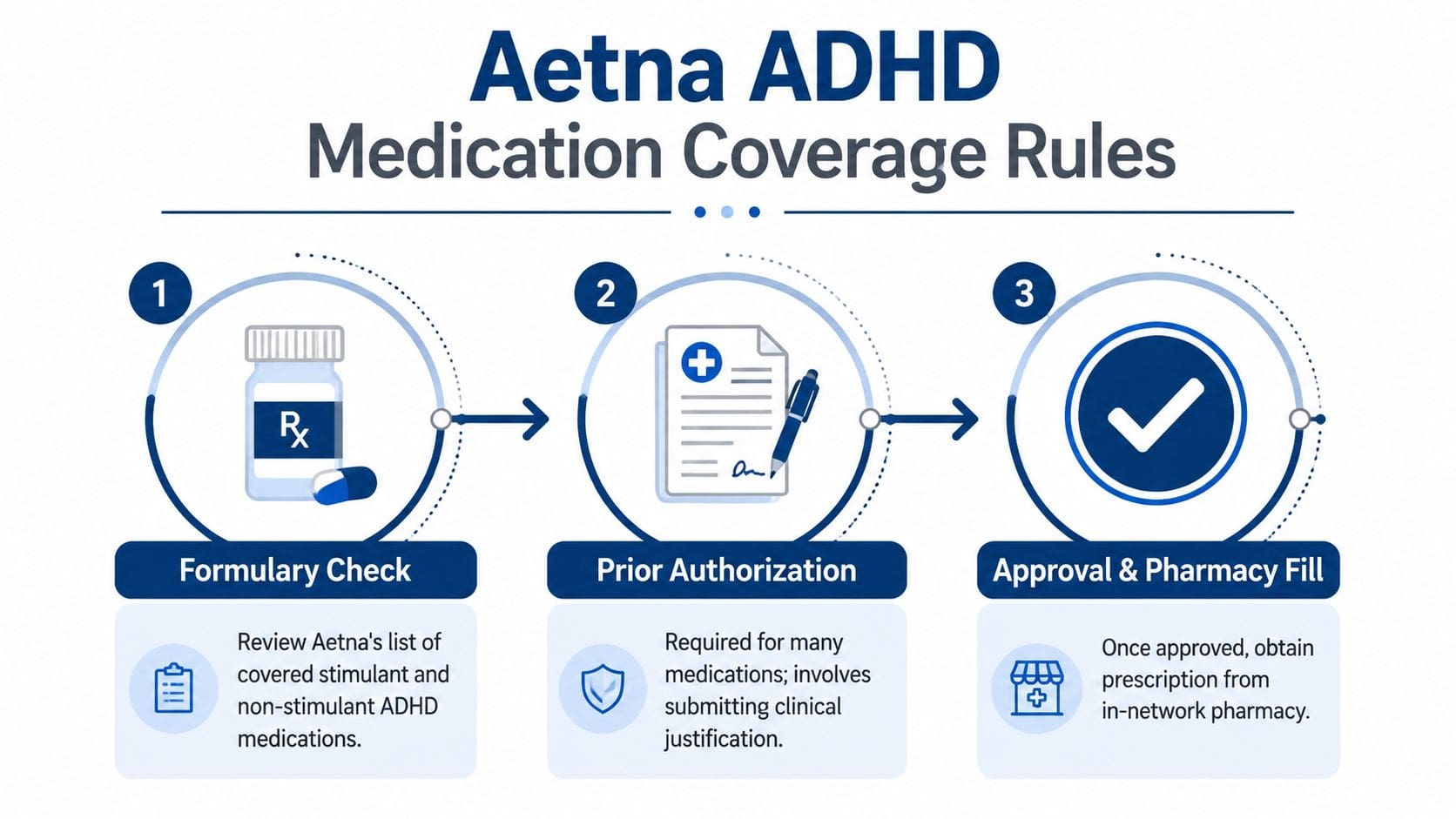
The medication pathway has several checkpoints
A useful way to understand the process is to separate three decisions:
| Coverage checkpoint | What the prescriber and member need to clarify |
|---|---|
| Formulary status | Is the medication covered, preferred, non-preferred, or excluded under this plan? |
| Prior authorization | Does Aetna require clinical documentation before the pharmacy can dispense it? |
| Quantity and refill rules | Does the requested dose or quantity trigger a limit or post-limit restriction? |
Aetna's 2022 ADHD Agents Post Limit policy required prior authorization for covered ADHD drugs when the patient had a documented ADHD or ADD diagnosis. That example shows why a prescription can be clinically reasonable yet still require an approval process. Aetna's ADHD post-limit policy also illustrates how age and product rules can differ.
For certain Medicaid-related guideline charts, preferred stimulant medications for children ages 4 to 17 may not require prior authorization, while adult stimulant treatment for members age 18 and older follows different rules. Non-preferred medications may still require age edits and clinical criteria. These distinctions shouldn't be generalized to every Aetna plan.
Step therapy can determine the order of treatment
Step therapy asks whether other medications were tried first. Aetna policies may require inadequate response, intolerance, or contraindication to listed stimulant or non-stimulant options before approval of another drug. The listed options can include amphetamine/dextroamphetamine, dexmethylphenidate, dextroamphetamine, lisdexamfetamine, methamphetamine, methylphenidate, atomoxetine, clonidine extended-release, Qelbree, Azstarys, and Zenzedi.
Aetna's Vyvanse policy provides a stricter example. It may require inadequate response, intolerance, or contraindication to three listed medications before approval, unless the member qualifies through a separate binge-eating-disorder pathway. The Aetna ADHD step-therapy policy_Policy_2937-D_UDR_12-2023_v2.html) contains those pathway details.
The practical consequence is significant. The prescriber should document the medication name, dose, duration, benefit, side effects, reason for stopping, and any contraindication. Vague statements such as “previous medications failed” may not answer the insurer's specific criteria.
Dose limits can disrupt otherwise reasonable adjustments
Aetna pharmacy policies also describe initial limits set at an off-label maximum daily dose or at a point where no established off-label maximum exists. Post-limit quantities may not be available for ADHD indications. That can affect titration and refill workflow when a patient needs a higher or sustained dose.
A denied claim doesn't automatically mean treatment must stop. The office can clarify whether the issue is prior authorization, step therapy, quantity, formulary status, or a pharmacy supply problem. The clinician can then consider a covered alternative, submit the required records, or appeal when the clinical facts support it.
Medication access depends on matching the clinical record to the exact policy pathway, not just naming the diagnosis.
Telehealth vs In-Person ADHD Care for Aetna Members
For Pennsylvania patients, the choice between virtual and in-person care often depends less on preference than on access, clinical complexity, network status, and continuity. Aetna telehealth ADHD care can support evaluation and medication follow-up when the provider is licensed to treat the patient in Pennsylvania and the member's plan covers the service. Exact cost sharing and authorization requirements still depend on the plan.
Where telehealth works well
Virtual care can remove travel barriers for adults in Philadelphia, rural communities, and counties with limited access to psychiatric clinicians. It can also make follow-up appointments easier to maintain when work, transportation, caregiving, or mobility creates practical obstacles.
A clinician can conduct a detailed interview through video, review records, use rating scales, assess functioning, and coordinate medication management remotely. The patient can attend from a private location and may find it easier to discuss daily routines in the setting where those routines occur.
Integrative Psychiatry of America is a Pennsylvania-based virtual psychiatric practice that provides evidence-based psychiatric evaluations, ADHD treatment, and medication management through secure telehealth. For an Aetna member, the relevant question remains whether the specific plan and service are covered, so benefit verification should occur before the first appointment.
Where in-person care may offer an advantage
In-person treatment can be more practical when a patient needs a physical examination, has complicated medical symptoms, requires coordinated laboratory work, or has a level of instability that makes remote care unsafe. Some patients also communicate more effectively in a clinical office, while others lack a private space or dependable internet connection.
The strongest model may involve coordination rather than choosing one format permanently. A virtual psychiatric clinician can communicate with primary care, request records, recommend an in-person assessment when clinically indicated, and continue remote follow-up when that remains appropriate.
| Virtual care | In-person care |
|---|---|
| Reduces travel and scheduling barriers | Provides direct physical assessment |
| Supports psychiatric interviews and medication follow-up | May simplify local examination or testing |
| Requires privacy, technology, and appropriate clinical fit | Requires travel and appointment availability |
| Network and telehealth benefits still require confirmation | Network status still requires confirmation |
Patients comparing an Aetna psychiatrist in Philadelphia with a Pennsylvania telehealth provider should ask the same core questions: Is the clinician licensed in Pennsylvania? Does the practice accept the exact plan? Can the office handle prior authorization? How will urgent concerns, records, and medication shortages be managed?
Building a Complete ADHD Treatment Plan Under Aetna
Coverage is only one part of effective ADHD care. A sustainable plan connects the evaluation to follow-up, medication monitoring, therapy, behavioral supports, and coordination with other clinicians. Aetna's historical treatment-program language reinforces this broader view, particularly for pediatric care, while adult treatment also benefits from addressing sleep, anxiety, depression, organization, and daily functioning.
Medication management needs a feedback loop
Medication follow-up should examine concentration, task completion, sleep, appetite, mood, anxiety, blood pressure when clinically relevant, adverse effects, and the duration of benefit. A patient who reports “the medication isn't working” may need a dose adjustment, a different formulation, treatment for a coexisting condition, improved sleep, or a non-medication intervention.
Therapy can target procrastination, emotional regulation, planning, relationship strain, and coping skills. Coaching or structured behavioral support may help translate treatment goals into calendars, reminders, task breakdowns, and routines. These services may be billed under different benefits, so the member should confirm coverage separately.
Integrative options require clinical review
Patients sometimes explore nutrition, exercise, mindfulness, laboratory testing, or supplements alongside standard ADHD care. These approaches should complement, not silently replace, a careful evaluation and medication review. A resource on personalised ADHD supplement stacks can help organize questions, but patients should discuss ingredients, interactions, pregnancy considerations, and medical conditions with a qualified clinician before adding products.
Adults who want a fuller overview of choices can review ADHD treatment options for adults. The central issue is coordination. Every treating professional should know which medications, supplements, therapies, and behavioral strategies the patient is using.
A practical record can include:
- Medication history: Name, dose, response, adverse effects, and reason for discontinuation.
- Symptom tracking: Changes in attention, impulsivity, organization, sleep, and mood.
- Insurance notes: Authorization status, formulary alternatives, quantity limits, and appeal instructions.
- Care contacts: Primary care, therapy, psychiatry, pharmacy, and relevant specialists.
This record helps the prescriber make safer decisions and gives the insurance office the details needed for a medication request. It also protects continuity when a patient changes pharmacies, providers, or plans.
Next Steps for Pennsylvania Aetna Members Seeking ADHD Care
A Pennsylvania adult seeking online ADHD treatment can begin with a focused administrative and clinical checklist:
- Verify the exact Aetna plan. Ask about psychiatric evaluations, medication management, therapy, telehealth, referrals, deductibles, and network status.
- Choose an appropriate clinician. Confirm Pennsylvania licensure, Aetna participation, evaluation availability, and the office's process for prior authorization.
- Prepare records. Gather medication history, symptom examples, childhood or school information, medical conditions, current prescriptions, and questions about treatment.
- Clarify the medication pathway. Ask whether the proposed drug is preferred, whether step therapy applies, and whether quantity limits could affect refills.
- Plan for availability problems. ADHD medicine shortages may continue into late 2025, depending on the product and country, according to the European Medicines Agency shortage information. If a pharmacy can't fill a prescription, the prescriber may need to discuss a covered alternative or a different formulation without making an unsupervised switch.
Patients seeking ADHD evaluation Pennsylvania services don't need to solve every insurance issue before requesting an appointment. They do need a provider who can separate the clinical decision from the coverage mechanics and document both clearly.
For ongoing care, online ADHD medication management can be considered alongside in-person options, subject to plan verification and clinical suitability.
Integrative Psychiatry of America provides virtual psychiatric evaluations, ADHD treatment, and medication management through secure telehealth for patients throughout Pennsylvania. Patients can visit Integrative Psychiatry of America to review care options, verify insurance, and request an appointment for an individualized evaluation.