
A positive pregnancy test can stop the day cold, especially if the bottle of Concerta is already part of the morning routine. For many adults with ADHD, the immediate question isn't abstract at all. It's whether staying on Concerta while pregnant puts the baby at risk, or whether stopping it would make everyday life unravel fast enough to create a different kind of risk.
That is the clinical problem behind Concerta and pregnancy. There isn't a clean yes or no answer, because the decision sits between two imperfect realities, medication exposure on one side and untreated ADHD on the other. The safest plan usually comes from a careful, individualized risk-benefit discussion, not from internet panic or blanket reassurance.
Table of Contents
- The Question Every Pregnant Patient on Concerta Asks
- What Concerta Is and Why Pregnancy Labeling Is Vague
- What the Research Actually Shows About Methylphenidate in Pregnancy
- First, Second, and Third Trimester Considerations
- The Risk Most Articles Forget, Untreated ADHD During Pregnancy
- How an Individualized Treatment Decision Is Actually Made
- Breastfeeding, Delivery, and the Postpartum Plan
- Frequently Asked Questions About Concerta and Pregnancy
The Question Every Pregnant Patient on Concerta Asks
A patient sees the test line appear, looks at the Concerta bottle, and immediately starts bargaining with herself. Should the next dose be skipped, should the medication be thrown away, or should nothing change until the first obstetric visit? That moment is emotionally common, and it's also where a lot of misinformation starts to do damage.
The better question is not, “Is Concerta safe during pregnancy?” It's, “Is functioning worse without it than with it?” That shift matters because ADHD treatment isn't only about comfort or productivity, it can affect work safety, driving, sleep, organization, follow-through, and the ability to keep prenatal appointments. A person who is barely holding things together on medication may face a very different clinical picture if the medication disappears overnight.
Practical rule: the decision should be based on severity, trimester, and daily functioning, not fear alone.
For a patient planning pregnancy, the conversation should begin before conception whenever possible. For someone who finds out after already taking Concerta, the next step is usually to avoid self-directed changes and get a same-week review of dose, timing, and symptom burden. That review often becomes easier to structure when the patient has a clear list of what falls apart off medication, missed deadlines, driving mistakes, emotional outbursts, or inability to sit through a workday.
A full decision also has to include the obstetric side of the equation. If exposure happened early, the main concern is not a vague global defect pattern, but the more specific early-pregnancy signal discussed in the research section below. If exposure is continuing later, the question becomes how to monitor maternal blood pressure, fetal growth, and newborn adaptation rather than treating pregnancy like one single risk window.
What Concerta Is and Why Pregnancy Labeling Is Vague
Concerta is an extended-release form of methylphenidate, a stimulant used for ADHD. Its delivery system is designed to release medication gradually through the day, which is one reason many adults find it steadier than short-acting options. In pregnancy, though, the formulation doesn't solve the key issue, which is that fetal safety data are limited and decisions still have to be made under uncertainty.
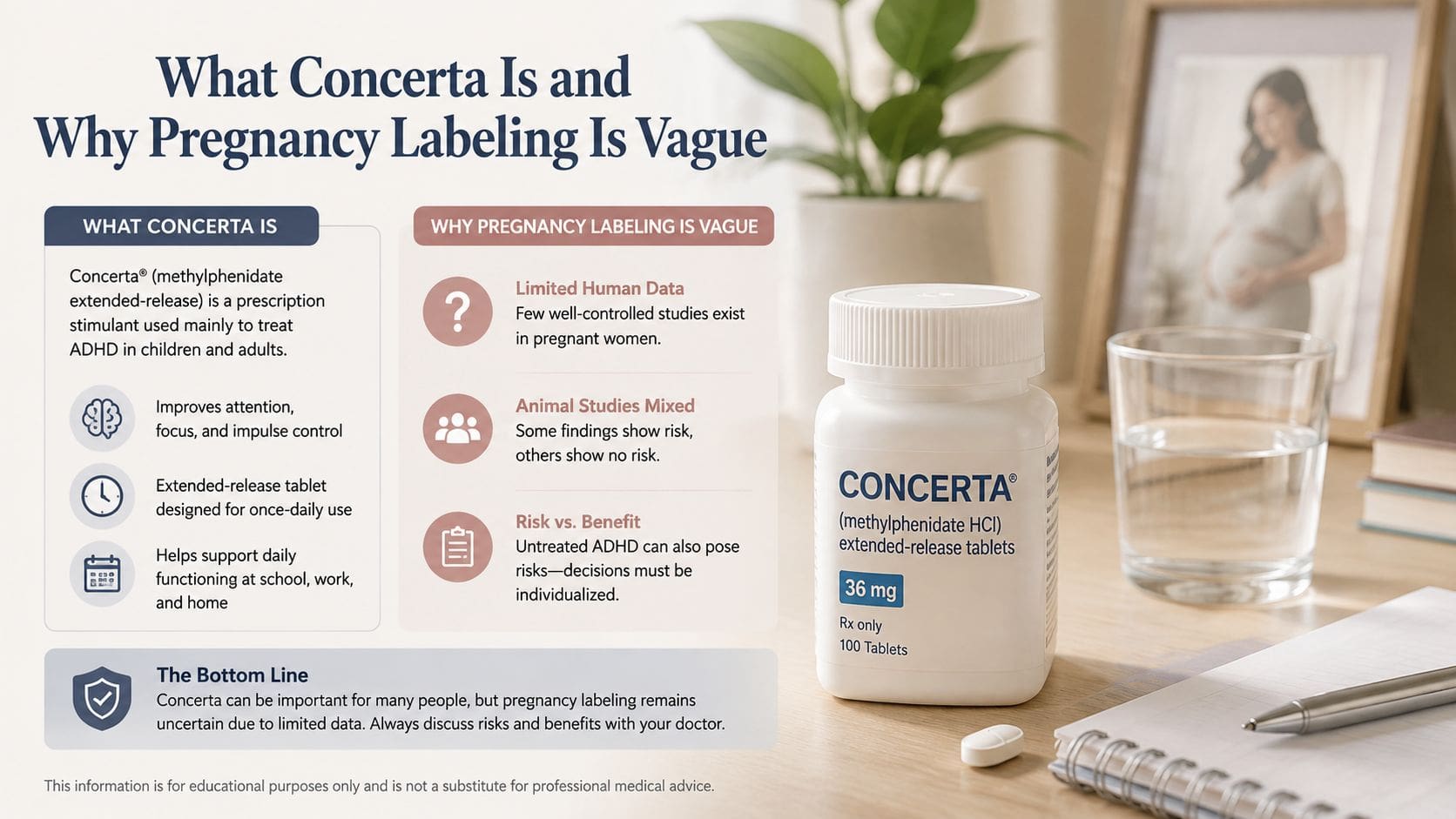
The official labeling language is cautious for a reason. Concerta's prescribing information says there are no adequate and well-controlled pregnancy studies, and use is recommended only when the maternal benefit justifies fetal risk. That wording is a regulatory standard, not proof that the drug causes birth defects. It means the evidence base isn't strong enough to make a clean promise either way, so prescribers are expected to weigh benefit against unknowns carefully. The product label makes that limitation explicit.
That's why pregnancy discussions about methylphenidate can sound cautious without being alarmist. Older pregnancy categories, including the now-retired system many patients still remember, were meant to signal the amount of human data available, not to declare a medication “safe” or “unsafe” in absolute terms. In practice, what that means is simple. The pharmacy label won't answer the hard question for the patient, because the decision depends on the severity of ADHD, the gestational stage, and what happens when treatment is withheld.
For patients comparing notes across platforms, the terminology can be confusing because different countries and databases phrase the same concern differently. The shared thread is the same, though. Concerta is not backed by strong pregnancy trials, so clinicians use a lowest-effective-dose, benefit-justifies-risk framework rather than a blanket approval. A practical review of stimulant prescribing during pregnancy can also help patients sort Concerta from broader ADHD medication counseling, such as the overview at Integrative Psychiatry of America's ADHD medication page.
A short video overview can help make the labeling language feel less abstract.
What the Research Actually Shows About Methylphenidate in Pregnancy
A pregnant patient on Concerta usually is not asking for a slogan, she is asking a harder question, whether her day-to-day functioning falls apart without it, or whether the medication exposure creates a bigger problem than untreated ADHD. That is the trade-off. The evidence on methylphenidate pregnancy is more nuanced than most headlines admit, and the safest way to read it is through a decision framework, not a verdict.
One major data set found a specific early-pregnancy cardiac signal, while broader reviews have not shown a clear rise in overall malformations or miscarriage across all exposures. Those two findings can both be true at the same time, and they are the reason clinicians keep the conversation narrow, individualized, and tied to actual functioning. A practical overview of stimulant use in pregnancy, including how clinicians think about risk by medication class, is available in this review of stimulants and pregnancy.
The cardiac signal is real, but the absolute risk is small
A large 2017 analysis published in JAMA Psychiatry looked at about 1.8 million publicly insured pregnancies in the U.S. and 2.5 million pregnancies in the Nordic countries. It found a 28% increased prevalence of cardiac malformations after first-trimester exposure to methylphenidate, which the authors translated into about 3 additional infants with congenital cardiac malformations per 1,000 women treated during that period. The same report noted that cardiac malformations occur in about 10 per 1,000 births, which helps explain why the absolute increase was described as small even though the relative increase mattered clinically. That report is the clearest reason many prescribers stay cautious about first-trimester exposure.
That finding also explains why regulators became more conservative. The Australian TGA changed methylphenidate's pregnancy category from B3 to D after large observational studies found a small increased occurrence of fetal cardiac malformations in women exposed during the first trimester compared with non-exposed pregnancies. For patients, the practical takeaway is targeted follow-up if early exposure already happened, not automatic alarm.
The broader data do not show a major birth-defect pattern
A later systematic review and meta-analysis covered 10 studies and 16.5 million pregnant women and found no significant increase in congenital anomalies or miscarriages compared with unexposed pregnancies, with pooled estimates of OR 1.14 for congenital anomalies and OR 1.15 for miscarriages. That larger pattern matters because it argues against a broad teratogenic effect across all organ systems. The meta-analysis supports the more measured view that any risk increase, if present, appears to be small and specific rather than sweeping.
MotherToBaby's summary data point in the same direction, noting studies of about 2,200 pregnancies without birth-defect rates above the 3% to 5% background risk, and a separate review of 180 first-trimester exposures with 4 major malformations (2.2%), similar to the general population's 2% to 4% baseline. Those numbers do not prove zero risk, but they do make it harder to claim that therapeutic methylphenidate clearly causes a wide birth-defect problem.
UKTIS adds a more cautious note by stating that some studies have linked methylphenidate in pregnancy to up to a two-fold increased risk of miscarriage in early pregnancy and low Apgar score with later use, while also stating that rates of intrauterine death, small for gestational age, and preterm delivery have not been shown to be increased, though the data remain limited. That mix of findings is exactly why a blanket answer does not fit every patient. The decision has to weigh the risk of medication exposure against the risk of untreated ADHD, including impaired follow-through, driving safety, work performance, and the strain that comes from trying to function while overloaded. For some patients, the discussion even overlaps with broader pregnancy symptom management questions, including the separate issue of causes of sensitive teeth when pregnant, which can complicate sleep, appetite, and daily stability.
The cleanest summary is this, the strongest consistent concern is a small first-trimester cardiac signal, not a proven broad increase in congenital anomalies.
First, Second, and Third Trimester Considerations
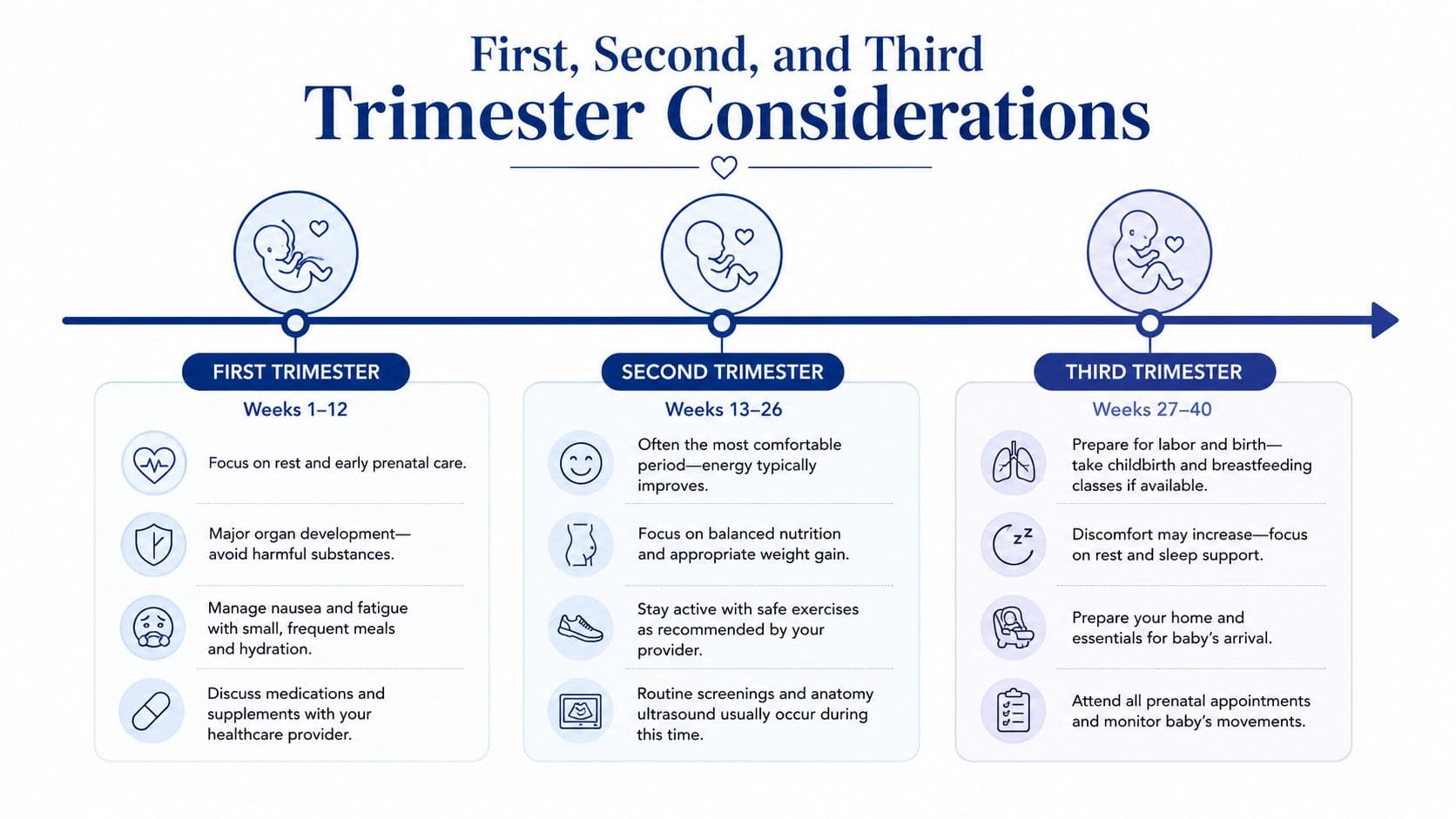
Pregnancy isn't one continuous risk block. The clinical question changes as the fetus develops, and the same medication can raise different concerns depending on whether exposure happened before organ formation, during growth, or near delivery.
First trimester demands the most caution
The first trimester is the period that matters most for the cardiac signal discussed above, because that's when organ formation is underway. If Concerta exposure occurred before pregnancy was recognized, the next step is usually a calm, structured review rather than a reflexive conclusion that harm definitely occurred. The concern is specific, not universal, and it does not mean every exposed pregnancy needs the same intervention.
A reasonable obstetric conversation may include whether additional fetal cardiac evaluation is appropriate based on the exposure history and the broader pregnancy picture. The important point is that first-trimester exposure is the window where the evidence is most concentrated, so it deserves the most deliberate follow-up.
Second trimester is often about stability
Once the pregnancy is established, the discussion often shifts toward maintaining the lowest effective dose and watching how the body is changing over time. Appetite, weight, sleep, and blood pressure deserve attention because stimulants can affect all three, and pregnancy can change medication response in unpredictable ways. Many patients also notice that the same dose no longer feels exactly the same once physiology changes.
This is also where functional monitoring matters. If the patient is missing appointments, unable to keep up with work, or becoming increasingly disorganized, those problems can feed anxiety and make prenatal care harder to follow. A useful non-medication support may be something as simple as a structured planning tool such as the Daily Agenda Planner, if used in conjunction with a prescriber's plan.
For patients who want a practical outside resource while thinking through physical changes, pregnancy-related symptoms can overlap in confusing ways. Even issues like causes of sensitive teeth when pregnant can become part of the broader self-care picture, because comfort, sleep, and routine all affect ADHD symptom control.
Third trimester requires a delivery plan
Late pregnancy raises a different concern, newborn adaptation. The key question becomes whether to continue, taper, or hold the stimulant near delivery based on symptom burden and obstetric preference. Some newborns exposed near birth may need observation for jitteriness, feeding difficulty, or sleep changes, even though many do well.
A second internal review point is also useful here, especially when the patient is balancing ADHD symptoms against another treatment path. A clinician can compare the pregnancy plan with other stimulant discussions, such as the practice's page on Vyvanse during pregnancy, without assuming that a switch is automatically safer.
The Risk Most Articles Forget, Untreated ADHD During Pregnancy
The medication question gets loud fast, but the untreated ADHD question often stays in the background. That is a mistake, because unmanaged ADHD can disrupt sleep, driving safety, punctuality, work performance, prenatal care follow-through, and the ability to keep up with the ordinary demands of pregnancy in ways that matter clinically, not just personally.
A 2021 systematic review found untreated ADHD in pregnancy was independently associated with higher odds of preterm birth and low birth weight. That does not mean ADHD itself causes every bad outcome, and it does not mean medication is always the answer. It does mean the decision should be framed as a risk-benefit tradeoff, not a reflexive stop-or-continue order. The review summary is a useful reminder that maternal functioning is part of fetal well-being too.
Functional loss is a clinical variable
For some pregnant patients, stopping Concerta looks manageable for a few days and then turns into missed appointments, unpaid bills, more conflict at work, and trouble sleeping because the mind will not settle. That pattern matters because it can reduce prenatal care quality and make it harder to manage other health conditions consistently. The harm is not abstract when it shows up as missed appointments or daily chaos.
A different patient may feel only mild worsening and can manage with behavioral supports, more structure, and a lower dose or intermittent use. Those are not the same case. The right answer depends on how severe the symptoms are when medication is removed, not on the label in isolation.
If stopping Concerta makes day-to-day functioning collapse, that collapse belongs in the pregnancy risk conversation.
For patients trying to organize what “collapse” means, structured self-monitoring can help. A journal such as the Feeling Journal can make it easier to track sleep, overwhelm, irritability, and missed tasks before a medication decision is made. That kind of record is often more useful than a vague recollection that “things felt worse.”
Pregnancy also magnifies emotional load. A helpful companion resource on supporting your mental health while pregnant can be useful context, because ADHD rarely travels alone. Anxiety, depressive symptoms, and exhaustion can all change the threshold at which medication becomes clinically reasonable.
Nutrition can also matter in a practical way, especially when appetite is low or meals become irregular. A focused review of nutrition support for pregnant women with ADHD can help patients think through how food, sleep, and routine affect symptom control alongside medication decisions.
How an Individualized Treatment Decision Is Actually Made
A careful pregnancy consultation does not start with “continue” or “stop.” It starts with severity, history, and the exact way symptoms show up when the medication is withheld. In Pennsylvania telepsychiatry, that conversation can happen virtually, which helps patients across Philadelphia, Pittsburgh, Harrisburg, Erie, Scranton, Allentown, Lancaster, and Reading get a decision made without waiting weeks for another in-person slot.
The prescriber usually weighs four things
- Symptom severity: Whether the patient can function safely without Concerta, or whether stopping it creates a major drop in work, driving, or home organization.
- Coexisting conditions: Anxiety, depression, and OCD can all change how stimulant use feels during pregnancy, and they may need separate treatment planning.
- Dose strategy: The goal is usually the lowest effective dose, not automatic discontinuation.
- Monitoring plan: Blood pressure, weight, sleep, fetal growth when indicated, and postpartum follow-up all matter if treatment continues.
A shared decision-making note should clearly state why the dose is being continued, reduced, or held, what symptoms are being tracked, and who is responsible for follow-up. That documentation isn't bureaucratic filler. It protects continuity of care if the obstetric team, pediatrician, or covering clinician needs to understand the reasoning later.
The exact plan often works better when behavioral supports are added instead of treated as an afterthought. Calendar reminders, fixed routines, meal planning, and task chunking can reduce the amount of medication needed to stay functional. For some patients, the Adult ADHD Assessment helps clarify whether symptoms are severe enough that stopping medication would cause more harm than benefit.
A maternal-fetal medicine referral becomes more relevant when there's first-trimester exposure plus other pregnancy risks, persistent blood pressure concerns, or a need for more detailed fetal surveillance. The point is not to over-medicalize every case. It's to match the level of review to the level of risk.
Breastfeeding, Delivery, and the Postpartum Plan
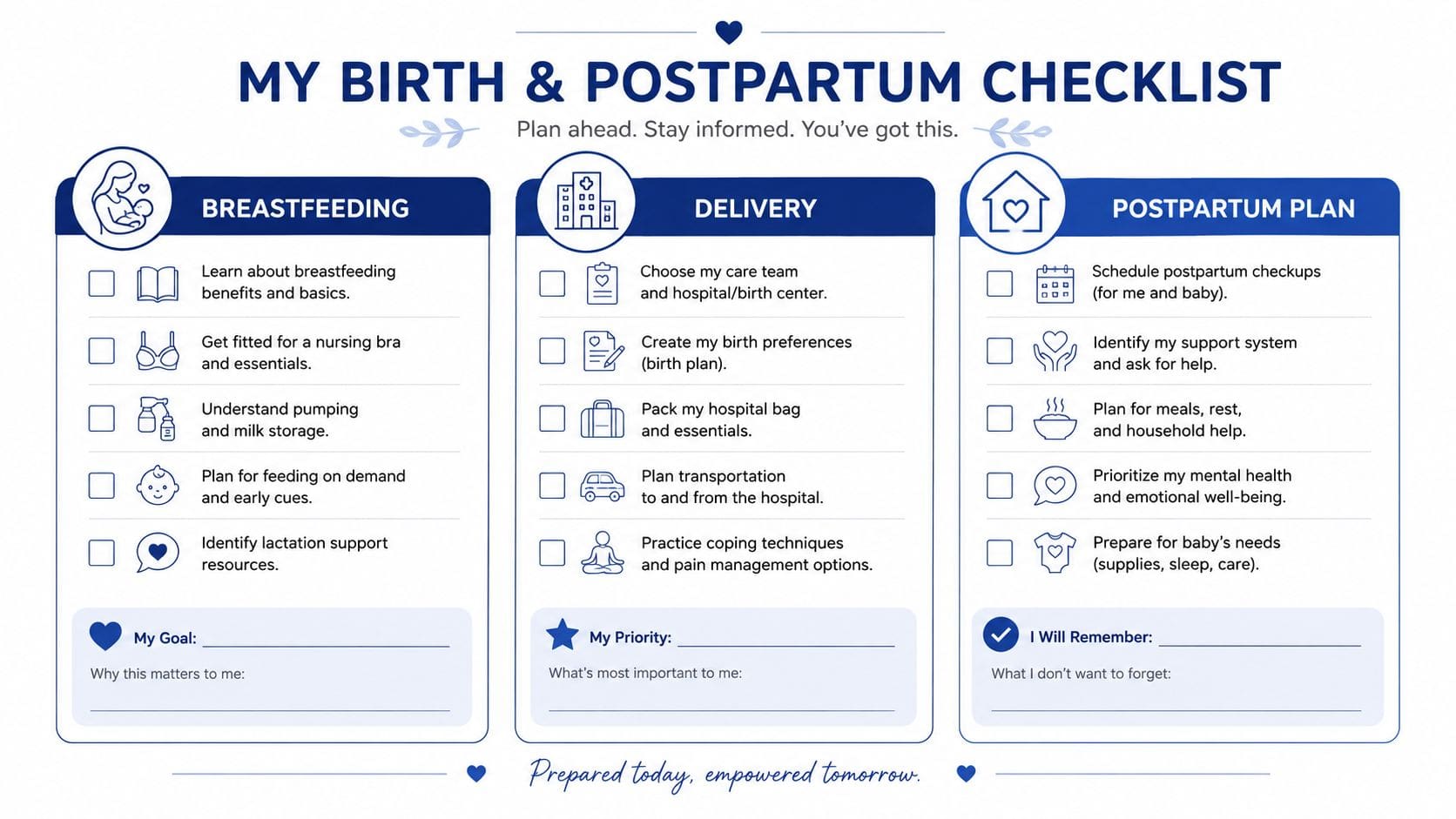
A parent can do everything “right” during pregnancy and still hit a wall after delivery. Sleep deprivation, hormonal shifts, and newborn care often make ADHD symptoms harder to manage right when organization matters most, so the practical decision continues after delivery and needs its own plan.
Breastfeeding and infant exposure
Neutral medical guidance notes that prescription methylphenidate is generally not expected to harm a nursing infant, but the evidence base is still limited. That is reassuring, yet it is not the same as proving zero risk. A parent and pediatrician still need to think through infant feeding, growth, and any unusual fussiness or sleep disruption after milk transfer.
Breastfeeding does not automatically rule out methylphenidate. It does mean the dose should be reviewed carefully, and the baby should be observed in a way that matches the rest of the clinical picture.
Delivery and newborn observation
If methylphenidate was used into late pregnancy, the newborn team may watch for transient adaptation issues such as jitteriness or feeding difficulty. That does not guarantee a problem, and it does not imply dependence in the way some other substances can cause. It does mean the delivery team should know the medication history ahead of time so they can observe appropriately.
Postpartum restart planning
Many patients need a concrete plan, not a general reassurance. A good postpartum plan usually includes an early dose review, mood screening, an infant feeding log, and a clear contact pathway for questions about sleep, irritability, or attention problems. A parent who is barely sleeping may need medication adjustment sooner than expected, because postpartum impairment can snowball quickly.
For practical home support, a maternity nurse explained resource can help families understand what kind of help is available in the first weeks. That kind of support matters because ADHD symptoms and sleep loss often feed each other, and a medication plan works poorly if the household is running on fumes.
Integrative Psychiatry of America can help patients build that postpartum strategy through virtual medication management and follow-up across Pennsylvania, especially when the transition from pregnancy to newborn care is already overwhelming.
Frequently Asked Questions About Concerta and Pregnancy
A patient may sit in the office feeling two kinds of pressure at once, the pressure of pregnancy and the pressure of trying to keep work, home, and attention on track. The questions that come up are usually practical. Can Concerta stay in place, should it be changed, or is the issue that untreated ADHD is already making pregnancy harder than the medication would?
Does Concerta increase miscarriage risk? Some summaries, including UKTIS, note a possible signal in early pregnancy, but the broader evidence is mixed and not definitive. That uncertainty is part of the decision, not a reason to panic. Should Concerta be switched to another ADHD medication? Switching is not automatic, because a new medication can destabilize symptoms, sleep, and daily functioning before it proves helpful. What if pregnancy is discovered mid-treatment? Contact the prescriber promptly and avoid abrupt self-changes, since stopping suddenly can leave attention, mood, and executive function worse at exactly the wrong time. Can the dose be lowered or split? Sometimes, but only if symptoms stay controlled and the lower dose still lets the patient function. How soon should help be sought? As soon as the pregnancy is known, especially in the first trimester or any time functioning is slipping.
The question is often whether life is safer and more workable with treatment than without it. For some patients, untreated ADHD raises the risk of missed appointments, poor sleep, impulsive choices, and an inability to keep up with the basic demands of pregnancy. For others, the medication benefit is modest and the exposure feels harder to justify. That is the trade-off to sort out, not a simple yes or no verdict.
Integrative Psychiatry of America provides virtual psychiatric evaluations, medication management, and evidence-informed ADHD care across Pennsylvania, including Philadelphia and surrounding areas. If Concerta and pregnancy are part of your decision right now, review treatment options, verify coverage, or schedule a telehealth appointment for a focused pregnancy medication conversation.