
A positive pregnancy test can turn a normal morning into a fast-moving stream of questions. For many adults with ADHD, one of the first is immediate and personal. Should Vyvanse be stopped right now, or could stopping it create a different set of problems?
That question deserves more than a yes-or-no answer. A patient who relies on lisdexamfetamine to stay organized, drive safely, work consistently, remember appointments, and care for herself isn't asking about medication in the abstract. She's asking how to protect a pregnancy without losing the stability that helped her function in the first place.
Psychiatric nurse practitioners hear this concern often. The fear is understandable, especially when online advice swings between reassurance and alarm. What helps most is a calm review of the evidence, an honest look at symptom severity, and a plan built with both obstetric and psychiatric care in mind. For many patients, the right path isn't panic, sudden discontinuation, or blind continuation. It's a thoughtful partnership.
Table of Contents
- The Moment You Find Out You Are Pregnant
- The Risks of Untreated ADHD in Pregnancy
- Vyvanse and Pregnancy What the Evidence Says
- Building Your Personalized ADHD Management Plan
- Postpartum Care and Breastfeeding on Vyvanse
- Get Expert Guidance at Integrative Psychiatry of America
The Moment You Find Out You Are Pregnant
A common real-world scenario looks like this. An adult woman has finally found a rhythm that works. Vyvanse helps her start tasks, finish work, keep track of appointments, eat regular meals, and manage the constant mental traffic that untreated ADHD can create. Then the pregnancy test turns positive, and that stability suddenly feels uncertain.

For some patients, the first instinct is to stop the medication before calling anyone. Others freeze because they worry that one more dose might hurt the pregnancy, but they also know what happens when focus, planning, and emotional regulation fall apart. Neither reaction is irrational. Both come from trying to protect a baby while holding onto daily functioning.
What usually helps in the first few days
The most useful first step is simple. Contact the prescribing clinician and the obstetric team promptly, rather than making a rushed medication decision alone. If support is needed to sort through urgent questions, guidance on when to see a psychiatric specialist for medication concerns can help patients decide how quickly to get expert input.
Immediate priority: confirm the pregnancy, review current medications, and avoid abrupt changes unless a medical professional specifically advises them.
What patients often need to hear
The presence of uncertainty doesn't mean catastrophe. Limited data isn't the same as proof of harm, and a medication decision in pregnancy should account for the whole picture: symptom burden, work demands, driving safety, previous response to treatment, sleep, nutrition, and mental health history.
Patients also deserve language that isn't shaming. A person who became pregnant while taking prescribed ADHD medication hasn't failed. She has a clinical question that needs an individualized answer.
The Risks of Untreated ADHD in Pregnancy
The central decision isn't medication risk versus no risk. Pregnancy doesn't remove ADHD. It changes the context in which ADHD symptoms show up, and that matters because untreated symptoms can interfere with prenatal health in very practical ways.
A patient with significant inattentiveness may miss prenatal vitamins, forget obstetric appointments, delay lab work, or struggle to track blood pressure instructions, nutrition, and hydration. A patient with impulsivity may have more difficulty slowing down routines that were manageable before pregnancy but now need adjustment. Emotional dysregulation can intensify stress, conflict, and exhaustion at a time when steadiness matters.
Function matters in obstetric care
When ADHD is severe, stopping effective treatment can lead to a rapid drop in day-to-day functioning. That decline may affect:
- Prenatal follow-through: missed appointments, late refills for other necessary medications, and difficulty keeping up with care recommendations
- Safety routines: distracted driving, workplace errors, or trouble managing home responsibilities
- Nutrition and rest: inconsistent meals, poor planning, and more chaotic sleep habits
- Emotional health: more frustration, guilt, overwhelm, and strain in relationships
These aren't abstract concerns. They shape how well a patient can care for herself during pregnancy.
A published U.S. claims-based study showed that ADHD medication exposure during pregnancy is a real and recurring clinical issue, not a rare edge case. In that study, Vyvanse accounted for 5.7% of ADHD-medication exposures, and among 87 exposed pregnant women, nearly all used medication in the first trimester, while 20.7% continued into the second trimester and 12.6% into the third trimester, reflecting how often this dilemma appears early in pregnancy and then continues for some patients over time (study on ADHD medication exposure in pregnancy).
The goal isn't perfection
Many patients assume the safest answer must be to tolerate worsening symptoms without medication. That approach can work for some. It doesn't work for everyone.
Pregnancy care works better when clinicians protect both fetal development and maternal functioning.
A patient who can't organize meals, remember appointments, manage work demands, or regulate stress may not be safer because a stimulant was stopped. The right standard is balance. Treatment decisions should reduce overall risk, not just medication exposure in isolation.
Vyvanse and Pregnancy What the Evidence Says
A common visit goes like this. A patient learns she is pregnant, looks at her pill bottle, and asks whether continuing Vyvanse is protecting her ability to function or creating avoidable risk. The honest answer usually requires more than a yes-or-no response.
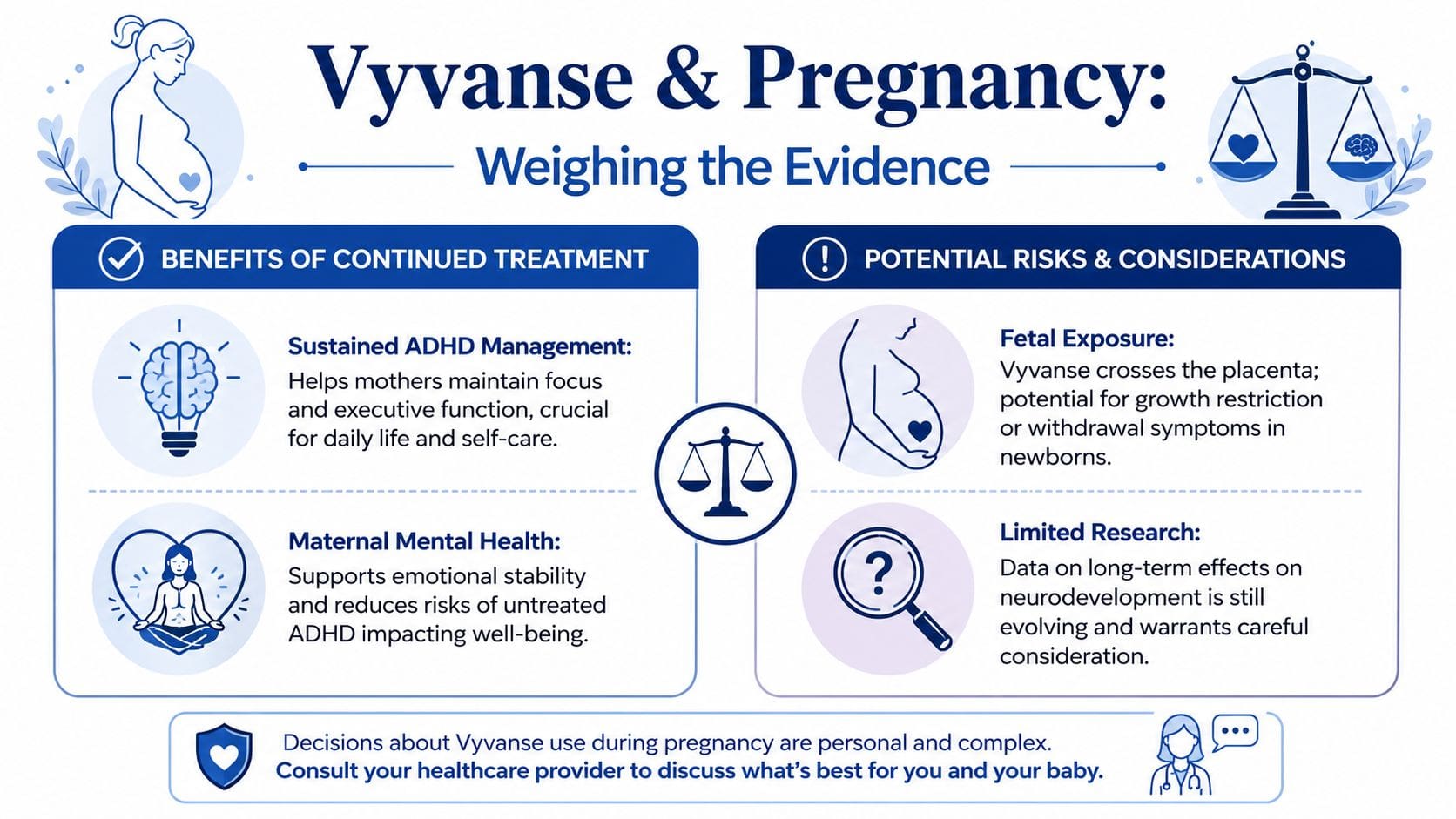
The evidence on Vyvanse during pregnancy is limited, which means clinicians have to make decisions with imperfect information. The FDA labeling for lisdexamfetamine states that available human pregnancy data are not enough to estimate a medication-related risk of major birth defects or miscarriage. The same prescribing information also gives the background rates seen in clinically recognized pregnancies overall, about 2% to 4% for major birth defects and 15% to 20% for miscarriage (FDA Vyvanse prescribing information).
The label also explains why obstetric follow-up matters. Amphetamines can constrict blood vessels, reduce placental blood flow, and stimulate uterine activity. In practical terms, that raises concern about fetal growth, maternal blood pressure, and timing of delivery, especially in patients with other medical or pregnancy-related risk factors.
That does not mean early exposure automatically leads to harm.
It means a careful prescriber looks beyond the question of congenital malformations and also watches for issues that may emerge later in pregnancy, such as appetite suppression, weight changes, hypertension, and fetal growth patterns. For many patients, this is also happening alongside anxiety, sleep disruption, or mood symptoms, which is why broader support around navigating mental health while pregnant can be helpful.
Recent pregnancy data on stimulant medications are more reassuring about major malformations than many patients expect. Reviews of amphetamine-based ADHD medications have not shown a clear signal that therapeutic use causes a large increase in major birth defects. The more realistic areas of concern are obstetric, not just structural. Preterm birth, lower birth weight, and maternal hypertension remain part of the risk discussion, particularly when stimulant effects on appetite, sleep, heart rate, or blood pressure are already showing up clinically.
Shared decision-making is paramount. In practice, I do not treat the question as “safe” versus “unsafe.” I look at symptom severity, prior response to dose changes, obstetric history, and whether the patient is still able to eat regularly, sleep enough, attend prenatal care, and function safely day to day. Some patients do well with a taper. Others deteriorate quickly off medication. Both realities are medically relevant.
Patients who want a fuller review of stimulant and non-stimulant options can compare ADHD medication choices during pregnancy before a follow-up visit.
Patients often benefit from hearing a clinician explain the trade-offs clearly. This video gives a helpful overview before a medication follow-up visit.
Current evidence supports careful, individualized prescribing. The goal is to reduce total risk for both mother and baby, not to make decisions based on fear alone.
Building Your Personalized ADHD Management Plan
The treatment plan usually becomes real in a simple moment. A patient is sitting in my office or on video, newly pregnant, asking whether she should stop Vyvanse today, lower the dose, or try to stay on it because she is already struggling to keep up with work, meals, and appointments. The right answer depends on how ADHD shows up in her actual life, not on a one-size-fits-all rule.
A useful plan starts with two questions at the same time. How much risk comes from the medication, and how much risk comes from poorly controlled ADHD during pregnancy? Both matter. Good care means comparing those risks objectively, then adjusting as pregnancy progresses.
Questions that shape the decision
In practice, I build the plan around a few concrete areas:
How impaired are you without medication?
Losing focus in meetings is different from missing prenatal visits, making driving errors, or falling behind on basic daily tasks.What happened the last time you reduced or stopped a stimulant?
Prior patterns matter. If symptoms became unmanageable within days, that changes the conversation.What side effects are already present?
Reduced appetite, poor sleep, anxiety, high blood pressure, or weight loss can push us toward a different strategy.What does your support system look like right now?
Help with meals, transportation, scheduling, and household tasks can make a lower-dose or non-medication plan more realistic.How flexible is the plan allowed to be?
Some patients do well with one decision for the entire pregnancy. Others need a month-by-month approach based on trimester, symptoms, and obstetric updates.
Options can be compared directly
Patients usually feel less overwhelmed when the choices are laid out side by side.
| Approach | Primary Goal | Key Considerations |
|---|---|---|
| Continue Vyvanse | Preserve daily functioning and reduce severe ADHD impairment | Often paired with the lowest effective dose, blood pressure checks, and closer coordination with obstetric care |
| Reduce dose | Lower medication exposure while keeping partial symptom control | Works best when symptoms remain manageable and nutrition, sleep, and follow-through stay stable |
| Taper off stimulant | Stop stimulant use during pregnancy | More realistic when symptoms are mild, prior tapers went well, and daily support is strong |
| Add non-medication care | Improve function without relying only on medication | Therapy, coaching, reminders, meal planning, and structured routines can reduce day-to-day breakdowns |
| Reassess at set intervals | Keep the plan matched to current needs | Useful when symptoms, trimester-specific concerns, or obstetric factors change over time |
As noted earlier, available evidence has been more reassuring on major malformations than many patients expect, but continued stimulant treatment still calls for thoughtful monitoring and the lowest dose that clearly helps.
What non-medication supports actually help
Non-medication care needs to be specific enough to use on a hard day.
A workable plan may include one shared calendar for prenatal visits and medication reminders, a short written morning routine, prepared snacks placed where they are visible, and therapy that targets follow-through instead of insight alone. Executive function support is most helpful when it reduces missed steps. It is less helpful when it stays abstract.
I also talk with patients about where failure points happen. Some miss meals until late afternoon. Some forget blood pressure checks. Some can do their jobs but cannot manage paperwork, refill requests, or home tasks. Once those patterns are clear, we can build supports around them instead of hoping motivation will carry the load.
Clinical reality: non-medication strategies can meaningfully improve function, but patients with moderate to severe ADHD often still need medication, especially if stopping treatment leads to unsafe driving, missed care, or rapid deterioration in daily functioning.
Patients who need prescription follow-up, dose adjustments, or closer monitoring can use online ADHD medication management for structured check-ins during pregnancy.
Mental health planning should also account for the period after delivery. Patients with ADHD and mood vulnerability often benefit from discussing sleep protection, family support, and effective PPD recovery paths before symptoms escalate.
Postpartum Care and Breastfeeding on Vyvanse
Delivery doesn't end the ADHD treatment question. In many cases, the postpartum period is when symptoms become harder to manage. Sleep loss, feeding schedules, physical recovery, and shifting routines can strain attention, patience, and memory even in people without ADHD.
For a new mother with ADHD, that can mean missed feedings, missed pediatric instructions, poor self-care, or mounting distress. Medication decisions after birth should account for caregiving function, not just pregnancy-era assumptions.
Breastfeeding requires an individualized discussion
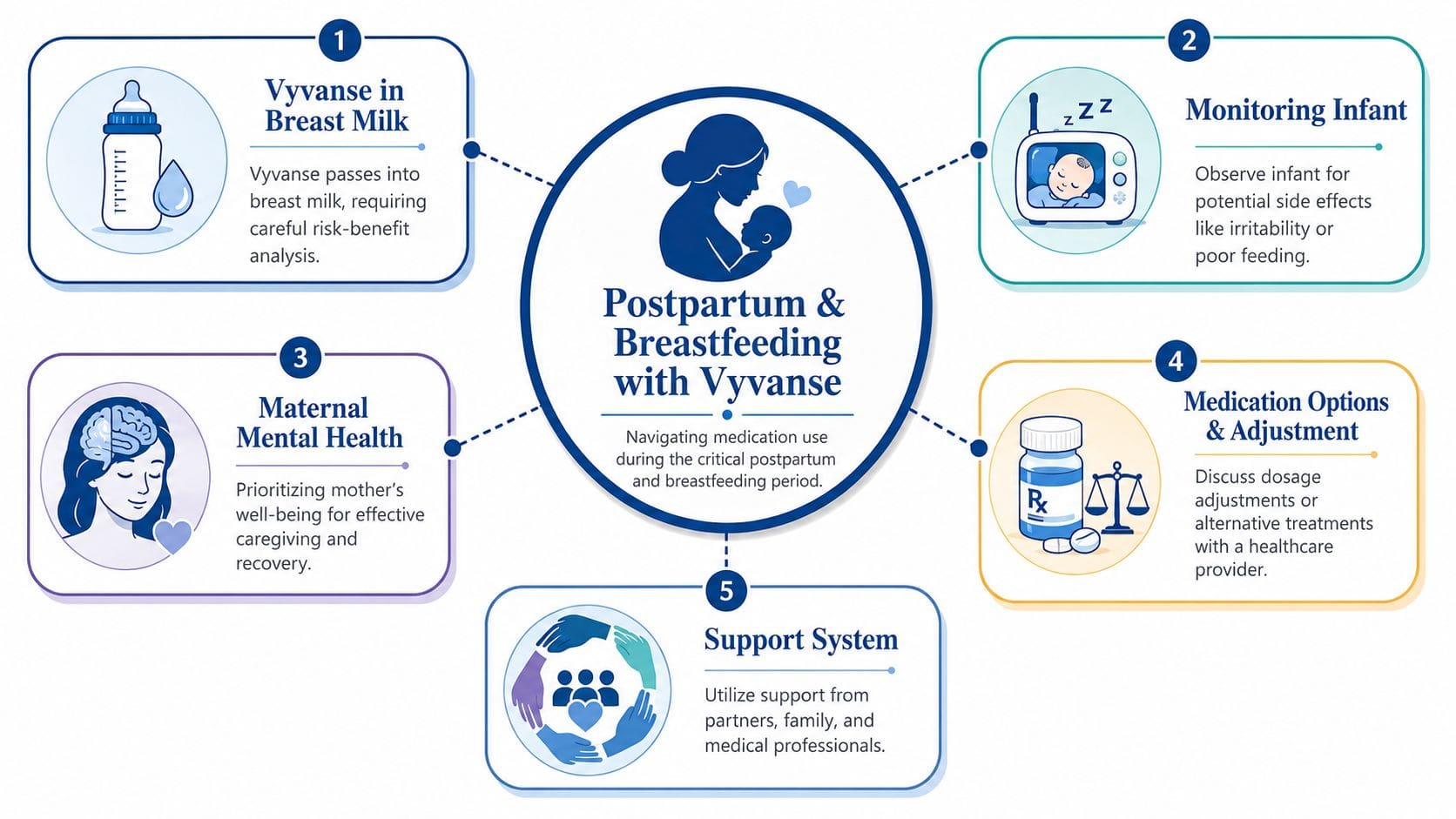
Vyvanse and its active metabolite can pass into breast milk, so breastfeeding while taking it requires an individualized risk-benefit review with the prescribing clinician and the baby's pediatric team. The practical questions usually include infant irritability, feeding quality, sleep, and maternal need for symptom control.
Older references have tended to be more cautious about amphetamine-based medications because human data are still thinner than for methylphenidate. At the same time, more recent cohort data are reassuring on longer-term child outcomes, finding no increased risk of developmental disorders, ADHD, autism spectrum disorder, seizure disorders, or growth restriction in children exposed to ADHD medication in utero after adjustment for confounders, while still supporting individualized planning and monitoring for amphetamine-based medications such as Vyvanse (Women's Mental Health review of in utero ADHD medication exposure).
What postpartum monitoring should include
A practical postpartum plan often covers:
- Infant observation: watch for irritability, poor feeding, or sleep disruption if breastfeeding continues with medication exposure
- Maternal follow-up: reassess dose needs once sleep deprivation and caregiving demands become clear
- Mood screening: distinguish ADHD overwhelm from postpartum depression or anxiety
- Family support: assign concrete tasks so the mother isn't carrying every reminder and routine
Patients who are also sorting through mood changes after delivery may find outside reading on effective PPD recovery paths helpful alongside formal psychiatric care.
A healthy postpartum plan protects the baby by supporting the mother's functioning, sleep, nutrition, and mental stability.
For readers who want pregnancy-to-postpartum treatment discussions in one place, this page on ADHD medication for pregnant women can help frame the next conversation with a prescriber.
Get Expert Guidance at Integrative Psychiatry of America
Medication questions in pregnancy usually aren't solved by a search result alone. They need a clinician who can review ADHD severity, prior medication response, blood pressure concerns, eating patterns, sleep, and postpartum planning in one conversation.
For adults in Pennsylvania, safe ADHD treatment during pregnancy in Philadelphia offers a clear starting point for discussing Vyvanse, alternatives, taper strategies, and monitoring plans through telehealth. The practical advantage of this type of visit is that it allows medication review, symptom assessment, and treatment planning without adding more logistical stress during pregnancy.
What to prepare before the visit
Patients usually get more from the appointment when they bring a short list of details:
- Current medication use: dose, timing, and how long Vyvanse has been taken
- Function without treatment: what becomes difficult when the medication is reduced or skipped
- Pregnancy status: gestational timing, obstetric concerns, and blood pressure updates
- Future plans: whether breastfeeding is a priority and what support is available at home
Some patients also need broader postpartum recovery resources. Physical recovery after birth can affect mental health, routine, and medication planning, so practical reading on healing after childbirth may be useful alongside psychiatric and obstetric follow-up.
A careful plan doesn't promise a zero-risk pregnancy. It gives patients something more realistic and more helpful: a structured decision based on evidence, function, and close follow-through.
If Vyvanse during pregnancy has become an urgent question, Integrative Psychiatry of America provides telehealth psychiatric care for adults in Pennsylvania, including ADHD medication review, pregnancy-related treatment planning, and postpartum follow-up. A psychiatric nurse practitioner can help weigh whether to continue, taper, or adjust treatment, while coordinating the decision around real-life functioning and obstetric care.