
If someone in Pennsylvania has been trying to quit opioids alone, the day usually comes when the barrier isn't motivation, it's logistics. The thought of finding a clinic, arranging transportation, and sitting in a waiting room can make treatment feel out of reach, especially when withdrawal is already making every hour harder. Suboxone treatment online gives that person a way to start evidence-based care from home, with a licensed clinician, a real treatment plan, and a path that doesn't depend on being near a specialty clinic.
Online care matters because the need is large and the treatment gap is real. CDC data estimate that about 5.6 million people age 12 and older in the United States had opioid use disorder in 2021, while only about 20% to 40% of the more than 2 million people with OUD receive medication treatment, and in 2020 nearly 28 million Americans lived at least 10 miles from the nearest buprenorphine provider (CDC data on opioid use disorder and access barriers). Those numbers help explain why telehealth has become a practical route into care, not a backup plan.
Table of Contents
- What Is Online Suboxone Treatment and How Does It Work
- Pennsylvania Telehealth Rules and the 2025 Federal Update
- Who Qualifies for Online Suboxone Treatment in Pennsylvania
- What Happens During Your First Online Suboxone Visit
- Integrative Treatment Combining Suboxone with Counseling and Lifestyle Support
- Insurance, Cost, and Payment Options for Online Suboxone in PA
- Getting Started with Online Suboxone Treatment in Pennsylvania FAQ
- Is telehealth Suboxone as effective as in-person care?
- Do you have to be in withdrawal before starting?
- What happens after the 6-month telemedicine supply period?
- What if broadband is unreliable where someone lives?
- Can Suboxone be combined with psychiatric medication for anxiety or depression?
- How should someone prepare for the first virtual visit?
What Is Online Suboxone Treatment and How Does It Work
A lot of patients first hear about Suboxone after a hard stretch of failed quits, sleep loss, or the fear that one more relapse could turn dangerous. In plain terms, Suboxone is a medication for opioid use disorder that combines buprenorphine and naloxone, and it is used to stabilize recovery rather than create a new dependency cycle. Buprenorphine helps reduce withdrawal and cravings, while naloxone mainly acts as an abuse-deterrent when the medication is taken the way it is prescribed, under the tongue (FDA Suboxone labeling).
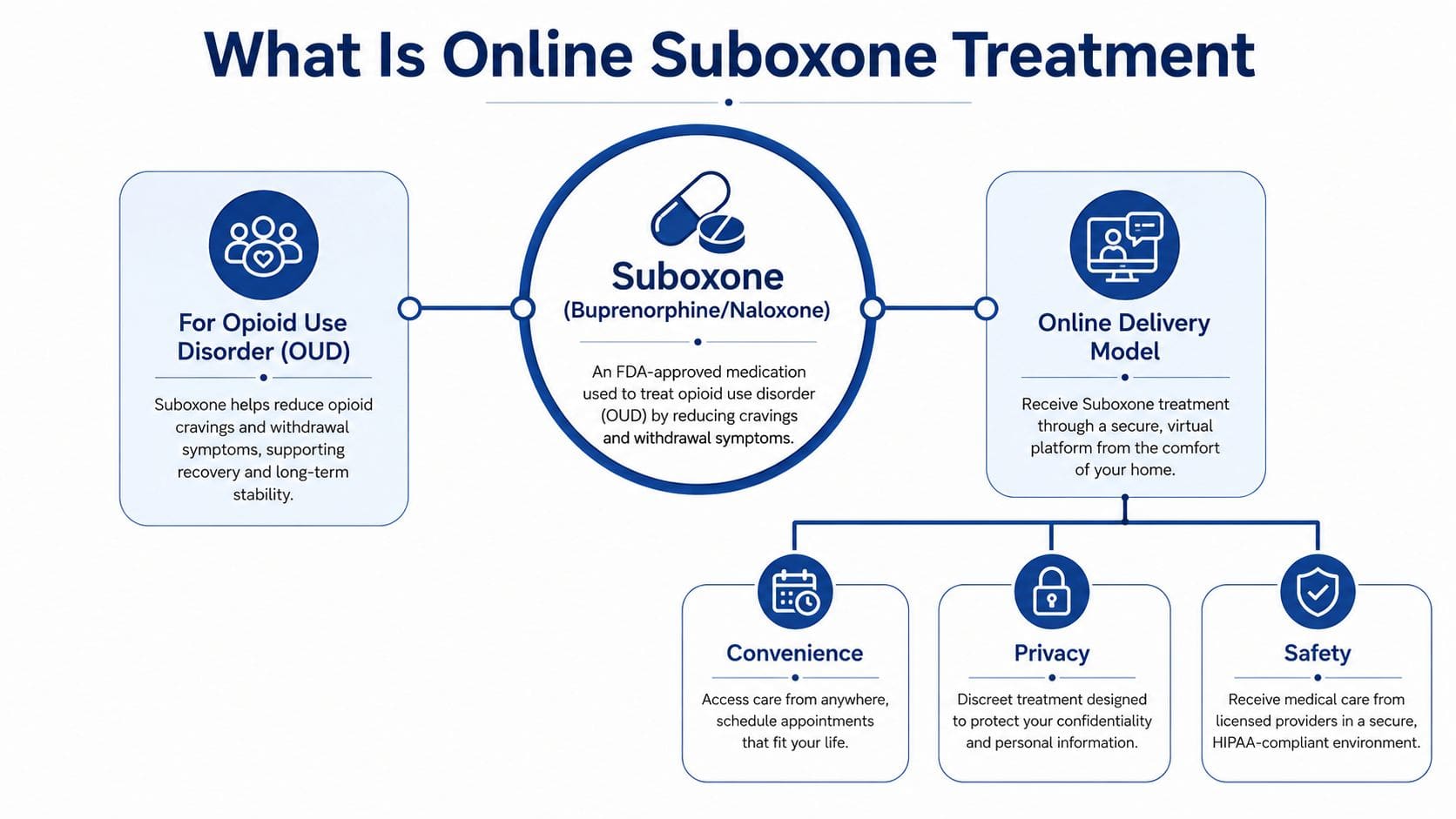
Suboxone works like a medical stabilizer. The medication lowers the intensity of cravings and withdrawal so the person can participate in recovery work, whether that means counseling, learning trigger management, or rebuilding daily routines. Online treatment works best when it is tied to a broader plan instead of a one-time prescription refill.
The online model became mainstream because access used to be the biggest obstacle. Before 2020, fewer than 1% of buprenorphine prescribers used telehealth to start treatment, but by 2022 that figure had risen to 55%, showing how quickly remote initiation scaled in the U.S. (telehealth Suboxone access milestone). For Pennsylvania patients in cities like Philadelphia, Pittsburgh, Harrisburg, Erie, Scranton, Allentown, Lancaster, and Reading, that means treatment no longer has to wait for a local opening.
Practical rule: Online Suboxone works best when the medication, the follow-up, and the behavior change plan all move together. Medication calms the withdrawal pressure. Therapy and daily structure help keep recovery intact.
For readers comparing approaches, MAT options from Zoe Behavioral Health is a useful overview of medication-assisted treatment as a category. Within that broader framework, a telehealth practice like online addiction recovery support can make care easier to access without lowering the clinical standard.
Pennsylvania Telehealth Rules and the 2025 Federal Update
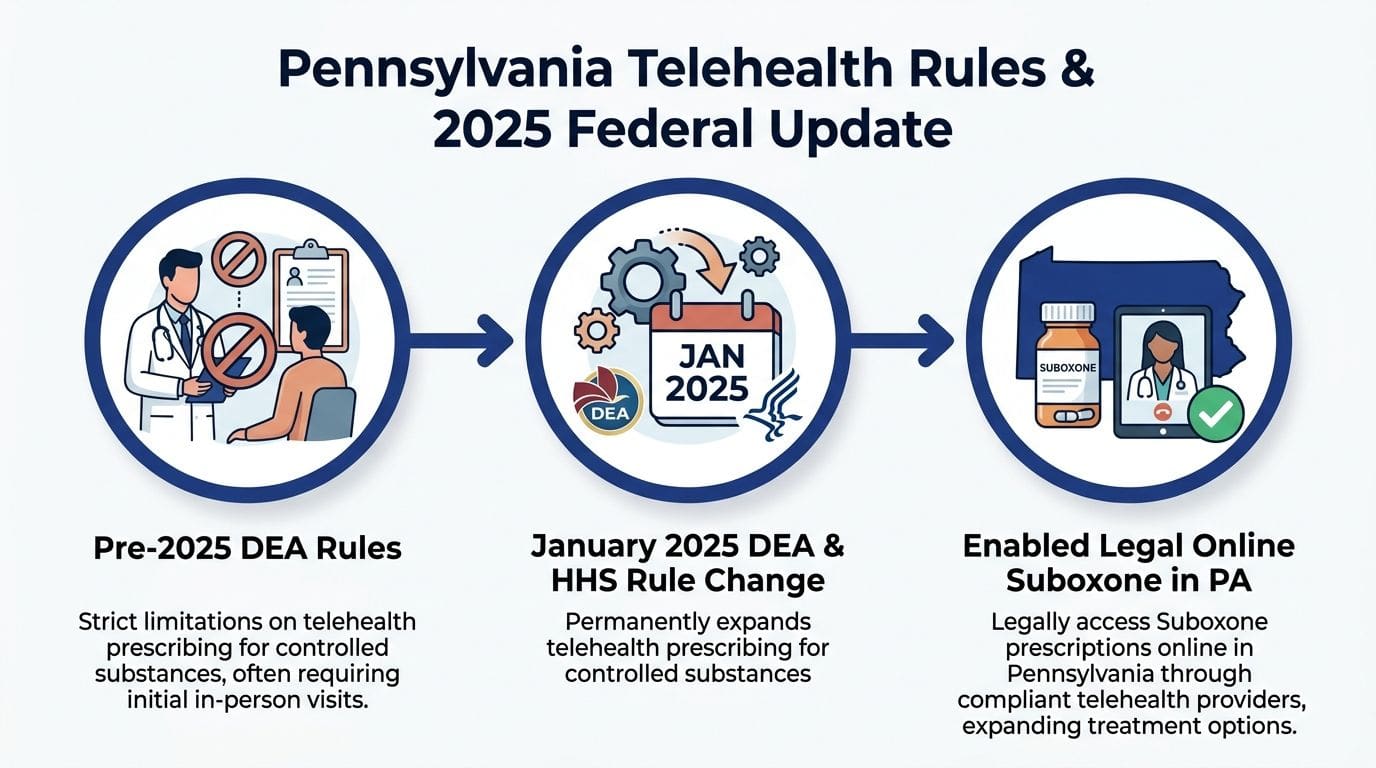
A patient can have the right medication and still run into legal trouble if the telehealth visit is not handled correctly. In January 2025, the DEA and HHS finalized a buprenorphine telemedicine rule that allows patients to start treatment through telephone consultation or audio-visual telehealth and receive up to a total of a 6-month supply before an in-person visit or another DEA-approved pathway is required (SAMHSA buprenorphine telemedicine prescribing guidance). For Pennsylvania patients, that matters because care often has to fit work hours, childcare, and transportation limits without cutting corners on compliance.
What the prescriber must do
A lawful telemedicine visit is not a questionnaire-based shortcut. Current prescribing rules require a real-time interactive evaluation, and the prescriber must follow state law where the patient is located, including holding a valid Pennsylvania medical license and DEA registration (telehealth prescribing regulations summary). Audio-only visits can be used when video is not feasible, but that limitation has to be documented.
For patients, that means the visit should feel like actual medical care, not a quick refill portal. A telehealth Suboxone clinician should be able to assess withdrawal symptoms, review medication risks, and decide whether virtual care is appropriate for that individual. That is the difference between licensed treatment and an unsafe online prescribing service.
Why this is workable across Pennsylvania
Patients in Philadelphia, Pittsburgh, Harrisburg, Erie, Scranton, Allentown, Lancaster, and Reading can receive legitimate virtual care when the prescriber is properly licensed and the visit format matches the rule. A Pennsylvania resident should not have to guess whether the care is legal. The provider should be able to explain the visit format, the prescription pathway, and what happens if an in-person step becomes necessary.
The current framework also fits what many patients need. Online treatment can begin with a live evaluation, continue through follow-up, and still stay inside a supervised medical structure. For someone who has delayed care because the old rules were confusing, that clarity can be the difference between starting treatment and putting it off again.
The visit mechanics are often the same as other telehealth services, and a virtual medication management visit can help patients understand how a licensed prescriber documents, monitors, and adjusts care over time. That same structure is part of the broader telehealth workflow discussed earlier.
Who Qualifies for Online Suboxone Treatment in Pennsylvania
A patient who has been using opioids may qualify for online Suboxone treatment, but the decision starts with a clinical screen, not a quick prescription. Suboxone is approved for moderate to severe opioid use disorder, and the prescriber usually looks for patterns such as regular opioid use, withdrawal when stopping, repeated failed attempts to quit, or relapse after a brief period of abstinence. A careful evaluation also reviews current medications, other medical problems, and the risk of precipitated withdrawal before a treatment plan is set.
The clinical screening is broader than opioid use alone
A good telehealth evaluation does more than ask whether you want help. It also looks at mental health symptoms, because anxiety, depression, ADHD, PTSD, and trauma often occur alongside opioid use and shape what treatment should include. If a person is dealing with panic, insomnia, hypervigilance, or severe distractibility, those concerns can affect follow-through just as much as cravings do.
Important distinction: A patient can qualify for Suboxone and still need separate treatment for anxiety, depression, ADHD, or trauma. Treating only the opioid use while ignoring the rest usually leaves the recovery plan incomplete.
This is also where a fuller care model matters. At Suboxone doctors in Pennsylvania, the clinical question is not only whether a patient can start medication online, but whether the rest of the treatment plan matches what that patient is facing.
Dosing is individualized, not fixed
As described in the FDA labeling cited earlier, buprenorphine/naloxone is typically adjusted within a usual range of 4/1 mg to 24/6 mg per day. That matters online because telehealth prescribers generally titrate to symptom control and tolerability, not to a one-size-fits-all dose. A dose that is too low can leave a patient in withdrawal or craving, while a dose that is started too aggressively can make induction harder to manage.
That issue matters even more now, because many patients present with higher opioid tolerance and a real fear of withdrawal. The goal is not to guess. It is to find the lowest effective dose that quiets withdrawal, reduces cravings, and supports stability.
Who may need a different plan
Some patients need a higher level of monitoring, a different medication strategy, or in-person care first. That is more common when the history includes unstable medical illness, severe sedation risk, or a pattern of unsafe medication combinations. A careful telehealth program should say so plainly instead of trying to fit every patient into the same template.
For Pennsylvania patients comparing clinics, Suboxone doctors in Pennsylvania can help clarify whether a virtual evaluation makes sense before the first appointment.
What Happens During Your First Online Suboxone Visit
A first virtual Suboxone visit should feel organized, private, and clinically grounded. A patient usually starts with a medical and substance-use history, then moves into current symptoms, treatment goals, and safety screening. If someone has been trying to stop opioids on their own, I want to know what happened during past attempts, what withdrawal looked like, and what medications or substances were involved. Those details help determine whether telehealth induction is a good fit and whether a different level of care is safer.
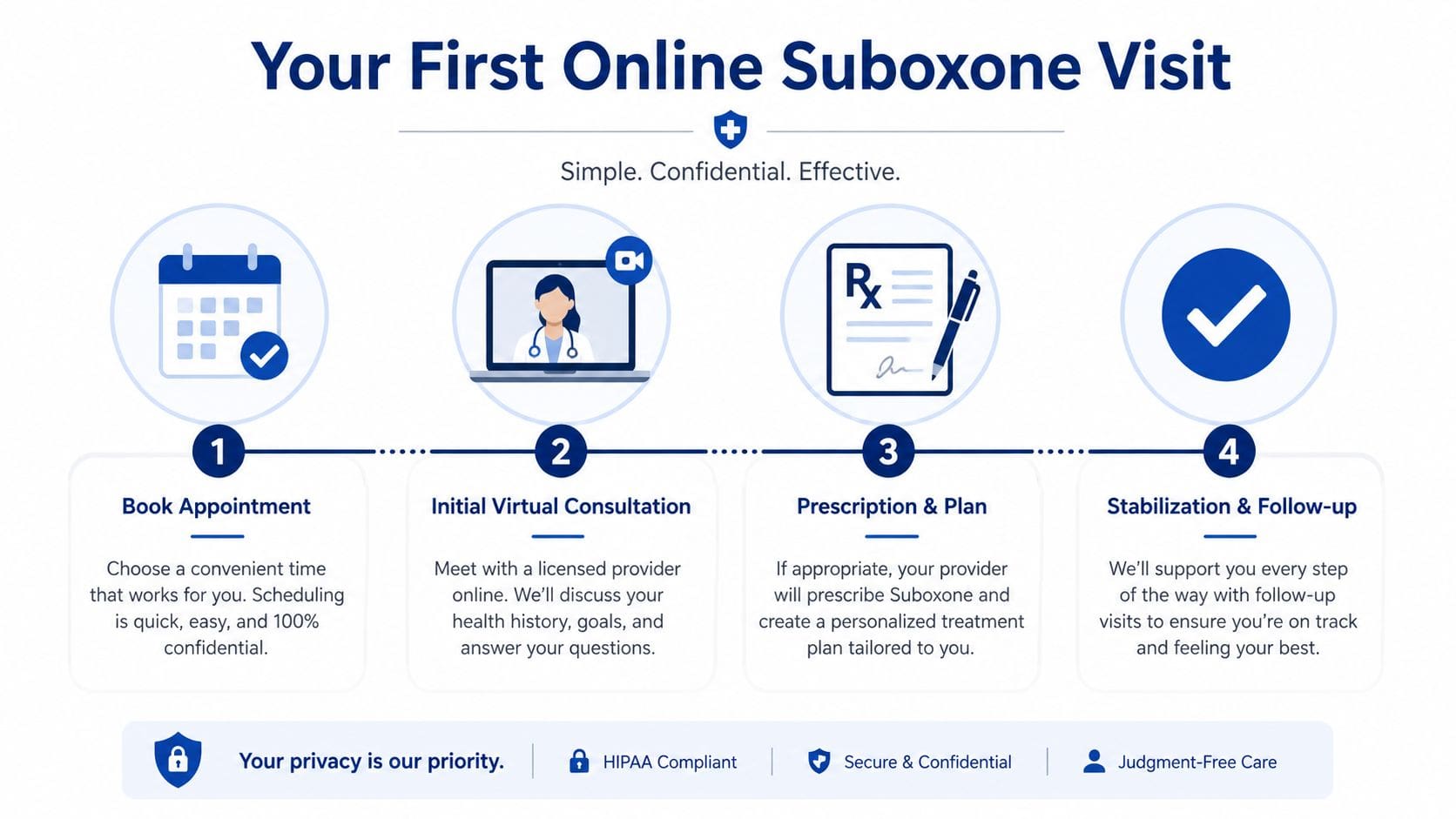
Step one, the consultation
The first visit is where the clinician decides whether online induction is appropriate, whether another schedule makes more sense, and what needs to happen before treatment starts. That conversation may include current opioid use, recent abstinence, prior overdose risk, and whether the patient is already in early withdrawal. A secure, private setting matters because patients need room to speak openly without interruption or pressure.
The clinician is also listening for practical barriers. In Pennsylvania, that can include work schedules, transportation problems, pharmacy access, or unstable housing, all of which affect whether a virtual plan will hold together after the visit ends.
Step two, timing the induction
Induction is the safety step that requires the most care. Telehealth prescribers generally wait until the patient is in early withdrawal, often after about 12 to 24 hours abstinent, because starting buprenorphine too soon can displace full agonist opioids and trigger precipitated withdrawal (EMA Suboxone product information). That is one of the main reasons patients should not start on their own without clinical direction.
A careful clinician times the first dose to the patient's withdrawal state, not to the clock alone. Starting too early can turn a difficult day into a worse one, and starting at the right time gives the medication a better chance to settle symptoms quickly and predictably.
Step three, prescription and early follow-up
Once the medication starts, the prescriber watches for relief, side effects, and changes in craving. The goal is steady symptom control, not sedation and not guesswork. Refills, check-ins, and portal messaging keep the plan moving between visits, especially while the dose is being adjusted.
This early follow-up also helps the clinician see whether the patient can take the medication as directed, whether withdrawal is improving, and whether additional support is needed. For some patients, that means a small dose change. For others, it means slowing the pace and addressing sleep, anxiety, or ongoing exposure to people and places tied to use.
Step four, stabilization
After induction, the care plan shifts toward maintenance. Online Suboxone treatment works best when it includes structured follow-up, counseling, behavioral therapy, and medical monitoring, because the medication is not a stand-alone cure, as noted in the EMA Suboxone product information. Patients who do well usually have clear routines for appointments, medication timing, and communication when symptoms change.
At this stage, a secure portal, a quiet room, and reliable pharmacy access still matter. A practice that offers organized virtual medication care, including online medication management, can make those logistics easier to manage. For patients who want another piece of the recovery plan, nutrition for addiction recovery is a practical place to start thinking about food as part of stabilization.
Integrative Treatment Combining Suboxone with Counseling and Lifestyle Support
Medication handles one part of recovery, not the whole thing. Suboxone can reduce withdrawal and cravings, but the emotional, behavioral, and environmental drivers of opioid use still need attention. That's why a whole-person model matters, especially for patients who are also managing anxiety, depression, trauma, or chaotic routines.
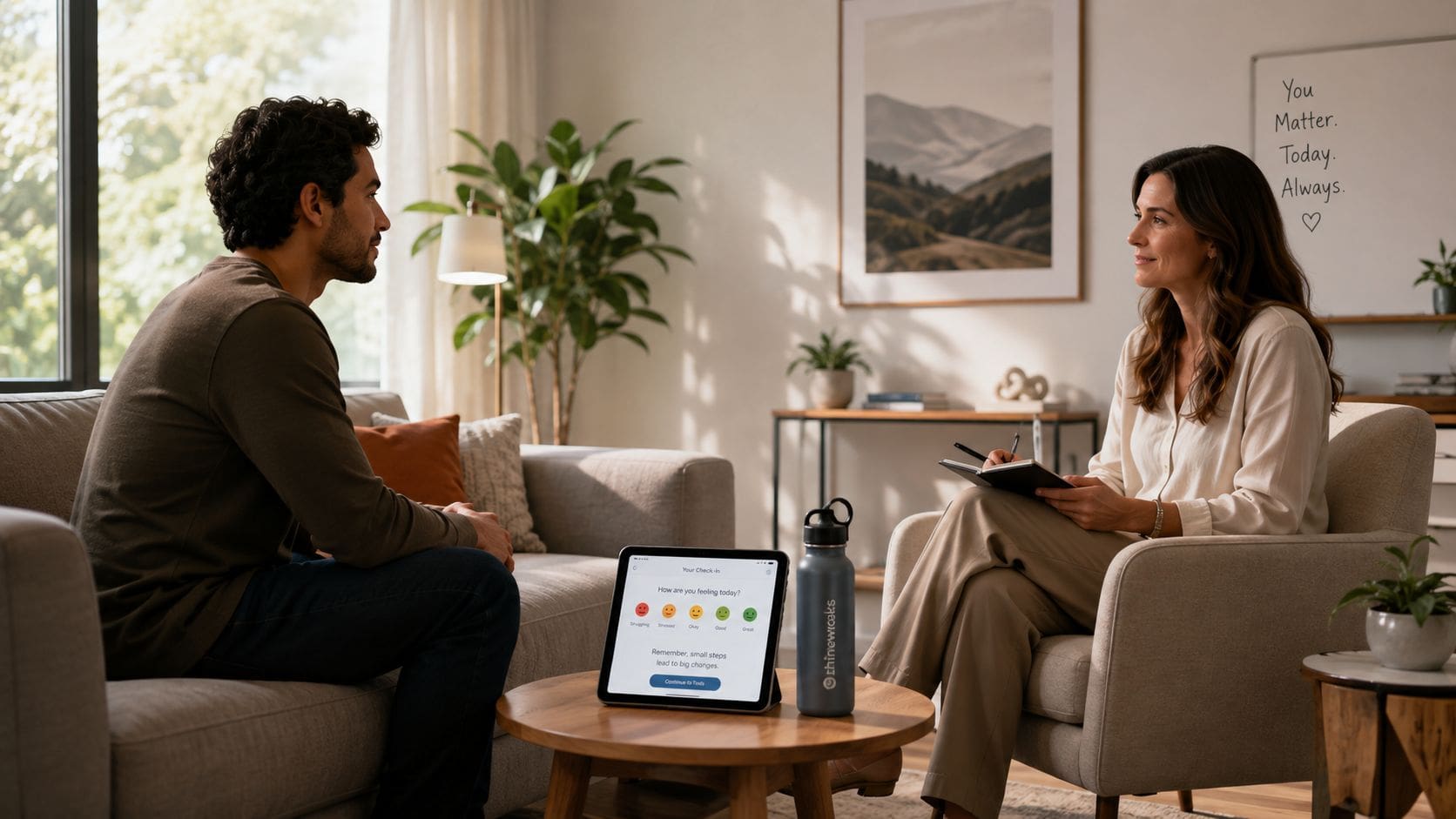
What medication does, and what it doesn't do
Suboxone helps stabilize the physical side of recovery. It quiets the body's withdrawal signal, lowers craving intensity, and gives the patient enough clarity to participate in treatment. It doesn't rebuild sleep habits, process trauma, or teach coping skills for stress spikes.
That's where counseling and lifestyle work come in. Behavioral therapy can help patients identify triggers, develop refusal skills, and replace the old pattern of using opioids to manage distress. Exercise, regular meals, and sleep consistency can also make recovery feel less fragile.
For patients who want practical tools, nutrition for addiction recovery is one place to start thinking about food as part of stabilization, not an afterthought.
Tools that support daily structure
A recovery plan works better when it becomes visible in the day itself. Simple tools can help patients keep momentum between visits.
- Daily Agenda Planner: useful for mapping medication timing, appointments, and one achievable daily priority.
- Feeling Journal: helps track cravings, mood shifts, and trigger patterns that might otherwise get missed.
- Exercise Routine Generator: supports a realistic movement plan that fits energy levels and time constraints.
- 5-4-3-2-1 Grounding Tool: can be used during anxiety spikes, craving waves, or the first signs of emotional overload.
Integrative Psychiatry of America uses this kind of whole-person framework in its virtual care model, combining medication management with counseling, exercise counseling, nutritional education, mindfulness, and meditation. That mix doesn't replace Suboxone, it makes Suboxone more likely to support real-life recovery instead of just symptom suppression.
Insurance, Cost, and Payment Options for Online Suboxone in PA
Cost is often the reason patients pause before scheduling, even when they know they need help. In Pennsylvania, many insurance plans cover telehealth Suboxone treatment, but the details vary by plan, network, and pharmacy benefits, so verification matters before the first appointment. The biggest billing surprises usually come from copays, deductible status, or prescription coverage rather than the visit itself.
What patients should check first
A practical benefits review should cover the psychiatric visit, medication management follow-up, and the medication at the pharmacy. Since Suboxone is dispensed through a pharmacy, the prescription benefit matters just as much as the telehealth benefit. Retail and mail-order pricing can differ, and the patient should know which pharmacy is in network before the prescription is sent.
Some patients also want a direct cash option if they don't have insurance or if they have a high deductible. That can make treatment easier to start quickly, especially when waiting for benefits confirmation would slow down care. For Pennsylvania residents comparing options, insurance and fees is the kind of page that helps clarify that process up front.
Why coverage is broader than it used to be
The January 2025 telemedicine rule widened the pool of clinicians who can prescribe buprenorphine, which can make it easier to find an insurance-covered provider within a network. That matters because access isn't only about having insurance, it's about being able to use it with an available clinician. The elimination of the old waiver barrier also means more patients can find legitimate care without a long referral chain.
Financial takeaway: Verify the visit cost, the medication copay, and the pharmacy network before starting. That simple step prevents avoidable interruptions once treatment is underway.
For patients who are budgeting carefully, the goal is not the cheapest possible visit. It's reliable care that includes follow-up, prescription continuity, and a clinician who can respond when the plan needs adjustment. That's what keeps a low-cost start from turning into a treatment gap.
Getting Started with Online Suboxone Treatment in Pennsylvania FAQ
Is telehealth Suboxone as effective as in-person care?
For many patients, yes, especially when treatment includes follow-up and behavioral support. Online care works best when the prescriber watches symptoms closely, adjusts the dose when needed, and keeps the patient connected to a broader recovery plan.
Do you have to be in withdrawal before starting?
Yes. Starting buprenorphine too early can trigger precipitated withdrawal. Patients are commonly told to wait until early withdrawal has begun, often after about 12 to 24 hours abstinent, but the exact timing should come from the prescriber, as noted in the EMA product information cited earlier.
What happens after the 6-month telemedicine supply period?
The current rule allows up to a 6-month supply before an in-person visit or another DEA-approved pathway is required, as discussed in the telemedicine guidance in Section 2. After that, ongoing care may continue through an allowed in-person or approved telehealth process, depending on the clinician's setup and the patient's situation.
What if broadband is unreliable where someone lives?
Phone-only care can matter when video is not feasible, and access barriers are especially real in low-broadband areas. A PubMed study found 23.9% of the U.S. population had no buprenorphine-waivered provider with capacity within 30 miles, and in counties with low broadband penetration, 78.9% of residents lacked such access, rising to 82.3% in rural low-broadband counties (PubMed access study on buprenorphine and broadband). That is why patients should ask whether audio-only backup is available.
Can Suboxone be combined with psychiatric medication for anxiety or depression?
Often, yes, but only with careful prescribing. The clinician should review every medication, because opioid recovery, anxiety treatment, and depression treatment can overlap in ways that need monitoring.
How should someone prepare for the first virtual visit?
Have a private space, a reliable phone or video device if possible, a list of current medications, and an honest timeline of recent opioid use. Patients should also be ready to discuss past withdrawal, prior treatment attempts, and the goals they want to reach beyond stopping opioids.
For Pennsylvania adults in Philadelphia, Pittsburgh, Harrisburg, and across the state, virtual care can provide a straightforward way to get evaluated, start medication, and stay connected to treatment without extra travel. The right clinic should make the process clear, medically sound, and respectful from the first call.
If you are ready to start Suboxone treatment online, Integrative Psychiatry of America offers virtual evaluations, medication management, and whole-person support for patients across Pennsylvania. Schedule a visit, verify your insurance, and use the free tools on the site if you want help organizing symptoms, cravings, or daily routines before your first appointment.