
Early recovery often looks nothing like the clean, hopeful version people expect. A person may be sleeping at odd hours, feeling irritable by midmorning, craving sugar at night, and wondering why sobriety still feels physically miserable. In Pennsylvania, that situation is common whether someone is in Philadelphia returning to work, in Pittsburgh managing family stress, or in a smaller community trying to recover with limited local support.
Food isn't a side issue in that phase. It affects energy, concentration, mood stability, and the brain chemistry that helps a person tolerate discomfort without reaching for a substance. For many adults, especially those also dealing with anxiety, depression, PTSD, or ADHD, nutrition for addiction recovery becomes one of the most practical ways to support mental healing at home.
That doesn't mean recovery needs a rigid diet culture approach. It means using meals, snacks, hydration, and targeted support to help the brain and body rebuild. For people exploring virtual treatment, online addiction treatment for recovery can make it easier to get consistent care while rebuilding daily routines safely and privately.
Table of Contents
- Your Recovery Journey Begins with You
- How Substance Use Affects Brain and Body Nutrition
- Essential Nutrients for Healing and Recovery
- Building Your Pro-Recovery Meal Plan
- Supplements and Medication Safety Considerations
- Integrating Nutrition into Your Telepsychiatry Care
- Frequently Asked Questions About Diet in Recovery
Your Recovery Journey Begins with You
The first weeks of recovery can feel confusing. A person may stop using substances and expect immediate mental clarity, but instead wake up exhausted, emotionally raw, and hungry in ways that seem hard to control. That isn't a sign of failure. It's often a sign that the brain and body are trying to recalibrate after a long period of strain.
Many adults in recovery also carry anxiety, depression, trauma symptoms, or attention problems into that process. When mood swings and cravings hit at the same time, eating can become chaotic. Some people skip meals all day and binge at night. Others rely on energy drinks, candy, or convenience foods because they feel fast and familiar.
Recovery works better when food is treated as support, not punishment.
Nutrition for addiction recovery helps create steadier ground. A simple breakfast, regular protein, and enough fluids won't solve every symptom, but they can lower some of the noise in the nervous system. That makes it easier to engage in counseling, follow medication plans, sleep more predictably, and get through hard moments without reacting on impulse.
In psychiatric care, food choices matter because physical stability and emotional stability are connected. When a person eats in a way that supports blood sugar, hydration, and brain repair, the work of recovery becomes more manageable. That matters for people across Pennsylvania who want treatment that fits real life, including virtual psychiatric care that can be accessed from Harrisburg, Scranton, Erie, Lancaster, Reading, Allentown, and beyond.
How Substance Use Affects Brain and Body Nutrition
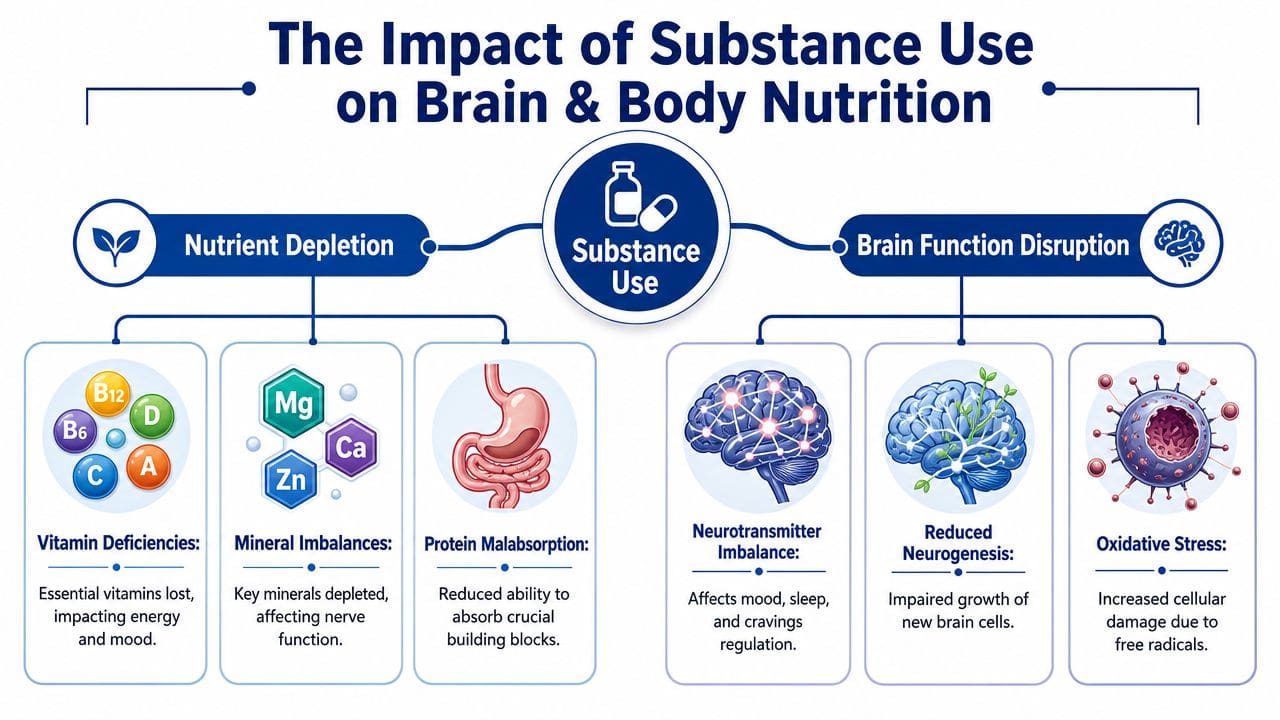
Substance use doesn't only affect behavior. It changes appetite, digestion, absorption, sleep, and the brain's chemical signaling. Over time, that can leave a person undernourished even when they're eating enough calories.
Why cravings and low mood can feel so physical
A useful way to think about the brain is as a communication network. Neurotransmitters such as serotonin and dopamine act like messengers. They help regulate motivation, reward, mood, focus, and the ability to tolerate stress. Chronic substance use disrupts that network and also strips away some of the nutritional raw materials the body needs to make those messengers.
During active addiction, vitamin D, B vitamins, iron, and amino acids are often poorly absorbed or consumed in limited amounts, while medications for opioid use disorder can further deplete magnesium, which is why meals that include all five food groups are recommended to help replenish deficiencies, according to Utah State University Extension's review of diet, nutrition, and substance use disorder. The same pattern shows up clinically as fatigue, low mood, shakiness, irritability, and poor concentration.
Some patients describe this as feeling "off" all day without knowing why. Food often plays a bigger role than they realize. Ultra-processed eating patterns can make that instability worse, especially when inflammation and blood sugar swings are already part of the picture. This is one reason clinicians increasingly discuss ultra-processed foods and neural inflammation when building a mental health recovery plan.
Repair requires raw materials
Recovery is a lot like rebuilding a house after a storm. Motivation alone isn't enough. The body needs materials to repair what has been worn down. Nutrients help restore neurotransmitter production, support nerve signaling, and improve the brain's ability to adapt.
Diets enriched with omega-3 fatty acids, vitamins, and minerals have been clinically demonstrated to yield a 20% improvement in cognitive test performance compared to standard care, directly addressing neurocognitive deficits caused by chronic substance abuse, as noted by Discovery Institute for Addictive Disorders' review of diet and addiction recovery.
Practical rule: If eating is irregular, the first goal isn't perfection. It's rebuilding consistency so the brain has dependable fuel.
That work also depends on the quality of clinical environments that study nutrition and recovery. For readers interested in the infrastructure behind this kind of science, resources on equipping nutrition research labs help show how specialized spaces support nutrition assessment, testing, and treatment development.
Essential Nutrients for Healing and Recovery
By the time many patients meet with me over telepsychiatry in Pennsylvania, they can describe the pattern clearly. Breakfast gets skipped, caffeine carries the morning, cravings hit hard in the afternoon, and mood drops by evening. That pattern is not a character flaw. It is often a brain and body trying to function without steady fuel.
A recovery meal plan works best when it is practical enough to repeat at home. The goal is to give the brain the raw materials it uses to make neurotransmitters, steady blood sugar, and support nerve signaling. In real life, that usually means regular protein, adequate fats, consistent carbohydrates, and enough micronutrients to correct common gaps.
The nutrients that matter most
Protein and amino acids deserve early attention because the brain builds many neurotransmitters from amino acids. In clinical practice, low protein intake often shows up as fatigue, irritability, poor concentration, and stronger late-day cravings. Foods like eggs, Greek yogurt, chicken, turkey, fish, tofu, beans, and lentils are usually easier to use consistently than specialty shakes. For patients managing recovery at home, I often recommend starting with one dependable protein choice at each meal before trying to overhaul the entire diet.
Healthy fats support brain cell membranes and help the nervous system function more steadily. The Gateway Foundation's overview of nutrition for substance abuse recovery summarizes why fats from foods such as salmon, sardines, trout, olive oil, nuts, seeds, and avocado are worth including regularly. This does not require expensive groceries. Canned salmon, peanut butter, walnuts, and olive oil on vegetables are realistic options for many households.
Complex carbohydrates help more than people expect. Oatmeal, brown rice, quinoa, potatoes, fruit, beans, and whole grain bread provide a steadier energy supply than sugar-heavy snacks or long stretches without food. In early recovery, this can reduce the shaky, irritable crash that patients sometimes mistake for worsening anxiety.
B vitamins, magnesium, zinc, and iron also matter because they support energy production, nerve function, oxygen delivery, and tissue repair. Substance use, poor intake, gastrointestinal problems, and inconsistent eating can all lower these stores. If a patient reports exhaustion, brain fog, restless sleep, or weakness, nutrition is part of the assessment, not an afterthought.
Digestive symptoms can complicate all of this. Constipation, nausea, bloating, or diarrhea can make healthy eating harder to tolerate, especially in the first phase of recovery. For patients asking about gut support, Healtsy's guide on probiotics for well-being offers a practical overview, but food choices and supplements still need to fit the person's symptoms, history, and medications.
People usually notice useful patterns once they track food and symptoms for even a few days. A missed lunch may line up with a 4 p.m. craving surge. A balanced dinner may line up with better sleep. This overview of how nutrition affects mental health can help patients connect those day-to-day observations with what is happening in the brain.
Key Nutrients for Addiction Recovery
| Nutrient | Role in Recovery | Food Sources |
|---|---|---|
| Protein and amino acids | Supports neurotransmitter production, muscle repair, and satiety | Eggs, Greek yogurt, chicken, turkey, fish, tofu, beans, lentils |
| B vitamins | Helps with energy metabolism and nervous system function | Whole grains, fortified cereals, legumes, leafy greens, dairy |
| Omega-3 fats | Supports brain health and mood regulation | Salmon, sardines, trout, walnuts, chia seeds |
| Magnesium | Helps nerve and muscle function and may support a calmer system | Pumpkin seeds, nuts, beans, spinach, whole grains |
| Zinc | Supports immune and cellular repair processes | Beef, poultry, shellfish, beans, nuts |
| Iron | Helps oxygen delivery and energy | Lean meats, beans, spinach, fortified grains |
| Complex carbohydrates | Provides steadier energy and supports blood sugar balance | Oatmeal, brown rice, quinoa, sweet potatoes, whole grain bread |
A few low-cost staples work especially well across Pennsylvania households, particularly for patients building meals between appointments and managing recovery from home.
- Canned fish: Salmon, tuna, or sardines keep well and can turn into a fast lunch.
- Beans and lentils: They stretch grocery budgets and add both protein and fiber.
- Eggs: They work for breakfast, lunch, or a snack.
- Frozen vegetables and fruit: They cut waste and make balanced meals easier.
- Oats and brown rice: They are reliable bases for simple, filling meals.
A good recovery plate needs to be realistic enough to repeat on a tired day.
Building Your Pro-Recovery Meal Plan
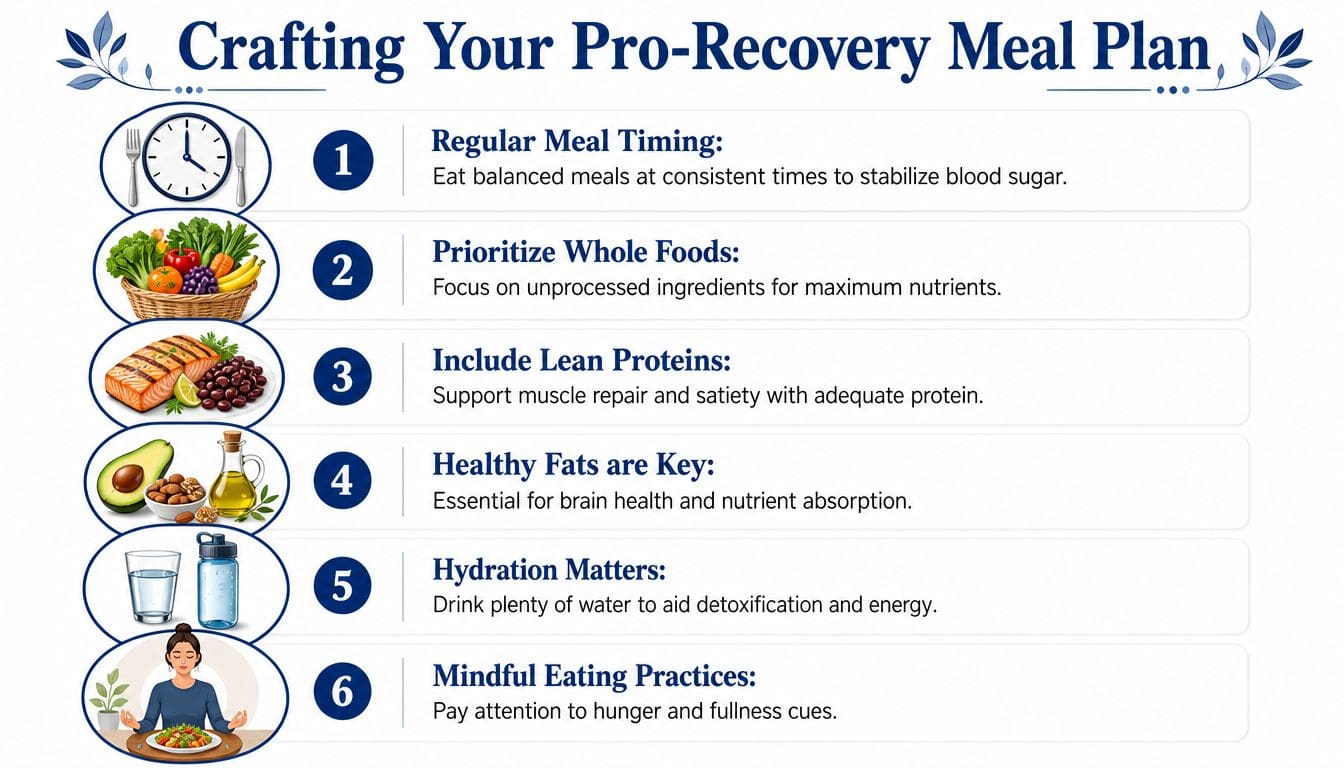
The most effective meal plans in recovery are usually simple. They reduce long gaps without food, make protein easier to hit, and lower the chance of impulsive eating late at night.
A simple structure that works
In early recovery, especially the acute detox stage, protein should be treated as a foundation. Individuals in early addiction recovery, typically 30 to 90 days, should prioritize protein and aim for at least 60 to 90 grams daily spread across three meals and two snacks to support digestive recovery and help the body reacclimate to nutrient-dense food, according to ISSUP's guidance on using nutrition to promote addiction recovery.
That structure works because it gives the body predictable fuel. It also reduces the crash that often follows a day of coffee, soda, and missed meals.
A practical daily rhythm looks like this:
- Eat within a reasonable window after waking: Even a small meal is better than waiting until hunger becomes overwhelming.
- Build meals around protein: Eggs, yogurt, beans, chicken, fish, or tofu should appear regularly.
- Add complex carbohydrates: Oats, fruit, brown rice, potatoes, or whole grain bread support steadier energy.
- Include healthy fat: Nuts, avocado, olive oil, or fatty fish improve satiety and brain support.
- Use planned snacks: A snack can prevent a late-day crash that turns into a binge.
- Drink water regularly: Dehydration can feel like anxiety, fatigue, or irritability.
For readers who like tracking meals more closely, tools that scan recipes for nutrition can make home cooking easier to understand without manually calculating every ingredient.
This short video gives a useful overview of practical nutrition habits during recovery.
A sample day at home
This kind of meal plan is flexible enough for a workday in Harrisburg, a class schedule in Philadelphia, or a quiet day at home in Erie.
- Breakfast: Oatmeal made with milk, topped with peanut butter and banana, plus eggs on the side
- Morning snack: Greek yogurt with berries
- Lunch: Turkey sandwich on whole grain bread, baby carrots, apple
- Afternoon snack: Trail mix and water
- Dinner: Baked salmon or beans, brown rice, roasted vegetables, avocado
- Evening option if needed: Whole grain toast with nut butter or cottage cheese with fruit
This isn't about eating perfectly. It's about not letting the brain get stranded without fuel.
Many cravings improve when the body stops cycling between restriction and sugar crashes.
People who struggle with routine often do better when meals are scheduled like appointments. A planning tool such as a Daily Agenda Planner can help anchor meal timing alongside therapy, work, and sleep goals.
Supplements and Medication Safety Considerations
In telepsychiatry, supplement questions come up often. A patient in Pittsburgh may be taking sertraline, a sleep aid, a pre-workout drink, and an herbal “mood” gummy without realizing those products can pull treatment in different directions.
A food-first approach still makes the most sense for many people. Regular meals deliver protein, fats, fiber, and micronutrients together, which supports steadier energy and more predictable blood sugar during recovery. Supplements have a role, but they work best when they are tied to a clear clinical reason such as poor intake, a likely deficiency, restricted eating, or lab findings.
When supplements make sense
In practice, short-term use of a multivitamin, B-complex, omega-3s, magnesium, or other targeted nutrients may be reasonable. The right choice depends on the person's symptoms, medication list, substance use history, appetite pattern, and any available lab work. If someone has been eating very little, losing weight, vomiting, or relying heavily on alcohol or stimulants, I pay closer attention to possible nutrient depletion because low stores can show up as fatigue, low mood, poor concentration, neuropathy, or irritability.
The goal is precision. Supplements should be used to correct a suspected or confirmed problem, rather than added casually because a trend online made them sound helpful.
Why medication review matters
This is especially important in recovery care because many patients are also taking medications for opioid use disorder, depression, anxiety, ADHD, insomnia, or trauma-related symptoms. Some supplements increase sedation. Others can affect blood pressure, bleeding risk, stomach upset, or serotonin activity. Even “wellness” products can complicate treatment if the full medication picture is missing.
“Natural” does not automatically mean safe. Product labels do not account for buprenorphine, SSRIs, stimulants, anti-anxiety medications, or the lingering effects of alcohol and other substances on the body.
A safer process includes a few basic steps:
- Review every product: Include capsules, powders, teas, tinctures, gummies, and energy blends.
- Match the supplement to the symptom or deficiency: Use a clear clinical target, not marketing claims.
- Check for duplicate ingredients: Combination formulas often stack B vitamins, magnesium, melatonin, caffeine, or herbal extracts.
- Look at timing and side effects: A product that worsens nausea, jitteriness, constipation, or daytime fatigue may interfere with recovery even if it seems minor.
- Compare it against psychiatric medications first: This deserves extra caution for anyone taking an antidepressant or medication for opioid use disorder.
For patients taking antidepressants or considering add-on products, SSRI supplements and diet for depression offers a practical overview of why supplement review should happen alongside medication management.
Integrating Nutrition into Your Telepsychiatry Care
Nutrition advice is most helpful when it fits the person's symptoms, schedule, budget, and mental health treatment. That's where virtual care can be surprisingly effective.

What this looks like in a virtual visit
In a telepsychiatry appointment, a clinician can review appetite changes, cravings, sleep, energy dips, medication side effects, caffeine intake, and the meal patterns that seem to trigger instability. That turns nutrition into part of treatment, not an afterthought.
This approach matters because counseling changes behavior in practical ways. Nutrition counseling has been shown to significantly reduce sugar-sweetened beverage consumption, with clients receiving counseling consuming 22% fewer sugary drinks compared to those without counseling, supporting improved dietary intake during substance use disorder treatment, according to this peer-reviewed study on nutrition counseling in SUD care.
Patients don't need to live near a major hospital system to have these conversations. Someone in Scranton can discuss evening sugar cravings. Someone in Reading can review whether skipped lunches are worsening anxiety. Someone in Allentown can work on food routines that support Suboxone treatment and mood stability.
One option for statewide care is virtual mental health services in Pennsylvania, where medication management, symptom review, and lifestyle factors such as nutrition can be addressed together through telehealth. That kind of coordination is often especially helpful for adults balancing recovery with work, parenting, transportation barriers, or privacy concerns.
Frequently Asked Questions About Diet in Recovery
How can overeating be managed without shame
Appetite often comes back hard in recovery, especially after stimulant use. A structured plan with high-fiber, complex-carbohydrate meals can stabilize dopamine and blood sugar, which helps manage cravings without the crash, as described by UF Health's guidance on substance use recovery and diet.
A few practical steps help:
- Eat on schedule: Don't wait until you're ravenous.
- Use fiber plus protein: Oatmeal with nuts, beans with rice, or yogurt with fruit works better than sugary snacks alone.
- Drop the guilt language: Hunger returning is a recovery issue, not a character flaw.
What if healthy food feels too expensive
Budget-friendly recovery foods include eggs, oats, beans, peanut butter, frozen vegetables, canned tuna, brown rice, and store-brand Greek yogurt. These choices are often easier to sustain than specialty products.
Buying the same dependable staples each week usually works better than chasing a perfect meal plan. Repetition can be a strength in recovery.
What helps when digestion feels off in early recovery
Digestive discomfort is common when eating patterns change. Small regular meals are often easier than very large ones. Bland protein sources, cooked vegetables, oatmeal, rice, soup, and yogurt can be gentler starting points.
If nausea, severe constipation, persistent diarrhea, or significant weight changes continue, medical review matters. Nutrition problems in recovery sometimes need more than self-management.
If food, mood, cravings, and recovery are all colliding at once, support is available. Integrative Psychiatry of America provides virtual psychiatric evaluations, medication management, and evidence-informed mental health treatment across Pennsylvania. Adults in Philadelphia, Pittsburgh, Harrisburg, Erie, Scranton, Allentown, Lancaster, Reading, and statewide can explore treatment options, verify insurance coverage, and use free tools such as the Adult ADHD Assessment, Anxiety Symptom Checker, Feeling Journal, Exercise Routine Generator, Daily Agenda Planner, and 5-4-3-2-1 Grounding Tool when building a practical recovery plan at home.