
A patient may sit in the exam room with a positive pregnancy test in one hand and an ADHD prescription bottle in the other, then ask the question that matters most, Can you take Vyvanse while pregnant. That moment is usually less about one medication and more about fear, function, and uncertainty. For many people, stopping a stimulant feels risky because work, driving, parenting, and basic daily structure already depend on treatment.
The evidence on stimulants and pregnancy is more nuanced than the internet makes it sound. Prescription ADHD treatment, non-prescribed stimulant use, and untreated ADHD are not the same clinical problem, and they should not be discussed as if they are. A careful conversation has to separate those paths, look at trimester timing, and weigh the patient's real-world functioning, not just fetal risk in isolation.
For people in Pennsylvania, including Philadelphia and surrounding communities, this is a question that often comes up in telepsychiatry visits because online care makes it easier to review medication history, pregnancy stage, and symptom severity without delay. That kind of counseling is especially useful when the choice is not just "take it" or "stop it," but how to manage ADHD treatment during pregnancy in the safest, most workable way.
Table of Contents
- Understanding Stimulants and Pregnancy
- How ADHD Stimulants Work During Pregnancy
- Current Stimulant Pregnancy Research Explained
- Risks of Untreated ADHD in Pregnancy
- Comparing Common ADHD Medications in Pregnancy
- Individualized Risk-Benefit Decisions
- Conclusion and Next Steps for Pennsylvania Patients
- Frequently Asked Questions on Stimulants
Understanding Stimulants and Pregnancy
A pregnant patient on Vyvanse often does not need a lecture. She needs a clear answer to a practical problem, whether to keep taking the medication that helps her think, drive, and work safely. That is why pregnancy and ADHD medication questions are so common in reproductive psychiatry, and why a blanket warning usually fails real people.
Why this question keeps coming up
The number of women exposed to stimulants during reproductive years has risen over time. In one U.S. sample, ADHD medication use during pregnancy increased from 0.2% in 1998 to 1.3% in 2014 in a U.S. sample, while broader international data show psychostimulant exposure during pregnancy rising from <0.1% in 1998 to 0.5%–1.3% in newer studies source. That trend makes this topic more visible in every setting, including Pennsylvania telepsychiatry.
A major reason the topic feels confusing is that consumers often search Vyvanse and pregnancy, Adderall and pregnancy, Concerta and pregnancy, or Ritalin and pregnancy and expect one yes-or-no answer. In clinical practice, the answer depends on whether the medication is prescribed, whether it is being used as directed, and whether ADHD symptoms are severe enough that stopping treatment would create safety problems.
Practical rule: the question is rarely whether stimulants are ever used in pregnancy. The real question is whether the benefit of continued treatment outweighs the risk for this specific patient at this specific point in pregnancy.
Why telepsychiatry helps
For patients in Harrisburg, Erie, Scranton, Allentown, Lancaster, and rural areas, a virtual visit can make it easier to review prior response, side effects, blood pressure concerns, and occupational demands without waiting months for a specialty appointment. That matters because Managing ADHD during pregnancy often requires timely, individualized planning, not a generic handout.
A clinician-led discussion also helps patients distinguish between anxiety-driven internet advice and evidence-based counseling. A patient who is stable on medication, has a demanding job, and becomes pregnant unexpectedly needs a different plan than someone with mild symptoms who can function well with behavioral supports alone.
One helpful resource for patients who want a medication-focused review is the ADHD medication page, which fits into a broader discussion of ADHD medication during pregnancy and medication management choices.
How ADHD Stimulants Work During Pregnancy
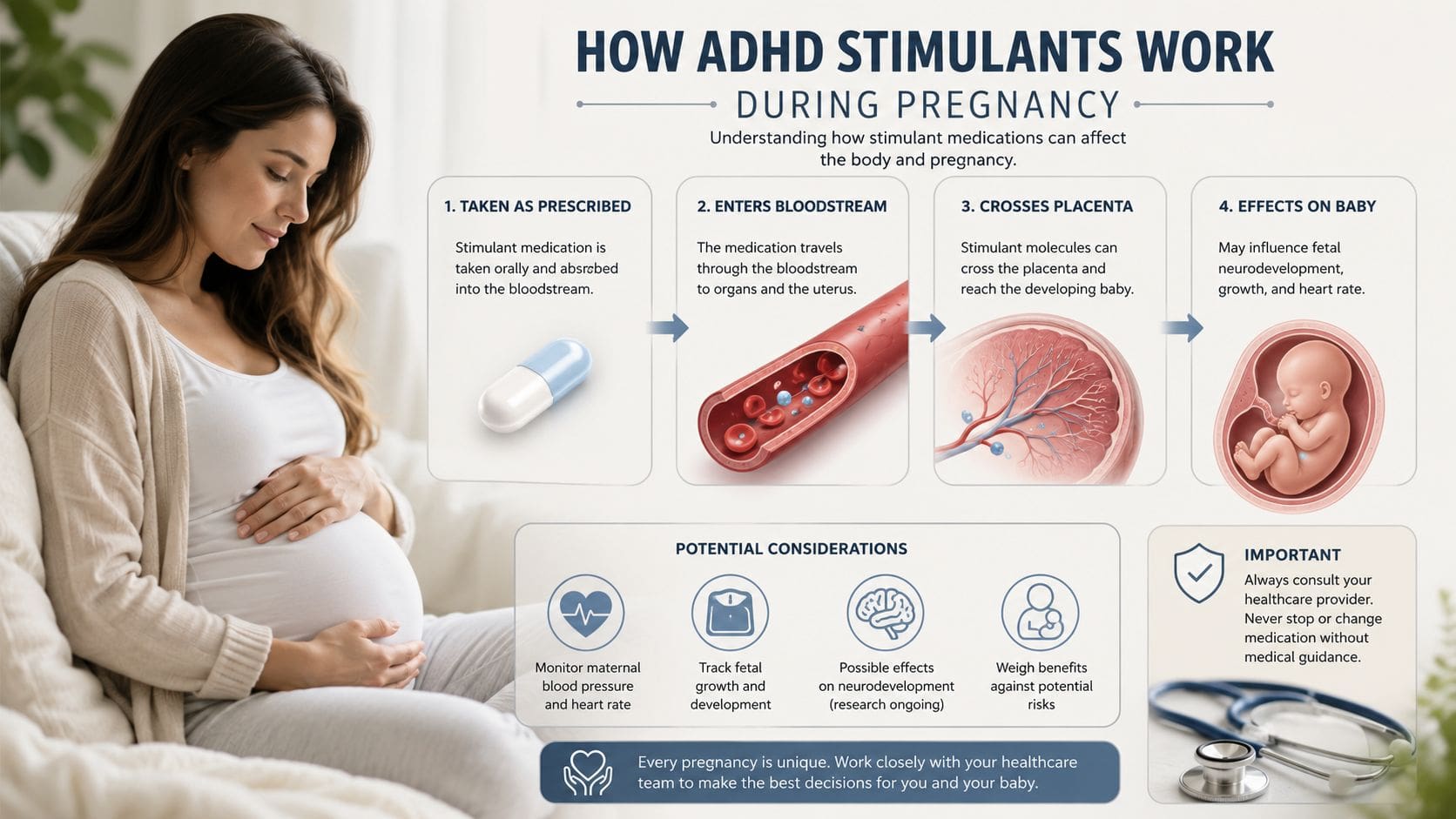
Prescribed stimulants are not “speed” in the street-drug sense. They are treatment tools that increase the brain's ability to organize attention, filter distraction, and complete tasks by altering dopamine and norepinephrine signaling, which is why Adult ADHD treatment can feel dramatically different when it works well. During pregnancy, that benefit does not disappear just because the patient is pregnant.
Prescribed use and non-prescribed use are different questions
The evidence base separates prescribed stimulant treatment from non-prescribed or street-supply stimulant use, and that distinction matters. For prescription use, several sources report no clear increase in birth defects and generally reassuring findings on major outcomes, while non-prescribed stimulant use is linked with much worse maternal and neonatal outcomes, including hypertensive disorders, preterm delivery, placental abruption, low birth weight, fetal or infant death, and severe maternal illness source. Consumer pages often blur those two questions, but clinicians should not.
That difference also explains why Amphetamine pregnancy and Methylphenidate pregnancy counseling cannot be reduced to one sentence. A medically supervised dose of Lisdexamfetamine pregnancy treatment is not the same thing as illicit stimulant exposure, and the risk profile is not the same either.
What patients usually miss
The practical issue is not just whether a stimulant crosses into the body. It is whether the medication keeps the patient functional enough to sleep, work, eat, and attend prenatal care consistently. That is why Pregnancy medication safety is not a purely fetal question.
Prescription stimulant counseling should always ask two questions, not one. What is the fetal exposure, and what happens to the mother if treatment stops?
That second question is especially important for people taking Vyvanse while pregnant, because stopping abruptly can leave them unable to keep up with work responsibilities, family care, or appointment schedules. For some patients, that creates a bigger day-to-day risk than a carefully managed prescribed stimulant.
A fuller medication discussion is also available through the understanding ADHD medication page, which can help patients prepare better questions before a clinician visit.
After reviewing the basic biology, it helps to see how the research has changed over time.
Current Stimulant Pregnancy Research Explained
A patient may come in stable on a prescribed stimulant, then ask whether staying on treatment is reasonable once pregnancy is confirmed. That conversation should be different from the one about non-prescribed stimulant use, because the goals, dose control, and medical monitoring are not the same. Psychiatric medication pregnancy research has moved from sparse case reports to larger observational studies, and the result is a more careful picture rather than a simple yes-or-no answer.
What the numbers mean
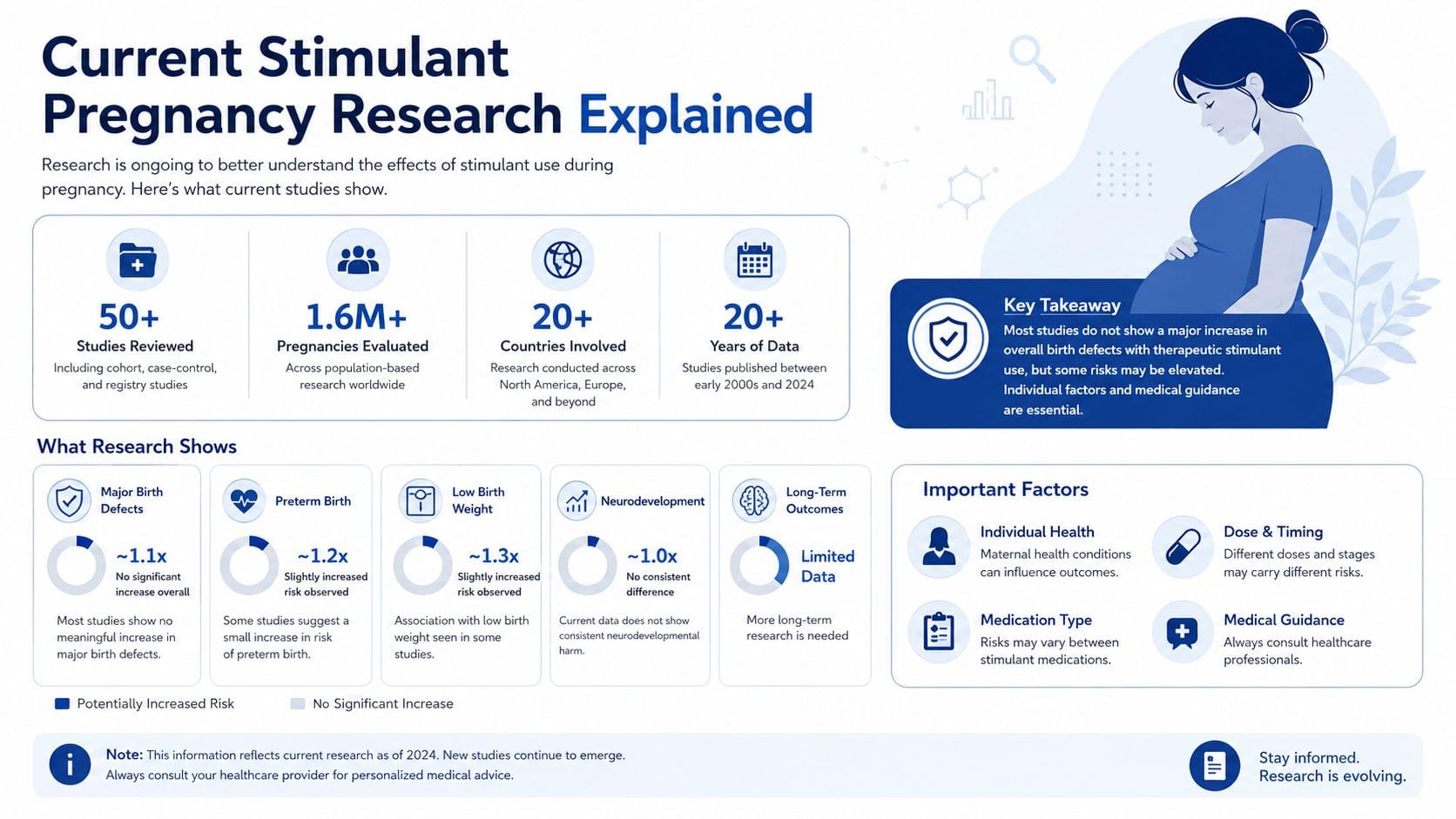
In a U.S. Medicaid study, investigators compared 1,529,756 unexposed pregnancies with 3,331 stimulant-exposed pregnancies. Baseline risks among unexposed women were 3.7% for preeclampsia and 11.2% for preterm birth, and stimulant exposure was associated with an adjusted risk ratio of 1.29 for preeclampsia and 1.06 for preterm birth overall source. Those are relative-risk numbers, so they should be read as comparisons, not as a prediction that harm will occur in an individual pregnancy.
That distinction matters in clinic. A relative increase can still correspond to a small absolute change, and patients often hear the number without hearing the baseline. For someone asking Is Vyvanse safe during pregnancy, the answer is better framed as a function-based discussion, because risk depends on timing, dose, symptom control, and the reason the medication is being used.
Why timing changes the picture
The same U.S. data showed that continuing stimulant use into the latter half of pregnancy raised the adjusted risk ratio to 1.30 for preterm birth and 1.26 for preeclampsia. Another study found continued second- or third-trimester use increased placental abruption, pre-eclampsia, gestational hypertension, and preterm birth, while first-trimester-only exposure was not linked to higher maternal or fetal risk in a matched cohort of 10,265 patients source. That pattern is why trimester counseling should focus on function, not just exposure. If a patient is doing well early in pregnancy, the question later becomes whether the current dose is still needed for driving, work, eating, sleep, and prenatal follow-through.
A related population-based cohort found stimulant use during pregnancy was linked to a small increased relative risk of preeclampsia and preterm birth, and an expert summary of that evidence reported a stronger association with gestational hypertension after 20 weeks of gestation source. Clinically, the later-pregnancy blood-pressure question deserves more attention than many consumer pages give it, especially when treatment is continued beyond the first trimester.
The broader exposure trend also helps explain why this question keeps coming up in practice. In the general reproductive-age population, 1.38 million women ages 15-44 reported past-month stimulant use in 2015, including prescription stimulant misuse at 1.0%, cocaine 0.7%, methamphetamine 0.7%, and ecstasy 0.3% source. That is one reason Stimulants during pregnancy is now a much more visible public-health issue.
Risks of Untreated ADHD in Pregnancy
A patient may feel physically stable in pregnancy and still be struggling in ways that matter clinically. Untreated ADHD can become the more immediate safety concern when driving, working, caring for other children, or trying to keep up with prenatal demands. The question is not whether symptoms exist, it is whether they are interfering with safe functioning.
What unmanaged symptoms can affect
Untreated ADHD can interfere with motor vehicle safety, medication adherence, nutrition, prenatal care, occupational functioning, and emotional regulation. A patient who misses prenatal visits, skips meals, or loses track of essential tasks is not merely inconvenienced. She may be less safe and less able to follow through with care.
Pregnancy adds fatigue, nausea, disrupted sleep, and a heavier scheduling burden. Those changes can make executive dysfunction more noticeable even before delivery. For a patient in Pittsburgh or Philadelphia who still has to work while pregnant, that can mean more missed appointments, more stress, and more day-to-day mistakes than she would normally expect.
- Driving and commuting: Attention lapses can make long drives, stop-and-go traffic, and late-night shifts riskier.
- Prenatal follow-through: Missed appointments and delayed lab work become more likely when attention and planning are impaired.
- Nutrition and hydration: Forgetting meals or water can worsen pregnancy fatigue and nausea.
- Emotional regulation: Irritability, frustration, and feeling overwhelmed can strain relationships and raise stress.
Why this is not a fear-based argument
The point is function. A patient who cannot reliably drive to work, attend prenatal visits, or keep up with basic self-care may need a different plan than someone whose symptoms are mild and manageable. Untreated ADHD does not affect every pregnancy in the same way, but it can create real clinical problems for the people who rely on structure to stay safe.
Recent large cohort data are also reassuring on child neurodevelopment after in utero exposure to amphetamine/dextroamphetamine or methylphenidate after confounding adjustment source. That makes fear alone a weak reason to stop all treatment, especially when untreated ADHD can disrupt daily functioning in ways that matter during pregnancy.
A measured medication review, such as an ADHD evaluation and treatment visit, can help clarify whether symptoms are severe enough that continued treatment should remain part of the discussion.
Comparing Common ADHD Medications in Pregnancy
Patients usually ask about Vyvanse, but the comparison often has to include the rest of the stimulant class. Adderall and pregnancy questions differ from Concerta and pregnancy questions, and Focalin and pregnancy may raise different counseling points from Ritalin and pregnancy because the molecule and release profile differ. That is why a medication-by-medication conversation is more useful than a category label.
ADHD Medication Comparison During Pregnancy
| Medication | Medication Class | Available Pregnancy Data | Major Clinical Considerations |
|---|---|---|---|
| Vyvanse | Lisdexamfetamine, amphetamine class | Human data are generally reassuring for prescribed stimulant exposure, with timing of exposure more important than a simple yes or no answer source | Often discussed when symptom control is strong and functioning would drop off if stopped |
| Adderall | Mixed amphetamine salts | Cohort data are generally reassuring overall, with later-pregnancy exposure needing closer monitoring source | Dose, trimester, and blood pressure history matter |
| Concerta | Extended-release methylphenidate | Expert reviews note methylphenidate has at most a small possible cardiac-malformation signal, while many outcomes remain reassuring source | Often reviewed carefully in early pregnancy and when cardiac risk is part of the history |
| Ritalin | Methylphenidate | MotherToBaby notes first-trimester use has not been shown to increase the chance of birth defects, though pregnancy-related concerns like growth and preterm delivery have been described source | Helpful when discussing older, well-studied stimulant options |
| Focalin | Dexmethylphenidate | Direct pregnancy data are more limited, so counseling usually follows the methylphenidate evidence base | Consider the lowest effective dose and the patient's prior response |
| Azstarys | Serdexmethylphenidate and dexmethylphenidate | Pregnancy-specific data are limited compared with older stimulants | Limited evidence means extra caution and careful shared decision-making |
| Jornay PM | Methylphenidate formulation | Pregnancy-specific data are limited, so counseling generally relies on the methylphenidate class | Night-dosed release pattern may matter for sleep and nausea |
The 2024 child outcome data are reassuring here too. A large cohort found second-half pregnancy exposure to amphetamine/dextroamphetamine or methylphenidate was not associated with autism spectrum disorder, ADHD, or a composite of any neurodevelopmental disorder after confounding adjustment source. That does not prove zero risk, but it does lower the chance that families should assume a major long-term neurodevelopmental harm from prescribed use.
Clinical takeaway: medication choice is less about “which stimulant is safe” and more about which medication has enough data, enough symptom benefit, and enough tolerability to support the patient through pregnancy without unnecessary disruption.
For patients who want to compare options before a visit, the Adderall and Adderall XR overview can be one starting point, especially when Pregnancy and ADHD medication counseling needs to be specific rather than generic.
Individualized Risk-Benefit Decisions
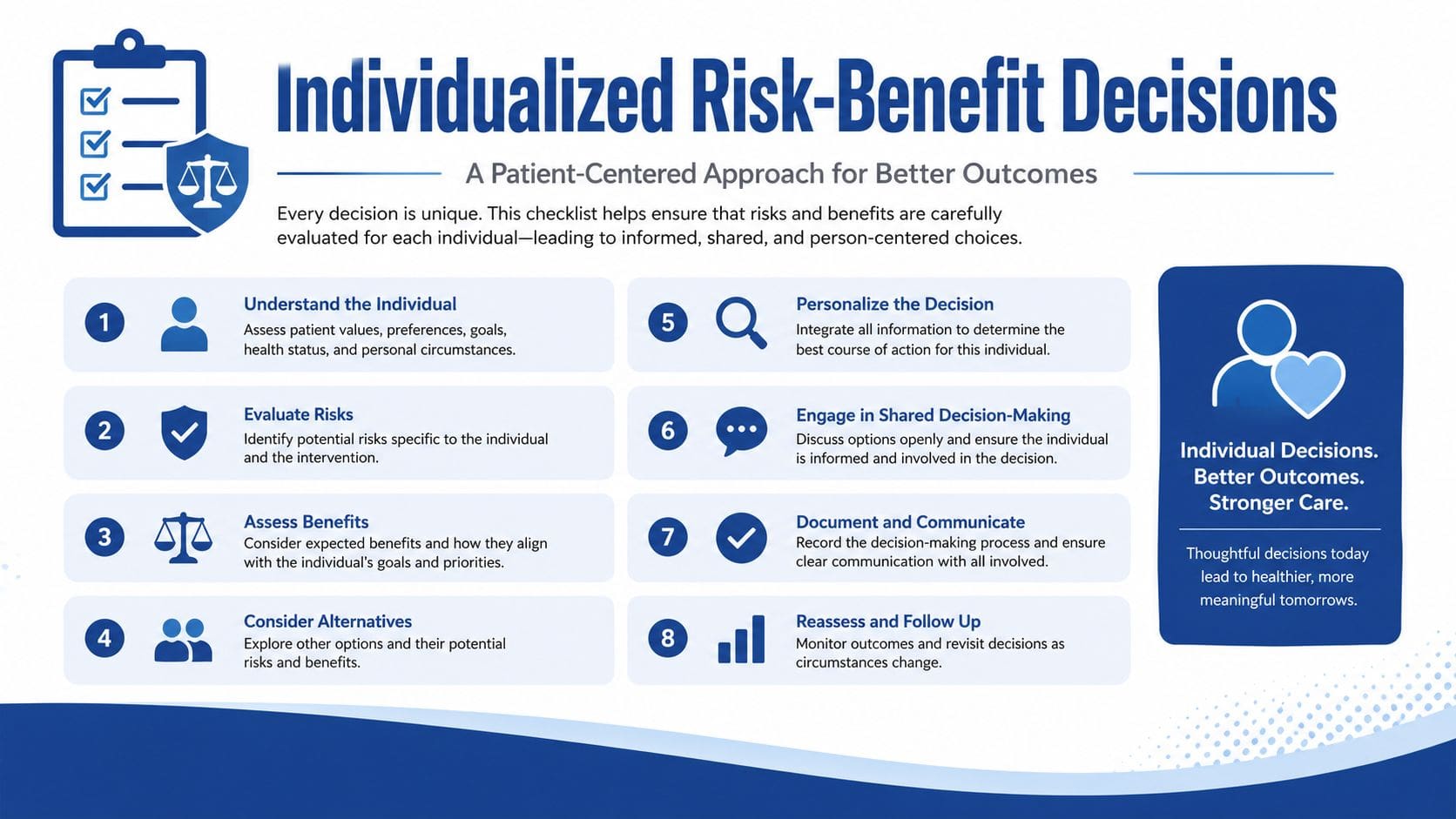
A patient who is doing well on a prescribed stimulant, a clinician who knows the medication history, and an obstetric provider who understands the pregnancy stage can usually make a better plan than any generic rule can. That is the core of ADHD treatment during pregnancy.
What should shape the decision
A useful decision starts with direct questions, not assumptions.
- How severe are symptoms off medication? If inattention creates safety problems, the threshold for continuing treatment changes.
- What trimester is it? First-trimester exposure and later continuation do not carry the same counseling implications source.
- What has worked before? Prior response usually matters more than theory.
- What are the practical demands? A nurse, teacher, driver, or parent may need medication support differently than someone with a lower cognitive load.
- What other health issues exist? Blood pressure, sleep, anxiety, appetite, and nausea all affect the plan.
That last point matters because some patients with women's mental health concerns are also dealing with anxiety, insomnia, or reduced appetite. Sleep disruption can complicate stimulant use, and a separate resource such as insomnia during pregnancy relief may help when sleep becomes part of the medication conversation.
What shared decision-making looks like
Shared decision-making should cover both benefit and trade-off. A patient who becomes unable to function at work after stopping medication may need a different plan from a patient who feels steady without stimulants and prefers to avoid fetal exposure.
Practical rule: if ADHD symptoms raise the risk of driving errors, missed appointments, or unsafe work performance, the discussion should not default to automatic discontinuation.
Prescribed stimulant treatment and non-prescribed stimulant use should be treated differently. A clinician can discuss dose, timing, symptom control, and maternal functioning for a prescribed medication, while illicit or nonmedical stimulant use raises a separate set of safety concerns that should be addressed directly.
For some patients, the medication review also includes a broader look at prior response and adverse effects. A conversation about genetic testing for psych meds may fit when the history is complex or previous medication trials have been difficult to interpret.
The main point is straightforward. Timing, dose, symptom severity, and daily function all matter, and trimester counseling should be based on what the patient needs to do each day. A good plan protects the pregnancy and the mother's ability to stay safe and stable.
Conclusion and Next Steps for Pennsylvania Patients
The safest way to think about stimulants during pregnancy is to avoid extremes. Prescription stimulants are not the same as illicit stimulant use, untreated ADHD carries real risks, and the evidence is more reassuring than many patients expect. Timing matters too, because later pregnancy exposure has looked different from first-trimester-only exposure in the available data source.
For patients in Pennsylvania, whether in Philadelphia, Pittsburgh, Erie, or smaller towns across the state, the best next step is usually a careful medication review with both psychiatric and obstetric context. That's especially true when the question is Vyvanse while pregnant, ADHD medication during pregnancy, or whether a stimulant should be continued, tapered, or paused based on function.
A few practical supports can help while that decision is being made. Patients may benefit from trusted education, a medication checklist, and, when appropriate, the list of trusted pregnancy centers if they want additional pregnancy support resources outside of medication management.
Integrative Psychiatry of America offers virtual ADHD evaluation and medication management through statewide telepsychiatry, which can be useful when a patient needs individualized counseling rather than a one-size-fits-all answer. For anyone in Pennsylvania who wants a structured review of symptoms, pregnancy stage, and medication options, scheduling an ADHD medication consultation can be a practical next step.
Frequently Asked Questions on Stimulants
Can I take Vyvanse in the first trimester?
Sometimes, yes, but the decision should be individualized. First-trimester-only exposure has looked different from later continuation in the available data.
Does Vyvanse increase miscarriage risk?
The evidence is not definitive enough to give a single universal answer, so the decision should focus on the patient's overall risk profile and symptom severity.
Can stimulants affect fetal growth?
Some studies have linked stimulant exposure with pregnancy-related problems such as poor growth and low birth weight, so growth monitoring may be discussed when medication continues.
Can ADHD medication be restarted after delivery?
Yes. Postpartum planning often matters because symptoms can become harder to manage after birth.
Can I breastfeed while taking Vyvanse?
Breastfeeding while taking stimulants needs individualized counseling, especially because the medication, dose, and infant monitoring plan all matter.
Should I stop my medication before trying to conceive?
Not always. Patients with severe functional impairment may need a different plan than patients with mild symptoms.
Are non-stimulant options safer?
Not automatically. Some non-stimulants have less pregnancy data, so “non-stimulant” does not always mean “better studied.”
How should ADHD be managed during pregnancy?
With shared decision-making, symptom tracking, and a focus on daily function, not just fetal risk.
What questions should I ask my healthcare provider?
Ask about trimester timing, symptom severity off medication, blood pressure, fetal growth monitoring, and postpartum planning.
Does untreated ADHD pose risks during pregnancy?
Yes. Untreated symptoms can affect driving, prenatal follow-through, nutrition, work safety, and emotional regulation.
Medication decisions during pregnancy are rarely simple, and they should not be made from a search result alone. If you're in Pennsylvania and need a careful review of pregnancy medication safety, ADHD severity, and treatment options, visit Integrative Psychiatry of America to learn about virtual ADHD evaluation and medication management.