
Some Pennsylvania men end up in the same exhausting loop. They wake up tired, push through work with brain fog, lose patience faster than usual, and start wondering whether they're depressed, burned out, anxious, sleeping poorly, or just getting older. When motivation drops and mood flattens out, it's easy to assume the problem is purely psychological.
Sometimes it is. Sometimes it isn't.
Low testosterone can overlap with symptoms people often label as depression, stress, or loss of drive. That doesn't mean every man with fatigue or low mood needs testosterone replacement therapy. It does mean the right evaluation should look at the full picture, including mood, sleep, stress, physical health, and hormone-related symptoms. Tom Koste, M.S.N, PMHNP-BC, is a Certified Psychiatric-Mental Health Nurse Practitioner who provides compassionate, holistic virtual care across Pennsylvania, helping patients sort through these questions carefully and confidentially from home.
Table of Contents
- Is It Burnout Depression or Something Else
- What TRT Is and Why It Affects Your Mental Health
- TRT Candidacy Symptoms and Accurate Diagnosis
- Your TRT Treatment Options Explained
- Benefits Risks and Realistic Timelines
- The Integrative TRT Approach at Our Practice
- Schedule Your Confidential Evaluation with Tom Koste
Is It Burnout Depression or Something Else
A man in Philadelphia may think he's just overworked. A man in Pittsburgh may assume he's losing motivation because life has gotten heavier. Another in Harrisburg, Erie, Scranton, Allentown, Lancaster, or Reading may notice that he's more irritable, less focused, sleeping poorly, and no longer feeling like himself. Those symptoms can point in several directions at once.

Depression can look like exhaustion. Anxiety can look like restlessness and poor sleep. Burnout can flatten mood and concentration. Low testosterone can also show up with fatigue, reduced interest, mental dullness, and changes in confidence or libido. That overlap is exactly why self-diagnosis often goes wrong.
Why many men stay stuck
Some people wait too long because getting help feels inconvenient, expensive, or hard to access. In Pennsylvania, over 60% of adults with anxiety or depression do not receive adequate mental health treatment due to barriers such as cost, lack of providers, and transportation issues, which is one reason statewide virtual care matters for people who need support without added travel burdens (Pennsylvania mental health access barriers).
Tom Koste's style of care is built for this kind of diagnostic uncertainty. His work focuses on the whole person rather than a single symptom cluster, and that matters when fatigue, low mood, sleep disruption, and reduced motivation may have both psychiatric and physical contributors.
Practical rule: If symptoms affect work, relationships, concentration, sleep, or interest in daily life, they deserve an evaluation instead of another month of guessing.
A careful next step might include learning when to see a psychiatric provider if it's still unclear whether the problem is mood-related, stress-related, hormone-related, or some mix of all three.
Looking beyond a single explanation
TRT isn't a cure-all, and it shouldn't be treated like one. A responsible psychiatric and integrative evaluation asks what's driving the symptoms. That may include mental health conditions, poor sleep, chronic stress, medication effects, medical issues, or hormone imbalance.
Some patients also like to read broadly about how biology can influence mood and cognition. For people exploring that wider conversation, this 2026 guide for brain health peptides offers background on another area of interest in brain-focused wellness, even though it serves a different purpose than a formal psychiatric or hormone evaluation.
What TRT Is and Why It Affects Your Mental Health
Testosterone replacement therapy, often shortened to TRT, is a medical treatment used when a person has clinically significant testosterone deficiency and symptoms that fit that diagnosis. It isn't the same as using hormones for bodybuilding, image goals, or vague anti-aging promises. In a clinical setting, the purpose is to restore levels when deficiency is contributing to functional problems.
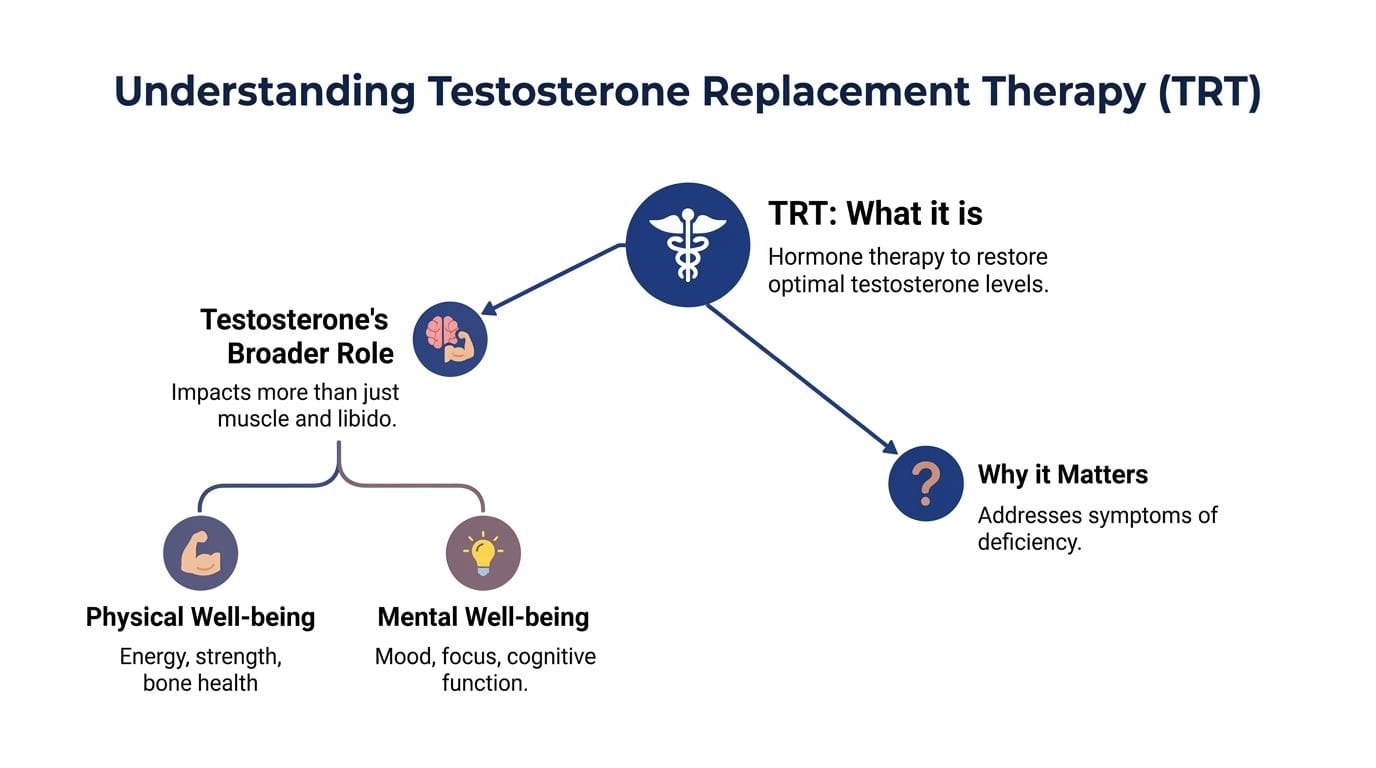
Testosterone affects more than muscle mass or sex drive. It acts like a volume knob for motivation, energy, and cognitive drive. When levels are low, some men report less initiative, slower thinking, lower endurance, and a blunted sense of well-being. That doesn't automatically mean testosterone is the main problem, but it explains why a mental health clinician may be involved in the assessment.
Why mood and hormones can overlap
The brain doesn't operate separately from the body. When hormone function shifts, patients may notice:
- Energy changes that feel deeper than ordinary tiredness
- Mental slowing or brain fog that affects work and home life
- Mood flattening that can resemble depression
- Irritability that gets misread as stress alone
- Reduced drive in both daily tasks and relationships
That overlap is one reason some people seek care after months of treating only the emotional side of the problem.
For readers who want a focused overview of this topic from a men's mental health angle, this article on testosterone replacement therapy in Philadelphia through an integrative mental health lens gives helpful context.
A short visual overview may also help clarify the basics:
What TRT is not
TRT is not a shortcut to perfect mood. It's not a treatment for every case of fatigue. It's not a substitute for sleep, nutrition, exercise, psychotherapy, or medication management when those are needed.
A patient with untreated anxiety, major depression, sleep apnea, substance use, or severe burnout won't get good care from a clinic that treats testosterone as the only possible answer.
That same medical caution shows up in other areas of treatment where body and mind interact. For example, patients researching metabolic medications often benefit from balanced reading like this GLP-1 and mental health resource, which looks at how physical treatments can also affect emotional well-being.
TRT Candidacy Symptoms and Accurate Diagnosis
Many men ask the same practical question. How does someone know when it's time to get evaluated for low testosterone instead of assuming it's stress or aging?
The answer starts with symptoms, but it doesn't end there. TRT candidacy depends on a pattern of symptoms plus a thorough medical assessment. A single complaint, or a single lab result taken out of context, usually isn't enough.
Symptoms that deserve a closer look
Low testosterone may be worth evaluating when a patient has a combination of concerns such as:
- Persistent fatigue that doesn't improve with ordinary rest
- Low motivation or a drop in initiative that feels unusual
- Brain fog or reduced mental sharpness
- Irritability or a shorter emotional fuse
- Depressed mood or emotional flatness
- Reduced libido
- Decreased physical drive during exercise or routine activity
- Sleep disruption that seems to worsen other symptoms
Those symptoms are nonspecific. That's the point. They can also appear with anxiety disorders, depression, trauma-related stress, poor sleep habits, medication side effects, medical illness, or weight-related metabolic issues. Patients who are noticing overlap between weight changes and hormonal concerns often find it useful to review how low testosterone can connect with weight gain.
Why a single number isn't enough
Accurate diagnosis requires more than grabbing one testosterone value and calling it a day. A careful evaluation looks at symptoms, timing, severity, health history, medication use, sleep quality, and lab interpretation together. In many cases, clinicians consider a broader hormone and health workup rather than relying on a simplified snapshot.
That's one reason virtual access matters. Telepsychiatry services have been shown to reduce wait times for psychiatric evaluations by up to 60% compared to traditional in-person care, while maintaining comparable treatment outcomes for anxiety, depression, and ADHD, which helps Pennsylvania residents get evaluated sooner when they're trying to sort out overlapping mental and physical symptoms (telepsychiatry access and wait time data from UPMC).
The wrong approach is to chase a lab value in isolation. The better approach is to ask whether the lab findings actually match the person sitting in front of the screen.
What an accurate workup usually includes
A thorough TRT candidacy review often involves these elements:
Clinical symptom review
The clinician asks when symptoms started, what has changed, how daily functioning is affected, and whether mood, stress, sleep, or libido shifted at the same time.Medical and psychiatric history
Past diagnoses matter. So do prior medications, current supplements, substance use, sleep patterns, and any history that might point toward depression, anxiety, bipolar disorder, or another contributor.Lab-based clarification
The workup may include testosterone-related testing and other labs that help rule out competing explanations.Risk screening
Some patients are not candidates for TRT, or they need more medical review before treatment is considered.
For adults anywhere in Pennsylvania, telehealth can handle much of this process efficiently while still allowing a serious and individualized evaluation.
Your TRT Treatment Options Explained
Once a patient is confirmed to be a candidate, the next question is practical. Which form of TRT fits daily life?
The answer depends on routine, comfort with self-administration, sensitivity to side effects, fertility goals, and how steady the patient wants dosing to feel. No method is ideal for everyone. Shared decision-making works better than pushing every patient into the same format.
How the common options differ in real life
Some men prefer injections because they're familiar and direct. Others want a method that avoids needles. Still others care most about convenience and consistency. The trade-offs matter more than marketing language.
| TRT Treatment Method Comparison | Frequency | Pros | Cons |
|---|---|---|---|
| Injections | Varies by prescription plan | Often practical for patients comfortable with needles. Can be a clear, structured routine. | Some patients notice more fluctuation between doses. Self-injection isn't a good fit for everyone. |
| Gels | Daily | Needle-free and easy to apply at home. Can feel less intimidating at the start. | Daily use requires consistency. Skin transfer precautions and irritation can be limiting. |
| Creams | Daily | Similar appeal to gels for patients who want non-injection treatment. | Absorption can vary, and daily application can become inconvenient. |
| Pellets | Less frequent office-based placement | Reduces day-to-day dosing tasks. | Less flexible once placed. Not ideal if adjustments are needed quickly. |
Matching the method to the patient
A patient with a highly structured routine may do well with a daily topical plan. Someone who wants fewer recurring tasks may lean toward injections or other longer-acting strategies if clinically appropriate. A man who hates needles but can commit to a careful daily ritual may prefer a gel or cream despite the inconvenience.
This is also where psychiatric medication planning can matter. If a person already manages several treatments, adding a complicated hormone routine may not help adherence. Patients who want a broader look at how psychiatric prescribing and monitoring works remotely can review online medication management options.
Convenience matters, but consistency matters more. The best TRT format is usually the one a patient can use correctly and safely over time.
What usually doesn't work
A few patterns tend to create problems:
- Chasing speed over fit by choosing the first option offered without discussing lifestyle
- Ignoring side-effect tolerance and hoping an inconvenient method will somehow become easier
- Treating administration as trivial when the dosing routine determines whether treatment succeeds
- Skipping follow-up conversations after the first prescription
The right option should fit the patient's schedule, preferences, and clinical needs well enough that treatment remains sustainable beyond the first few weeks.
Benefits Risks and Realistic Timelines
Patients deserve a balanced answer before starting TRT. There are potential benefits, there are real risks, and there's usually a timeline gap between starting treatment and feeling meaningful change.
That gap matters because unrealistic expectations lead to disappointment. TRT isn't like flipping a switch. Even when it's appropriate, progress tends to unfold gradually and requires monitoring.
What patients may hope to improve
When low testosterone contributes to the problem, treatment may support improvements in areas such as mood, energy, focus, physical drive, and libido. Some men describe a return of steadier motivation rather than a dramatic surge. That distinction matters. The goal is restoration, not stimulation.
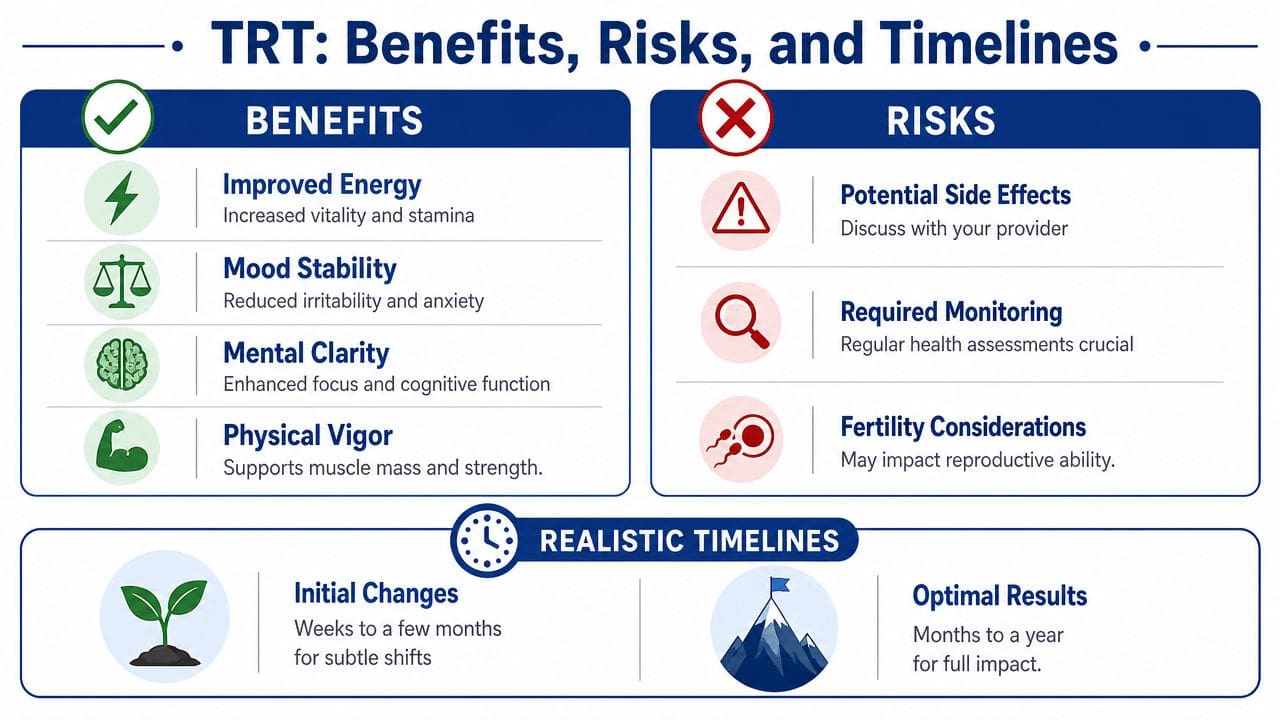
Patients should also understand that timelines vary. Early shifts may be subtle. Some changes show up over weeks, while fuller effects can take months and depend on sleep, nutrition, activity, medical history, and whether another untreated condition is still dragging symptoms down.
The risks that need honest discussion
TRT requires monitoring because it can carry downsides. Side effects and concerns may include skin issues with topical options, hormonal imbalance-related symptoms, red blood cell increases, cardiovascular concerns, and fertility effects. Men who may want children should discuss this early, since TRT can affect reproductive potential.
For a patient-centered overview of that fertility issue, this article on understanding TRT and male fertility is a useful starting read.
Starting TRT without discussing fertility is a preventable mistake.
Who may not be a good candidate
Some patients need a different plan altogether or further medical review before moving forward. That can include men with unresolved medical issues, significant contraindications, or symptom patterns that point more strongly toward another diagnosis.
A cautious evaluation also asks whether the patient is expecting TRT to fix problems it cannot fix, such as severe relationship stress, untreated trauma, chronic sleep deprivation, or an active substance use issue. Hormone treatment can be one tool. It can't replace complete care.
What realistic follow-up looks like
A monitored treatment plan typically includes:
- Ongoing symptom review to see whether changes are meaningful and not just placebo-driven
- Lab follow-up to check safety and guide adjustments
- Side-effect screening so small issues don't become larger ones
- Medication review if psychiatric treatment is also part of the plan
Patients usually do best when they view TRT as a long-term clinical process rather than a one-time prescription.
The Integrative TRT Approach at Our Practice
TRT makes the most sense when it's placed inside a larger health plan. Fatigue, low mood, poor focus, and reduced motivation rarely come from one cause alone. A whole-person model treats testosterone as one possible lever, not the entire strategy.
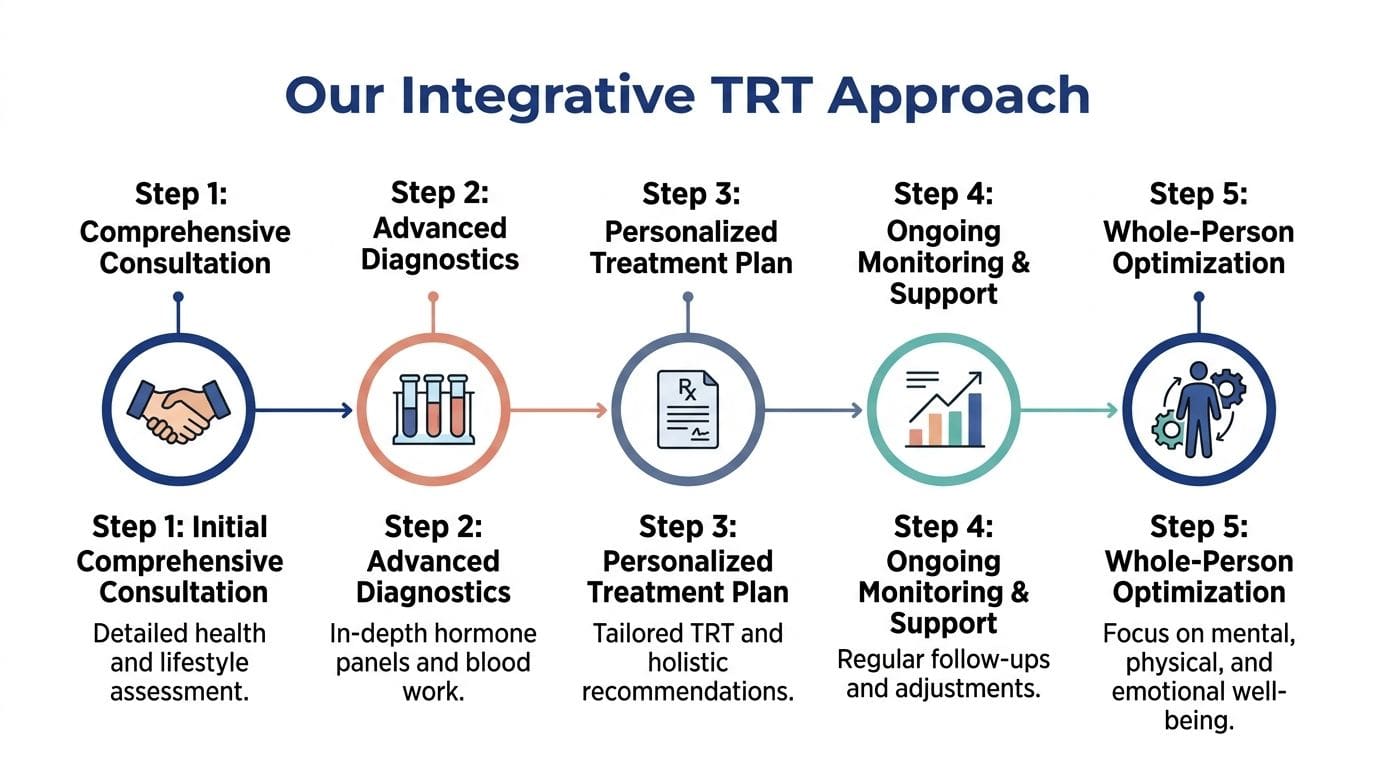
Tom Koste, M.S.N PMHNP-BC, approaches care with that broader lens. He is a Board-Certified Psychiatric-Mental Health Nurse Practitioner at Integrative Psychiatry of America, and his clinical focus includes mood and anxiety disorders, bipolar disorder, SAD, ODD, and sleep-related issues, alongside an integrative style that includes nutritional and exercise support and confidential telehealth access across Pennsylvania.
What makes an integrative plan different
An integrative TRT evaluation doesn't stop at “Are the testosterone levels low?” It also asks:
- How is sleep functioning?
- What is stress doing to mood and concentration?
- Could nutrition, weight changes, or inactivity be amplifying symptoms?
- Are current psychiatric medications helping, hurting, or only partly addressing the picture?
- Does the patient need hormone support, mental health treatment, or both?
That structure is especially useful for men whose complaints sit at the intersection of energy, mood, and physical health.
Personalization matters
Personalization in psychiatric care can also involve pharmacogenomic testing. Pharmacogenomic genetic testing in psychiatric care can reduce medication side effects by 30–50% and improve treatment response rates by identifying how individual genetic variations affect drug metabolism, which can help tailor medication management for patients with mood disorders and ADHD (pharmacogenomic testing overview for Integrative Psychiatry of America).
That kind of tool doesn't replace clinical judgment, and it isn't specific to TRT itself. It does show how an evidence-informed, data-guided model can improve decision-making when hormone symptoms overlap with psychiatric treatment questions.
A useful TRT plan asks two questions at once. Is testosterone part of the problem, and what else must change for the patient to actually feel better?
Lifestyle support matters here too. Nutritional guidance, exercise planning, sleep review, and routine-building often determine whether gains from treatment are sustained or undermined by the same habits and stressors that contributed to the decline in the first place.
Schedule Your Confidential Evaluation with Tom Koste
If fatigue, low mood, low motivation, irritability, brain fog, or reduced libido have been dragging on, the next step isn't guessing harder. It's getting a careful evaluation from someone who can sort through mental health symptoms, sleep issues, lifestyle factors, and possible hormone-related concerns in one coherent process.
Tom Koste is a Board-Certified Psychiatric-Mental Health Nurse Practitioner who serves patients across Pennsylvania through secure telehealth. He's available for young adults, teenagers, adults, children, and seniors, and he provides care in a structured, person-centered model that includes medication management and integrative support. His standard initial session cost is $250 for 60 minutes and his ongoing session cost is $150 for 30 minutes, according to his Thomas Koste PMHNP-BC profile on Zocdoc.
A simple way to move forward
Patients who want to book with Tom Koste PMHNP-BC today can keep the process straightforward:
- Start with a confidential evaluation through this online mental health evaluation page.
- Write down the main symptoms before the visit, especially energy changes, mood changes, libido changes, sleep disruption, and concentration problems.
- Bring a medication and supplement list so the review is accurate.
- Consider tracking patterns first if symptoms are still hard to describe. Some people benefit from using the Adult ADHD Assessment, Anxiety Symptom Checker, Daily Agenda Planner, Feeling Journal, Exercise Routine Generator, or 5-4-3-2-1 Grounding Tool before booking.
For many adults, relief starts with clarity. Whether the answer is TRT, psychiatric treatment, lifestyle changes, further medical workup, or a combination of those, a thorough evaluation gives patients something more useful than speculation.
If the symptoms described here feel familiar, Integrative Psychiatry of America offers confidential virtual mental health care throughout Pennsylvania, including evaluations, medication management, and evidence-informed treatment planning from home. Patients can learn more about care options, verify insurance coverage, explore free mental health tools, and schedule the next step when they're ready.