
It is late, and a Pennsylvania patient is moving between browser tabs, comparing provider names and trying to separate real credentials from lookalike listings. Dr. Kenneth Levy, DO, is a psychiatrist who has joined the provider team at Integrative Psychiatry of America, where he works alongside its nurse practitioners. That arrival matters most for someone who is also weighing treatment for opioid dependence and wondering whether a medication like Suboxone could fit daily life.
The useful questions are plain: what his training includes, what his role looks like in practice, and how a first question becomes a booked telehealth visit. Each answer can be checked against his Pennsylvania license and the practice's current provider list.
Table of Contents
- Dr. Kenneth Levy's Training and Role at IPA
- How Dr. Levy Blends Integrative Care With Medication
- How Buprenorphine and Naloxone Treat Opioid Dependence
- How Suboxone Induction Works, Step by Step
- Dosing, Side Effects and Safety You Need to Know
- Counseling and Lifestyle Support for Lasting Recovery
- Book Your Telehealth Visit With Dr. Levy
- What to Expect at Your First Telehealth Visit
Dr. Kenneth Levy's Training and Role at IPA
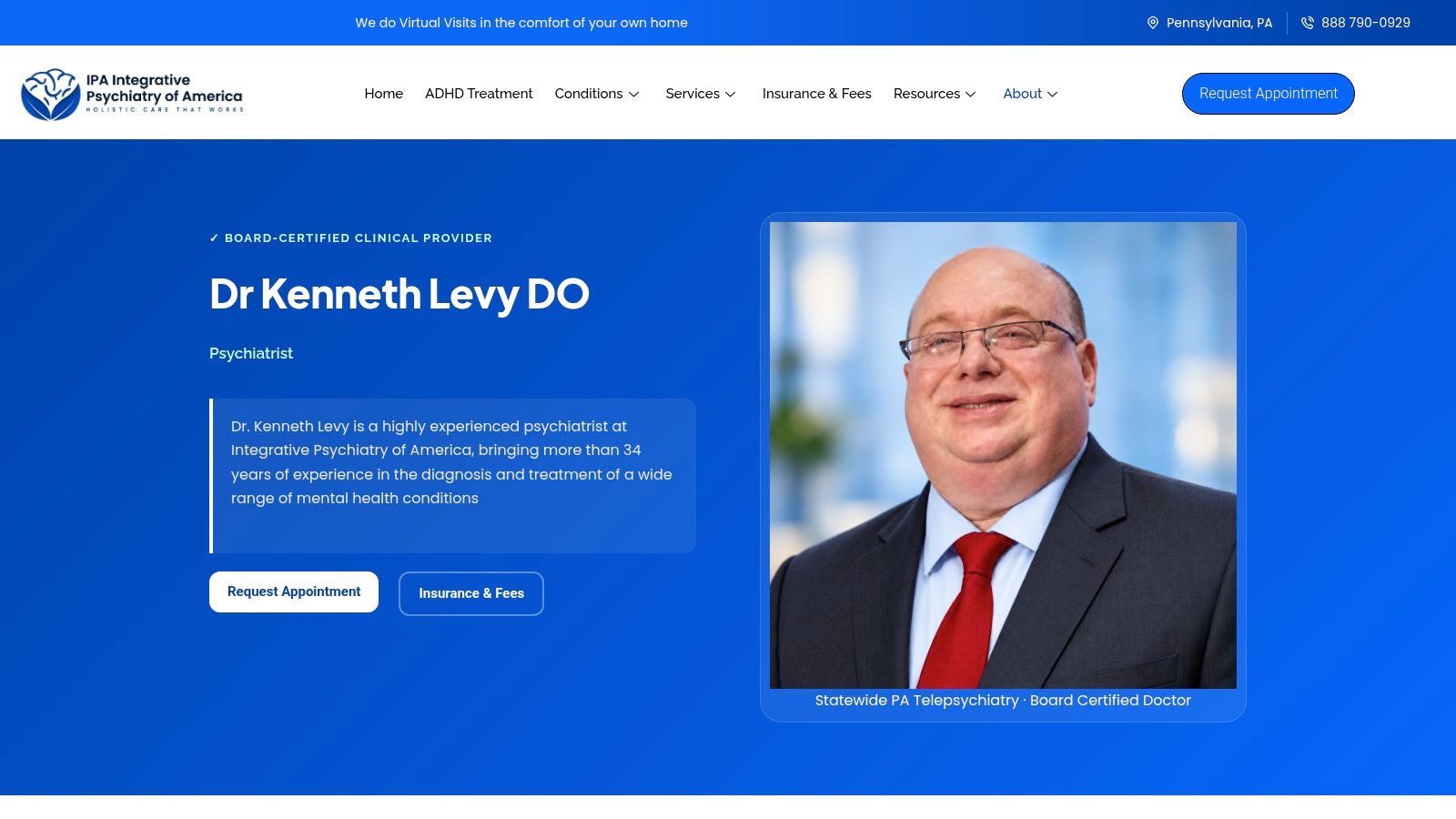
Training is easiest to check in order: medical school, residency, license, then hospital affiliations. Dr. Kenneth Levy, DO, is a member of the provider team at Integrative Psychiatry of America, which also includes Tom Koste, PMHNP-BC, Lori Simons, Ph.D., LPC, and Christopher Clark, PMHNP-BC. For a patient weighing buprenorphine treatment, that team context matters because the first question is whether the clinician's license and training fit the care being discussed. Readers who want the credential difference explained can review psychiatric NP vs psychiatrist roles at IPA.
Training in sequence
His path follows the conventional sequence for a physician. The U.S. News doctor profile for Dr. Kenneth Levy lists a Doctor of Osteopathic Medicine from Kansas City University of Medicine and Biosciences College of Osteopathic Medicine in 1990, a three-year psychiatry residency at Zucker Hillside Hospital, part of Northwell Health, from 1991 through 1994, an active Pennsylvania medical license through 2026, and affiliations with Fairmount Behavioral Health System and Friends Hospital in the Philadelphia area. That residency is the supervised clinical stretch after medical school where a physician learns to evaluate and treat psychiatric conditions.
Experience figures need context. The IPA provider page for Dr. Kenneth Levy states more than 34 years of experience, while physician directories describe more than 20 years in practice. The two figures likely measure different things, such as time since training versus time in active clinical practice. Those figures describe time, not patient volume or outcomes.
How to verify the right Dr. Levy
A practical check helps avoid a common mix-up. The WebMD doctor listing for Kenneth Levy, DO reports Pennsylvania license number OS007464L. Readers can enter that number, along with his full name, in the Pennsylvania license lookup. That step matters because a different clinician, Kenneth N. Levy, PhD, is a psychologist and researcher, not this physician.
His photo appears on his IPA provider page. The provider team listing is the simplest way to confirm his current role: he is one of the clinicians patients can see through IPA's Pennsylvania telehealth practice.
How Dr. Levy Blends Integrative Care With Medication
For a patient weighing buprenorphine treatment, the first question is often whether medication and lifestyle support compete for priority. They don't. At IPA, Dr. Levy's role as the newest attending psychiatric physician is to combine medication management with practical whole-person tools when each is clinically appropriate. IPA's integrative psychiatry services include nutritional psychiatry, and readers can see how that fits the wider service on the page for integrative psychiatry treatment in Pennsylvania.
Medication can steady the floor under someone in withdrawal or craving. It does not by itself rebuild sleep, routine, or support systems. Integrative care means using medication where indicated and adding tools that help the plan hold up in daily life. Each tool answers a different question, and each has a limit.
What each tool does in practice
Exercise supports mood, energy, and sleep. It works best when it is planned in small, specific steps rather than left as vague advice. A patient might start with short walks on set days, then review what happened at follow-up. That turns a good intention into something measurable and adjustable.
Nutrition means reviewing eating patterns and how they affect energy, appetite, and medication tolerance. Skipped meals, heavy caffeine use, or erratic eating can make symptoms harder to read. A clinician who asks about food is not changing the subject. That conversation helps separate a medication problem from a fuel problem.
Targeted lab work is ordered when it is clinically indicated, not as a routine checklist for everyone. Labs can help when fatigue, mood changes, or medication effects need a medical explanation. They do not diagnose a psychiatric condition on their own, and more testing is not automatically better care.
Integrative tools support evidence-based treatment. They do not replace diagnosis, medication where it is indicated, or emergency care.
What integration looks like in a visit
The practical test is whether each piece changes a decision. Which lifestyle step fits now, and which should wait? Would any lab test change the plan? What should improve first if treatment is working? Those questions keep the visit focused on the patient in front of the clinician, not on a fixed menu of services.
For someone starting buprenorphine, that might mean reviewing sleep and meal timing alongside the induction schedule. It might mean checking for a medical cause of fatigue before attributing every symptom to withdrawal. The goal stays practical: reduce symptoms, improve daily function, and review the plan as the patient stabilizes.
How Buprenorphine and Naloxone Treat Opioid Dependence
Opioid dependence is a physical and brain adaptation to repeated opioid use. When use stops, withdrawal and cravings follow. That's a treatable medical condition, not a failure of willpower, and framing it that way changes the treatment conversation. Background on the wider crisis appears in IPA's overview of opioid epidemic trends over the past decade.
Suboxone combines two medications, buprenorphine and naloxone, and each does a different job. Buprenorphine is a partial opioid agonist. It activates opioid receptors enough to ease cravings and withdrawal, but it has a ceiling effect on breathing depression compared with full agonists. Think of a dimmer switch. It holds the light at a steady level instead of snapping fully on or fully off.
The image below shows the kind of unhurried consultation where that mechanism gets explained before any prescription decision.

Naloxone is the second component. When the film or tablet dissolves as directed, very little naloxone is absorbed. If someone dissolves and injects it instead, naloxone blocks the opioid effect, which discourages misuse. It's a safeguard built into the formulation, not an active ingredient during normal use.
Comparing the main medication options
| Medication | How it's taken | Where it's dispensed | Key point for patients |
|---|---|---|---|
| Suboxone | Film or tablet dissolved under the tongue or against the cheek | Pharmacy, after a prescription | Fits daily routines at home |
| Methadone | Liquid or tablet, usually daily | Licensed opioid treatment program | Requires frequent clinic visits, especially early on |
| Extended-release naltrexone | Monthly injection | Clinic or prescriber's office | No daily dose, but requires a period without opioids first |
No row in that table is the right answer for everyone. The better fit depends on substance history, which opioids were used, daily routine, transportation, and access to a clinic. A person working shifts with a long commute may struggle with daily clinic dosing. Someone else may prefer that daily structure.
Suboxone carries FDA approval for opioid use disorder, and outcomes improve when medication is combined with counseling and support. The practical takeaway is simple. Match the option to daily life first, then compare doses.
How Suboxone Induction Works, Step by Step
Induction is the planned start of buprenorphine treatment, and timing is the whole point. The first dose should begin when the body is already in mild to moderate withdrawal. Taken too early, buprenorphine can push remaining opioids off the receptors and trigger precipitated withdrawal, a sudden worsening that patients understandably fear.
The infographic below summarizes that sequence before the detailed steps.
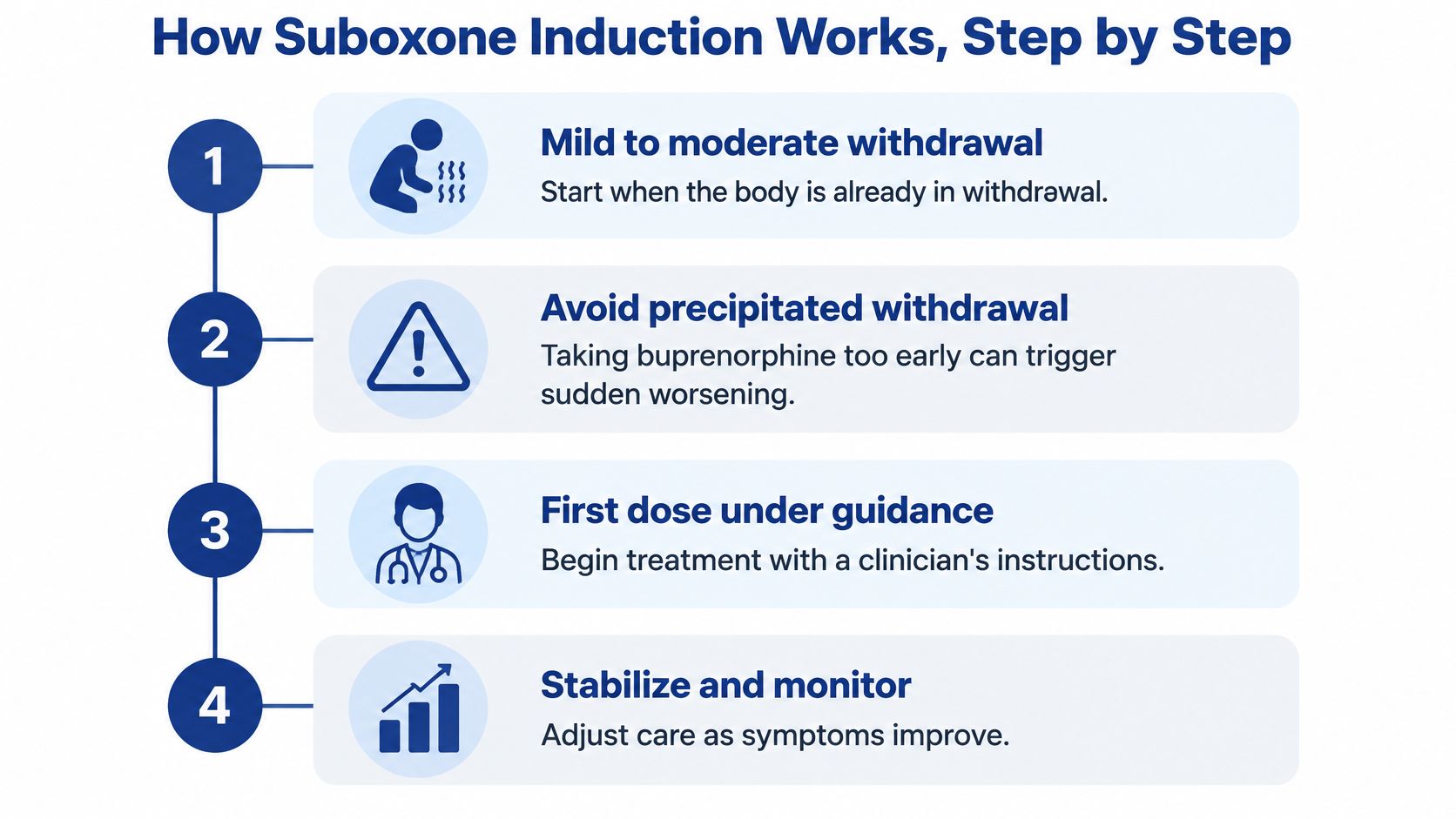
The six steps, in order
- Confirm the opioid history. The clinician asks which substances were used, how much, how often, and when the last dose was taken. Honest answers here set every timing decision that follows.
- Assess withdrawal with a standard scale. The Clinical Opiate Withdrawal Scale (COWS) scores signs such as restlessness, sweating, pupil size, and stomach symptoms. Moderate signs usually indicate readiness to start.
- Time the first dose. The table below sets typical waits by the last opioid used. The clock alone isn't enough, so symptoms guide the final call.
- Take the first dose correctly. The film or tablet goes under the tongue or against the cheek and dissolves fully. Eating, drinking, talking, or swallowing too soon reduces absorption.
- Watch for easing symptoms. Withdrawal should soften over the next hours. Extra doses shouldn't be taken unless the clinician instructs otherwise.
- Adjust toward a stable dose. Over several days, the dose is tuned against cravings, withdrawal, and daily function until symptoms stay controlled around the clock.
Typical wait before the first Suboxone dose
| Last opioid used | Typical timing before first dose | What the clinician checks |
|---|---|---|
| Short-acting opioids such as heroin or prescription oral opioids | Usually 12 to 24 hours after last use, once withdrawal signs appear | Withdrawal score, vital signs and dose history |
| Fentanyl or other potent, long-acting opioids | Often a longer wait or a low-dose start spread over several days | Ongoing withdrawal and sedation before each dose increase |
| Methadone | Set by the clinician after dose review, usually with a supervised dose reduction first | Current methadone dose and time since the last dose |
Fentanyl and methadone need different handling because they leave the body slowly and unevenly. A low-dose induction starts with very small buprenorphine amounts and builds gradually, which lowers the risk of a sudden withdrawal surge. That slower route takes patience, but it exists for a reason.
Progress has a recognizable shape. Withdrawal usually eases within hours of a well-timed first dose, sleep often improves next, and cravings begin to fade over the first days. A rocky first day doesn't mean treatment has failed. It usually means timing or dose needs adjustment, and that's a clinical conversation, not a verdict.
Dosing, Side Effects and Safety You Need to Know
A common assumption says a higher dose must work better. Buprenorphine doesn't behave that way, because its ceiling effect means benefit levels off. The labeled target dose is 16 mg per day, within a typical range of 4 to 24 mg. The actual dose is adjusted for withdrawal, cravings, and daily function. Some people split the dose across the day, and the dose is never self-adjusted.
Common side effects
Most side effects are manageable and often ease as the body adjusts. Patients commonly report headache, nausea, constipation, sweating, and trouble sleeping. Films and tablets that dissolve in the mouth can also cause mouth irritation and raise dental concerns over time, so rinsing after the dose dissolves and keeping dental appointments both matter.
Practical rule: A side effect that fades is information. A side effect that grows, or sedation that feels hard to shake, is a reason to call before the next dose.
Serious risks that need a plan
Three risks deserve direct language. Combining buprenorphine with benzodiazepines, alcohol, or other sedatives raises the danger of heavy sedation and overdose. Taking it too soon after a full agonist can cause precipitated withdrawal. After a period of reduced use, tolerance drops, so returning to a previous opioid amount carries a higher overdose risk than many people expect.
Safety habits reduce those risks in concrete ways.
- Keep naloxone at home: A naloxone kit should stay in a known spot, and family members should know where it is and how to use it.
- Store medication securely: Films and tablets belong locked away from children, because even one dose can seriously harm a small child.
- Tell every prescriber: Dentists, surgeons, urgent care clinicians, and pharmacists all need to know about buprenorphine before adding sedating medicines.
- Never stop abruptly: Stopping suddenly brings back withdrawal and cravings, so any taper needs a clinician's plan and schedule.
Emergencies and routine questions follow different paths. Slow or stopped breathing, or a person who can't be woken, means emergency services and naloxone right away. Side effects that linger, cravings that return, or a dose that feels off belong in a clinic call.
This list isn't complete. Pregnancy, liver disease, other medications, and alcohol use all change the risk picture. A clinician reviews each person's risks before treatment starts and again as circumstances change.
Counseling and Lifestyle Support for Lasting Recovery
Medication steadies the body, and counseling builds the habits that protect that stability. That's why medication plus counseling is linked with better treatment retention than medication alone. The consultation image below reflects how that combined plan gets discussed and revisited over time.

Counseling options that do different work
Cognitive behavioral therapy targets triggers and thought patterns. A patient who always used after payday learns to spot that sequence early and plan around it. Motivational interviewing works on readiness to change, which helps when part of a person wants recovery and part doesn't. Contingency management, offered in some programs, rewards confirmed progress such as negative drug screens or attended sessions.
Mutual-support groups and family involvement are optional layers, not requirements. Some patients draw strength from a group that meets twice a week. Others do better with a spouse who attends one session a month and learns what support helps.
Lifestyle work and medical monitoring
Lifestyle support fits naturally beside that counseling. Regular exercise, consistent sleep routines, nutrition, and stress management each reduce the background strain that feeds cravings. Practical guidance on eating during recovery appears in IPA's resource on nutrition for addiction recovery. A clinician may also order liver function and other labs before and during treatment. Those steps support medical care rather than replace it.
The short video below offers a patient-friendly overview that can help frame questions before an appointment.
At IPA, Suboxone treatment is coordinated with counseling, exercise, and nutrition planning so each part reinforces the others. Every plan should also include a written relapse plan. It lists early warning signs, people to contact, the clinic phone number, and what to do after a missed dose. Naloxone and storage habits belong to the dosing safety discussion, so patients should review that material rather than rely on memory.
Book Your Telehealth Visit With Dr. Levy
Booking with Dr. Kenneth Levy, DO, starts on the IPA website, where new patients can schedule a psychiatric evaluation. Telepsychiatry is offered statewide, so patients across Pennsylvania meet by secure video from home or another private location. Dr. Levy is part of the provider team, and the visit follows the same telehealth format used across the practice. The page on online addiction treatment at IPA explains the scope of care.
Insurance needs verification before the first visit. Benefits, copays, deductibles, network status, and prior authorization differ by plan, and no medication should be assumed covered. The checklist below gives patients exact questions for the plan's member services line.
Insurance questions to ask before booking
| Benefit or cost item | Why it matters | Question to ask your plan |
|---|---|---|
| Telehealth coverage | Plans differ on whether virtual visits are covered and at what cost | Are behavioral health telehealth visits covered from home? |
| Copay or coinsurance | Sets the out-of-pocket cost per visit | What is my cost for an evaluation and for follow-up visits? |
| Prior authorization | Some plans require approval before certain services or medications | Do buprenorphine and naloxone need prior authorization? |
| Pharmacy formulary tier | Determines the medication copay | Which tier is buprenorphine and naloxone on my plan? |
| Network status | Out-of-network care usually costs more | Is Integrative Psychiatry of America in network for my plan? |
| Deductible | Full cost applies until the deductible is met | How much of my deductible remains this year? |
Coverage rules also vary by service. A plan may cover psychiatric telehealth visits yet handle separate offerings, such as weight loss prescriptions delivered to your door, under different terms. That is why it helps to confirm each service's rules before booking. Prescribing controlled substances through telehealth follows federal and state rules that the clinician must confirm for each patient. If buprenorphine is the reason for the visit, mention it when scheduling so the clinician can confirm the applicable prescribing rules before the appointment. Booking is also the right moment to ask how refills are handled, how urgent concerns are managed between visits, what happens if the internet fails, and how care continues after a move. Online review scores describe patient experience, not clinical outcomes, so service details are the better test of access.
What to Expect at Your First Telehealth Visit
The first visit is a psychiatric evaluation by video. The provider reviews history and goals before any treatment decision, so nothing is prescribed on autopilot.
- Confirm identity and location. Identity, a Pennsylvania location, and consent for telehealth come first, since licensure follows the patient's location.
- Review the full history. Symptoms, past treatment, current medications, and substance use are covered, including the date of last opioid use when buprenorphine is the reason for the visit.
- Discuss goals openly. What has helped, what hasn't, and what recovery should look like in daily life all shape the plan.
- Use screening tools carefully. Questionnaires are a starting point only. A screening score doesn't establish a diagnosis.
- Talk through options. Labs, prior records, counseling, and medication choices are weighed together.
- Agree on follow-up. Visit frequency and between-visit contact methods are set before the call ends.
Prescriptions are written only when clinically appropriate and after the plan is discussed. Patients should have a current medication list, prior records, recent lab results, an insurance card, and written questions ready. A first visit can't guarantee a specific outcome, and emergencies need 911 or the nearest emergency department rather than a scheduled visit.
Pennsylvania patients who want whole-person psychiatric care, including careful medication management and Suboxone treatment for opioid dependence, can start with a thorough evaluation with Dr. Levy or another IPA provider by secure telehealth. To verify insurance, review provider profiles, and request an appointment, visit Integrative Psychiatry of America.