
An adult in Philadelphia checks the scale after starting a weight-loss plan and notices something unexpected. Clothes fit differently, appetite has changed, and energy may be better, but sleep feels unsettled and anxiety is harder to manage. Another adult in a smaller Pennsylvania town is considering a GLP-1 medication or bariatric surgery and wants to know whether the mental-health payoff will match the physical effort.
The honest answer is that weight loss and mental health are connected, but they aren't a simple cause-and-effect chain. Three variables often get blended together: the amount of weight lost, the reduction in weight stigma, and changes in mood-related biology. These variables can move in different directions.
Adults managing anxiety, depression, ADHD, OCD, or PTSD need more than motivation slogans. They need a plan that considers psychiatric medications, eating behavior, body image, social stress, sleep, and follow-up care. The evidence supports potential mental-health benefits, but it also shows why individualized monitoring matters.
Table of Contents
- Why This Question Matters Right Now
- How Biology, Psychology, and Social Experience Interact
- What the Evidence Says About Mental Health Benefits
- When Weight Loss Can Worsen Mental Health
- An Integrative Clinical Strategy for Adults in Pennsylvania
- A Practical First-Month Plan
- Comparing Surgical, Medication, and Lifestyle Approaches
- Safety, Monitoring, and When to Seek Telepsychiatry
Why This Question Matters Right Now
Weight management can affect mood through several routes, and the route matters. A person may feel better because movement becomes easier, self-efficacy improves, or other people treat the person differently. Another person may lose weight while experiencing restrictive eating, medication changes, body-image distress, or renewed anxiety.
That difference explains why the question “Does weight loss improve mental health?” rarely has a universal yes-or-no answer. A scale records body weight, but it doesn't record shame, sleep quality, depression severity, emotional eating, or whether a person feels safer in social settings.
For adults in Pennsylvania, the decision may involve lifestyle treatment, a GLP-1 medication, bariatric surgery, or a combination of medical and behavioral support. Each option changes the body differently. Each also creates different demands for psychiatric monitoring.
Clinical perspective: A lower number on the scale can be helpful, neutral, or emotionally complicated. The mental-health outcome depends on more than weight change alone.
A 2020 systematic review and meta-analysis found that adult behavioral weight-management interventions improved depression, mental-health-related quality of life, self-efficacy, exercise self-efficacy, and diet self-efficacy compared with minimal or inactive controls. The review also found no overall evidence that these interventions worsened mental health, although evidence remained insufficient for some outcomes, including anxiety, binge eating, emotional eating, and stress. The systematic review is available through the National Library of Medicine.
This distinction is important for anyone who has tried diets, medication, or surgery and now feels uncertain about the emotional result. The useful question isn't only “How much weight was lost?” It's also “What changed biologically, psychologically, and socially?”
How Biology, Psychology, and Social Experience Interact
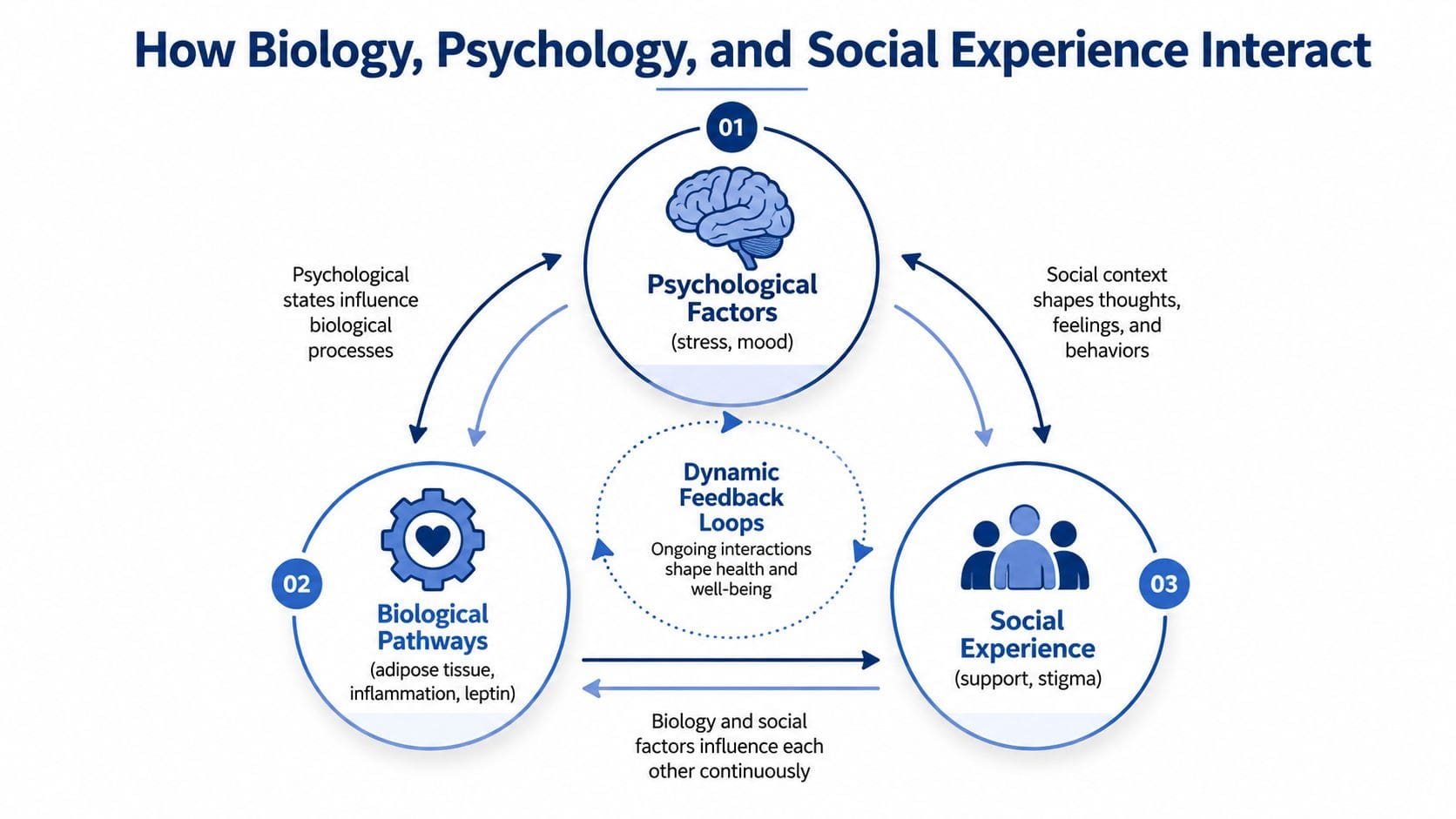
A practical way to understand weight loss and mental health is to picture a three-legged stool. The legs represent biology, psychology, and social experience. If one leg changes while the others remain unstable, the whole stool can wobble.
Biology affects mood, but it doesn't dictate it
Fat tissue is biologically active. It interacts with inflammation, hormones such as leptin, and insulin sensitivity. These systems also communicate with the brain and can influence energy, appetite, stress response, and mood regulation.
That doesn't mean inflammation or insulin resistance automatically causes depression. It means that metabolic health can become part of a broader psychiatric assessment, especially when low mood, fatigue, appetite changes, and sleep problems occur together. The inflammation and gut-brain axis resource offers additional context for this mind-body connection.
Psychology changes the meaning of eating and weight
A person with depression may eat for comfort, skip meals, or lack the energy to plan food. Someone with ADHD may struggle with impulsive eating, delayed meals, or inconsistent routines. PTSD can make body sensations feel threatening, while OCD can attach rigid rules or fears to food and weight.
Weight-management efforts can build self-efficacy, which means confidence in the ability to take effective action. A completed walk, regular meal, or calmer response to an urge can strengthen that confidence. However, rigid rules and repeated perceived failures can create the opposite effect.
Social experience can change faster than biology
Weight stigma includes negative treatment, stereotypes, and shame directed at people because of body size. A person may lose weight yet continue to feel judged, monitored, or unsafe around food. Internalized stigma can also persist after visible weight change.
Supportive relationships may reduce stress, while criticism can increase it. For adults seeking practical movement guidance during hormonal transitions, a science-backed perimenopause workout plan may help connect exercise with strength and function rather than punishment.
The three legs constantly affect one another. Biological changes can alter appetite. Appetite changes can affect confidence. Social responses can then influence stress eating or avoidance. A useful clinical plan therefore tracks all three instead of treating the scale as the only outcome.
What the Evidence Says About Mental Health Benefits
A meaningful reduction in body weight may lower depression risk, but the pathway is not just “fewer pounds, better mood.” Weight change, reduced weight stigma, and shifts in mood-related physiology can move separately. The strongest trial evidence supports a possible reduction in depression after treatment-related weight loss.
A 2025 meta-analysis of randomized controlled trials reported a Mantel-Haenszel odds ratio of 0.45 for major depression, with a 95% confidence interval from 0.21 to 0.94. For overall depression, the odds ratio was 0.72, with a 95% confidence interval from 0.54 to 0.97. The trial-based meta-analysis is indexed by PubMed.
In plain language, the weight-loss groups experienced fewer depression outcomes than the comparison groups in the included trials. An odds ratio below one indicates lower odds in that treatment group. It does not predict what will happen to a particular adult, and it cannot show that weight loss alone caused every improvement.
The same analysis found that weight loss greater than 10% was linked to a lower incidence of depression than smaller weight loss, with a statistically significant subgroup difference, p = 0.04. Because the trials included surgical, endoscopic, and approved pharmacologic interventions, the result points to clinically meaningful weight reduction rather than one universally superior method. It also does not show that pounds lost, rather than stigma reduction or physiological change, caused the mood benefit.
What this means for people with existing diagnoses
An adult with depression may notice better mood as energy, mobility, self-efficacy, or daily functioning improves. Someone with ADHD may find a steadier routine easier to maintain. A person with anxiety may feel more comfortable moving or joining social activities. These are possible pathways, not guarantees. Coordinated care, including guidance on how nutrition and metabolic health affect mood, can support treatment without replacing psychiatric care.
The relationship also runs in both directions. A meta-analysis found that obesity at baseline increased later depression risk by 55%, with an unadjusted odds ratio of 1.55 and a 95% confidence interval from 1.22 to 1.98. A Mendelian randomization review estimated a possible causal component, with obesity increasing depression risk by 33%, represented by an odds ratio of 1.33 and a 95% confidence interval from 1.19 to 1.48. The obesity and depression evidence is available through PubMed.
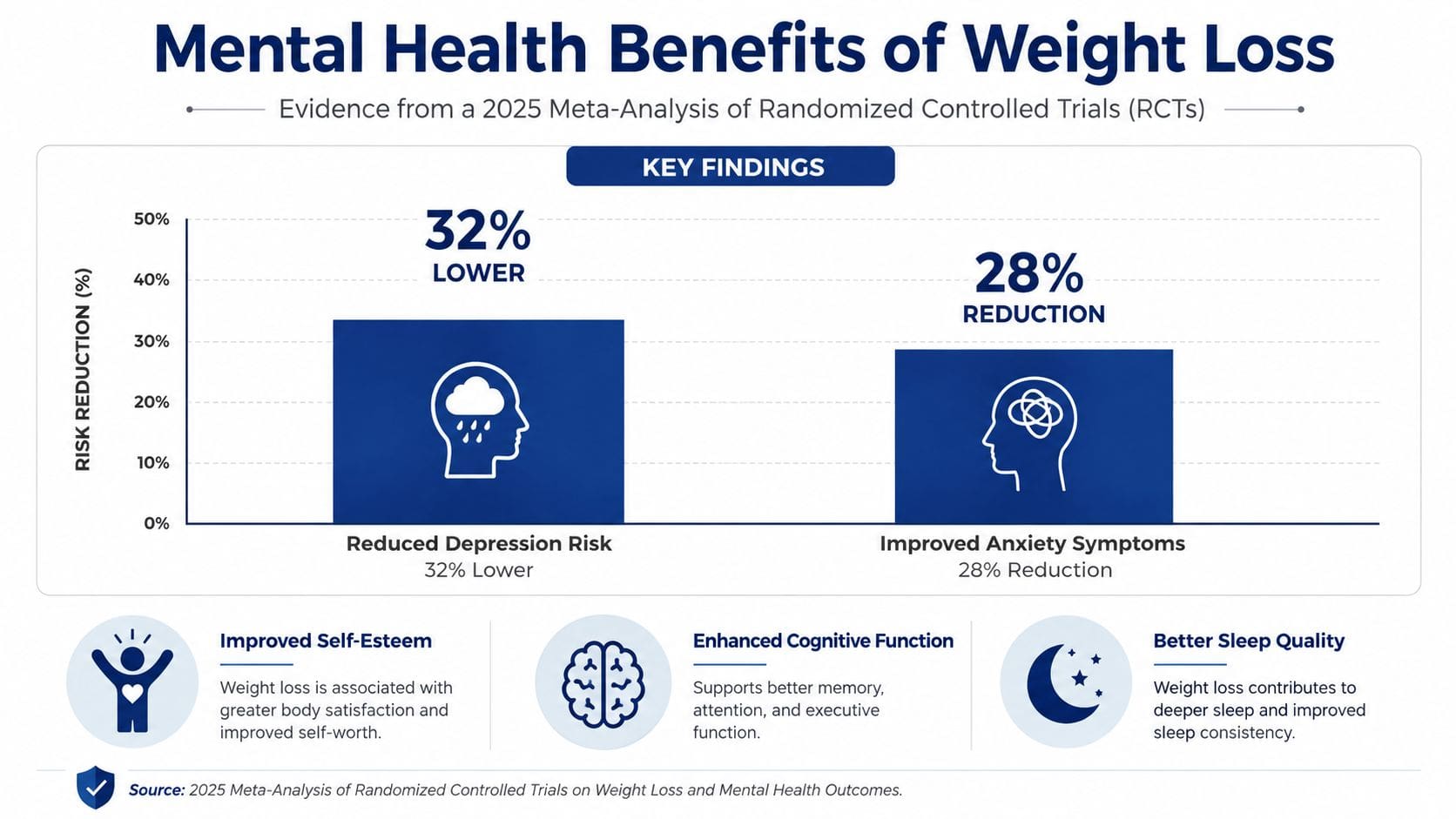
These findings support treating metabolic and psychiatric health together. They do not establish that every person with anxiety, binge eating, emotional eating, or stress will improve. The earlier systematic review found insufficient evidence for several of those outcomes, so depression findings should remain limited to what the research supports.
When Weight Loss Can Worsen Mental Health
Weight loss can become psychologically harmful when the method relies on extreme restriction or when clinicians overlook the person's psychiatric history. A 2025 analysis of NHANES data found that calorie restriction was associated with higher depressive symptom scores. Adults following calorie-restricted diets scored about 0.29 points higher on the PHQ-9 overall and 0.46 points higher among adults with overweight. Nutrient-restricted patterns showed a larger increase in the overweight group. The calorie-restriction analysis is discussed by ACE Fitness.
Those findings describe an association, not proof that calorie restriction directly caused depression. Still, they give clinicians a reason to ask whether a plan is producing hunger, guilt, obsessive food thoughts, social withdrawal, or loss of control around eating.
The scale may not be the main mental-health variable
A 2025 study summarized by HealthDay found that after weight-loss surgery, improvements in depression and anxiety were linked more closely to lower weight stigma than to the amount of weight lost. Patients who continued to experience stigma had higher risks of depression, anxiety, and eating disorders. The HealthDay summary is available through U.S. News Health.
This creates an important clinical safeguard. A person can meet a weight goal and still need support for shame, discrimination, body image, or disordered eating. Conversely, a person may experience better mental health before reaching a particular scale target because social confidence and self-respect improve.
Long-term safety still needs attention
A 2026 narrative review found that most obesity interventions appeared psychologically safe or beneficial, but long-term data for GLP-1 receptor agonists remained limited. Some bariatric studies also suggested late suicidality signals after five years. These findings don't establish that GLP-1 medications or surgery cause psychiatric harm, but they do support ongoing follow-up.
Adults considering medication may find a patient-friendly GLP-1 and mental health guide useful alongside individualized medical advice. Adults taking antidepressants should also review medication and weight considerations with a clinician through depression treatment and medication support.
An Integrative Clinical Strategy for Adults in Pennsylvania
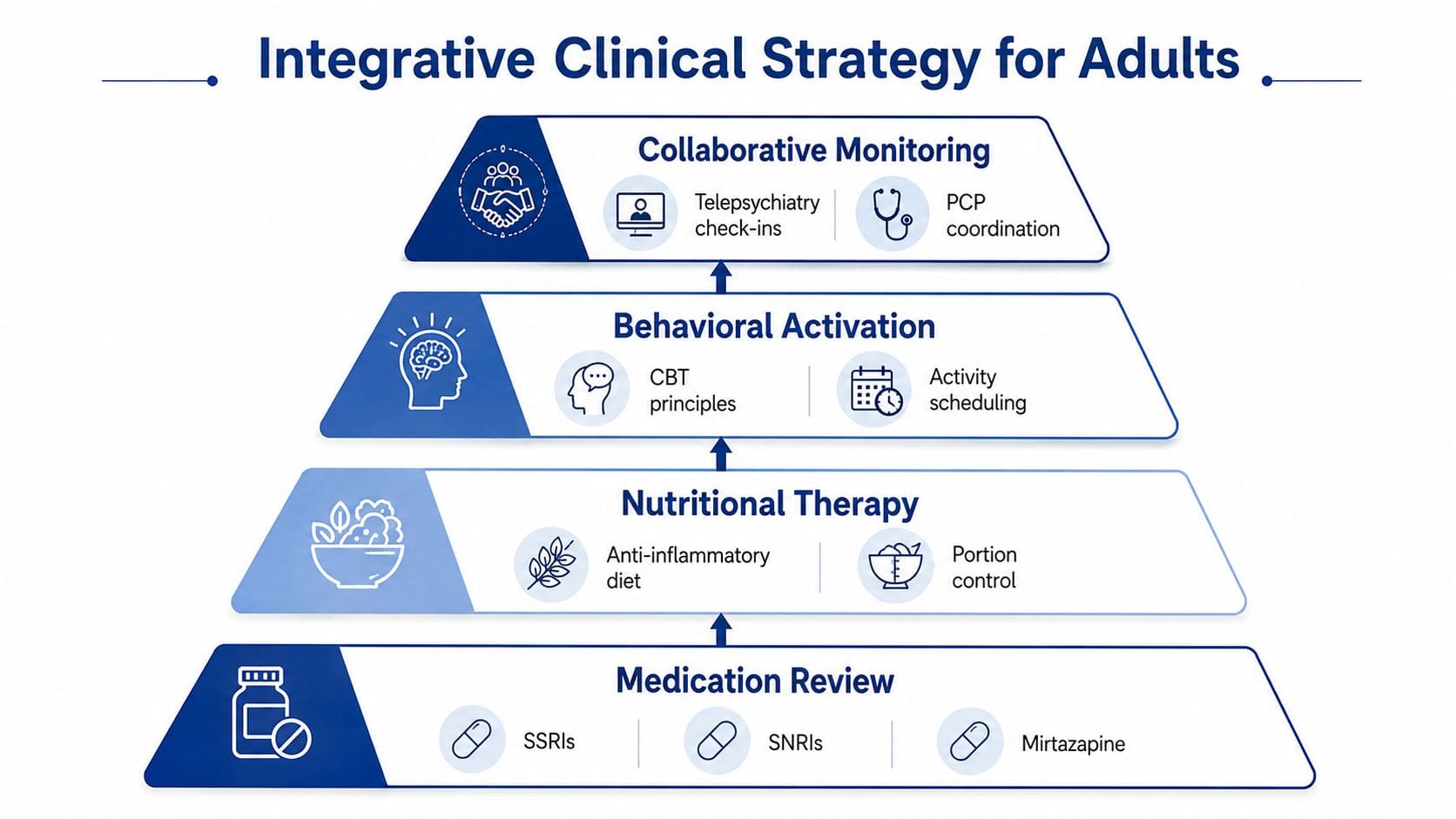
An integrative plan starts with a psychiatric and medical review, not with a demand for rapid weight change. The clinician asks what changed first, which symptoms are active, and whether medication, sleep, eating behavior, or metabolic health may be contributing.
Medication review comes before major adjustments
SSRIs, SNRIs, mirtazapine, antipsychotics, and stimulants used for ADHD can affect appetite, energy, sleep, or weight differently. That doesn't mean a person should stop or switch medication independently. A prescriber weighs psychiatric stability against side effects and considers whether a change could destabilize depression, anxiety, ADHD, OCD, or PTSD.
Psychotherapy can address the behavioral and emotional side of treatment. Cognitive behavioral strategies may help with binge eating and emotional eating. Therapy can also target body image, internalized stigma, trauma-related eating patterns, and the loss of food as a coping tool.
Build movement and nutrition around function
Exercise counseling should focus on strength, mobility, energy, and mood. Nutrition education should support adequate nourishment and a sustainable eating pattern, rather than treating hunger as a moral failure. Mindfulness and meditation may help a person notice urges and body sensations without reacting automatically.
A clinician may also coordinate lab testing. Depending on symptoms and history, evaluation can include thyroid function, cortisol-related concerns, insulin regulation, lipids, vitamin status, and other medical contributors. Genetic or pharmacogenomic testing may be considered when it could inform psychiatric medication selection or tolerability. Testing should answer a clinical question, not just add more data.
Testosterone replacement therapy may be appropriate for an adult with documented hypogonadism and relevant symptoms, but it requires medical evaluation and monitoring. Mood symptoms alone don't establish a need for testosterone.
Integrative Psychiatry of America provides virtual psychiatric evaluations, medication management, and integrative mental-health treatment through secure telehealth for adults throughout Pennsylvania. Telepsychiatry can connect adults in Philadelphia, Pittsburgh, Harrisburg, and smaller communities with coordinated psychiatric care when local specialists are difficult to access.
Practical rule: The safest plan is usually the one that can be reviewed, adjusted, and supported over time.
Whole-person care isn't a marketing label when it changes the questions being asked. The clinician tracks mood and metabolic goals together, coordinates with primary care when needed, and changes the plan when risks outweigh benefits.
A Practical First-Month Plan
The first month should create information, not pressure. A simple baseline helps distinguish a true mood change from a difficult day.
Record the starting picture. Track mood, anxiety, sleep, appetite, energy, eating urges, and weight trends. The Feeling Journal can help organize observations, while the Anxiety Symptom Checker may help identify symptoms that deserve clinical discussion.
List every medication and supplement. Include psychiatric medications, weight-loss medications, over-the-counter products, and the timing of each dose. A medication review can identify appetite, sleep, or energy changes that might otherwise be blamed on willpower.
Arrange appropriate medical testing. A clinician may consider TSH, A1C, lipids, vitamin D, fasting insulin, and relevant genetic or pharmacogenomic panels when indicated. The exact panel depends on symptoms, medical history, medications, and prior results.
Choose two modest movement goals. The Exercise Routine Generator can help create a realistic starting point. Goals might involve a regular walk, brief strength work, or movement tied to an existing routine.
Avoid extreme calorie restriction. A sustainable nutrition pattern should provide adequate nourishment and leave room for social meals. Severe rules can worsen food preoccupation and emotional distress for some adults.
Add a short daily regulation practice. The 5-4-3-2-1 Grounding Tool can help during anxiety, cravings, or trauma-related activation.
Adults should contact a clinician if mood worsens, sleep changes sharply, binge eating escalates, or medication side effects appear. Guidance about online versus in-person weight-loss care can help clarify which format fits the person's symptoms and need for follow-up.
Comparing Surgical, Medication, and Lifestyle Approaches
The best option depends on more than pounds lost. Baseline psychiatric symptoms, exposure to weight stigma, medication interactions, eating-disorder history, and reliable follow-up can change the balance of benefits and risks. These factors also move independently: a person may lose weight without improved mood, while reduced stigma or better metabolic function may support well-being before further weight change occurs.
| Approach | Mental Health Benefits | Mental Health Risks | Monitoring Priority |
|---|---|---|---|
| Surgical | Substantial physical change may be followed by improvements in depression, anxiety, quality of life, and stigma-related distress. | Some bariatric cohorts have reported late suicidality signals after five years. | Psychiatric stability, eating behavior, medication changes, nutrition, and long-term follow-up |
| Medication | Trial-based evidence links weight loss with lower depression risk, including GLP-1 weight-loss medications and their effects on metabolic and mental health. | Long-term psychiatric safety data for GLP-1 receptor agonists remain limited. | Mood, anxiety, appetite, sleep, adverse effects, and medication interactions |
| Lifestyle and behavioral | Structured programs can improve depression, self-efficacy, exercise confidence, diet confidence, and quality of life. | Restrictive plans may increase distress or depressive symptoms for some adults. | Adequate nutrition, emotional eating, body image, mood, and sustainability |
No approach is universally superior. Stable mood and dependable follow-up may make one option reasonable, while active suicidal thoughts, uncontrolled binge eating, or recent psychiatric medication changes may require a different sequence or added support.
Medication selection should remain collaborative and individualized, with a qualified prescriber reviewing benefits, uncertainties, and mental-health effects.
Safety, Monitoring, and When to Seek Telepsychiatry
Mood monitoring belongs at the beginning of weight management, not only after a crisis. A person should track the symptoms that matter clinically, including depression, anxiety, panic, sleep, appetite, binge eating, energy, irritability, and thoughts of self-harm.
Red flags require prompt attention
New symptoms can appear after a major routine change, medication adjustment, restrictive diet, GLP-1 treatment, or surgery. A same-week psychiatric evaluation is appropriate for several warning signs:
- New or returning suicidal thoughts: Seek immediate help rather than waiting for the next routine appointment.
- Rapid mood swings: Sudden shifts in energy, irritability, or behavior need assessment.
- Worsening anxiety or panic: Escalating fear can interfere with eating, sleep, medication use, and daily functioning.
- Binge-eating escalation: More frequent loss-of-control eating or compensatory behavior requires professional support.
- Dissociation around meals: Feeling detached, numb, or unreal during eating can signal trauma-related activation or another psychiatric concern.
- Significant sleep pattern changes: Major changes in sleep can accompany worsening mood or other psychiatric symptoms.
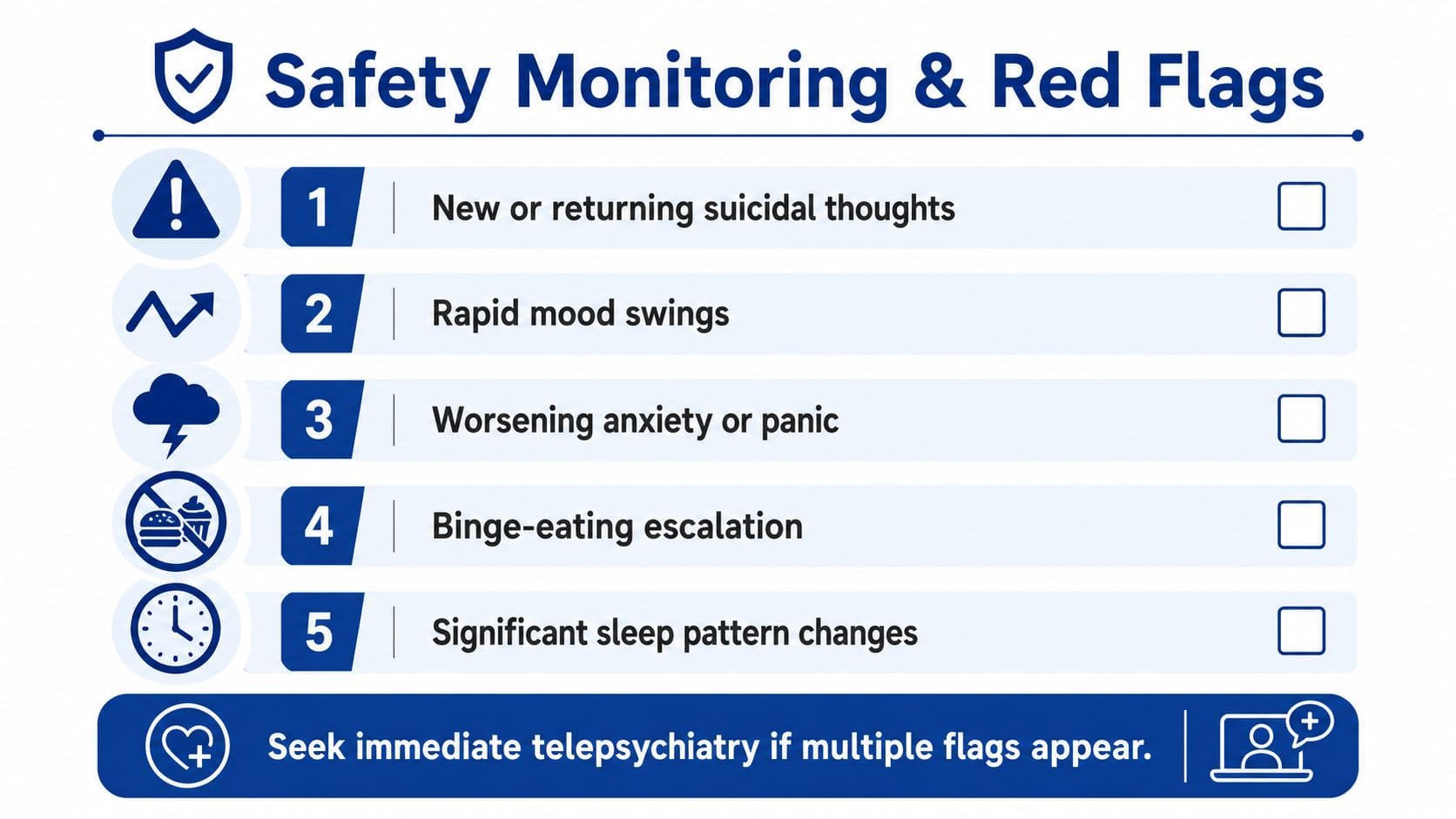
Anyone with immediate danger, an active suicide plan, severe confusion, or inability to stay safe should contact emergency services or go to the nearest emergency department. Telepsychiatry can support prompt evaluation, but it isn't a substitute for emergency care when immediate safety is at risk.
What a virtual psychiatric evaluation can include
At a Pennsylvania-based virtual practice, a secure, HIPAA-compliant visit may include a review of psychiatric symptoms, current medications, medical history, eating patterns, weight-management treatment, sleep, and relevant laboratory information. A board-certified clinician can then develop a treatment plan that coordinates psychiatric care with medical weight management rather than treating them as unrelated problems.
That differs from general wellness coaching or commercial telehealth that focuses only on prescribing a weight-loss medication. Adults taking psychiatric medication, adults with eating-disorder histories, and adults considering bariatric surgery or GLP-1 treatment may need more complete psychiatric oversight.
Integrative Psychiatry of America offers telepsychiatry across Pennsylvania, including Philadelphia, with virtual psychiatric evaluations and medication management. Adults can review insurance information before care and use the appointment scheduling pathway when a clinical evaluation is appropriate.
Questions adults commonly ask
Can GLP-1 medications cause depression?
Current evidence summarized in the provided research doesn't establish that GLP-1 medications cause depression. A 2026 narrative review noted limited long-term psychiatric data, so clinicians should monitor mood, anxiety, sleep, appetite, and suicidal thoughts during treatment rather than promise that psychiatric effects cannot occur.
Do antidepressants make weight loss harder?
Some antidepressants can influence appetite, energy, or weight, but effects vary by medication and person. A treatment change should never happen without the prescribing clinician because stopping or switching can lead to psychiatric relapse.
How quickly should mood change?
Mood may change at a different pace than weight. Some adults notice improved confidence or energy early, while others need treatment for depression, anxiety, trauma, or eating behavior before they feel emotionally better. A randomized controlled trial of a group-based weight-management program found a transient depression improvement at three months, with a 0.6-point difference versus self-help, but no consistent later differences in depression or anxiety. The study reported no evidence that the program worsened those symptoms, and the effect was less than one point on a 21-point Hospital Anxiety and Depression Scale, which wasn't clinically significant. The randomized trial is indexed by PubMed.
What does body mass index tell clinicians?
BMI can help describe weight categories, but it doesn't capture a person's full health or psychiatric picture. A U.S. population study found higher psychiatric disorder prevalence at both BMI extremes, with higher depression and anxiety prevalence in several groups, including men with class III obesity. After adjustment, men with BMI of at least 40 kg/m² remained significantly more likely to have current or lifetime diagnosed depression and anxiety. The population study is available through PubMed.
Key takeaways
- Weight change, biology, and stigma are separate variables.
- Weight loss greater than 10% was linked with stronger depression reduction than smaller weight loss in subgroup analysis, but that threshold isn't a personal prescription. The trial-based meta-analysis reports this finding.
- Mood monitoring should accompany weight management, especially during medication changes, restrictive eating, GLP-1 treatment, or bariatric care.
- Integrative telepsychiatry in Pennsylvania can help coordinate psychiatric symptoms, medication management, eating behavior, and medical follow-up.
Adults who are experiencing new or returning suicidal thoughts should seek immediate emergency support. Adults with worsening mood, anxiety, binge eating, sleep changes, or concerns about psychiatric medication can schedule a timely clinical evaluation.
Integrative Psychiatry of America provides secure virtual psychiatric evaluations, medication management, and integrative care for adults across Pennsylvania who are navigating weight concerns alongside anxiety, depression, ADHD, OCD, or PTSD. Qualified readers can visit Integrative Psychiatry of America to learn about care options, verify insurance, or schedule an appointment.