
Relief can feel complicated on Lexapro. Mood may be steadier, panic may ease, and daily life may stop feeling like a grind. Then a different problem shows up. Jeans fit differently. Hunger feels less predictable. Cravings return at night. That creates a frustrating question: if Lexapro is helping, why does the body suddenly feel harder to manage?
Short answer: Lexapro is not a weight-loss drug. Some people lose a small amount early, many stay stable, and others gain modestly over months.
If weight is not budging on Lexapro, the first move is not a diet overhaul. It is a pattern check. Confirm whether the weight change started right after beginning the medication or after a dose increase. Review other prescriptions, supplements, sleep quality, and any recent changes in menstrual status, thyroid health, or testosterone. Track food and appetite for one to two weeks so you can separate mood-recovery eating from medication-driven cravings. Escalate to your prescriber promptly if weight change is rapid, severe, or accompanied by swelling, fatigue, or mood destabilization.
The important point is that this pattern can be addressed. Psychiatric nurse practitioners look at more than a prescription bottle. Weight on Lexapro has to be evaluated in context. That includes nutrition, movement, sleep, stress, other medications, supplements, and hormone status. It also includes the reality that a person who is finally feeling less depressed may be eating more normally again, which can be healthy, even if the scale moves.
For readers who want to understand the mind-body connection in more depth, IPA discusses how nutrition affects mental health.
How We Evaluated Weight Changes on Lexapro for This Guide
In preparing this guide, our editorial team prioritized safety, clinical relevance, and clarity over trends or anecdotal claims. We reviewed peer-reviewed studies on escitalopram and body weight, clinical guidelines on antidepressant side-effect management, and established nutrition principles for preserving muscle and appetite control. Where population data showed variability in individual responses, we highlighted that uncertainty rather than presenting a single narrative.
We also applied practical patient-safety filters. Advice that might encourage medication discontinuation without clinician oversight was excluded. Recommendations focused on measurable habits, clear escalation thresholds, and collaboration with a prescriber when needed. If a claim could not be supported by credible clinical or nutritional evidence, we replaced it with a more conservative, actionable alternative.
In our clinical review of medication-related weight concerns, we consistently find that most patients benefit from structured monitoring rather than extreme dietary restriction. That is why this guide emphasizes protein targets, resistance training, sleep protection, and timely prescriber conversations.
Introduction You Feel Better But Your Clothes Feel Tighter
Many adults start Lexapro for the right reason. Anxiety is running the day. Depression is flattening motivation. Relationships feel harder. Work feels heavier. Then the medication begins to help, and a few months later a different kind of stress appears in the mirror.
That emotional split is real. A person can be grateful that Lexapro is helping and still feel upset about weight gain. Both things can be true at the same time. Shame usually makes this harder, especially when someone assumes weight changes mean they're eating badly or "not trying hard enough."
Psychiatric care should be more precise than that. How to lose weight on Lexapro starts with understanding the cause of the pattern, not blaming the person living through it.
The goal isn't punishment
Crash diets usually backfire here. They increase hunger, reduce consistency, and often make mood and energy less stable. A better approach is a structured one that preserves muscle, steadies appetite, improves sleep, and reviews whether the medication plan itself still makes sense.
A practical reset often includes:
- Meal timing with enough protein: Consistent meals can reduce the late-day hunger that leads to overeating.
- Simple daily movement: Walking is often more sustainable than an all-or-nothing gym plan.
- Sleep protection: Tired brains make impulsive food choices faster.
- Medication review: Sometimes the side effect burden changes enough that a prescriber needs to reassess the plan.
Weight management on Lexapro works better when mental health treatment and physical health treatment are handled together, not as separate problems.
Relief and weight stability can coexist
The good news is that people don't have to white-knuckle this. Lifestyle interventions can help, especially when they are specific and repeatable. Walking, resistance training, adequate sleep, and nutrition quality matter because they address the exact factors that often drift during SSRI treatment.
The objective isn't perfection. It's a pattern that can be maintained when motivation is average, schedule is busy, and stress is high. That's usually the difference between a short burst of discipline and actual weight stability.
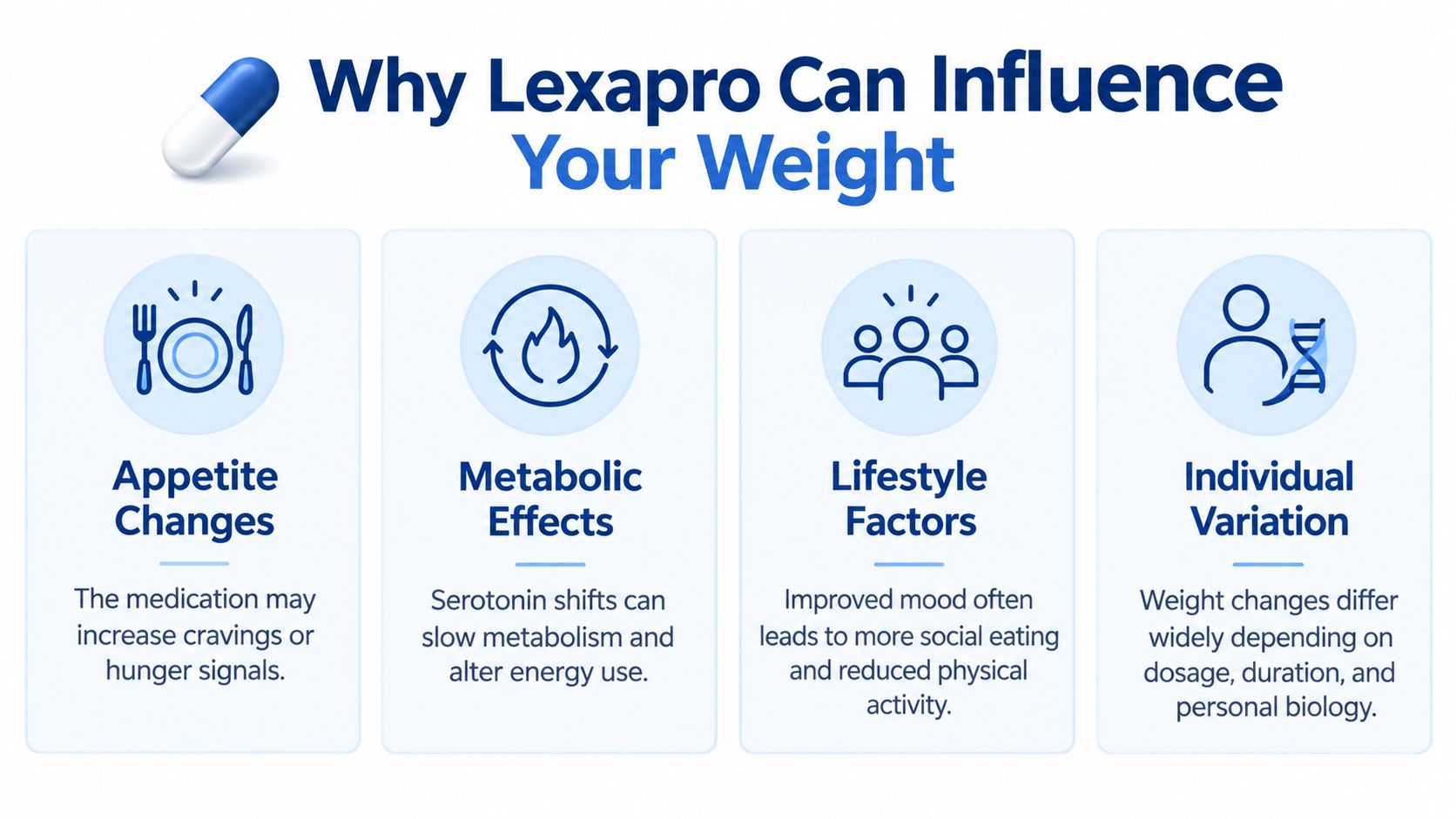
Why Lexapro Can Influence Your Weight
Lexapro affects serotonin signaling, and serotonin influences far more than mood. It also interacts with appetite, reward, satiety, and food preference. That's why some people notice they want more carbohydrates, snack more easily at night, or feel less satisfied by meals that used to be enough.
At the population level, weight gain is possible, but it isn't universal. In our experience reviewing medication-related weight concerns, Lexapro rarely acts like a simple "weight-gain pill." Individual responses depend on baseline appetite, depression recovery, sleep quality, activity levels, and other medications. Lexapro doesn't create one fixed outcome; it changes a set of drivers, and the net result varies.
When Lexapro may be linked with early weight loss or appetite reduction
A minority of patients notice reduced appetite or modest weight loss shortly after starting escitalopram. This can happen because anxiety improvement, nausea, or early serotonin effects temporarily lower food intake. If appetite was suppressed by severe depression or anxiety before treatment, normalized eating after starting medication can also look like a rebound rather than a drug effect.
Clinical evidence does not support Lexapro (escitalopram) as a dependable weight-loss medication. In a 2011 GENDEP study involving 630 adults with moderate-to-severe unipolar depression, participants receiving escitalopram experienced an average weight increase of approximately 0.14 kilograms during 12 weeks of treatment. That result represents a small average change, not a meaningful weight-loss effect, and individual responses varied. A separate review of acute antidepressant treatment reported an average escitalopram weight change of minus 0.33 kilograms in one analysis [Reference URL].
Why longer-term weight gain is more common than sustained weight loss
Longer-term population research indicates that escitalopram is more often associated with modest weight gain than sustained weight loss. A 2024 observational study of more than 183,100 adults ages 20 to 80 compared eight commonly prescribed antidepressants during the first 24 months after treatment initiation. Compared with sertraline, people taking escitalopram gained about 0.41 kilograms more after six months and were approximately 10% to 15% more likely to gain at least 5% of their starting body weight. The study's broader estimates placed average escitalopram-associated gain at roughly 1.4 kilograms [Reference URL].
Historical trials also show that escitalopram generally produces less weight disruption than some older antidepressants, but that does not make it a weight-loss treatment. In the GENDEP comparison of 630 adults, escitalopram produced an average increase of only 0.14 kilograms over 12 weeks, while the older medication nortriptyline produced significantly greater weight increases. Another double-blind, placebo-controlled trial lasting eight months compared escitalopram with duloxetine in 274 adults and reported an average escitalopram gain of approximately 1.83 kilograms. Both escitalopram and duloxetine were evaluated in [Reference URL].
What weight changes over time typically look like
Weight trajectories on Lexapro often follow a recognizable sequence, even though each person's timeline differs.
| Timeframe | Typical pattern |
|---|---|
| First few weeks | Appetite changes, possible nausea, mood-driven eating shifts |
| First 3 to 6 months | Recovery-related eating normalizes; weight may stabilize or rise slightly |
| First 6 to 12 months | Modest weight gain becomes more likely in some patients |
| Beyond 12 months | Long-term weight trend depends on habits, other meds, and metabolic factors |
People curious about serotonin's broader role can read IPA's explanation of what 5-HT is, since serotonin pathways help explain why mood treatment can sometimes affect food behavior too.
Whether Lexapro can make weight loss harder even when someone is trying
Yes. Lexapro can make weight loss harder for some people, even when calories are tracked and exercise is consistent. That happens when appetite rises, evening snacking increases, sleep quality declines, or metabolic adaptation slows progress. It does not mean weight loss is impossible. It means the plan needs clearer structure, stronger protein and fiber intake, consistent resistance training, and occasional medication review with a clinician if progress stalls despite good habits.
Strategic Nutrition for Metabolic Health on Lexapro
Nutrition on Lexapro has to do two jobs at once. It needs to support mood stability and it needs to reduce the conditions that make weight gain easier. The most effective plans usually aren't the most restrictive. They're the ones that preserve lean mass, control rebound hunger, and make it easier to stay consistent through an ordinary week.
The centerpiece is protein. Research summarized in the British Journal of Sports Medicine recommends about 1.6 g of protein per kg of body weight daily, paired with resistance training, to preserve muscle and help counter the metabolic slowdown associated with SSRIs, as described in this review of Lexapro weight management strategies. If you want a plain-English breakdown of per-meal protein targets for weight loss, see Gym Snack.
How to avoid weight gain on Lexapro before it starts
Prevention is simpler than reversal. If you are starting Lexapro or adjusting your dose, put basic monitoring in place from day one. Weigh yourself once weekly under consistent conditions, not daily. Track protein and fiber intake for at least the first two weeks so you can spot drift early. Set a minimum protein target at each meal and keep high-calorie liquids and grazing habits in check. When hunger spikes after a dose change, adjust meal timing and protein order before reaching for restrictive diets.
A quick prevention checklist:
- Weekly weigh-ins with the same scale and time of day
- Protein minimums at breakfast, lunch, and dinner
- Fiber targets from vegetables, legumes, and whole grains
- Evening appetite plan to limit unplanned late snacks
- Calorie-dense habit audit for drinks, sauces, takeout, and grazing
Protein is the anchor
Protein helps with fullness, protects muscle during weight loss, and supports the metabolism-preserving side of exercise. Many people on Lexapro accidentally under-eat protein while over-eating snack foods. That combination drives hunger and makes body composition drift in the wrong direction.
A better setup is to build each meal around a clear protein source first, then add fiber-rich carbohydrates and healthy fats.
Examples include:
- Breakfast: Greek yogurt, eggs, cottage cheese, or a protein smoothie.
- Lunch: Chicken, tuna, tofu, turkey, or beans added to a substantial salad or grain bowl.
- Dinner: Fish, lean beef, tempeh, or lentils with vegetables and a balanced starch.
- Snacks: Edamame, cheese, yogurt, jerky, or a protein shake when meals run late.
For readers who want a plain-English explanation of energy balance, PlateBird has a useful breakdown of how a calorie deficit works. That concept matters, but on Lexapro it works best when the deficit is moderate and protein stays high.
Build meals that reduce rebound hunger
People often ask what to cut out. A better question is what to build in. Meals that are mostly refined carbs tend to disappear quickly and leave hunger behind. Meals with protein, fiber, and volume last longer.
A practical plate often includes:
- A defined protein source: This comes first.
- A high-fiber carbohydrate: Beans, fruit, oats, potatoes, or whole grains can be more filling than ultra-processed snacks.
- Vegetables for volume: These help meals feel substantial.
- Healthy fat in a measured amount: Nuts, olive oil, avocado, or seeds can improve satisfaction, but portion drift matters.
Short-term success often improves when patients use structure rather than constant decision-making. That may mean repeating the same breakfast on weekdays, packing lunch before work, and deciding dinner protein in advance.
Here is one realistic 3-day example of a simple meal pattern:
- Day 1: Eggs and vegetables for breakfast; chicken salad with beans for lunch; salmon, quinoa, and roasted broccoli for dinner.
- Day 2: Greek yogurt with berries and nuts for breakfast; turkey and hummus wrap with salad for lunch; tofu stir-fry with brown rice and vegetables for dinner.
- Day 3: Cottage cheese with fruit for breakfast; tuna salad on whole-grain bread with carrot sticks for lunch; lean beef stir-fry with lentils and spinach for dinner.
"Healthy eating" is too vague to guide behavior. A repeatable meal pattern works better than motivation.
What to do if hunger spikes after a dose change
Dose increases can temporarily amplify appetite or shift food preferences. If hunger suddenly intensifies after a change, do not punish yourself with extreme restriction. Instead, raise protein and fiber at each meal, add a short walk after dinner, and track intake for a few days to see whether the spike stabilizes. If elevated hunger persists beyond two weeks despite structured meals, share the pattern with your prescriber.
Mindful structure beats rigid dieting
Strict food rules can trigger overeating later, especially in people who are already stressed. Mindful eating isn't a soft concept here. It's practical. It means noticing whether eating started because of hunger, fatigue, boredom, anxiety, or reward-seeking.
Useful tools include:
- Food and mood journaling: A simple note on meals, hunger, mood, and evening cravings can reveal patterns quickly.
- Portion awareness: Smaller bowls, plated meals, and fewer straight-from-the-bag snacks reduce accidental overeating.
- Liquid calorie review: Coffee drinks, alcohol, juice, and sweetened beverages often contribute more than expected.
- Hydration habits: Some people mistake thirst for hunger, especially in the afternoon.
- Meal timing: Skipping meals early often leads to overeating later.
Readers looking for more on food strategy alongside antidepressant treatment can explore IPA's discussion of SSRI supplements and diet for depression.
What usually doesn't work? Cutting calories too hard, relying on willpower at night, eating "clean" all day and then bingeing, or trying to out-exercise poor meal structure. Those methods create a cycle of hunger and frustration. A measured plan built around protein, satiety, and consistency is far more effective.
Incorporating Movement That Supports Your Metabolism and Mood
Exercise on Lexapro shouldn't be framed as punishment for eating. It's a treatment tool. The right movement plan helps preserve metabolism, supports mood, improves sleep, and gives structure to the day. The wrong plan usually burns people out.
Walking remains one of the most practical entry points because it's easy to repeat and doesn't require a high motivation threshold.
Why walking still matters
A daily walk is often more realistic than a perfect gym schedule. It reduces the "all or nothing" mindset and helps maintain momentum when depression, anxiety, or schedule disruption make bigger workouts hard to sustain.
Walking is also one of the strategies identified in the earlier evidence summary on SSRI-related weight management. The benefit isn't just calorie burn. It also supports emotional regulation, reduces sedentary time, and makes healthy routines easier to stack.
Some patients do well with this simple progression:
- Start with a set time: A walk after breakfast or after dinner is easier to remember than a vague intention.
- Tie it to a cue: Shoes by the door, calendar reminders, or walking during a phone call can help.
- Use mood as a metric too: The session still "counts" even if it wasn't intense.
For readers who like digital support and coaching prompts, Zing Coach outlines an AI-powered approach to fat loss that can help with consistency and planning.
Why strength training changes the game
Cardio helps. Resistance training is what protects metabolism. That distinction matters on Lexapro.
When people try to lose weight with food restriction and cardio only, they often lose muscle along with fat. Less muscle can make weight maintenance harder. Strength training helps preserve lean mass, which supports a healthier metabolic baseline.
Practical options include:
- Gym-based sessions: Machines, dumbbells, or barbells on two nonconsecutive days each week.
- Home training: Resistance bands, adjustable dumbbells, squats, rows, presses, and hip hinges.
- Beginner format: Pick a few major movement patterns and repeat them consistently rather than chasing variety.
A simple beginner session might include a squat, a push movement, a row, a hinge, and a carry. The exact tool matters less than progression and consistency.
A useful demonstration can help people get started safely:
A realistic weekly rhythm
The best exercise plan is one a person can still follow during a stressful month. That usually means a mix, not extremes.
A workable pattern often looks like this:
| Focus | Practical example |
|---|---|
| Daily movement | Walk most days |
| Strength work | Resistance training at least twice weekly |
| Mood support | Light to moderate cardio on additional days |
| Recovery | Avoid turning every session into exhaustion |
Patients who want a broader behavioral health perspective on movement can read IPA's article on exercise as part of integrative treatment for depression in Philadelphia.
The common mistake is trying to "earn" food with exercise. That usually increases resentment and inconsistency. Movement works better when it's used to support function, energy, muscle, and mood.
Mastering Sleep and Stress Your Hidden Weight Regulators
Many people focus on food first and overlook two factors that sabotage the plan. Those are sleep and stress. When sleep is poor and stress stays high, appetite gets less reliable, cravings increase, and even a good nutrition plan becomes harder to execute.
Sleep doesn't just affect fatigue. It changes judgment, reward-seeking, and patience. A tired brain tends to want quick comfort, and quick comfort often means more sugar, more snacking, and less willingness to cook or train.
Poor sleep changes food decisions fast
If Lexapro is helping mood but sleep quality is still fragmented, weight management can stall. Some people sleep longer but not better. Others feel sedated at the wrong times and then stay up too late. Both patterns can distort eating habits.
Helpful sleep hygiene often includes:
- Consistent sleep and wake times: Even on weekends when possible.
- A wind-down routine: Dim lights, lower stimulation, and a clear end to work.
- A cooler, darker room: Environmental cues matter.
- Less late-night scrolling: Screens and emotional stimulation keep the brain activated.
Readers who want a practical checklist can review Cloudfit's sleep quality guide, which covers the basics in a usable format.
Stress makes good plans harder to follow
Stress pushes people toward convenience. It reduces planning, increases emotional eating, and makes workouts feel harder to start. For some patients, Lexapro improves baseline anxiety but doesn't fully address the behavioral habits that developed around stress.
That's why stress regulation has to be part of how to lose weight on Lexapro. Useful approaches can include:
- Brief mindfulness practice: Even a short daily check-in can interrupt automatic eating.
- Breathing exercises before meals: This can reduce rushed eating and improve fullness awareness.
- Therapy for emotional eating patterns: Especially when food has become a primary coping tool.
- Reducing decision overload: Preplanned meals and workout times remove friction.
Better sleep and lower stress don't replace nutrition and exercise. They make those strategies possible on ordinary days.
Your Partnership in Care at Integrative Psychiatry of America
Some Lexapro weight gain is straightforward. Meal quality slipped. Activity dropped. Sleep got messy. A structured reset helps. But some cases are more complex, and that's where generic internet advice falls short.
A critical gap in standard guidance is the failure to account for concurrent medications, supplements, and hormone-related factors. ADHD stimulants may suppress appetite and temporarily mask Lexapro's weight effects. A change in stimulant dose can suddenly reveal a pattern that had been hidden. Supplements such as St. John's Wort or 5-HTP can complicate serotonin-related symptom patterns. Thyroid changes, testosterone status, and menopausal hormone shifts can also alter weight regulation. This gap is specifically noted in the verified clinical brief for this topic.
When generic advice stops being enough
A person may be doing many things "right" and still feel stuck. That's often a sign to widen the lens.
We recommend escalating to a clinician-review pathway in these situations:
- Weight gain of around 5% of body weight within the first several months on Lexapro
- Sudden weight loss that does not match intentional dieting or increased activity
- Signs of thyroid dysfunction, menopausal changes, or testosterone shifts alongside weight changes
- Concurrent medication or supplement changes that make appetite patterns hard to interpret
- Persistent weight stagnation despite consistent protein targets, resistance training, and sleep protection
Examples of situations that deserve a more clinical review include:
- Weight gain despite strong habits: Nutrition and exercise are consistent, but the trend continues.
- Conflicting medications: Appetite changes don't make sense unless all prescriptions are reviewed together.
- Supplement stacking: Over-the-counter products can affect symptoms and eating patterns in unpredictable ways.
- Hormonal concerns: Energy, body composition, libido, or recovery suggest thyroid or sex-hormone issues may be part of the picture.
A broad medication and health review becomes more useful than another generic meal plan.
What a deeper medication and metabolic review looks like
In practice, this kind of review may include prescription history, symptom timeline, weight timeline, meal patterns, exercise habits, sleep quality, and current supplements. It may also include lab work when clinically indicated, especially if hormone or thyroid concerns are on the table.
A prescriber will typically review these history elements:
- Weight timeline and rate of change
- Lexapro dose and timing, plus any recent changes
- Sleep duration, quality, and possible sleep-disordered breathing
- Menstrual status, perimenopause/menopause symptoms, or testosterone concerns
- Adjunct medications, including stimulants, antihistamines, or mood stabilizers
- Supplement use and potential serotonin or metabolic interactions
- Prior lab history, especially thyroid panels and metabolic markers
Medication management matters here. Sometimes the right move is to stay the course and improve lifestyle structure. Sometimes the dose, timing, or overall treatment plan deserves reconsideration. Abruptly stopping Lexapro is not the answer. Weight concerns should be handled through a supervised discussion, not a self-directed discontinuation.
One option for Pennsylvania residents seeking this kind of whole-person review is Integrative Psychiatry of America's comparison of online vs in-person weight loss care, which explains how telehealth-based support can fit real schedules.
The right question isn't only "What should this person eat?" It's "What else is affecting appetite, metabolism, and body composition while they're taking Lexapro?"
Care that fits Pennsylvania telehealth life
For many adults, the obstacle isn't willingness. It's logistics. Commuting to appointments, finding local specialists, and coordinating medication follow-up can slow down care. Telehealth makes it easier to review psychiatric symptoms, side effects, sleep, nutrition habits, supplement use, and treatment adherence in one connected plan.
That matters for adults seeking support for depression, anxiety, ADHD, OCD, PTSD, and weight-related concerns at the same time. It also matters for people who want care that includes psychotherapy, exercise counseling, nutritional education, mindfulness, and medication management rather than a single narrow intervention.
The most effective plans are individualized. One patient needs protein targets and strength training. Another needs sleep repair and stimulant review. Another needs thyroid or testosterone evaluation folded into the conversation. That level of nuance is what makes weight management on Lexapro more successful and less frustrating.
Frequently Asked Questions
Has anyone successfully lost weight on Lexapro?
Yes. Some people lose weight while taking Lexapro, especially in the first weeks of treatment or when depression-related appetite suppression improves gradually alongside structured nutrition and exercise. However, Lexapro is not a weight-loss medication, and sustained fat loss usually depends on consistent protein intake, resistance training, sleep quality, and overall calorie balance rather than the drug itself.
Is it normal to gain 20 pounds on Lexapro?
Gaining 20 pounds is not typical, but it can happen, especially when multiple factors align: prolonged appetite elevation, reduced activity, poor sleep, concurrent medications, hormonal changes, or insufficient structure around meals. If significant weight gain occurs, it deserves a clinical review rather than another generic diet attempt.
Does Lexapro make it harder to lose weight?
For some patients, yes. Lexapro can increase appetite, shift food preferences, reduce energy for consistent exercise, or interact with other medications in ways that slow progress. That does not make weight loss impossible. It usually means the plan needs clearer meal structure, stronger protein targets, regular strength training, and occasional prescriber input if progress stalls.
Can Lexapro make you lose weight instead of gain it?
A subset of people experience early appetite reduction or modest weight loss shortly after starting escitalopram. Long-term, larger studies show escitalopram is more often linked with modest weight gain than sustained weight loss. Individual outcomes vary, which is why monitoring and personalized adjustments matter.
When should I talk to my prescriber about Lexapro and weight changes?
You should contact your prescriber if weight gain reaches about 5% of your body weight within several months, if you experience sudden weight loss, if hunger spikes persist despite structured meals, or if other symptoms such as fatigue, swelling, mood changes, or menstrual irregularities appear. Early review often prevents a long, frustrating plateau.
What are realistic expectations for weight change on Lexapro?
Weight tends to remain stable or show a modest gain over six to twelve months. A small percentage may lose a little weight early on, but sustained weight loss is uncommon. Understanding this range helps set realistic goals and avoids unnecessary guilt when the scale doesn't move as hoped.
| Pattern | What it may feel like |
|---|---|
| Mood recovery | Eating more regularly again |
| Appetite shift | Feeling hungry sooner after meals |
| Reward change | Wanting sweets or starches more often |
| Routine drift | Less structure around meals and movement |