
Integrative psychiatry combines evidence-based psychiatric evaluation and treatment with psychotherapy, sleep, exercise, nutrition, stress management, and other lifestyle factors when clinically appropriate. It can include medication when indicated, while recognizing that persistent adult ADHD affects 2.58% of adults and symptomatic adult ADHD affects 6.76%, according to a global review summarized by Psychiatric Times.
Could better concentration, steadier mood, or less anxiety require more than a prescription? Sometimes the most useful answer comes from looking at the full pattern, including symptoms, sleep, daily routines, physical health, stress, relationships, and treatment preferences. Integrative psychiatry offers that broader view without abandoning standard psychiatric care.
Table of Contents
- What Integrative Psychiatry Means and What It Does Not
- How Integrative Care Compares to Traditional Psychiatric Care
- How Medication and Psychotherapy Fit in Integrative Treatment
- Sleep Exercise Nutrition and Stress Support in Daily Functioning
- How Integrative Support Looks for ADHD Anxiety and Depression
- When Medical Evaluation and Progress Tracking May Be Helpful
- Accessing Integrative Telepsychiatry Across Pennsylvania
What Integrative Psychiatry Means and What It Does Not
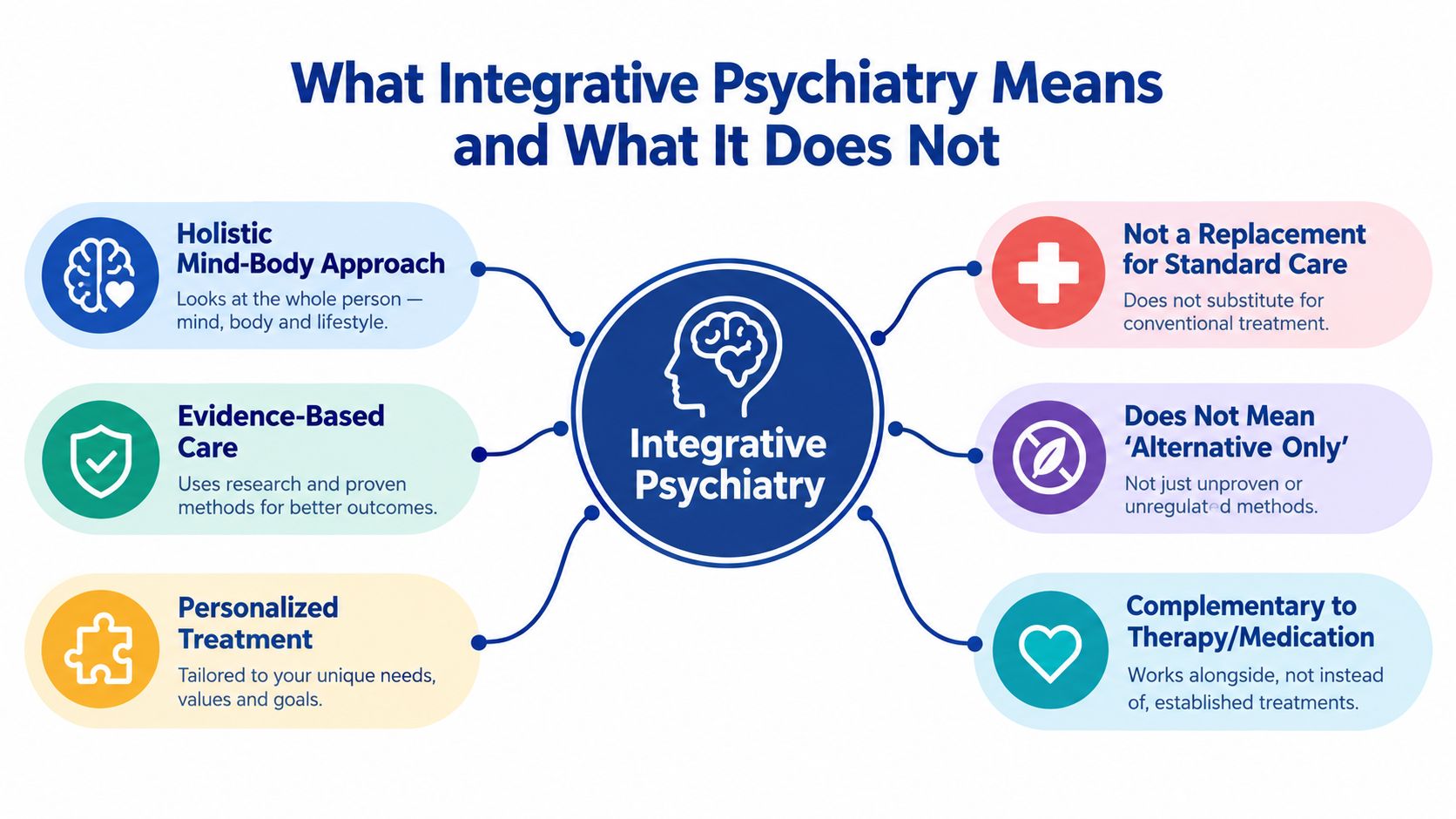
Could ADHD, anxiety, or depression improve with a plan built around your symptoms, goals, and daily life? Integrative psychiatry combines conventional psychiatric care with coordinated attention to factors that influence mental health. A provider may evaluate symptoms, discuss medication, coordinate psychotherapy, and review sleep, physical activity, nutrition, stress, medical history, and functioning. The plan is individualized rather than a fixed package.
The approach does not treat lifestyle changes as a substitute for indicated care. Nutrition, exercise, mindfulness, and supplements don't replace indicated medication or psychotherapy. They may support treatment when clinically appropriate, while severe symptoms, safety concerns, or major impairment require timely professional attention. Integrative psychiatry works more like assembling a care team around the person than selecting one isolated remedy.
What the model includes
An integrative evaluation may examine:
- Psychiatric symptoms: Attention problems, worry, low mood, irritability, sleep changes, impulsivity, and impairment.
- Behavioral patterns: Procrastination, avoidance, inconsistent routines, substance use, or difficulty following treatment plans.
- Physical and medical context: Current medications, medical conditions, family history, and symptoms that may warrant primary care coordination.
- Personal goals: Work, school, relationships, parenting, sleep, emotional regulation, or organization.
Laboratory and genetic testing are not routine requirements for every patient. A provider may consider testing when symptoms, medical history, medication safety, or a specific clinical question makes it relevant. Genetic testing cannot guarantee the right psychiatric medication choice.
The Integrative Psychiatry service describes how conventional treatment can be coordinated with individualized wellness support.
How Integrative Care Compares to Traditional Psychiatric Care
Traditional and integrative psychiatric care share the same clinical foundation: evaluation, diagnosis, safety assessment, evidence-based treatment, and follow-up. The distinction is usually one of emphasis. Integrative care connects psychiatric symptoms with behavioral, lifestyle, and medical factors when those factors may affect symptoms, treatment response, or daily functioning.
| Aspect | Traditional Psychiatric Care | Integrative Psychiatric Care | What They Share |
|---|---|---|---|
| Evaluation | Focuses on symptoms, diagnosis, history, and impairment | Uses the same foundation while examining sleep, stress, routines, physical health, and context | Structured clinical assessment |
| Medication decisions | Weighs diagnosis, symptoms, risks, benefits, and preferences | Applies those criteria while considering lifestyle, adherence, side effects, and care coordination | Individualized prescribing |
| Psychotherapy | May be recommended or coordinated separately | May be incorporated alongside medication and behavioral goals | Evidence-based therapy can support recovery |
| Lifestyle factors | May receive brief attention | Sleep, exercise, nutrition, and stress strategies may receive more systematic discussion | Recommendations remain clinically appropriate |
| Coordination | May involve referrals to other professionals | May connect psychiatric care with primary care or psychotherapy when useful | Follow-up and communication matter |
| Treatment goals | Symptom reduction and improved functioning | Symptom reduction, functioning, routines, prevention, and whole-person support | Patient safety and meaningful improvement |
The table is a guide for choosing care, not a ranking of two competing systems. A patient who needs medication management may prefer a focused psychiatric visit, while someone whose symptoms are affected by sleep disruption, stress, or inconsistent routines may value a plan that addresses those factors alongside standard treatment.
For example, an adult with ADHD may need help with attention and organization, while also working on routines that make treatment easier to follow. A person with anxiety might combine psychiatric treatment with psychotherapy and practical stress strategies. Someone with depression may need symptom monitoring, medication discussion, and support for daily structure. The right plan depends on the person's symptoms, goals, medical history, and response over time.
Choosing between a psychiatric nurse practitioner and a psychiatrist is one part of that decision. Patients can ask how the provider evaluates diagnosis, handles prescribing, coordinates psychotherapy, schedules follow-up, and makes referrals when another professional's input would help.
How Medication and Psychotherapy Fit in Integrative Treatment
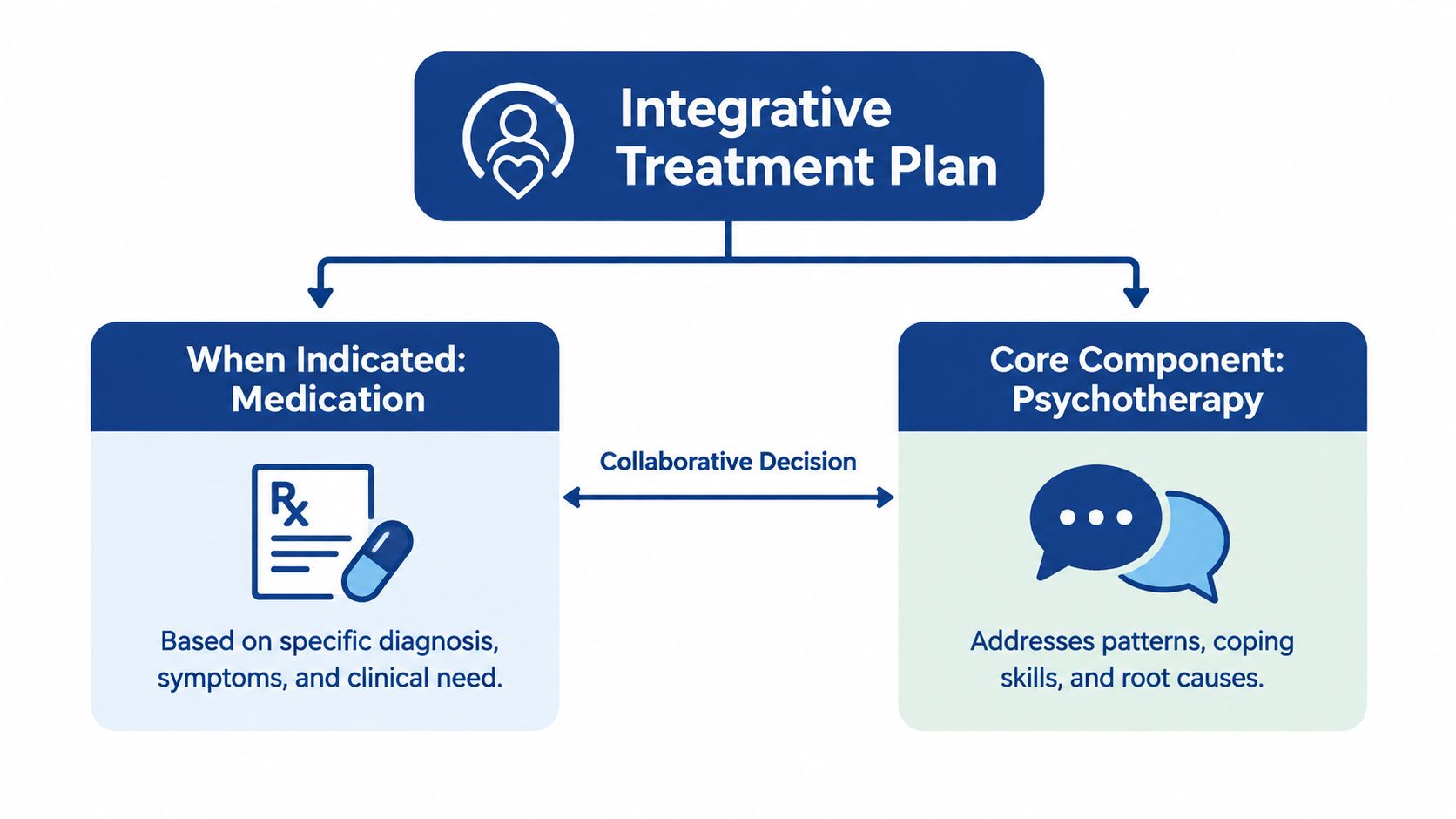
Yes, integrative psychiatry uses medication when medication is clinically indicated. Integrative care doesn't reject psychiatric medication. It places medication within a larger plan that considers diagnosis, symptom severity, previous treatment response, medical history, current medications, family history, side-effect risk, patient preferences, and functional impairment.
A medication plan may target core ADHD symptoms, depression, anxiety, or more than one condition. The provider should explain expected benefits, possible risks, monitoring needs, and alternatives. Medication adjustments also require attention to sleep, appetite, blood pressure, mood changes, substance use, and other factors relevant to the individual prescription.
Why treatment order can matter
ADHD, anxiety, and depression can overlap. Poor concentration may occur with ADHD, severe worry, low mood, sleep deprivation, medication effects, or more than one condition. Adult ADHD diagnostic criteria include symptoms beginning before age 12, appearing in multiple settings, and not being better explained by another disorder, according to a federal adult ADHD clinical summary.
For adults with ADHD and anxiety or depression, clinical guidance recommends addressing the most severe and functionally impairing condition first, then reassessing remaining ADHD symptoms after stabilization. In moderate-to-severe depression, mood stabilization may come before stimulant titration. For anxiety, clinicians often use a “start low, go slow” approach while moving toward a therapeutic dose, as described in clinical guidance on adult ADHD with comorbid conditions.
Stimulants can be used with most antidepressants with monitoring, but that doesn't make every combination appropriate. The prescriber must review the complete medication list, medical history, symptoms, and response.
Where psychotherapy fits
Psychotherapy can teach practical skills and address patterns that medication may not fully change. Cognitive behavioral therapy, or CBT, may help with avoidance, anxious predictions, negative thinking, emotional regulation, planning, and coping with executive-function challenges. Readers seeking additional background may find this guide to understanding ADHD and anxiety interaction useful when preparing questions for a provider.
A coordinated online medication management plan may include therapy with another clinician, therapy referrals, behavioral goals, or regular review of daily functioning. Medication and psychotherapy aren't competing philosophies. For many patients, they address different parts of the same problem.
Sleep Exercise Nutrition and Stress Support in Daily Functioning
No single strategy consistently provides the fastest relief for ADHD, anxiety, and depression. Response varies with diagnosis, severity, medical history, symptom pattern, treatment access, and individual preferences. Sleep improvement, physical activity, nutrition education, mindfulness, and stress-management skills can support care, but they aren't interchangeable and shouldn't substitute for indicated psychiatric treatment.
Sleep often deserves early attention because irregular or insufficient sleep can worsen concentration, emotional regulation, and anxiety. A practical plan might focus on a consistent wake time, reducing late-night stimulation, reviewing caffeine timing, and identifying barriers that make regular sleep difficult. The aim is a manageable routine, not perfection.
Exercise can be gradual and adapted to physical ability. A person might begin with walking, stretching, or another activity that feels realistic. The relevant question isn't whether exercise is a cure. It's whether movement can support energy, routine, stress regulation, or confidence alongside treatment.

Practical support differs by person
- ADHD: External reminders, a prepared morning routine, visual task lists, and time-blocking can reduce the number of decisions required before work or school. Guidance on executive function morning strategies may offer ideas to discuss with a provider.
- Anxiety: Slow breathing, mindfulness practice, gradual exposure through psychotherapy, sleep consistency, and reducing avoidant routines may work together.
- Depression: Gentle activity, regular meals, social contact, and small scheduled tasks may support functioning while clinical treatment addresses mood symptoms.
Nutrition education should remain practical and nonjudgmental. A provider may discuss regular eating patterns, hydration, food access, appetite changes, and how medication affects eating. The nutrition and mental health resource can support that conversation without presenting food changes as a replacement for psychiatric care.
Anxiety and depression are common concerns among younger and working-age populations. In research involving adolescents and young adults, anxiety prevalence was 4.94% and 5.80%, while depressive disorder prevalence was 2.43% and 4.79%, respectively, as reported in research on mental health among younger populations.
How Integrative Support Looks for ADHD Anxiety and Depression
Integrative Psychiatry for ADHD, Anxiety, and Depression looks different for each patient because the same symptom can have different causes and consequences. The following examples are hypothetical. They don't describe actual IPA patients or predict an individual outcome.

A hypothetical ADHD plan
An adult reports missed deadlines, disorganization, restless sleep, and difficulty completing routine tasks. Evaluation explores childhood history, symptoms across settings, mood, anxiety, substance use, medical history, current medications, and functional impairment. If ADHD is supported, treatment may include medication when appropriate, CBT-based organization skills, a simplified morning routine, and sleep-focused goals.
A questionnaire can support evaluation, but it can't establish the diagnosis by itself. A provider may also consider collateral information, school or work history, and the patient's description of real-world functioning. The ADHD Treatment service offers a relevant pathway for patients considering evaluation or ongoing care.
A hypothetical anxiety plan
A patient has persistent worry, muscle tension, poor sleep, and difficulty concentrating. The clinical plan may prioritize anxiety treatment if it causes the greatest impairment, with psychotherapy, medication when indicated, gradual activity, and a simple stress-management practice. Improving sleep may help clarify which concentration problems remain after anxiety becomes more manageable.
A 2025 network meta-analysis concluded that CBT is the first-line non-pharmacological option for adults with ADHD when anxiety or depression is present, while medication-only or therapy-only approaches may be less complete, according to the Frontiers in Psychiatry analysis. General information about evidence-based ADHD supplements should be reviewed cautiously, since supplements can interact with medications and aren't automatically appropriate.
The following video may help patients understand how symptoms and treatment choices can overlap:
A hypothetical depression plan
An adult reports low mood, fatigue, reduced interest, and difficulty keeping up with responsibilities. A provider may assess safety, depression severity, sleep, medication history, medical symptoms, substance use, and functional changes. Treatment could include psychotherapy, medication when indicated, gradual daily activity, regular meals, and coordination with primary care if the history suggests a medical contributor.
These examples show why an integrative plan shouldn't begin with a universal list of supplements or habits. It should begin with a careful formulation of what may be contributing to symptoms and what the patient wants to change.
When Medical Evaluation and Progress Tracking May Be Helpful
Laboratory testing is selective, not a routine diagnostic requirement for ADHD, anxiety, or depression. A provider may consider medical evaluation when symptoms or history suggest a possible medical contributor, a medication-safety concern, or another question that could change treatment. Genetic testing also shouldn't be treated as a routine method for choosing psychiatric medication.
Consider a hypothetical patient with depressive symptoms and significant fatigue. If the clinical history supports thyroid testing, an abnormal result could prompt coordination with primary care and reassessment of the psychiatric plan. That example illustrates appropriate investigation, not a promise that every patient needs thyroid studies.
What progress can include
Patient-reported measures may help track symptom severity and change over time when clinically appropriate. Examples include:
- Depressive symptoms: The PHQ-9 may help monitor changes in depression symptoms.
- Anxiety symptoms: The GAD-7 may help organize and follow anxiety severity.
- ADHD symptoms: Validated ADHD symptom scales may support assessment, but collateral information and functional impairment remain important.
- Daily functioning: Sleep, work, school, relationships, routines, medication adherence, and task completion can show changes that a score alone may miss.
Lab monitoring depends on medications, medical history, symptoms, and other clinical factors. Testing may include thyroid studies, metabolic measures, a CBC, a CMP, vitamin levels, or other studies when medically indicated. These tests don't automatically diagnose a psychiatric condition.
Telebehavioral care can support this process through scheduled follow-ups, symptom review, medication monitoring, and discussion of routines between visits. A large review found telepsychiatry outcomes were largely not significantly different from in-person care for adults with anxiety, depression, substance use disorder, and PTSD. A systematic review also reported non-inferiority compared with face-to-face treatment for depression and anxiety, according to the Milbank Memorial Fund review of telebehavioral health.
Accessing Integrative Telepsychiatry Across Pennsylvania
Yes, integrative psychiatry can be provided through telehealth when the required services are clinically and technically appropriate. Secure virtual visits can support psychiatric evaluation, medication management, psychotherapy coordination, progress tracking, education, and follow-up without requiring travel to an office.
Pennsylvania policy allows behavioral health services to be delivered virtually and reimbursed at the same rate as in-person care in the state fee-for-service system. State guidance also says health plans may not exclude coverage solely because a service is delivered through telemedicine, as summarized by the Center for Connected Health Policy's Pennsylvania telehealth policy page. Actual benefits still vary. Copays, deductibles, network status, authorization rules, and medication coverage depend on the individual plan.
Virtual care can serve patients in Philadelphia, Bucks County, Pittsburgh, the Lehigh Valley, Harrisburg, Lancaster, Reading, Scranton, Wilkes-Barre, Erie, and other Pennsylvania communities. It may also support coordination with primary care when medical evaluation or laboratory work occurs outside psychiatric care.
Patients can review Integrative Psychiatry, Psychiatric Care, and Insurance & Fees before deciding whether a virtual evaluation fits their needs. A patient who wants to discuss ADHD, anxiety, depression, medication, or lifestyle support can use the Request Appointment pathway.
Integrative Psychiatry of America offers secure virtual psychiatric evaluations and ongoing care for Pennsylvania patients with ADHD, anxiety, and depression, including medication management when clinically appropriate and coordination around psychotherapy and daily-functioning goals. Patients can visit Integrative Psychiatry of America to review services, check insurance information, and request an appointment.