
A positive pregnancy test can make a stable ADHD routine feel urgent overnight. For someone who has been functioning on Adderall, the immediate questions are usually simple and personal, Is Adderall safe during pregnancy, should it be stopped right away, and what happens if focus, sleep, work, or driving safety fall apart without it? The honest answer is rarely a one-word yes or no, because the decision depends on trimester, dose, symptom severity, other health conditions, and what untreated ADHD is already doing to daily life.
For pregnant patients in Pennsylvania and beyond, the most useful next step is not panic. It's a calm review of the current evidence, the limits of that evidence, and the trade-offs that show up in psychiatric and obstetric practice. When patients need a place to start before the next appointment, the clinical guidance on Adderall medication use in pregnancy can help frame the conversation in a practical way.
Table of Contents
- The Question Behind the Search
- What Adderall Is and Why Pregnancy Changes the Conversation
- What Large Cohort Studies Show About Birth Defects
- Miscarriage, Fetal Growth, Preterm Delivery, and Neurodevelopment
- The Risk Most Articles Underplay, Untreated ADHD in Pregnancy
- How the Decision Is Actually Made in Clinical Practice
- Breastfeeding, Postpartum, and Newborn Considerations
- Practical Next Steps and What to Bring to Your Next Visit
The Question Behind the Search
A patient who has been stable on Adderall for years often finds out she is pregnant in the middle of a workweek, then spends the next hour searching for a clear answer that doesn't exist in a vacuum. She wants to know whether the medication could harm the baby, whether she needs to stop today, and whether her own ability to function will collapse if she does. Those are not abstract concerns. They're the actual clinical question.
Pregnancy changes how ADHD medication is discussed because the decision is no longer only about symptom control. It also includes first-trimester structural risk, later growth concerns, newborn adaptation, breastfeeding, and the possibility that untreated ADHD could make prenatal care harder to manage. The right question is not, “Is Adderall good or bad?” It's, “What does the evidence show for this patient, at this dose, at this point in pregnancy?”
Practical rule: a medication decision in pregnancy should be made with the same seriousness as any other obstetric or psychiatric treatment decision, not from a late-night search result.
That is why this topic belongs in a shared discussion with a psychiatric prescriber and an obstetric clinician. A patient who comes to that visit prepared can ask better questions, compare options more clearly, and avoid a rushed choice that ignores either fetal safety or maternal functioning. The most useful mindset is not certainty. It's informed caution.
The rest of the evidence is more nuanced than many people expect. Some data are reassuring, some data are limited, and some questions still don't have a clean answer. That uncertainty is frustrating, but it is also normal in perinatal psychiatry.
What Adderall Is and Why Pregnancy Changes the Conversation
Adderall is a prescription stimulant made from mixed amphetamine salts. It is commonly used for adult ADHD treatment and, in some cases, narcolepsy. The medication helps increase dopamine and norepinephrine activity, which can improve attention, task initiation, impulse control, and mental stamina.
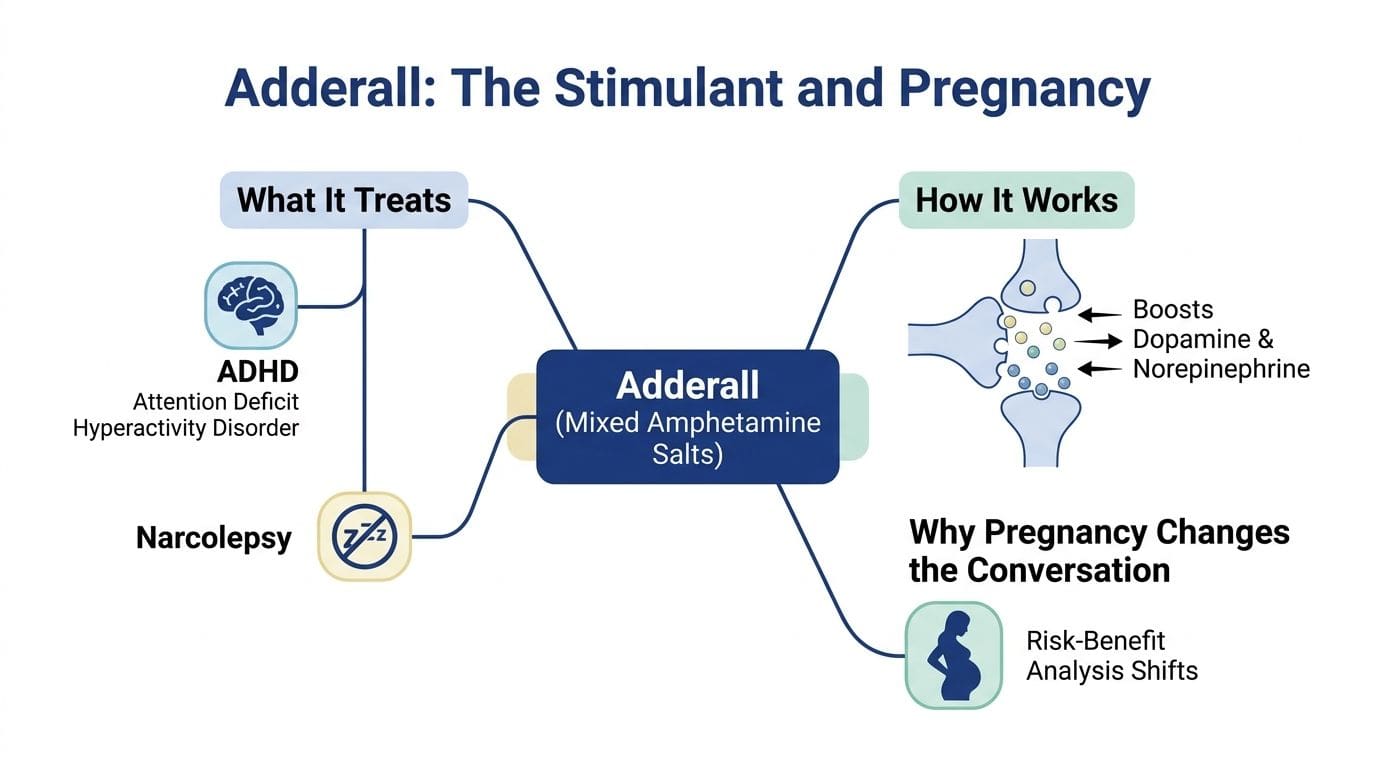
Pregnancy raises questions for any central nervous system medication because clinicians think in several different risk windows. The first is teratogenicity, meaning whether a medication can increase the chance of major birth defects during early organ formation. Later in pregnancy, the focus shifts to fetal growth and placental function. After delivery, attention turns to newborn adaptation and feeding, then to longer-term child outcomes.
A plain-language way to think about this is that “safe” and “unsafe” are usually too blunt. A medication can look reassuring for one outcome and still need monitoring for another. That is why a first-trimester question is not the same as a third-trimester question, and why a patient's symptoms matter as much as the prescription itself.
Other stimulants can appear in the research literature, especially methylphenidate. That matters because cross-study comparisons are sometimes confusing, and the signal for one medication does not automatically apply to another. A brief overview of stimulant classes and pregnancy considerations is available in the ADHD medication education page, which can help patients separate mechanism from headlines.
For patients comparing options, the label on the bottle is only part of the picture. The actual clinical question is whether the current treatment is helping enough to justify continuing, adjusting, or stopping it during pregnancy.
What Large Cohort Studies Show About Birth Defects
The first question many patients ask is whether Adderall during pregnancy raises the chance of major congenital malformations. The best human evidence on prescribed amphetamine exposure is more reassuring than many people expect, especially when the medication is used in a standard clinical way and the pregnancy question is limited to birth defects rather than later outcomes.
A large U.S. and Nordic cohort study of 1.8 million pregnancies found no increase in overall congenital malformations with amphetamines, and the cardiac signal in that study was seen with methylphenidate, not amphetamines. The 2024 AJOG clinical review reaches the same general conclusion and states that amphetamines do not seem to be associated with major congenital malformations, including cardiac malformations. MotherToBaby gives a similar summary of the larger stimulant-exposed pregnancy literature, and the NIH/NLM monograph says most studies suggest first-trimester exposure does not increase the chance of birth defects (PMC review with cohort data, AJOG clinical review00376-4/fulltext), NIH/NLM monograph).
Major Amphetamine Pregnancy Studies at a Glance
| Study or Source | Population | Headline Finding |
|---|---|---|
| U.S. and Nordic cohort study | 1.8 million pregnancies | No overall increase in congenital malformations with amphetamines; the cardiac signal was linked to methylphenidate, not amphetamines |
| 2024 AJOG clinical review | Human pregnancy data synthesis | Amphetamines do not seem to be associated with major congenital malformations, including cardiac malformations |
| NIH/NLM monograph | Clinical summary source | Most studies suggest first-trimester exposure does not increase the chance of birth defects |
Clinical takeaway: the available human data do not show a clear major-malformation signal for therapeutic amphetamine exposure, but the evidence is still observational, not a guarantee.
That distinction matters in real counseling. “No proven increase” is not the same as “proven zero risk.” It means the best human evidence we have is reassuring enough that an automatic stop is usually not the right first response, especially when untreated ADHD is affecting safety, function, or the ability to follow through with prenatal care.
A detailed pregnancy-focused review of stimulant treatment is available through the ADHD medication during pregnancy resource. For a patient deciding whether to continue Adderall, the key point is that structural birth-defect concerns need to be considered separately from later pregnancy effects and separate again from neurodevelopmental questions.
Miscarriage, Fetal Growth, Preterm Delivery, and Neurodevelopment
Many patients move from “birth defects” to the next worry almost immediately, which is miscarriage, growth, or whether the child will have later developmental problems. The evidence is less complete here, and the questions should be handled separately rather than blended together.
What the evidence says and what it doesn't
The NIH/NLM monograph notes that limited data have linked stimulant use during pregnancy to poor growth, low birth weight, or preterm delivery (NIH/NLM monograph). It also defines low birth weight as less than 5 pounds, 8 ounces, 2,500 grams and preterm delivery as birth before week 37 (NIH/NLM monograph). Those definitions matter because patients often hear the terms without knowing exactly what clinicians mean.
For later child outcomes, the most reassuring data in the brief are the 2024 study of 7,065 amphetamine/dextroamphetamine-exposed pregnancies, which found no adjusted increase in autism spectrum disorder, ADHD, or any neurodevelopmental disorder in children. The adjusted hazard ratio for ASD was 0.80, with 95% CI 0.56–1.14, and for ADHD it was 1.07, with 95% CI 0.89–1.28 (PMC review). A review of seven studies also concluded that continuing prescribed ADHD medication in pregnancy was not associated with significant negative maternal or offspring outcomes (PMC review).
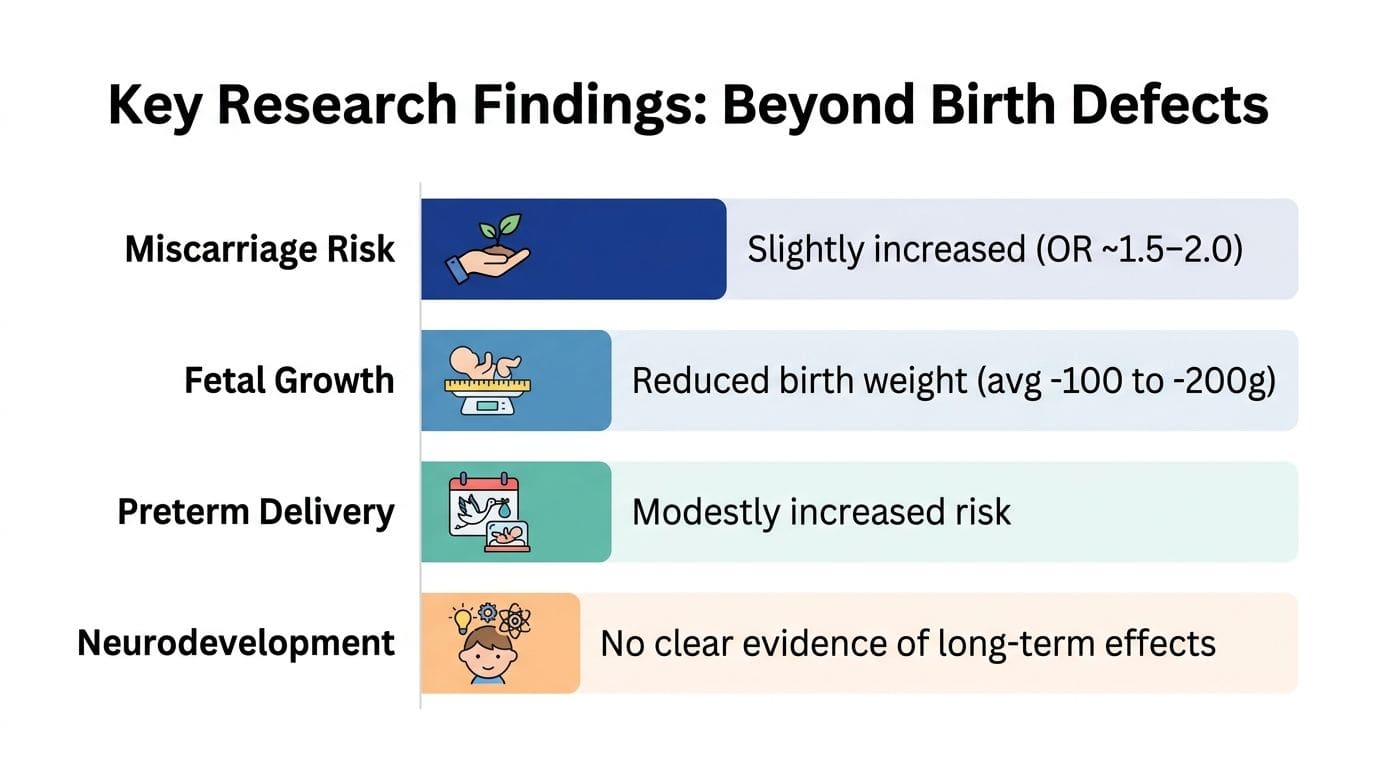
Miscarriage is harder to answer cleanly because the strongest data in the brief do not provide a definitive number to quote. In practice, that means clinicians avoid overstating either risk or reassurance. The safer clinical language is that miscarriage remains a common outcome in pregnancy for many reasons, and current evidence does not support dramatic claims about therapeutic Adderall as a proven cause.
The other important point is timing. A first-trimester exposure question should not be used to make the same decision as a third-trimester growth concern. When growth becomes the main issue, obstetric monitoring and blood pressure tracking matter more than internet generalizations.
The Risk Most Articles Underplay, Untreated ADHD in Pregnancy
The conversation changes when untreated ADHD is taken seriously as a medical risk rather than a personality inconvenience. Pregnancy already strains sleep, attention, executive function, and emotional regulation. If ADHD is moderate to severe, the absence of treatment can make those strains much harder to manage.
Functioning matters in pregnancy
Untreated ADHD can affect follow-through on prenatal appointments, medication schedules, nutrition routines, and organization around work and family obligations. It can also worsen emotional lability, frustration tolerance, and conflict at home. Those are not minor quality-of-life issues. They can shape how well a patient manages pregnancy itself.
The evidence base in the brief also points to broader maternal concerns. A review summarized in the background material found that continuing prescribed ADHD medication in pregnancy was not associated with significant negative maternal or offspring outcomes in aggregate. That does not mean medication is always the right choice. It does mean the reflex to stop automatically can be overly simplistic.
Untreated ADHD in pregnancy is not just a distraction problem. For some patients, it is a safety, work, and family-functioning problem.
For patients whose ADHD is complicated by anxiety, depression, or PTSD, the impact can be even more pronounced. A woman searching for “Adderall while pregnant” is often trying to protect her baby, but she may also be trying not to unravel at work, miss prenatal care, or lose the routines that keep her stable. That is a legitimate part of the risk-benefit discussion, not a secondary concern.
For a broader look at women's ADHD care and how symptoms can shift across life stages, the ADHD in women integrative treatment page is a useful companion resource. The point is not that everyone should stay on a stimulant. The point is that the cost of untreated ADHD needs to be weighed carefully.
How the Decision Is Actually Made in Clinical Practice
A good decision starts with the patient's actual symptom burden, not with a generic rule. A clinician usually looks at how severe the ADHD is, whether the patient has driving risks or job demands that depend on focus, whether there is a history of mood or anxiety worsening in pregnancy, and whether the pregnancy itself has other medical issues that raise concern.
The three broad paths
Some patients continue the current medication, sometimes at the same dose and sometimes at a lower one, with closer monitoring. Others taper off if symptoms are mild, support systems are strong, and non-medication strategies have worked well in the past. A third group may shift toward behavioral supports, environmental changes, or a non-stimulant approach when the overall risk profile makes that a better fit.
A psychiatric prescriber and obstetric clinician should co-manage the plan whenever possible. The reason is simple, the prescriber can judge ADHD severity and medication response, while the obstetric clinician can monitor pregnancy-specific issues such as blood pressure, fetal growth, and other maternal risks. Abrupt self-discontinuation is rarely ideal, because it can trigger a sudden drop in functioning without giving the patient a safer backup plan.
The practical resources that support a decision like this are often simple. A structured medication review, a symptom tracker, a daily planning tool, and grounding strategies can make a real difference when a patient is trying to decide whether the current regimen is still needed. For patients receiving virtual care, ADHD Medication Management can be coordinated alongside prenatal care, including in Pennsylvania through telehealth-based psychiatric follow-up.
The collaborative nature of this decision also fits with broader prenatal mental health support. Patients looking for general coping strategies may find prenatal mental health tips helpful for day-to-day stress reduction while medical decisions are being finalized.
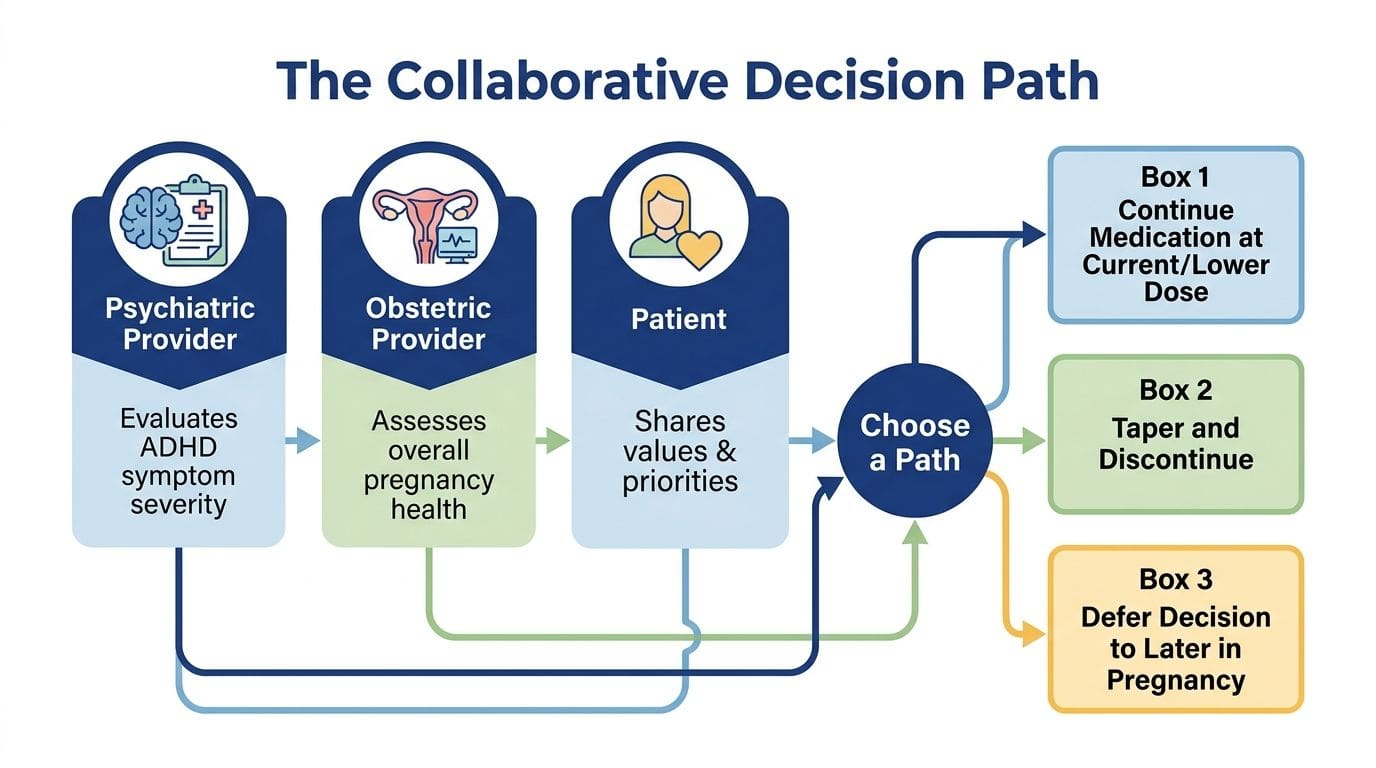
A patient who is stable, medically uncomplicated, and fully informed may reasonably choose to continue treatment. Another patient may decide the opposite. Both can be medically defensible if the decision is individualized and revisited over time.
Breastfeeding, Postpartum, and Newborn Considerations
The pregnancy conversation doesn't end at delivery. Postpartum is often the point when sleep disruption, executive dysfunction, and mood symptoms intensify, so the medication plan should be thought through before the baby arrives.
Breastfeeding and newborn monitoring
Amphetamine can transfer into breast milk, but infant exposure through breastfeeding is generally lower than exposure during pregnancy. That does not make the issue trivial. Clinicians still watch for poor weight gain, jitteriness, and excessive sleepiness in the newborn when a breastfeeding parent uses a stimulant.
The better approach is usually individualized planning rather than defaulting to automatic continuation or automatic discontinuation. Some patients need medication to function safely while caring for a newborn, especially if they have other children, return to work quickly, or have a history of severe postpartum symptom flare. Others may be able to delay restarting, reduce the dose, or use a different strategy for a period of time.
A postpartum plan works better when it is written before delivery, not improvised during a 2 a.m. feeding.
Sleep, mood, and the first weeks after birth
Postpartum sleep loss can aggravate ADHD symptoms and increase emotional reactivity. It can also make it harder to tell whether a patient is dealing with medication side effects, sleep deprivation, postpartum depression, or all three at once. That is why postpartum follow-up matters as much as prenatal follow-up.
For non-medication support, some parents also look for gentle sleep strategies while they're making feeding decisions. A practical overview of natural sleep options for moms can be useful as a supplement to medical care, not a replacement for it.
If breastfeeding is part of the plan, the decision about Adderall should still be made with the same core questions, how severe are the symptoms, what dose is being used, what is the infant's weight trajectory, and what are the mother's mental health risks without treatment. Postpartum is not the time for rigid rules. It is the time for monitoring, honesty, and flexibility.
Practical Next Steps and What to Bring to Your Next Visit
A helpful visit starts with specific information. The clinician needs to know the current Adderall dose, how long it has been used, what symptoms it treats best, and what happens when doses are missed. That information is often more useful than a yes-or-no question about safety.
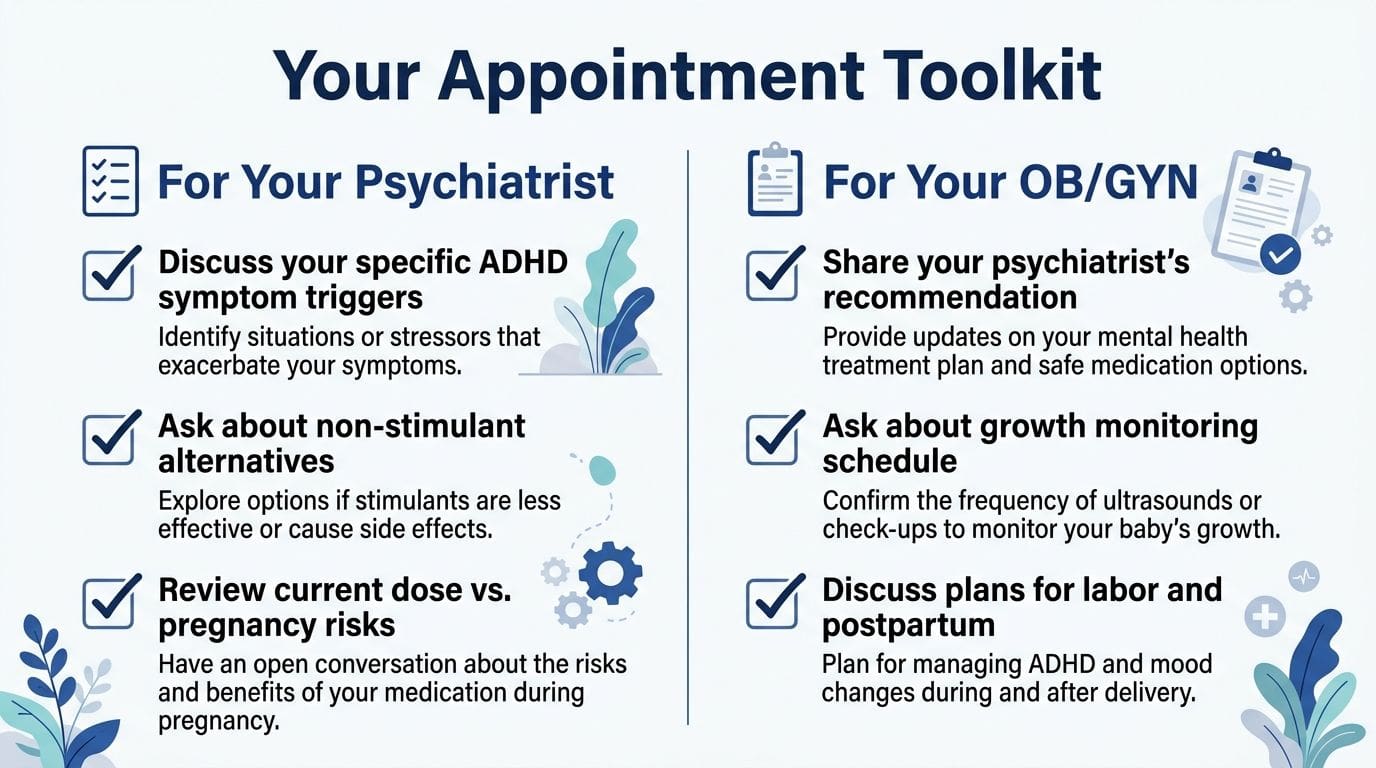
What to discuss with each clinician
- With the psychiatric provider, bring a clear description of ADHD symptoms, the times of day they are worst, and any past attempts at non-medication strategies. If the medication has been the difference between working safely and barely functioning, that should be stated plainly.
- With the obstetric provider, share the full medication list, any history of high blood pressure, fetal growth concerns, or pregnancy complications, and ask how the pregnancy will be monitored if the stimulant is continued.
- With both providers, ask whether the current plan should include tapering, continued dosing, or a scheduled reassessment later in pregnancy. If the pregnancy is unexpected, it is better to make a monitored plan than to stop suddenly and hope for the best.
- If anxiety or mood symptoms are present, ask how those will be tracked. ADHD and perinatal mood symptoms often overlap enough that one can mask the other.
For patients in Philadelphia, Pittsburgh, Harrisburg, Erie, Scranton, Allentown, Lancaster, Reading, and other parts of the state, virtual ADHD care can make this coordination easier. A Pennsylvania-based telehealth visit can connect medication management with prenatal planning without requiring repeated long drives or missed work.
The questions to bring to gynecologist resource can also help patients prepare for a more structured OB conversation. For a deeper discussion of diagnostic and treatment planning, the ADHD Evaluation & Treatment and companion Adult ADHD Treatment resources are a sensible next stop, especially when medication decisions are being made alongside pregnancy care.
For patients who want a grounded, evidence-informed review of Adderall and pregnancy, Integrative Psychiatry of America offers virtual psychiatric evaluations and medication management for adults across Pennsylvania. Visit Integrative Psychiatry of America to review treatment options, verify insurance, and schedule a telehealth appointment that can be coordinated with prenatal care.