
Day three arrives with a headache, a queasy hour after the morning dose, and sleep that broke apart at 4 a.m. The pill is small, it's being taken exactly as directed, and the only visible result so far is discomfort. Then a friend mentions that Lexapro changed her life within a week, and the whole thing starts to feel like a mistake.
That reaction comes from a misunderstanding about what the first week is for. Those seven days aren't a trial run of the drug's antidepressant effect. They're the stretch where the body adapts to a new daily exposure, and the results that matter most are unglamorous ones: whether the dose gets taken on schedule, whether side effects stay manageable, and whether sleep and appetite are drifting in a direction worth reporting. Judge the week on those terms and it becomes far easier to get through.
Table of Contents
- What the First Week on Lexapro Is For
- Common Lexapro Side Effects and How Long They Last
- When Lexapro Benefit Usually Starts
- Safety Tips for Taking Lexapro in Week One
- Telehealth Monitoring During Week One
- Warning Signs, Calls and Next Steps
What the First Week on Lexapro Is For
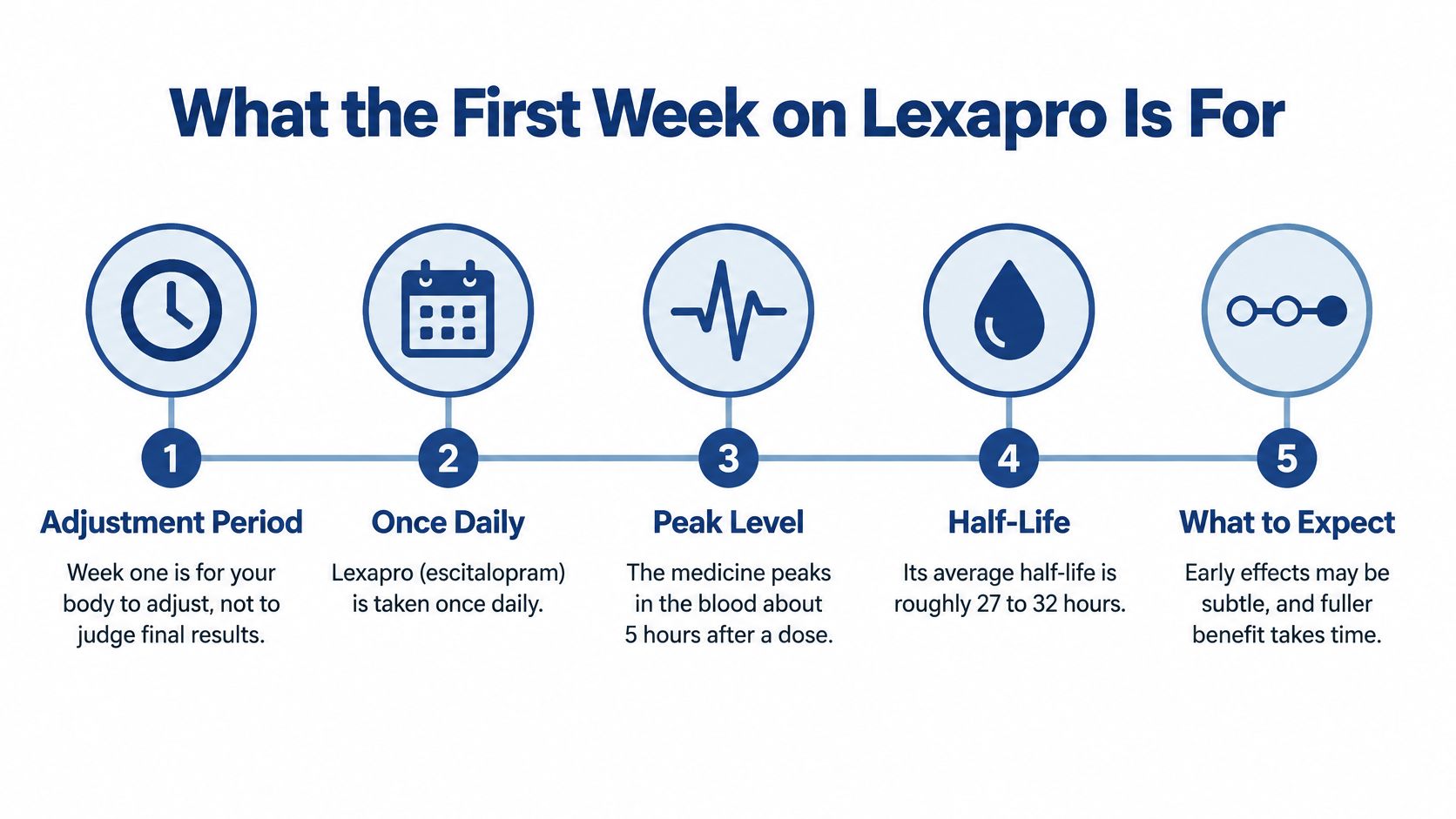
Week one is an adjustment period, not a verdict on whether the medicine will work. It exists to show how your body tolerates Lexapro (escitalopram), whether you can take it consistently, and how sleep, appetite and energy begin to shift. Treating day three as a pass or fail result is the most common mistake people make during the Lexapro first week.
Escitalopram is taken once daily and reaches peak plasma concentration about 5 hours after a dose. Its average terminal half-life runs 27 to 32 hours, which is why one late dose doesn't empty the tank. Blood levels keep climbing with each dose until they level off, and the FDA prescribing information for escitalopram notes that steady state generally arrives after about one week of daily dosing. At that point, total plasma exposure is roughly 2.2 to 2.5 times what a single dose produces.
That accumulation explains the unevenness. Nausea, stomach discomfort, headache, sleepiness, insomnia, fatigue or sweating can all surface before mood or anxiety changes at all, because the body meets the drug before the brain's serotonin system has adapted.
A day-by-day map of the first week
| Days | What Is Happening in Your Body | What to Track |
|---|---|---|
| Days 1-2 | First doses reach the bloodstream while levels are still low | Time of each dose, nausea, headache, sleep |
| Days 3-4 | Levels rise toward steady state and early side effects may peak | Nausea, sleep, energy, dose timing |
| Days 5-7 | Levels approach steady state at about one week | Pattern of side effects, missed doses, daily functioning |
| Day 8 onward | Steady state is reached; full benefit usually takes several more weeks | Trends across weeks rather than single days |
Days 1 and 2 are mostly about absorption, so a headache or a wave of nausea a few hours after the dose is common and tells you very little. Days 3 and 4 are noisier: levels are climbing, sleep may flip in either direction, and a jittery feeling can appear out of nowhere. By days 5 to 7 you have enough days behind you to spot a pattern rather than a single bad morning.
The one rule for week one: take the dose at the same time daily and write down what you notice. Interpretation comes later, with your prescriber.
Nothing on that table counts as evidence that Lexapro is or isn't working. What the week can do is give you and your provider a record to work from, which is why a two-line daily note beats trying to reconstruct the week from memory at your follow-up.
Common Lexapro Side Effects and How Long They Last
A rough first week on Lexapro says far more about your body adjusting than about whether the medicine will work. Side effects show up early because your system is adapting to a new chemical signal, while benefit builds on a much slower clock. Treating a queasy day three as a verdict on the drug is the most common reason people quit in week one, and it is the one decision worth slowing down. The pattern is reassuring when you look at it closely: the effects that arrive first tend to be the ones that leave first.
In one placebo-controlled trial, nausea affected 8.9% of people taking escitalopram versus 3.7% on placebo, and that gap narrowed by about week 2 (escitalopram tolerability trial data). Fewer than 1 in 20 participants stopped treatment because of side effects, and the difference from placebo wasn't statistically significant, at 4.7% versus 1.1%.
How the FDA defines a common reaction
A reaction counts as common when it appears in at least 5% of patients and at least twice the placebo rate. In FDA review of controlled major depressive disorder trials, the effects that met that bar were nausea, insomnia, fatigue, somnolence, increased sweating, and sexual effects including delayed ejaculation, decreased libido and anorgasmia.
Read that list as a description of what is normal early on, not a forecast of what you will personally feel. Many people get one or two of these, some get none, and intensity can shift from day to day.
| Side Effect | Reported Frequency | Typical Timing | What to Do |
|---|---|---|---|
| Nausea | 8.9% on escitalopram vs 3.7% on placebo in one trial | Often early; gap narrows by about week 2 | Eat smaller meals and ask your provider about dose timing |
| Insomnia | Common reaction in FDA review (at least 5% and at least twice placebo) | Can begin in week one | Note bedtime and wake time; ask about taking the dose earlier in the day |
| Fatigue or drowsiness | Common reaction in FDA review | Early; may ease as the body adapts | Avoid driving until you know how the medicine affects you |
| Headache or sweating | Among the effects people most often mention in the first days | Usually eases over a couple of weeks | Track how often it happens and mention it if it persists |
| Sexual side effects | Common reaction in FDA review (delayed ejaculation, decreased libido, anorgasmia) | May last longer than other effects | Discuss openly with your provider; do not stop without advice |
What to do when an effect sticks around
Practical steps beat white-knuckling. Take the dose with a small snack if nausea bites, keep water within reach through the day, and protect a consistent sleep window even when sleep feels broken. If appetite shifts, the guidance on how to lose weight on Lexapro covers what is worth monitoring from the first days rather than weeks later.
A side effect that lingers is a tolerability question, not proof the medicine has failed. Anything that persists, worsens quickly or interferes with work, sleep or driving belongs in a conversation with the prescriber, and the answer is often a timing change or an adjustment rather than stopping altogether.
When Lexapro Benefit Usually Starts
Many people notice meaningful change over several weeks, not several days. A small shift during week one is possible, and it's pleasant when it happens, but it isn't something to count on. Its absence says nothing about how the medicine will perform by week six.
The evidence supports that framing. A pooled analysis of eight major depressive disorder trials found escitalopram produced greater improvement on the Montgomery-Åsberg Depression Rating Scale at week 1 than placebo, other SSRIs and venlafaxine. Earlier trial evidence reported statistically greater improvement after one week on the Clinical Global Impressions-Improvement scale and on the depressed-mood item of the Hamilton Rating Scale, while broader total-score advantages appeared at roughly two weeks. In the same evidence base, citalopram's advantage over placebo didn't show up until around week 6.
Regulatory guidance sets a similarly wide window. The FDA's escitalopram information notes that some people may notice benefit within 1 to 4 weeks and should keep taking the medication as directed. The anxiety evidence ran on a longer clock entirely: three 8-week, multicenter, flexible-dose, placebo-controlled studies in outpatients aged 18 to 80 compared 10 to 20 mg daily with placebo, and the escitalopram labeling for generalized anxiety trials notes that efficacy beyond eight weeks wasn't systematically studied in that program.

What early progress actually looks like
Early change rarely arrives as a dramatic lift. It shows up in smaller ways:
- Less dread in the morning. Waking up stops feeling like a negotiation with the day.
- Motivation nudges upward. Small tasks get started instead of postponed indefinitely.
- Reactions slow down. The gap between a stressor and the response widens by a second or two.
- Someone else notices first. A partner or friend comments on the change before you can see it from the inside.
Comparing today with yesterday is a poor measurement, because both days sit inside the adjustment window. A fairer comparison is this week against the week you started, and the honest read usually comes at a follow-up visit. If Zoloft is the alternative on your mind, the timeline in this guide to how long Zoloft takes to work makes the same multi-week point.
A good day isn't proof the dose is right, and a bad day isn't proof it's wrong. Both are single data points inside a process that's judged in weeks.
Safety Tips for Taking Lexapro in Week One
Take the dose at the same time every day, exactly as prescribed. That single habit does more for the first week than anything else on this page. NHS escitalopram guidance is explicit that the medication can take several weeks before symptoms improve, that headache and sweating are common early effects, and that most side effects ease after a couple of weeks as the body adapts, though some can last longer. It also advises continuing as prescribed and discussing troublesome reactions with the prescriber rather than stopping abruptly.
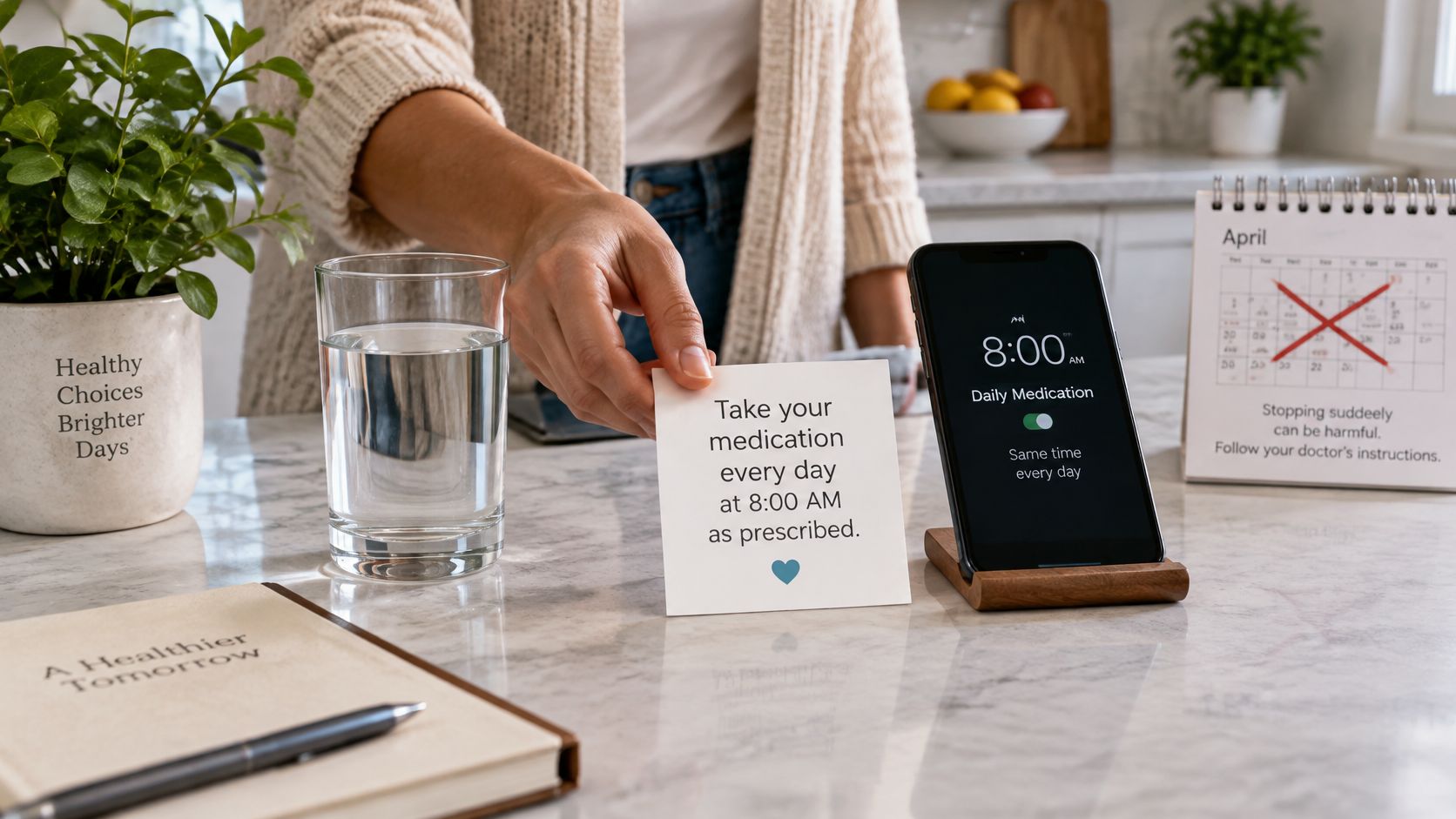
Stopping suddenly carries its own cost: dizziness, irritability and a flu-like fog can appear within a day or two, which turns one problem into two. Set a phone alarm, pair the dose with a fixed daily ritual such as brushing teeth, and keep a refill request in before the bottle runs low.
The dose stays where the prescriber put it
Raising the dose because week one feels flat usually backfires. A faster climb intensifies the early nausea, insomnia and jitteriness without shortening the wait for benefit. Any change goes through the prescriber, including a change that seems small.
Interactions worth naming out loud
Tell every prescriber and every pharmacist about everything you take, including over-the-counter products and supplements. The list that matters most in week one:
- Other serotonergic drugs. Other antidepressants, migraine triptans, tramadol, lithium and St. John's wort all add to serotonin risk and need a clinician's review.
- NSAIDs, aspirin and blood thinners. Ibuprofen, naproxen, aspirin and warfarin raise bleeding risk when combined with an SSRI, so regular use deserves a direct conversation.
- Alcohol. It amplifies drowsiness and emotional volatility, which makes week one harder to read.
- Machinery and driving. Hold off until you know how the medicine affects your alertness.
Missed doses, refills and the rest of the routine
If a dose is missed, take it as soon as you remember, unless the next one is close, in which case skip it. Never double up to catch up. Ask the pharmacist for the exact rule that fits your schedule, since morning and evening dosing behave differently.
Keep a current medication list in your phone, including doses and the prescriber's name. Anyone who is pregnant, breastfeeding or planning a pregnancy should raise it with the prescriber before the first dose. Nutrition and supplement questions that come up in the first month are covered in this look at SSRIs, supplements and diet for depression.
Telehealth Monitoring During Week One
A virtual follow-up gives day three some context. On a short video visit, a board-certified psychiatric mental health nurse practitioner can review dose timing, sleep, appetite, energy, mood ratings and whether side effects are easing, staying flat or interfering with normal routines. The point is tolerability first: a rough Tuesday does not prove Lexapro cannot help, and a calm Thursday does not prove it has started working.
Through Integrative Psychiatry of America, follow-up care is built around secure telehealth visits, a patient portal for messages and refill requests, personalized treatment plans and regular check-ins. When a change is clinically appropriate, online medication management can include electronic prescriptions sent to your local pharmacy.

Preparation keeps the call concrete. Bring a daily log with dose time, sleep hours, appetite, energy and a simple mood rating, plus two or three questions written down in advance. A notebook page or mood and emotion tracker removes the blank-page problem, and iScribe Live Transcribe for appointments can turn dosing instructions into text you can reread after the call.
Telehealth has limits. It cannot manage an emergency, some concerns still need an in-person exam or lab work, and a weak connection can cut a visit short. Use a private room, keep the practice phone number nearby as backup, and confirm benefits before booking because coverage, copays, deductibles and network status vary by plan.
Warning Signs, Calls and Next Steps
Expected discomfort is not a warning sign. Mild nausea, a stretch of broken sleep, or fatigue that stays manageable belongs in your log and on the agenda for the next visit. Escalating symptoms need faster contact, and the distinction between the two is the part many patients never get told clearly.
The clinical review of first-week safety signals makes the case for that triage logic directly: standard guidance lists side effects without separating ordinary discomfort from symptoms that need prompt contact, such as markedly increased energy, a sharply reduced need for sleep, impulsivity, worsening agitation or suicidal thinking. The same review points to a 2025 randomized phase 3 trial in 173 people with Alzheimer's-related agitation, which found no significant benefit from escitalopram and observed drug-related QT-interval prolongation. That trial doesn't describe typical adult depression treatment, and it isn't a reason to avoid a medication your prescriber recommended. It does show why indication, age, other conditions and cardiac risk belong in the conversation before and after the first dose.
The difference between discomfort and a warning sign
Message or call the prescriber within 1 to 2 business days if side effects disrupt work, sleep or driving. Call the same day for markedly increased energy, a sharply reduced need for sleep, racing thoughts, impulsive actions, escalating agitation, panic or new confusion. Anyone with a history of bipolar disorder should say so before starting, because activation can be an early sign rather than a side effect to wait out.
| Symptom | Action | Timing |
|---|---|---|
| Mild nausea, headache or sleep changes that are stable and tolerable | Log them and mention them at the next visit | Routine |
| Persistent nausea, insomnia or fatigue that disrupts work, sleep or driving | Message or call your prescriber | Within 1-2 business days |
| Markedly reduced need for sleep with high energy, racing thoughts or impulsive actions | Call your prescriber | Same day |
| Escalating agitation, panic or new confusion | Call your prescriber | Same day |
| Thoughts of suicide, self-harm or dangerous behavior | Call or text 988, or call 911 or go to the nearest emergency department | Immediately |
| Swelling of the face, lips or tongue, hives with trouble breathing | Call 911 | Immediately |
| Fainting, chest pain, or a racing or irregular heartbeat | Call 911 | Immediately |
New suicidal thinking is an emergency at any age, and so is dangerous behavior. Before making any of these calls, jot down when the symptom started, how long it lasted and how severe it felt on a simple scale. A portal message is the wrong tool for an emergency, and telehealth patients in particular should keep these thresholds somewhere they can find them at 2 a.m.
When to review the plan
Four weeks is a reasonable checkpoint. If nothing has shifted by then, or side effects still interfere with daily life, book a follow-up to review the plan rather than making a solo call about stopping. Mood instability that predates the medication is a separate thread worth exploring, and this overview of practical mood swings treatment options helps frame that conversation.
Integrative Psychiatry of America welcomes questions through its secure patient portal messaging between visits. For anyone not yet under care, new patients can schedule a full psychiatric evaluation through the website. Nobody should decide alone whether Lexapro is working, or whether it should be stopped.
Integrative Psychiatry of America provides virtual psychiatric care to adults across Pennsylvania, with medication management built around exactly this kind of early follow-up: a review of your first weeks, honest answers about what's normal, and adjustments only when they're clinically warranted. A board-certified psychiatric mental health nurse practitioner can go through your symptom log with you and help you judge progress over weeks instead of single days. Visit Integrative Psychiatry of America to request an appointment or verify your coverage before the first visit.