
A technically grounded depression treatment plan combines standard psychiatric care with targeted lifestyle interventions. In a 2024 meta-analysis, mindfulness meditation reduced depressive symptoms versus controls with SMD = -1.14, 95% CI -1.45 to -0.83 (2024 evidence review).
The popular advice to “just exercise, eat clean, and avoid medication” misses the clinical point. Whole-person depression treatment isn't natural-only care. It's an individualized psychiatric model that may combine evaluation, psychotherapy, medication, sleep support, movement, nutrition, mindfulness, stress management, and coordination with medical professionals.
Table of Contents
- Defining Evidence-Based Holistic Depression Care
- Comparing Traditional and Integrative Psychiatric Approaches
- The Clinical Foundation of Evaluation and Medication
- Lifestyle Interventions With Measurable Clinical Impact
- Mindfulness and Medical Coordination for Whole-Person Health
- Delivering Whole-Person Care Through Telehealth
- Starting Your Integrative Treatment Journey in Pennsylvania
Defining Evidence-Based Holistic Depression Care
Whole-person depression treatment considers the person behind the symptoms. A psychiatric provider assesses mood, sleep, energy, concentration, trauma history, relationships, physical health, substance use, work demands, and practical barriers to care. The resulting plan addresses biological, psychological, and social factors that may maintain depression.
The sequence matters. Depending on the diagnosis, symptom severity, previous treatment, safety concerns, preferences, other medications, and ability to follow recommendations, care may begin with evaluation and therapy, medication, sleep stabilization, structured exercise, mindfulness, or coordination with medical care. These interventions are monitored for symptom relief, functioning, side effects, and adherence rather than added as an unstructured list.
A clinical approach differs from wellness marketing. Some lifestyle interventions have meaningful support, while several supplements and alternative therapies have weak, inconsistent, or absent high-quality evidence. A review in BMJ Open's evidence assessment of complementary approaches found moderate-quality evidence for St. John's wort, but very low-quality or absent high-quality evidence for acupuncture, aromatherapy, herbs, fasting, probiotics, omega-3 supplements, B vitamins, and zinc. A long list of remedies, without diagnosis, monitoring, and follow-up, is not a treatment plan.
What whole-person care addresses
A board-certified psychiatric mental health nurse practitioner may examine:
- Mood and cognition, including sadness, hopelessness, guilt, slowed thinking, and loss of interest.
- Neurovegetative symptoms, such as disrupted sleep, appetite changes, low energy, and reduced activity.
- Medical contributors, including symptoms that warrant coordination with primary care or another specialist.
- Daily functioning, including work, parenting, relationships, exercise capacity, and barriers to following treatment.
- Treatment preferences, including whether medication, therapy, or lifestyle changes feel acceptable and realistic.
The term “integrative psychiatry” describes this broader clinical perspective. It does not lower diagnostic standards or promise that one intervention will resolve depression. Patients can learn more about integrative psychiatry and whole-person mental health care while keeping the central distinction clear: supportive lifestyle care complements psychiatric treatment rather than replacing it.
Clinical boundary: Exercise, nutrition, sleep, and mindfulness can support recovery, but they should not be presented as cures or substitutes for an evaluation when depression is persistent, severe, or associated with safety concerns.
Comparing Traditional and Integrative Psychiatric Approaches
Traditional psychiatric treatment and integrative psychiatry share the same clinical foundation. Both require an appropriate evaluation, a working diagnosis, safety assessment, follow-up, and treatment adjustments based on response and side effects.
The difference is usually scope and sequencing. A conventional visit may focus on symptoms, diagnosis, medication, and a therapy referral. An integrative visit uses those same clinical tools while also examining sleep timing, movement, nutrition, stress load, social support, physical health, and barriers to following the plan.
| Traditional Psychiatric Treatment | Holistic/Integrative Psychiatric Approach | What They Have in Common |
|---|---|---|
| Focuses on psychiatric symptoms, diagnosis, medication, and therapy referrals | Combines psychiatric treatment with individualized lifestyle, mind-body, and care-coordination strategies | Uses clinical evaluation and diagnostic reasoning |
| May prioritize medication changes when symptoms remain active | May sequence medication, psychotherapy, exercise, sleep support, mindfulness, and nutrition according to need | Monitors benefits, side effects, safety, and functioning |
| Often addresses immediate symptom relief and relapse prevention | Connects symptom relief with daily routines, physical health, relationships, and long-term self-management | Requires informed consent and patient participation |
| Refers medical questions to primary care or specialists | Builds active coordination around possible medical contributors and other treatments | Does not guarantee outcomes and must be individualized |
The approach is broader, not less medical
Integrative care does not mean a provider accepts every alternative therapy as equally credible. The clinician weighs evidence, safety, timing, and the patient's ability to follow the plan.
Trade-offs matter. A demanding exercise schedule may fail when energy is extremely low, so a smaller, realistic schedule may be more useful. A supplement can interact with prescription medication and should be reviewed before use. Mindfulness may help some patients, yet frustrate or activate others, particularly when trauma symptoms have not been addressed.
Patients seeking a detailed overview can review the integrative psychiatry approach and ask a provider which elements fit their diagnosis and circumstances. The strongest plan is not the one with the most components. It is the one the patient can follow safely and consistently.
The Clinical Foundation of Evaluation and Medication
Yes, whole-person treatment can include antidepressants. Medication may lower symptoms enough for a patient to sleep, concentrate, attend therapy, and rebuild daily routines. Prescribing medication can fit an integrative plan when it serves the patient's goals and is monitored carefully.
Evaluation comes before a treatment choice. The provider determines whether symptoms fit major depressive disorder or another condition, including bipolar disorder, anxiety, trauma-related illness, ADHD, substance-related symptoms, or a medical problem. Screening questionnaires help organize information, but they do not establish a diagnosis on their own.
What a psychiatric evaluation examines
A provider may review:
- Current symptoms and duration, including mood, interest, sleep, appetite, energy, concentration, and thoughts of death or self-harm.
- Past psychiatric treatment, including medications tried, therapy experiences, benefits, side effects, and reasons treatment stopped.
- Mood lifting and activation, because unusually high or irritable mood, reduced need for sleep, or impulsive behavior can change the treatment approach.
- Trauma, anxiety, attention, and substance use, since overlapping symptoms can affect treatment selection.
- Medical history and current medications, including conditions or treatments that may influence mood, energy, sleep, or cognition.
- Daily context, such as caregiving, work stress, isolation, financial pressure, and access to therapy or exercise.
Medication management should follow those findings rather than happen automatically. The provider may discuss an antidepressant, adjust an existing medication, monitor side effects, or recommend psychotherapy and lifestyle support without medication when that fits the clinical picture. No medication should be started, stopped, or changed without guidance from the prescribing clinician.
Why therapy remains central
Whole-person psychiatry doesn't replace therapy. Psychotherapy can help patients identify depressive thinking patterns, increase meaningful activity, process trauma, improve relationships, and maintain gains after acute symptoms improve. Medication and therapy often address different parts of depression, so combining them may offer more support than treating either as a universal answer.
Patients also ask whether genetic or laboratory testing can reveal one cause of depression. These tools may have a limited, case-specific role, but they do not replace clinical assessment or guarantee a medication response. Information about genetic testing and depression care should be considered within those limits.
Urgent safety concerns require immediate help, not a lifestyle experiment. Anyone facing imminent risk of self-harm should contact emergency services or a crisis resource serving their location.
Lifestyle Interventions With Measurable Clinical Impact
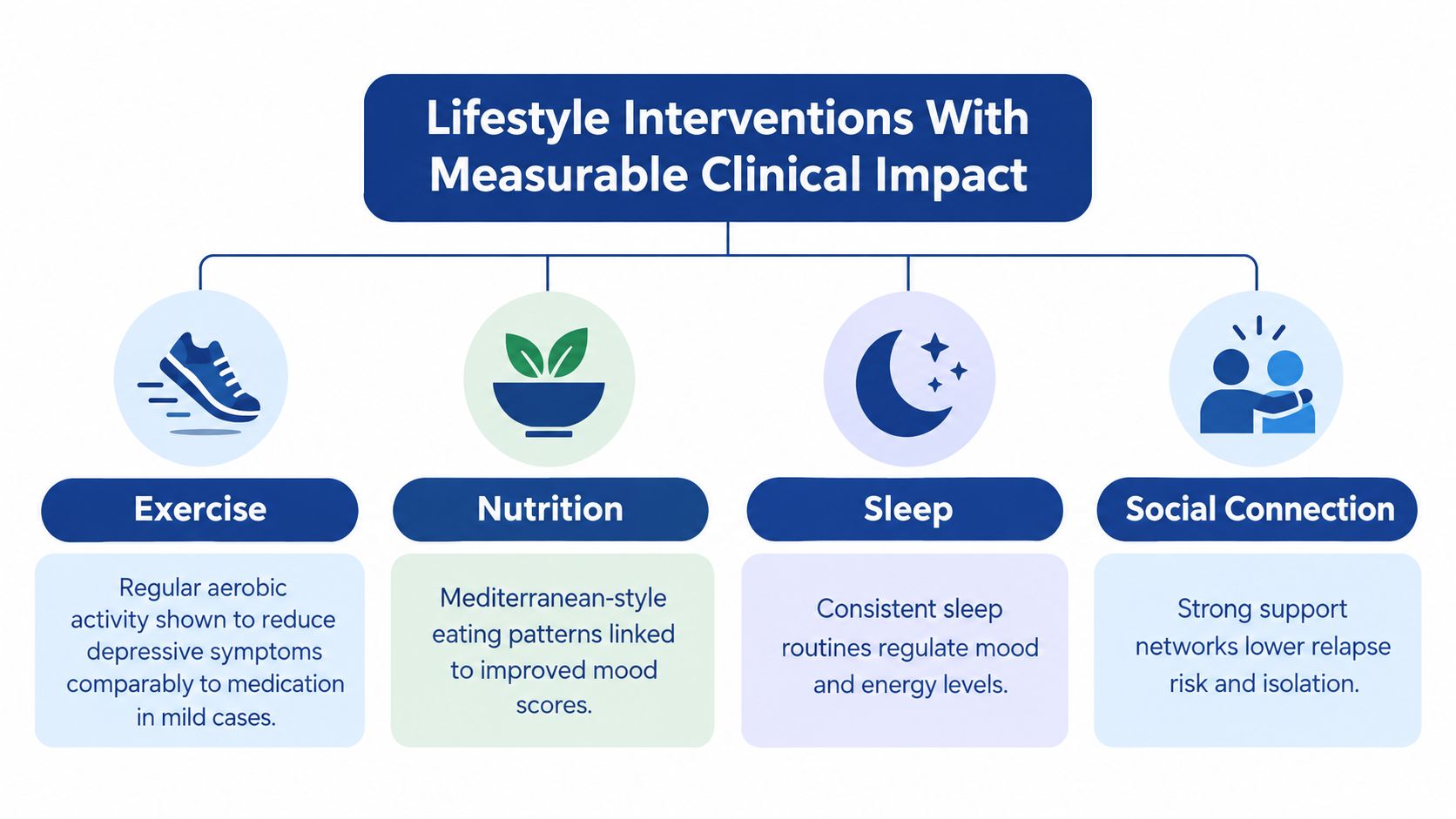
Exercise, nutrition, sleep, and social connection can support depression care, but they are not interchangeable wellness suggestions. Each has a different evidence base, clinical purpose, and practical barrier. The treatment plan should place these interventions alongside therapy and medication when indicated, rather than present them as a natural-only alternative.
Exercise requires a workable dose
A 2024 systematic review and network meta-analysis found exercise effective for depression, with walking or jogging, yoga, and strength training performing better than several other exercise types, particularly at higher intensity (exercise network meta-analysis). The American Psychiatric Association also reports that exercise consistently reduces depressive symptoms and may function as a primary treatment or complement medication and therapy (APA lifestyle guidance).
Intensity is only one consideration. A patient with pain, limited mobility, cardiovascular risk, severe fatigue, or low motivation may begin with a short walk, chair exercises, gentle yoga, or adapted strength work. The clinician can increase duration or difficulty as symptoms, safety, and consistency allow. A smaller plan completed regularly is more useful than an ambitious routine that the patient cannot sustain. This exercise-focused integrative treatment guidance can help patients consider movement within medical limits.
Nutrition should be concrete
The NIH review on nutritional psychiatry describes five practical targets recommended by the International Society for Nutritional Psychiatry Research:
- Choose traditional patterns: Mediterranean, Norwegian, or Japanese dietary patterns can provide structure.
- Increase nutrient-dense foods: Emphasize fruits, vegetables, legumes, whole grains, nuts, and seeds.
- Include omega-3-rich foods: Discuss food sources alongside the patient's medical needs and overall diet.
- Replace rather than restrict: Substitute more nutritious options for less nutritious choices.
- Limit heavily processed options: Reduce fast foods, commercial bakery goods, processed foods, and sweets.
Nutrition may complement depression treatment and support general health. It does not cure depression, and rigid rules can increase shame or make eating more difficult.
Sleep is a treatment target
Assessment may cover bedtime, wake time, awakenings, naps, snoring, nightmares, shift work, caffeine, screens, and medication timing. Regular sleep and wake patterns, morning light exposure, and reduced late-day stimulation may make therapy, exercise, and medication easier to follow. Severe insomnia, excessive sleep, or possible sleep apnea requires clinical evaluation rather than generic sleep-hygiene advice.
Mindfulness and Medical Coordination for Whole-Person Health
Mindfulness is a clinical tool, not a universal treatment. It can help patients observe thoughts, physical sensations, and emotional reactions before responding, which may reduce rumination, support emotional regulation, and improve participation in therapy. The practice should be selected according to symptoms, preferences, trauma history, and ability to concentrate.
Some patients tolerate only brief grounding exercises, paced breathing, walking meditation, or other trauma-informed approaches. Prolonged silent meditation may increase distress, dissociation, panic, or self-criticism for others. A clinician should modify or pause the practice when those reactions appear, rather than presenting discomfort as a sign that the patient needs to try harder.
Stress management must match the patient
Stress management may involve behavioral activation, realistic scheduling, boundary setting, problem-solving, social support, relaxation techniques, and psychotherapy. It should address the conditions affecting the patient's life, not demand calm in circumstances that are unsafe or unmanageable. Someone facing housing insecurity, workplace conflict, caregiving overload, or financial strain may need practical resources and depression treatment alongside coping skills.
Readers exploring connections among digestion, stress, and mood can review this friendly guide to the gut-brain axis. Educational material about the gut-brain connection does not establish that supplements treat depression and should not delay psychiatric care.
Medical coordination closes important gaps
Depression symptoms can overlap with medical illness, medication effects, sleep disorders, hormonal changes, and nutritional problems. A psychiatric provider may coordinate with primary care or a specialist when the history indicates that further medical evaluation is appropriate.
Coordination can include sharing relevant treatment information, asking the patient to discuss laboratory work with a primary care clinician, and reviewing whether medication affects sleep, appetite, energy, or mood. Laboratory testing doesn't diagnose depression by itself, and normal results do not invalidate psychiatric symptoms. The goal is to reduce tunnel vision while keeping psychiatric assessment and treatment responsibilities clear.
Delivering Whole-Person Care Through Telehealth
Telehealth is fully compatible with whole-person depression care. Video visits can support psychiatric evaluation, medication management, psychotherapy coordination, sleep counseling, exercise planning, mindfulness instruction, and follow-up on symptoms and side effects.

The home setting can add clinically useful information. A provider may ask where the patient sleeps, works, exercises, stores medication, and takes appointments. Those details can reveal barriers that a brief office visit misses. Telehealth still has limits: an in-person assessment may be required for a physical examination, urgent intervention, or specialized testing.
Pennsylvania telepsychiatry has technical boundaries
Safe video care requires privacy, reliable communication, identity and location checks, emergency planning, and sound clinical judgment. Magellan Behavioral Health of Pennsylvania states that outpatient psychiatric telehealth may continue through real-time, two-way interactive audio-video transmission, while audio-only delivery isn't allowed for outpatient psychiatric services under the cited Pennsylvania regulations (Pennsylvania telehealth guidance).
Video also gives the provider more information than an audio-only visit. Affect, engagement, psychomotor changes, and the patient's environment can inform assessment, although privacy and safety planning remain necessary.
Patients can review an explanation of how telepsychiatry works before a first appointment. Use a private setting, keep a current medication list nearby, confirm the physical location at the start of the visit, and identify a local emergency contact or resource when clinically appropriate.
Access is part of treatment design
Treatment gaps remain even when effective options exist. An evidence-and-gap review supports combining antidepressants with low-intensity psychological interventions, online self-help tools, and lifestyle medicine rather than relying on supplements or alternative methods alone (evidence-and-gap review).
Statewide video access can let a patient in Scranton or Erie keep the same prescribing clinician through a job change or a move within Pennsylvania. Fewer travel and scheduling demands may make regular follow-up more realistic, though telehealth does not remove every barrier.
Work strain can disrupt recovery and treatment routines. Patients and managers can use this resource on prevent burnout on your team for practical workplace ideas.
Starting Your Integrative Treatment Journey in Pennsylvania
Your first appointment should produce a clear clinical plan, not a list of wellness suggestions. The provider reviews your concerns, symptom history, medications, previous treatment, medical conditions, sleep, stress, and goals. They also assess immediate safety needs, clarify the diagnosis, and determine whether medication management, therapy coordination, lifestyle changes, medical follow-up, or a combination is appropriate.
You do not need a perfect health history before scheduling. Bring current medications and supplements, prior psychiatric medications and side effects, relevant diagnoses, sleep patterns, alcohol or substance use, family psychiatric history, and questions about your treatment preferences.
Practical steps for getting started
- Review benefits: Check the Insurance & Fees information for coverage, copays, deductibles, network status, and authorization requirements.
- Gather records: Include medication names and doses, prior therapy, medical concerns, and recent primary-care information.
- Choose the right pathway: Request an evaluation if the diagnosis is unclear. Choose medication management when an established plan needs monitoring or adjustment.
- Schedule securely: Use a private setting for the video visit and be physically located in Pennsylvania during care, as required.
- Set measurable goals: Early targets may include better sleep, improved energy, fewer depressive symptoms, safer daily functioning, and a plan for follow-up.
Lifestyle support should be added to appropriate psychiatric care, not used to delay evaluation or prescribed treatment when symptoms are moderate, severe, or unsafe.
Integrative Psychiatry of America provides virtual psychiatric care across Pennsylvania, including evaluation, medication management, and lifestyle-oriented depression support. Qualified patients can use the appointment request page to discuss whether this approach fits their needs.
Integrative Psychiatry of America offers virtual Pennsylvania psychiatric care that may combine medication management, psychotherapy coordination, exercise, sleep, nutrition, mindfulness, and medical collaboration when appropriate.