
For too many people, finding the right antidepressant feels like a long, frustrating cycle of trial and error. What if your psychiatric nurse practitioner had a personalized map to your unique biology before ever writing a prescription?
That's the promise behind a depression genetic test, a tool that is changing how we approach mental health care. This form of precision medicine, often called pharmacogenomics, helps create a more personalized treatment for depression by analyzing your DNA. This article explores how a genetic test for depression medication can shorten the path to relief, minimize side effects, and empower you on your mental health journey.
What Is a Depression Genetic Test?

It’s critical to understand one thing right away: a depression genetic test does not diagnose depression. Instead, this type of testing—known as pharmacogenomic testing—acts as a personalized guide for your provider. It’s a key part of what is becoming known as precision medicine for mental health.
It offers crucial insights into how your genes might influence your body's reaction to different antidepressants. This is not a diagnostic tool but rather a guide for selecting the most appropriate depression medication based on your genetic profile.
Think of your DNA as a set of instructions for building the enzymes that process medications. This test reads those instructions. It helps your provider see if your body might metabolize a certain drug too quickly (making it ineffective) or too slowly (increasing the risk of side effects). This process of analyzing your DNA for medication response is a cornerstone of effective mental health treatment.
Shifting From Guesswork to Precision
The traditional approach to prescribing antidepressants often involves an educated guess, followed by weeks or months of waiting to see if it helps. Unfortunately, studies show that up to 40% of patients may not respond to the first antidepressant they try. This is a common issue in treatment-resistant depression.
This can lead to feeling hopeless while cycling through medications that don't work. Pharmacogenomic testing helps take much of this uncertainty out of the equation. By understanding your genetic profile, your psychiatric nurse practitioner can make a more informed choice from the very start, potentially identifying the right antidepressant faster.
Key Takeaway: A depression genetic test is not a diagnostic tool for depression itself. Rather, it is a clinical tool that provides genetic insights to guide medication selection, potentially reducing the trial-and-error process and leading to faster, more effective treatment. This DNA test for medication effectiveness is a game-changer.
The Growing Role of Genetic Insights
The mental health field is increasingly embracing this personalized approach. The global market for genetic tests used in depression treatment is projected to grow from USD 2.67 billion in 2026 to USD 6.15 billion by 2034.
This rapid adoption is driven by the clear benefits seen in clinical practice, helping providers in places like Pennsylvania offer more advanced care through telehealth. The use of a genetic test for depression medication is becoming standard practice.
Here's a quick summary of the main advantages of using a depression genetic test to guide your treatment.
Benefits of a Depression Genetic Test
| Benefit | Impact on Your Treatment Journey |
|---|---|
| Reduced Trial and Error | Potentially shortens the time it takes to find an effective medication. |
| Minimized Side Effects | Helps identify medications with a higher risk of adverse reactions for you. |
| Personalized Dosing | Informs your provider's decision on an appropriate starting dose. |
| Empowered Decision-Making | Gives both you and your provider objective data for collaborative care. |
This data helps ensure your care is precise and tailored to you as an individual.
By integrating this information, we move beyond a one-size-fits-all model to one that honors your unique biological makeup. You can read more about genetic testing for mental health and how it fits into a comprehensive care plan at IPA.
How Genes Influence Your Response to Medication
It’s a common and frustrating experience: a specific antidepressant brings relief to one person but causes difficult side effects for another. The reason often comes down to our DNA. This is the core idea behind a depression genetic test—understanding how your genes shape your body's reaction to medication. This DNA test for antidepressants is revolutionizing treatment plans.
Your DNA contains genes that act as blueprints for creating enzymes. Think of these enzymes as your body’s dedicated “medication processing crew.” Their primary job is to metabolize, or break down, the medications you take.
When your psychiatric nurse practitioner has access to this genetic information, they gain a powerful look into how your personal crew operates. This is central to precision medicine for mental health.
The Metabolism Speed Analogy
Let's imagine our bodies process medications at different speeds, much like cars on a highway. Some move slow, some at a normal pace, and some go very fast. Our unique genetic makeup determines which speed we travel at.
A depression genetic test reveals your "speed category" for specific medications. Your profile will typically fall into one of these groups:
- Slow (or Poor) Metabolizers: Your body processes medication very slowly. This can cause the drug to build up in your system, which increases the risk of side effects, even at a standard dose.
- Normal (or Extensive) Metabolizers: You break down medication at a typical, expected rate. Standard dosing guidelines are most likely to work well for you.
- Rapid (or Ultrarapid) Metabolizers: Your body processes the medication so quickly that it might be cleared before it has a chance to work. This can make it seem like the treatment is ineffective.
This information helps your provider shift away from a one-size-fits-all approach and toward a strategy that matches your body’s natural pace. This personalized treatment for depression is far more effective.
Key Genes in Antidepressant Metabolism
While many genes are involved, pharmacogenomic testing focuses on a few key players known to have a major impact on how we respond to antidepressants. Many of these are part of the Cytochrome P450 (CYP) family of enzymes.
For example, the CYP2D6 gene is responsible for metabolizing roughly 25% of all prescribed drugs, including many common antidepressants. Variations in this single gene can dramatically change how you respond to treatment, which is why a depression genetic test is such a useful tool.
Another important gene is MTHFR. It affects how your body uses folate, a B vitamin critical for making neurotransmitters like serotonin and dopamine. Certain MTHFR variations can slow this process down, and knowing this can point toward supportive treatments. If you're curious about this gene, you can learn more in our guide to methylfolate for MTHFR.
From Guesswork to Personalized Care
Without genetic insights, finding the right antidepressant can feel like searching for a key in the dark. A provider makes an educated guess but must then wait weeks or months to see if it works, often adjusting doses or switching medications along the way. This trial-and-error period is discouraging and emotionally draining for patients.
A depression genetic test essentially provides a roadmap. It shines a light on which medications are most likely to be compatible with your unique biology from the start.
It helps answer critical questions right away:
- Which medications should we prioritize? The results highlight drugs that are a better genetic match for you.
- What is a safe starting dose? If you're a slow metabolizer, your provider can begin with a lower-than-standard dose to minimize side effects.
- Why did a past medication fail? Genetic results can finally explain why a previous treatment didn't work or caused difficult side effects.
Using this data, your psychiatric nurse practitioner can build a more precise, informed treatment plan. The goal is simple: shorten the path to finding relief and help you feel better, faster.
Decoding Your Genetic Test Results
Getting the results of a depression genetic test can feel a bit overwhelming at first glance. But these reports aren't meant to be complicated instruction manuals. Instead, think of them as a powerful set of insights, designed to be reviewed and understood with your psychiatric nurse practitioner. They don’t give commands—they provide guidance.
Most pharmacogenomic reports use a simple, color-coded system to classify medications based on your genetic profile. This design makes it easy to see which treatments are likely a good match for you and which ones might cause problems.
Your psychiatric nurse practitioner will walk you through exactly what these categories mean. This conversation is where the data from the report connects with the real-world context of your health, symptoms, and life. This DNA test for medication response is a collaborative tool.
Understanding the Color-Coded Categories
The report is a lot like a traffic light for your medication options. Each color gives your provider a clear signal on how to proceed, which helps make your treatment plan safer and more personalized right from the start.
The most common categories you'll see are:
- Green ('Use as Directed'): Medications on this list have a standard, predictable interaction with your body based on your genes. This means there are no known genetic red flags, making them excellent first-line options.
- Yellow ('Use with Caution'): These medications might need a more careful approach. For example, your provider may need to start with a different dose or monitor you more closely because your genes suggest your body could process them differently.
- Red ('Consider Alternatives'): This is a strong signal. It flags medications with a high chance of being ineffective or causing significant side effects for you. Your provider will almost always explore other choices first.
It's crucial to remember that these results are not absolute rules. A medication in the yellow or even red category might still be the right choice in certain clinical situations, but the report ensures this decision is made with full awareness of the potential genetic risks.
This flowchart shows how your genes can influence the speed at which your body metabolizes medication, which is a key factor in deciding the right dose.
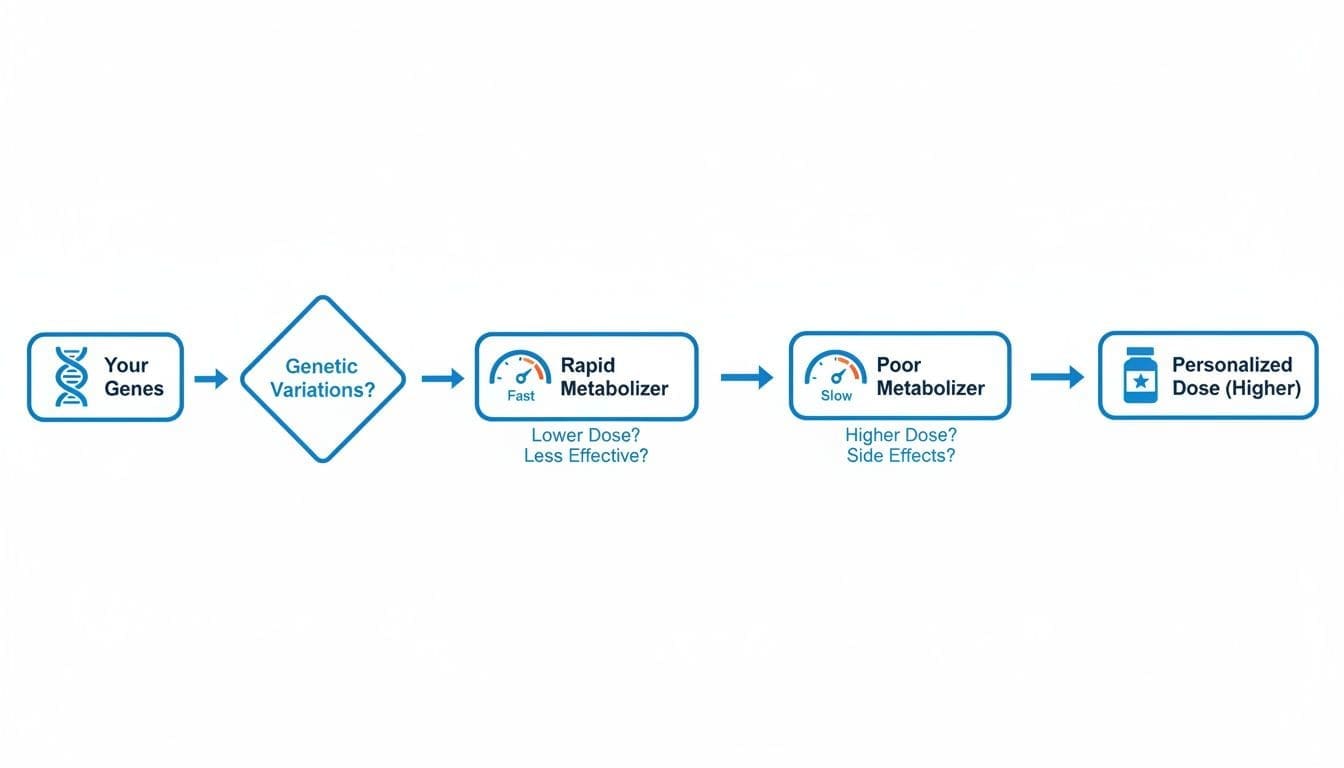
As you can see, understanding your unique metabolism allows your provider to move past standard "one-size-fits-all" dosing toward a personalized dose that's much more likely to work for you.
To make this even clearer, here's a simplified look at how this information is typically organized in your report.
Interpreting Your Sample Medication Report
| Medication Category | Genetic Implication | Example Clinical Action |
|---|---|---|
| Green List | Standard metabolism and response expected. | Prescribe at a standard dose; normal monitoring. |
| Yellow List | May be metabolized too quickly or slowly. | Start with a lower dose; monitor for side effects. |
| Red List | High risk of side effects or poor efficacy. | Avoid this medication; choose an alternative from the green list. |
This table shows how each category translates into a specific, actionable step for your provider, turning genetic data into a practical treatment strategy.
Weaving Data into a Complete Picture
Your genetic report is just one chapter in your health story, not the whole book. A skilled psychiatric nurse practitioner will never treat the report in isolation. Instead, they integrate this new genetic data with all the other critical information about you. This includes your personal health history, current symptoms, lifestyle, and what you want to achieve with treatment.
For instance, two people could have the exact same "green light" result for an antidepressant, but receive completely different recommendations. Why? One person might have a liver condition or take another medication that creates an interaction, prompting their provider to choose an alternative despite the green light.
This comprehensive, whole-person approach is the future of mental healthcare. In fact, the precision psychiatry market is expanding quickly, with genetic testing holding the largest share at 41.21% in 2026. This growth is driven by strong evidence. One analysis, for example, showed a 30% higher response rate for patients with depression whose treatment was guided by genetic testing. This highlights the effectiveness of using a DNA test for antidepressants.
As this market is projected to hit USD 2,858 million by 2033, more providers are using these tools to deliver truly personalized care. You can explore the market research from Grand View Research for more details on these trends.
Ultimately, your genetic test results provide an invaluable roadmap. By combining this genetic blueprint with a deep understanding of you as a person, your psychiatric nurse practitioner can build a more targeted, effective, and empowering treatment plan—helping you find the path to wellness with far more confidence and clarity.
The Integrative Approach to Genetic Testing

A depression genetic test provides a powerful glimpse into your unique biology, but the raw data is just the beginning. At Integrative Psychiatry of America, we don't see these results as a final verdict. Instead, they are the start of a much deeper conversation about your well-being.
A lab report offers clues, but it doesn’t know you. Our psychiatric nurse practitioners, including Christopher Clark, MSN, PMHNP-BC, use this information as one piece of a much larger wellness puzzle. The goal is to build a treatment plan that addresses every aspect of your health, not just your symptoms. This is personalized treatment for depression at its best.
Moving Beyond the Prescription Pad
The real value of a depression genetic test goes far beyond simply choosing a medication. A truly integrative plan weaves this genetic information together with other key health factors, creating a strong foundation for your mental wellness.
For instance, a test might show a variation in the MTHFR gene. This gene is vital for how your body processes folate, a B-vitamin needed to produce mood-regulating neurotransmitters like serotonin. This single piece of information opens the door to powerful, non-medication interventions.
Your psychiatric nurse practitioner might recommend:
- Targeted Nutritional Support: Suggesting foods rich in folate or a specific supplement like methylfolate that your body can use more easily.
- Lifestyle Adjustments: Discussing how specific dietary changes can directly support your brain chemistry and mood.
- Additional Lab Work: Checking your actual folate levels to see if a genetic potential is causing a real-world deficiency.
This is how we turn a page of data into a practical, personalized path toward feeling better.
A genetic test provides the "what"—the raw information about your unique biology. Our integrative approach provides the "how"—a comprehensive plan that uses this information to support your mind and body.
Weaving Together a Holistic Treatment Plan
Our philosophy is simple: you are more than a collection of genes or symptoms. A successful treatment plan has to be as unique as you are, incorporating strategies that promote health from multiple angles.
We combine the precision of a depression genetic test with proven, evidence-based practices. Your personalized care plan might include:
- Evidence-Based Medication Management: Using genetic insights to select and dose medications more effectively from the start.
- Therapeutic Support: Incorporating techniques from Cognitive Behavioral Therapy (CBT) or other modalities to build lasting coping skills.
- Mindfulness and Stress Reduction: Recommending practices like meditation or breathwork to help regulate your nervous system.
- Nutritional and Exercise Counseling: Creating a plan that supports both brain health and physical vitality.
This method treats you as a whole person, which is the heart of our practice. You can learn more about revolutionizing mental health with the integrative psychiatry approach on our blog. For our patients across Pennsylvania, this means care that is not only convenient through telepsychiatry but also deeply personalized and comprehensive.
Navigating Cost, Insurance, and Privacy
Practical questions about cost and privacy are a normal part of making any healthcare decision. It's completely understandable to wonder about the investment and the security of your personal information when considering a depression genetic test. We believe in total transparency, so let’s walk through these important topics.
The good news is that the cost of pharmacogenomic testing has dropped significantly over the years, making it far more accessible. The final price tag often depends on the specific lab and how comprehensive the test panel is.
Understanding Insurance Coverage
Many insurance plans now cover pharmacogenomic testing, especially when there's a clear clinical need. This is often the case if you have treatment-resistant depression, meaning you've already tried at least one antidepressant without success.
Insurance companies are increasingly recognizing that guiding treatment with a genetic test can be more cost-effective in the long run than paying for a cycle of ineffective prescriptions. Your psychiatric nurse practitioner can help you by providing all the necessary clinical documentation to your insurance provider. We know navigating insurance is a headache, which is why we also offer flexible options at Integrative Psychiatry of America to make sure care is within reach.
Research has repeatedly shown that people can receive genetic information about mental health predispositions without experiencing negative psychological effects. One study found no clinically meaningful changes in depression or anxiety symptoms among individuals who viewed their genetic risk reports.
Protecting Your Genetic Privacy
Your privacy is our top priority. You might be wondering: who sees my genetic data, and how is it used? Fortunately, strong federal laws are in place to protect your sensitive information.
There are two key laws you should know:
- GINA (Genetic Information Nondiscrimination Act): This federal law makes it illegal for health insurers and most employers to use your genetic information against you. In other words, your health insurance company can't raise your rates or deny you coverage based on your genetic test results.
- HIPAA (Health Insurance Portability and Accountability Act): This well-known privacy law sets strict rules for how your protected health information, including genetic test data, is handled and shared by healthcare providers.
At Integrative Psychiatry of America, we don't just follow these regulations—we are committed to them. Your results are kept secure within our HIPAA-compliant telepsychiatry platform and are used only for your clinical care. Your data is for your benefit and your provider's eyes only. It is never sold or shared with outside parties for marketing or research without your explicit consent.
Our Commitment to Accessible and Affordable Care
We believe personalized mental healthcare should be accessible to everyone who needs it. To support our Pennsylvania patients, we provide several ways to manage the cost of your treatment.
Our practice offers:
- Insurance Verification: We’ll help you make sense of your benefits and what your plan is likely to cover.
- Affordable Membership and Cash-Pay Options: For those without insurance or who simply prefer not to use it, we have straightforward pricing. These options eliminate surprises and make high-quality care more manageable.
You can find a clear breakdown of our fee structure by reviewing our pricing and membership options. Our goal is to remove financial uncertainty so you can focus completely on what matters most: your well-being.
Your Next Steps Toward Personalized Care
Deciding to find a new path for your mental health is a powerful move. If you've felt let down by the traditional, one-size-fits-all approach to depression, it's not a personal failure. It often means you haven't had the right tools to match a treatment plan to your unique biology.
A depression genetic test can finally provide those missing insights.
Ready to see what a personalized approach feels like? At Integrative Psychiatry of America, our dedicated psychiatric nurse practitioners are here to guide you. We use advanced tools like pharmacogenomic testing within a compassionate, whole-person framework to help our Pennsylvania patients find lasting relief.
Scheduling Your First Consultation
We've made our process straightforward and confidential, so you can start your journey right from home.
Here's how to get started:
- Schedule Online: Simply visit our website and pick an appointment time that fits your life. Our secure, HIPAA-compliant booking system makes scheduling your first telepsychiatry visit quick and easy.
- Initial Consultation: You'll meet with one of our psychiatric nurse practitioners to share your story, discuss your symptoms, and outline your health goals. This is a collaborative meeting where you can ask anything you want to know about the depression genetic test.
- Receive Your Test Kit: If you and your provider agree that genetic testing is a good next step, we'll have a simple, non-invasive test kit shipped directly to your home.
- Simple At-Home Collection: The test is just a quick cheek swab—no needles and no discomfort. Just follow the instructions and use the prepaid mailer to send your sample back to the lab.
The information from a genetic test is just one piece of your health story. The most important part of this process is the partnership you build with your psychiatric nurse practitioner, who will use these insights to create a plan that works for you.
What to Expect After the Test
Once the lab processes your sample—which usually takes a couple of weeks—your provider will set up a follow-up appointment to go over the results with you. This is where the data from your test becomes a practical roadmap for your care.
Together, you'll review the report, learn what it means for your medication options, and make truly informed decisions about your treatment. This is how we move past guesswork and toward a precise, effective plan. For a closer look at our online services, explore our guide on online depression treatment at Integrative Psychiatry of America.
This process is about far more than just finding the right medication. It's about empowering you with knowledge and giving you a sense of control over your own mental health journey. We are here to support you at every step, blending scientific insights with compassionate care to help you feel better, faster.
Frequently Asked Questions
Considering a depression genetic test? It's natural to have questions. Here's a quick, clear look at what you can expect as you consider this powerful tool for your mental health journey.
What Does the Test Reveal—And Not Reveal?
A pharmacogenomic test will not diagnose depression or predict your future risk of developing it. Its purpose is much more specific and practical.
Think of it as a personalized roadmap for medication. The test reveals how your unique genetic makeup is likely to influence your body’s response to various antidepressants. It helps identify which drugs you may process too quickly, too slowly, or just right. This DNA test for medication effectiveness helps streamline treatment.
How Does a Psychiatric Nurse Practitioner Use the Results?
Your psychiatric nurse practitioner uses the test results as a guide, not a rigid rulebook. This genetic information is one piece of the puzzle, combined with your health history, symptoms, and personal goals.
The report helps your provider make more informed decisions by:
- Prioritizing medications that are a better genetic fit for you.
- Adjusting starting doses to help minimize potential side effects.
- Avoiding medications that have a high probability of being ineffective based on your genetics.
Ultimately, the results are part of a collaborative conversation. They help ensure your treatment plan is truly personalized to you.
Recent studies confirm that receiving genetic risk information is well-tolerated. Research shows no clinically meaningful increases in depression or anxiety symptoms among people who view their reports, suggesting individuals can be empowered by this knowledge without negative psychological effects.
How Is the Sample Collected?
The process is incredibly simple and can be done from the comfort of your home. It’s completely non-invasive.
The depression genetic test kit includes a simple cheek swab. You just gently rub the swab on the inside of your cheek for about a minute to collect a cell sample. Then you seal it in the provided container and mail it back using a prepaid envelope.
There are no needles, no blood draws, and no trips to a lab required.
How Long Does It Take to Get Results?
Once the lab receives your sample, it typically takes about two weeks to process the results.
As soon as we receive the report, your psychiatric nurse practitioner will schedule a follow-up telepsychiatry appointment. During this session, your provider will walk you through the findings, explain what they mean for your treatment, and work with you to decide on the best next steps.
Ready to move beyond trial-and-error treatment? At IPA Integrative Psychiatry of America, our team of dedicated psychiatric nurse practitioners uses these advanced tools to create a personalized path to wellness for our patients across Pennsylvania. Schedule your confidential consultation today.