
A Pennsylvania adult may already know the feeling. Work has become harder to hold together. Sleep is off. Cravings hit at the worst times. Family members may be asking whether medication is enough, while the person seeking help wonders whether counseling by itself will hold when stress spikes again.
That tension is one reason holistic addiction treatment gets so much attention. The term sounds broad, and sometimes confusing. In a clinical setting, it shouldn't mean scented candles, vague wellness promises, or replacing proven care with lifestyle advice. It should mean a treatment plan that addresses the brain, the body, daily routines, and co-occurring mental health symptoms in one coordinated system.
For many adults with opioid or other substance problems, the question isn't whether recovery should be thorough in theory. It's whether treatment can become practical enough to start now, continue consistently, and fit everyday life in Pennsylvania. That's where virtual psychiatric care matters. A secure statewide telehealth model can connect medication management, therapy planning, follow-up visits, and lifestyle support without requiring repeated travel or a waiting-room barrier. Readers who want a broader overview of this model can explore integrative psychiatry care.
Table of Contents
- Introduction to Holistic Addiction Treatment for Lasting Recovery
- What Whole-Person Addiction Treatment Means and What Evidence Shows
- Core Components That Make Holistic Care Work Together
- How Telehealth Delivers Holistic Addiction Treatment in Pennsylvania
- Expected Outcomes Timelines and What Supports Success
- How to Choose an Integrative Provider Insurance and Access in Pennsylvania
- Taking the Next Step Toward Holistic Recovery
Introduction to Holistic Addiction Treatment for Lasting Recovery
A useful way to think about recovery is to picture a house after a storm. If the foundation is cracked, paint won't fix it. If the roof is leaking, fixing the floor alone won't solve the problem either. Addiction works in a similar way. It affects biology, mood, judgment, habits, sleep, relationships, and day-to-day structure at the same time.
That's why a whole-person plan matters. Medication can steady the part of the brain that drives withdrawal and craving. Therapy can help a person understand triggers, shame, trauma, anxiety, or depression that keep feeding use. Lifestyle supports such as exercise, sleep structure, nutrition, and mindfulness help recovery hold during ordinary days, not just during appointments.
Who this approach helps
This model fits adults who are motivated to change but worried that one tool alone won't be enough. It also helps people who have tried to quit before and found that early improvement fell apart when stress, isolation, pain, or mood symptoms returned.
Some adults come in asking only for Suboxone. Others ask only for therapy because they feel hesitant about medication. Care that considers the whole person doesn't force one answer onto everyone. It starts with a proper evaluation, then builds a plan around what's driving the substance use.
Recovery usually becomes more stable when treatment matches the full pattern of the problem, not just the most visible symptom.
What readers can expect from this guide
The rest of this article keeps the term grounded. It explains what treatment means in medical practice, which parts have stronger evidence, how virtual care can deliver it across Pennsylvania, what outcomes are realistic, and how to judge whether a provider is offering a thoughtful plan or just a long menu of add-ons.
What Whole-Person Addiction Treatment Means and What Evidence Shows
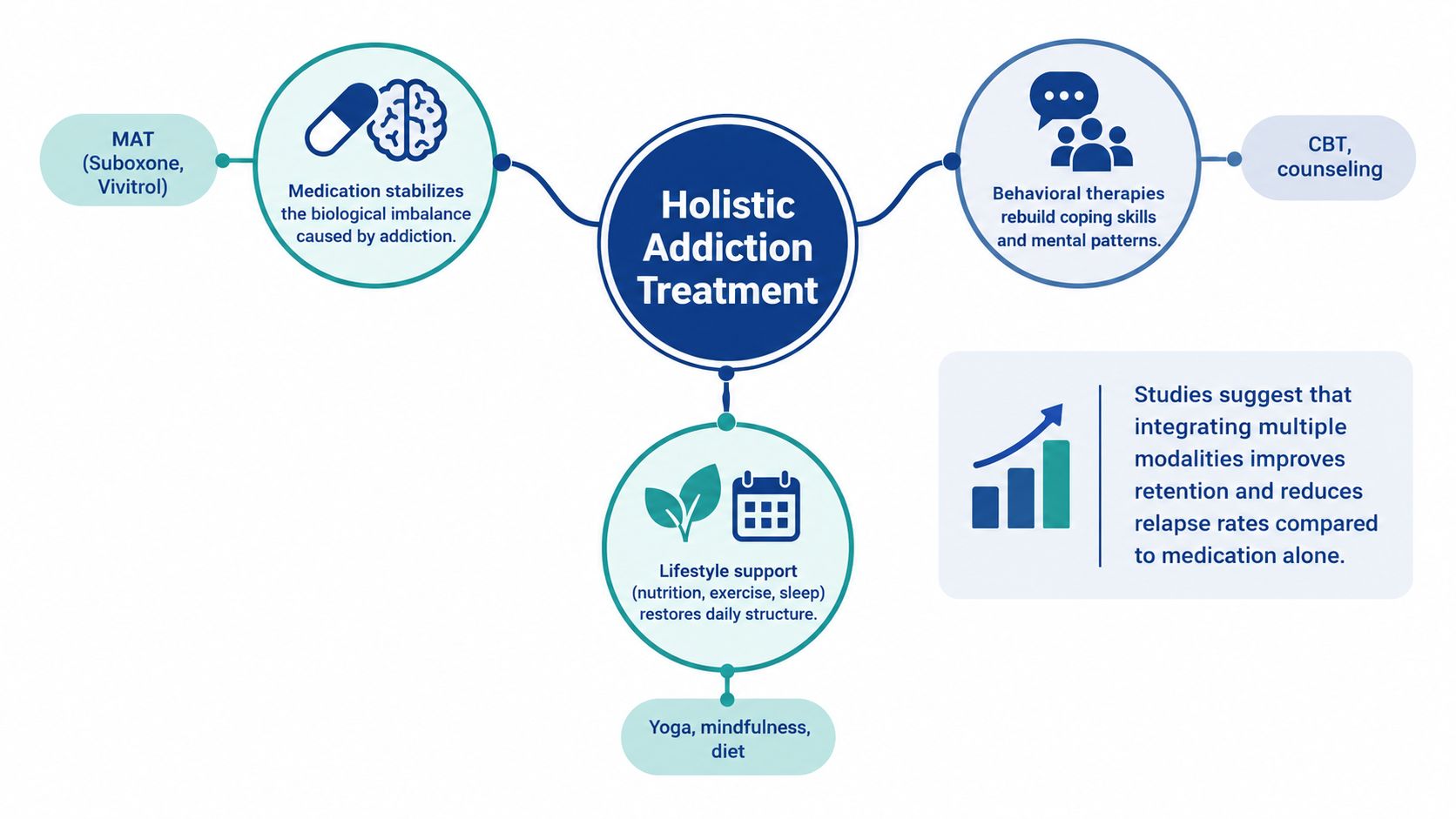
A person may start treatment asking for one thing. Maybe it is Suboxone because cravings feel unbearable. Maybe it is therapy because medication feels intimidating. In practice, good addiction care works more like a well-built treatment map. The foundation is medication and psychotherapy when they are indicated. Exercise, nutrition, mindfulness, sleep work, and lab screening are added for a reason, not because they sound healthy.
Start with the clinical base
Whole-person addiction care begins with sorting out what problem is present, how severe it is, and what is keeping it going. A quiz can raise concern. It cannot diagnose.
A proper assessment usually sorts four questions in order:
- What substances are being used, and how often?
- Is there current or past withdrawal risk?
- Are mental health symptoms, pain, sleep problems, or medical issues feeding the substance use?
- What treatment mix fits this person's needs, safety, and goals right now?
That order matters. If someone is still cycling through withdrawal and craving, the brain is often too occupied with survival to make full use of therapy. Medication can steady that biology. Therapy can then address habits, triggers, avoidance, trauma, anxiety, depression, and the other patterns medication does not treat by itself.
Research supports that hierarchy. A National Institute on Drug Abuse summary of the Prescription Opioid Addiction Treatment Study found low success during the initial taper phase and better outcomes after stabilization on buprenorphine-naloxone. The same summary noted that adding counseling did not improve outcomes uniformly across every patient group, while some higher-need groups appeared to benefit when counseling exposure was adequate. That is a good example of evidence-graded care. Medication often forms the base. Therapy is still an important treatment tool, but its role depends on the clinical picture and the quality of delivery (National Institute on Drug Abuse summary of POATS findings).
What belongs in the adjunct layer
Supportive practices still matter. They just belong in the right lane.
Mindfulness can help some patients reduce stress reactivity and cravings. Exercise can improve mood, sleep, and routine. Nutrition work can identify skipped meals, stimulant overuse, or blood sugar swings that make recovery days harder. Lab screening can uncover thyroid problems, anemia, liver issues, vitamin deficiencies, or other medical factors that can look like anxiety, fatigue, poor concentration, or depressed mood.
The U.S. National Center for Complementary and Integrative Health reports that mindfulness-based interventions may reduce use of substances and improve craving and stress-related symptoms in some studies, while also noting limits such as small samples and inconsistent methods. That is why mindfulness fits best as an adjunct to standard treatment, not a substitute for medication for opioid use disorder or structured psychotherapy (NCCIH overview of mind-body approaches for substance use disorders).
A simple way to judge a program helps here. If the clinical core is thin and the wellness menu is long, the balance is off.
Evidence also includes whether people can actually get care
Treatment only works if a person can reach it, afford it, and stay connected long enough for it to help. Access is part of quality, not a side issue.
The 2026 National Drug Control Strategy describes a large treatment gap and identifies barriers such as awareness, availability, access, affordability, and attendance. It also notes that cost is a common reason people do not receive treatment (2026 National Drug Control Strategy). In Pennsylvania, that point matters because many adults live far from an addiction specialist, have work or childcare constraints, or feel too exposed walking into a local clinic.
Telehealth helps address those barriers when the provider uses it well. Federal telemedicine flexibilities for prescribing buprenorphine are scheduled to be temporarily extended through December 31, 2026, which would allow continued remote access under current policy timelines rather than forcing unnecessary in-person delays. For readers who want broader public health context, opioid epidemic statistical trends over the past decade gives useful background on why timely access matters.
That is the practical meaning of whole-person treatment. It is not a grab bag of extras. It is a structured system where the strongest tools carry the most weight, and added supports are chosen to solve specific problems that could otherwise pull recovery off course.
Core Components That Make Holistic Care Work Together
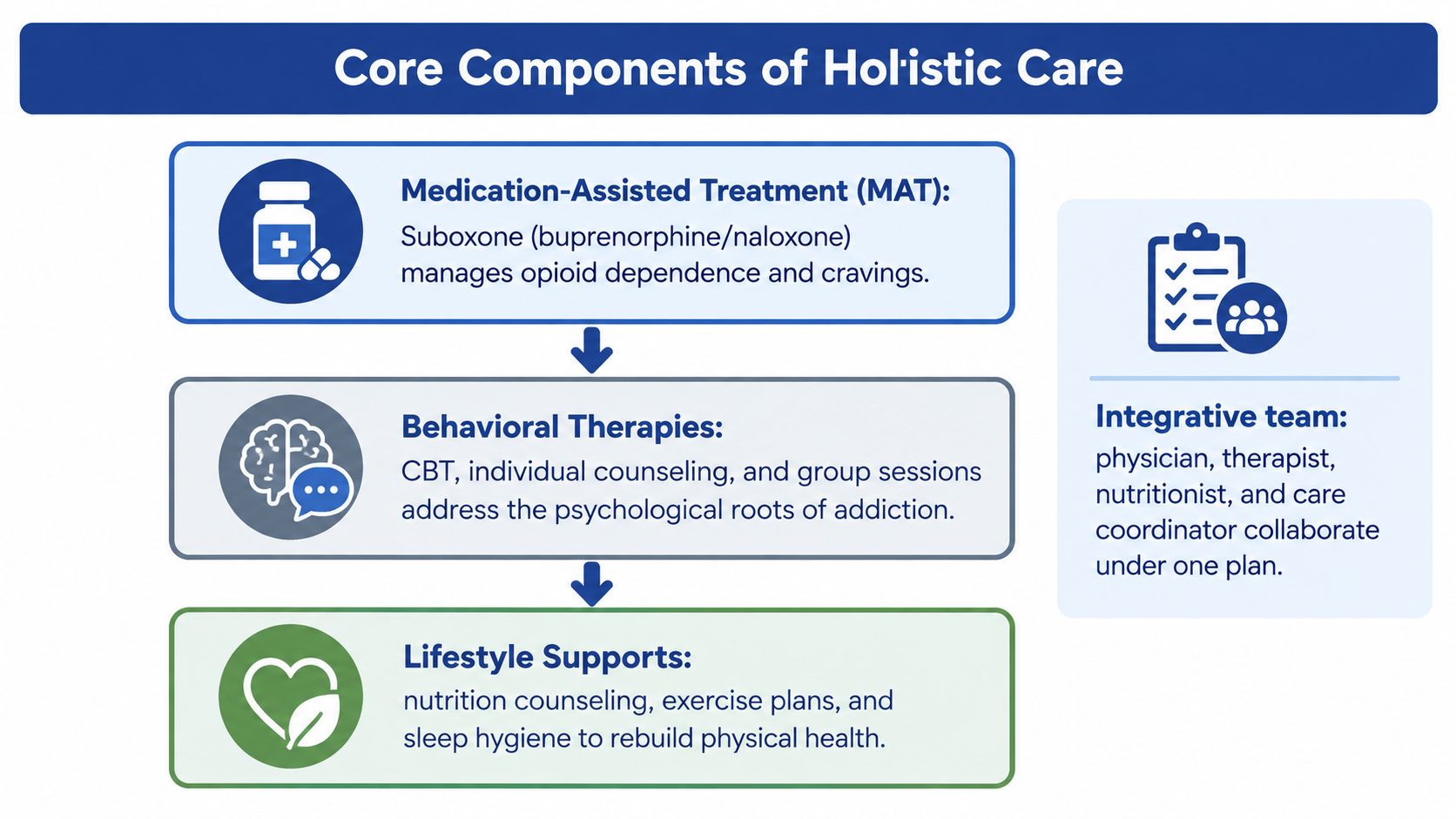
A treatment plan works best when each part has a clear job. Recovery care is more like a team than a toolbox. Medication steadies the nervous system, therapy builds skills and insight, and lifestyle supports help the brain and body hold those gains between visits.
Medication-assisted treatment for opioid dependence
For opioid dependence, Suboxone (buprenorphine-naloxone) often serves as the stabilizing piece. It helps quiet withdrawal, cravings, and the constant pull to avoid getting sick. Once that cycle settles, attention and judgment usually improve enough for the person to participate more fully in treatment.
Medication supports recovery, but it does not cover every part of recovery. A prescription cannot teach conflict skills, process trauma, or repair trust at home. Still, without biologic stabilization, therapy often feels like asking someone to learn while a fire alarm is ringing.
Therapy for the drivers underneath use
Therapy addresses the patterns medication does not reach directly. That may include cue-driven use, avoidant coping, grief, trauma, or mental health conditions such as anxiety, depression, PTSD, or OCD that have been present for years.
The clinical hierarchy matters here. Medication and evidence-based psychotherapy are the foundation. Exercise, nutrition, mindfulness, and medical screening can strengthen care, but they work best when attached to a solid base rather than used as substitutes. For broader context on treatment gaps and evidence limits, see this review of the addiction treatment gap and evidence boundaries in integrated care.
Therapy may include practical work such as:
- Trigger mapping: noticing when pain, conflict, boredom, or isolation increase risk
- Craving planning: deciding in advance what to do in the first minutes of an urge
- Dual-diagnosis treatment: treating substance use and psychiatric symptoms together
- Relapse review: studying a setback carefully, without turning it into shame
Exercise, nutrition, and body-based supports
Lifestyle supports are not decorative extras. They target problems that commonly destabilize recovery, such as poor sleep, low appetite, agitation, fatigue, and stress sensitivity.
Exercise can improve mood regulation and help create routine. Nutrition support can restore regular eating patterns and steadier energy. Mindfulness can help a person notice a craving, a body sensation, or a spike of panic without reacting automatically. Some adults also benefit from structured movement practices that pair breathing, attention, and physical regulation. A related example appears in this article on yoga and integrative psychiatry approaches for anxiety and depression.
A short overview can help make the structure concrete:
Lab screening, genetics, and hormone review
Some patients need more medical clarification. Lab testing can identify thyroid problems, low iron, vitamin deficiencies, liver issues, or other conditions that affect mood, energy, sleep, and concentration. Those findings do not replace addiction treatment, but they can explain why progress feels harder than expected.
Genetic testing may sometimes help with medication selection, although it does not diagnose a condition or predict response with certainty. Hormone treatment, including testosterone replacement in selected patients, belongs in the same category. These tools are targeted adjuncts used to answer a specific clinical question.
For example, some Pennsylvania telepsychiatry practices, such as Integrative Psychiatry of America, provide statewide psychiatric evaluation, medication management, psychotherapy planning, and selected lifestyle or lab-based supports when clinically indicated.
How Telehealth Delivers Holistic Addiction Treatment in Pennsylvania
A Pennsylvania parent finishes work, picks up a child from school, and still needs help for cravings, sleep disruption, and anxiety. The barrier is often not willingness. It is time, distance, privacy, and the strain of adding one more appointment to a week that already feels full. Telehealth addresses that access problem by bringing the foundation of addiction care, psychiatric evaluation, medication management, and therapy planning, into the home.
What the process usually looks like
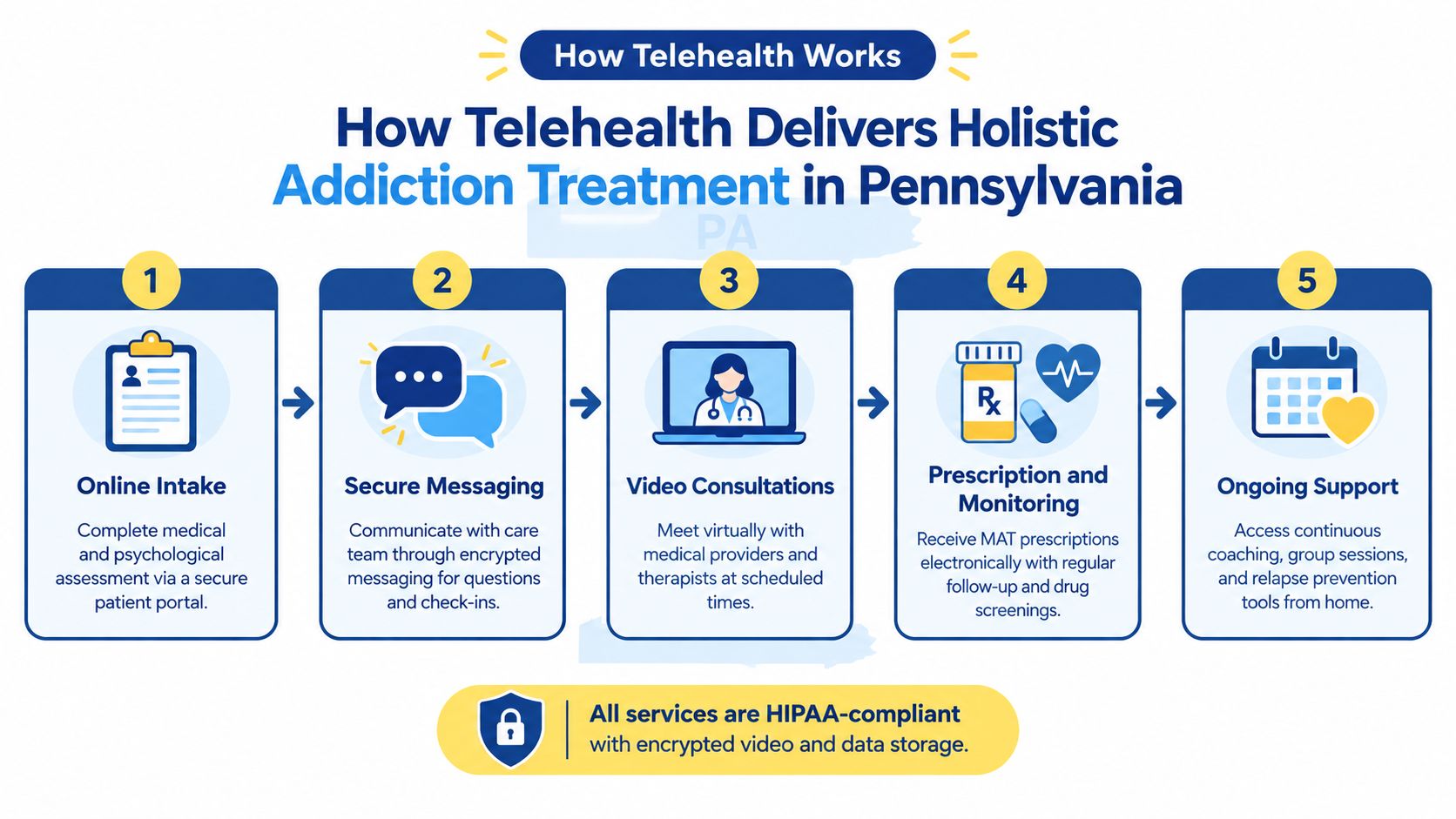
Virtual addiction treatment works best when it follows a clear clinical sequence. That structure matters. Recovery care is a bit like rebuilding after a storm. You start with safety and support beams, then add the parts that improve day-to-day function.
- Online intake collects medical history, current substance use, psychiatric symptoms, medications, and practical concerns such as schedule or childcare.
- Evaluation reviews diagnosis, withdrawal risk, overdose risk, past treatment response, and whether telehealth is appropriate.
- Care planning sets the foundation first. Medication and therapy are usually the primary tools. Exercise, nutrition work, mindfulness practice, or lab testing are added when they match a specific clinical need.
- Follow-up visits track cravings, sleep, side effects, attendance, mood symptoms, and any return to use, then adjust the plan.
- Ongoing support often includes secure messaging, refill coordination, and portal-based scheduling.
Pennsylvania policy resources recognize telepsychiatry within the behavioral health system as psychiatric care delivered through approved electronic communication technologies. Those same resources note that Pennsylvania HealthChoices Behavioral Health covers medically necessary outpatient mental health services, including therapy and medication management, for eligible residents, though benefits vary by plan and eligibility (Pennsylvania telepsychiatry and behavioral health coverage overview).
How online Suboxone prescribing works now
For opioid use disorder, telehealth can also support buprenorphine treatment when the clinician determines it is appropriate. That matters because buprenorphine is not a wellness extra. It is a core evidence-based treatment that can reduce withdrawal, reduce cravings, and help a patient stay engaged long enough for therapy and behavior change to work.
A DEA and HHS final rule that took effect December 31, 2025 allows DEA-registered practitioners to prescribe Schedule III-V medications approved for opioid use disorder, including buprenorphine, through audio-video or audio-only telemedicine when clinically appropriate. The rule also allows up to a six-month supply without an in-person exam if required safeguards are met, including PDMP review and identity verification (DEA and HHS final rule outline on buprenorphine telemedicine).
Separate from that, broader telehealth prescribing flexibilities for controlled substances are scheduled to be temporarily extended through December 31, 2026, which would allow DEA-registered practitioners to prescribe Schedule II-V controlled medications via audio-video telemedicine without a prior in-person evaluation, and certain opioid use disorder medications via audio-only encounters under federal and state law (DEA extension of telemedicine flexibilities).
Telehealth does not lower clinical standards. It changes where the visit happens while keeping identity checks, prescribing rules, risk review, and follow-up in place.
Why this matters across Pennsylvania
The practical value is straightforward. A person in Philadelphia may use telehealth to avoid missed work and long waits. A person in Lancaster or a smaller town may use it because there is no nearby clinician with addiction psychiatry experience. In either setting, telehealth can connect the main parts of treatment, medication, therapy, and targeted lifestyle support, without requiring repeated travel.
That model also helps with continuity. If sleep worsens after starting treatment, the clinician can address it quickly. If lab results suggest iron deficiency or thyroid issues, those findings can be folded into the plan instead of treated as a separate mystery. If cravings improve but depression remains, therapy and medication can be adjusted without losing momentum.
Patients who want a clearer picture of the format can review online addiction treatment benefits for recovery to see how access and consistent follow-up fit together.
Expected Outcomes Timelines and What Supports Success
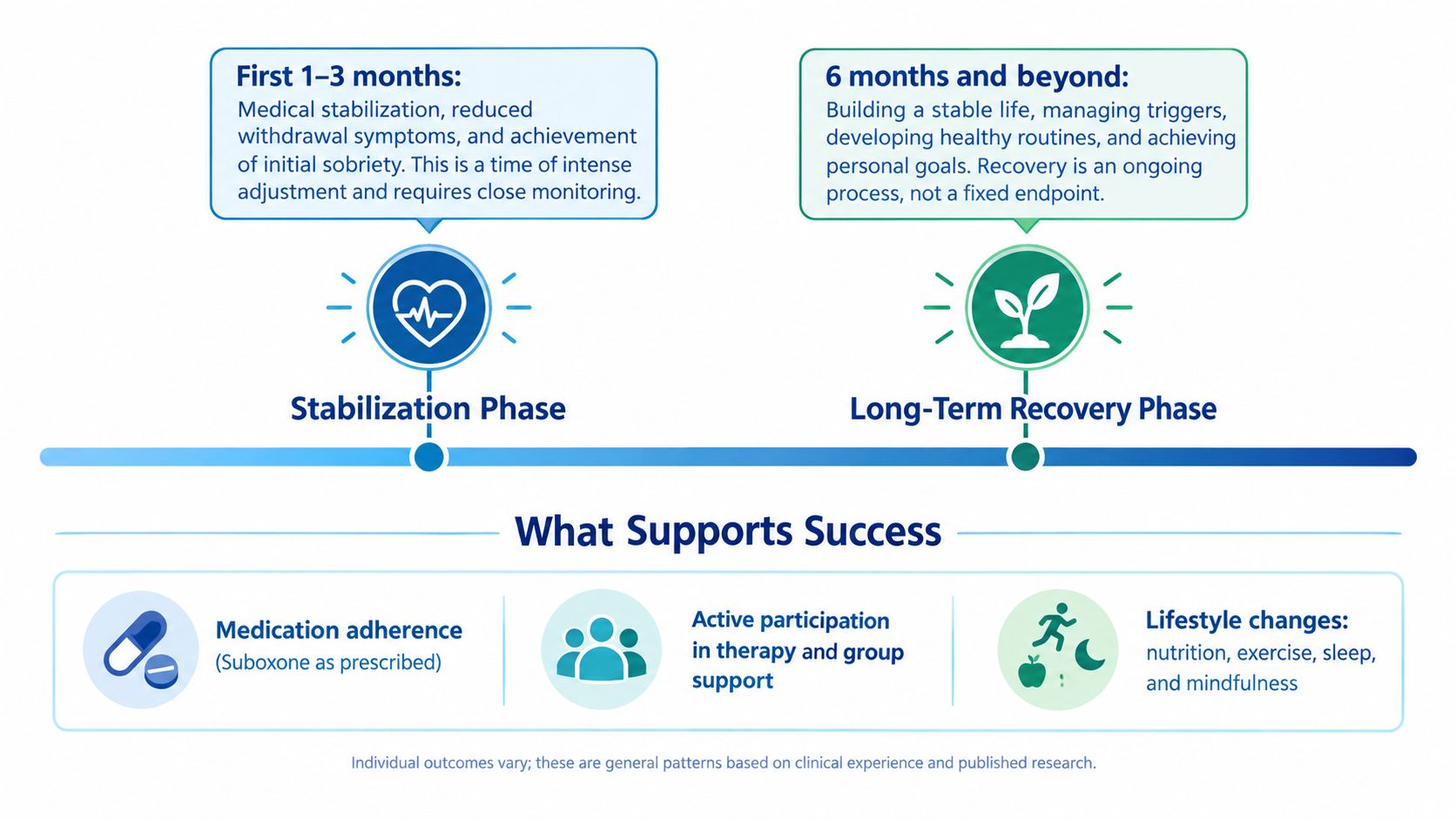
Recovery usually moves in phases. Early treatment is about stabilization. Later treatment is about staying engaged long enough to build a life that doesn't keep pulling the person back toward use.
What tends to happen early
In the first stage, common goals include reduced withdrawal symptoms, better daily functioning, fewer urgent cravings, and enough stability to attend appointments and follow through on the plan. This phase often feels less dramatic than people expect. The person may not feel “fixed.” The more realistic sign is that life becomes a little more manageable.
The National Institute on Drug Abuse summary cited earlier helps explain why this stage matters. Success was much stronger after medication stabilization than during the initial taper period. That's one reason many clinicians focus first on steadying the system before trying to test recovery under less support.
What long-term patterns look like
A 2023 long-term inpatient treatment study reported that at final assessment, 32% of patients were abstinent, 27% were abstinent with intermittent lapses, 33% had relapsed, and the remainder had died. The same source also described a systematic review showing that psychosocial interventions combined with pharmacological detoxification were associated with better treatment attendance, higher completion rates, reduced opioid use, and longer-term abstinence (long-term impact of holistic inpatient treatment and review of combined psychosocial and pharmacologic care).
Those findings support a careful message. Good treatment improves the odds of meaningful recovery, but it doesn't erase risk. Setbacks can happen even in strong programs.
Individual outcomes vary. A lapse isn't proof that treatment failed. It often means the plan needs adjustment, more support, or a closer look at untreated triggers.
What helps recovery hold
The people who do better over time often have a few things in common:
- Consistent follow-up: regular visits keep small problems from becoming treatment exits
- Medication adherence: taking Suboxone or other prescribed medication as directed supports stability
- Active therapy participation: coping skills only become useful when practiced between sessions
- Daily rhythm: sleep, meals, movement, and structure make relapse less likely during ordinary stress
- Honest review of co-occurring symptoms: depression, trauma symptoms, anxiety, and obsessive thoughts can undermine progress if they aren't treated
How to Choose an Integrative Provider Insurance and Access in Pennsylvania
Choosing a provider for addiction care is less like shopping for a product and more like checking whether a treatment system is built soundly. The key question isn't whether a practice uses the word “holistic.” It's whether the care plan keeps evidence-based treatment at the center.
What to ask before booking
A strong Pennsylvania telepsychiatry option should be clear about who leads care, how diagnosis is made, when medication is used, how therapy is integrated, and what follow-up looks like. For some readers who like to compare health technologies and patient-centered tools across settings, resources such as Telomyx can be useful examples of how digital health platforms present care pathways and communication features.
The comparison below can help sort meaningful signals from marketing language.
| Evaluation Criteria | What to Look For | Potential Red Flag |
|---|---|---|
| Clinical leadership | A board-certified psychiatric mental health nurse practitioner or physician-led team using clear psychiatric evaluation standards | Vague titles or no clear prescriber credentials |
| Diagnostic process | A full assessment of substance use, mental health, medical history, and functioning | Instant treatment offers without a real evaluation |
| Medication approach | Evidence-based prescribing, including Suboxone when clinically appropriate | Anti-medication messaging or pressure to avoid standard treatment |
| Therapy integration | Clear referral or coordination for counseling and co-occurring conditions such as PTSD, anxiety, depression, or OCD | Medication-only care with no plan for psychological drivers |
| Lifestyle supports | Exercise, nutrition, mindfulness, sleep work, or labs used to support the main treatment plan | Add-ons presented as substitutes for proven care |
| Access model | Secure telehealth, practical scheduling, refill processes, and ongoing follow-up | Hard-to-reach staff or no clear continuity plan |
| Inclusivity and fit | Respectful care for diverse patients and realistic treatment expectations | Promises of guaranteed results |
How insurance verification really works
Coverage questions matter because mental health and addiction benefits can vary widely by plan. A patient may have Cigna, Aetna, UnitedHealthcare, or BCBS/IBX and still face different copays, deductibles, network rules, or prior authorization requirements depending on the specific policy.
A careful process should include:
- Benefit verification: checking network status and covered service categories
- Cost review: explaining that copays and deductibles differ by plan
- Authorization review: identifying whether approvals are needed for visits or medications
- Backup planning: discussing self-pay options if needed
Pennsylvania readers can start that process through an insurance verification process for psychiatric care before scheduling.
Taking the Next Step Toward Holistic Recovery
The most useful way to think about addiction treatment is simple. Medication can stabilize the biology. Therapy can rebuild thinking and coping. Daily health supports can help recovery last in real life. None of those pieces has to compete with the others when care is designed well.
That matters because many adults delay treatment while trying to choose between “medical” care and “whole-person” care, as if they are opposite paths. They aren't. The stronger model combines proven psychiatric treatment with targeted supports such as exercise counseling, nutrition guidance, mindfulness practice, and medically appropriate screening when those tools answer a real clinical need.
For a Pennsylvania adult who wants help now, the next steps are usually practical. Complete a substance-use assessment. Verify insurance benefits. Schedule a virtual psychiatric evaluation that can sort screening from diagnosis and build a plan around opioid dependence, co-occurring anxiety, depression, PTSD, OCD, or other concerns that may be affecting recovery.
Treatment should feel structured, not flashy. It should make starting care easier, not more confusing. And it should leave room for adjustment, because recovery is personal and outcomes vary.
Integrative Psychiatry of America offers statewide virtual psychiatric care in Pennsylvania, including medication management for opioid dependence, treatment planning for co-occurring mental health conditions, and targeted whole-person supports delivered through secure telehealth. Adults who want a more practical path into addiction treatment can learn more, verify insurance, or request an evaluation through Integrative Psychiatry of America.