
A Pennsylvania adult may begin searching for integrative psychiatry after months of poor sleep, racing thoughts, low motivation, or difficulty managing work and relationships. Medication might help, but the person may still wonder whether stress, nutrition, exercise, trauma, or daily routines deserve attention too. A parent may ask a similar question while seeking ADHD treatment for a child or teenager, especially when school concerns occur alongside anxiety, sleep problems, or family stress.
Integrative care addresses those questions without treating “natural” approaches as automatic substitutes for psychiatric treatment. It combines careful evaluation, evidence-based medication management, psychotherapy recommendations, and practical support for health behaviors when those supports fit the person's needs. Integrative Psychiatry of America provides virtual psychiatric care throughout Pennsylvania, including Philadelphia, Bucks County, Pittsburgh, the Lehigh Valley, Harrisburg, Lancaster, Reading, Scranton, Wilkes-Barre, and Erie.
The guide below defines the model, separates evidence-supported options from experimental ones, describes telehealth care, and explains who may benefit from an integrative psychiatric evaluation.
Table of Contents
- Why Many Pennsylvanians Are Searching for Integrative Psychiatry Now
- What Integrative Psychiatry Means Today
- How Integrative Psychiatry Differs From Traditional and Alternative Approaches
- What the Evidence Shows Across Depression Anxiety ADHD PTSD and OCD
- How an Integrative Evaluation and Treatment Plan Works via Telehealth in Pennsylvania
- Personalizing Lifestyle Supports and Tracking Progress Over Time
- Who May Benefit and Next Steps for Care in Pennsylvania
Why Many Pennsylvanians Are Searching for Integrative Psychiatry Now
A person in Philadelphia may finish a workday feeling mentally exhausted but unable to slow down. Sleep remains inconsistent, anxiety affects concentration, and an old depression diagnosis no longer explains every difficulty. Someone in the Lehigh Valley may have the opposite concern: ADHD symptoms interfere with organization, but medication questions are complicated by appetite, sleep, blood pressure, or another medical condition.
These patients often aren't rejecting conventional psychiatry. They're looking for a wider clinical conversation. They want a provider to ask about symptoms and diagnoses, but also about medications, physical health, relationships, stressors, routines, and functioning at home or work.
Pennsylvania residents also face practical access concerns. A person may have trouble finding timely in-person care near Erie, Pittsburgh, or a rural community. Virtual treatment can remove travel barriers, while still requiring appropriate evaluation, privacy, clinical boundaries, and follow-up. The state's behavioral-health system has specific telehealth billing rules, so online treatment isn't an office visit moved to a video call.
The ongoing mental health provider shortage in Pennsylvania adds context to why patients research alternatives to traditional appointment pathways. Yet convenience shouldn't lower clinical standards.
The central question: Can psychiatric care address the whole person without losing the discipline of diagnosis, evidence review, and outcome tracking?
That question guides the rest of this article. It covers what integrative psychiatry means, how it differs from conventional care, where evidence is strongest for depression, anxiety, ADHD, PTSD, and OCD, and how a Pennsylvania telehealth evaluation may work. It also explains what patients can do before requesting care, including preparing a medication list, symptom history, and insurance information.
What Integrative Psychiatry Means Today
Integrative psychiatry combines evidence-based psychiatric assessment and treatment with individualized attention to psychological, social, biological, and spiritual factors. Depending on clinical needs, care may include medication management, psychotherapy recommendations, sleep hygiene, nutrition, exercise, mindfulness, stress management, and behavioral strategies.
The model grew from the broader integrative mental health movement. A 2012 review described the bio-psycho-socio-spiritual framework as a new approach for contemporary psychiatry, while a 2020 review defined integrative mental health care as the use of appropriate therapeutic and lifestyle approaches alongside medication and psychotherapy, including nutraceuticals, mind-body therapies, diet, exercise, and sleep hygiene (PubMed review).
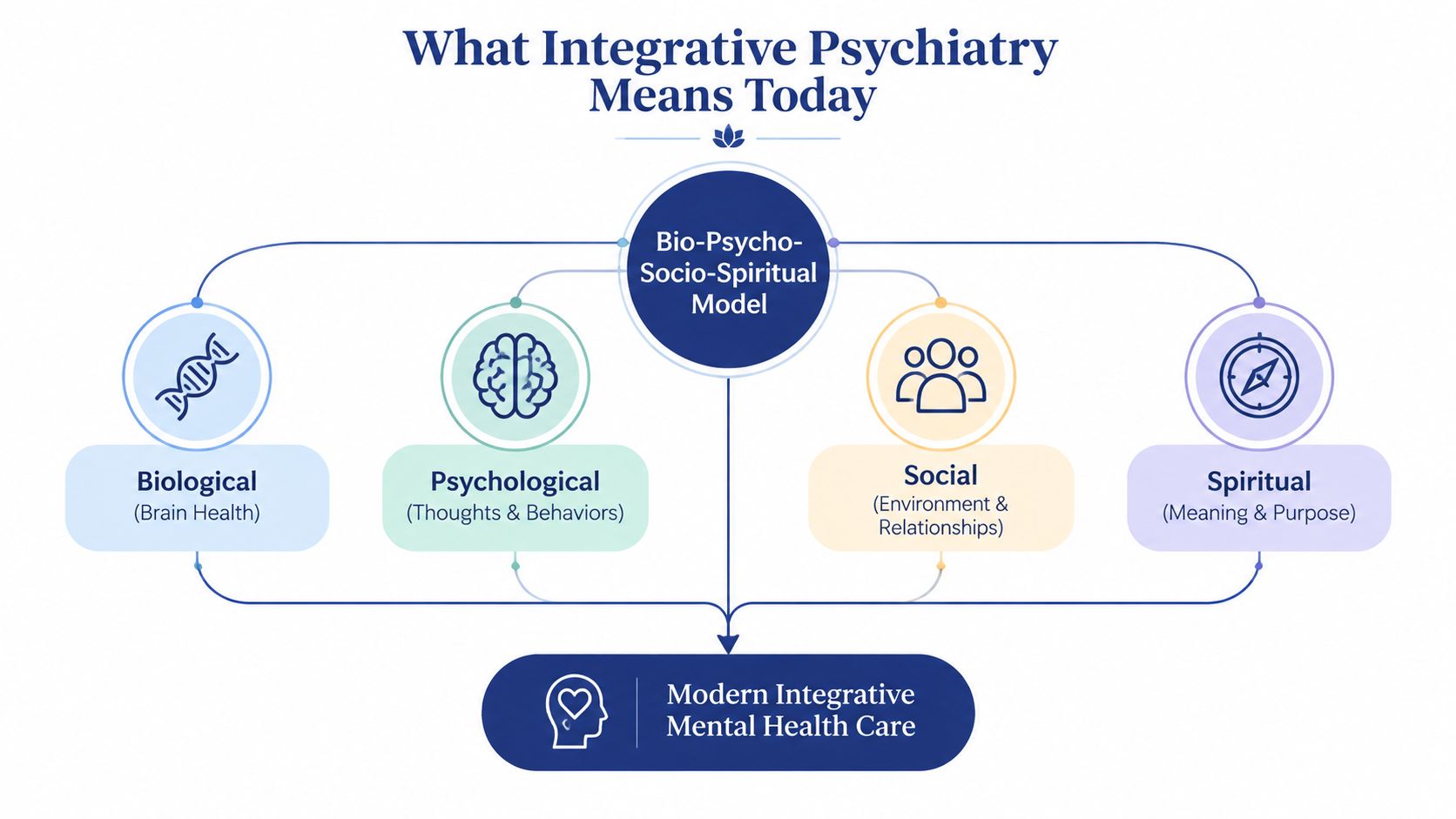
A whole-person clinical lens
A symptom-only approach might focus on panic, insomnia, inattention, or low mood as separate problems. Integrative psychiatry asks how those symptoms interact with medication effects, medical history, trauma, family responsibilities, work demands, sleep patterns, and health behaviors.
That doesn't mean every factor receives equal weight. A severe depressive episode may require prompt psychiatric treatment. A child with suspected ADHD still needs a structured assessment rather than a supplement recommendation. A person with PTSD may need trauma-focused psychotherapy, medication management, safety planning, or a combination.
The phrase “whole person” describes the scope of assessment, not a promise that every part of life can be corrected through one treatment. The clinician still identifies diagnoses, considers risks, reviews alternatives, and monitors response.
From wellness language to coordinated care
By 2020, peer-reviewed reviews had formally described integrative mental health care and its treatment components rather than presenting it only as a loose wellness concept (integrative mental health review). Modern integrative care is best understood as coordinated clinical decision-making.
For example, an individualized plan might pair medication management with a psychotherapy referral and a realistic sleep routine. Another plan might focus on ADHD medication monitoring, organization strategies, exercise, and reducing barriers that interfere with adherence. The treatment differs because the patient's diagnosis, medical history, goals, and response differ.
Patients seeking therapy alongside psychiatric support can review psychology care at Integrative Psychiatry of America. Those seeking lifestyle-oriented services can also learn about integrative health and wellness care. Neither pathway replaces a full psychiatric evaluation when diagnosis or medication treatment is needed.
How Integrative Psychiatry Differs From Traditional and Alternative Approaches
A Pennsylvania patient might receive a diagnosis, discuss medication, and begin therapy, while also working on sleep or stress patterns that affect symptoms. Integrative psychiatry connects these pieces without treating them as equally supported or suitable for every person.
Integrative psychiatry places psychiatric diagnosis, evidence-based medication, and psychotherapy at the foundation. Individualized lifestyle or mind-body supports can complement that foundation when they fit the diagnosis, medical history, goals, and safety needs. Traditional psychiatry may focus on diagnosis, medication, psychotherapy, or a combination. Integrative care broadens the assessment to include sleep, nutrition, activity, stress, relationships, environment, meaning, and daily functioning.
Alternative-only care may place natural remedies, energy practices, detoxification, or other non-conventional methods ahead of psychiatric assessment. A natural label does not establish safety or effectiveness. Supplements can interact with prescriptions, affect medical conditions, or delay treatment for a serious disorder. The relevant question is not whether an approach sounds natural, but whether its benefits, limits, and risks have been examined.
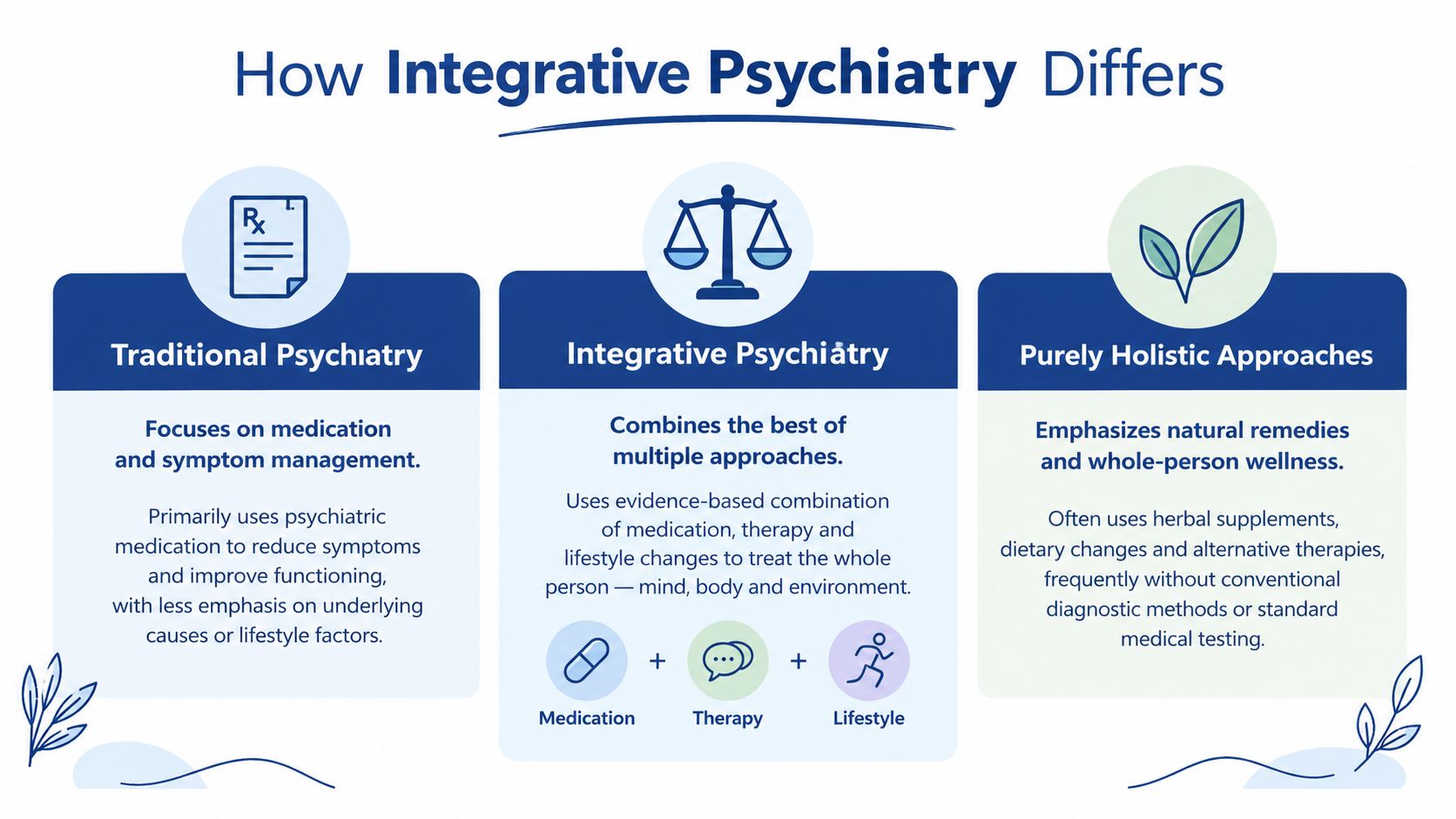
| Feature | Traditional Psychiatry | Integrative Psychiatry | Alternative-Only Approach |
|---|---|---|---|
| Main focus | Diagnosis, symptoms, medication, and psychotherapy | Diagnosis plus coordinated attention to health behaviors, context, and functioning | Natural or alternative approaches may receive primary emphasis |
| Evidence standard | Evidence-based psychiatric treatment | Evidence-based treatment with careful appraisal of adjunctive options | Evidence standards can vary widely |
| Medication role | May be central when clinically indicated | Considered when appropriate, with monitoring and shared decision-making | May be minimized or excluded |
| Lifestyle support | May receive limited or targeted attention | Sleep, exercise, nutrition, mindfulness, and behavior strategies may complement treatment | Often emphasized as the main intervention |
| Safety process | Psychiatric and medical review | Psychiatric and medical review, plus interaction and feasibility review | Conventional screening may be inconsistent |
The key difference is clinical hierarchy. Integrative psychiatry does not treat all therapies as interchangeable. Treatments with stronger evidence generally receive more weight than approaches with uncertain findings, while diagnosis, safety, and measurable progress remain central. In practice, that can mean tracking symptoms, side effects, sleep, functioning, or another agreed-upon outcome before deciding whether an added intervention is useful.
Patients can ask how a provider evaluates evidence, checks medication and supplement interactions, measures progress, and decides whether to continue or stop an adjunctive intervention. Those questions help distinguish coordinated psychiatric care from an unstructured collection of wellness services.
What the Evidence Shows Across Depression Anxiety ADHD PTSD and OCD
Evidence for integrative psychiatry varies by diagnosis, intervention, and study quality. Depression has the clearest support for several adjunctive approaches. Findings for anxiety, ADHD, PTSD, and OCD are more dependent on the specific treatment and how carefully it has been studied.
A 2013 review reported that more than half of people with depression used some form of integrative medicine for symptom management. A 2021 review stated that up to two-thirds of U.S. patients with depression sought complementary, alternative, or integrative treatments. It identified St. John's wort, omega-3 fatty acids, S-adenosyl-L-methionine, and saffron as having the best evidence for mild-to-moderate depression. Exercise, light therapy, yoga, acupuncture, and probiotics had support that varied by intervention and study (depression and integrative medicine review).
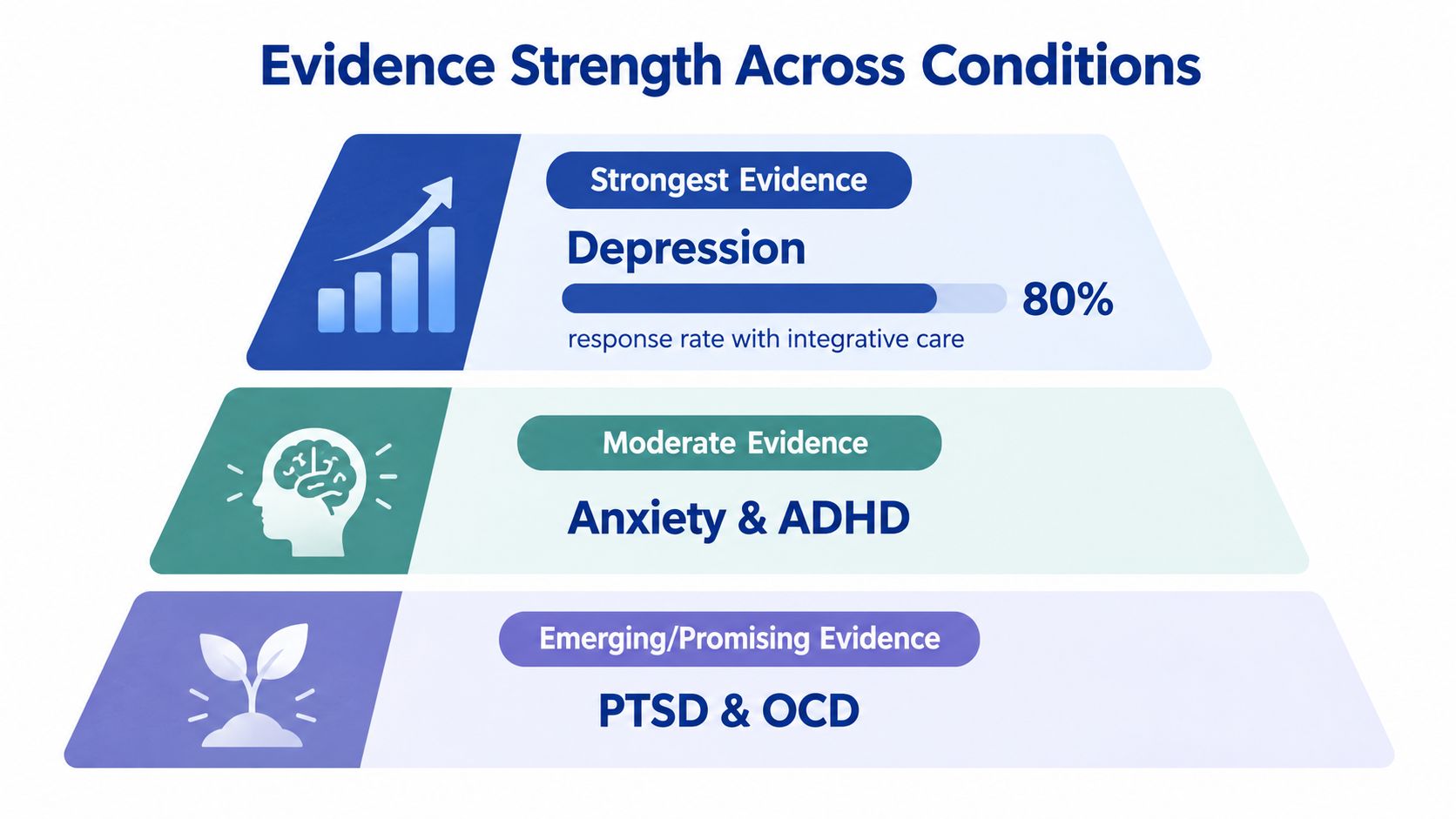
Evidence depends on the diagnosis and intervention
Exercise, mindfulness-based interventions, and omega-3 fatty acids have appeared favorably as additions to depression treatment. Research remains less rigorous for many other techniques. A promising result is not the same as a proven treatment, and evidence from one diagnosis cannot automatically be applied to another.
For anxiety, appropriate psychotherapy, medication management, sleep support, and stress-focused behavioral strategies may all have a role. ADHD treatment still depends on a structured diagnostic process and may include medication, behavioral treatment, school or workplace supports, and routine changes. PTSD and OCD generally call for diagnosis-specific care. Lifestyle practices can support that care, but should not replace treatments with established roles.
Individual treatment selection also requires medication and supplement review. Patients curious about pharmacogenomic options can review genetic testing for psychiatric medications, while recognizing that test results are one part of clinical decision-making, not a stand-alone prescription.
A recent review of pranayama found short-term symptom improvements in some mental-disorder settings, but also reported high risk of bias, low patient numbers, no significant effect for depression, and a need for more long-term safety data (Psychiatric News report on integrative psychiatry). Readers exploring supplements can use this practical stress support supplement guide for general education, not as a substitute for diagnosis or medication review.
Measurement keeps care clinically accountable
An integrative review found only nine eligible studies covering 2008 through 2021, indicating that measurement-based care remains a developing research area (measurement-based integrative psychiatry review). In practice, symptom scales and functional tracking give clinicians a way to test whether a multimodal plan is helping.
A baseline and repeated review may examine depression, anxiety, attention, functioning, sleep, and side effects. The clinician can then adjust, continue, or stop an adjunctive treatment based on observed benefit and safety rather than assuming every intervention works equally well.
Evidence is also emerging for models that connect mental-health care with physical-health screening and chronic-disease management. A 2025 scoping review found that coordinated physical-health interventions can address major care gaps for people with serious mental illness, while an NIMH 2025 update highlighted evidence that integrating depression treatment into chronic-condition care improved well-being for patients and families (integrated physical-health interventions review). These findings support coordinated care models, not guaranteed symptom relief or reduced medication burden for every patient.
How an Integrative Evaluation and Treatment Plan Works via Telehealth in Pennsylvania
A Pennsylvania telehealth evaluation starts with a detailed psychiatric assessment and turns those findings into an individualized care plan. The plan may combine evidence-based medication management, psychotherapy recommendations, and practical lifestyle supports. The provider reviews symptoms and diagnoses alongside medical history, current medications, sleep, nutrition, activity, stressors, and daily functioning.
The evaluation establishes the clinical foundation
The first visit examines the causes and effects of symptoms. The clinician asks when they began, how they affect work or school, and whether medical conditions, substances, medications, trauma, or sleep problems may contribute.
For adult ADHD, a proper assessment includes current symptoms, adult-norm rating scales, childhood history, impairment across settings, family history, and a physical examination for medical causes such as thyroid or neurologic disorders, as well as stimulant-related concerns such as hypertension (AAFP adult ADHD diagnostic review). The AAFP adult ADHD toolkit explains that assessment usually requires at least two visits. It also states that DSM-5 requires at least five symptoms of inattention and/or hyperactivity-impulsivity for six months or longer, in at least two settings, with measurable impairment.
Screening tools organize information, but they do not establish a diagnosis alone. Integrative Psychiatry of America may use its structured CADE approach for ADHD evaluations when appropriate.
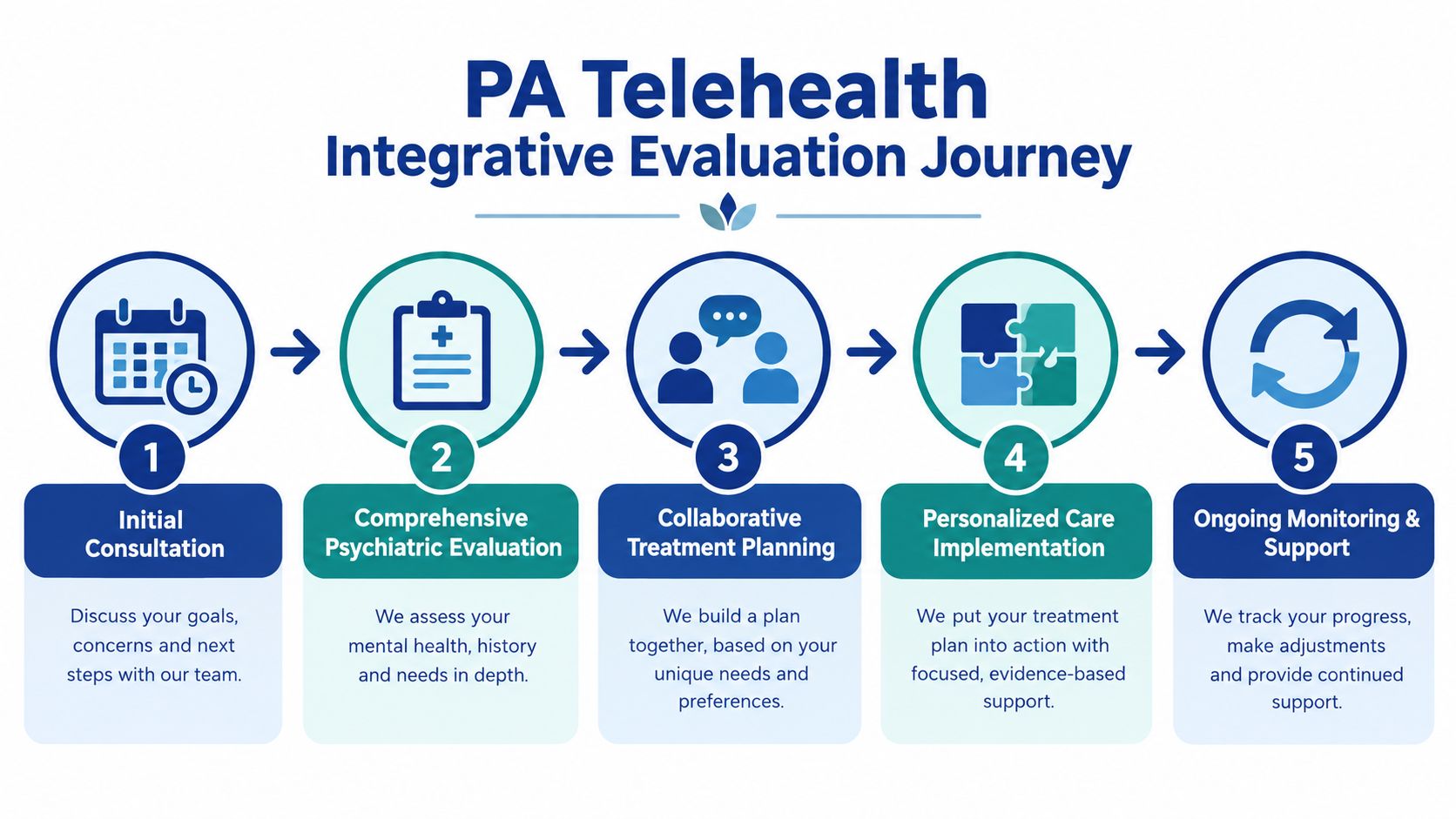
Treatment develops through follow-up
After evaluation, the clinician and patient select the interventions that match the findings and the patient's circumstances. Options may include evidence-based medication, psychotherapy, sleep changes, exercise planning, nutrition education, mindfulness, or behavioral strategies. The plan does not need to use every option at once.
Follow-up reviews symptoms, functioning, medication effectiveness, tolerability, and progress toward agreed goals. A medication may be adjusted for side effects, a routine may be revised if it proves unrealistic, or the treatment approach may change when symptoms persist. For ADHD care, the AAFP toolkit recommends reassessment within 30 days, then monthly until stable, followed by visits every three to six months.
Pennsylvania telehealth also involves billing rules. The Center for Connected Health Policy describes place-of-service code 10 for telehealth delivered in a patient's home, along with psychiatric outpatient billing modifiers (Pennsylvania telehealth policy summary). Pennsylvania's Department of Human Services states that Medical Assistance fee-for-service telemedicine services continue to receive reimbursement at the same rates as in-person services (Pennsylvania telemedicine FAQs). Coverage depends on the patient's plan and eligibility.
Patients can review online ADHD medication treatment and learn what telepsychiatry involves before requesting an appointment.
Personalizing Lifestyle Supports and Tracking Progress Over Time
Lifestyle support works best when it answers a specific clinical need. A person with irregular sleep may benefit from a consistent wind-down routine and review of caffeine, medication timing, and nighttime anxiety. Someone with ADHD may need environmental changes, task systems, movement breaks, and medication monitoring rather than a general instruction to “live healthier.”
IPA commonly considers sleep optimization, exercise, nutrition, stress management, mindfulness, and behavioral strategies when appropriate. These interventions generally complement, rather than replace, medication management and psychotherapy. No single lifestyle therapy works universally, and a plan that looks reasonable on paper may fail if it doesn't fit the person's schedule, medical condition, finances, culture, or responsibilities.
Progress needs observable markers
Measurement-based care gives the plan a feedback loop. A clinician may document baseline symptoms and later track depression, anxiety, functioning, attention, sleep, and side effects. The results help distinguish a meaningful change from a temporary impression and help identify when an intervention should be adjusted.
Practical rule: A lifestyle recommendation becomes clinically useful when the patient and provider can define what it is meant to change and review whether that change occurred.
A mood tracker, self-care planner, exercise planner, or time-blocking tool may help patients record patterns between visits. The record can reveal that sleep worsens before anxiety, missed meals affect stimulant tolerability, or unstructured evenings increase rumination. Those observations don't diagnose a condition, but they can improve the next clinical conversation.
Patients may also encounter laboratory testing or pharmacogenomic testing. Labs can be considered when medically appropriate, and genetic information may contribute to a broader review, but neither test definitively identifies the correct psychiatric medication or diagnosis. Treatment decisions still depend on symptoms, history, safety, prior response, interactions, and patient preferences. IPA's nutrition and mental health resource offers further context for patients who want to discuss food and psychiatric symptoms with a provider.
For practical stress-management ideas outside clinical treatment, readers may find these Danza Academy of Social Dance tips for preventing overload useful as general education. Severe symptoms, medication concerns, suicidal thoughts, or safety risks require timely professional help rather than self-guided lifestyle changes.
Who May Benefit and Next Steps for Care in Pennsylvania
Adults and children may benefit from integrative psychiatric care when they want evidence-based treatment that also considers sleep, stress, nutrition, activity, relationships, and daily functioning. This may include people seeking care for ADHD, anxiety, depression, OCD, or PTSD, as well as patients whose psychiatric symptoms interact with chronic medical concerns.
Integrative care may not be necessary for every patient, and lifestyle support shouldn't delay urgent treatment. A focused medication visit, psychotherapy referral, primary-care evaluation, or higher level of care may be more appropriate depending on symptoms and safety needs.
Integrative Psychiatry of America provides virtual psychiatric care statewide in Pennsylvania, led by a board-certified psychiatric mental health nurse practitioner. The practice's broader nursing background includes emergency care, psychiatric settings, healthcare leadership, chemical dependency, and hospice or on-call care. That perspective supports attention to medical history, medications, environment, stressors, and functioning while keeping psychiatric assessment and evidence-based treatment at the center.
Patients considering care should:
- Gather clinical information: Prepare a medication and supplement list, previous diagnoses, treatment history, sleep concerns, and the main changes affecting daily life.
- Review insurance: IPA can help patients explore coverage involving Cigna, Aetna, UnitedHealthcare, and BCBS or IBX, but benefits, copays, deductibles, network status, and authorization requirements vary by plan.
- Choose the appropriate pathway: Patients may begin with an ADHD evaluation, ADHD treatment, medication management, insurance verification, or a general appointment request.
- Seek timely help: Suicidal thoughts, severe medication reactions, mania, psychosis, or immediate safety concerns require urgent or emergency evaluation.
A thoughtful first visit doesn't require a perfect explanation. A clear account of symptoms, goals, prior treatment, and current challenges gives the provider a useful starting point.
Integrative Psychiatry of America offers virtual psychiatric evaluations, medication management, and individualized whole-person care for adults and children across Pennsylvania. Patients researching integrative psychiatry can visit Integrative Psychiatry of America to review care options, verify insurance, or request an appointment.