
An ADHD evaluation in Pennsylvania is a broader clinical process than completing a questionnaire, and Pennsylvania's school-health records documented 51,794 students with a medical ADHD diagnosis in the 2016–2017 school year. A proper evaluation considers symptoms, childhood history, functional impairment, medical and mental health factors, daily habits, safety concerns, and treatment goals before a diagnosis or treatment plan is established.
A Pennsylvania adult may be preparing for a virtual intake after years of missed deadlines, unfinished tasks, restless thoughts, or difficulty managing work and home responsibilities. A parent may be gathering school concerns after noticing that a child struggles to focus, follow directions, regulate impulses, or complete assignments. In both situations, a useful evaluation needs more than a positive online screener.
An ADHD assessment in Pennsylvania may include clinical history, functional impairment, differential diagnosis, comorbid conditions, lifestyle factors, collateral information, validated rating scales, and follow-up when the available information isn't sufficient. A screening tool can identify symptoms worth discussing, but it doesn't establish a diagnosis by itself. Labs or genetic testing aren't routinely required to diagnose ADHD, although additional medical information may be considered when clinically appropriate.
Integrative Psychiatry of America's CADE and ADHD testing information describes a structured approach that goes beyond a quick questionnaire. IPA provides secure virtual psychiatric care statewide, including Philadelphia and other Pennsylvania communities. The seven categories below show what prospective patients and parents should prepare, how telehealth changes the intake, and what each provider option may or may not offer. No responsible practice should promise a diagnosis during one visit.
Readers researching related clinical careers can also review psychology jobs in Pennsylvania.
Table of Contents
- 1. Integrative Psychiatry of America
- 2. Penn Medicine Adult ADHD Treatment and Research Program
- 3. UPMC Western Psychiatric Hospital ADHD Across the Lifespan Program
- 4. Children's Hospital of Philadelphia Center for Management of ADHD
- 5. ADHD Philadelphia Adult ADHD Evaluation and Treatment
- 6. Rittenhouse Psychiatric Associates ADHD Diagnosis and Testing
- 7. Newtown Therapy and Wellness Center Newtown ADHD Center
- Top 7 ADHD Evaluation Services in Pennsylvania, Comparison
- Turn Your Answers Into a Clear Next Step
1. Integrative Psychiatry of America
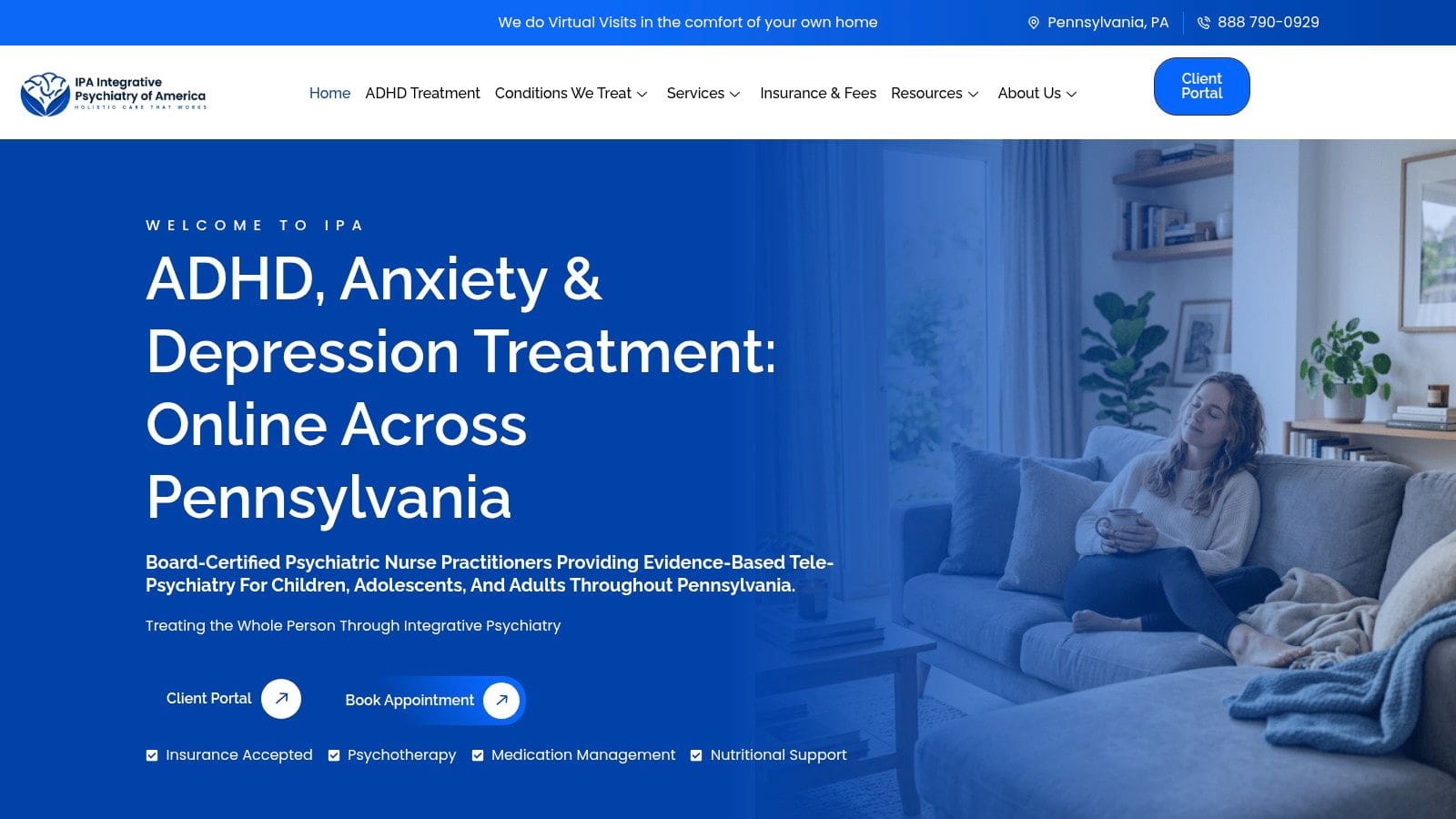
Integrative Psychiatry of America is a Philadelphia-based telehealth practice serving Pennsylvania residents through secure virtual appointments. The practice provides care for children aged six and older and adults, with services spanning ADHD, anxiety, depression, OCD, PTSD, personality disorders, opioid dependence, and medically supervised weight management. Care is led by Christopher Clark, MSN, PMHNP-BC, a board-certified psychiatric mental health nurse practitioner with more than two decades of clinical experience that includes emergency trauma and hospice leadership.
The distinguishing feature for an ADHD evaluation is the IPA CADE approach. Rather than treating a symptom checklist as a diagnosis, the process can consider clinical history, functional impairment, possible differential diagnoses, co-occurring conditions, lifestyle factors, and appropriate validated assessment tools. That structure matters because concentration problems can also occur with anxiety, depression, trauma, sleep problems, medication effects, medical conditions, or substance use.
What patients can expect
A virtual appointment still requires a private setting, reliable technology, and enough uninterrupted time to discuss sensitive history. Adults should prepare examples from work, relationships, finances, driving, home responsibilities, and time management. Parents should gather school observations, developmental history, reports, and information from other caregivers when relevant.
IPA's broader model can combine medication management and psychotherapy with nutrition education, exercise counseling, mindfulness or meditation support, and clinically appropriate medical information. Genetic or laboratory screening may be considered when indicated, but neither is a routine requirement for diagnosing ADHD.
Practical rule: A thorough evaluation should explain not only whether ADHD is plausible, but also what else could be contributing to the person's difficulties.
Strengths and limitations
IPA offers statewide, HIPAA-secure telehealth with a patient portal for scheduling, messaging, and medication refills. The practice reports accepting many major insurance plans, including Medicare, Independence Blue Cross, Highmark, Aetna, Cigna, UnitedHealthcare, and Optum, while also offering cash and membership options. Coverage, deductibles, copays, network status, and authorization requirements still vary by individual plan, so benefit verification should happen before the appointment.
The main limitation is that IPA's care is telehealth-based and available to Pennsylvania residents. Patients seeking in-person testing or a hospital-based academic program may prefer another option. Published costs can also depend on insurance and service type, so prospective patients should confirm financial details directly.
For patients ready to discuss treatment after evaluation, IPA's online ADHD medication treatment page explains the next service pathway without guaranteeing a specific medication or prescribing outcome.
Visit Integrative Psychiatry of America
2. Penn Medicine Adult ADHD Treatment and Research Program
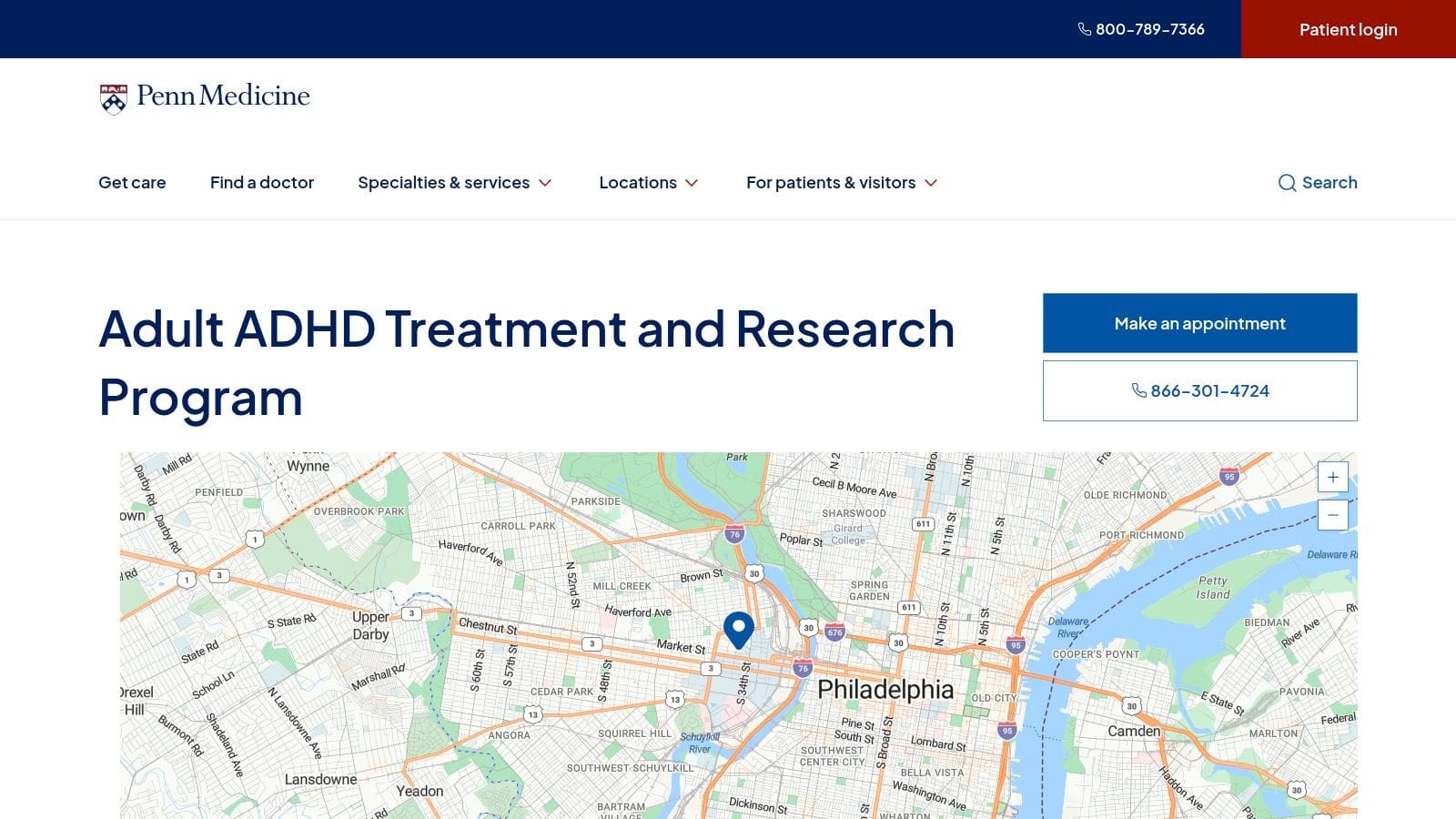
Penn Medicine's Adult ADHD Treatment and Research Program is designed for adults who prefer care within a major academic health system. Its Philadelphia location and connection to Penn's broader specialty network can help patients who need evaluation alongside other medical or mental health services.
A hospital-based program may be especially useful when the diagnostic question is complicated by co-occurring conditions, prior treatment concerns, or the need for referral to another specialty. Patients should still ask how the program separates an initial screening from a complete diagnostic evaluation, what records are required, and whether follow-up medication management is available through the same team.
Where the academic model helps
Academic systems can coordinate referrals across departments and provide institutional resources that smaller practices may not have. Adults with overlapping mood, anxiety, sleep, medical, or substance-use concerns may value that network. The trade-off is that appointment scheduling can require phone contact, and program-specific costs, insurance rules, and availability may not be clear until the patient speaks with the office.
Penn Medicine's weekday clinic structure may suit adults who can attend during standard business hours. It may be less convenient for people who need evening access or statewide virtual care without traveling to central Philadelphia.
Adults who want a clearer explanation of the diagnostic process can review how adults can pursue an ADHD diagnosis before contacting a program. The key preparation remains the same: document childhood patterns, current impairment, previous diagnoses, medication history, sleep, substance use, and the settings where symptoms appear.
Questions worth asking
Patients can ask Penn Medicine whether the evaluation includes collateral information, validated rating scales, a review of differential diagnoses, and a written summary. They can also ask whether neuropsychological testing is required or only considered when the clinical picture remains unclear. The Penn Medicine adult ADHD program is best suited to adults who value academic-system coordination over a fully independent private practice experience.
3. UPMC Western Psychiatric Hospital ADHD Across the Lifespan Program
UPMC Western Psychiatric Hospital's ADHD Across the Lifespan Program serves children, adolescents, and adults through a large academic mental health system. Its lifespan focus can appeal to families who want a specialty setting that understands how ADHD presentations change with age, school demands, employment, relationships, and independent living.
The program combines evaluation and treatment resources, including therapy and medication management. Its academic environment may also be appropriate for complex or comorbid presentations that require additional mental health referrals. Prospective patients can use the program's intake materials and referral resources to clarify what records, forms, and collateral information should be submitted before an appointment.
A good fit for complex questions
A large specialty system may provide stronger access to related programs under one institutional umbrella. That can help when attention problems coexist with anxiety, depression, trauma, sleep disruption, substance use, learning concerns, or other psychiatric symptoms. It doesn't mean every patient needs hospital-based testing, and patients should ask whether the proposed pathway matches the complexity of the case.
The main trade-offs involve practical access. Program-specific pricing may require direct insurance verification, and appointment availability can vary. Patients outside Pittsburgh may also need to clarify whether the available appointment is virtual, in person, or a combination of both.
Parents should prepare teacher and caregiver observations when possible. Adults should bring old school records, performance reviews, prior evaluations, medication lists, and a timeline showing when symptoms became impairing. A diagnosis shouldn't rest on current frustration alone, particularly when childhood history is incomplete.
Questions about the next step
Before scheduling, patients can ask whether the program provides ongoing medication management, whether therapy is available internally, and how it handles requests for accommodations. Those questions can reveal whether the program offers a complete care pathway or primarily an evaluation and referral.
Patients comparing western Pennsylvania care with statewide virtual options may also review Philadelphia ADHD evaluation services to understand how a telehealth practice differs from an academic hospital program. The UPMC Western Psychiatric Hospital website provides the direct institutional starting point.
4. Children's Hospital of Philadelphia Center for Management of ADHD
Children's Hospital of Philadelphia's Center for Management of ADHD focuses on pediatric and adolescent patients. Families seeking a structured child evaluation may value the center's written summaries, diagnostic impressions, behavioral treatment resources, medication consultation, and school-oriented recommendations.
A pediatric assessment needs information beyond the child's self-report. Parents, teachers, and other caregivers may observe different patterns across school, home, sports, social settings, and routines. CHOP's model is useful for families who need coordinated care and documentation that can support communication with schools and other clinicians.
What makes pediatric assessment different
Children may not describe internal distractibility, anxiety, low mood, or mental fatigue as clearly as adults. Clinicians therefore need developmental history, academic information, family observations, and context about behavior across settings. A child who struggles only during a particular subject or environment may need a broader educational or developmental review rather than an automatic ADHD diagnosis.
The CHOP ADHD clinical pathway explains that neuropsychological or psychoeducational testing isn't required for every ADHD diagnosis. A sound evaluation still includes history, differential diagnosis, physical considerations, comorbidity screening, and parent or teacher input when relevant.
A rating scale organizes observations. It doesn't replace clinical judgment or establish a diagnosis by itself.
Benefits and limitations for families
CHOP offers the advantages of a nationally recognized pediatric hospital and coordinated specialty care. Detailed reports can help families discuss treatment, school accommodations, and follow-up with other professionals. The limitation is fit. CHOP primarily serves children and adolescents, not adults seeking an adult-only ADHD evaluation, and high demand may affect scheduling.
Parents should ask about the expected evaluation stages, required forms, feedback appointments, and the type of report provided. They should also clarify insurance benefits, possible authorization requirements, and whether a referral is needed.
Families comparing pediatric hospital care with statewide virtual services can review ADHD testing in Philadelphia County as another way to evaluate access, care setting, and follow-up options. The CHOP Center for Management of ADHD remains a strong option for families who prioritize pediatric specialty coordination.
5. ADHD Philadelphia Adult ADHD Evaluation and Treatment
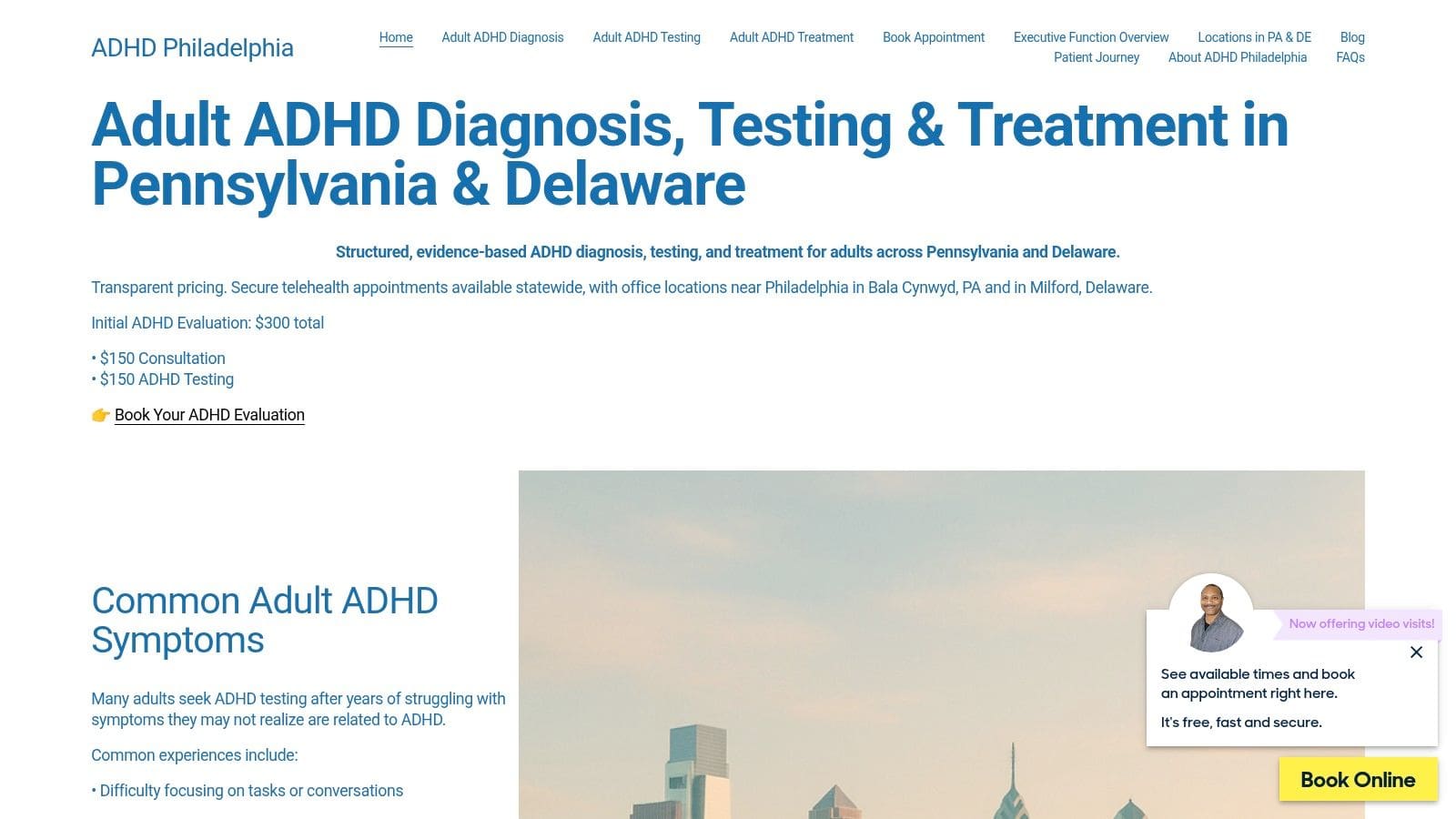
ADHD Philadelphia is an adult-focused private service that presents a two-step evaluation model, with an initial consultation followed by ADHD testing. The service offers statewide telehealth, an in-person Bala Cynwyd office, optional computerized testing, medication management, and documentation support when clinically appropriate.
This format may appeal to adults who want a defined process and posted flat-fee information. A two-stage pathway can create a useful separation between discussing history and completing supporting assessment tasks. It may also help patients understand that a questionnaire or computerized measure is one part of evaluation rather than the entire diagnostic decision.
The value of adult-focused care
Adult ADHD often becomes more visible when work, parenting, finances, education, or independent living demands exceed established coping strategies. NIMH estimates current ADHD prevalence at 4.4% among U.S. adults aged 18 to 44 and lifetime prevalence at 8.1%, providing context for why adults seek assessment after years without childhood testing. Those figures don't determine whether any individual meets diagnostic criteria.
A private adult service may provide executive-function education and accommodation documentation. The trade-off is that private-pay care may limit the practical role of insurance, although patients can ask whether out-of-network benefits apply. Medication policies also vary, and no service should guarantee stimulant treatment because an evaluation is completed.
Questions about testing and treatment
Patients should ask whether computerized testing is optional, what information the clinician needs from childhood, how the service evaluates anxiety or depression, and whether follow-up medication management is available. They should also confirm the clinician's prescribing policies before booking if medication management is a central goal.
Adults comparing private adult care with a broader psychiatric practice can review online ADHD evaluation options and compare telehealth access, insurance processes, testing requirements, and treatment continuity. Details about the ADHD Philadelphia service should be confirmed directly because availability and policies can change.
6. Rittenhouse Psychiatric Associates ADHD Diagnosis and Testing
Rittenhouse Psychiatric Associates offers adult ADHD diagnostic evaluations through in-person and virtual appointments, with neuropsychological testing available when indicated. Its multidisciplinary model includes psychiatric nurse practitioners and psychologists, which can support different evaluation needs under one practice.
The service may offer either a more efficient diagnostic visit or a broader half-day or full-day neuropsychological pathway. That distinction matters. Neuropsychological testing can examine attention, memory, learning, and executive functioning, but it isn't automatically necessary for every ADHD evaluation.
Choosing between a brief visit and full testing
A shorter diagnostic pathway may suit an adult with a clear developmental history, consistent current impairment, and enough information to evaluate alternative explanations. Full testing may become more relevant when learning concerns, cognitive questions, accommodation documentation, or conflicting reports complicate the picture.
Patients should ask what the clinician means by “testing,” which tools are included, whether a written report is provided, and how the practice handles suspected anxiety, depression, trauma, sleep disorders, substance use, or medical contributors. A report for workplace or school accommodations should reflect the actual evaluation completed, not just a requested diagnosis.
Before booking: Ask whether the appointment is diagnostic, neuropsychological, or both. The terms aren't interchangeable.
Rittenhouse's strengths include flexible formats, accommodation experience, and access to therapy and medication management. The limitations include unpublished self-pay details, provider-specific availability, and potentially long waits for testing. Controlled-substance prescriptions aren't guaranteed, even when a patient receives an ADHD diagnosis.
Adults who want to compare testing with a structured psychiatric evaluation can review psychological testing for ADHD. The Rittenhouse ADHD diagnosis and accommodations service can clarify current fees, scheduling, and documentation policies.
7. Newtown Therapy and Wellness Center Newtown ADHD Center
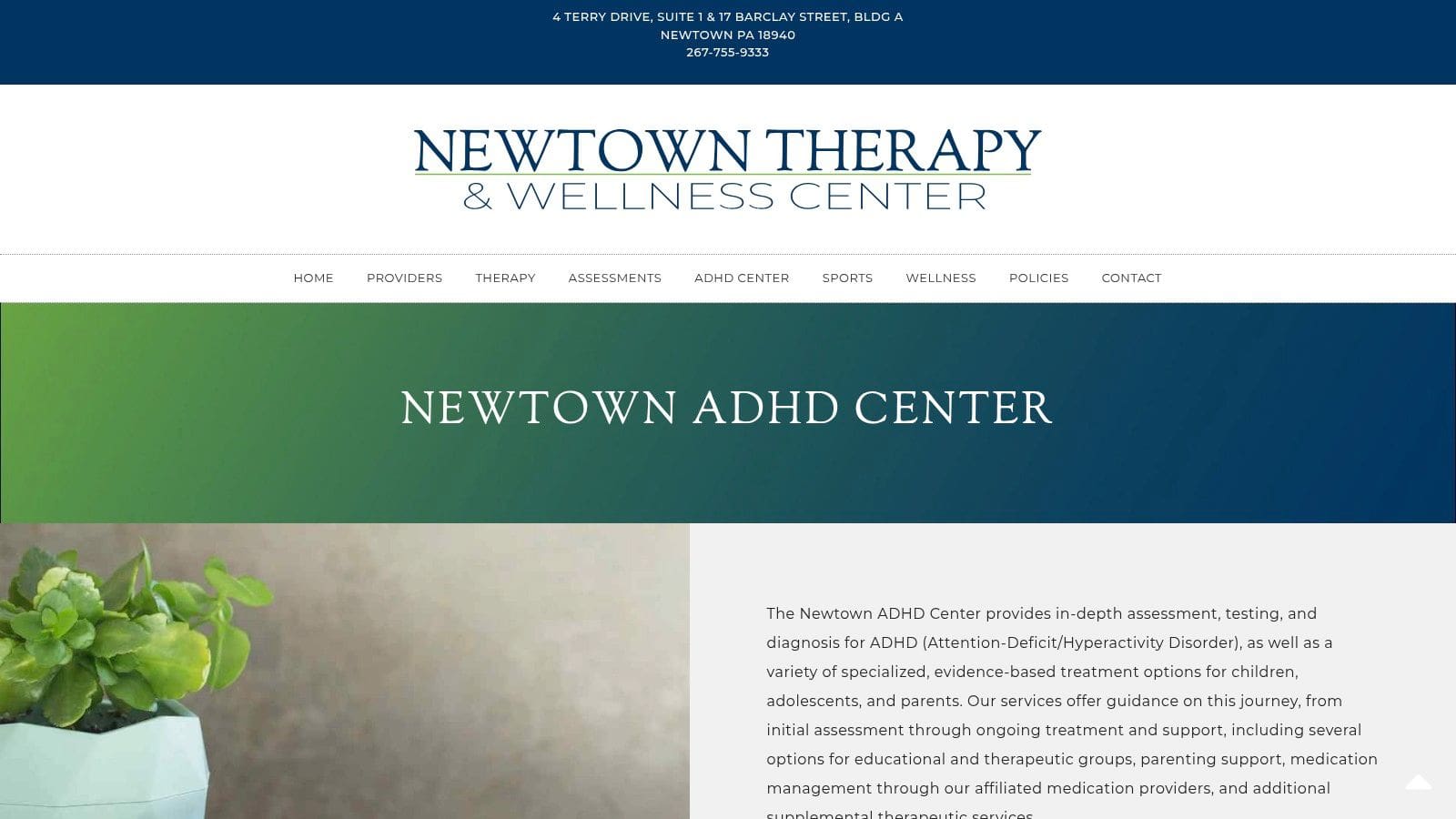
Newtown Therapy and Wellness Center serves Bucks County families, adolescents, and adults through in-depth ADHD assessments. Its evaluation model includes psychological and psychoeducational testing, interviews with relevant people, behavioral observations, rating scales, feedback sessions, and a detailed written report.
This report-driven approach may be a strong fit when the main need involves school, college, or workplace accommodations. Families may also value the combination of assessment, follow-up therapy, and care planning. Adults should ask whether the evaluation is designed primarily for diagnosis, educational planning, workplace documentation, or a combination.
Why collateral information matters
An ADHD evaluation in Pennsylvania becomes more useful when it reflects functioning across settings. Parents may provide developmental history and home observations, while teachers or other caregivers can describe school and social patterns. Adults may need to reconstruct childhood symptoms through report cards, family recollections, old evaluations, or work history.
That process can take longer than completing an online form, especially when records or collateral reports are difficult to obtain. A careful clinician may recommend follow-up rather than forcing a conclusion from incomplete evidence. The result may clarify ADHD, suggest another explanation, identify comorbid conditions, or support a referral for additional testing.
Practical trade-offs
Newtown Therapy and Wellness Center's strengths include broad testing, customized recommendations, and accommodation-focused reports for school, college, and work. Pricing is provided on request, and private-center insurance billing may be more limited than a large hospital system. Prospective patients should ask about self-pay costs, billing codes, insurance participation, report timelines, and whether medication management is available through the same organization.
The Newtown ADHD Center is a direct starting point for Bucks County residents seeking a detailed assessment. Patients who prefer statewide virtual psychiatric care can compare the model with IPA's CADE and ADHD testing pathway and decide whether telehealth, in-person observation, testing depth, or insurance access matters most.
Top 7 ADHD Evaluation Services in Pennsylvania, Comparison
| Provider | Implementation complexity 🔄 | Resources & access ⚡ | Expected outcomes ⭐📊 | Ideal use cases 💡 | Key advantages ⭐ |
|---|---|---|---|---|---|
| Integrative Psychiatry of America | Moderate, multimodal care (meds + therapy + integrative supports) via telehealth | Broad insurance acceptance + cash/membership; Pennsylvania-only telehealth; award-winning patient portal | High, whole-person approach aimed at symptom reduction and functional improvement; strong patient reviews | Patients (6+) seeking coordinated integrative mental-health care statewide PA | Combines medication, therapy, nutrition, genetics, and exercise counseling |
| Penn Medicine – Adult ADHD Treatment and Research Program | High, academic program with coordinated multidisciplinary workflows | Hospital-based resources and referrals; central Philadelphia location; standard clinic hours | High, evidence-based evaluations with access to specialty follow-up and research-informed care | Adults preferring academic medical center care and complex comorbid management | Strong institutional reputation and referral pathways across specialties |
| UPMC Western Psychiatric Hospital – ADHD Across the Lifespan | High, specialty clinics within large academic system; research-supported protocols | Large-system insurance participation typical; program intake materials available | High, lifespan evaluations and treatment with research grounding | Children through adults with complex or comorbid presentations needing specialty support | Integrated specialty programs and institutional resources for complex cases |
| Children's Hospital of Philadelphia (CHOP) – Center for Management of ADHD | Moderate to high, structured pediatric workflows and reporting requirements | High-volume pediatric center; possible waitlists; strong care coordination resources | Very high for pediatric outcomes, detailed reports useful for school accommodations and follow-up | Families needing thorough child/adolescent assessment and school documentation | Nationally recognized pediatric expertise and school-ready reports |
| ADHD Philadelphia – Adult ADHD Evaluation and Treatment | Low to moderate, two-step structured evaluation with optional testing; telehealth + in-person | Transparent flat-fee pricing posted; statewide telehealth + Bala Cynwyd office | Moderate to high, clear diagnostic pathway and documentation support; adult-focused resources | Adults seeking transparent pricing and streamlined adult ADHD evaluation | Posted pricing, online booking, adult-only focus, executive-function resources |
| Rittenhouse Psychiatric Associates – ADHD Diagnosis and Testing | Moderate, flexible diagnostic visits or comprehensive neuropsych testing | In-person or telehealth; multidisciplinary providers; fee details require inquiry | Moderate to high, tailored evaluations with accommodation-focused documentation | Adults needing flexibility between brief diagnostic visit or full testing | Flexible formats and access to full-day neuropsychological testing |
| Newtown Therapy & Wellness Center – Newtown ADHD Center | High, in-depth psychological/psycho-educational testing and multi-stakeholder interviews | Private center; reporting and observation-heavy; pricing on request; insurance may be limited | High, comprehensive reports support IEP/504 or workplace accommodations | Children, adolescents, and adults needing thorough, report-driven assessments | Multi-setting observations and detailed written reports for accommodations |
Turn Your Answers Into a Clear Next Step
A useful ADHD evaluation starts before the video visit. The patient or parent should write a brief symptom timeline, gather medication and medical information, note sleep and substance-use patterns, identify current functional problems, and describe the support or treatment being requested. These details help a clinician distinguish a long-standing pattern from a recent change caused by stress, illness, medication effects, sleep disruption, anxiety, depression, trauma, or substance use.
Adults should document examples from more than one setting. Work performance, household tasks, finances, relationships, driving, education, and time management may reveal impairment that a general statement such as “poor concentration” doesn't explain. Parents can collect school reports, teacher comments, developmental history, and observations from caregivers.
Telehealth preparation has a clinical dimension, not just a technical one. The patient should choose a private room, use a stable internet connection, check the camera and microphone, and avoid an environment where family members, coworkers, or children may interrupt sensitive discussion. Pennsylvania behavioral-health telehealth delivery is addressed through state guidance from the Department of Human Services, so patients can ask how records, consent, privacy, and follow-up are handled.
Insurance and scheduling questions
Before booking, patients should verify:
- Network status: Confirm whether the clinician and service are in network under the specific plan.
- Patient responsibility: Ask about copays, deductibles, coinsurance, and possible out-of-pocket charges.
- Authorization: Check whether the plan requires prior authorization, a referral, or specific testing documentation.
- Service coverage: Confirm whether evaluation, psychological testing, medication management, and telehealth use separate benefits.
- Follow-up care: Ask how later appointments, rating scales, reports, and medication visits are billed.
Coverage isn't guaranteed by a practice's participation with an insurer. Plan benefits and authorization requirements can differ even within the same insurance company, including Cigna, Aetna, UnitedHealthcare, and BCBS or Independence Blue Cross.
Results may become clearer during the evaluation process, but a diagnosis shouldn't be rushed. Some patients provide enough history and supporting information for diagnostic clarification during the initial process. Others require additional history, rating scales, collateral information, testing, or follow-up before a clinician can responsibly reach a conclusion.
Treatment after evaluation
An ADHD evaluation and treatment are related but separate decisions. If ADHD is diagnosed, the patient and clinician can discuss behavioral strategies, psychotherapy, medication management, lifestyle supports, accommodations, or referrals. Federal telemedicine flexibilities currently allow DEA-registered practitioners to prescribe Schedule II through V controlled medications by telemedicine without a prior in-person visit through December 31, 2026, when all other requirements are met, as summarized by this Pennsylvania telehealth controlled-substance guidance. That rule doesn't guarantee a prescription, a stimulant, or insurance coverage.
Patients and parents seeking a starting point can review IPA's CADE and ADHD testing information and its ADHD treatment and medication management services. The appropriate next step is to request an evaluation when attention, organization, impulsivity, or executive-function concerns are affecting daily life. An evaluation may provide clarity, but it doesn't guarantee an ADHD diagnosis or a specific medication.
Integrative Psychiatry of America provides secure statewide telehealth for Pennsylvania adults and children aged six and older, including structured ADHD evaluation, treatment planning, psychotherapy, and medication management. Patients who want to prepare carefully and discuss attention concerns with a qualified psychiatric provider can visit Integrative Psychiatry of America to review services, verify insurance, or request an appointment.