
A person may spend months avoiding crowded stores, turning down invitations, or waking after the same nightmare, while still wondering whether treatment will make things worse. Searching for the best therapy for PTSD can feel like another decision made under pressure, especially after self-help strategies, medication, or general counseling haven't brought enough relief.
The practical answer is that trauma-focused psychotherapy is usually the strongest first-line treatment for adult PTSD. The leading choices include Cognitive Processing Therapy, Prolonged Exposure, and Eye Movement Desensitization and Reprocessing. Yet the “winner” isn't the same for everyone. A therapy that a patient can understand, tolerate, access, and complete may be more useful than a theoretically ideal treatment that never gets started.
Table of Contents
- Why Finding the Right PTSD Therapy Matters
- How PTSD Is Diagnosed and Why Treatment Choice Matters
- Comparing the Top Trauma-Focused Therapies for PTSD
- Medications for PTSD and Where They Fit
- Matching Therapy to Comorbidities and Life Circumstances
- Starting PTSD Therapy Through Telehealth in Pennsylvania
- A Practical Decision Framework for Choosing Your Treatment
- Frequently Asked Questions About PTSD Therapy
Why Finding the Right PTSD Therapy Matters
An adult with persistent PTSD may look functional from the outside. Work still gets done, bills still get paid, and conversations still sound normal. Inside, the person may be scanning for danger, avoiding reminders, feeling detached from loved ones, or reliving the trauma without warning.
That person may compare therapy names online and ask whether EMDR, CPT, or PE is most powerful. Clinical guidance offers a more useful answer. The 2023 VA/DoD PTSD treatment guidance recommends individual manualized trauma-focused therapies, specifically CPT, EMDR, and PE, over medications as the preferred first-line approach. Its synopsis classifies that recommendation as “strong for.”
This shift matters because PTSD treatment hasn't always centered so clearly on trauma-focused psychotherapy. The guideline framework contains 34 evidence-based recommendations, while international guidance has moved in a similar direction. A review of 14 PTSD guidelines found that 100% recommended CBT in some form as a first-line psychological treatment (systematic review of PTSD guidelines).
The most effective treatment is also the treatment a patient can begin and finish.
That principle changes the clinical conversation. PE may suit someone ready to work directly with avoided memories and situations. CPT may fit someone who wants to examine beliefs about safety, blame, trust, or control. EMDR may appeal to someone who prefers less extended verbal discussion of the trauma. Access, privacy, scheduling, dissociation, comorbid conditions, and therapeutic trust all influence the decision.
PTSD is treatable, but treatment isn't a quick performance test. A difficult early session doesn't automatically mean failure, and choosing medication doesn't mean a person has rejected therapy. The most responsible plan matches evidence-based care with the patient's current capacity and priorities.
How PTSD Is Diagnosed and Why Treatment Choice Matters
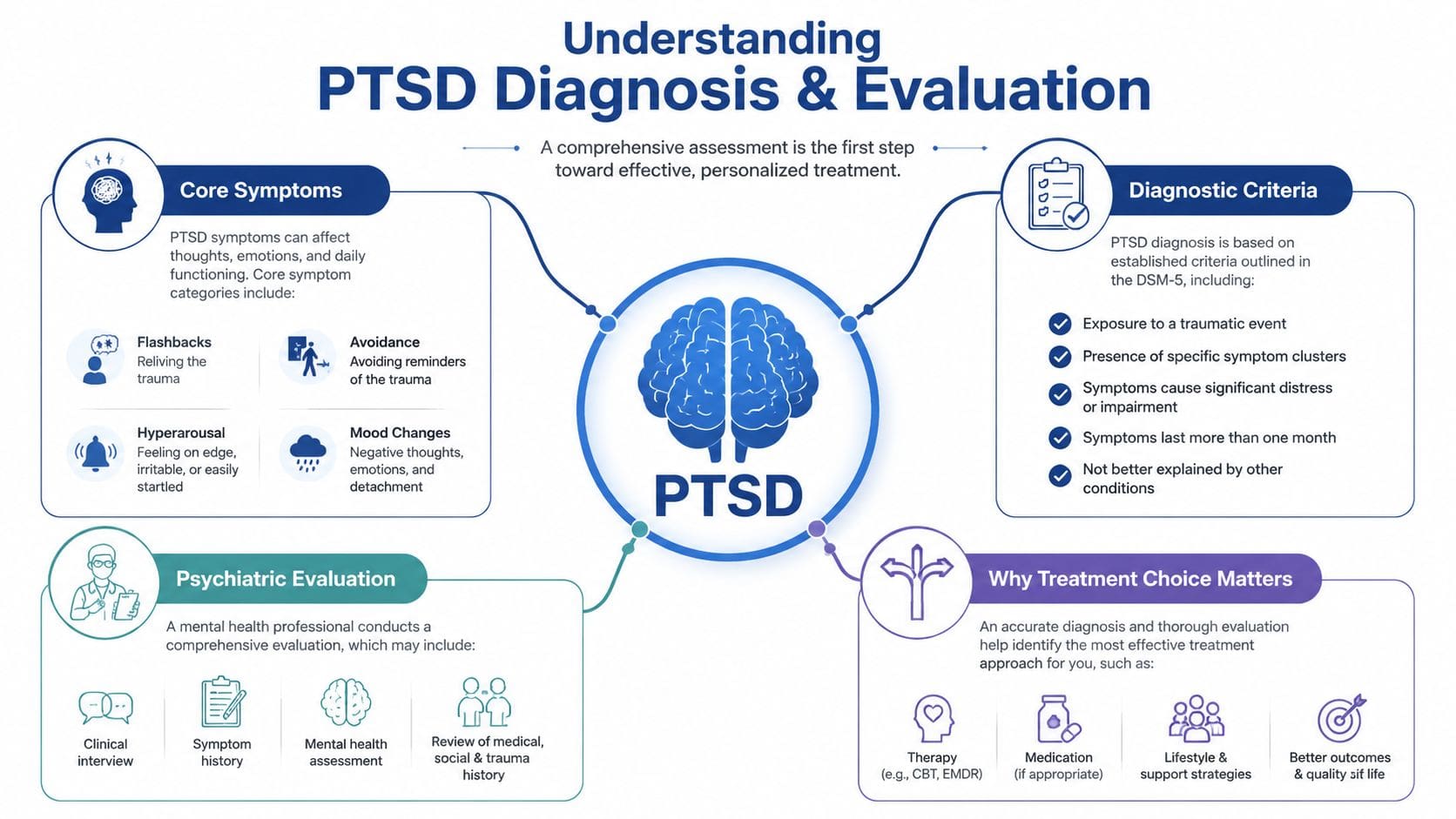
After a traumatic event, a person may avoid familiar places, wake from nightmares, or remain alert for danger long after the threat has passed. Post-traumatic stress disorder can develop after exposure to actual or threatened death, serious injury, or sexual violence. Its symptoms usually involve several connected groups:
- Intrusion: unwanted memories, nightmares, flashbacks, or intense distress after reminders.
- Avoidance: efforts to stay away from trauma-related thoughts, feelings, people, places, or activities.
- Mood and thinking changes: persistent guilt, shame, fear, anger, detachment, or negative beliefs.
- Arousal and reactivity: irritability, disrupted sleep, exaggerated startle, poor concentration, or constant threat monitoring.
Diagnosis depends on more than checking symptoms. A clinician considers timing, functional impairment, medical conditions, substance use, medications, depression, anxiety, and safety concerns. A structured assessment can distinguish PTSD from an acute stress reaction, panic symptoms, major depression, obsessive-compulsive symptoms, or another condition requiring a different plan.
What a psychiatric evaluation usually covers
A clinician may ask about:
- The traumatic exposure and current symptoms, without requiring unnecessary detail at the first appointment.
- Avoidance and daily functioning, including work, relationships, sleep, and physical health.
- Comorbidities, such as depression, anxiety, substance use, pain, or dissociation.
- Treatment preferences, including written work, memory processing, exposure exercises, medication, and telehealth.
- Safety and support, including suicidal thoughts, domestic danger, housing instability, and available help.
Complex PTSD, or CPTSD, describes a trauma-related presentation involving broader, persistent difficulties with emotional regulation, self-concept, and relationships. It is not interchangeable with standard PTSD in every clinical situation. Repeated trauma, severe dissociation, or major instability may call for a carefully paced treatment plan before intensive trauma processing begins.
Treatment choice affects whether care is practical enough to start and complete. Trauma-focused therapy addresses the memories, meanings, emotions, and avoidance connected with trauma. Supportive counseling can offer validation and companionship, but may not target the processes maintaining PTSD. NICE guidance recommends trauma-focused psychological treatment for adults with PTSD, including trauma-focused CBT or EMDR (NICE PTSD recommendations). Access, privacy, scheduling, symptom stability, and therapeutic trust should shape the plan alongside clinical evidence.
Comparing the Top Trauma-Focused Therapies for PTSD
A patient may understand that trauma-focused therapy works and still struggle to complete it if the format, pacing, or access do not fit. The leading approaches all address trauma-related memories, beliefs, emotions, or avoided situations in a structured way, but they ask for different kinds of participation.
Guideline strength: CPT, PE, and EMDR are preferred individual trauma-focused options in VA/DoD guidance, as noted in the diagnostic and treatment-choice discussion above. The APA strongly recommends CBT, CPT, cognitive therapy, and PE, while it conditionally recommends EMDR, brief eclectic psychotherapy, and narrative exposure therapy (APA guideline summary).
| Therapy | Typical Course | Guideline Status | Best Fit |
|---|---|---|---|
| CPT | Often structured across a manualized course | Strongly supported by VA/DoD guidance | Adults willing to examine trauma-related beliefs and guilt |
| PE | Structured sessions with in-session and between-session exposure work | Strongly supported by VA/DoD guidance | Adults ready to reduce avoidance through gradual exposure |
| EMDR | Structured phases involving trauma processing and bilateral stimulation | Preferred by VA/DoD guidance, conditional in APA guidance | Adults who prefer a less homework-heavy processing style |
| TF-CBT | Often 8 to 12 sessions, with more if clinically indicated | First-line in NICE guidance | Adults seeking a broad CBT-based trauma approach |
CPT identifies “stuck points,” such as “the world is never safe” or “the trauma was entirely my fault,” then examines them against evidence. Written exercises and discussion address trust, control, power, safety, and intimacy. This format can suit patients who prefer clear assignments and direct work with trauma-related beliefs.
PE combines education, breathing or anxiety-management skills, in-session revisiting of the trauma memory, and gradual approach toward safe situations that have been avoided. The aim is to reduce avoidance and teach the nervous system that remembering is different from being in danger. The trade-off is that exposure work can feel demanding, especially when avoidance is firmly established.
EMDR uses bilateral stimulation, commonly guided eye movements, while the patient attends to trauma-related material. The therapist also develops coping resources and works with distressing memories, beliefs, body sensations, and emotional responses. Patients can review this therapsy.it trauma therapy guide for background on trauma processing and complex trauma.
TF-CBT uses cognitive and behavioral methods to process trauma, reduce avoidance, manage arousal, and change trauma-related meanings. NICE describes components that may include psychoeducation, flashback management, trauma-memory processing, emotion processing, and work on avoidance (NICE full guideline).
Access affects completion as much as preference. Pennsylvania patients can review PTSD therapy options in Pennsylvania with a qualified provider, including whether telehealth, scheduling, privacy, and clinician expertise make trauma-focused care practical to begin and sustain.
Medications for PTSD and Where They Fit
Medication can be useful when trauma-focused therapy isn't immediately available, isn't preferred, or needs support from treatment for depression, anxiety, panic, or severe sleep disruption. It can also help a patient become stable enough to participate in psychotherapy. Medication doesn't process the traumatic memory or replace the therapeutic work of reducing avoidance.
The 2023 VA/DoD guideline identifies paroxetine, sertraline, and venlafaxine as the medications with strong support for PTSD, while many other commonly used medications received insufficient-evidence ratings (VA/DoD guideline synopsis). Prescribers consider symptom pattern, prior response, other medications, medical conditions, pregnancy or breastfeeding, substance-use history, and the patient's willingness to manage side effects.
SSRIs and SNRIs generally require consistent use and clinical monitoring before their full benefit can be judged. Early effects may include gastrointestinal symptoms, headache, sleep changes, sexual side effects, agitation, or emotional blunting. A clinician may adjust the dose, change medications, or combine medication with psychotherapy rather than stopping treatment abruptly.
Medication is often an adjunct or alternative. When trauma-focused psychotherapy is available and acceptable, guidelines generally place it ahead of medication alone.
Prazosin may be discussed for trauma-related nightmares, but medication choices should remain individualized. It isn't appropriate to assume that one drug addresses every PTSD symptom, and a medication that improves sleep may not resolve avoidance or intrusive memories.
Emerging treatments require particular caution. Ketamine and related interventions remain areas of active interest, but they aren't established first-line replacements for CPT, PE, or EMDR. Patients considering these options can review a guide to ketamine treatment and safety while also discussing evidence, supervision, interactions, dissociation, and misuse risk with a licensed clinician. For Pennsylvania residents who need prescribing oversight, online medication management can be part of a broader care plan.
Matching Therapy to Comorbidities and Life Circumstances
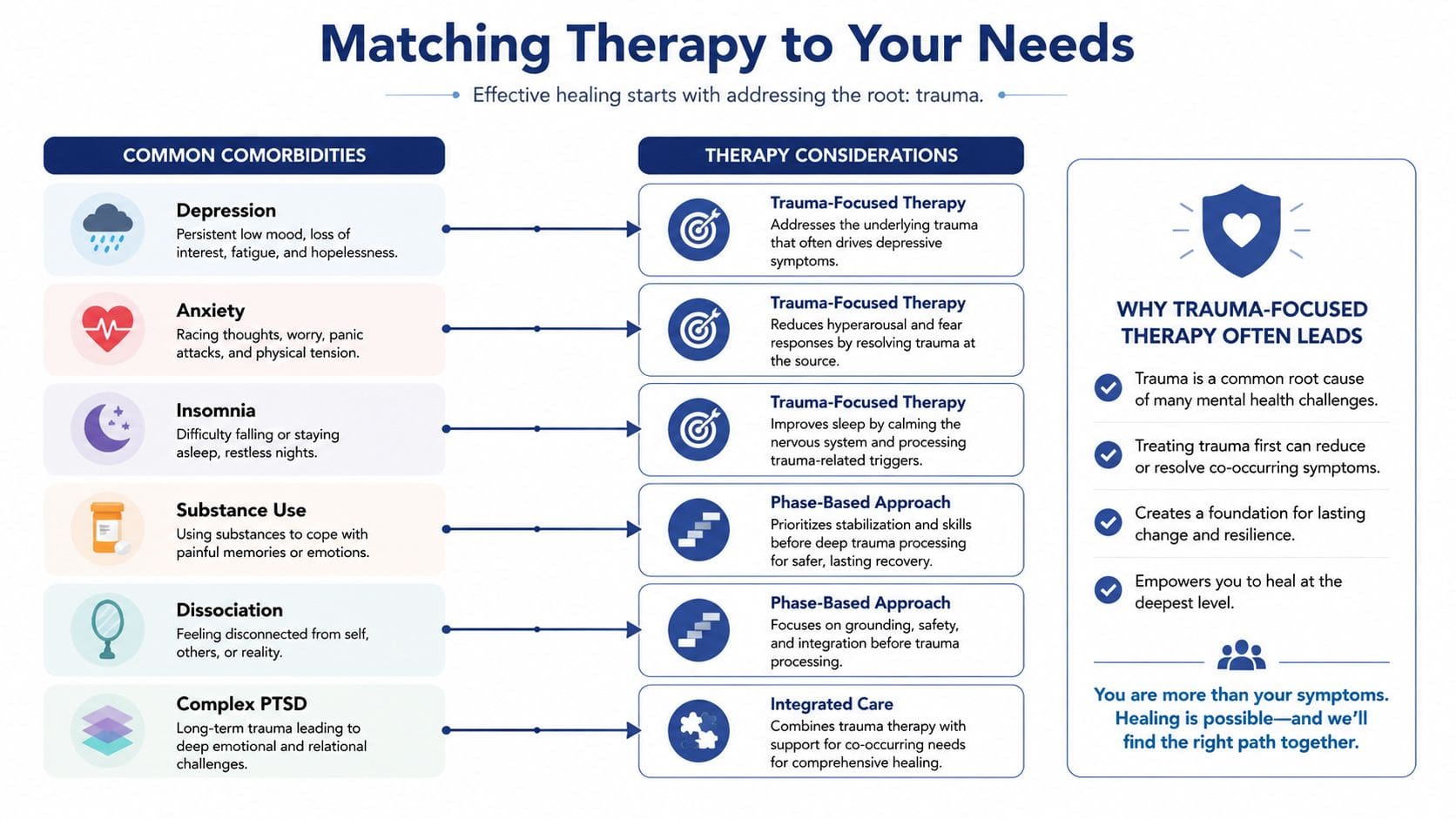
The right PTSD therapy depends on the symptoms and circumstances surrounding the diagnosis. Depression can reduce motivation, anxiety can intensify avoidance, and insomnia can impair concentration and emotional regulation. Substance use may temporarily numb distress while creating safety, attendance, and scheduling problems that require parallel care.
A patient troubled by depression and guilt may find CPT useful because it examines beliefs about responsibility, worth, and control. Someone avoiding highways, crowds, or trauma reminders may discuss PE. A patient who feels overwhelmed by extended verbal recounting may prefer to explore EMDR with a trained clinician. The best theoretical match still fails if the pace, format, or therapist relationship makes completion unlikely.
When stabilization comes first
Trauma-focused care is generally the starting point for adults with PTSD, yet immediate memory processing may be unsafe in some situations. Severe dissociation can cause a patient to lose contact with the present during exposure work. Active substance use may require coordinated help with intoxication, withdrawal risk, cravings, and attendance. Ongoing violence may require safety planning before trauma processing can proceed responsibly.
A stabilization-first plan can address grounding, sleep, emotional regulation, crisis planning, substance-use treatment, and trust with the clinician. It prepares the patient to participate rather than postponing trauma treatment indefinitely.
Evidence is more nuanced for complex PTSD. A 2026 review found that phase-based approaches may offer an advantage over single-phase treatment for CPTSD, while evidence for the stabilization phase was mixed and the reintegration phase remained largely unstudied (2026 complex PTSD research review).
A slower start can still be trauma-focused care if it prepares the patient to participate safely and consistently.
Clinicians may coordinate psychotherapy, medication management, sleep support, substance-use treatment, and practical coping tools. This trauma-informed mental health care approach keeps the trauma history in view without reducing the patient to a diagnosis. It also makes room for access barriers, privacy concerns, and the patient's ability to attend consistently.
Starting PTSD Therapy Through Telehealth in Pennsylvania
An adult in Philadelphia may avoid a long commute after work, while someone in Pittsburgh, Harrisburg, Allentown, Lancaster, or a rural Pennsylvania community may struggle to find a clinician trained in PE, CPT, or EMDR. Secure video visits can make consistent attendance more realistic and help patients begin trauma-focused care without waiting for a convenient local opening.
Research supports remote delivery of several trauma-focused treatments. A 2025 meta-analysis found only small differences between video and in-person PTSD treatment, and a 2025 review reported strong support for telehealth delivery of PE and CPT, with promising evidence for Written Exposure Therapy and TF-CBT (telehealth PTSD evidence review). The clinician still must assess privacy, technology, safety, dissociation, and whether the home setting allows focused sessions. Access matters because a treatment that cannot be attended consistently is unlikely to be completed.
A practical Pennsylvania start
- Confirm the clinician's license and treatment methods. Ask whether the provider offers CPT, PE, EMDR, or trauma-focused CBT, and how the approach fits the patient's symptoms and readiness.
- Verify insurance or discuss cash-pay terms. Coverage, deductibles, out-of-network benefits, and medication costs vary. Clarify what the evaluation includes and whether follow-up care is covered.
- Schedule the evaluation. The first visit usually reviews symptoms, history, medications, safety, treatment goals, and practical barriers. Detailed trauma disclosure can wait until trust develops.
- Prepare the treatment setting. A private room, headphones, reliable internet, and support after a difficult session can improve safety and privacy.
- Set a follow-up rhythm. Trauma-focused therapy depends on regular sessions and between-session practice. Choose a schedule the patient can maintain.
Patients can review how secure remote care works through this overview of telepsychiatry services. Telehealth does not suit every situation, but in Pennsylvania it can provide a practical route to qualified trauma-focused care when distance, scheduling, or local availability would otherwise interrupt treatment.
A Practical Decision Framework for Choosing Your Treatment
“Which therapy is best?” is less useful than asking which evidence-based treatment the patient can start, tolerate, and complete with appropriate support. The decision should account for symptom pattern, readiness, preferences, access, and the risk of dropping out.
At the first session
Clarify the diagnosis, urgent safety concerns, comorbidities, treatment goals, privacy, and practical barriers. Ask what the therapy requires between visits and how the clinician responds to dissociation, panic, nightmares, or a temporary increase in distress. A clear rationale helps the patient understand why trauma-focused treatment is being recommended and what participation involves.
During the first month
Begin the chosen modality rather than delaying care through endless comparisons. Early discomfort can occur, so the clinician should explain expected reactions, coping skills, warning signs, and when to report worsening symptoms. The treatment must remain active while allowing adjustments in pacing, preparation, or support.
At the three-month checkpoint
Review more than symptom intensity. Sleep, work attendance, relationships, avoidance, emotional range, and the ability to manage reminders show whether daily function is improving. The plan may continue, change pace, address a comorbidity, add medication, or shift modalities.
Dropout is a clinical reality, not a character flaw.
Completion risk makes fit and logistics part of clinical planning. A patient who repeatedly misses virtual sessions because of limited privacy may need a different setting or schedule. If PE feels intolerable, assess pacing, preparation, dissociation, and modality before abandoning trauma-focused care. If CPT homework causes paralysis, simplify assignments while preserving the treatment model.
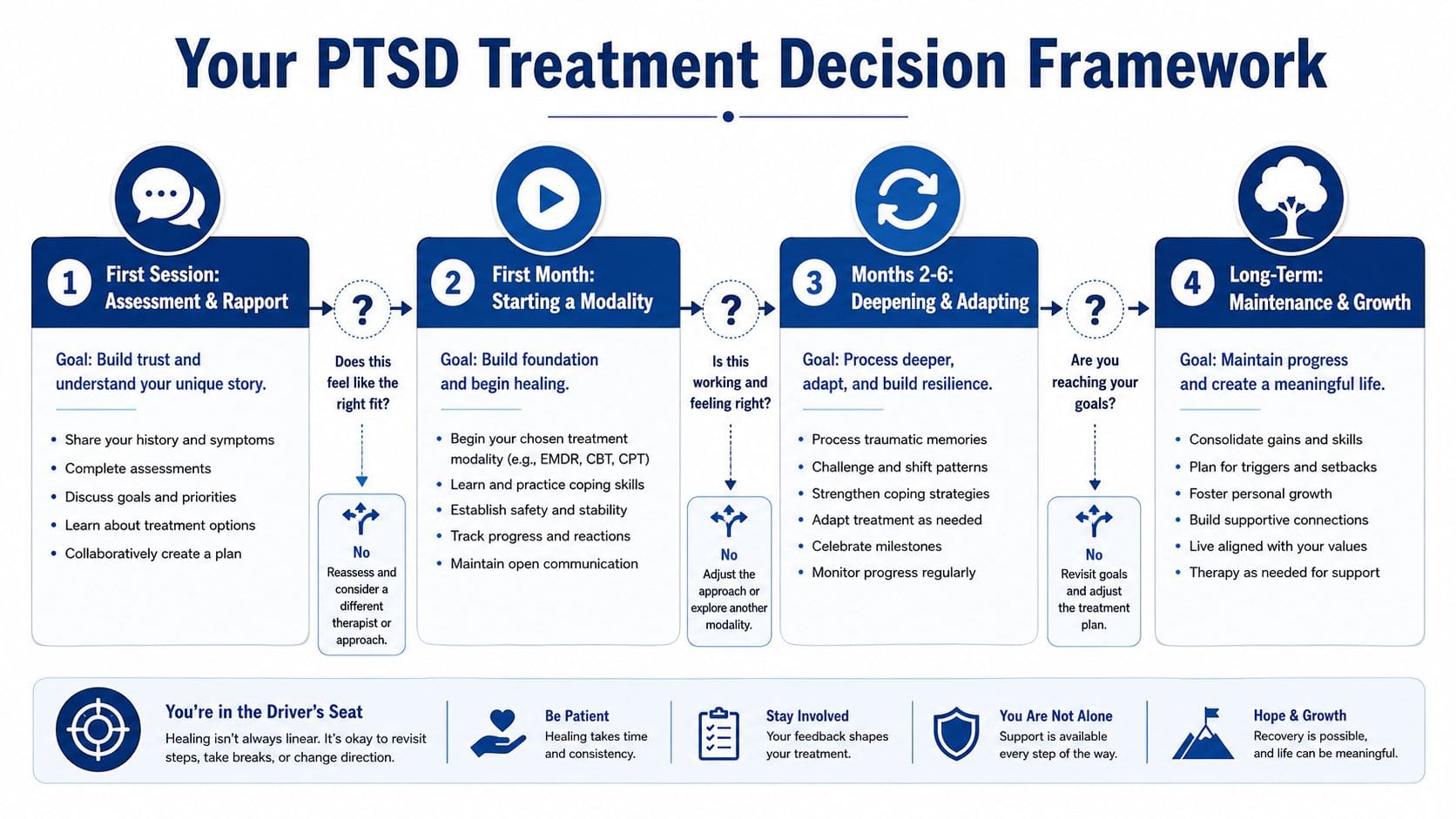
Long-term care can include relapse planning, coping practice, medication review, and targeted work on remaining triggers. The goal is not perfect symptom absence. It is greater safety, connection, freedom, and function.
Frequently Asked Questions About PTSD Therapy
How long does trauma-focused therapy take?
Many structured courses are designed for weekly treatment. NICE describes trauma-focused CBT as usually lasting 8 to 12 sessions, with additional sessions when clinically indicated (NICE recommendations). Complex PTSD, comorbidities, safety concerns, and treatment response can change the pace.
What should a patient look for in a therapist?
The provider should have training in the specific modality, explain the treatment clearly, assess safety, and welcome questions about pacing and alternatives. Patients should also ask how the clinician handles dissociation, nightmares, medication coordination, and telehealth privacy.
Does EMDR work without eye movements?
Bilateral stimulation is part of standard EMDR practice, but patients should ask the trained clinician about acceptable forms and the evidence for the specific approach. The treatment should remain structured and trauma-focused.
What if the first therapy isn't helping?
The clinician should review attendance, homework, diagnosis, comorbidities, pacing, therapeutic fit, and measurable functional changes. A lack of progress calls for adjustment, not self-blame.
Patients may also benefit from practical tools such as PTSD grounding techniques, especially when reminders trigger intense arousal.
Integrative Psychiatry of America provides virtual psychiatric evaluations, medication management, and trauma-informed PTSD care through secure telehealth for adults throughout Pennsylvania. Patients seeking a structured next step can visit Integrative Psychiatry of America to learn about PTSD treatment, verify insurance, and request an appointment.