
Work deadlines keep slipping. Bills get paid late even when there’s money in the account. A simple email somehow turns into twenty open tabs, three half-finished tasks, and a familiar sense that something harder than “poor time management” is going on.
For many adults in Pennsylvania, that’s the moment the search for adhd medication online starts. They aren’t looking for a shortcut. They’re looking for a real evaluation, clear answers, and treatment that fits a full adult life with work, family, school, and privacy concerns.
Online ADHD care can meet that need when it’s done carefully. Telehealth has changed access in a major way. Demand for online ADHD care has climbed sharply, and annual ADHD medication prescriptions in Australia rose from 1,424,904 in 2020 to 3,112,072 in 2023, with ADHD-related Google searches showing a statistically significant relationship with prescription volume in this PubMed analysis of ADHD prescribing and online interest. That doesn’t mean every online option is good. It means more adults are turning to digital care, and choosing the right Pennsylvania provider matters.
Table of Contents
- Navigating Adult ADHD Treatment Online in Pennsylvania
- Your First Steps An Online ADHD Assessment
- Is Getting ADHD Medication Online Safe and Legal in PA
- Comparing Stimulant and Non-Stimulant ADHD Medications
- Why Medication Is Only Part of Your ADHD Treatment Plan
- Long-Term Success with Online ADHD Medication Management
Navigating Adult ADHD Treatment Online in Pennsylvania
Adult ADHD rarely looks the way people expect. In Pennsylvania, many adults reach out after years of calling themselves forgetful, inconsistent, lazy, scattered, or “bad at adulting.” The pattern is often more specific than that. They miss details, lose track of time, struggle to start tasks, interrupt conversations, or burn out trying to compensate.

Telepsychiatry works well for this kind of problem because ADHD symptoms show up in real life, not just in a clinic room. A secure video visit lets a Pennsylvania-licensed psychiatric nurse practitioner review symptoms, daily functioning, health history, and treatment goals without adding a commute, a waiting room, or more scheduling friction to an already overloaded week.
What online care can do well
A strong online ADHD process should make three things easier:
- Access to evaluation: adults can book care from home, work, or a private space.
- Medication discussion: both stimulant and non-stimulant options can be reviewed based on symptoms, risks, and preferences.
- Ongoing follow-up: dose adjustments, side effect checks, and refill planning can happen without disrupting the whole day.
That’s why many Pennsylvania adults start with a dedicated online ADHD care appointment in Pennsylvania instead of waiting for an in-person opening.
Practical rule: Convenience matters, but convenience alone isn’t treatment. The provider still has to do a full psychiatric assessment.
What tends not to work
Quick quiz platforms, rushed visits, and prescription-first marketing usually create problems. ADHD overlaps with anxiety, depression, trauma, sleep disorders, and substance use concerns. If a service skips careful screening, the wrong diagnosis can send treatment in the wrong direction.
Pennsylvania adults usually do best when they choose a provider who treats telehealth as real medical care. That means a structured evaluation, state-specific prescribing compliance, and a plan that doesn’t end after the first prescription is sent.
Your First Steps An Online ADHD Assessment
The first appointment should feel organized, not mysterious. A proper ADHD assessment online is more than a symptom checklist. It’s a clinical interview designed to answer two separate questions. First, do the symptoms fit ADHD? Second, is something else contributing to the same problems?
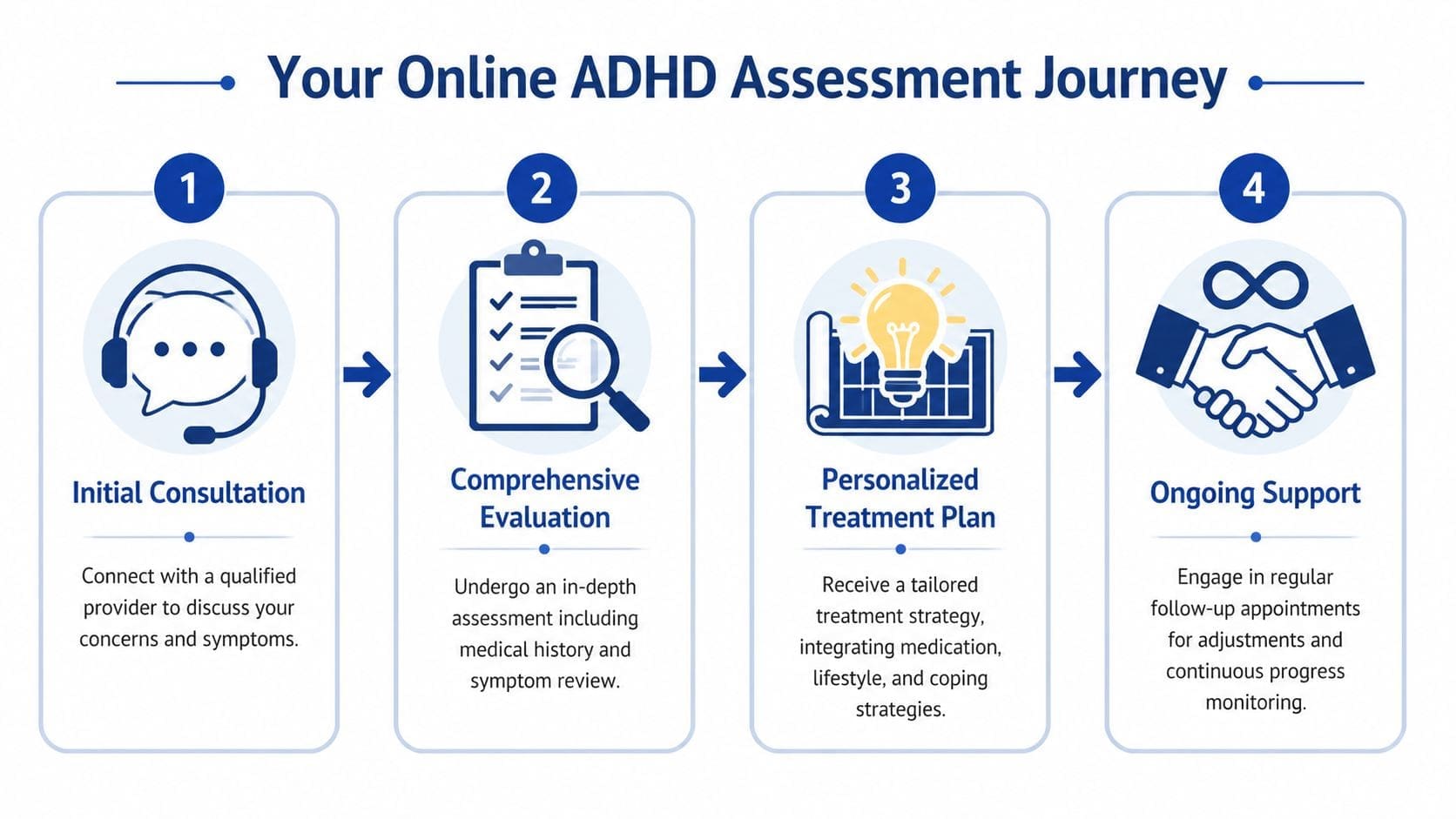
A good place to start is reviewing how to get an adult ADHD diagnosis, because the diagnostic process is more detailed than most patients expect.
Before the visit
Most online practices send intake paperwork ahead of time. That usually includes symptom forms, current medications, past psychiatric treatment, medical history, and pharmacy information. Completing those forms carefully helps the visit focus on clinical decision-making instead of basic data gathering.
It also helps to prepare a few concrete examples from daily life. Trouble meeting deadlines, forgetting appointments, losing items, struggling with task initiation, and zoning out during conversations are more useful than saying “focus is bad.”
During the evaluation
The appointment itself should cover more than attention span. A psychiatric nurse practitioner typically asks about:
- Current symptoms such as inattention, impulsivity, restlessness, forgetfulness, and disorganization.
- Functional impact at work, in relationships, in school, and at home.
- History over time including whether symptoms have been present since earlier life stages.
- Mental health overlap with anxiety, depression, trauma, OCD, sleep problems, or mood symptoms.
- Medical safety factors such as heart history, substance use history, and medication interactions.
Online ADHD care either proves its quality or exposes its limits. If the provider never explores sleep, anxiety, trauma, or substance use, the evaluation is incomplete.
Adults often seek care after years of coping well enough to get by, then suddenly not well enough to keep up.
After the assessment
Not every visit ends with medication, and that’s appropriate. Sometimes the next step is more diagnostic clarification. Sometimes it’s therapy, sleep treatment, anxiety treatment, or a non-stimulant option. Sometimes medication is appropriate right away, but only after the clinician explains benefits, side effects, and follow-up expectations.
A legitimate telehealth assessment should leave the patient with a clear impression of what the diagnosis is, what still needs clarification, and what the next medical step will be. That level of clarity matters more than speed.
Is Getting ADHD Medication Online Safe and Legal in PA
This is the question most adults ask first, and they should. ADHD medication online can be appropriate in Pennsylvania, but only when the process follows both clinical and legal standards.
The first issue is licensure. The prescribing clinician must be licensed to treat patients in Pennsylvania. The second issue is platform quality. Visits should happen through a secure, HIPAA-compliant system with standard psychiatric documentation, informed consent, and follow-up planning. The third issue is medication type. Stimulants are controlled substances, so the medical evaluation and prescribing process must be handled carefully.
What the safety data shows
Safety concerns are real, but fear and evidence aren’t the same thing. A Mass General Brigham analysis of 7,944 U.S. patients from 2020 to 2023 found that the 9% who received stimulants exclusively through virtual visits showed no overall increase in substance use disorder risk after adjustment, as reported in Mass General Brigham’s telehealth ADHD prescribing summary.
That supports telehealth as a reasonable format for ongoing ADHD medication management when the prescriber follows proper standards. It doesn’t support careless prescribing.
What patients in Pennsylvania should verify
Before booking, adults should confirm a few basics:
- Pennsylvania licensure: the provider must be authorized to treat Pennsylvania patients.
- Controlled substance capability: if stimulant treatment may be needed, the practice should explain how it handles that legally and clinically.
- Real follow-up care: one-time prescribing models are a poor fit for ADHD.
- Secure systems: visits, messaging, and refill requests should happen through protected technology.
Patients who want more detail on the prescribing side can review how psychiatry prescribes medicine for ADHD.
The safest online ADHD care looks a lot like careful in-person care. The difference is location, not standards.
What raises concern
Red flags are usually easy to spot. Instant prescriptions, very brief visits, no review of medical history, and no explanation of side effects or monitoring should make a patient pause. So should vague statements about whether stimulants are available in Pennsylvania.
Transparent practices explain what’s possible, what isn’t, and what documentation or follow-up is required. That kind of honesty protects patients.
Comparing Stimulant and Non-Stimulant ADHD Medications
Medication decisions shouldn’t be based on internet popularity. The better question is simpler. Which option matches the patient’s symptom pattern, medical history, side effect tolerance, and risk profile?
Stimulants are commonly first-line because they tend to work well and work quickly. According to Visionary Psych’s review of online ADHD medication support, stimulant medications have a 70% positive response rate and work by increasing dopamine and norepinephrine. Non-stimulants such as atomoxetine offer an alternative, with a 40% to 60% response rate, and work by selectively increasing norepinephrine over time.
Stimulant vs. Non-Stimulant Medications at a Glance
| Feature | Stimulants (e.g., Adderall, Vyvanse) | Non-Stimulants (e.g., Strattera) |
|---|---|---|
| Typical role | Often first-line treatment | Often used when stimulants aren’t a fit |
| How they work | Increase dopamine and norepinephrine | Selectively increase norepinephrine |
| Onset | Often noticed sooner | Builds gradually over several weeks |
| Common fit | Patients needing strong symptom control for inattention and impulsivity | Patients with anxiety concerns, substance use concerns, or stimulant intolerance |
| Monitoring focus | Appetite, sleep, heart rate, jitteriness, misuse risk | Tolerability, gradual response, adherence |
When stimulants make sense
Adderall, Vyvanse, Concerta, and Ritalin are familiar names for a reason. For the right patient, stimulants can improve attention, follow-through, and mental organization in a noticeable way. They’re often considered when symptoms are clearly impairing work, school, parenting, or daily functioning.
But they aren’t automatically right for everyone. Sleep issues, cardiovascular concerns, anxiety sensitivity, and misuse risk all matter.
When non-stimulants deserve a closer look
Atomoxetine is often overlooked because it doesn’t have the same immediate effect profile. That doesn’t make it weaker in every case. It makes it different. Some adults do better with a medication that has no stimulant effect and can fit more comfortably with anxiety or substance use concerns.
Patients exploring alternatives can review non-stimulant ADHD treatment options.
Clinical takeaway: The “best” ADHD medication is the one that improves function without creating side effects or risks that outweigh the benefit.
Medication choice is rarely about one brand being superior. It’s about fit, monitoring, and willingness to adjust.
Why Medication Is Only Part of Your ADHD Treatment Plan
A common Pennsylvania scenario looks like this. An adult finally starts ADHD medication, notices better focus for part of the day, then realizes the harder problems are still there. Sleep is off. Meals are inconsistent. Work gets started but not always finished. Shame and burnout still show up at the end of the week.
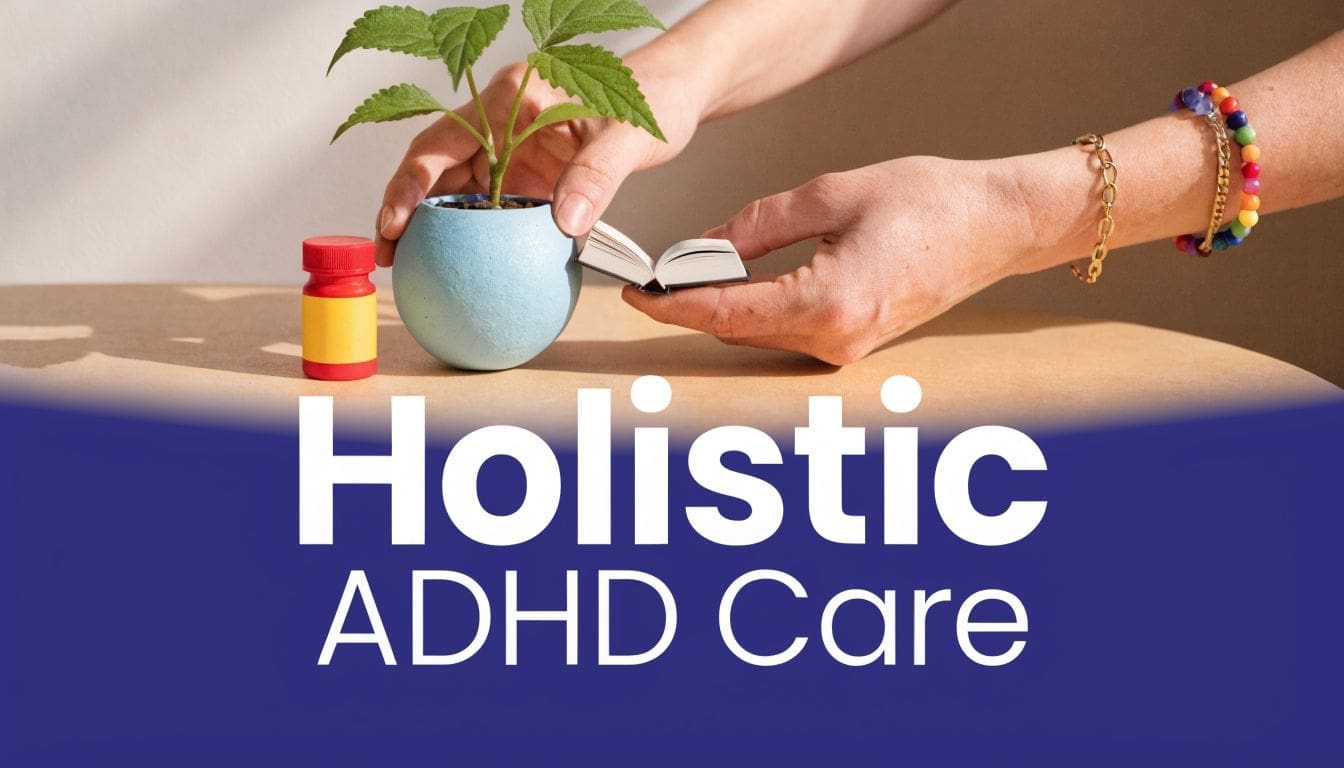
That does not mean the medication failed. It means ADHD treatment usually works best as a plan, not just a prescription.
Online care can either help or fall short here. Some telehealth companies focus on brief prescribing visits with little attention to sleep, stress, nutrition, therapy needs, or day-to-day routines. Cigna’s telehealth overview for ADHD reflects how common virtual ADHD care has become, but access alone is not enough. The quality of the treatment model matters.
What broader ADHD care includes
In practice, adults with ADHD often need support in several areas at the same time:
- Medication management: selecting a medication, adjusting the dose, and watching for side effects or misuse concerns.
- Sleep support: because poor sleep can worsen attention, irritability, and executive dysfunction.
- Nutrition guidance: especially if appetite suppression, skipped meals, or erratic eating is affecting energy and concentration.
- Exercise planning: because regular movement can help with restlessness, mood, and mental clarity.
- Mindfulness and coping skills: to improve self-monitoring, frustration tolerance, and emotional regulation.
An integrative approach stands out. As a psychiatric nurse practitioner, I see better outcomes when treatment addresses both symptoms and the patterns around them. Integrative Psychiatry of America provides online psychiatric care in Pennsylvania that can combine medication management with psychotherapy, exercise counseling, nutritional education, mindfulness support, and added screening when clinically indicated. Patients who need ongoing prescribing support can review online ADHD medication management in Pennsylvania.
What medication alone will not fix
Medication can improve attention, task initiation, and impulse control. It does not automatically create a realistic schedule, reduce phone overuse at midnight, organize a cluttered workspace, or repair years of self-criticism after missed deadlines and underperformance.
That trade-off matters. A stimulant or non-stimulant may make it easier to use better habits, but it does not build those habits for you.
A short overview of the broader mindset is helpful here:
A more realistic standard for progress
Good ADHD care is measured by function. Are mornings less chaotic? Are work tasks getting finished with fewer last-minute crises? Is follow-through better at home? Are patients less overwhelmed and less discouraged by their own patterns?
Those are meaningful gains.
Some adults do not need another lecture about trying harder. They need treatment that recognizes ADHD as a medical condition with real effects on daily life, relationships, work performance, and self-esteem. That is why medication is often one part of the plan, not the whole plan.
Long-Term Success with Online ADHD Medication Management
Starting treatment is only the beginning. ADHD medication management works best as an ongoing clinical relationship, not a one-time decision. Doses may need adjustment. Side effects may need troubleshooting. Life demands change, and treatment has to keep pace.
Pennsylvania adults looking for structured follow-up can learn more about online ADHD medication management, including how ongoing telehealth visits support dose changes, refill timing, and long-term planning.
What follow-up visits usually cover
Early follow-up visits often focus on response and tolerability. The prescriber may ask whether attention improved, whether sleep changed, whether appetite dropped, or whether the medication wears off too early or lasts too long. These details matter because ADHD treatment is highly individual.
Later visits often become more strategic. The conversation shifts toward work performance, emotional regulation, consistency, adherence, and whether the current plan still matches the patient’s goals.
How patients make the process work better
The most useful patient habits are simple and practical:
- Track effects consistently: note focus, appetite, sleep, mood, and timing.
- Use the patient portal: message the practice through secure channels rather than waiting until problems build up.
- Request refills early: especially if a controlled medication requires ongoing review and pharmacy coordination.
- Bring real examples: “still missing deadlines on Tuesdays” is more actionable than “not sure it’s working.”
What steady care looks like
Long-term ADHD care should feel predictable. Patients should know how to schedule follow-ups, where to ask medication questions, and what to do if a pharmacy issue comes up. Insurance verification, billing clarity, and refill expectations should also be easy to understand.
Good telehealth care is not passive. The provider monitors patterns. The patient reports what daily life looks like. Over time, that collaboration is what turns a promising start into durable symptom control.
Treatment succeeds when the plan stays flexible and the follow-up stays consistent.
Adults in Pennsylvania who are ready to pursue adhd medication online can schedule a confidential telehealth evaluation with Integrative Psychiatry of America. The practice provides board-certified psychiatric nurse practitioner care, ADHD assessment, medication management, and integrative support through secure online visits designed for real life.