
Yes, the right psychiatric professionals can prescribe medication for ADHD, helping you find the focus and clarity you've been looking for. This includes not just medical doctors, but also highly trained specialists like Psychiatric-Mental Health Nurse Practitioners (PMHNPs), who are fully authorized to diagnose ADHD and manage your treatment, including prescribing medication. At Integrative Psychiatry Of America, our care is provided by these expert nurse practitioners, ensuring you receive specialized, patient-centered support.
Who Can Prescribe ADHD Medication in Pennsylvania
Trying to figure out who can provide the right support for Attention-Deficit/Hyperactivity Disorder (ADHD) can feel overwhelming. The term psychiatry can prescribe medicine for adhd, but what many people don't realize is that "psychiatry" includes more than just one type of professional. Knowing the difference is your first step toward finding the best fit for your care.
In Pennsylvania, a few types of licensed medical professionals can diagnose ADHD and write prescriptions. However, their training, philosophy, and how they practice can be very different. It's a bit like building a custom kitchen—you have a general contractor, a cabinet specialist, and an electrician. They all play a role, but you want the specialist for the most critical parts of the job.
Key Prescribers and Their Roles
Most people immediately think of a medical doctor specializing in psychiatry. While they are certainly experts, another group of professionals is quickly becoming the preferred choice for many: Psychiatric-Mental Health Nurse Practitioners (PMHNPs). These are advanced practice nurses who have earned master’s or doctoral degrees focused specifically on mental health care. At our practice, we are proud to be led by PMHNPs.
PMHNPs are trained and licensed to:
- Conduct in-depth psychiatric evaluations to diagnose conditions like ADHD.
- Create personalized treatment plans that may include medication.
- Prescribe medications, including controlled substances like stimulants used to treat ADHD.
- Offer therapy and counseling, which provides a more complete approach to care.
Their training puts a strong emphasis on a holistic view of health. They look at the whole person—your lifestyle, environment, and any other health conditions—not just a single diagnosis. This patient-first approach is key to effective, modern ADHD management. For a deeper look at how their roles differ, you can learn more about the differences between a medical doctor and a psychiatric nurse practitioner in our guide.
This chart shows a simplified view of the professionals who manage ADHD treatment.
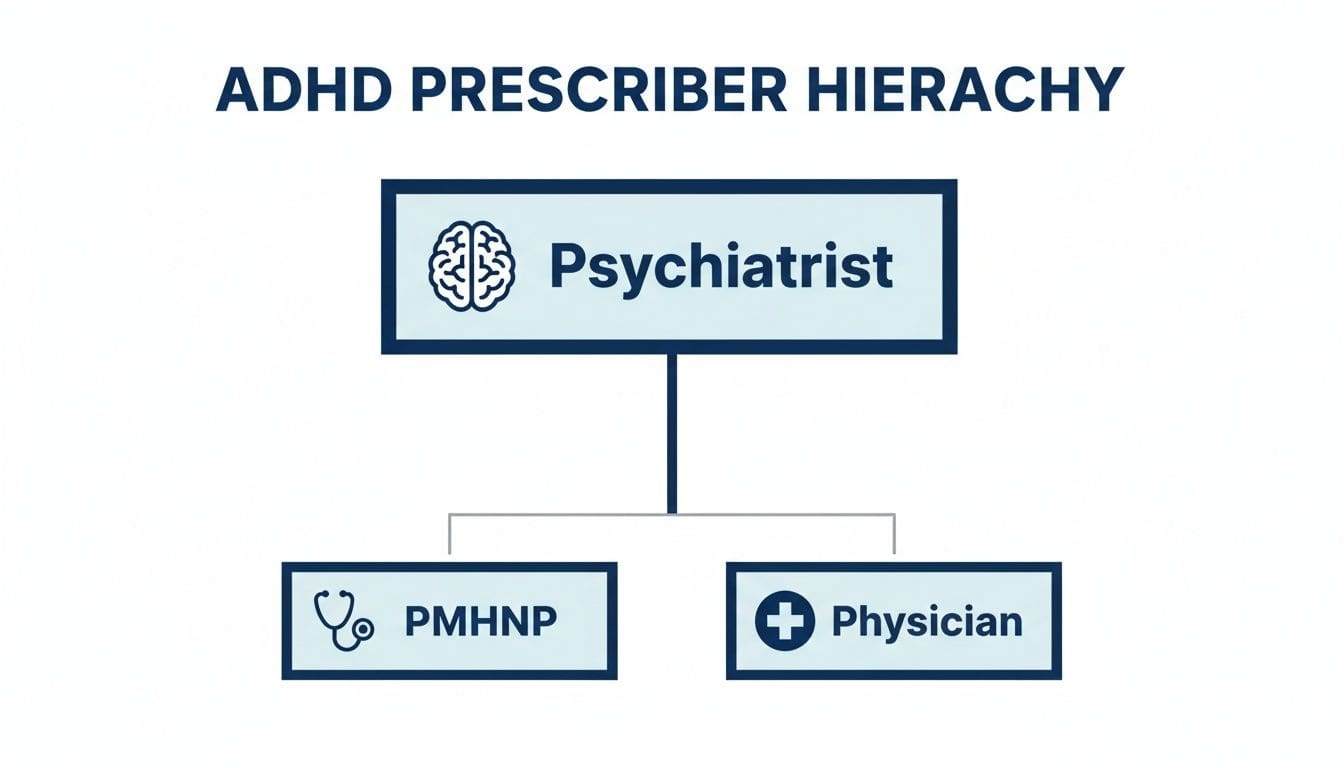
While different providers can prescribe, specialists like PMHNPs bring a focused expertise in mental wellness that is often ideal for ADHD care. Our approach as nurse practitioners is centered on providing comprehensive mental health solutions.
Comparing Your Options in Pennsylvania
To make the right choice for your care, it helps to see a side-by-side comparison. Not every prescriber has the same level of knowledge or philosophy when it comes to ADHD. Some have a more general background, while others live and breathe mental health diagnostics every single day.
The right professional for ADHD care is someone who not only has the authority to prescribe but also possesses specialized training in psychiatric conditions, ensuring your diagnosis is accurate and your treatment plan is both safe and effective.
The table below breaks down the qualifications and typical approaches of different professionals you might encounter in Pennsylvania when seeking help for ADHD. This clarity can empower you to choose a provider who truly understands ADHD and aligns with your personal health goals.
ADHD Medication Prescribers in Pennsylvania
Here’s a clear comparison of the professionals qualified to diagnose ADHD and prescribe medication, detailing their training and care philosophy.
| Professional | Education and Credentials | Prescribing Authority for ADHD | Typical Care Approach |
|---|---|---|---|
| Psychiatric Nurse Practitioner (PMHNP) | Master's (MSN) or Doctorate (DNP) in Psychiatric-Mental Health Nursing; Board Certified (PMHNP-BC). | Full authority to diagnose and prescribe all ADHD medications, including stimulants, based on state law. | Holistic and patient-centered, blending medication management with therapy, counseling, and lifestyle strategies. |
| Medical Doctor (Psychiatry Specialization) | Medical Doctor (MD) or Doctor of Osteopathic Medicine (DO) with a residency in psychiatry. | Full authority to diagnose and prescribe all ADHD medications. | Expert in complex psychiatric conditions, with a focus on the biological and neurological aspects of mental health. |
| Primary Care Physician (PCP) | Medical Doctor (MD) or Doctor of Osteopathic Medicine (DO) in family medicine or internal medicine. | Can prescribe ADHD medications but often has less experience with complex cases or co-occurring conditions. | Generalist approach. Often the first point of contact who may refer you to a specialist for a full evaluation. |
Ultimately, finding a provider with specialized training in mental health—like a psychiatric nurse practitioner—ensures you get a care plan that’s built for you, not just a one-size-fits-all prescription. This is the cornerstone of our practice.
The Rising Need for Expert ADHD Care
If you're an adult looking into an ADHD diagnosis for the first time, you are far from alone. In the last few years, we’ve seen a huge spike in awareness and requests for ADHD treatment, especially from adults. This isn't just a fleeting social media trend; it's a real shift in understanding ADHD as a legitimate neurological condition that affects people their entire lives.
This growing awareness is a fantastic thing. It means more people are finally getting the answers they’ve been looking for and the support they need. For many, a diagnosis explains lifelong struggles with focus, organization, and emotional regulation, opening the door to real, effective management.

This movement isn't about over-diagnosing normal behavior; it’s about empowerment. With the right care, people with ADHD can build stronger careers, nurture better relationships, and successfully manage the demands of daily life. Our psychiatric nurse practitioners are dedicated to providing this life-changing support.
The Data Behind the Demand
The growing number of people asking for help isn't just a feeling—it’s backed by hard data showing a sharp rise in ADHD diagnoses and treatments worldwide. This trend highlights a critical need for skilled professionals who truly understand the nuances of ADHD care and can provide an accurate ADHD diagnosis.
Global data reveals a massive increase in the use of ADHD medication. In Sweden, for example, medication use in adults exploded by more than 10-fold between 2006 and 2020. Here in the US, stimulant prescriptions shot up 157.2% from 2015 to 2023, with a major jump after 2020, particularly among adult women. You can dig deeper into these numbers in this detailed analysis published by JAMA.
This dramatic increase points to two important realities:
- Reduced Stigma: More adults feel safe seeking a diagnosis without worrying about judgment.
- Greater Recognition: The medical community and the public now better understand that ADHD is not just a childhood condition.
This rising demand is putting pressure on the healthcare system, making accessible, expert care more important than ever. While many professionals in psychiatry can prescribe medicine for adhd, not all providers are equally available or equipped to handle the complexities.
Meeting the Need with Modern Care
This surge in ADHD awareness has hit at the same time as a growing shortage of mental health providers in many areas. This gap creates long wait times and real barriers to getting help. To learn more about this issue here in our state, you can read our article about the mental health provider shortage in Pennsylvania.
This is where modern care models become essential. By using telehealth and specializing in mental health, providers like PMHNPs are perfectly positioned to bridge this gap, offering timely, expert, and accessible ADHD treatment.
Our practice was built specifically to meet this demand head-on. We believe that everyone deserves high-quality mental health support that actually fits their life. This means going far beyond a quick consultation to provide a comprehensive and personalized treatment experience.
Our approach as psychiatric nurse practitioners includes:
- Specialized Expertise: Our care is led by board-certified Psychiatric-Mental Health Nurse Practitioners (PMHNPs) with advanced, focused training in diagnosing and treating complex conditions like ADHD.
- Holistic Treatment: We look beyond the prescription pad. Our plans integrate lifestyle factors, nutritional guidance, and other supportive strategies to promote whole-person wellness.
- Unwavering Accessibility: Through a secure telepsychiatry platform, we bring expert ADHD care directly to you, cutting through the traditional barriers of travel and long wait times.
Ultimately, the rising demand for ADHD care is a call to action. It’s an opportunity for us to provide better, more accessible support so that every individual has the chance to understand their brain and unlock their full potential.
Understanding Your ADHD Medication Options
Once you have an ADHD diagnosis, medication is often the next step. Think of ADHD medications less like a single cure and more like a set of specialized tools. The right tool depends entirely on your brain chemistry, your specific symptoms, and even your daily routine.
This is where the partnership with your Psychiatric-Mental Health Nurse Practitioner (PMHNP) becomes so important. They are the expert guide who helps you choose the right tool and fine-tune it until it works just right for you.
The world of ADHD medication might seem overwhelming, but it really comes down to two main types: stimulants and non-stimulants. Each one works differently to improve focus, dial down impulsivity, and help you manage hyperactivity. Your psychiatric nurse practitioner will walk you through these options to find your best fit.
The Two Main Types of ADHD Medication
The most frequently prescribed medications for ADHD are stimulants. They work by boosting the levels of key brain chemicals—dopamine and norepinephrine—that are essential for attention and focus. It’s like turning up the volume on a fuzzy radio signal, helping your brain’s communication channels come in loud and clear.
Stimulants: These are typically the first choice because they’re effective for about 70-80% of people with ADHD. This category includes well-known medications like amphetamines (e.g., Adderall) and methylphenidates (e.g., Ritalin, Concerta). They come in short-acting versions that work for a few hours and long-acting forms designed to last the entire day.
Non-Stimulants: For some people, stimulants aren't the right fit because of side effects, other health conditions, or simply personal preference. Non-stimulants take a different approach, often by targeting norepinephrine. They might take a bit longer to start working, but they can provide a very smooth, 24-hour coverage that many find beneficial.
Your PMHNP will perform a thorough evaluation to figure out the best starting point. This isn't a one-size-fits-all decision; it’s based on your symptoms, medical history, and any concerns you bring to the table. The process is a team effort, and we’ll make adjustments over time to maximize the benefits while keeping side effects to a minimum. For a deeper dive into specific medications, our guide on understanding ADHD medication is a great resource.
Navigating Controlled Substances Safely
A common worry is that most stimulant medications are classified as controlled substances. That label can sound serious, but it just means their prescription and use are carefully regulated by law to ensure safety and prevent misuse. As providers of adult ADHD treatment, we take this responsibility very seriously.
Controlled substance regulations aren’t meant to be a barrier to getting help. They are a system of safeguards put in place to protect you, ensuring these powerful medications are used correctly and under professional supervision.
In Pennsylvania, licensed PMHNPs have the full authority to prescribe these medications, and we follow all regulations to the letter, including those for telehealth. This ensures your treatment is not just effective but also completely safe and compliant.
Here’s what that responsible management looks like in practice with our nurse practitioners:
- Comprehensive Initial Evaluation: A prescription is only written after a detailed assessment confirms an ADHD diagnosis and rules out other things that could be causing your symptoms.
- Careful Monitoring: We schedule regular follow-up appointments to check on your progress, watch for any side effects, and make dosage adjustments as needed.
- Secure Prescribing: All prescriptions are sent electronically to your pharmacy through a secure, HIPAA-compliant platform.
- Patient Education: You’ll get clear instructions on how to take your medication, what to expect, and who to call if you have questions.
This structured approach makes sure you get the full benefit of the medication while the risks are carefully managed. It frees you up to focus on what really matters: improving your quality of life.
Accessing ADHD Care Online in Pennsylvania
How can you get expert ADHD care without dealing with traffic, long waits in an office, and taking time off work? Telepsychiatry is the answer. It offers a secure and simple way to meet with a qualified professional online.
For busy professionals in Philadelphia, parents juggling schedules in Pittsburgh, or anyone in a more rural part of the state, this modern approach to healthcare is built to fit your life, not disrupt it.
Getting an evaluation and prescription online is a straightforward process on a HIPAA-compliant platform. This model removes the traditional barriers to care, offering unmatched convenience, privacy, and access. You can meet with a specialized provider, like a Psychiatric-Mental Health Nurse Practitioner (PMHNP), right from your own home.
This increased accessibility is a big reason why more people are finally getting the help they need. In fact, the availability of telehealth contributed to a massive 157.2% increase in new stimulant prescriptions from 2015 to 2023.
Importantly, the data shows most of these individuals also received dedicated ADHD care, proving telehealth supports responsible and complete treatment. You can read the full study about these prescribing trends to better understand the impact.
Pennsylvania's Telehealth Rules for ADHD Medication
A common and important question is whether you can get a prescription for a controlled substance, which many ADHD medications are, through an online appointment. In Pennsylvania, the answer is a clear yes, as long as you are working with a properly licensed professional like one of our psychiatric nurse practitioners.
The state’s regulations are designed to keep patients safe while embracing the benefits of remote care. Here is what you need to know:
- Licensed Prescribers: A licensed PMHNP in Pennsylvania has the full authority to conduct evaluations and prescribe medications via telehealth, just as they would in a physical office.
- Established Standards: The standard of care is exactly the same. A thorough initial assessment is always required before any prescription is written.
- Secure Technology: To protect your privacy, all appointments must be held on a secure, HIPAA-compliant video platform.
This framework ensures that when you see a professional who understands that psychiatry can prescribe medicine for adhd online, the process is both legitimate and safe.
The Simple and Secure Process
Getting started with online ADHD care should be as seamless as possible. You shouldn't have to fight a complicated system to get support.
Online care isn't about cutting corners; it's about removing obstacles. The goal is to deliver the same high-quality, personalized psychiatric evaluation you'd receive in person, but with the convenience and comfort of being in your own space.
The journey to getting help usually involves just a few key steps:
- Easy Online Scheduling: You can book your first evaluation through a simple online portal, picking a time that works for your schedule without ever needing to call an office.
- Comprehensive First Visit: Your initial appointment is a detailed conversation with your PMHNP. This is their chance to listen to your experiences, ask about your history, and perform a full psychiatric assessment.
- Personalized Treatment Plan: If an ADHD diagnosis is made, your provider will collaborate with you on a treatment plan. This may include medication, which can be sent electronically to your preferred pharmacy.
- Ongoing Support: Follow-up appointments are scheduled to check on your progress, make any needed adjustments to your plan, and make sure you're getting the best possible results.
For anyone in Pennsylvania looking for support, our guide to online psychiatry for ADHD care provides even more detail on how to get started. This model of care puts you back in control, making expert help more accessible than ever.
Preparing for Your First Telepsychiatry Appointment
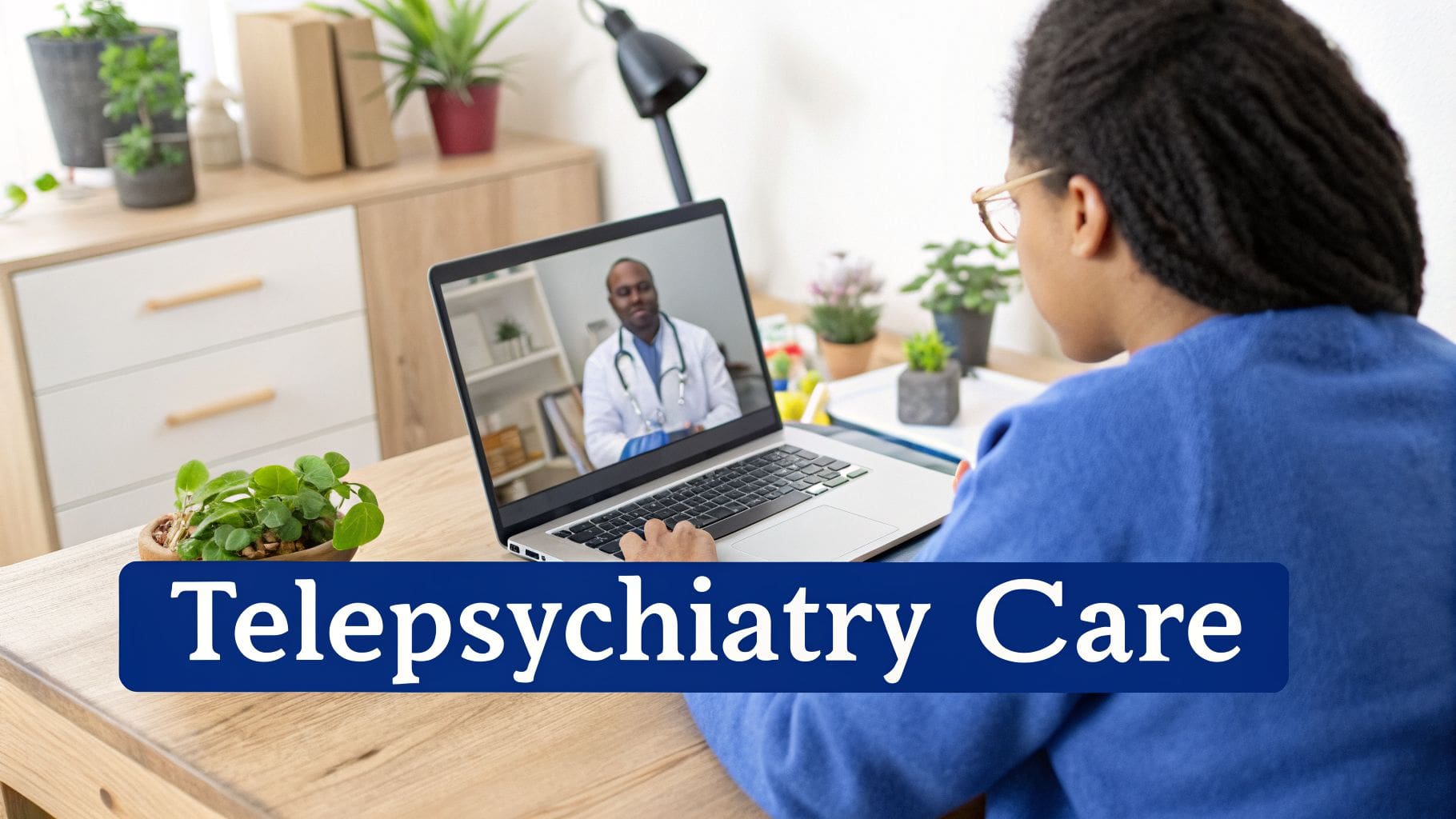
The idea of a first appointment can feel intimidating, but it doesn't need to be. This meeting isn't an interrogation. It’s the start of a partnership with your psychiatric nurse practitioner—a collaborative conversation designed to build a treatment roadmap just for you.
To make sure your first telepsychiatry session is productive, a little bit of prep work makes a huge difference. Gathering some key information beforehand helps your provider get a full, accurate picture of your experiences right from the start.
When you feel prepared, it helps calm any nerves and allows you to talk about your challenges more clearly. It’s about taking an active role in your own care from day one.
What to Gather Before Your Appointment
Coming to your session with organized information helps your nurse practitioner understand your history and what you're struggling with now. Think of it like bringing a mechanic a list of the strange noises your car is making—the more details you give them, the faster they can figure out what's really going on.
Here’s a simple checklist to help you get ready for your ADHD evaluation:
- A List of Your Symptoms: Jot down the specific challenges you’re facing. This could be anything from trouble focusing at work and forgetting appointments to feeling restless or struggling with organization.
- Your Personal History: Be prepared to talk about when these symptoms first appeared. Did they show up in childhood? How have they affected your school, work, or relationships over the years?
- Current and Past Medications: Make a list of all medications and supplements you currently take, including dosages. Also, think back on any psychiatric medications you've tried before and how they did—or didn't—work for you.
- Medical and Family History: Note any important medical conditions you have (like heart issues or high blood pressure) and whether any family members have a history of mental health conditions.
Your initial evaluation is a confidential and safe space. The goal is to understand your complete story so we can build a treatment plan that addresses your specific needs, ensuring that when psychiatry can prescribe medicine for adhd, it is done responsibly and effectively for you.
What to Expect During the Conversation
Your first appointment is a comprehensive discussion that usually lasts around 60-90 minutes. Your nurse practitioner will guide the conversation, but your input is the most critical piece of the puzzle. They'll ask questions designed to understand your day-to-day life and how your symptoms are impacting it.
You can expect to talk about:
- Your Main Concerns: What finally pushed you to seek help now?
- Your Treatment Goals: What does getting better look like for you? Is it better focus at work? More stable moods?
- Lifestyle Factors: Your provider will ask about your sleep, diet, exercise habits, and any substance use to get a complete picture of your overall health.
This first conversation lays the groundwork for your entire treatment journey. It establishes clear expectations for follow-up care, medication management, and the ongoing support you’ll get from our team. It’s the most important first step toward getting the help you deserve.
Integrative Psychiatry for Whole-Person ADHD Care
Real, effective ADHD treatment goes far beyond a simple prescription. While medication can be a life-changing cornerstone for focus and clarity, it delivers the best results when it’s part of a broader, evidence-based plan. This is the heart of an integrative approach—we build a strategy that treats you, not just the diagnosis.
Think of it this way: medication is the powerful engine in your car. But you still need good tires (nutrition), a clear windshield (lifestyle), and a skilled driver at the wheel (you) to get where you’re going safely. An integrative plan makes sure all those parts work together in harmony.
Looking Beyond the Prescription
A truly effective treatment plan addresses the whole person. Our psychiatric nurse practitioners are trained to see the bigger picture, moving past symptom management to support your brain’s overall health and long-term function. We know that factors like your diet, sleep quality, and even your unique genetics have a massive impact on how you feel every day.
This approach brings several key components together:
- Genetic Insights: Pharmacogenomic testing can give us clues about how your body is likely to process certain medications. This helps reduce the frustrating trial-and-error period.
- Nutritional Counseling: We look at how food impacts your mood and concentration, offering guidance on anti-inflammatory diets and key nutrients that support cognitive health.
- Lifestyle Adjustments: Simple, consistent changes in exercise, sleep habits, and mindfulness can have a profound effect on ADHD symptoms and your overall sense of well-being.
By weaving these elements into your care, we build a more resilient foundation for long-term success. It’s a proactive way to manage your health that gives you tools for the rest of your life.
The goal of integrative care is to create a robust support system around your medication. It’s about ensuring that every aspect of your well-being is addressed, leading to more comprehensive and lasting results than a prescription alone can offer.
Managing Co-Occurring Conditions
It’s extremely common for ADHD to show up alongside other conditions like anxiety, depression, or substance use disorders. In fact, research shows a significant percentage of adults with ADHD also have at least one co-occurring mood or anxiety disorder. Trying to treat ADHD while ignoring these related issues is like fixing one leaky pipe while another one keeps flooding the room.
An integrative model is specifically designed to handle this complexity. Your psychiatric nurse practitioner is trained to assess and treat the full spectrum of your mental health concerns at the same time.
This unified approach means:
- A Cohesive Treatment Plan: We develop a single, coordinated strategy that addresses all your symptoms. This avoids the confusion and potential medication conflicts that can happen when seeing multiple, disconnected providers.
- Careful Medication Selection: We choose medications that can help with multiple issues at once or ensure that different prescriptions work together safely and effectively.
- Holistic Support: We can integrate services like counseling for opioid dependence with Suboxone or, when clinically appropriate, evaluate testosterone replacement therapy (TRT) if hormone imbalances are contributing to your symptoms.
We believe that modern psychiatry can prescribe medicine for adhd in a way that acknowledges the complete person. By addressing co-occurring conditions head-on, we don't just put a bandage on one problem—we help you build a more stable and healthier future. To discover more about this method, you can learn about the integrative psychiatry approach in our detailed article.
Common Questions About ADHD Treatment
Navigating ADHD treatment for the first time can feel overwhelming, and it’s natural to have questions. We’ve put together direct answers to the most common things prospective patients ask. Our goal is to give you the clarity you need to feel confident taking the next step.
Can a Psychiatric Nurse Practitioner Prescribe Adderall Online in Pennsylvania?
Yes, absolutely. In Pennsylvania, our licensed and board-certified psychiatric-mental health nurse practitioners (PMHNPs) have full authority to diagnose ADHD and prescribe controlled medications, including stimulants like Adderall.
This is all done through secure, private telepsychiatry appointments that follow every state and federal guideline. We make sure your care is both safe and effective, because responsible psychiatry can prescribe medicine for adhd when the right protocols are in place.
How Quickly Can I Get a Diagnosis and Prescription?
Our process is built to be both thorough and efficient. Your first step is a comprehensive initial evaluation, which usually lasts between 60 to 90 minutes. During this meeting, your provider will dive deep into your symptoms, history, and goals.
If you receive an ADHD diagnosis and medication is a good fit for your treatment plan, we can often send a prescription electronically to your pharmacy right after that first session. Our priority is accurate, responsible care without making you wait.
What If I Have Anxiety or Depression Along with ADHD?
It's incredibly common for ADHD to show up alongside conditions like anxiety and depression—in many cases, they go hand-in-hand. Our integrative model is specifically designed to handle this kind of complexity.
Your PMHNP is an expert in assessing and treating the full picture of your mental health, not just one symptom in isolation.
We build a holistic plan that addresses all of your symptoms at once. This usually involves a thoughtful combination of medication management and targeted lifestyle strategies to support your whole-person wellness.
This approach prevents the kind of fragmented care that happens when you treat each condition separately, which ultimately leads to much better, more stable outcomes.
How Does Follow-Up Care Work for Online ADHD Treatment?
Consistent follow-up care is what makes a treatment plan successful in the long run. After your initial evaluation, we’ll schedule regular check-ins on our secure video platform.
These sessions are where we monitor your progress, talk through any side effects, and make precise, careful adjustments to your medication. This ensures your treatment stays effective and safe. Plus, our patient portal gives you an easy and secure way to message your provider with any questions that pop up between appointments.
Ready to find clarity and take control of your focus? The expert team at Integrative Psychiatry Of America offers personalized, whole-person ADHD care online throughout Pennsylvania. Schedule your evaluation today and start your journey toward a more focused future. Book your appointment now.