
A lot of people in Pennsylvania start in the same place. They stay up too late, open another browser tab, and search for ADHD testing Pennsylvania, ADHD psychologist Philadelphia, or some version of “why can't I stay organized when everyone else seems to manage.” They may be doing fine on paper, holding a job, finishing school, caring for a family, but daily life still feels harder than it should.
That search usually isn't just about focus. It's about wanting a clear answer. Is this ADHD, anxiety, burnout, trauma, depression, or several things layered together? For many adults, the hardest part isn't starting treatment. It's figuring out what is truly going on so treatment can fit the underlying problem.
Table of Contents
- A Search for Clarity in Pennsylvania
- Meet Our New Psychologist Dr Lori Simons
- Comprehensive ADHD and Neuropsychological Testing Now Available
- Who Can Benefit From a Psychological Evaluation
- An Integrative Approach to Diagnosis and Treatment
- Your Path to a Clear Diagnosis in Pennsylvania
A Search for Clarity in Pennsylvania
A professional in Philadelphia may notice the same pattern every week. Deadlines keep getting pushed, emails pile up, home tasks stay half-finished, and simple routines take too much effort. A college student in Pittsburgh may read the same page three times and still leave assignments until the last minute, then wonder whether the issue is poor motivation or something more specific.
Those late-night searches often happen after months or years of second-guessing. Online quizzes can raise good questions, but they rarely settle them. People looking for Welcome Lori Simons Psychologist to Integrative Psychiatry of America are often looking for something more useful than reassurance. They want diagnostic clarity.

Why the search gets complicated
ADHD in adults can overlap with anxiety, depression, trauma-related symptoms, sleep disruption, and substance use concerns. That's one reason people can spend a long time feeling “off” without knowing why. A rushed visit or a short checklist often doesn't separate one issue from another.
The need for accessible care also matters. Pennsylvania patients are often balancing work, school, parenting, transportation, and privacy concerns. The practice treats ADHD, anxiety, depression, OCD, and PTSD through secure telehealth for Pennsylvania patients, which makes expert care more accessible when getting to an office is the barrier (telepsychiatry services).
Clear diagnosis matters because the wrong explanation leads to the wrong plan.
A better next step
The frustration many patients feel doesn't come from lack of effort. It comes from trying to solve the wrong problem. Someone may be using anxiety strategies for untreated ADHD, or may be assuming ADHD when trauma or depression is driving the symptoms.
That's also why Pennsylvania families keep running into access barriers, long waits, and fragmented care, which reflects a wider mental health provider shortage in Pennsylvania. Adding a psychologist with experience in evaluation and therapy directly addresses the question many patients ask first. Who can help sort this out thoroughly and correctly?
Meet Our New Psychologist Dr Lori Simons
Dr. Lori Simons joins the team as a psychologist and therapist with a background that speaks directly to patients who need careful evaluation rather than quick assumptions. She is Lori Simons, PhD, LPC, CCDP-D, CAC-D, an Educational Psychologist and Licensed Professional Counselor with additional credentials in substance use and co-occurring disorders.

Credentials that fit complex cases
Her training includes a PhD in Educational Psychology from Temple University, an MS in Experimental Psychology from St. Joseph's University, and a BA in Psychology from Neumann University. She also serves in academic leadership at Widener University as Co-Director of Academic Service Learning and Practicum and Internship Coordinator in the Psychology Department.
That academic background matters, especially for ADHD and learning-related concerns. Educational psychology focuses on how people think, learn, perform, and adapt in real settings. For adults who've spent years wondering why school, work, or organization feels harder than expected, that lens is practical.
Experience beyond the classroom
Dr. Simons has worked in community-based addiction treatment and mental health programs as a director and supervisor for over three decades. Her clinical work has included children, adolescents, and adults, with specialties in addiction, anxiety, depression, ADHD, and PTSD.
That range matters because many patients don't come in with a single, tidy concern. They may have attention problems mixed with trauma history. They may have depression with executive dysfunction. They may have anxiety that worsens because they're constantly missing deadlines, forgetting tasks, or struggling to organize daily life.
Clinical reality: the best evaluator for ADHD is someone who also understands the conditions that can mimic it, worsen it, or appear alongside it.
How she approaches care
Dr. Simons uses a client-centered approach and matches patients to techniques suited to their individual needs. That sounds simple, but it solves a common problem. Many people have already tried generic advice. They've used planners they abandoned, productivity apps they forgot to open, and coping tips that didn't fit their actual diagnosis.
Patients who want to learn more about the team behind this work can review the practice background and provider information. For people searching terms like ADHD psychologist, ADHD testing Philadelphia, and ADHD testing Pennsylvania, the key point is straightforward. A new psychologist with strong academic, counseling, and co-occurring disorder experience is now part of the clinical team, with a major focus on thorough diagnostic work.
Comprehensive ADHD and Neuropsychological Testing Now Available
A short screener can suggest ADHD. It can't replace a thorough evaluation. That difference is why formal ADHD testing matters, especially for adults who've been misunderstood for years.
What comprehensive testing does better
An in-depth psychological or neuropsychological evaluation looks at patterns, not isolated symptoms. It helps answer several practical questions:
Is it ADHD or something else
Trouble focusing can come from anxiety, depression, trauma, sleep disruption, or substance use. A detailed evaluation looks for the best-fitting explanation.Is there more than one issue present
Some patients do have ADHD, but they also have anxiety, PTSD, or depression. Treatment usually works better when those layers are identified early.What kind of support will be effective
The purpose isn't just labeling. The purpose is building a treatment plan that matches how a person functions in work, school, and daily life.
What patients can expect
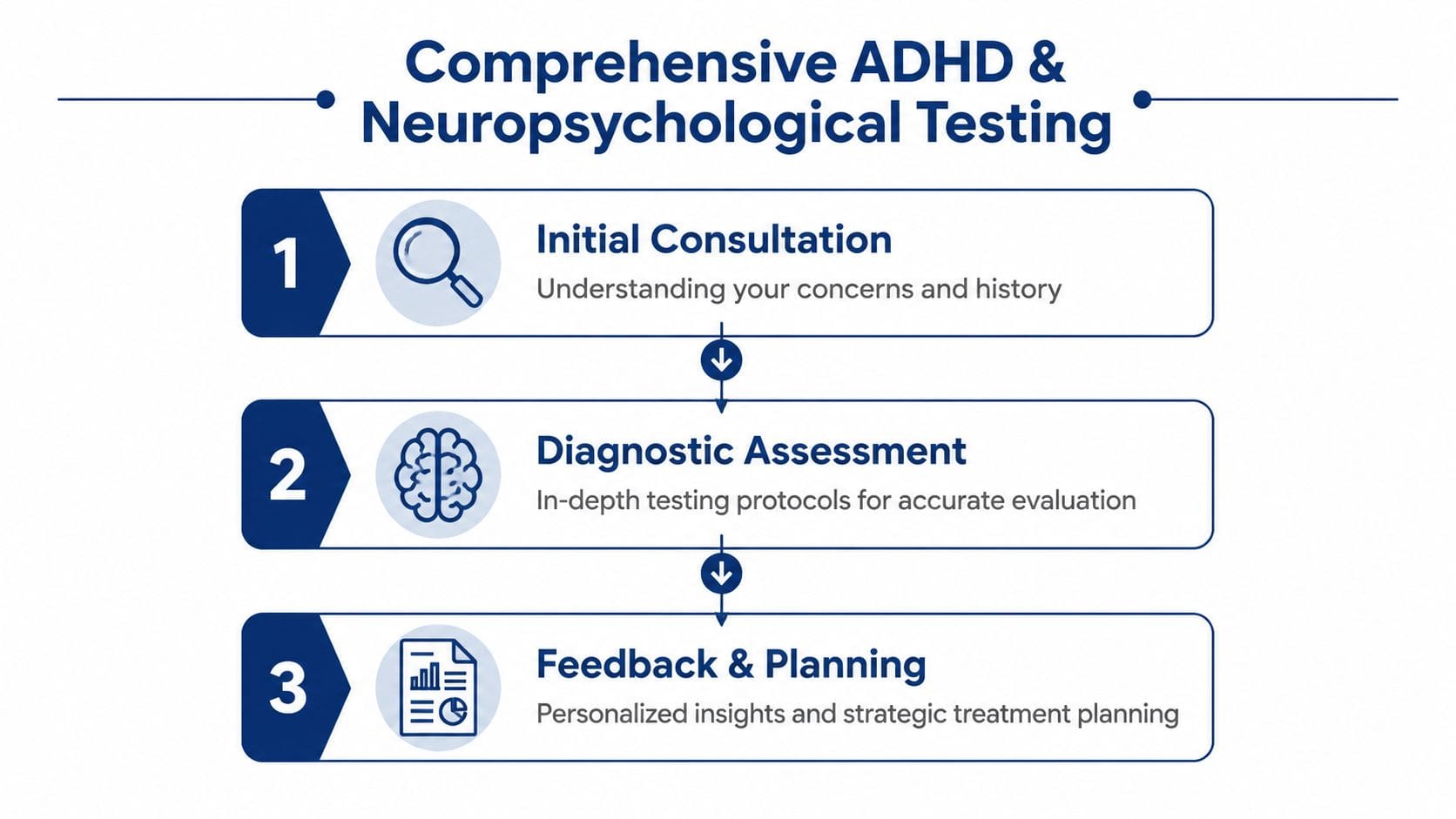
A full evaluation usually includes a clinical interview, review of symptoms over time, developmental and educational history, and standardized testing when appropriate. This is very different from answering a few online questions and getting a generic result.
For patients looking specifically for psychological testing for ADHD, this kind of process is what turns uncertainty into a usable plan. It gives context to symptoms and helps guide medication decisions, therapy recommendations, workplace or school accommodations, and follow-up care.
A brief comparison helps:
| Approach | What it can do | What it often misses |
|---|---|---|
| Online screener | Flag possible symptoms | Overlap with anxiety, trauma, depression, sleep issues |
| Brief checklist visit | Start a conversation | Developmental history, functional pattern, co-occurring concerns |
| Comprehensive evaluation | Clarify diagnosis and guide treatment | Requires more time, but reduces guesswork |
Why families and adults ask for this
Adults often seek testing after years of compensating. Children and teens may need a different kind of developmental evaluation, and some families benefit from outside resources that explain holistic support for children's testing in a broader context. For adults in Philadelphia, Harrisburg, Allentown, and throughout Pennsylvania, the practical value is the same. Better information leads to better treatment choices.
A diagnosis should explain real life. If it doesn't fit the person's daily functioning, it needs a closer look.
Who Can Benefit From a Psychological Evaluation
Not everyone who feels distracted needs formal testing. But many people reach a point where guessing stops helping. That's usually when a structured psychological evaluation becomes the right next step.
The practice is licensed to provide virtual psychiatric care across Pennsylvania, making statewide access available for patients in Philadelphia, Pittsburgh, Harrisburg, Erie, Scranton, Allentown, Lancaster, and Reading (statewide virtual care access). That matters because the people who need evaluation most often don't have extra time to travel.
Three common situations
A working adult in Lancaster may be successful on the surface but constantly behind in private. Bills are missed, meetings are forgotten, and projects take twice as long as expected. Family members may say the person is smart but inconsistent. That pattern often raises the question of adult ADHD, especially when it has been present for years.
A college student in Erie may notice a different problem. They can understand the material, but they can't organize assignments, estimate time, or sustain focus well enough to meet deadlines. The issue may not be intelligence or motivation. It may be executive dysfunction that needs formal assessment.
A patient in Scranton may already be in treatment for anxiety or depression but feels stuck. Medication may help somewhat, therapy may help somewhat, yet progress keeps stalling. In some cases, an untreated co-occurring condition such as ADHD changes the whole picture.
Signs that testing may be worth discussing
Persistent uncertainty
The main problem still isn't clear after prior treatment, self-help efforts, or brief evaluations.Life impact across settings
Symptoms affect work, school, relationships, finances, or daily routines, not just one isolated area.Mixed or overlapping symptoms
Attention problems, mood symptoms, trauma history, and stress responses seem to blend together.
For patients who are also exploring non-medication supports, some find it useful to read about understanding ADHD supplements as part of a broader discussion. Supplements don't replace evaluation, but they often come up once patients begin building a more complete plan.
An Integrative Approach to Diagnosis and Treatment
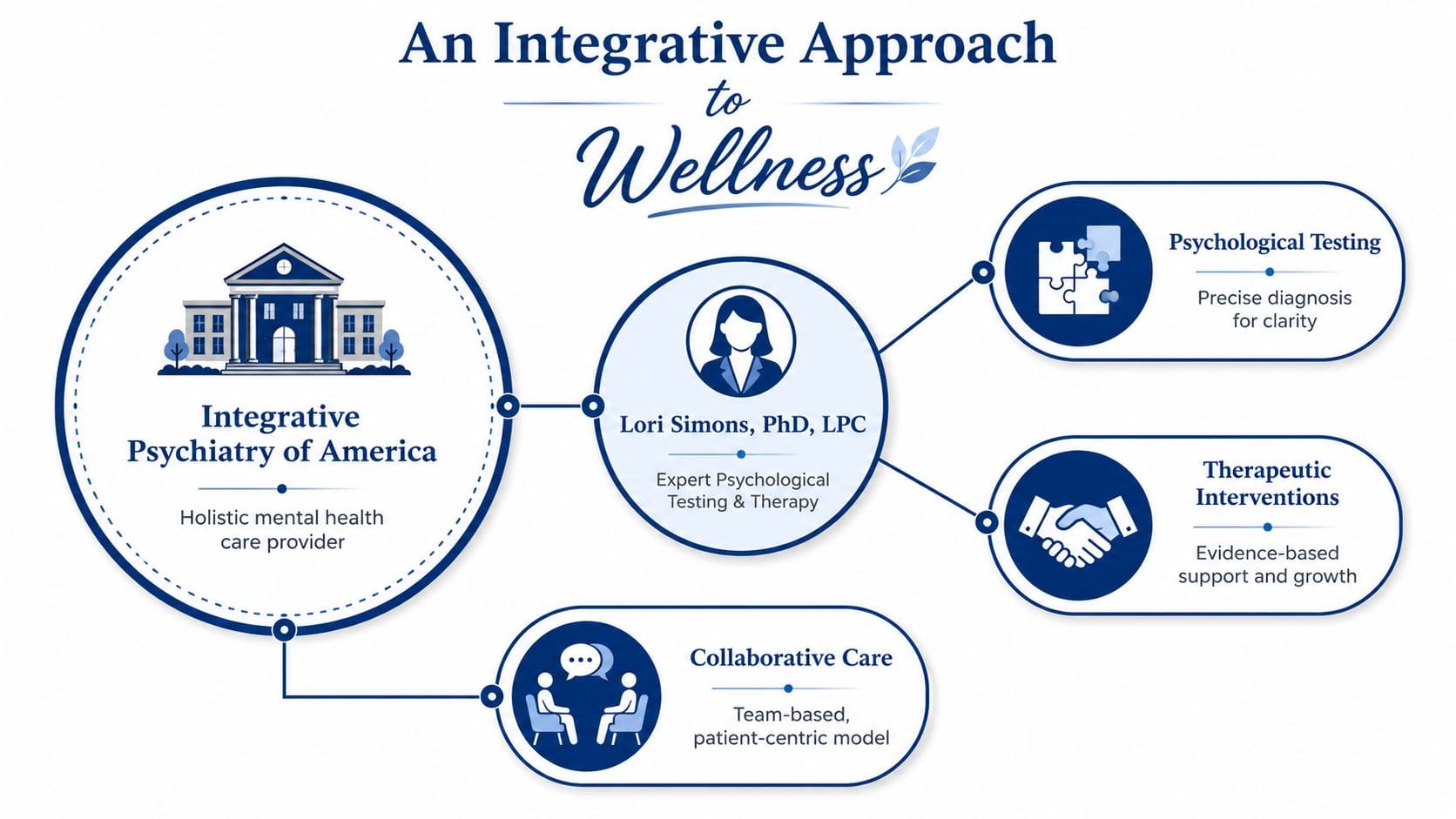
A strong diagnosis is valuable because it shapes everything that follows. Testing doesn't sit in a silo. It works best when it informs medication management, therapy, lifestyle adjustments, and follow-up care in a coordinated way.
Why diagnosis and treatment should connect
Some patients need psychotherapy. Some need medication management. Many need both, plus changes in sleep, daily structure, exercise, and nutrition. The most effective plan is usually the one that fits the whole person rather than chasing one symptom at a time.
That's where an integrative model matters. The practice often uses advanced lab panels to identify biological contributors such as vitamin deficiencies or inflammation in 20 to 40 percent of patients, which can support a more targeted treatment plan (integrative lab panel approach). When attention, mood, and energy problems overlap, that kind of medical context can change the plan in meaningful ways.
What whole-person care looks like
A practical treatment plan may include several moving parts:
Diagnostic clarity first
Testing helps separate ADHD from look-alike conditions and identifies co-occurring concerns.Medication decisions with context
Medication management works better when the diagnosis is clear and the symptom pattern makes sense.Lifestyle interventions that match the diagnosis
Sleep, exercise, structure, and nutrition aren't generic add-ons. They work best when designed for the patient's actual condition.Therapy with a specific target
Once the diagnosis is clearer, therapy can focus on the right problems, such as trauma recovery, executive functioning, anxiety management, or substance-related patterns.
Patients who want to explore the broader philosophy behind this model can review the integrative psychiatry approach. A helpful starting point for adults questioning ADHD symptoms is also the Adult ADHD Assessment available through the practice's mental health tools.
Good care gets more efficient when the team knows what they're treating and what they're not treating.
Administrative clarity matters too. Patients often underestimate how much smoother care feels when scheduling, billing, and coordination are handled well. For readers interested in the systems side of mental health practice operations, this overview of how clinics can improve mental health financial processes gives useful background on why those details affect patient experience.
Your Path to a Clear Diagnosis in Pennsylvania
For many adults, the hardest part is staying stuck between suspicion and certainty. They think ADHD may be part of the problem, but they're not fully sure. Or they've been treated for anxiety or depression without ever getting a complete explanation for why daily functioning still feels difficult.
A clear next step is to learn what a formal adult evaluation involves and decide whether symptoms justify testing. Patients who are specifically wondering about the process can review how to get an ADHD diagnosis as an adult. That's often the most useful place to begin when the question is no longer “could this be ADHD?” but “how do I get an accurate answer?”
Practical planning matters as well. The practice operates on a self-pay model with affordable cash and membership options, and patients are encouraged to review costs or verify benefits before the first appointment for a smoother start to care (self-pay and membership options). For people across Pennsylvania who want careful assessment, telehealth access makes that process more manageable from home.
If the search for answers has turned into months or years of uncertainty, Integrative Psychiatry of America offers a path toward clearer diagnosis and more personalized treatment. Patients in Pennsylvania can learn more about ADHD evaluations, virtual psychiatric care, medication management, and integrative treatment options, review self-pay details, and schedule an appointment from home.