
Typing “Psychiatrist Philadelphia” into a search bar usually happens on a hard day. Sleep may be off. Work may be slipping. A relationship may feel strained. The person searching often isn't looking for a title as much as a real solution that fits life in Philadelphia.
That's where many directories fall short. They show names, office locations, and a broad list of conditions, but they don't answer the questions that matter most when someone needs help now. Can appointments fit around work? Will follow-up be consistent? Is medication management handled thoughtfully? Can care happen privately from home? Those are often the true issues behind the search.
Table of Contents
- Finding Mental Health Care in Philadelphia Today
- The Benefits of Telepsychiatry for Philadelphians
- Conditions We Treat With Online Integrative Care
- How to Choose Your Online Mental Health Provider
- Your First Telepsychiatry Visit What to Expect
- Why Philadelphians Choose Integrative Psychiatry of America
Finding Mental Health Care in Philadelphia Today
A common Philadelphia scenario looks like this. An adult has been meaning to get help for months. They're functioning, but barely. They search for a psychiatrist in Center City, then in South Philly, then “online psychiatrist Pennsylvania,” and the tabs start piling up without making the decision easier.

The search term Psychiatrist Philadelphia sounds simple, but the need behind it usually isn't. Many people searching that phrase aren't just trying to get a diagnosis. They're trying to solve logistics, cost, and continuity problems, which is why local resource lists often emphasize free and low-cost services along with crisis hotlines in Philadelphia's mental health ecosystem, as described by The Philadelphia Citizen's guide to mental health services in Philly.
The title matters less than the fit
A lot of people assume they specifically need a psychiatrist. Sometimes they do. Often, what they really need is a qualified prescriber who can evaluate symptoms carefully, manage medications appropriately, track progress, and coordinate a broader treatment plan. In modern telepsychiatry, that care is often delivered by psychiatric nurse practitioners, also called PMHNPs.
That distinction matters because it expands the reader's options. A PMHNP can provide psychiatric evaluation, diagnosis, medication management, and ongoing follow-up. For many adults dealing with anxiety, depression, ADHD, OCD, PTSD, bipolar symptoms, or substance-use concerns, that's the care they were searching for when they typed “psychiatrist Philadelphia.”
Practical rule: Don't choose a provider based only on title. Choose based on clinical fit, prescribing scope, communication style, and how reliably the practice can support follow-up.
What works in the real world
The people who stay engaged in treatment usually choose care that reduces friction. If every follow-up requires a long commute, parking stress, and time away from work, appointments tend to slip. If the practice has a clear portal, refill support, and structured follow-up, continuity gets easier.
Philadelphia patients comparing options can start with a broad view of virtual psychiatric care available for Philadelphia residents. What matters most is whether the provider can deliver timely access, safe prescribing, and a treatment plan that feels sustainable, not whether the listing uses one specific job title.
The Benefits of Telepsychiatry for Philadelphians
Telepsychiatry fits Philadelphia particularly well because city life creates a very specific kind of scheduling pressure. People are balancing work, caregiving, public transit, traffic on I-76, parking in Center City, and the mental effort of getting to one more appointment when they already feel depleted.
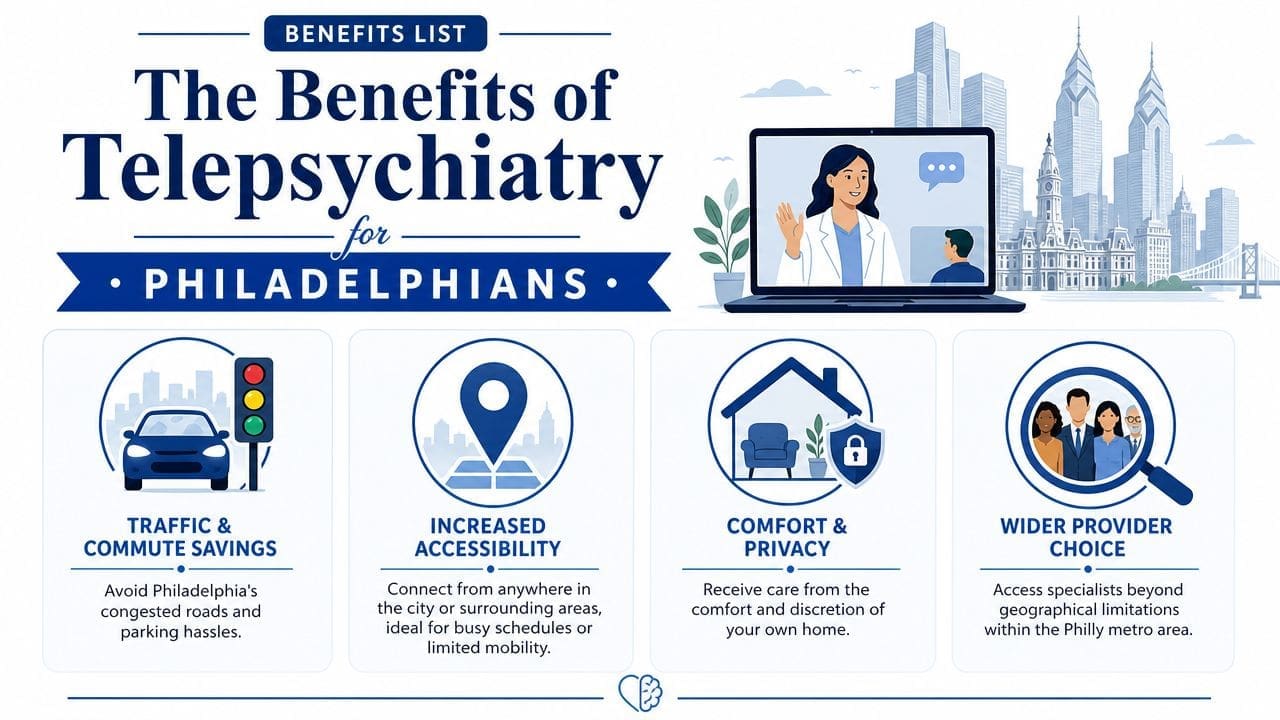
That's why telehealth isn't a backup model anymore. Philadelphia's behavioral health system increasingly depends on a hybrid in-person and telehealth structure, and the CDC reported that mental health treatment among U.S. adults in large metropolitan areas rose from 16.8% in 2019 to 22.2% in 2021, a shift noted on LifeStance's Philadelphia psychiatry page.
Why telehealth solves real access problems
For many adults, the main benefit isn't novelty. It's consistency. Telepsychiatry removes several common reasons people delay care or stop after one visit.
- Less travel burden: No drive across the city, no parking search, no waiting room commute before and after the appointment.
- More privacy: Some patients speak more openly from home than they do in a clinic.
- Broader access across Pennsylvania: Patients aren't limited to whoever is closest to their zip code.
- Better fit for recurring follow-up: Medication check-ins work better when they can happen on schedule.
When telepsychiatry is the better choice
Telepsychiatry is especially useful when symptoms themselves make getting to an office harder. Anxiety, depression, trauma symptoms, and attention problems can all interfere with planning, leaving the house, and keeping appointments. A virtual model lowers the activation energy needed to start treatment.
A practical example of this model is all-virtual integrative psychiatry for Philadelphia patients, where care is designed around secure online visits rather than treating telehealth like an add-on. For many Philadelphians, that's the difference between intending to get help and receiving it.
Conditions We Treat With Online Integrative Care
Good psychiatric care doesn't stop at naming a condition. It asks what's driving the symptoms, what's keeping them going, and what combination of treatments gives the patient the best chance of feeling and functioning better.
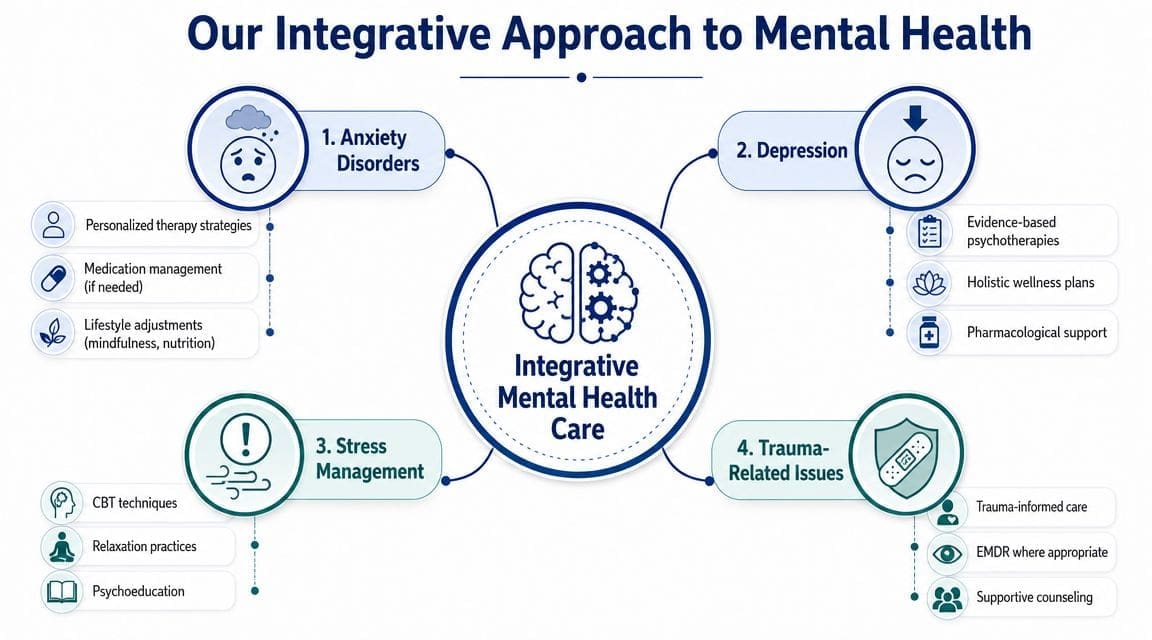
The American Psychiatric Association notes that prescribers commonly use medications in combination with psychotherapy and other interventions, matching stimulant medications to ADHD and antidepressants to depression and anxiety when clinically appropriate, as outlined by the American Psychiatric Association's overview of what psychiatry involves. That combination model is important because medication-only care often misses the daily patterns that shape outcomes.
Anxiety and depression need more than symptom suppression
When anxiety is high, patients often want immediate relief. That's understandable, but the most durable plan usually includes more than a prescription. Sleep, caffeine use, alcohol, relationship stress, trauma history, and work overload all affect the clinical picture.
Depression works the same way. Medication can be useful, but recovery often also depends on restoring structure, sleep timing, movement, nutrition, and therapy support. Adults looking for integrative depression treatment in Philadelphia often need a plan that addresses both mood symptoms and the habits that erode motivation over time.
The strongest treatment plans usually answer two questions at once. What reduces symptoms now, and what makes relapse less likely later?
ADHD, OCD, PTSD, and related concerns
Adult ADHD is one of the clearest examples of why integrative care matters. Medication may help with focus and task initiation, but it won't automatically fix poor sleep, burnout, inconsistent routines, or digital overstimulation. For adults whose rest is also disrupted, resources like SleepHabits' comprehensive ADHD sleep guide can support practical sleep changes alongside psychiatric treatment.
OCD and PTSD also need nuance. A quick medication refill without discussion of exposures, triggers, avoidance patterns, therapy alignment, and nervous system regulation usually isn't enough. Trauma-related symptoms can show up as insomnia, irritability, emotional numbing, or panic. OCD can be hidden under perfectionism, reassurance-seeking, or compulsive checking that the patient has normalized for years.
Integrative care also includes overlapping health issues
Many adults don't present with one clean diagnosis. They may have depression and weight concerns, ADHD and anxiety, or trauma symptoms alongside substance use. In those cases, narrow medication management tends to feel fragmented.
An integrative model may include:
- Medication management when appropriate: Prescribing should be deliberate, not automatic.
- Lifestyle support: Exercise planning, mindfulness work, and nutritional education can strengthen response and adherence.
- Lab or screening review when clinically indicated: Some mental health symptoms overlap with broader medical concerns.
- Addiction treatment support: Opioid dependence may require a plan such as Suboxone plus counseling and behavioral support.
That whole-person approach is often what people mean when they search for a psychiatrist Philadelphia option but feel dissatisfied with generic listings.
How to Choose Your Online Mental Health Provider
The best way to choose an online provider is to stop thinking like a shopper scrolling directories and start thinking like someone hiring a clinical partner. A polished website isn't enough. The questions have to get more specific than “Do they treat anxiety?”
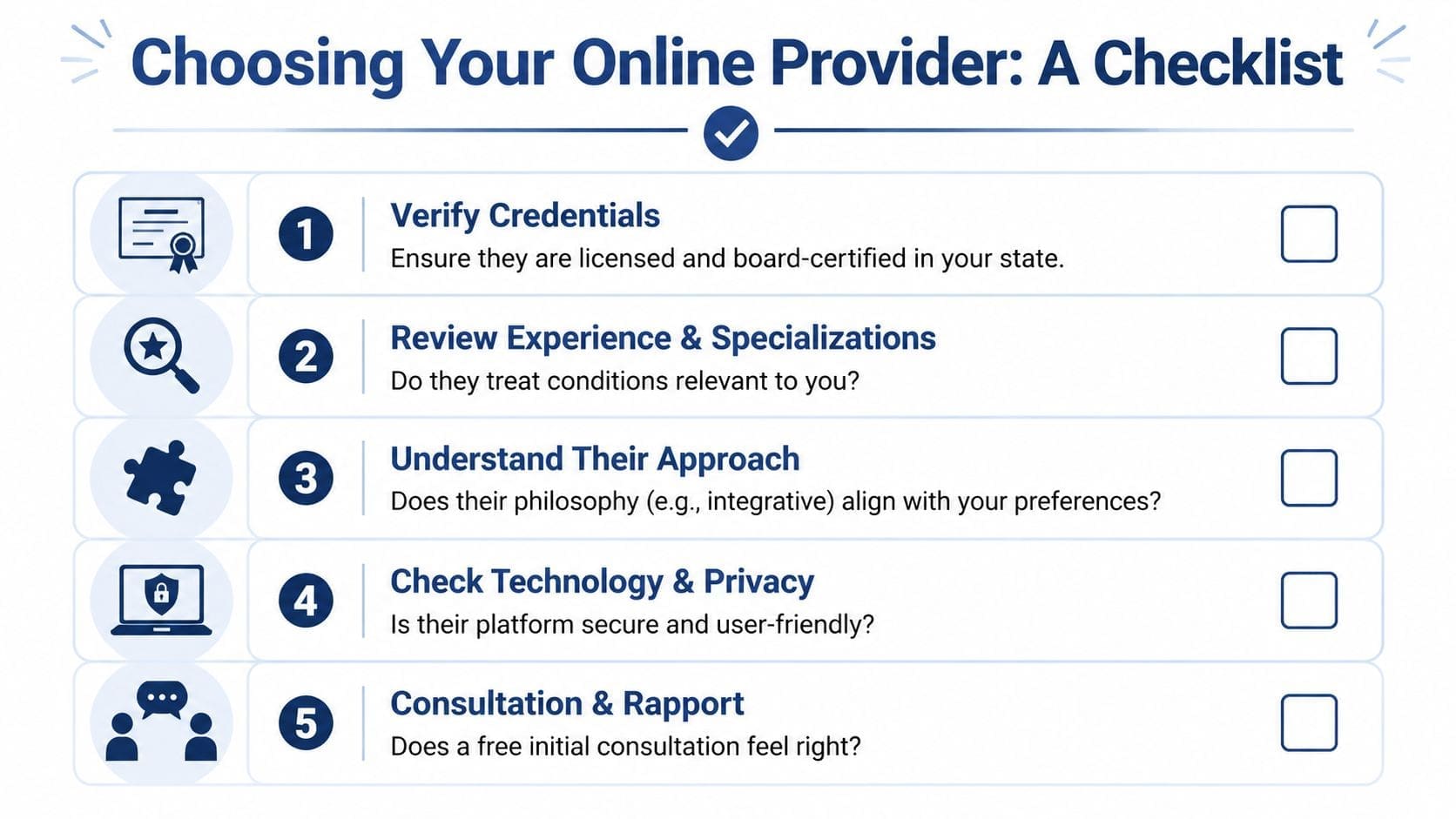
A strong provider should be able to explain credentials, prescribing approach, follow-up rhythm, and how progress is monitored. One high-yield quality marker is measurement-based care, where clinicians use standardized symptom scores to guide treatment changes rather than relying only on memory or general impressions, as discussed in this review of measurement-based care in psychiatric practice.
Questions worth asking before you book
Some questions reveal quality quickly. Others expose vague, refill-driven care.
- Who is providing care? Ask whether the clinician is a PMHNP, psychiatrist, therapist, or another professional. Licensure and scope matter.
- How do follow-ups work? A good answer includes expected cadence, not “it depends” without detail.
- How do you track whether treatment is helping? If the practice uses symptom scales, that's a meaningful sign of structure.
- What happens if the first plan doesn't work? Good care includes adjustment, not passive waiting.
- How are refills, portal messages, and urgent concerns handled? Logistics become clinical issues when they're neglected.
Later in the decision process, many patients also benefit from understanding the practical differences between prescribers. This comparison of psychiatric nurse practitioners and psychiatrists can help clarify what role fits a person's needs.
A short video can also help patients think through what to look for in online care.
A quick screening table
| What to check | Why it matters |
|---|---|
| Licensure in Pennsylvania | The provider must be able to treat patients located in Pennsylvania during visits |
| Experience with your condition | ADHD, OCD, trauma, and bipolar symptoms all require different clinical judgment |
| Secure telehealth platform | Privacy affects comfort and honesty during sessions |
| Measurement-based follow-up | Symptom tracking helps providers adjust treatment earlier |
| Clear policies on insurance, payment, and refills | Confusion here often turns into missed care |
If a practice can't clearly explain how it evaluates symptoms, monitors change, and handles follow-up, that's useful information. Ambiguity usually becomes frustration later.
Your First Telepsychiatry Visit What to Expect
The first visit usually feels easier once the patient knows what happens. It isn't an interrogation, and it shouldn't feel like a rushed checklist. It's a structured conversation built to understand symptoms, functioning, risk, history, and goals.
Before the visit, most practices ask patients to complete portal forms. These often include medical history, prior medications, allergies, current symptoms, and consent documents. Finishing them in advance helps the appointment focus on clinical decision-making instead of basic paperwork.
What the conversation usually covers
Early in the visit, the provider will ask what prompted the appointment now. That question matters because timing often reveals a lot. Some patients have had symptoms for years and reached a breaking point. Others have a recent shift in mood, concentration, sleep, or substance use that needs a careful workup.
The assessment typically includes current symptoms, past treatment, family history, sleep, appetite, work stress, trauma exposure, and substance use. A thorough initial evaluation also helps connect the patient to Philadelphia's wider behavioral health ecosystem, including resources such as 988, Crisis Text Line 741741, SAMHSA's National Helpline, and local support options like NAMI Philadelphia, all summarized in Thriveworks' Philadelphia mental health resources guide.
Useful questions for patients to ask
Patients don't need to sit passively through the appointment. Good care is collaborative.
- What diagnosis are you considering, and what else is on the differential?
- What are the treatment options besides medication?
- How often will follow-up happen at the start?
- What side effects or trade-offs should be watched for?
- How would you know it's time to change the plan?
A strong first visit should leave the patient with a clearer map. Even if every answer isn't immediate, the next steps should be.
Why Philadelphians Choose Integrative Psychiatry of America
Philadelphia patients often want three things at once. They want competent prescribing, convenient access, and a plan that sees them as more than a diagnosis. That combination is harder to find than it should be.
There's also a real content gap around integrative, whole-person treatment for adult ADHD, depression, and PTSD. Many Philadelphia-focused provider pages list conditions, but few explain how they combine medication management with nutrition, lab screening, or addiction treatment, a gap reflected in Talkiatry's Philadelphia psychiatrist page.
What stands out in a PMHNP-led model
A PMHNP-led practice can be a strong fit for adults who want psychiatric evaluation and medication management delivered in a personal, accessible format. The care model matters. Patients usually do better when the practice makes it easy to schedule, communicate through a portal, request refills, and stay engaged between visits.
That's one reason some Philadelphia adults choose Integrative Psychiatry of America's Philadelphia virtual care services. The practice offers online psychiatric care across Pennsylvania with a focus on whole-person treatment, including medication management, psychotherapy-informed support, lifestyle counseling, and care pathways for issues such as anxiety, depression, ADHD, OCD, PTSD, opioid dependence, and weight-related concerns.
The practical advantages that matter
Patients often stay with a practice because the system around the treatment works.
- Clear access: Online scheduling, insurance verification, and cash or membership options reduce confusion at the start.
- Secure communication: A patient portal helps with messages, appointment requests, and refill coordination.
- Inclusive care: Some adults specifically need a provider who works comfortably with LGBTQ+ patients, first responders, entertainers, gamers, or other communities with distinct stressors.
- Whole-person planning: Care can include exercise counseling, nutritional education, mindfulness, and clinically indicated screening alongside medication treatment.
Good psychiatric care doesn't feel pieced together. It feels coordinated, understandable, and realistic enough to continue.
For someone searching “Psychiatrist Philadelphia,” that may be the most important shift in perspective. The goal isn't finding a label. The goal is finding care that is qualified, responsive, and built for long-term follow-through.
If you're looking for thoughtful online mental health care in Pennsylvania, Integrative Psychiatry of America offers a practical next step. Patients can review services, verify insurance, and request an appointment through the website to find out whether a PMHNP-led telepsychiatry model fits their needs.