

A lot of PMHNPs are sitting in the same place right now. They're clinically capable, fully booked, and exhausted by systems that reward speed over depth. They want more control over scheduling, treatment design, documentation flow, and income. They also know that opening a practice isn't just about getting an LLC and a logo. It's about building a model that can hold up under clinical, legal, and operational pressure.
That's why PMHNP Practice Builders Are Live! matters. This isn't another vague “start your dream practice” message. It's a focused mentorship built from a working Pennsylvania-based virtual psychiatry model, with special attention to the two areas that usually decide whether a new PMHNP practice gains traction or stalls out: state-specific regulation and referral-building for high-demand services like ADHD and anxiety care.
Table of Contents
- The Growing Call for PMHNP-Led Private Practices
- The Business Case for Launching Your Telehealth Practice
- The Four Pillars of the Foundations Mentorship Program
- Applying Advanced Integrative Psychiatry Principles
- Navigating Regulations and Building Your Revenue Engine
- Begin with Confidence Your 3-Month Foundations Mentorship
The Growing Call for PMHNP-Led Private Practices
One of the most common turning points for a PMHNP happens after enough months in a high-volume role. The clinician knows how to diagnose, prescribe, monitor, educate, and manage risk, but the job still feels narrow. Visits get compressed. Good care gets reduced to throughput. Patients with ADHD, anxiety, depression, OCD, or PTSD need more than a fast refill cycle, and the clinician knows it.
In Pennsylvania, that tension is especially visible. Patients in Philadelphia, Pittsburgh, Harrisburg, Erie, Scranton, Allentown, Lancaster, and Reading are actively looking for virtual psychiatric evaluations and medication management that feel thoughtful, accessible, and consistent. Rural patients often face even steeper barriers, including long drives and delayed access to specialty care. The practical need for telepsychiatry is already clear, and mental health provider shortages in Pennsylvania make that reality even harder to ignore.

Why so many clinicians feel boxed in
Most PMHNPs don't need motivation. They need a safer path. The gap isn't ambition. The gap is knowing how to turn strong clinical skill into a functioning private practice without making expensive mistakes in compliance, workflow, technology, and referral development.
That's where many generic business courses fail. They talk about branding before they address documentation standards. They talk about social media before they address state rules. They talk about “freedom” without showing how a schedule, portal, refill process, and intake system work together.
Practical rule: A practice becomes stable when the clinical model and the operations model are built at the same time.
Why the market is opening now
The opportunity isn't theoretical. The supply of PMHNPs treating Medicare beneficiaries grew by 162% between 2011 and 2019, while the workforce serving the same population in that comparison group declined by 6%; in some rural areas, PMHNPs now handle over 50% of all mental health prescriber visits according to this workforce analysis published on PubMed Central.
That matters because it confirms something practicing clinicians already see every week. PMHNPs aren't filling a side role. They've become central to access, especially in underserved and rural settings where virtual care can close distance and scheduling gaps.
For clinicians exploring launch costs, licensing expenses, and early setup, funding questions often come up before the practice has steady revenue. In that stage, resources on securing initial funding for your business can help frame options without pushing a rushed decision.
The Business Case for Launching Your Telehealth Practice
Private practice doesn't work when it's treated like a personal escape plan. It works when the clinician starts thinking like an owner. That means looking at demand, capacity, startup overhead, systems, and the kind of patient experience that keeps a caseload steady.
For a telehealth PMHNP practice, the model is often much more accessible than people expect. There's no automatic need for leased office space, waiting room staff, or a buildout that drains capital before the first patient visit. For many clinicians, that lower-friction structure is what makes the leap realistic.
The owner mindset changes the math
The growth trend supports the move. The U.S. Bureau of Labor Statistics projects 46% employment growth for nurse practitioners through 2033, and private practice PMHNP owners typically earn between $180,000 and $300,000+ in gross revenue, while lean telehealth startup costs range from $5,000 to $20,000 according to this PMHNP job outlook summary.
That doesn't mean every new practice will immediately hit a full caseload or strong margins. It does mean the ceiling is different when the clinician owns the workflow, sets the service mix, and builds direct relationships with patients and referral partners.
A simple comparison helps:
| Practice path | Typical challenge | Practical trade-off |
|---|---|---|
| Salaried role | Limited control over time and care model | Predictable paycheck, less autonomy |
| Brick-and-mortar launch | Higher overhead and more logistics | Physical presence, bigger upfront burden |
| Lean telehealth practice | Requires disciplined systems and boundaries | Lower startup costs, wider statewide reach |
Why telehealth lowers the barrier to entry
In Pennsylvania, telepsychiatry can remove barriers tied to transportation, delayed care, and long travel distances for specialty mental health support. That's especially relevant for adults looking for ADHD treatment, anxiety treatment, depression medication management, and follow-up visits that fit around work and family schedules.
A telehealth practice doesn't need to feel small. When built correctly, it can feel more organized, more responsive, and more patient-centered than a traditional office.
The financing side still deserves sober planning. Some clinicians self-fund. Others want a structured lending path for startup equipment, legal setup, software, or early operating costs. For those evaluating formal loan options, GoSBA Loans SBA 7(a) resources can help clarify what lenders typically review.
Patients also search for basics before they ever book. They want to know what virtual care looks like, what medication management includes, and whether an online psychiatry visit can be thorough. A clear page on what telepsychiatry is often answers those questions before the first inquiry.
The Four Pillars of the Foundations Mentorship Program
A clinician can be excellent in the visit and still lose momentum before the practice ever stabilizes. The usual failure points are not mysterious. Intake is inconsistent. Policies are half-finished. Referral outreach starts before the service mix is clear. State rules get treated like a formality instead of an operating constraint.
That is why this mentorship is built from a real Pennsylvania telepsychiatry practice, with systems already in use. The focus stays on what determines whether a PMHNP-owned practice works: sound clinical judgment, clean operations, state-specific setup, and referral streams tied to services patients actively seek, especially ADHD and anxiety care.
What live actually means
“Live” means the workflows are already being used with patients, not drafted in theory. The stack has to support real intake volume, refill questions, scheduling changes, consent collection, documentation, and follow-up without creating chaos for the owner.
A strong starting setup usually includes:
- Secure video visits: Reliable telehealth access tied to documentation and follow-up.
- Patient portal messaging: A controlled channel for non-urgent questions, refill requests, and forms.
- Scheduling automation: Fewer missed inquiries and less administrative back-and-forth.
- Standardized onboarding: Consent forms, payment collection, expectations, and next steps patients can follow without confusion.
The point is not to look bigger than you are. The point is to run cleanly from day one. In a new practice, a disciplined intake process does more for retention and word-of-mouth than polished branding ever will.
A short walkthrough helps make that concrete:
The four pillars in practice
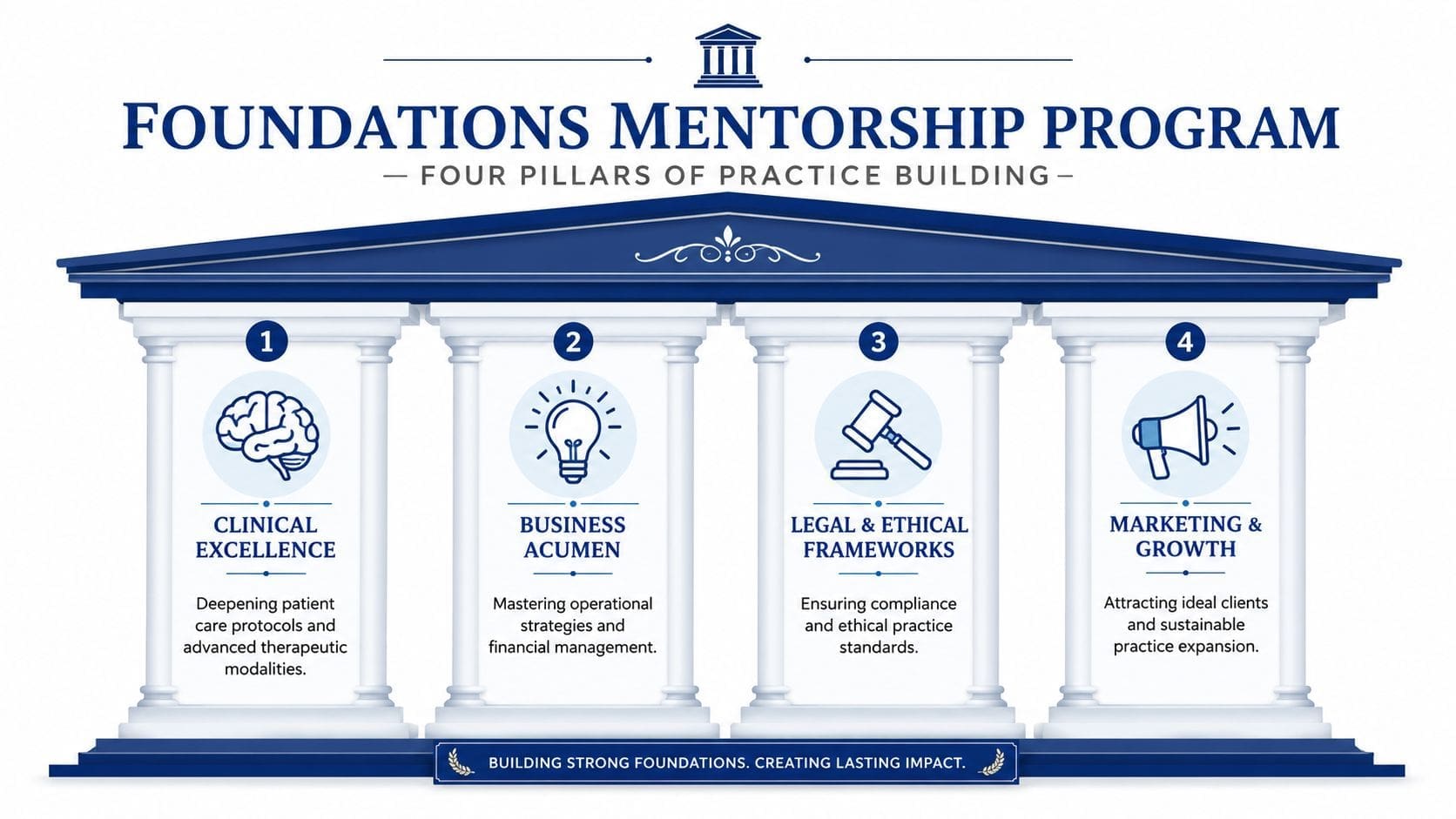
The Foundations Mentorship is organized around four working pillars. Each one solves a different problem that shows up early in ownership.
1:1 Mentorship gives direct access to an active PMHNP practice owner. That matters when the question is operational, not academic. Which policies need to exist before launch? How should intake be sequenced? What should be fixed before you spend money on outreach or ads? Those decisions affect patient experience, compliance, and cash flow.
Weekly Chart Review builds owner-level judgment. The goal is not just cleaner notes. It is better decision-making under real clinical pressure, stronger boundaries, and better pattern recognition across ADHD, anxiety, depression, trauma, and medication follow-up work.
Integrative Psychiatry adds clinical depth that many startup programs leave out. Patients notice when assessment goes beyond symptom checklists and routine prescribing. In practice, that can include medical screening, sleep assessment, nutrition review, supplement discussions when appropriate, and selective use of tools such as pharmacogenomic testing for mental health treatment decisions. The standard is individualized care with medical reasoning behind it.
Business + Revenue covers the mechanics that keep the practice open. Billing, credentialing, intake flow, service mix, referral development, and capacity planning belong in the same system. This is also where the mentorship draws a firm line. A good practice does not try to serve everyone. It chooses a few high-demand problems, builds referral trust around them, and sets boundaries that protect both care quality and the owner's time.
Integrative Psychiatry of America is the practice model behind that approach, offering virtual psychiatric evaluations, medication management, and evidence-informed treatment across Pennsylvania. The mentorship uses lessons from that real operating environment instead of generic startup advice.
Applying Advanced Integrative Psychiatry Principles
A new PMHNP practice doesn't stand out just because it offers telehealth. It stands out when patients and referral sources can see a more complete clinical process. That's especially true for adults seeking help with anxiety, depression, ADHD, PTSD, or OCD, where symptom clusters often overlap with sleep disruption, medical contributors, nutritional issues, and medication tolerability concerns.
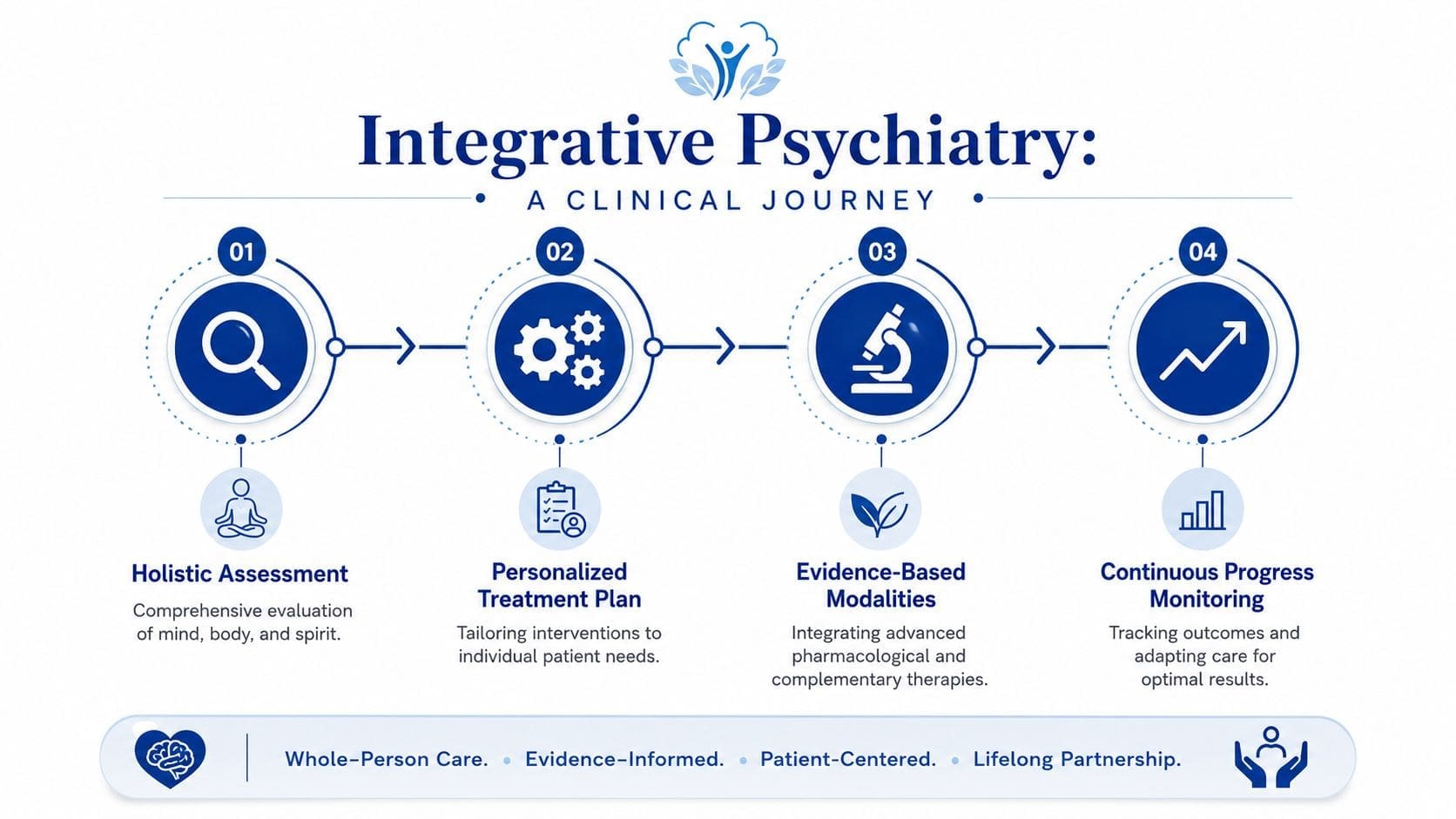
The clinical advantage of an integrative model is that it widens the assessment lens without abandoning evidence-based prescribing. The work stays medically grounded. It just becomes more individualized.
Clinical depth matters in a crowded market
Patients often come in saying medication “didn't work,” though the underlying reasons are more complex. The dose may have been poorly matched. Side effects may have gone unmanaged. Sleep, nutrition, exercise, hormonal factors, or untreated medical issues may have been ignored. An integrative framework gives the clinician more useful questions to ask.
That doesn't mean ordering everything for everyone. It means using judgment. Some patients need basic medication management and supportive psychotherapy. Others may benefit from lab review, medical screening, or more personalized decision support.
A practical framework often looks like this:
- Clarify the diagnosis carefully: Rule out overlap, trauma effects, sleep issues, and substance-related factors.
- Assess for contributing medical patterns: Fatigue, appetite change, inflammation concerns, or endocrine questions may matter.
- Match treatment to the whole presentation: Medication may be part of the plan, not the entire plan.
- Track outcomes deliberately: Follow symptom response, side effects, functioning, and adherence.
How integrative care becomes operational
There's strong reason to build this skill set. Practices that use an integrated data architecture incorporating genetic screening, lab monitoring, and lifestyle data achieve a 2.1x higher symptom reduction rate in anxiety and depression patients compared to medication-only models, based on information published by Integrative Psychiatry of America.
For PMHNPs, this becomes a practice differentiator in two ways:
- Clinical confidence: Treatment planning becomes less reactive.
- Referral credibility: Therapists and primary care clinicians are more likely to refer when they understand the practice goes beyond quick prescribing.
For clinicians who want a clearer patient-facing example of this approach, educational material on genetic testing for mental health helps show how personalized prescribing discussions can be introduced responsibly.
An integrative model works best when every added clinical tool answers a real treatment question. Extra testing without a decision pathway only adds noise.
Navigating Regulations and Building Your Revenue Engine
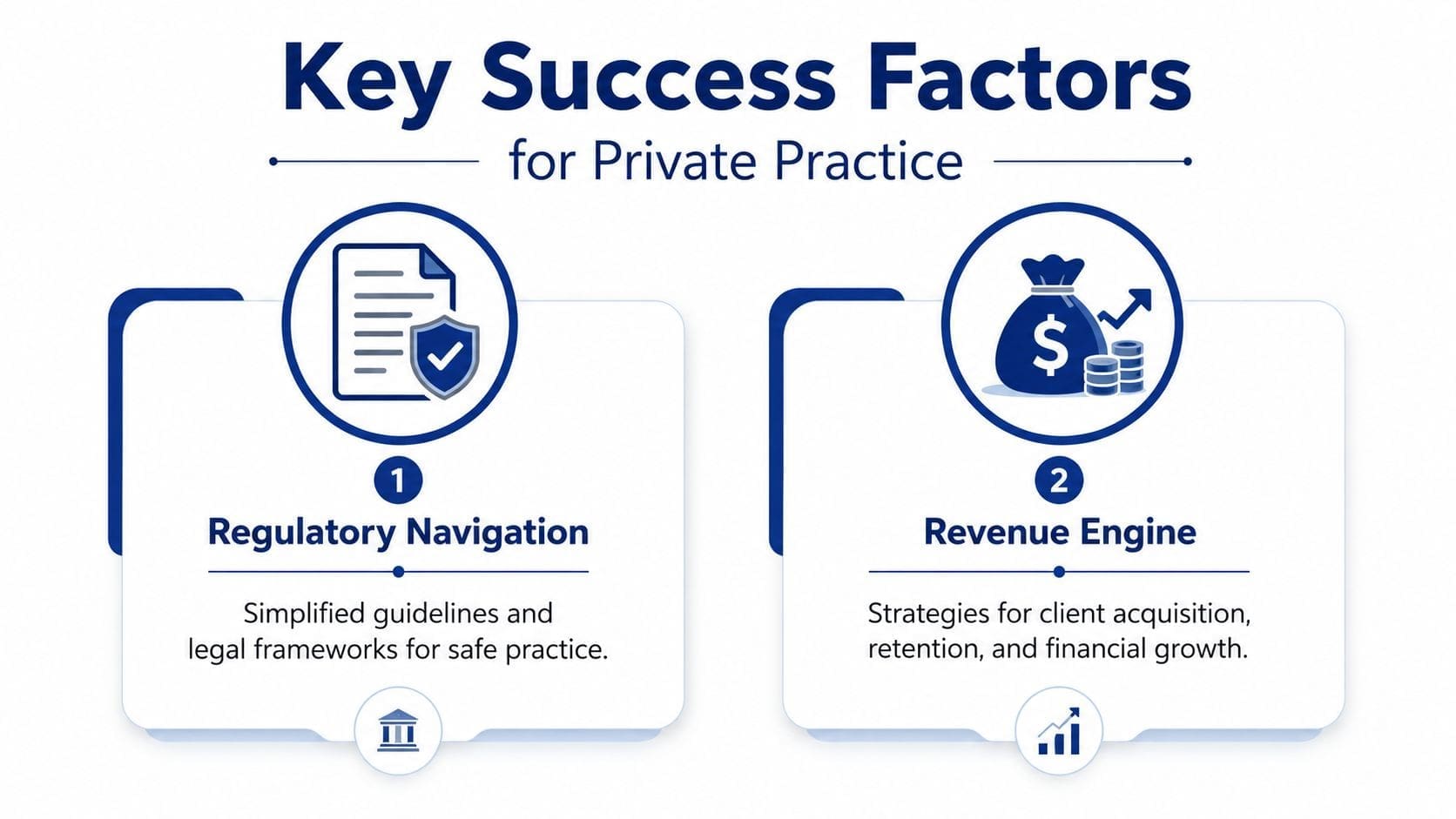
Many PMHNPs can provide excellent care and still struggle in private practice because they underestimate two pressure points. The first is regulation. The second is lead generation. If either one is weak, the practice feels unstable even when the clinical work is strong.
Here, broad startup advice usually falls apart. It treats all states the same and assumes marketing means posting on social media, buying ads, or writing a few blogs. That's not enough for a regulated clinical business.
State rules shape business reality
A PMHNP practice has to be built around the actual rules of the state where care is delivered. Supervision requirements, prescribing limitations, collaborative structures, documentation expectations, and telehealth compliance affect launch speed and administrative burden. They also influence whether the owner can keep workflows lean.
That's why state-specific mentorship matters. A Pennsylvania-focused approach is very different from generic national advice, especially when the goal is safe, scalable telepsychiatry for adults across cities and rural communities.
A few realities matter early:
- Licensure and scope issues: These shape service design before marketing begins.
- Telehealth compliance: Privacy, consent, and workflow choices must support HIPAA-safe care.
- Controlled substance policies: These affect evaluation structure, follow-up planning, and documentation discipline.
- Cross-state questions: These need careful handling if the clinician plans to grow beyond one state.
For teams reviewing secure virtual workflows, HIPAA compliance in telehealth is a practical place to start.
Referral streams beat random marketing
For adult ADHD and anxiety treatment, the highest-value referral sources are often already seeing these patients before a medication consultation is booked. Primary care offices and therapists are usually closer to the first point of contact than search ads are. That's why referral development deserves a real system.
The most underused tactic is often simple education. Emerging data shows that PMHNPs who implement structured “lunch and learn” sessions for primary care offices see a 40% increase in referral volume within 6 months, according to this article on growing an anxiety practice as a PMHNP.
That strategy works because it solves a real problem for referral partners. It helps them know:
- Which patients to refer: Adults with persistent anxiety, medication complexity, or likely ADHD.
- What the PMHNP evaluates: Diagnosis, medication options, safety concerns, and treatment planning.
- How the handoff works: Response times, visit format, follow-up expectations, and communication.
Field note: A referral partner doesn't need a sales pitch. They need confidence that the patient will be evaluated carefully and communicated back to appropriately.
Revenue also depends on collecting correctly for the care already delivered. Many practices lose time chasing avoidable claims issues or coding mistakes. When billing denials start pulling attention away from patient care, operational resources on Clarity's solutions for CPT denials can help practice owners understand where common revenue leakage happens.
Begin with Confidence Your 3-Month Foundations Mentorship
A lot of PMHNPs reach the same point. You know how to assess, diagnose, prescribe, and follow patients well, but the business side still feels fragmented. One week you are trying to choose an EMR. The next you are sorting out credentialing questions, referral outreach, and charting decisions that need to hold up clinically and operationally. That is the gap this mentorship is designed to close.
The PMHNP Practice Builders™ Foundations Mentorship is for clinicians who want a clear starting structure and direct access to someone actively running a PMHNP practice. It is a focused 3-month membership built from the systems behind the practice model referenced throughout this article, with attention to the decisions that matter early: state-specific setup, clinical workflows, referral development, and revenue basics.
What's included
| Included component | Details |
|---|---|
| Price | $250 / month |
| Program length | 3-month introductory membership |
| Total investment | $750 total program investment |
| 1:1 Mentorship | Personal guidance from an active PMHNP practice owner |
| Weekly Chart Review | One educational chart or case review each week |
| Integrative Psychiatry | Labs, medical screening, supplementation, and lifestyle care |
| Business + Revenue | Billing, operations, credentialing, and sustainable growth |
The value is not more information. It is getting the right sequence.
New practice owners do better when they can ask focused questions before they spend money, sign contracts, or create workflows they later have to rebuild. A short, structured mentorship period creates enough time to set priorities, test assumptions, and fix weak spots early without turning the process into endless consulting.
For clinicians who want to see how a patient-facing prescribing workflow can function in a virtual setting, this example of online medication management for psychiatric care gives useful context for how intake, follow-up, and ongoing medication visits can be organized.
Boundaries that protect the value of mentorship
Clear boundaries make mentorship more useful. They keep the support focused, protect clinical responsibility, and prevent the relationship from turning into unlimited on-call access.
The communication guidelines are simple:
- Response timing: Responses are generally provided within 2 business days.
- Support scope: Guidance is for non-urgent educational and business questions.
- No rollover: Unused calls, reviews, emails, or messages do not roll over.
- Session priority: More complex issues may be reserved for the scheduled mentorship session.
- Chart review boundary: Educational chart review does not transfer patient care responsibility.
That structure matters. If you are building a private practice, you do not need vague encouragement. You need practical feedback, honest trade-offs, and a place to bring questions about what to do first, what to postpone, and what should never be improvised.
The PMHNP Practice Builders™ Foundations Mentorship also includes a community component through the PMHNP Practice Builders™ Facebook group, where clinicians can stay connected to the broader conversation around practice building.
This mentorship fits PMHNPs who are ready to build with intention, use proven systems, and handle the constraints that come with practice ownership. That includes regulatory decisions, referral strategy, and the discipline to build a practice that works well before trying to make it bigger.