
Finding Clarity: Your Guide to Adult ADHD Care in Philadelphia
The search often starts late at night. A Philadelphia professional misses another deadline. A student rereads the same page without absorbing it. The browser tab says Best Psychiatrist Philadelphia ADHD, but the underlying question is more personal: what is going on, and how does someone find real help?
Philadelphia offers strong ADHD care, but the options can feel scattered. Some practices focus tightly on medication. Others lean into therapy, coaching, or broader integrative care. Some are easy to access by telehealth across Pennsylvania, while others work best for patients who want an academic medical center or an in-person office.
Adult ADHD also rarely shows up alone. Anxiety, depression, sleep disruption, and burnout often travel with it, which is why it helps to understand ADHD comorbidity and overlapping conditions before choosing care. The right fit usually depends on three things: treatment philosophy, scheduling reality, and cost.
This guide gets to the point. It highlights seven well-regarded ADHD care options serving the Philadelphia area, including statewide virtual practices, and explains the trade-offs that matter when someone is trying to book real treatment instead of collecting more tabs.
Table of Contents
- 1. Integrative Psychiatry of America
- 2. Penn Medicine Adult ADHD Treatment and Research Program
- 3. Rittenhouse Psychiatric Associates
- 4. Philadelphia Integrative Psychiatry
- 5. ADHD Philadelphia
- 6. Nuance Psychiatric Services
- 7. Thomas Scary, MD
- Top 7 Philadelphia ADHD Psychiatrists Comparison
- Take the Next Step Towards Managing Your ADHD
1. Integrative Psychiatry of America
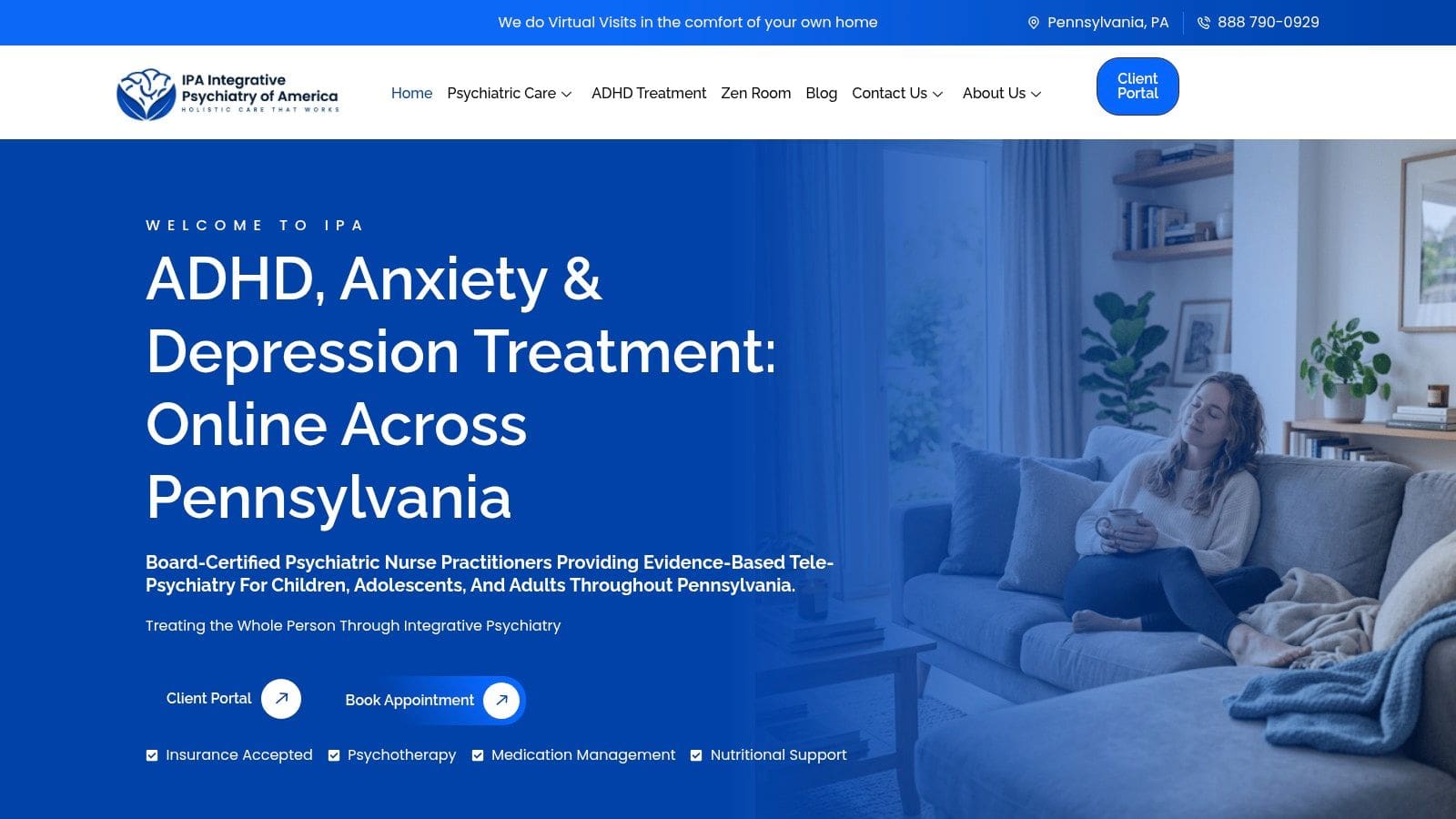
A common Philadelphia ADHD scenario looks like this: you finally decide to get help, then hit the same barriers over and over. Long waits. Office hours that conflict with work. An evaluation that feels rushed into a medication decision before anyone asks about sleep, anxiety, trauma, or burnout.
Integrative Psychiatry of America stands out because it addresses those access and treatment-fit problems directly. The practice serves patients across Pennsylvania through HIPAA-compliant telepsychiatry, which can make care easier to start and easier to continue if commuting, childcare, or a packed schedule have delayed treatment.
Why it stands out
Christopher Clark, MSN, PMHNP-BC leads the practice. His background includes emergency trauma and hospice leadership, which matters for patients whose ADHD picture is not straightforward. Adults seeking an ADHD psychiatrist in Philadelphia are often comparing more than credentials. They are trying to figure out whether a clinician will treat ADHD as an isolated diagnosis or assess the full clinical picture.
Here, the model combines medication management and psychotherapy with exercise counseling, nutrition education, mindfulness, and biological tools such as lab or genetic screening when clinically appropriate. That broader approach can be useful when ADHD symptoms overlap with anxiety, depression, emotional dysregulation, sleep problems, or substance use concerns.
Evidence summarized in adult ADHD therapy guidance for Philadelphia supports treatment plans that may include medication, CBT, mindfulness, ACT, exercise, nutrition, and sleep support.
Practical rule: If ADHD symptoms are tangled up with mood, sleep, or stress, treatment usually works better when follow-up goes beyond medication alone.
Patients who want to understand the prescribing process can review online ADHD medication management in Pennsylvania. The practice also treats anxiety, depression, OCD, PTSD, personality disorders, opioid dependence, and offers medically supervised weight management, TRT when clinically indicated, and Suboxone-based addiction care.
Best fit
This practice fits adults and families who want care from home and want a psychiatrist or psychiatric provider who can address more than ADHD alone. It is also a practical option for patients comparing telehealth availability, treatment philosophy, and insurance access rather than focusing only on office location.
The trade-off is clear. Virtual care is convenient, but it will not suit someone who strongly prefers in-person visits or feels more comfortable building rapport face to face. Insurance also needs direct verification, because coverage and out-of-pocket costs vary by plan.
Pros
- Broader treatment model: ADHD care can include medication, therapy, lifestyle support, mindfulness, and biological screening when appropriate.
- Telehealth across Pennsylvania: Patients in Philadelphia and other parts of the state can attend visits from home or work.
- Useful for overlap cases: The practice treats ADHD within a wider psychiatric setting, which helps when symptoms intersect with anxiety, depression, OCD, PTSD, or substance use.
- Practical follow-up tools: The patient portal supports messaging, appointment requests, and refill coordination.
Cons
- Virtual only: Patients who want an office-based psychiatrist should compare other Philadelphia options.
- Costs still require checking: Insurance acceptance helps, but benefits and patient responsibility depend on the specific plan.
2. Penn Medicine Adult ADHD Treatment and Research Program
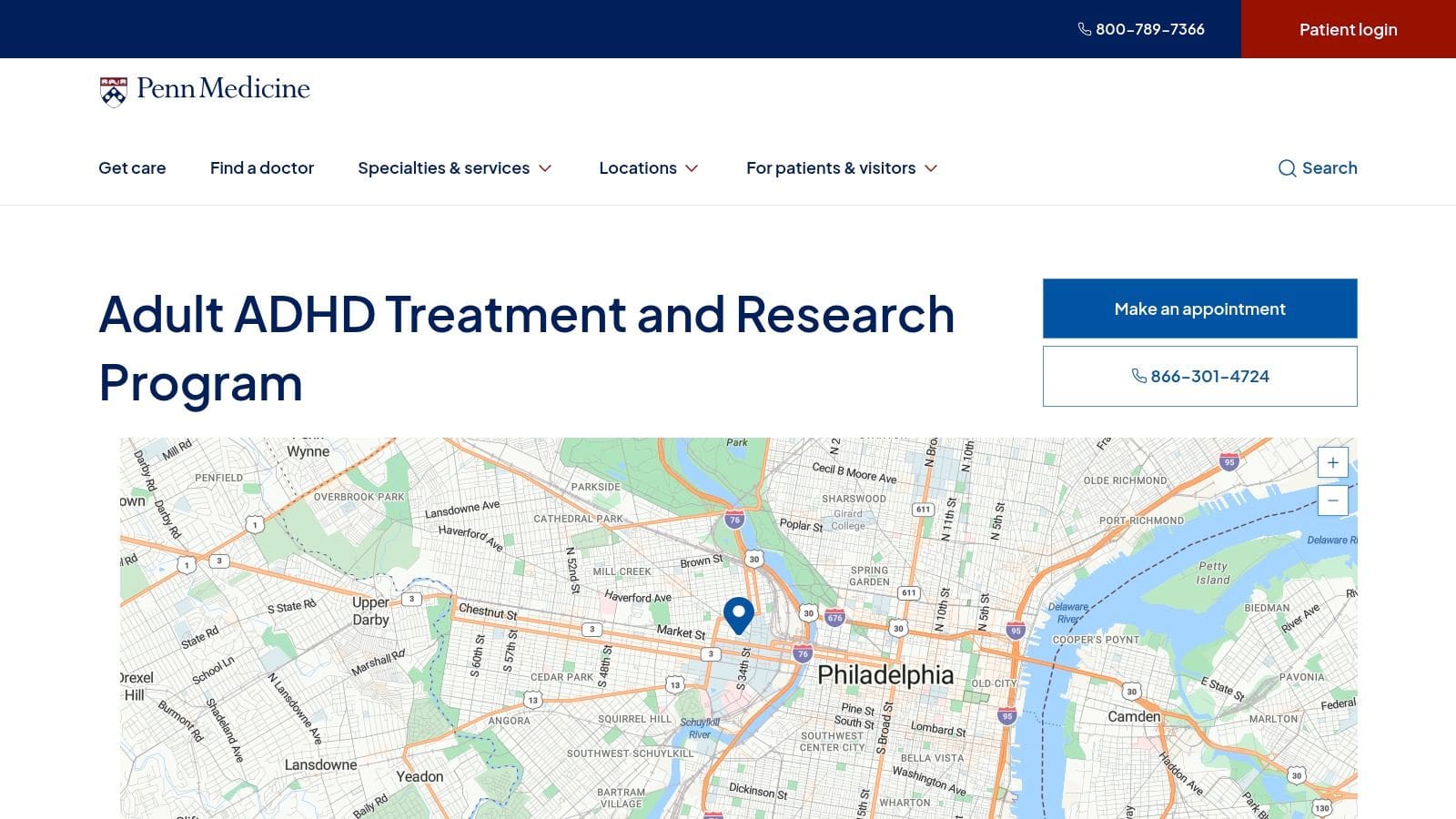
Some adults want an academic medical center first and everything else second. Penn Medicine's Adult ADHD Treatment and Research Program is a strong option for that group, especially for patients who value a research-oriented setting and access to a large behavioral health network.
Its University City location at 3535 Market Street is central for many Philadelphia residents. The major appeal isn't speed or boutique flexibility. It's the structure and depth that come with a large integrated health system.
What patients are really choosing here
Patients choosing Penn are often prioritizing diagnostic rigor, institutional support, and the option for broader referrals within Penn Behavioral Health. That's especially useful when ADHD isn't the only issue on the table and care may eventually involve other specialties.
The trade-off is practical. Large systems often mean more steps, more coordination, and less flexibility around scheduling. Adults with demanding jobs or parenting responsibilities may find weekday clinic hours harder to work with than virtual-first practices.
Academic programs can be excellent for complex presentations, but they aren't always the easiest path for someone who needs fast, low-friction access.
This option makes sense for adults who want care inside a major hospital system and don't mind a more traditional intake process. It's also a reasonable fit for patients who feel more comfortable with a formal medical-center environment than with a smaller private clinic.
Pros
- Academic focus: Adult ADHD is addressed within a research-informed clinical program.
- Integrated system access: Patients may benefit from Penn's larger referral and support network.
- Established location: University City is convenient for many people working or studying in Philadelphia.
Cons
- Less scheduling flexibility: Daytime clinic structure may not fit everyone.
- System complexity: Intake and coordination can take more effort than smaller practices.
Website: Penn Medicine Adult ADHD Treatment and Research Program
3. Rittenhouse Psychiatric Associates
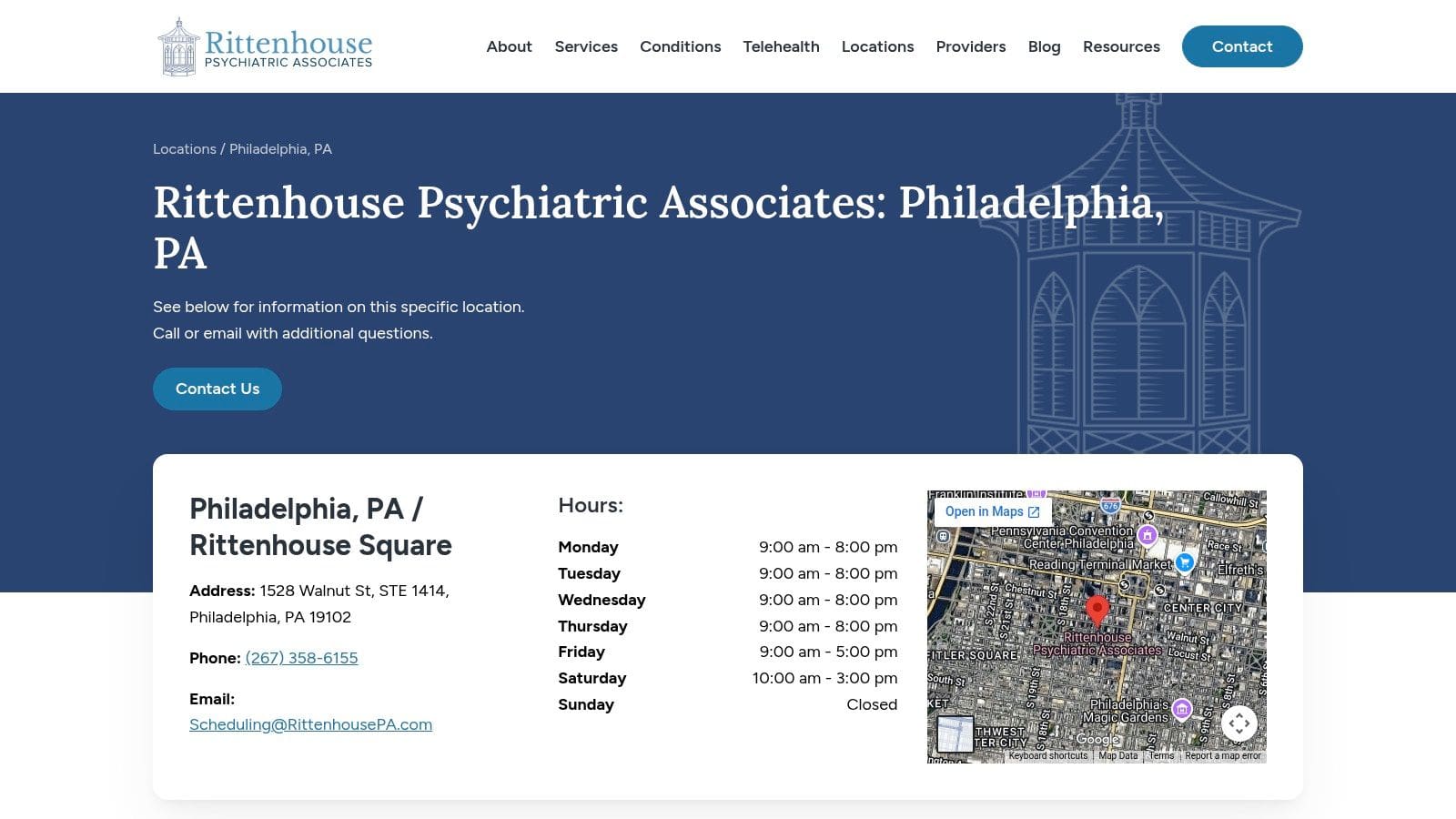
Rittenhouse Psychiatric Associates works well for adults who want a private-practice experience with both in-person and telehealth options. The practice is particularly visible among college students, graduate students, and working adults who need evaluation, medication management, or documentation for accommodations.
A notable strength is range. Some patients want ongoing treatment. Others need a focused evaluation for school or workplace documentation. This practice is built to handle both.
Where this option works well
The large clinician team gives this practice a different feel from a solo office or hospital clinic. Patients who want faster scheduling often prefer this model, especially when they don't want to wait through a large-system intake process.
The financial trade-off matters. This practice primarily operates out-of-network as fee-for-service, so patients typically submit superbills for possible reimbursement. For some adults, that isn't a problem. For others, it becomes the deciding factor.
Adults comparing provider types sometimes also wonder whether they specifically need an MD or whether a psychiatric nurse practitioner is appropriate. This breakdown of psychiatric NP vs psychiatrist roles in ADHD care can help clarify that decision.
Pros
- Flexible format: In-person Center City visits and telehealth both appear to be available.
- Strong team model: A larger clinician group can improve scheduling options.
- Useful for documentation needs: Single-visit evaluations may appeal to adults seeking school or work accommodations.
Cons
- Out-of-network costs: Reimbursement may require extra paperwork and isn't guaranteed.
- Less price transparency: Patients need to ask directly about fees.
Website: Rittenhouse Psychiatric Associates Philadelphia
4. Philadelphia Integrative Psychiatry
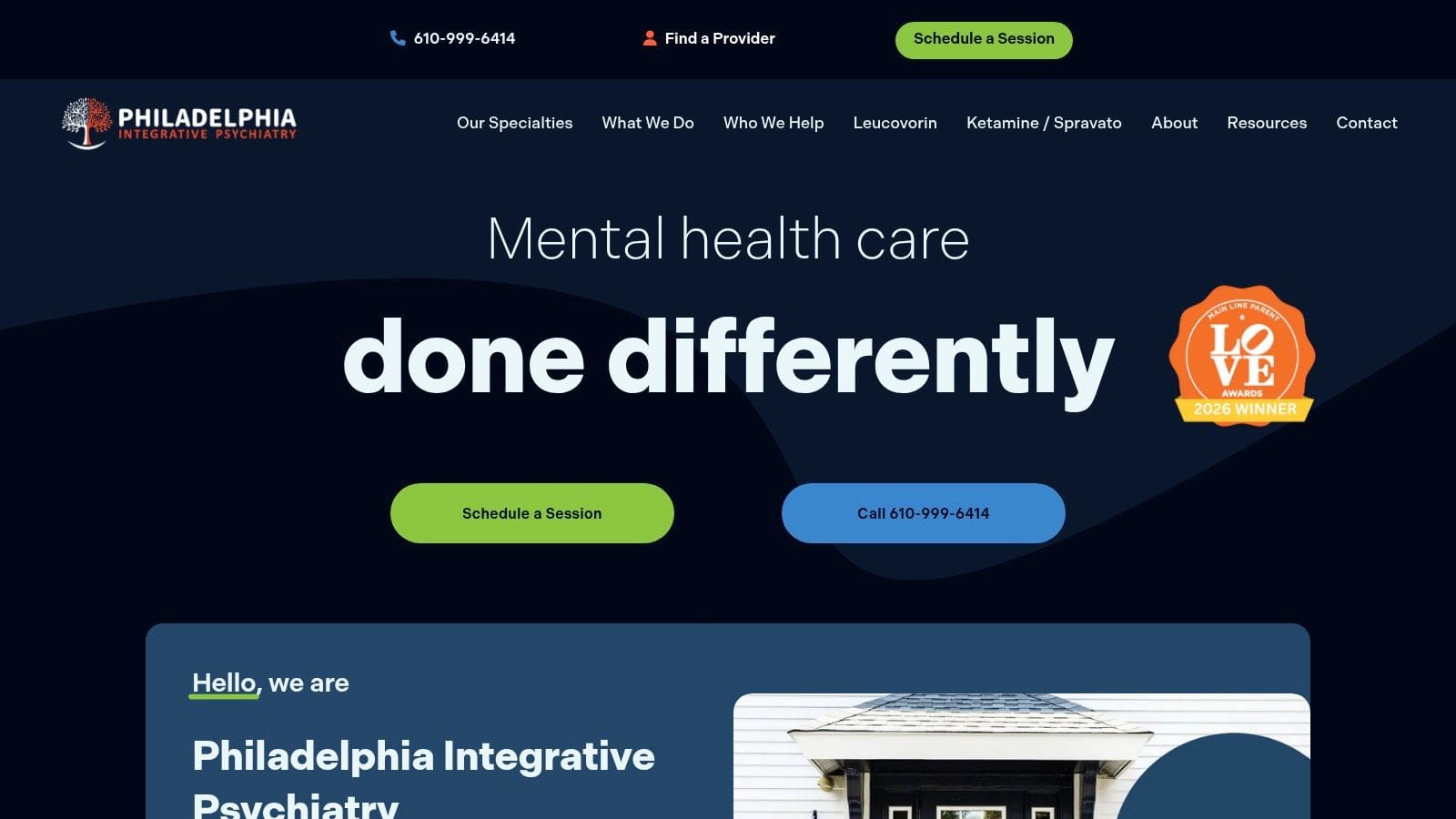
Philadelphia Integrative Psychiatry is one of the more appealing choices for adults who want ADHD care inside a broader wellness-oriented treatment model. The practice combines psychiatry with therapy, TMS, Spravato, and executive function or ADHD coaching.
That mix can be useful when attention problems are tangled up with mood symptoms, anxiety, or treatment-resistant depression. It also gives patients more than one treatment lane inside the same practice.
The main advantage
The biggest practical advantage here is transparency around payment options and service structure. Many clinics ask patients to call for every detail. This practice gives more guidance upfront, which can lower friction for people already overwhelmed by decision fatigue.
Its Devon location won't be ideal for every Philadelphia resident, though telehealth may reduce that issue for some. Insurance participation also varies by provider and service, so verification still matters before booking.
Adults with ADHD and chronic worry often need care that addresses both conditions together rather than treating one and hoping the other settles down. This overview of ADHD and anxiety in adults is a useful companion when comparing integrative practices.
The best ADHD provider isn't always the one with the longest service menu. It's the one whose service menu matches the patient's actual problems.
Pros
- Integrative scope: Medication, therapy, coaching, and somatic treatment options sit under one roof.
- Helpful price guidance: More transparent than many private practices.
- Insurance opportunities: Some major plans are accepted for eligible services.
Cons
- Location: Devon may be less convenient for patients who want routine in-person care inside Philadelphia.
- Variable coverage: Insurance fit depends on the specific service and clinician.
Website: Philadelphia Integrative Psychiatry
5. ADHD Philadelphia
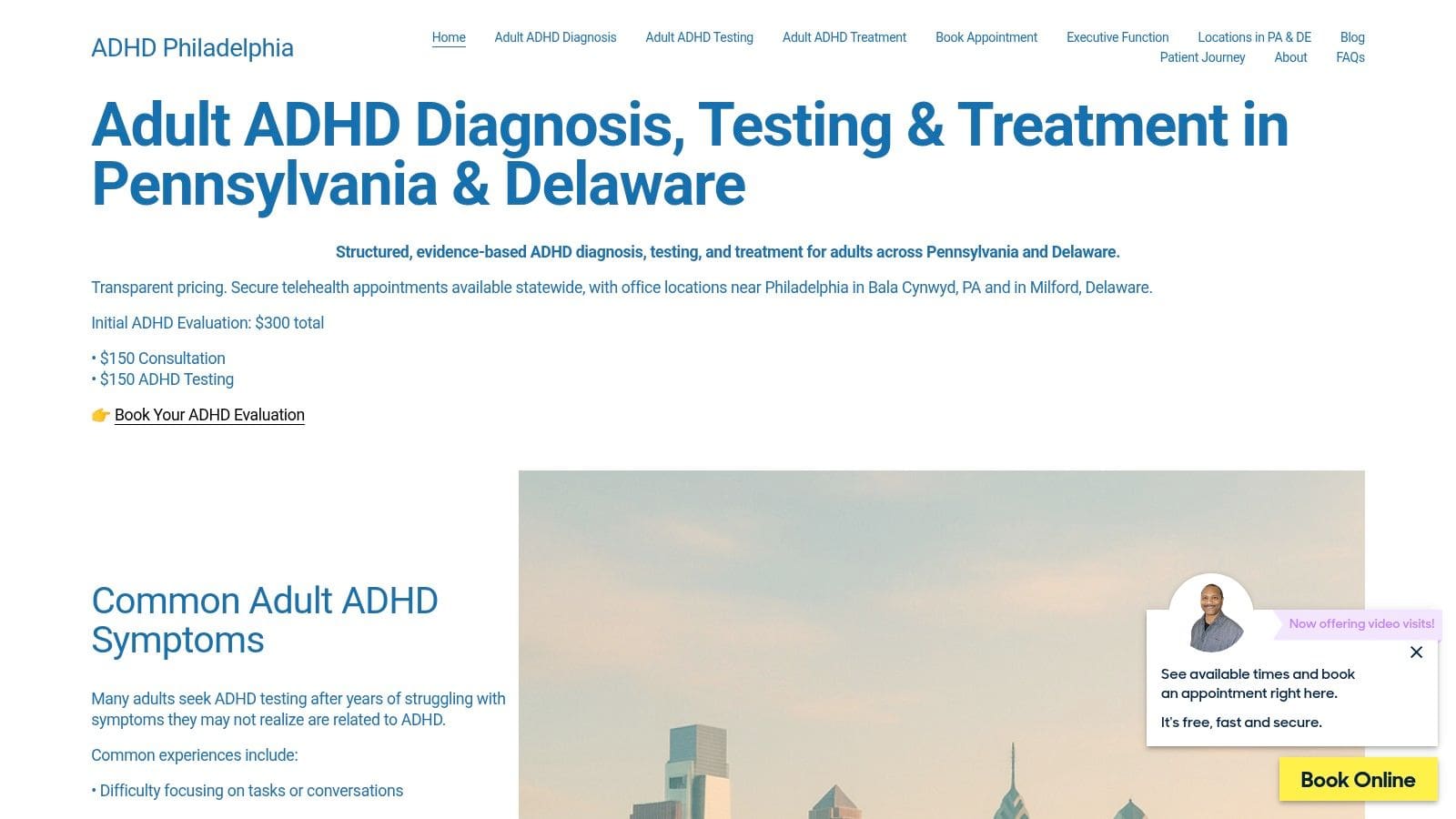
ADHD Philadelphia takes a narrow, telehealth-first approach, and that focus is exactly why some adults choose it. This is not a general psychiatry practice trying to fit ADHD into a wider menu. It's built around adult ADHD specifically.
The process is structured. Patients move through consultation and computerized testing, then into treatment planning and medication follow-up. For adults who want a standardized workflow and clear pricing, that's attractive.
Who usually benefits most
This option tends to work best for adults who already suspect ADHD, want a defined evaluation process, and value transparent flat-fee pricing. It may also appeal to people who don't want to go through hospital systems or broad general psychiatry practices.
The trade-off is scope. Adults with more complex comorbid symptoms may eventually need outside therapy or additional psychiatric support. A narrow ADHD clinic can be efficient, but efficiency isn't the same thing as complete care.
Adults preparing for assessment should know that a real ADHD evaluation looks at functional impairment, not just distractibility. Missed deadlines, unfinished chores, careless mistakes, lateness, impulsive spending, and poor task initiation matter, along with childhood clues such as report card comments or teacher concerns, as explained in this guide on how to get an ADHD diagnosis as an adult.
Pros
- Tight ADHD focus: Adult ADHD is the clear center of care.
- Transparent pricing: A major advantage for self-pay patients.
- Telehealth convenience: Good fit for adults anywhere in Pennsylvania who prefer remote access.
Cons
- Limited breadth: More complex anxiety, depression, trauma, or substance issues may require referral elsewhere.
- Insurance questions: Patients should confirm reimbursement policies directly.
Website: ADHD Philadelphia
6. Nuance Psychiatric Services
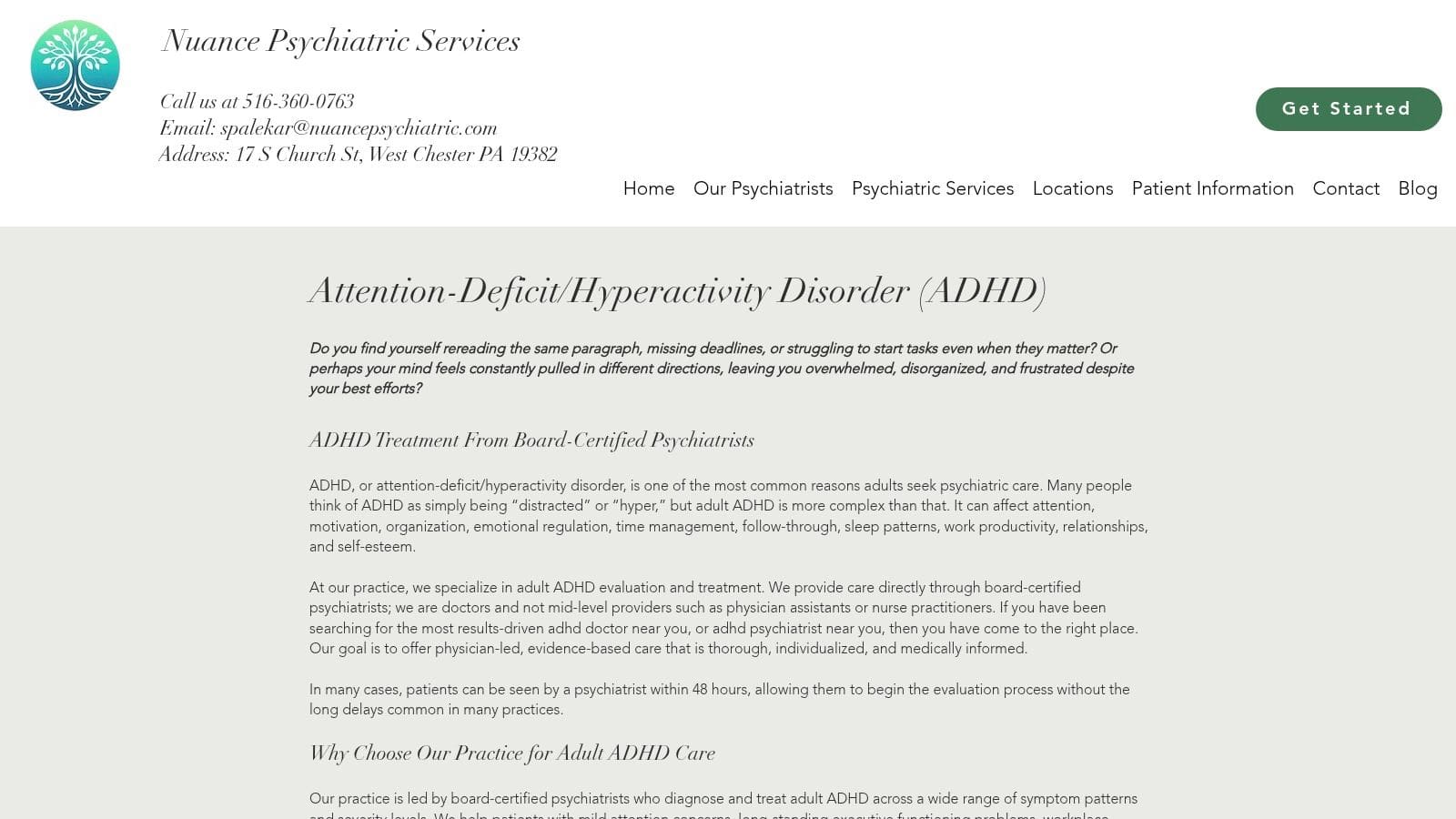
Nuance Psychiatric Services will appeal to adults who specifically want physician-led ADHD care and don't want to guess who they'll see. The practice emphasizes evaluations and treatment by board-certified psychiatrists, with locations in Philadelphia and West Chester plus telehealth availability.
For some patients, that MD-only model creates peace of mind. It doesn't automatically mean better fit, but it does narrow the type of provider relationship from the start.
What to watch for
This practice appears to emphasize careful differential diagnosis, which matters in adult ADHD because symptoms can overlap with anxiety, depression, trauma, sleep problems, and ordinary overload. That's a good sign. Adults who have wondered whether they are dealing with true ADHD or just chronic stress should value a clinic that takes that distinction seriously.
Telehealth also makes this model more practical than a location-only office. Research summarized in telepsychiatry and virtual mental health care reporting describes telepsychiatry outcomes for ADHD and other psychiatric conditions as statistically equivalent to in-person care, with satisfaction matching traditional care models.
Pros
- Psychiatrist-led care: A strong draw for patients who prefer MD management.
- Multiple access points: Fishtown, West Chester, and telehealth create useful flexibility.
- Diagnostic caution: Differential diagnosis appears to be a core part of the practice style.
Cons
- Pricing and insurance require inquiry: Less upfront transparency than some competitors.
- Smaller footprint: A newer or smaller practice may have narrower operational capacity than a major health system.
Website: Nuance Psychiatric Services ADHD care
7. Thomas Scary, MD
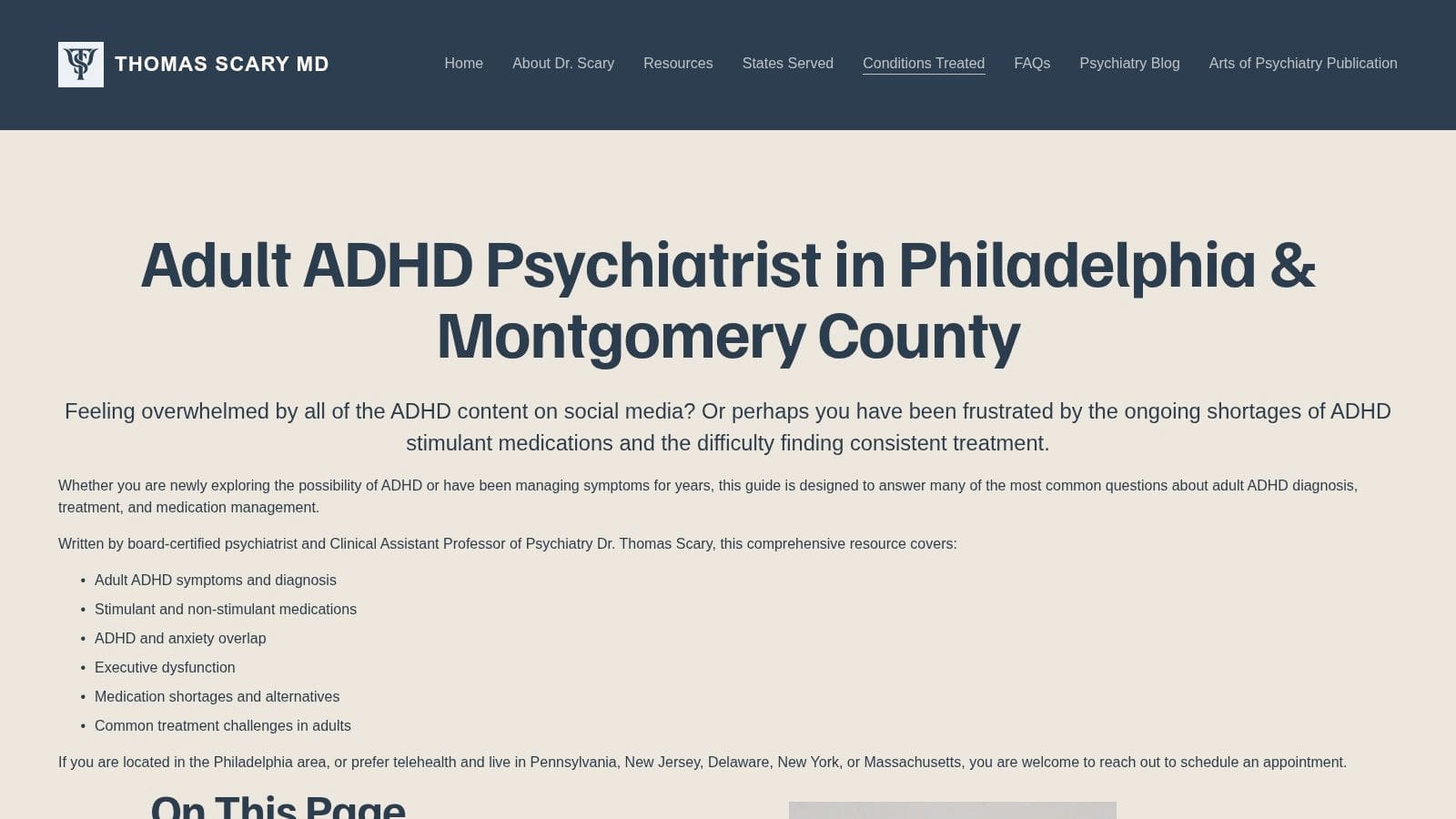
Thomas Scary, MD is a strong option for adults who want a more direct relationship with a single physician and place high value on patient education. The practice offers adult ADHD evaluations, stimulant and non-stimulant treatment, and longitudinal follow-up, along with a substantial public education presence.
That educational style matters more than it may seem. Adults with ADHD often do better when they understand not just what medication was chosen, but why.
Why some adults prefer this model
A smaller practice can feel more personal and more consistent. Patients aren't being passed through a large team or a hospital intake system. They are choosing one clinician's judgment and style.
That said, the small-practice model can also mean less flexibility around access, scheduling, or insurance arrangements. Patients usually need to contact the office directly to understand fees and participation.
Virtual care broadens access here. NIH-cited reporting summarized in online psychiatry care for ADHD in Pennsylvania notes that telepsychiatry achieves similar symptom improvement and medication adherence to in-person care for ADHD, and also points to growing use of validated digital tools for attention, impulsivity, and executive functioning in online clinics.
A solo or small practice can be the best fit when the patient wants continuity, a clear clinical voice, and less institutional complexity.
Pros
- Education-forward care: Helpful for adults who want to understand treatment decisions in depth.
- Academic affiliation: Reassuring for patients who value an evidence-focused style.
- Interstate telehealth: Useful for adults who split time across state lines.
Cons
- Direct inquiry needed: Insurance and cost details aren't obvious upfront.
- Availability may vary: Smaller practices can have less scheduling elasticity.
Website: Thomas Scary MD ADHD care
Top 7 Philadelphia ADHD Psychiatrists Comparison
| Service | Implementation complexity 🔄 | Resource / Access ⚡ | Expected outcomes ⭐📊 | Ideal use cases 💡 | Key advantages |
|---|---|---|---|---|---|
| Integrative Psychiatry of America | Moderate 🔄, multimodal, telehealth-only workflows | Moderate ⚡, telehealth platform, labs/genetic testing, insurance/membership options | ⭐⭐⭐, personalized symptom reduction + lifestyle gains; measurable improvements | Adults/families in PA wanting integrative, remote care | Comprehensive integrative care; PMHNP-led (23+ yrs); flexible scheduling; broad insurance participation |
| Penn Medicine – Adult ADHD Treatment and Research Program | High 🔄, academic protocols, multi-step intake | High ⚡, hospital systems, specialty referrals, in-person clinic hours | ⭐⭐⭐, research-informed evaluations and specialty follow-up | Adults needing academic/research-driven or complex ADHD care | Academic expertise; integrated Penn Behavioral Health resources; research-informed care |
| Rittenhouse Psychiatric Associates | Moderate 🔄, multi-clinician private-practice processes | Moderate ⚡, in-person + telehealth; often faster new‑patient availability; mostly out-of-network | ⭐⭐, efficient evaluations and documentation for accommodations | College students, graduates, working adults needing quick access or documentation | Large clinician team with academic ties; quicker scheduling; single-visit documentation |
| Philadelphia Integrative Psychiatry | Moderate–High 🔄, team-based, multimodal (TMS/Spravato) care paths | High ⚡, clinic (Devon) or telehealth; published fees; insurer-dependent coverage | ⭐⭐⭐, broad impact for treatment-resistant or multifaceted cases | Patients seeking TMS/Spravato or integrated behavioral + medical approaches | Transparent pricing; in-network options for select services; multimodal treatments |
| ADHD Philadelphia | Low–Moderate 🔄, standardized two-step workflow (consult + testing) | Low ⚡, telehealth-first, computerized testing, transparent flat fees | ⭐⭐, standardized diagnosis and stable med management outcomes | Adults who want clear, fast ADHD evaluation/testing and flat-fee pricing | Transparent pricing; standardized testing; rapid statewide telehealth access |
| Nuance Psychiatric Services | Moderate 🔄, MD-only evaluation model with careful differential diagnosis | Moderate ⚡, multiple locations + telehealth; typically fast availability | ⭐⭐⭐, psychiatrist-level assessment with careful differential workup | Patients preferring board-certified psychiatrists and rapid appointments | MD-only care; emphasis on differential diagnosis; flexible access (locations + telehealth) |
| Thomas Scary, MD | Moderate 🔄, solo/small-practice with academic involvement | Moderate ⚡, interstate telehealth, local offices, public education materials | ⭐⭐⭐, evidence-based longitudinal care and strong patient education | Adults valuing academic-affiliated psychiatrist care and interstate access | Academic appointment; extensive patient education; interstate telehealth availability |
Take the Next Step Towards Managing Your ADHD
You finally decide to get help. Then the key questions start. Do you need a full diagnostic evaluation, medication management, therapy, coaching, or a clinician who can sort out ADHD from anxiety, trauma, poor sleep, or depression?
That choice matters because ADHD care is not one-size-fits-all. A strong adult evaluation looks at childhood and adult history, current functioning, impairment at work and home, and whether another condition better explains the symptoms. A rushed checklist can miss the actual problem, which is one reason patients end up feeling unheard or started on a plan that does not fit.
Cost shapes the decision, too. In Pennsylvania, private ADHD diagnostic evaluations typically range from about $400 to $2,800, with many listed between $800 and $1,800, while some university training clinics such as Drexel and Temple may offer lower-cost evaluations in the $150 to $500 range (ADHD Costs Pennsylvania listings). Medicaid through HealthChoices may also be a lower-cost path for some residents. Before booking, confirm whether the practice accepts your insurance, whether testing is billed separately, and whether follow-up medication visits are included or charged on their own.
The right treatment plan should match the impairment, not just the label. Some adults mainly need medication management with careful follow-up. Others need therapy for anxiety, executive function support, sleep treatment, or a clinician who can address several conditions at the same time. In practice, the best fit often comes down to treatment philosophy, visit format, and whether the psychiatrist is set up for ongoing care instead of a one-time assessment.
Access also changes what is realistic. Telepsychiatry can make consistent treatment easier for patients who cannot lose half a day to traffic, parking, and waiting rooms. That is true in Philadelphia and often even more important in smaller Pennsylvania communities where adult ADHD specialists are harder to find.
Integrative Psychiatry of America is one option for patients who want virtual psychiatric care across Pennsylvania, including ADHD evaluation, medication management, and broader mental health treatment. As noted earlier, the practice also offers structured tools that some patients use between visits as part of their care plan.
If this search has felt bigger than it should, start with three questions. Do you need diagnosis, treatment, or both? Do you want telehealth or in-person care? Will this practice work with your insurance and your schedule? Clear answers usually make the next appointment easier to choose.