
It's often late when this search starts. A person in Philadelphia, Pittsburgh, Harrisburg, Erie, Scranton, Allentown, Lancaster, Reading, or a small Pennsylvania town sits with a phone open, types “Suboxone doctors near me,” and tries to sort urgent medical decisions from ads, directories, and confusing insurance pages.
That moment carries a lot. Some people are trying to stop withdrawal before work the next morning. Some are helping a partner, an adult child, or a friend who finally said yes to treatment. Some are scared of being judged. Others are worried they waited too long. In Pennsylvania, that fear isn't abstract. As of 2021, an average of 14 people in Pennsylvania fatally overdosed from opioid usage every single day, which is one reason access to timely treatment matters so much (statewide overdose context and treatment need).
The most helpful way to approach this search is to stop thinking only about finding a prescriber. The better goal is finding a treatment partner. Medication matters, but so do trust, follow-up, mental health support, and a plan that still works when life gets messy.
Suboxone treatment can be that path. It's evidence-based, widely used, and increasingly available through confidential telehealth across Pennsylvania. For many adults, virtual care removes two of the biggest barriers at once: delay and stigma. Anyone trying to understand the broader scope of the crisis can review these opioid epidemic statistical trends over the past decade, but the practical takeaway is simpler. Real treatment is available, and it can start with one clear next step.
Table of Contents
- Your Search for Suboxone Treatment in Pennsylvania
- Understanding Your Treatment Options
- How to Find and Verify a Suboxone Provider
- Navigating Insurance and Payment in Pennsylvania
- Preparing for Your First Telehealth Appointment
- Sustaining Recovery with Long-Term Treatment
Your Search for Suboxone Treatment in Pennsylvania
Searching for Suboxone doctors in Pennsylvania rarely feels calm or organized. It usually happens when someone is already under pressure. Withdrawal may be starting. Cravings may be back. A family member may be saying treatment has to happen now, not next month.
That urgency can push people toward the first available option. Sometimes that works. Often, it leads to frustration. A clinic may answer the phone but give little detail about timing, follow-up, or how medication starts. Another may offer appointments but no real support for anxiety, depression, trauma, or sleep problems that often travel alongside opioid use.
The search is about safety and fit
A better frame is to look for care that is both accessible and stable. That means asking whether the provider offers prompt evaluation, clear instructions, reliable follow-up, and a treatment model that doesn't disappear after the first prescription.
Practical rule: The right provider should be able to explain the first week of care in plain language before treatment begins.
This matters in every part of the state. A person in Philadelphia might have more local listings but still struggle to find clear answers. A person in rural Pennsylvania may have fewer nearby offices and depend more on telehealth. In both settings, the problem isn't only finding a name on a directory. It's finding someone who can help with the full recovery process.
Treatment should feel possible
Suboxone is often part of a larger recovery plan, not a shortcut and not a sign of failure. For many adults, it reduces the chaos enough for therapy, routines, work, parenting, and medical care to become manageable again. Telehealth has made that process more realistic for people who can't easily take time off, travel long distances, or sit in a waiting room where privacy feels limited.
A strong treatment partner will usually help with several things at once:
- Medication planning that addresses cravings and withdrawal safely
- Mental health review for symptoms like panic, low mood, PTSD, or insomnia
- Practical follow-up so patients know what happens after the first appointment
- Pharmacy coordination when medication access becomes the next obstacle
That's the difference between getting a prescription and getting treatment.
Understanding Your Treatment Options
Suboxone is one of the main medications used for opioid use disorder, and it helps to understand what it is before comparing providers.

What Suboxone is and how it works
Suboxone is an FDA-approved medication-accompanied treatment for opioid use disorder that combines buprenorphine and naloxone (overview of Suboxone and its ingredients). Buprenorphine is a partial opioid agonist. Naloxone is an opioid antagonist. In practice, clinicians use this medication to help reduce withdrawal symptoms and cravings so patients can engage in treatment more consistently.
The word “medication” can make treatment sound narrow. It isn't. Good care usually includes discussion of sleep, anxiety, depression, trauma history, daily routine, and what tends to trigger return to use. That's one reason many patients do better when they choose a provider who can offer ongoing online medication management rather than one-time prescribing.
Suboxone works best when it's part of a structure. Medication lowers the noise. Recovery work becomes easier to hear.
Why treatment is more available in Pennsylvania
Pennsylvania has expanded access to this kind of care. In 2022, Pennsylvania distributed 9.2 buprenorphine prescriptions per 100 residents, reflecting broader medication-assisted treatment access across the state (Pennsylvania buprenorphine treatment access). That matters because it shows Suboxone treatment is not fringe care. It is established medical treatment used across communities in Pennsylvania.
Patients may hear the phrase MAT, or Medication for Addiction Treatment. In Pennsylvania, MAT has become more integrated into ordinary medical care, including hub-and-spoke efforts that connect specialized support with community-based treatment. That shift helps people in larger cities and smaller communities alike.
A few practical points can make treatment options easier to compare:
- In-person care may appeal to patients who want face-to-face visits or need local wraparound services.
- Telehealth care often works well for adults who need privacy, transportation flexibility, or statewide access.
- Integrated care is usually stronger than medication-only care, especially when anxiety, depression, OCD, PTSD, or sleep problems are part of the picture.
For many Pennsylvanians, the question isn't whether Suboxone is legitimate. It's which setting makes it easiest to stay engaged long enough for treatment to work.
How to Find and Verify a Suboxone Provider
The best search process is simple, but it should be deliberate. When people look for Suboxone doctors in Pennsylvania, they often compare availability first and quality second. That order should be reversed as much as possible.
What to check before booking
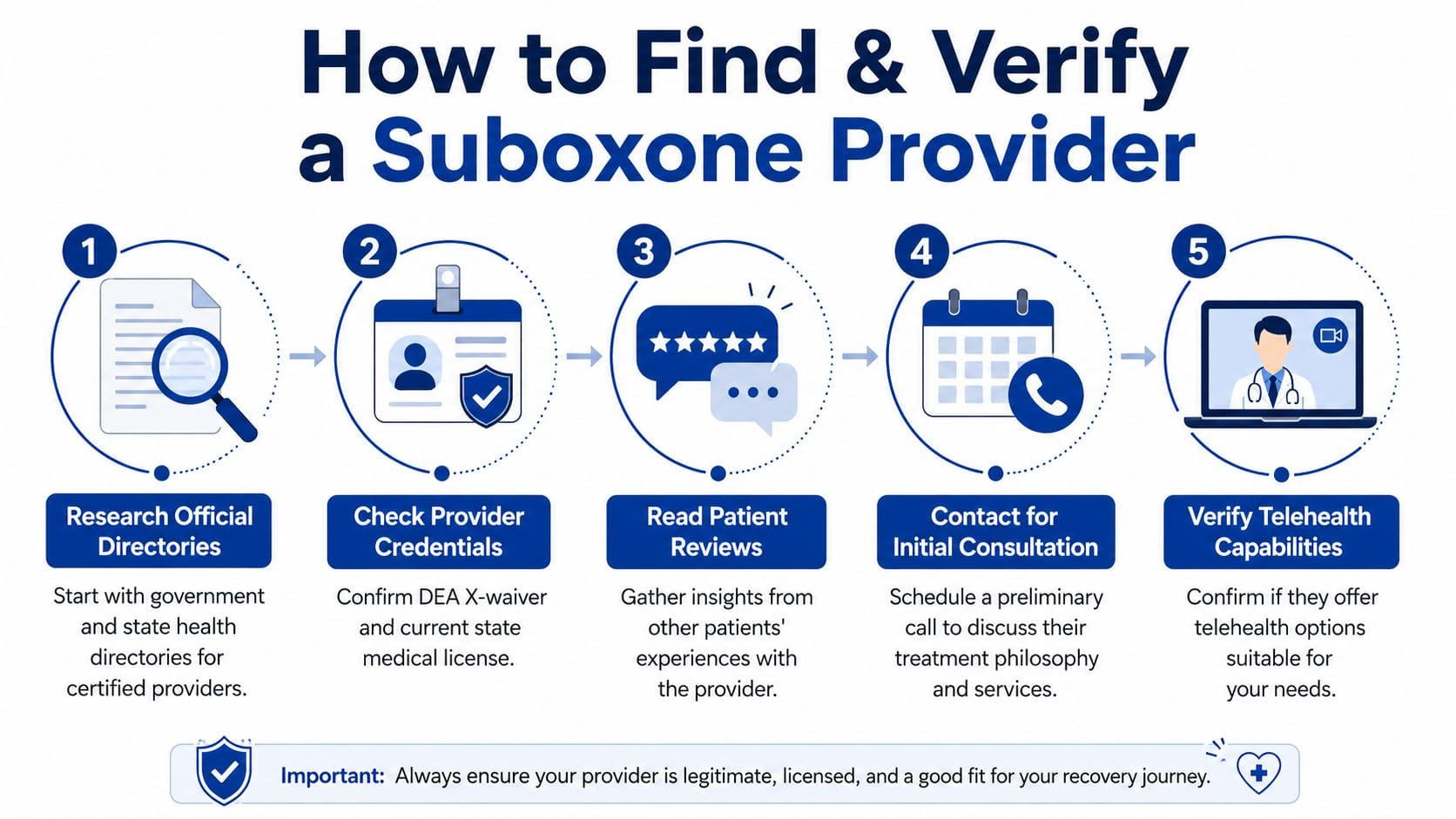
Start with official listings and established treatment practices, then verify the person who will be treating the patient. For addiction care, credentials and scope matter. A physician, nurse practitioner, or physician assistant may all be involved in care, but patients should still confirm that the clinician is licensed in Pennsylvania and actively treating opioid use disorder.
If a credential includes PMHNP-BC, that means the clinician is a board-certified psychiatric mental health nurse practitioner. That can be especially relevant when opioid use is mixed with panic attacks, depression, ADHD symptoms, trauma, or other psychiatric concerns. Patients who want broad psychiatric support can also review what an online addiction treatment provider typically offers in a virtual setting.
A practical verification flow often looks like this:
Search credible directories first
Government resources, health system listings, and established practice websites are usually safer starting points than anonymous directory pages.Confirm Pennsylvania licensure
The provider should clearly state they treat Pennsylvania residents.Review actual services
Look for mention of evaluation, medication follow-up, therapy coordination, and pharmacy support.Check whether co-occurring mental health is addressed
Many programs differ in this regard.
After those basics, patients need a feel for how the practice operates day to day.
A short explainer can help patients think through the process before they book.
Questions that reveal fit
The fastest way to spot a weak program is to ask detailed questions. If the answers stay vague, that tells the patient something important.
“Can you tell me what happens after the first appointment?” is often more revealing than “Do you treat opioid use disorder?”
Useful questions include:
- About induction: Ask how the provider decides when Suboxone should be started and what instructions are given before the first dose.
- About follow-up: Ask how often visits happen early in treatment and what support exists if symptoms change quickly.
- About psychiatric care: If anxiety, depression, OCD, PTSD, or insomnia are present, ask whether those issues can be evaluated in the same practice.
- About pharmacy issues: Ask what happens if the first pharmacy doesn't have medication in stock.
Patients should also pay attention to communication style. A good provider doesn't just approve or deny care. The provider explains risks, sets expectations, and treats the patient like someone building recovery, not someone being screened out.
Navigating Insurance and Payment in Pennsylvania
Insurance can slow treatment before it starts. Patients may find a clinician they trust, then discover the harder question is whether the visit, the medication, or both will be affordable.
Where payment confusion usually starts
In Pennsylvania, approximately 120,000 Pennsylvanians with opioid use disorder were covered under Medicaid in 2016, which shows how many people need treatment options that work with public insurance (Pennsylvania Medicaid treatment context). For many adults, Medicaid coverage is the difference between entering treatment now and delaying care.
The confusion usually isn't whether Suboxone itself is recognized as treatment. It's the details. Patients often need to know whether the specific provider is in network, whether telehealth visits are covered under their plan, which pharmacy benefits apply, and whether counseling expectations are built into coverage or clinic policy.
Commercial insurance brings a different kind of uncertainty. A practice may “accept insurance” but not the patient's specific plan. Self-pay can be appropriate for some patients, but only when fees, refill policies, and follow-up expectations are transparent in advance.
Coverage check: Ask two separate questions. “Do you take my insurance?” and “Is the clinician who will see me in network under my exact plan?”
Some families also find it helpful to compare how other markets explain insurance questions, especially when they want a patient-friendly checklist. This guide to Suboxone treatment in Dallas-Fort Worth is outside Pennsylvania, but it's useful for thinking through the practical questions to ask before booking.
Key Questions for Your Provider and Insurer
| Question Category | Specific Question to Ask |
|---|---|
| Provider network status | Is the specific clinician who will treat me in network with my exact plan? |
| Telehealth coverage | Are virtual visits for opioid use disorder covered the same way as office visits under my policy? |
| Medication coverage | Is Suboxone or generic buprenorphine-naloxone on my formulary, and are there pharmacy restrictions? |
| Follow-up visits | How are follow-up medication appointments billed, and how often are they usually needed early on? |
| Therapy requirements | Does the plan require counseling for ongoing coverage, or is that only this clinic's policy? |
| Prior authorizations | Will your office handle any required authorization paperwork if it comes up? |
| Out-of-pocket costs | What copay, deductible, or self-pay amount should I expect for the evaluation and ongoing care? |
| Pharmacy logistics | If one pharmacy can't fill the prescription, what is the clinic's process for helping me locate another option? |
For Pennsylvania Medicaid patients, another trade-off deserves attention. Coverage for treatment exists, but many people still aren't sure whether a telehealth-only start is allowed under their particular arrangement. That lack of clarity can discourage people from seeking care even when treatment may be available. The best move is to ask the office to verify benefits and to call the plan directly if any answer sounds uncertain.
Preparing for Your First Telehealth Appointment
The first telehealth visit usually feels easier once the patient knows what the appointment is for. It is not just a screening call and not just a prescription request. It is a clinical evaluation that helps determine whether Suboxone is appropriate, how it should be started, and what other support may be needed.
What usually happens at the first visit
Most initial appointments cover current opioid use, recent withdrawal symptoms, other substances, past treatment, current medications, medical conditions, and mental health symptoms. Patients don't need perfect answers. They do need honesty. The safest induction plan depends on accurate information about timing and use patterns.
The term induction means the early process of starting Suboxone. Patients usually receive instructions about when to begin medication based on withdrawal status and the type of opioid involved. This part needs to be clear. If the instructions feel rushed or confusing, patients should ask for them again in plain language.
Telehealth can make this step far more manageable for adults who want privacy and convenience. Many people considering virtual care benefit from reading about the benefits of choosing online addiction treatment for recovery before their first appointment, especially if they're unsure how a remote visit compares with office care.
How to make the appointment easier
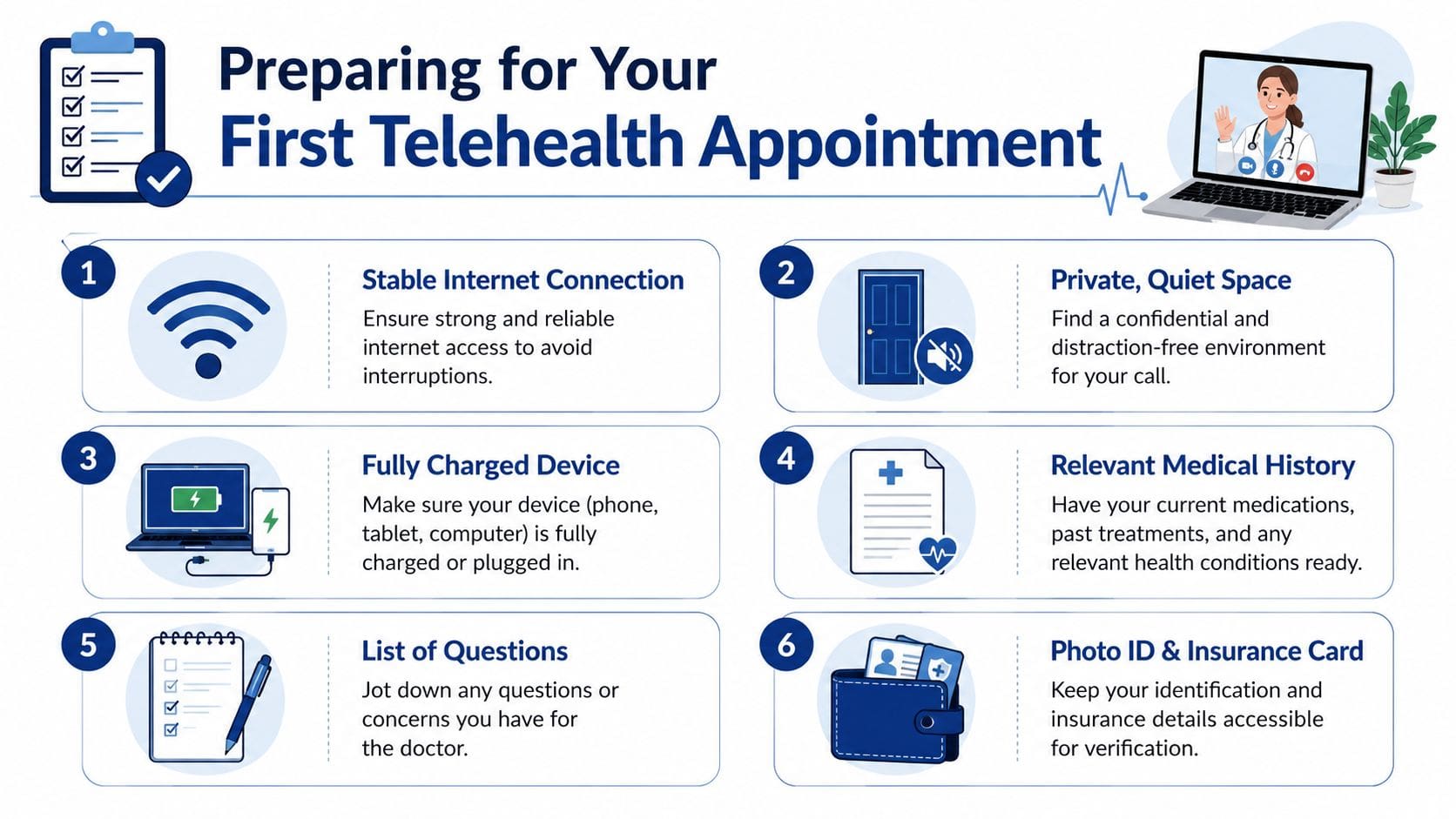
Patients usually feel more settled when they prepare a few basics ahead of time:
- Medication list ready: Include prescriptions, over-the-counter products, and anything used recently for sleep, pain, or anxiety.
- A private room: Confidentiality matters, especially when discussing substance use, trauma, or depression.
- Photo ID and insurance card nearby: Many offices verify these before or during the visit.
- Questions written down: People often forget what they meant to ask once the conversation starts.
A few questions are especially worth bringing to the first visit:
- What should be expected on day one?
- What symptoms mean the medication should be started or delayed?
- How quickly will follow-up happen if something feels off?
- Can the provider also address anxiety, depression, PTSD, or sleep problems?
Bring real-life concerns to the visit. Work schedule, childcare, transportation, court obligations, and unstable sleep all shape whether a treatment plan is practical.
Some patients also find it useful to track mood, triggers, or cravings before and after treatment starts. A simple journal can help identify patterns, and tools like a feeling tracker or grounding exercise can support the first weeks of care when emotions are fluctuating.
Sustaining Recovery with Long-Term Treatment
Starting Suboxone is important. Staying engaged with treatment is what usually determines whether life becomes more stable over time.

Why staying in care matters
Buprenorphine-based treatments like Suboxone increase the likelihood of patients remaining in treatment by 1.82 times compared to placebo, while reducing opioid-positive drug tests by 14.2% (Suboxone retention and drug test outcomes). That's one reason short-term thinking can be risky. Patients often feel pressure from family, stigma, or internal guilt to stop medication quickly, even when they're only beginning to stabilize.
Long-term treatment does not mean passive treatment. It means active monitoring, dose review, relapse prevention, and support for the conditions that often sit underneath opioid use. Anxiety can drive cravings. Depression can sap motivation. Trauma symptoms can make daily life feel unmanageable. If those issues aren't treated, recovery gets harder to sustain.
Recovery usually becomes steadier when the patient stops asking, “How fast can I get off this?” and starts asking, “What helps me stay well?”
What long-term recovery support looks like
The strongest programs build structure around the medication. That may include counseling, psychiatric follow-up, sleep support, stress planning, and realistic habit change. Nutrition and physical health also matter more than many patients expect, especially when energy, appetite, and routine have been disrupted for a long time. Patients interested in the role of diet in recovery can review this guide on nutrition for addiction recovery.
Long-term care should also account for setbacks without turning one difficult day into a collapse. Patients and families sometimes benefit from learning about the Obex guide on abstinence violation, which explains why a lapse can trigger shame and all-or-nothing thinking. That concept matters because shame often pushes people away from care at the moment they most need to stay connected.
A treatment partner helps patients do three things well:
- Stay in contact when cravings, stress, or life disruption increase
- Adjust the plan when mental health symptoms or medication needs change
- Keep recovery whole-person by addressing sleep, food, movement, relationships, and emotional regulation
That whole-person approach is often what separates temporary stabilization from durable recovery. A person who can sleep, think clearly, manage anxiety, and show up for follow-up visits has a much better platform for healing than a person left to manage all of that alone.
If treatment for opioid use disorder has been difficult to sort through, Integrative Psychiatry of America offers virtual psychiatric evaluations, medication management, and evidence-informed mental health treatment throughout Pennsylvania. Adults in Philadelphia, Pittsburgh, Harrisburg, Erie, Scranton, Allentown, Lancaster, Reading, and statewide can explore care options, verify insurance coverage, schedule an appointment, or use free mental health tools such as the Adult ADHD Assessment, Anxiety Symptom Checker, Daily Agenda Planner, Feeling Journal, Exercise Routine Generator, and 5-4-3-2-1 Grounding Tool.