
Telepsychiatry is mental health care delivered through secure video visits, which means a licensed psychiatric provider can evaluate symptoms, diagnose conditions, and manage medications while a patient stays at home. It has become a standard part of care, with 96% of telepsychiatry patients reporting satisfaction with virtual mental health care.
A lot of people in Pennsylvania start looking into telepsychiatry the same way. They are lying awake in Philadelphia after another anxious night, trying to find ADHD treatment near Pittsburgh that won't take months to arrange, or wondering in Harrisburg, Erie, Scranton, Allentown, Lancaster, or Reading whether getting psychiatric care online is real medical care or just a temporary workaround.
It is real care. For many patients, it is also the most practical way to finally begin treatment.
Table of Contents
- Your Search for Mental Health Care in Pennsylvania
- What Telepsychiatry Really Means for Your Care
- How a Virtual Psychiatry Appointment Works
- The Benefits and Realities of Online Mental Health Care
- Technology Privacy and Coverage in Pennsylvania
- How to Prepare for Your First Telepsychiatry Visit
- Finding the Right Telepsychiatry Provider in PA
- Frequently Asked Questions About Telepsychiatry
- Can telepsychiatry be used for ADHD, anxiety, depression, OCD, or PTSD
- Can prescriptions be sent after a virtual visit
- Is telepsychiatry useful for people outside big Pennsylvania cities
- What if the internet connection isn't great
- How can a patient verify whether a provider can treat them in Pennsylvania
- Is telepsychiatry the right choice during a crisis
Your Search for Mental Health Care in Pennsylvania
Someone in Pennsylvania can do everything right and still struggle to get help. They can call offices in Philadelphia and hear nothing back, find a provider in Pittsburgh with a long waitlist, or live outside a major metro area and realize the nearest in-person psychiatric appointment requires too much driving, time off work, or child care planning.
That's where telepsychiatry changes the equation. In plain terms, it means receiving psychiatric care through a secure video appointment instead of sitting in a physical office. The appointment is still medical. The discussion is still clinical. The treatment plan is still individualized.
For a person dealing with anxiety, depression, OCD, PTSD, or adult ADHD symptoms, that difference matters. It often means care can begin from a living room in Scranton, a home office in Allentown, or a lunch break in Lancaster instead of after weeks of logistical hurdles.
Why patients search for this option
Many patients aren't just asking what telepsychiatry is. They're asking whether it can work for their life.
Common concerns usually sound like this:
- Work schedule conflicts: Taking half a day off for a short follow-up visit isn't realistic.
- Commute fatigue: Travel into Philadelphia or Pittsburgh can turn one appointment into an all-day task.
- Privacy worries: Some people feel more comfortable speaking from home than walking into a waiting room.
- Ongoing treatment needs: Medication management usually requires follow-up, so convenience matters over time.
Telepsychiatry often becomes most helpful when the barrier isn't willingness to get help. It's the friction involved in getting to care consistently.
Patients looking for statewide virtual care can review online mental health treatment in Pennsylvania to see how video-based psychiatric visits are typically delivered across the state.
What Telepsychiatry Really Means for Your Care
A virtual psychiatric appointment isn't a casual check-in over video. It's a structured clinical visit where a licensed provider gathers history, assesses symptoms, considers diagnoses, reviews prior treatment, and builds a plan that may include medication management, therapy recommendations, behavioral strategies, or coordination with other healthcare professionals.
That matters because many new patients worry that care through a screen must be less thorough. In actual practice, telepsychiatry can still support evaluation and treatment for concerns such as ADHD, anxiety disorders, depression, OCD, and PTSD when the patient is appropriate for remote care.
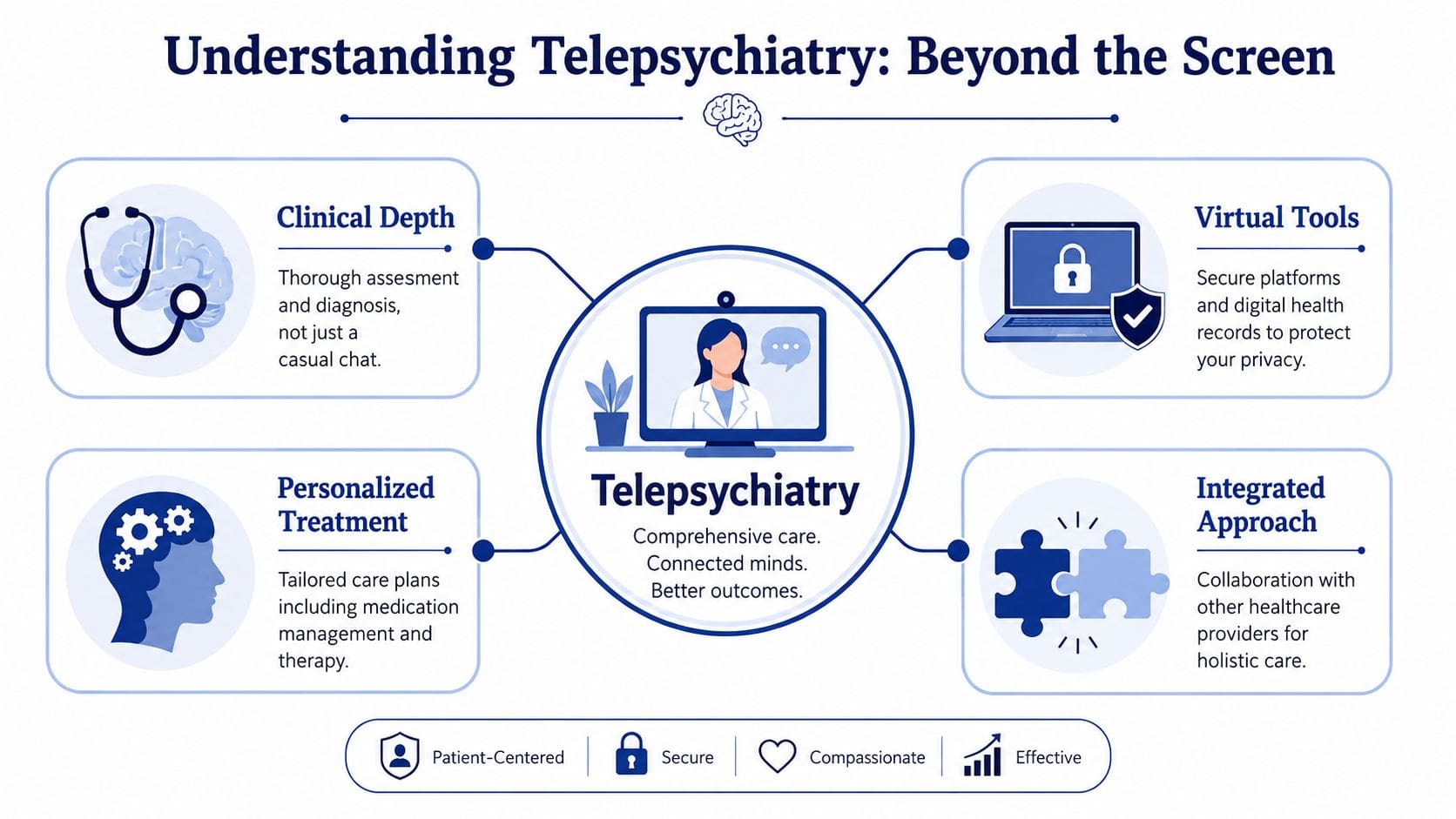
What happens clinically during telepsychiatry
A telepsychiatry visit usually includes the same core elements a patient would expect in person:
- Symptom review: Mood changes, panic symptoms, attention concerns, sleep, trauma symptoms, compulsions, irritability, and functioning.
- History gathering: Medical history, psychiatric history, family history, prior medications, therapy, substance use, and current stressors.
- Assessment and diagnosis: The provider looks for patterns, not just isolated symptoms.
- Treatment planning: This may involve prescriptions, lab recommendations, lifestyle support, referrals, or follow-up scheduling.
A useful way to think about it is this. The screen is the setting, not the substance. If a cardiology visit can still focus on heart symptoms and treatment decisions, a psychiatric visit can still focus on thought patterns, emotional symptoms, behavior, sleep, and medication response.
Is the care actually comparable to in-person visits
For many patients, yes. The American Psychiatric Association states that telepsychiatry demonstrates equivalence to in-person care across diagnostic accuracy, treatment effectiveness, quality of care delivery, and patient satisfaction, while privacy and confidentiality are maintained at levels comparable to traditional settings in its telepsychiatry overview for patients and families.
That doesn't mean every situation is ideal for video care. It does mean a patient shouldn't assume that virtual care is automatically less serious or less evidence-based.
Clinical reality: Good psychiatric treatment depends on careful listening, pattern recognition, follow-up, and trust. Those can happen through secure video when the patient's situation is suitable for remote care.
Patients interested in a broader whole-person model can explore integrative psychiatry services in Pennsylvania, including medication management and evidence-informed support delivered virtually.
How a Virtual Psychiatry Appointment Works
The first telepsychiatry visit feels easier when the steps are clear. Most appointments follow a simple flow from scheduling to treatment planning, and the process is built to reduce unnecessary friction.
A visual overview helps many patients understand the sequence before the first visit.
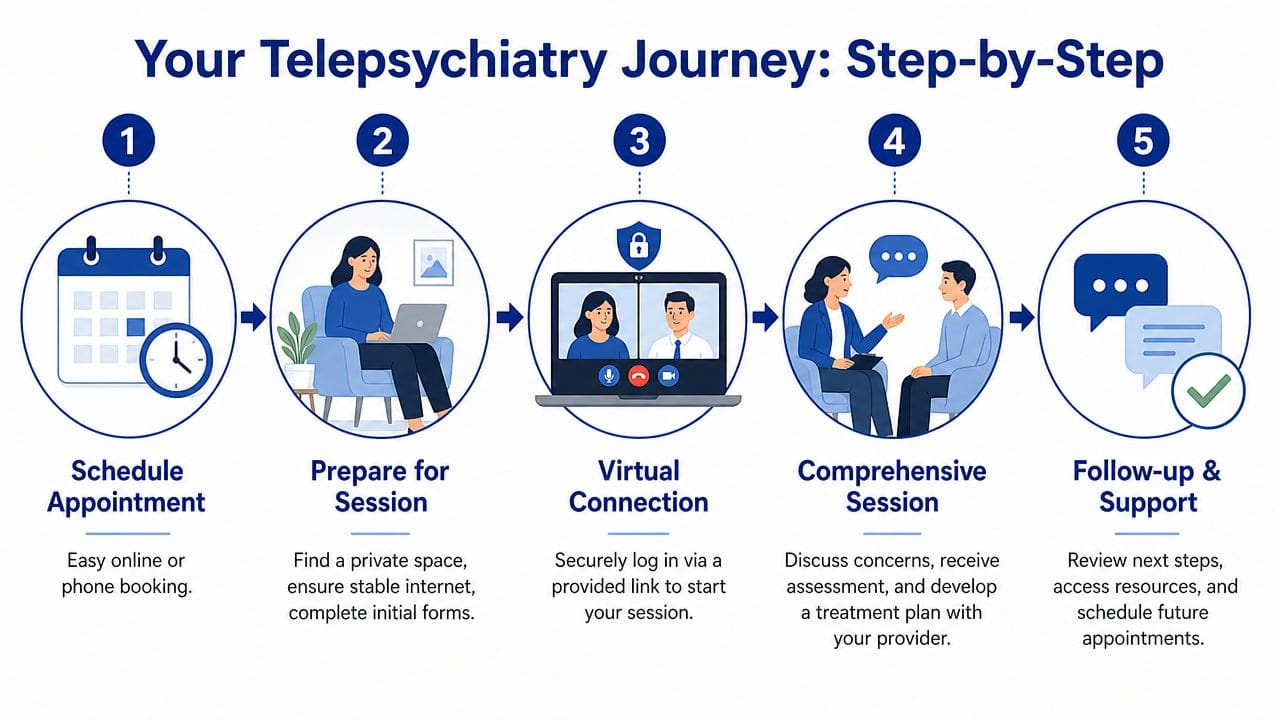
Step one through step three
Booking the appointment
The patient chooses a visit time, shares basic information, and usually completes intake paperwork. That paperwork often includes symptoms, history, medications, allergies, and consent forms.Insurance and logistics review
Before the session, the practice may confirm benefits, discuss self-pay options if needed, and explain how to access the visit link.Joining the video session
At the appointment time, the patient logs in from a private location using a phone, tablet, or computer with camera and audio.
A patient who wants to see what the intake side looks like can review a typical online mental health evaluation before booking.
What happens during the visit
The actual session is usually more conversational than people expect, but it is still a medical assessment. The provider asks focused questions about symptoms, timeline, severity, current functioning, and relevant history. If the patient is seeking help for adult ADHD, for example, the discussion may cover concentration, procrastination, impulsivity, organization, school or work patterns, sleep, and prior treatment.
Later in the visit, the provider talks through impressions and options. Sometimes the plan is straightforward. Sometimes it takes more than one visit to sort out overlapping symptoms such as anxiety plus attention problems, trauma plus sleep disturbance, or depression plus burnout.
This short video offers a basic orientation to the virtual process.
After the appointment
What happens next depends on the treatment plan, but usually includes a few practical items:
- Prescriptions sent electronically: Medications are generally sent to the patient's local Pennsylvania pharmacy.
- Follow-up plan: The provider recommends when to return and what to track between visits.
- Supportive recommendations: Patients may receive guidance on sleep, routines, nutrition, exercise, therapy, or symptom monitoring.
- Portal communication: Many practices use secure messaging for forms, refill requests, and scheduling.
Most patients don't need to master complicated technology. They need a quiet room, a working device, and enough time to talk honestly.
The Benefits and Realities of Online Mental Health Care
A common Pennsylvania situation looks like this. Someone in Pittsburgh has been putting off care because getting across town for an appointment means missed work, traffic, parking, and arranging childcare. Someone in a smaller community may have an even harder problem. There may be few psychiatric prescribers nearby, or long wait times for in-person visits. Telepsychiatry can remove some of those barriers, which is why many patients choose it for ongoing outpatient care.
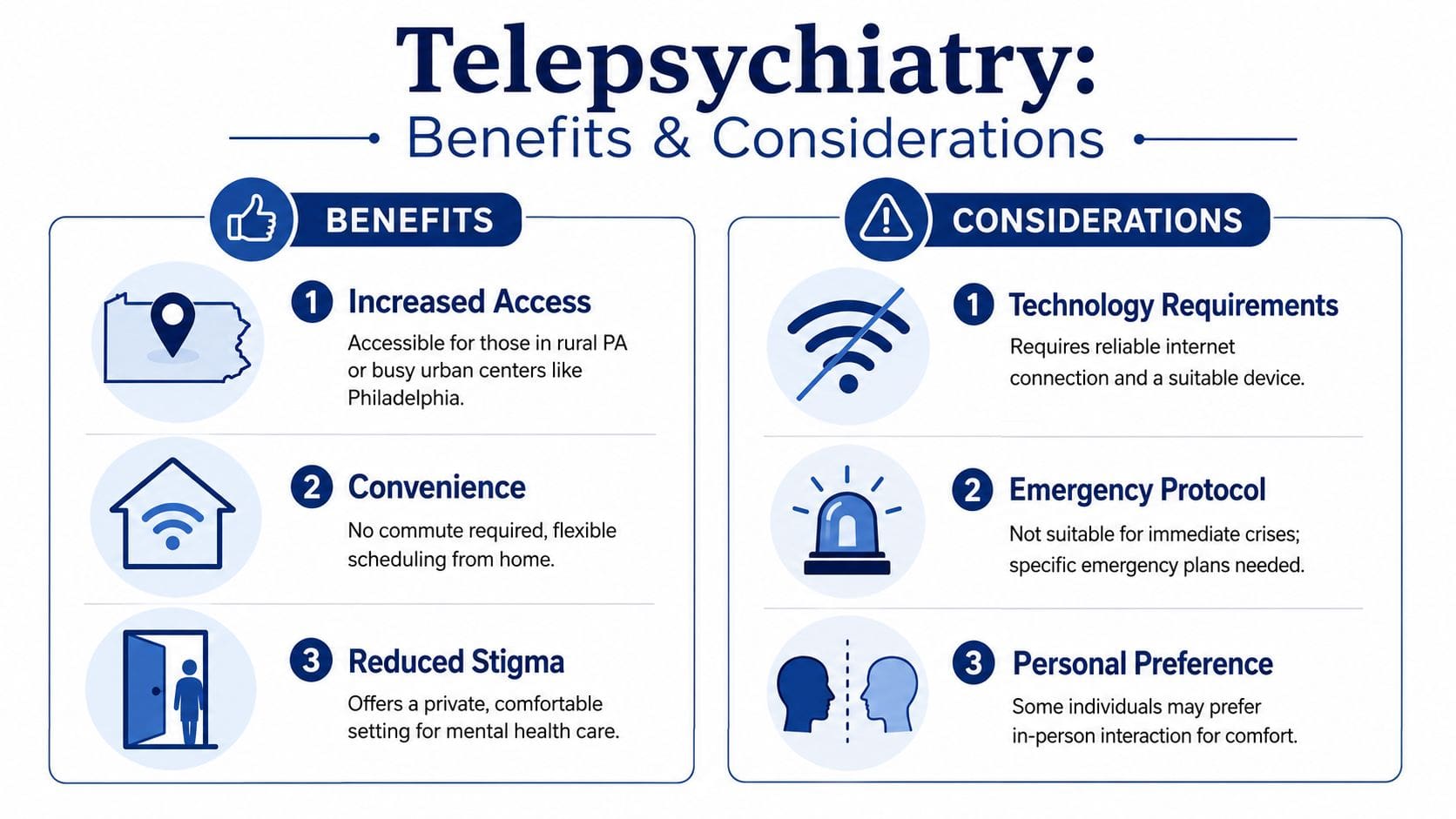
What matters most is fit. Virtual care works very well for many Pennsylvania adults seeking help with anxiety, depression, ADHD, trauma-related symptoms, sleep problems, or medication follow-up. It also helps patients stay in treatment when weather, transportation, mobility issues, or busy family schedules would otherwise lead to missed visits.
Where telepsychiatry works especially well
For patients across Pennsylvania, the benefits are usually practical.
| Benefit | What it means in real life |
|---|---|
| Access | A patient in Erie, Reading, or a rural part of the state can meet with a Pennsylvania-licensed psychiatric provider without a long drive. |
| Consistency | Follow-up visits are easier to keep when appointments fit around work shifts, college classes, or parenting responsibilities. |
| Comfort | Some patients talk more openly from home, especially when discussing panic, trauma, or symptoms that carry shame. |
Telepsychiatry can also make specialty care more reachable. A patient in Philadelphia may want a provider with experience in adult ADHD or perinatal mental health. A patient outside Pittsburgh may want medication management without waiting months for a nearby opening. Online care can widen those options, as long as the clinician is licensed to treat patients in Pennsylvania.
There are workflow advantages too. Secure platforms, patient portals, and tools such as medical speech to text software can support accurate documentation and follow-up without turning the visit into a paperwork exercise.
What telepsychiatry does not do well
Telepsychiatry is outpatient care. It is not the right setting for an immediate psychiatric emergency.
The American Psychiatric Association's guidance on telepsychiatry makes the main limitation clear. Virtual care requires planning for patient safety, emergency contact information, and local crisis resources because the clinician is not physically present with the patient during the visit. In practice, that means a person with active suicidal intent, escalating violence, severe intoxication, or rapidly worsening psychosis may need a higher level of care than a routine video appointment can provide. You can review more about HIPAA compliance in telehealth and safe virtual care practices.
A patient may need in-person or emergency services if there is:
- Immediate danger: Active suicidal intent, recent self-harm with ongoing risk, escalating aggression, or inability to stay safe.
- Need for hands-on assessment: Confusion, severe medication side effects, or a medical concern that needs physical evaluation.
- Severe instability: Symptoms are changing too fast, or functioning has dropped to a level that cannot be managed responsibly through scheduled outpatient video visits.
Some patients also prefer sitting in the room with their clinician. That is a valid preference. In my experience, good psychiatric care depends on access, safety, and the quality of the connection. Telepsychiatry helps with the first two for many Pennsylvanians, but it does not replace every kind of care.
Technology Privacy and Coverage in Pennsylvania
A lot of Pennsylvania patients ask these questions before they book. Will this stay private, and will insurance pay for it?
Both questions are reasonable. Psychiatric care involves sensitive details, and no one wants to start treatment only to find out the visit platform is insecure or the claim will not be covered.
What privacy looks like during a virtual visit
A legitimate telepsychiatry appointment should take place on a healthcare platform designed to protect protected health information. In plain terms, that means secure video technology, controlled access to records, and office procedures that limit who can see your information. It should not feel like a casual social video call.
Privacy also depends on what happens on both sides of the screen. I tell patients to treat a telepsychiatry visit the same way they would treat an in-office conversation. Choose a space where other people cannot overhear. Use headphones if needed. Let the clinician know if someone else is in the room or nearby, especially if you are discussing trauma, substance use, or family conflict.
A careful telehealth process usually includes:
- A HIPAA-aware video platform: The system is built for medical visits and protected health information.
- Clear identity and consent steps: The office may confirm your name, date of birth, location, and emergency contact at the start of the visit.
- Protected documentation workflows: Notes, messages, prescriptions, and follow-up instructions stay inside clinical systems.
- Patient-side privacy choices: A quiet room, a secure internet connection, and headphones can make a real difference.
Some patients worry that technology will make the visit feel less personal, especially if the clinician is also documenting. That concern is fair. Tools such as medical speech to text software can support efficient charting, but any documentation tool used in psychiatric care still needs to meet privacy and compliance standards.
If you want a clearer picture of what secure virtual care should involve, review this explanation of HIPAA compliance in telehealth.
Does Pennsylvania cover telepsychiatry
Coverage in Pennsylvania is more established than many patients expect. The Pennsylvania telemedicine FAQ states that Medical Assistance enrolled providers have been allowed to bill for behavioral health services delivered through telemedicine since 2011, and that reimbursement continued after October 31, 2022, according to the Pennsylvania telemedicine FAQ.
That matters if you live in Philadelphia, Pittsburgh, Erie, Scranton, or a rural part of the state where psychiatry appointments can be hard to get. Telepsychiatry is not a temporary workaround in Pennsylvania. It is an established way to deliver outpatient behavioral health care.
Private insurance is less uniform. Some plans cover telepsychiatry much like in-person care, while others apply different network rules, copays, or preauthorization requirements. The practical step is simple. Ask the office to verify benefits before the first appointment, and ask whether the clinician is in network with your specific plan.
Licensing is another Pennsylvania-specific issue. In most cases, the clinician must be licensed for the state where the patient is physically located during the session. If you live in Pennsylvania but plan to take an appointment while visiting New Jersey, Ohio, or another state, that can affect whether the visit can legally happen.
A good question to ask before scheduling is this: “Are you licensed to treat patients located in Pennsylvania, and have you checked my telepsychiatry benefits with my insurance?” That one question clears up many problems before care begins.
How to Prepare for Your First Telepsychiatry Visit
Preparation changes the quality of a first appointment. A patient doesn't need to rehearse answers, but a little structure helps the visit move faster and more accurately.
A simple pre-visit checklist
Before the session, it helps to:
- Choose a private spot: A parked car can work in a pinch, but a quiet room at home is usually better.
- Test the device early: Check camera, microphone, speaker, battery, and internet connection.
- Write down symptoms: Include what's happening, how long it has been happening, and what's getting harder.
- List current medications: Prescription drugs, supplements, and past psychiatric medications all matter.
- Bring questions: Concerns about side effects, diagnosis, ADHD evaluation, anxiety treatment, or follow-up are worth noting ahead of time.
Helpful tools for organizing thoughts
Some patients freeze when the appointment starts because they're trying to remember too much at once. Symptom tracking tools can make the conversation more focused.
Useful preparation resources may include:
- Anxiety pattern tracking: The Anxiety Symptom Checker can help patients notice frequency, triggers, and severity.
- Mood and reaction logging: A Feeling Journal can make it easier to describe emotional shifts over time.
- Daily structure support: A Daily Agenda Planner may help patients identify where symptoms are interfering with work, routines, or follow-through.
A patient who suspects ADHD may also want to complete an Adult ADHD Assessment before the visit.
The first appointment usually goes best when the patient focuses on examples, not labels. “Missed three deadlines because focus kept drifting” is more useful than “maybe it's ADHD.”
Finding the Right Telepsychiatry Provider in PA
Not every virtual mental health option offers the same level of psychiatric care. Patients in Pennsylvania should look past marketing language and check whether the provider's training, scope, and process match what they need.
What to look for before booking
A strong starting checklist includes:
- Pennsylvania licensure: The provider must be authorized to treat patients located in Pennsylvania.
- Relevant psychiatric credentials: Training should match psychiatric evaluation and medication management, not just general wellness coaching.
- Clear treatment scope: Patients should know whether the practice treats anxiety, depression, ADHD, OCD, PTSD, or other specific conditions.
- Follow-up process: Medication care requires continuity, refill policies, and scheduled reassessment.
Some patients compare provider types before deciding who to see. A practical overview of those differences is available in this guide on psychiatric NP versus psychiatrist roles.
Questions worth asking
Before a first appointment, patients can ask:
- Are visits available statewide in Pennsylvania, including Philadelphia, Pittsburgh, Harrisburg, Erie, Scranton, Allentown, Lancaster, and Reading?
- Does the practice provide psychiatric evaluations and medication management, or only therapy support?
- How are refills, portal messages, and follow-up visits handled?
- What happens if the provider thinks telepsychiatry isn't the safest fit?
One Pennsylvania-based option is Integrative Psychiatry of America, which offers virtual psychiatric evaluations, medication management, and evidence-informed mental health treatment through secure telehealth for patients across the state.
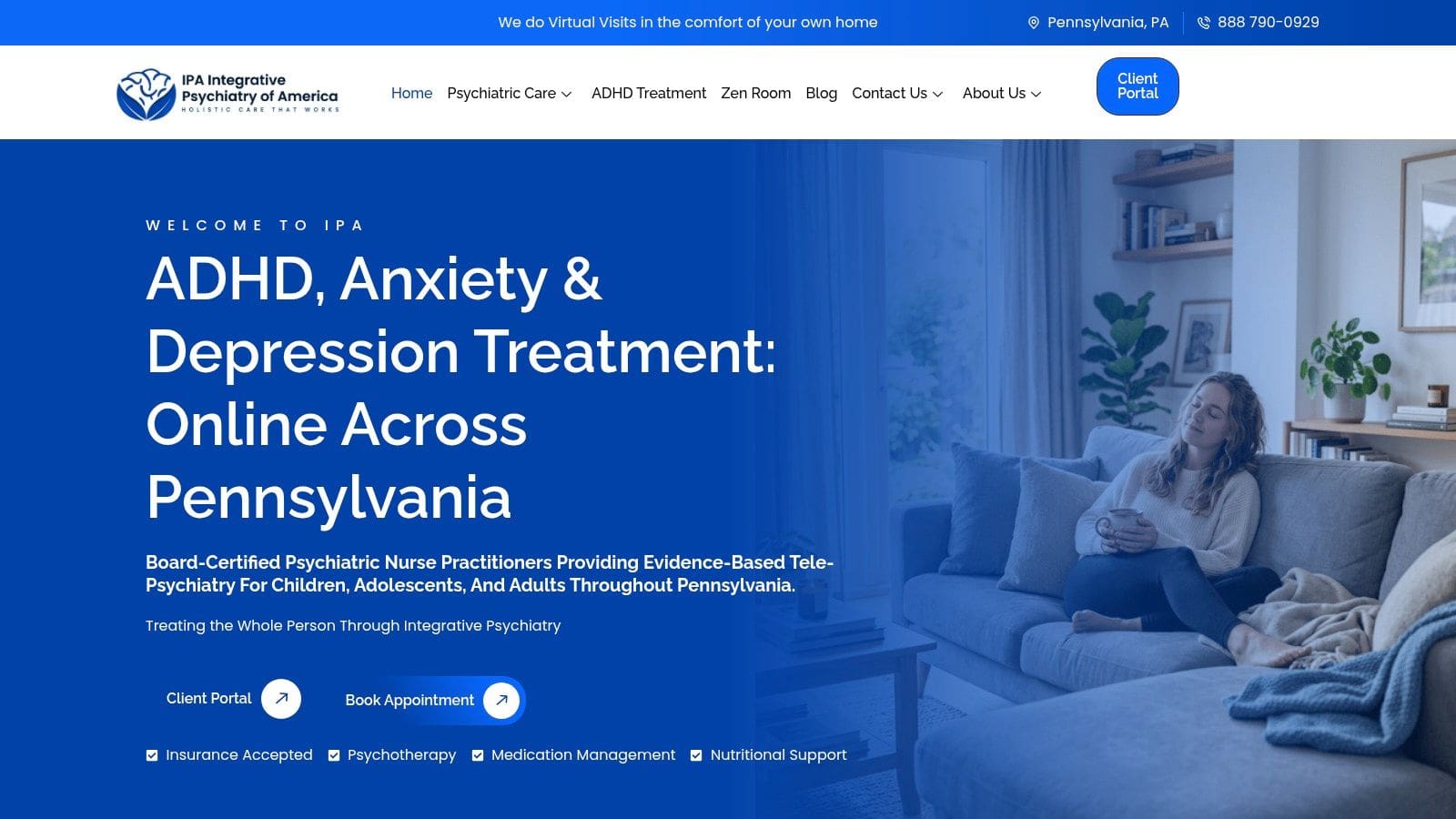
The right choice is the provider who can treat the actual problem, explain the plan clearly, and offer follow-up that feels reliable rather than improvised.
Frequently Asked Questions About Telepsychiatry
Can telepsychiatry be used for ADHD, anxiety, depression, OCD, or PTSD
Yes, many patients receive evaluation and ongoing treatment for those conditions through telepsychiatry when their situation is clinically appropriate for remote care. The visit can include diagnosis, medication management, and treatment planning.
Can prescriptions be sent after a virtual visit
Often, yes. If medication is appropriate, prescriptions are generally sent electronically to a local pharmacy. Specific prescribing decisions depend on the diagnosis, the medication type, safety considerations, and the provider's clinical judgment.
Is telepsychiatry useful for people outside big Pennsylvania cities
Yes, and this is one of its most practical advantages. Over 60% of adults with mental health conditions in rural areas receive no treatment at all, according to this discussion of rural behavioral telehealth access. Virtual care can reduce the distance barrier that affects patients outside major hubs.
What if the internet connection isn't great
A stable connection helps, but perfection isn't required. Patients should test their device beforehand, move closer to a stronger signal if possible, and have a backup plan. If technical problems keep interfering, the practice may reschedule or recommend a different setting for future visits.
How can a patient verify whether a provider can treat them in Pennsylvania
The patient should ask directly whether the clinician is licensed to see patients who are physically located in Pennsylvania during the visit. This matters even if the practice is virtual and even if the provider appears to work across several states.
Is telepsychiatry the right choice during a crisis
No. If someone is immediately unsafe, actively suicidal, violent, or otherwise in acute danger, emergency evaluation is the right next step rather than a routine telepsychiatry appointment.
If virtual psychiatric care feels like the most realistic next step, Integrative Psychiatry of America offers secure telehealth treatment throughout Pennsylvania, including psychiatric evaluations, medication management, and evidence-informed care for concerns such as ADHD, anxiety, depression, OCD, and PTSD. Patients can learn more about treatment options, check insurance, schedule an appointment, or use free tools to prepare for care.