
Many adults looking for mental health care in Pennsylvania know this feeling well. Medication may have taken the sharpest edge off anxiety, depression, or ADHD, but something still feels unfinished. Therapy may help with insight, yet sleep is still poor, eating patterns are chaotic, energy is flat, and stress keeps showing up in the body.
That gap is where integrative health and wellness starts to make sense. It doesn't replace standard psychiatric treatment. It expands it. The broader wellness economy reached $6.8 trillion in 2024, represented 6.12% of global GDP, and is projected to reach nearly $9.8 trillion by 2029, while mental wellness grew at an average annual rate of 12.4% from 2019 to 2024 according to the Global Wellness Institute's statistics and facts. People aren't only asking for symptom control anymore. They want care that connects mood, sleep, nutrition, movement, stress, and daily functioning.
For patients trying to sort through overlapping terms, this primer on understanding functional versus integrative medicine can help clarify where psychiatric care fits into a broader whole-person model. For a closer look at how this approach applies specifically to mental health treatment, this overview of the integrative psychiatry approach shows how telepsychiatry can bring that model into everyday care.
Table of Contents
- Beyond the Prescription Pad An Introduction
- What Integrative Mental Healthcare Really Means
- The Building Blocks of Your Wellness Plan
- Advanced Tools for Personalized Care
- Who Benefits from an Integrative Approach
- Your Telepsychiatry Journey at IPA in Pennsylvania
- Common Questions and Your Path Forward
Beyond the Prescription Pad An Introduction
Mental health treatment often starts with the most urgent problem. Panic attacks need relief. Depression needs lifting. ADHD symptoms need structure. That approach is appropriate, but it can become too narrow when care stays focused only on symptom suppression.
A more complete model asks different questions. What is sleep doing to mood stability. Is nutrition worsening irritability or fatigue. Are stress patterns, trauma responses, hormone issues, low activity, or substance use making treatment less effective. Are relationships, work strain, or social conditions keeping the nervous system stuck in survival mode.
In psychiatric practice, integrative health and wellness means taking those questions seriously without drifting into vague wellness language. It means using evidence-based medication when it's indicated, psychotherapy when it's helpful, and lifestyle or complementary supports when they can add meaningful benefit. High-quality integrative care isn't anti-medication and it isn't anti-therapy. It's anti-fragmentation.
Patients usually don't need more random advice. They need a care plan that connects the advice, prioritizes it, and checks whether it's actually helping.
That matters because many people have already tried isolated solutions. One person has a prescription but no guidance on sleep habits. Another has therapy but no review of nutrition, movement, or substance use. Someone else has been told to meditate when what's really needed is better medication selection, trauma treatment, and practical routines.
A whole-person psychiatric model works best when it stays grounded in reality:
- Symptoms still matter: Anxiety, depression, OCD, PTSD, and attention problems deserve direct treatment.
- Context matters too: Physical health, daily habits, and environmental stressors can either support recovery or block it.
- Measurement matters: A plan should track sleep, energy, focus, side effects, appetite, and function over time.
For adults in Pennsylvania, telepsychiatry makes this approach more usable. Care doesn't have to depend on commuting across the city, coordinating time off, or limiting choices to whoever is physically nearby. A secure virtual format can make thorough care easier to access while still keeping the work clinical, structured, and individualized.
What Integrative Mental Healthcare Really Means
The simplest way to understand integrative mental healthcare is to compare it with garden care. A symptom-only model keeps trimming whatever is visible above ground. A whole-person model also looks at soil, light, water, roots, and what keeps interfering with growth.
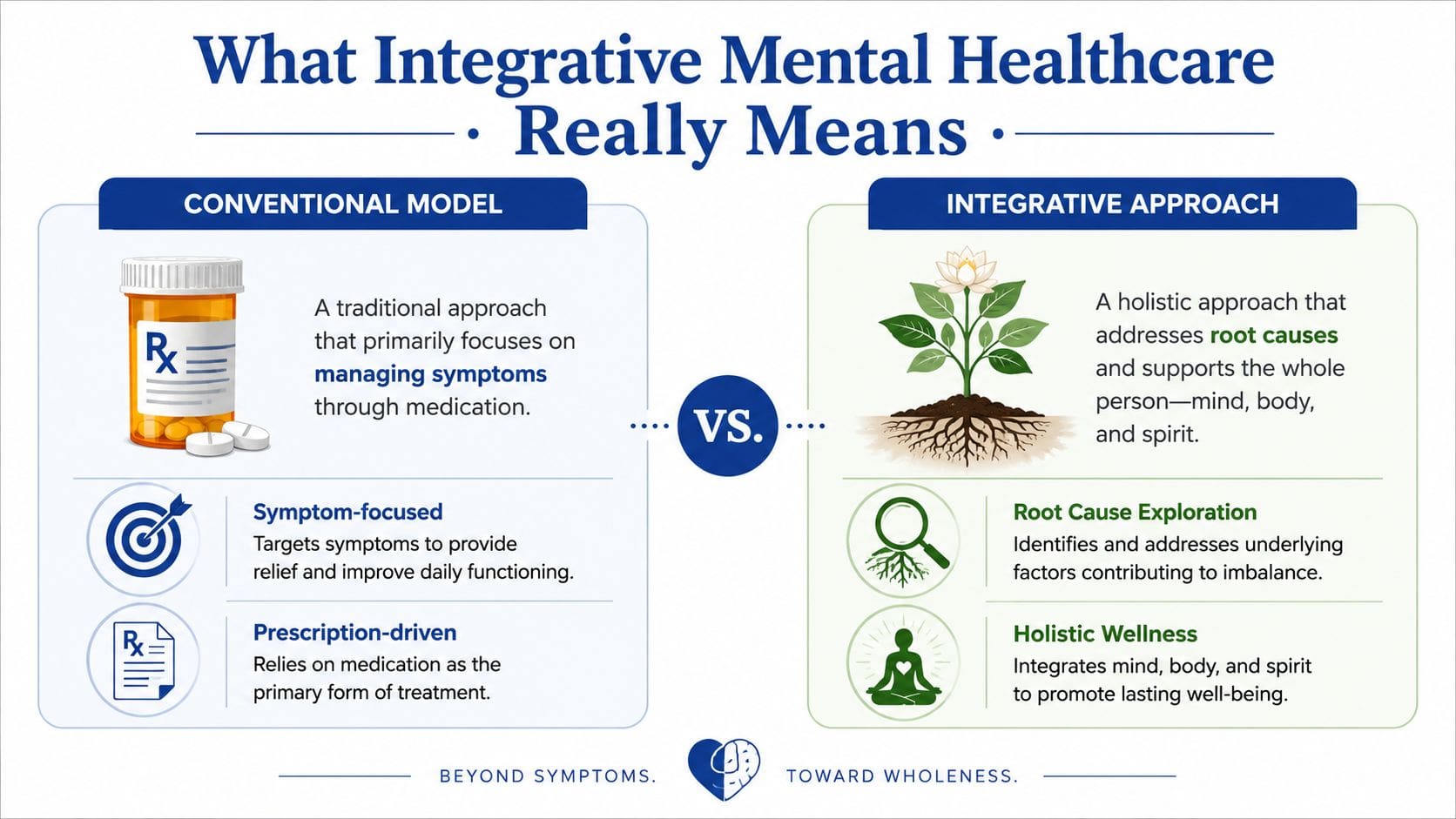
Cleveland Clinic describes integrative medicine as combining conventional treatment with complementary therapies and lifestyle changes to address the full mind-body-spirit context, with measurable outcomes used to confirm whether the plan is working, in its overview of integrative medicine. That principle is especially useful in psychiatry, where the same diagnosis can look very different from one person to another.
The difference is coordination
Many patients already use several forms of care. They may be taking medication, seeing a therapist, trying to improve sleep, cutting back alcohol, and experimenting with exercise or supplements. The problem isn't lack of effort. The problem is that the pieces often aren't coordinated.
An integrative psychiatric clinician acts more like a general contractor than a single-trade specialist. Medication isn't treated as the whole house. It's one part of the build. The same goes for therapy, food choices, movement, mindfulness, and medical contributors to symptoms.
A practical comparison helps:
| Approach | Main question | Common limitation |
|---|---|---|
| Symptom-focused care | "What will reduce this symptom fastest?" | May overlook drivers that keep symptoms returning |
| Integrative care | "What combination of tools fits this person's biology, habits, stress load, and goals?" | Requires more discussion, follow-up, and patient participation |
Whole-person doesn't mean anything goes
A frequent source of misunderstanding is that some people, when encountering the concept of a whole-person approach, assume the plan will become loose, unscientific, or opposed to standard treatment. That's not what responsible integrative psychiatry looks like.
Practical rule: If an intervention can't be tied to a clear clinical reason, a defined goal, and some way to track response, it probably doesn't belong in the plan.
Good integrative care stays selective. It asks whether a change is likely to improve sleep onset, daytime focus, appetite regulation, trauma recovery, or medication tolerability. It also recognizes trade-offs. A patient may want to avoid medication, but severe symptoms may make that unrealistic or unsafe. Another patient may prefer medication only, but untreated insomnia, poor diet, or chronic stress may keep outcomes partial.
The center of the model is collaboration. The patient brings lived experience. The psychiatric nurse practitioner brings clinical training in diagnosis, prescribing, safety, and treatment planning. Together, they build something more useful than a single recommendation handed down in isolation.
The Building Blocks of Your Wellness Plan
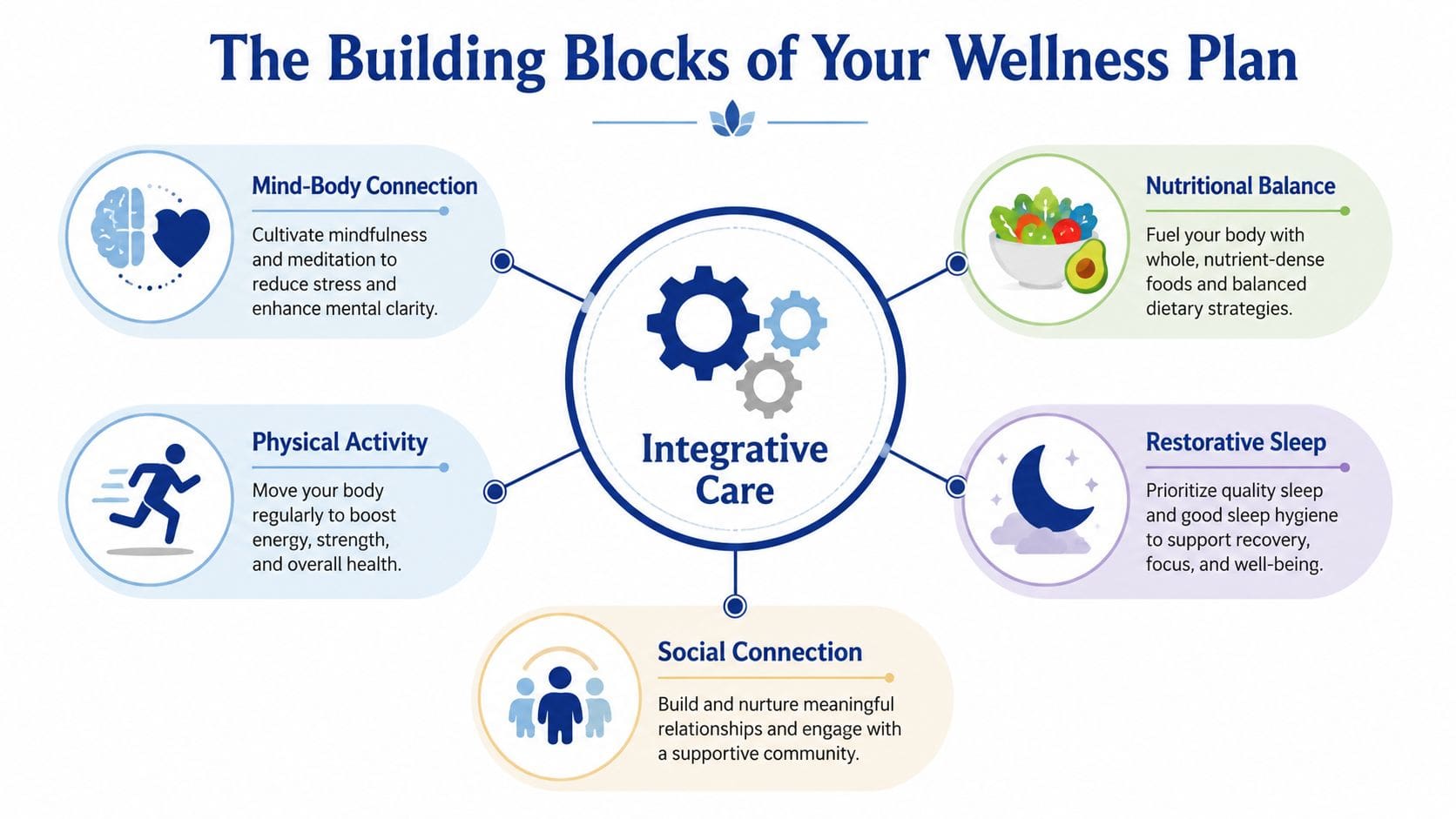
A strong plan isn't built from one dramatic intervention. It's built from several smaller decisions that reinforce each other over time.
Medication Management With a Broader Lens
Medication can be essential. For some adults with severe anxiety, major depression, OCD, PTSD, or ADHD, it creates enough stability to make the rest of treatment possible. The mistake isn't using medication. The mistake is using it as if nothing else matters.
In an integrative model, prescribing decisions stay connected to sleep quality, substance use, appetite changes, stress load, and physical symptoms. Side effects aren't treated as minor inconveniences if they're reducing adherence or worsening daily life. A medication that's technically effective but leaves someone too fatigued, emotionally flat, or restless to function may need adjustment.
This is also where careful follow-up matters. Prescribing isn't a one-time event. It involves reviewing benefit, burden, and fit.
Psychotherapy as Active Skill Building
Therapy works best when it's not reduced to venting. It helps patients identify patterns, build coping skills, process trauma, strengthen boundaries, and respond differently to spirals that once felt automatic.
The psychiatric plan should reflect that reality. If medication improves concentration but the patient still has perfectionism, avoidance, or chronic self-criticism, psychotherapy remains central. If trauma reactions keep driving insomnia and hypervigilance, no supplement routine is going to solve that alone.
A practical plan often includes psychotherapy goals such as:
- Emotion regulation: Learning how to slow escalation before it becomes panic, shutdown, or impulsive behavior.
- Behavioral follow-through: Turning insight into routines that support recovery.
- Relational repair: Addressing conflict patterns, isolation, or people-pleasing that keep stress high.
Nutritional Psychiatry and Daily Fuel
Food isn't a moral issue, but it is clinical information. Irregular eating, under-fueling, heavy evening intake, or diets built around convenience can affect focus, energy, sleep, and mood stability.
Nutritional psychiatry doesn't promise miracle cures. It asks whether the brain is getting what it needs and whether current patterns are amplifying symptoms. For patients who want a practical starting point, this guide to personalized nutrition is a helpful overview of how individualized nutrition planning can work. A more mental-health-specific discussion appears in this article on how nutrition affects mental health.
Some nutrition-related questions that often matter in psychiatric care include meal timing, protein intake, caffeine use, alcohol habits, hydration, and whether stress is pushing eating patterns toward extremes.
Exercise Counseling and Nervous System Regulation
Exercise counseling in psychiatry shouldn't sound like generic fitness advice. The goal isn't to turn every patient into a gym enthusiast. The goal is to use movement strategically.
Someone with depression may need activation and structure. Someone with anxiety may need steady, repetitive movement that lowers physiological arousal. Someone with ADHD may notice better focus when exercise becomes part of the morning routine. Someone with trauma may need movement that feels safe, non-punitive, and sustainable.
The best movement plan is the one a patient can repeat during a difficult week, not just during a motivated week.
Mindfulness Practices That Fit Real Life
Mindfulness helps some patients immediately and frustrates others at first. That's normal. It isn't one thing. It can mean breathwork, guided body awareness, sensory grounding, brief meditation, prayer, paced pauses between tasks, or learning to notice activation before it takes over.
A useful rule is to match the practice to the patient. Quiet seated meditation may help one person and overwhelm another. A short grounding exercise before work calls may be far more realistic than a long formal routine.
The five building blocks don't carry equal weight for everyone. One patient may need medication and trauma therapy first. Another may improve most when sleep, nutrition, and ADHD treatment finally align. Integrative care works because it allows the plan to be built in that order, rather than pretending every person needs the same formula.
Advanced Tools for Personalized Care
Sometimes the right next step isn't more motivation. It's better data.

The whole-health literature emphasizes structured data capture, patient-reported outcomes, objective metrics, functional laboratory interpretation, and nutrigenomics as part of a more personalized model, as described in this whole-health and precision wellness review. In practice, that means psychiatric care can move beyond guesswork when symptoms are persistent, mixed, or unusually difficult to treat.
When Lab Data Adds Useful Clarity
Lab work isn't a magic answer, but it can reveal factors that complicate mental health treatment. Fatigue, low motivation, concentration problems, sleep disruption, and mood changes don't always come from a primary psychiatric condition alone. Sometimes medical contributors need attention at the same time.
The important question isn't whether testing sounds advanced. It's whether it answers a real clinical question. Testing should be used to clarify treatment, not to create noise.
A clinician may look more closely when:
- Symptoms don't fit neatly: The picture includes mental and physical complaints that overlap.
- Progress has stalled: Standard treatment helped somewhat, but important problems remain.
- The history suggests another layer: Energy, sleep, appetite, libido, or cognition point toward broader assessment.
Genetic Testing and Medication Decisions
Pharmacogenetic testing doesn't choose the perfect medication by itself. It also doesn't replace diagnostic skill or ongoing follow-up. What it can do is provide another piece of information when medication response has been inconsistent or side effects have made treatment difficult.
For patients exploring this area, the page on genetic testing for mental health shows how PGx testing can be incorporated into psychiatric decision-making. Used well, this kind of tool may reduce some of the trial-and-error frustration that patients often describe after trying several medications without a clear pattern.
Hormonal Evaluation in the Right Clinical Context
Hormonal care belongs in an integrative framework when symptoms and history justify it. Low energy, motivation changes, sexual symptoms, disrupted recovery, and mood shifts may warrant further evaluation in some patients. That doesn't mean every person with depression or anxiety needs hormone treatment. It means clinicians shouldn't ignore physiology when the presentation calls for a fuller assessment.
Technology can support this personalization between visits too. Tools that help patients track nutrition, patterns, and consistency can make discussions more concrete. For readers interested in how digital self-monitoring may fit into health behavior change, this guide to AI diet management offers one example of how structured tracking can support better day-to-day decisions.
One practical point matters here. Advanced tools are most helpful when they narrow choices and improve precision. They become less helpful when they're used to impress, overwhelm, or substitute for careful clinical reasoning.
Who Benefits from an Integrative Approach
Single-modality treatment can work well for straightforward cases. But many adults seeking psychiatric care don't have straightforward cases. They have overlapping symptoms, stress-driven habits, disrupted sleep, complex histories, and goals that go beyond feeling slightly less miserable.
A recent discussion of integrative health notes that the model aims to complement medication and psychotherapy with lifestyle changes for common concerns such as anxiety, depression, and ADHD while also addressing social and structural determinants of health in this overview of what integrative health is. That framing fits real psychiatric practice because symptoms rarely exist in a vacuum.
Common Conditions Where Whole-Person Care Helps
For anxiety, an integrative plan often works best when it combines direct symptom treatment with sleep support, caffeine review, nervous system regulation, and realistic stress management. Some patients need medication to settle the physiological intensity. Others need exposure-based therapy, boundaries, and fewer hidden stimulants in daily life.
For depression, the question isn't only whether mood is low. It also matters whether routines have collapsed, movement has disappeared, eating patterns are irregular, loneliness is intense, or medical fatigue is adding weight to the picture. Whole-person care gives those issues a place in treatment rather than treating them as unrelated side notes.
For ADHD, medication may help focus, but organization, meal timing, sleep consistency, and digital overstimulation often shape how well treatment works. Adults with ADHD frequently need environmental structure as much as they need symptom relief.
Situations That Need More Than One Tool
Conditions like OCD and PTSD often require disciplined treatment planning. OCD usually responds best when evidence-based psychotherapy and medication strategy are clear, while PTSD treatment may need trauma-informed therapy, sleep stabilization, substance use review, and body-based calming strategies. An integrative model helps because it allows the clinician to treat the condition directly while also addressing the behaviors and stressors that keep the system activated.
This approach can also be useful for people in specific high-stress roles or subcultures. First responders may carry chronic hyperarousal and sleep disruption. Gamers and entertainers may deal with irregular schedules, performance pressure, and social isolation. Patients seeking weight-related mental health support often need care that addresses mood, eating behavior, energy, and motivation together rather than splitting them into separate silos.
Effective psychiatric care often comes from matching several modest interventions to the same problem, not waiting for one dramatic fix.
The benefit isn't complexity for its own sake. The benefit is relevance. Each part of the plan should answer a real need the patient is facing now.
Your Telepsychiatry Journey at IPA in Pennsylvania
For many adults, the hardest step is starting. Not because they don't want help, but because the process feels unclear, time-consuming, or hard to fit around work, family, and privacy concerns.
What the First Steps Usually Look Like
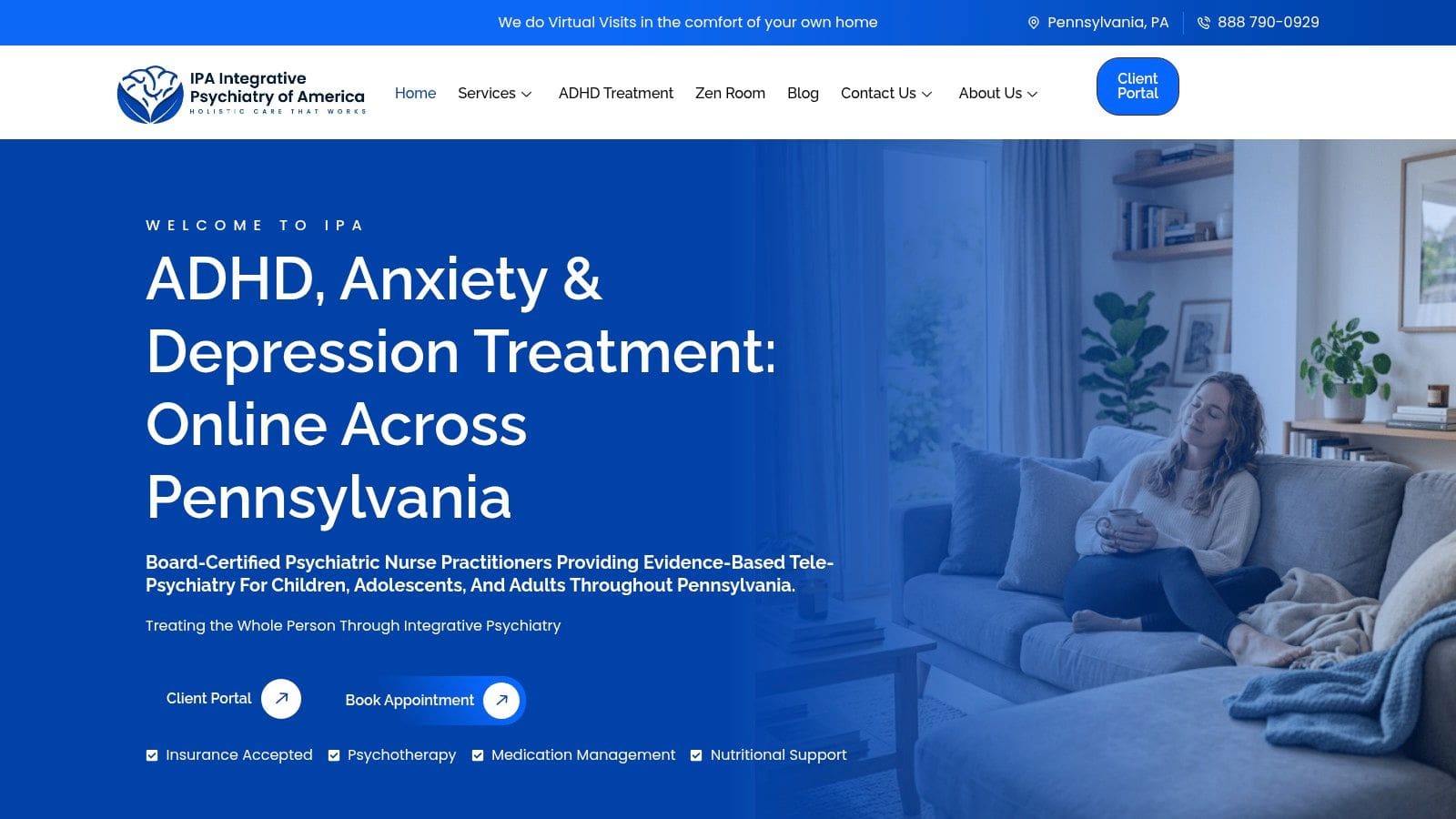
For Pennsylvania residents, including people in Philadelphia and surrounding communities, virtual care can make access much simpler. This page on integrative psychiatry in PA virtual mental health services outlines how telepsychiatry can be delivered across the state through secure online visits.
The first steps are typically practical:
- Review the website carefully: Patients usually start by looking at conditions treated, service options, and whether the clinical style matches what they're seeking.
- Check payment details: Insurance verification, cash pricing, or membership options should be clear before the first appointment whenever possible.
- Schedule online: A straightforward booking process lowers friction and helps patients move from researching to acting.
What Happens During Ongoing Care
The initial video visit usually focuses on the full picture, not just one symptom. That includes current concerns, past treatment, medication history, sleep, appetite, stress, substance use, medical issues, and daily functioning. If the practice is using an integrative model, the appointment should also explore what has or hasn't worked outside of medication.
After the intake, care often continues through a mix of follow-up visits and portal-based communication. Patients may use the portal for messages, appointment requests, medication refill needs, and updates between sessions. That doesn't remove the work of treatment, but it does make the process easier to manage from home.
Integrative Psychiatry of America is one telepsychiatry option in this space. The practice provides online psychiatric care in Pennsylvania with services that may include medication management, psychotherapy-informed treatment planning, nutritional support, exercise education, mindfulness guidance, lab review, genetic testing, and TRT when clinically indicated. For patients who want extensive care without in-person travel, that model can be especially practical.
Common Questions and Your Path Forward
Practical questions matter. In integrative care, access often depends less on interest and more on logistics. NCIPH notes that barriers such as payment design and workforce distribution remain significant, and that practices offering clear information about insurance, cash pricing, and membership options help bridge that gap in its resource page for integrative health professionals.
Insurance Access and Distance
Many patients want to know whether care is covered and whether they need to live near Philadelphia to receive it. Coverage depends on the practice and plan, so the useful answer is always the specific one. Patients should look for a clinic that explains insurance verification, self-pay options, and any membership structure in plain language before treatment begins.
Distance is often less of a barrier with telepsychiatry. If the clinician is licensed to treat patients in Pennsylvania, adults across the state may be able to receive care from home. That's especially helpful for people balancing work schedules, family demands, transportation issues, or privacy concerns.
What a Psychiatric Nurse Practitioner Does
A psychiatric nurse practitioner is an advanced-practice mental health clinician who evaluates symptoms, diagnoses conditions, prescribes medication, monitors safety, and develops treatment plans. In integrative settings, that role may also include reviewing lifestyle factors, coordinating with therapists or other clinicians, and helping patients decide when broader tools are worth considering.
For people still unsure whether specialty care is appropriate, this guide on when to see a psychiatrist can help clarify when a higher level of mental health evaluation makes sense.
Patients don't need to arrive with the perfect vocabulary or a fully formed plan. They only need enough clarity to say what isn't working. From there, a good clinician can help sort what belongs to medication, therapy, sleep, nutrition, stress, medical evaluation, and daily habit change.
If a more complete mental health plan sounds like the missing piece, Integrative Psychiatry of America offers secure telepsychiatry for adults across Pennsylvania. Patients can review services, check practical details, and schedule an initial consultation to explore a whole-person approach to anxiety, depression, ADHD, OCD, PTSD, weight concerns, and related mental health needs.